Understanding the Flow of Genetic Information: From DNA to Protein
Fundamentals of Genetic Information Transfer
Overview of the Genetic Information Pathway
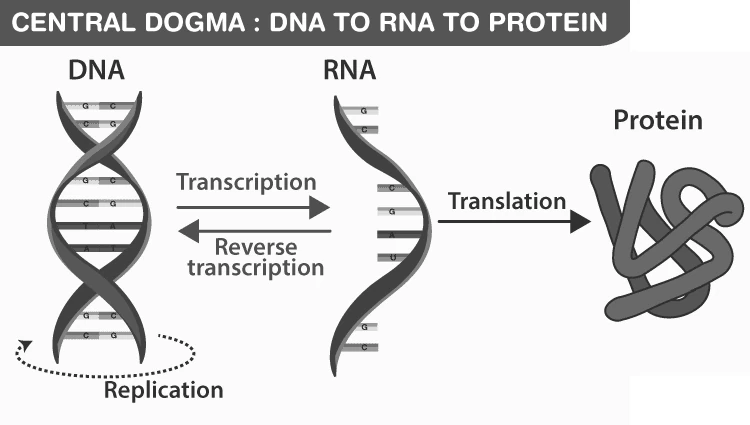
The genetic information within living cells follows a specific route, starting from DNA, moving to RNA, and finally resulting in protein synthesis. This sequence is essential for the production of functional proteins that perform various cellular roles. DNA holds the hereditary instructions, while RNA acts as the intermediary messenger that conveys this information to the protein-making machinery.
This concept, often referred to as the central dogma of molecular biology, explains how genetic data is decoded and expressed within cells, ensuring the continuity of life processes.
Example Problem
Explain why RNA is considered a crucial intermediary in the process of protein synthesis.
Solution:
- DNA remains in the nucleus and cannot directly participate in protein synthesis in the cytoplasm.
- RNA is synthesized from DNA and carries the genetic code to ribosomes.
- RNA's ability to move to ribosomes allows it to serve as a template for assembling amino acids into proteins.
- Thus, RNA acts as a messenger, bridging the gap between DNA and protein production.
Mechanisms Driving Genetic Information Flow
DNA Replication and Its Semiconservative Nature
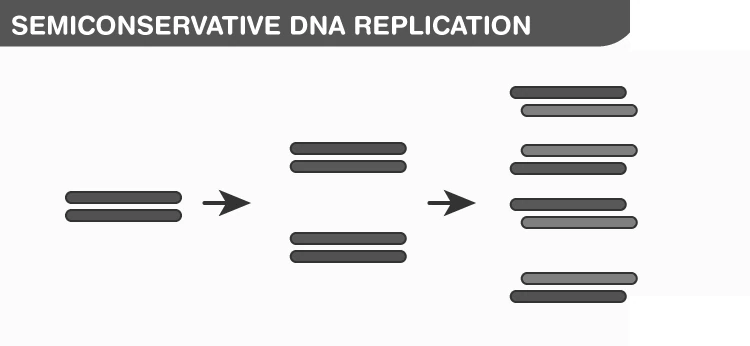
Before a cell divides, it must duplicate its DNA to ensure each daughter cell receives an exact copy. This replication process is semiconservative, meaning each new DNA molecule consists of one original strand paired with a newly synthesized strand. This mechanism preserves genetic fidelity across generations.
Example Problem
During DNA replication, if the original strand has the sequence 5′-AGCTTAGC-3′, what will be the sequence of the newly synthesized complementary strand?
Solution:
- The complementary base pairing rules apply: A pairs with T, and G pairs with C.
- Original strand: 5′-A G C T T A G C-3′
- New strand (complementary, antiparallel): 3′-T C G A A T C G-5′
- Thus, the new strand sequence is 3′-TCGAATCG-5′.
Transcription: Synthesizing RNA from DNA Template
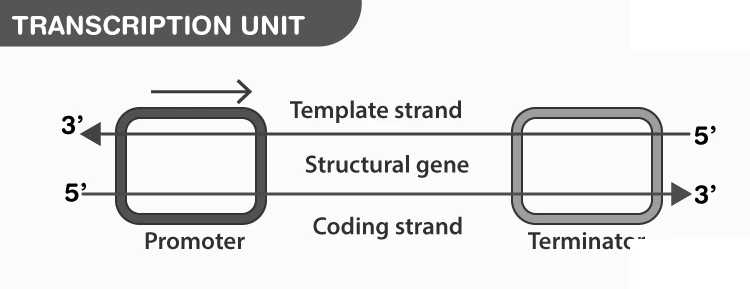
Transcription is the process where the genetic code from DNA is copied into messenger RNA (mRNA). This occurs when the enzyme RNA polymerase binds to a specific DNA region called the promoter and moves along the template strand, synthesizing RNA in the 5′ to 3′ direction. The DNA strand used for RNA synthesis is the template strand, while the other is the coding strand.
Once RNA polymerase reaches the terminator sequence, transcription ends, releasing the newly formed RNA molecule, which then undergoes modifications before translation.
Example Problem
Given the DNA template strand sequence 3′-TACGGTACG-5′, determine the sequence of the mRNA transcribed.
Solution:
- RNA is synthesized complementary to the DNA template strand, replacing thymine (T) with uracil (U).
- Template strand: 3′-T A C G G T A C G-5′
- mRNA sequence (5′ to 3′): 5′-A U G C C A U G C-3′
- This mRNA will be used in the next step for protein synthesis.
Protein Synthesis and the Genetic Code
Translation: Converting RNA Code into Proteins
Translation is the cellular process where the mRNA sequence is decoded to build a specific protein. This energy-dependent process occurs in ribosomes, which consist of a small and a large subunit. The mRNA binds to the smaller subunit, while transfer RNA (tRNA) molecules bring amino acids to the ribosome by matching their anticodons to the mRNA codons.
Two tRNA molecules align in the larger subunit, allowing peptide bonds to form between amino acids, gradually creating a polypeptide chain that folds into a functional protein.
Example Problem
If the mRNA codon sequence is 5′-AUG-GCU-ACG-3′, identify the amino acids incorporated during translation.
Solution:
- Codon AUG codes for Methionine (start codon).
- Codon GCU codes for Alanine.
- Codon ACG codes for Threonine.
- The polypeptide chain begins with Methionine, followed by Alanine and Threonine.
Decoding the Genetic Code
The genetic code consists of triplets of nucleotides called codons, each specifying a particular amino acid. With four nitrogenous bases (adenine, thymine/uracil, cytosine, guanine), the total number of possible codons is calculated as:
\[ 4 \times 4 \times 4 = 64 \]
However, only 20 amino acids are naturally found in proteins, so multiple codons can code for the same amino acid, a feature known as degeneracy. Among these 64 codons, three serve as stop signals to terminate protein synthesis, and one codon (AUG) acts as the start signal, coding for Methionine.
Exam Tip: Remember that each codon corresponds to only one amino acid, and the genetic code is universal across almost all organisms.
Summary Table for Quick Review
| Process | Description | Key Enzyme/Component | Location |
|---|---|---|---|
| DNA Replication | Duplication of DNA strands before cell division | DNA Polymerase | Nucleus |
| Transcription | Synthesis of RNA from DNA template | RNA Polymerase | Nucleus |
| Translation | Assembly of proteins from mRNA code | Ribosomes and tRNA | Cytoplasm |
| Genetic Code | Triplet codons specifying amino acids | Codons (mRNA) | Ribosome |
Glossary of Key Terms
| Term | Definition |
|---|---|
| Central Dogma | The flow of genetic information from DNA to RNA to protein. |
| DNA Replication | Process of copying DNA before cell division. |
| Transcription | Formation of RNA from a DNA template. |
| Translation | Process of synthesizing proteins from mRNA. |
| RNA Polymerase | Enzyme that synthesizes RNA during transcription. |
| Ribosome | Cellular structure where proteins are made. |
| tRNA | Transfer RNA that brings amino acids to ribosomes. |
| Codon | A sequence of three nucleotides coding for an amino acid. |
| Start Codon | The codon (AUG) signaling the start of protein synthesis. |
| Stop Codon | Codons that signal the end of translation. |
Frequently Asked Questions
What is the significance of the central dogma in biology?
The central dogma explains how genetic information is transferred within a cell, ensuring that DNA instructions are accurately converted into functional proteins essential for life.
Why is RNA necessary if DNA contains all genetic information?
RNA acts as a messenger that carries genetic instructions from DNA in the nucleus to ribosomes in the cytoplasm, where proteins are synthesized.
What does semiconservative replication mean?
It means each new DNA molecule contains one original strand and one newly synthesized strand, preserving genetic information during cell division.
How does the genetic code ensure accurate protein synthesis?
The genetic code uses specific three-nucleotide codons that correspond to particular amino acids, allowing precise translation of RNA into proteins.
What role do ribosomes play in protein synthesis?
Ribosomes facilitate the decoding of mRNA and the assembly of amino acids into polypeptide chains during translation.