Understanding Disorders of the Muscular and Skeletal Systems
Overview of the Musculoskeletal Framework
The musculoskeletal framework is an intricate network composed of bones, muscles, tendons, ligaments, joints, and connective tissues. This system not only facilitates bodily movement but also supports posture and aids in vital functions such as blood circulation. The skeletal structure provides the essential support that prevents the body from collapsing, while muscles generate the force required for motion. Both components are indispensable and work in harmony to maintain the body's integrity and function.
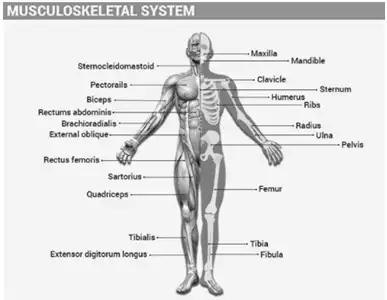
Illustration of the Musculoskeletal System
Common Disorders Affecting Muscles and Bones
Communication Breakdown in Muscle Function: Myasthenia Gravis
Myasthenia gravis is a condition characterized by unusual muscle weakness and rapid fatigue. It arises when the signals between nerve cells and muscles are disrupted, impairing muscle contraction. This disorder often leads to difficulties in voluntary movements and can affect muscles controlling the eyes, face, and limbs. Understanding the nerve-muscle communication is crucial to grasping the impact of this disease.
Example: A 30-year-old patient experiences drooping eyelids and difficulty in swallowing. Electromyography confirms impaired nerve-to-muscle transmission. Explain why muscle weakness worsens with activity in myasthenia gravis.
Solution:
In myasthenia gravis, antibodies block or destroy acetylcholine receptors at the neuromuscular junction.
This reduces the efficiency of nerve impulses triggering muscle contraction.
With repeated use, fewer receptors are available, causing increased muscle fatigue.
Hence, symptoms worsen with continued activity and improve with rest.
Inherited Muscle Degeneration: Muscular Dystrophy
Muscular dystrophy refers to a group of genetic disorders that cause progressive weakening and loss of skeletal muscle mass. These muscles are responsible for voluntary movements. The degeneration leads to difficulties in walking, breathing, and other motor functions. Early diagnosis and management can help slow progression but there is currently no cure.
Example: A 12-year-old boy shows increasing difficulty climbing stairs and frequent falls. Genetic testing reveals a mutation affecting muscle proteins. Identify the primary cause of muscle weakness in muscular dystrophy.
Solution:
Mutations lead to defective or absent dystrophin, a protein vital for muscle fiber stability.
Without dystrophin, muscle cells are damaged during contraction and gradually die.
This results in progressive muscle wasting and weakness.
Calcium Deficiency and Muscle Spasms: Tetany
Tetany is a condition marked by involuntary, rapid muscle contractions or spasms, often caused by low calcium levels in the blood. Calcium ions play a key role in muscle contraction and nerve function. When calcium is deficient, nerve cells become hyperactive, triggering spasms that can be painful and debilitating.
Muscle spasms associated with Tetany
Example: A patient with low blood calcium experiences frequent hand cramps and twitching. Explain how hypocalcemia leads to tetany.
Solution:
Calcium stabilizes nerve membranes and regulates neurotransmitter release.
Low calcium increases nerve excitability, causing spontaneous muscle contractions.
This hyperexcitability manifests as tetanic spasms and cramps.
Joint Inflammation and Pain: Arthritis
Arthritis is the inflammation of one or more joints, leading to pain, swelling, and restricted movement. It can result from autoimmune reactions, wear and tear, or infections. The inflammation damages cartilage and surrounding tissues, impairing joint function and causing discomfort.
Example: A 55-year-old woman complains of stiff and painful knees, especially in the morning. X-rays show joint space narrowing. What type of arthritis is likely, and what causes the symptoms?
Solution:
Osteoarthritis is common in older adults due to cartilage degeneration.
Loss of cartilage causes bones to rub, leading to pain and stiffness.
Inflammation and reduced joint lubrication worsen symptoms.
Bone Fragility with Age: Osteoporosis
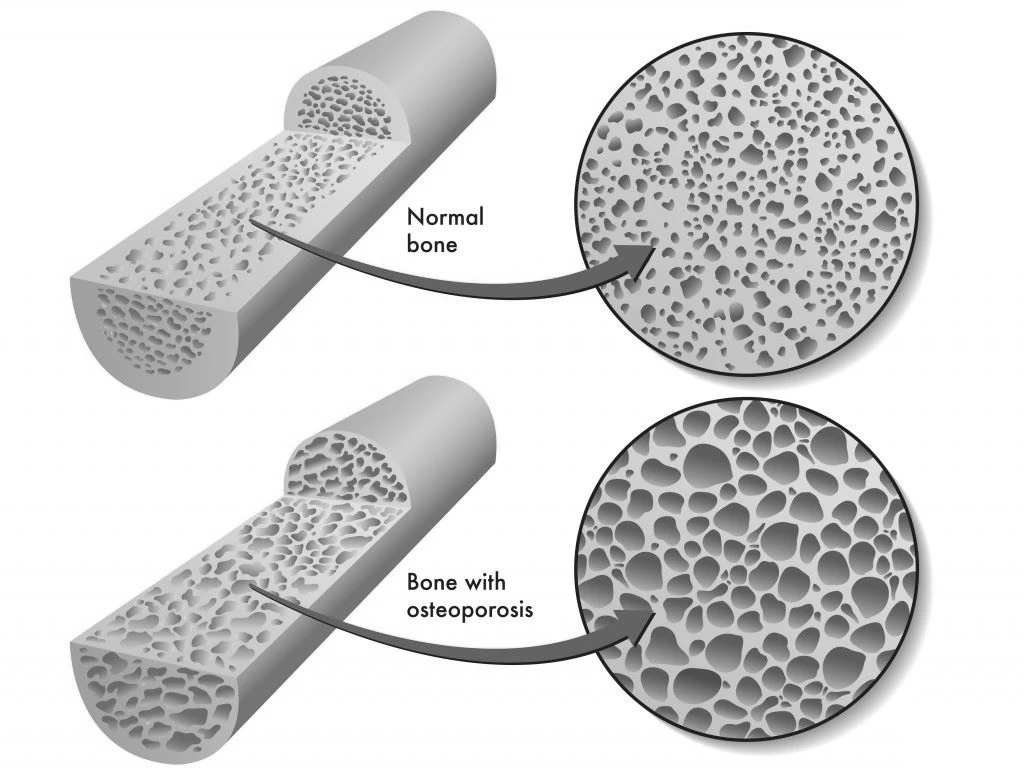
Osteoporosis is a condition where bones become porous and fragile, increasing fracture risk. It is more prevalent in older adults, especially postmenopausal women, due to decreased estrogen levels. The reduction in bone density weakens the skeletal framework, making it susceptible to breaks even with minor injuries.
Example: A 65-year-old woman suffers a wrist fracture after a minor fall. Bone density tests reveal low mineral content. Explain the role of estrogen in osteoporosis.
Solution:
Estrogen helps maintain bone density by balancing bone formation and resorption.
Lower estrogen after menopause accelerates bone loss.
This leads to decreased bone mass and increased fracture risk.
Joint Inflammation from Crystal Deposits: Gout
Gout is a form of arthritis caused by the accumulation of uric acid crystals in joints, triggering intense inflammation and pain. It often affects the big toe but can involve other joints. The buildup results from impaired uric acid metabolism or excretion.
Example: A middle-aged man experiences sudden severe pain and swelling in his big toe. Blood tests show elevated uric acid. Describe the mechanism causing gout symptoms.
Solution:
Excess uric acid crystallizes in joint spaces.
These crystals provoke an immune response causing inflammation.
Inflammation leads to redness, swelling, and intense pain.
Summary Table of Muscular and Skeletal Disorders
Disorder | Cause | Main Symptoms | Effect on Body |
|---|---|---|---|
Myasthenia Gravis | Impaired nerve-muscle communication | Muscle weakness, fatigue | Reduced voluntary muscle control |
Muscular Dystrophy | Genetic mutation affecting muscle proteins | Progressive muscle wasting | Loss of movement ability |
Tetany | Low blood calcium levels | Muscle spasms, cramps | Involuntary muscle contractions |
Arthritis | Joint inflammation (autoimmune or wear) | Pain, swelling, stiffness | Limited joint mobility |
Osteoporosis | Bone density loss, low estrogen | Fragile bones, fractures | Increased fracture risk |
Gout | Uric acid crystal accumulation | Joint pain, redness | Inflamed joints |
Key Terms and Definitions
Term | Definition |
|---|---|
Musculoskeletal System | The combined system of muscles, bones, joints, and connective tissues enabling movement and support. |
Myasthenia Gravis | A disorder causing muscle weakness due to faulty nerve-muscle communication. |
Muscular Dystrophy | A genetic condition leading to progressive muscle degeneration. |
Tetany | Involuntary muscle spasms caused by low calcium levels. |
Arthritis | Inflammation of joints causing pain and stiffness. |
Osteoporosis | A disease characterized by decreased bone density and fragility. |
Gout | A type of arthritis caused by uric acid crystal deposits in joints. |
Ligaments | Fibrous tissues connecting bones to other bones at joints. |
Tendons | Connective tissues attaching muscles to bones. |
Estrogen | A hormone that helps maintain bone density, especially in women. |
Frequently Asked Questions
What causes muscle weakness in myasthenia gravis?
It is caused by antibodies blocking acetylcholine receptors at the neuromuscular junction, reducing muscle contraction efficiency.
How does muscular dystrophy affect movement?
Genetic mutations cause muscle fibers to weaken and degenerate, leading to progressive loss of voluntary muscle control.
Why does low calcium lead to muscle spasms?
Calcium deficiency increases nerve excitability, causing involuntary and rapid muscle contractions known as tetany.
What are the main symptoms of arthritis?
Arthritis typically causes joint pain, swelling, stiffness, and reduced range of motion.
How does osteoporosis increase fracture risk?
Loss of bone density weakens bones, making them fragile and more likely to break even with minor trauma.