Comprehensive Overview of Cilia: Structure, Types, and Functions
Fundamentals and Classification of Cilia
Understanding Cilia and Their Varieties
Cilia are tiny, hair-like projections that extend from the surface of eukaryotic cells. These slender structures can appear singly or in clusters and are essential for various cellular activities. Organisms equipped with cilia, often called ciliates, utilize them primarily for movement and feeding.
There are two main categories of cilia based on their mobility:
Motile Cilia: These are numerous and actively move to perform functions such as clearing mucus in respiratory pathways.
Non-motile Cilia (Primary Cilia): Typically solitary and immobile, these act as sensory antennae, detecting environmental signals and coordinating cellular responses.
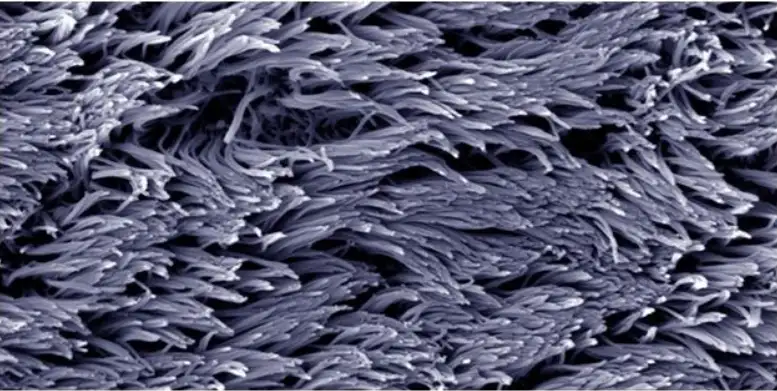
Microscopic image showing cilia on the surface of a eukaryotic cell
Example Problem
Question: Identify the primary difference between motile and non-motile cilia in terms of their cellular roles.
Solution:
Motile cilia are involved in active movement, such as clearing mucus or propelling single-celled organisms.
Non-motile cilia serve as sensory structures, detecting mechanical and chemical signals to regulate cellular functions.
Thus, motility distinguishes the two types, with motile cilia facilitating movement and non-motile cilia acting as sensory receptors.
Detailed Architecture of Cilia
Structural Composition and Arrangement
Cilia are composed of microtubules enveloped by the plasma membrane. The core structure, known as the axoneme, consists of nine pairs of microtubules arranged in a ring around two central microtubules, often described as a "9+2" pattern. This arrangement is critical for the cilia's ability to move.
The outer nine pairs are connected to motor proteins called dynein, which generate the force required for ciliary motion. At the base, cilia anchor to the cell via the basal body, which contains nine triplets of microtubules arranged in a cylindrical fashion.
Typically, cilia measure between 0.25 micrometers in diameter and can extend up to 20 micrometers in length, making them microscopic yet vital cellular components.
Example Problem
Question: Calculate the total number of microtubules present in the axoneme of a single motile cilium.
Solution:
The axoneme has nine pairs of outer microtubules plus two central microtubules.
\[ \text{Total microtubules} = (9 \times 2) + 2 = 18 + 2 = 20 \]
Therefore, each motile cilium contains 20 microtubules in its axoneme.
Functional Roles and Clinical Significance of Cilia
Physiological Functions and Associated Disorders
Cilia perform crucial roles in locomotion, sensory perception, and cellular signaling. Motile cilia coordinate rhythmic movements to clear mucus and debris from respiratory pathways, maintaining airway health. Non-motile cilia act as sensory antennae, detecting mechanical stimuli such as fluid flow in kidneys and transmitting signals to regulate cellular activities.
In the retina, non-motile cilia facilitate the transport of molecules within photoreceptor cells, essential for vision.
Disorders related to cilia, collectively called ciliopathies, arise from defects in ciliary structure or function. For example, Primary Ciliary Dyskinesia is a genetic condition where motile cilia fail to operate properly, leading to impaired mucus clearance and recurrent respiratory infections.
Example Problem
Question: Explain how defective motile cilia can affect respiratory health.
Solution:
Motile cilia in the respiratory tract move mucus and trapped particles out of the lungs.
If these cilia are dysfunctional, mucus accumulates, creating a breeding ground for pathogens.
This leads to frequent infections, inflammation, and breathing difficulties, characteristic of Primary Ciliary Dyskinesia.
Summary Table for Quick Revision
Aspect | Details |
|---|---|
Definition | Hair-like projections on eukaryotic cell surfaces involved in movement and sensing. |
Types | Motile (movement) and Non-motile (sensory primary cilia). |
Structure | Axoneme with 9+2 microtubule arrangement; basal body with 9 triplets. |
Functions | Locomotion, mucus clearance, sensory reception, cellular signaling. |
Disorders | Ciliopathies, Primary Ciliary Dyskinesia causing respiratory issues. |
Size Range | Diameter: 0.25 μm; Length: up to 20 μm. |
Motor Protein | Dynein enables ciliary movement. |
Location | Respiratory tract, kidney cells, retina, protozoans like paramecium. |
Role in Sensory | Detects mechanical and chemical signals for cellular response. |
Organisms with Cilia | Eukaryotic cells including mammals and ciliates. |
Glossary of Key Terms
Term | Definition |
|---|---|
Axoneme | The core microtubule structure of a cilium, typically arranged in a 9+2 pattern. |
Basal Body | Microtubule-based organelle anchoring the cilium to the cell. |
Ciliates | Organisms that possess cilia for movement and feeding. |
Ciliopathies | Genetic disorders caused by defects in cilia structure or function. |
Dynein | Motor protein responsible for ciliary movement. |
Motile Cilia | Cilia capable of movement, aiding in locomotion and fluid clearance. |
Non-motile Cilia | Also called primary cilia; function mainly as sensory organelles. |
Microtubules | Cylindrical polymers of tubulin forming the cilia’s structural framework. |
Primary Ciliary Dyskinesia | Inherited disorder causing defective motile cilia and respiratory problems. |
Respiratory Epithelium | Cell layer lining respiratory tract where motile cilia clear mucus. |
Frequently Asked Questions
What are the main roles of cilia in human cells?
Cilia assist in moving fluids and particles across cell surfaces and act as sensory structures to detect environmental signals.
What materials compose the structure of cilia?
Cilia are made of microtubules composed of tubulin proteins and motor proteins like dynein that enable movement.
Where in the body are motile cilia predominantly found?
Motile cilia are mainly located on epithelial cells lining the respiratory tract, trachea, and parts of the digestive system.
Do prokaryotic cells have cilia?
No, cilia are exclusive to eukaryotic cells; prokaryotes use flagella for movement instead.
How do non-motile cilia contribute to kidney function?
Non-motile cilia in kidney cells sense urine flow and help regulate cellular responses to maintain proper kidney function.