Comprehensive Overview of Cell Organelles and Their Roles
Fundamentals of Cell Organelles and Their Classification
Understanding the Role and Types of Cell Organelles
Every living organism, whether unicellular or multicellular, is composed of cells that serve as the fundamental units of life. Within these cells, specialized structures known as organelles perform distinct functions essential for the cell's survival and operation. These organelles vary in structure and function, working together to maintain cellular activities such as metabolism, growth, and reproduction.
Cell organelles are broadly categorized based on the presence or absence of membranes surrounding them:
- Non-membrane-bound organelles: These include the cell wall, ribosomes, and cytoskeleton, found in both prokaryotic and eukaryotic cells.
- Single membrane-bound organelles: Such as vacuoles, lysosomes, Golgi apparatus, and endoplasmic reticulum, present exclusively in eukaryotic cells.
- Double membrane-bound organelles: Including the nucleus, mitochondria, and chloroplasts, also unique to eukaryotic cells.
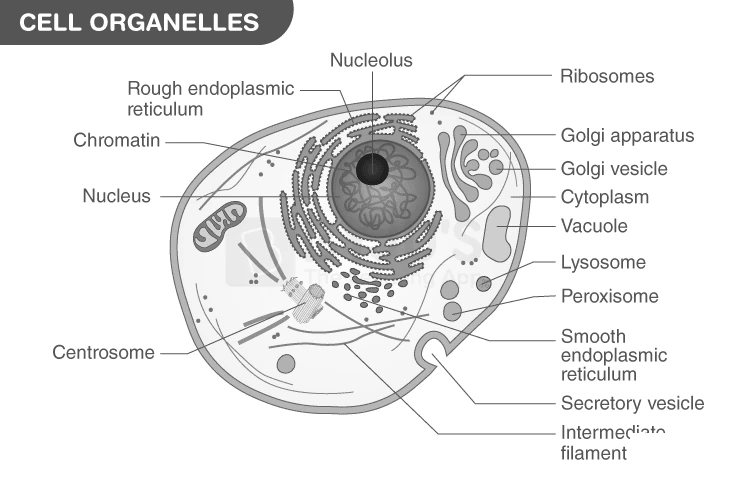
Solution: Ribosomes are non-membrane-bound organelles. They are found in both prokaryotic and eukaryotic cells, serving as the sites for protein synthesis. Their presence in both cell types highlights their fundamental role in cellular function.
Membrane Structures and Cytoplasmic Components
Selective Barrier: The Plasma Membrane
The plasma membrane, also known as the cell membrane or cytoplasmic membrane, is a selectively permeable barrier that encloses the cell. It is primarily composed of a lipid bilayer interspersed with proteins, forming a dynamic structure described by the fluid mosaic model. This membrane regulates the movement of substances into and out of the cell, maintaining homeostasis and protecting cellular contents.
In animal cells, the plasma membrane also provides shape and structural integrity. Its selective permeability ensures that essential nutrients enter while waste products are expelled efficiently.
Solution: The fluid mosaic model describes the plasma membrane as a flexible lipid bilayer with embedded proteins that can move laterally. This arrangement allows the membrane to adapt its shape, facilitates selective transport, and enables communication with the environment, ensuring proper cellular function.
Gel-like Matrix: The Cytoplasm
The cytoplasm is a viscous, jelly-like substance filling the space between the plasma membrane and the nucleus in both plant and animal cells. It consists mainly of water, organic molecules, and inorganic ions. This medium houses all the organelles and is the site for numerous metabolic reactions essential for cell survival.
Solution: Enzymes present in the cytoplasm catalyze various biochemical reactions, including metabolism and synthesis of molecules, enabling the cell to perform vital functions efficiently.
Genetic Control and Protein Synthesis Centers
Command Center: The Nucleus
The nucleus is the largest double-membraned organelle found in eukaryotic cells, acting as the control hub for cellular activities. It contains the cell’s genetic material organized into chromosomes, which carry genes responsible for hereditary traits. The nuclear envelope is porous, allowing selective exchange between the nucleus and cytoplasm.
Inside the nucleus lies the nucleolus, a dense region responsible for synthesizing ribosomal RNA and assembling ribosomes. The nucleus regulates metabolism, growth, and reproduction by directing protein synthesis based on genetic instructions.
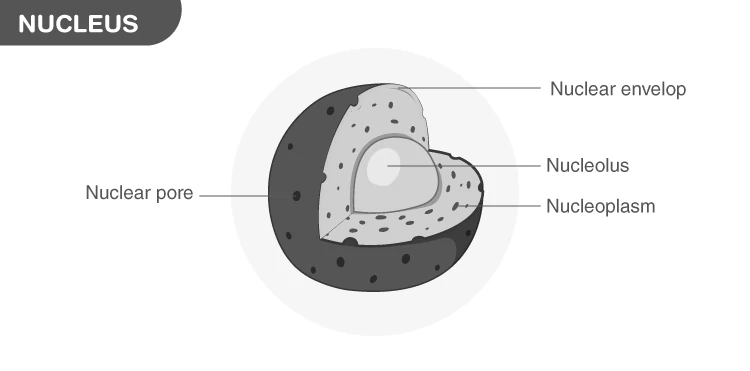
Solution: The nucleus controls cellular functions by storing DNA, which contains instructions for protein synthesis. These proteins regulate metabolism, growth, and cell division, ensuring proper cell operation.
Protein Factories: Ribosomes
Ribosomes are small, non-membrane-bound organelles composed of ribosomal RNA and proteins. They exist either freely in the cytoplasm or attached to the endoplasmic reticulum. Ribosomes are classified as 70S in prokaryotes and 80S in eukaryotes, based on their size and density.
Their primary role is to synthesize proteins by translating messenger RNA sequences into polypeptide chains, which are vital for cell structure and function.
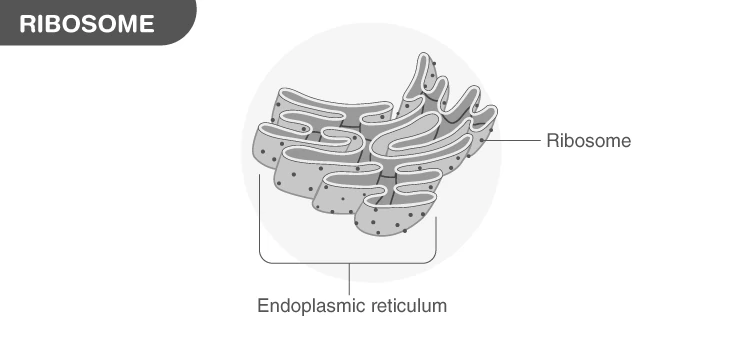
Solution: 70S ribosomes are smaller and found in prokaryotic cells, while 80S ribosomes are larger and present in eukaryotic cells. Both types consist of two subunits and perform protein synthesis.
Intracellular Transport and Energy Production
Endoplasmic Reticulum: Cellular Transport Network
The endoplasmic reticulum (ER) is an extensive network of membrane-bound tubules and sacs that facilitate the transport of molecules within the cell. It exists in two forms:
- Rough ER: Studded with ribosomes, it is involved in synthesizing and processing proteins.
- Smooth ER: Lacking ribosomes, it functions in lipid and steroid synthesis and detoxification processes.
Solution: Rough ER synthesizes proteins due to attached ribosomes, while smooth ER produces lipids and detoxifies harmful substances, highlighting their specialized roles.
Energy Generators: Mitochondria
Mitochondria are double-membraned, oval-shaped organelles known as the cell’s powerhouses. They generate energy by converting nutrients into adenosine triphosphate (ATP) through aerobic respiration. The inner membrane folds into cristae, increasing surface area for energy production.
Remarkably, mitochondria contain their own circular DNA and ribosomes, enabling them to produce some proteins independently.
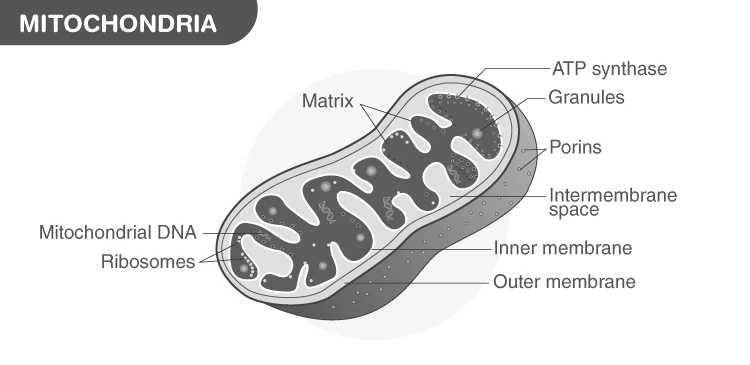
Solution: Given one glucose molecule produces 36 ATP, the total energy output is \( 36 \times 1 = 36 \text{ ATP molecules} \), which powers cellular activities.
Specialized Organelles in Plant Cells
Plastids: Pigment and Storage Organelles
Plastids are large, membrane-bound organelles found in plant cells, containing pigments or storing nutrients. They are classified into three types based on their function and pigment content:
- Chloroplasts: Double-membraned organelles containing chlorophyll, responsible for photosynthesis. They have internal thylakoid membranes stacked into grana, surrounded by stroma containing DNA and ribosomes.
- Chromoplasts: Contain carotenoid pigments like carotene and xanthophyll, imparting yellow, orange, or red colors to plant parts such as flowers and fruits.
- Leucoplasts: Colorless plastids that store nutrients; amyloplasts store starch, aleuroplasts store proteins, and elaioplasts store oils and fats.
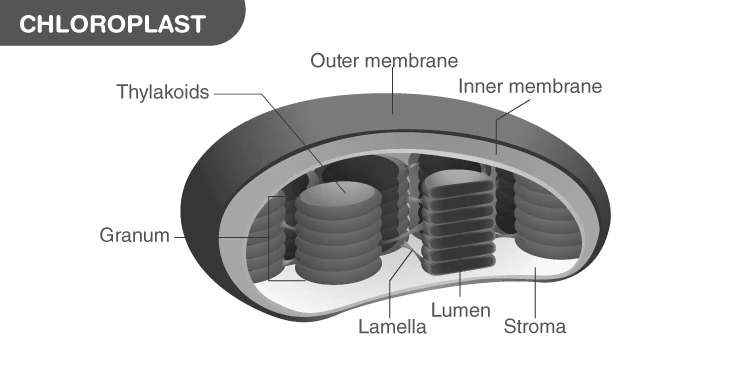
Solution: Chloroplasts contain chlorophyll pigments that give leaves their green color and facilitate photosynthesis.
Cellular Organization and Movement Structures
Golgi Apparatus: Packaging and Distribution Center
The Golgi apparatus consists of flattened, stacked membrane sacs called cisternae. It modifies, sorts, and packages proteins and lipids received from the endoplasmic reticulum for transport to their destinations inside or outside the cell. This organelle is present in both plant and animal cells.
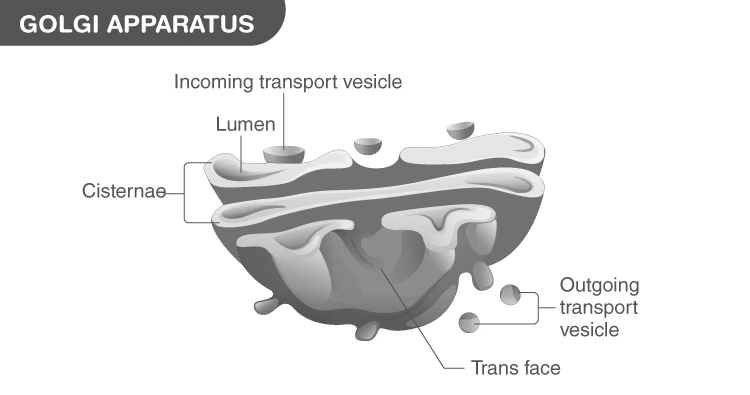
Solution: It modifies proteins by adding carbohydrates or lipids, then packages and directs them to their target locations.
Microbodies: Enzyme-Containing Vesicles
Microbodies are small, membrane-bound vesicles found in both plant and animal cells. They contain enzymes that participate in various metabolic processes, such as breaking down fatty acids and detoxifying harmful substances. Due to their minute size, they are visible only under electron microscopes.
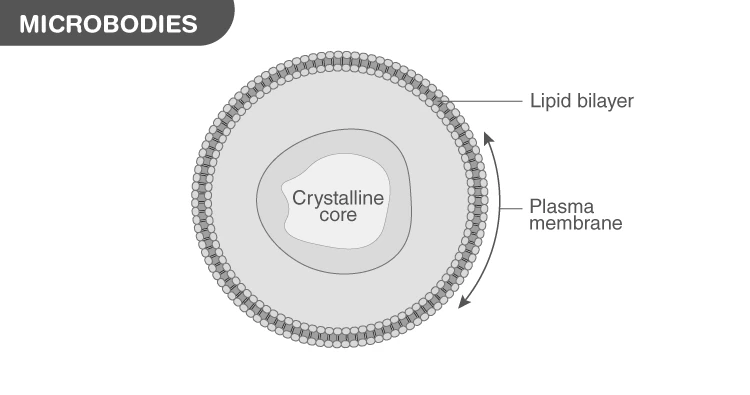
Solution: Microbodies contain enzymes that help in detoxifying harmful compounds and metabolizing fatty acids.
Cytoskeleton: Structural Framework
The cytoskeleton is a dynamic network of protein filaments extending throughout the cytoplasm. It provides mechanical support, maintains cell shape, and facilitates intracellular transport and cell division. The filaments can rapidly assemble or disassemble based on cellular needs.
Solution: The cytoskeleton forms spindle fibers that help segregate chromosomes during mitosis, ensuring accurate cell division.
Motility Structures: Cilia and Flagella
Cilia and flagella are hair-like projections extending from the cell surface, aiding in movement. Cilia are short and numerous, moving fluid or the cell itself, while flagella are longer and usually fewer, propelling the cell forward. Both have a core called the axoneme, composed of nine pairs of peripheral microtubules and a central pair, connected by radial spokes and surrounded by a sheath.
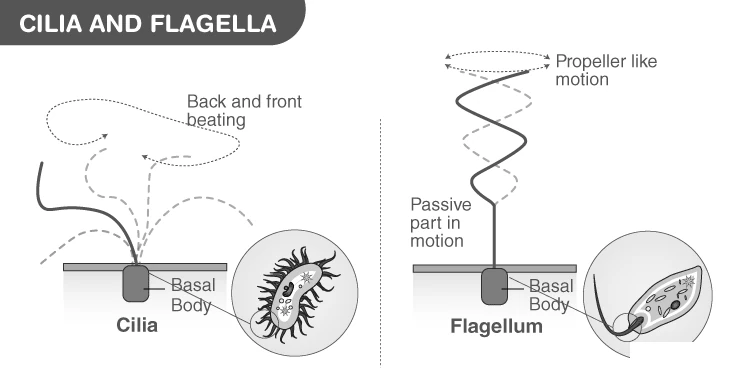
Solution: Both have a 9+2 microtubule arrangement, but cilia are shorter and more numerous, while flagella are longer and fewer, reflecting their distinct motility roles.
Centrosome and Centrioles: Organizers of Cell Division
The centrosome is a key organelle involved in organizing microtubules during cell division. It contains two centrioles arranged perpendicularly. Each centriole is made of nine triplets of tubulin fibrils connected by a proteinaceous hub and radial spokes. Centrioles also form basal bodies that give rise to cilia and flagella.
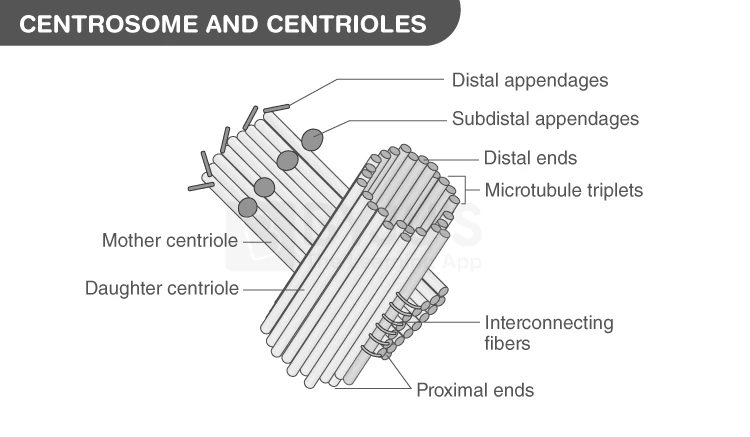
Solution: Centrioles help form spindle fibers that separate chromosomes, ensuring proper cell division.
Storage and Waste Management in Cells
Vacuoles: Storage Compartments
Vacuoles are membrane-bound sacs within cells that store nutrients, waste products, and other substances. They help maintain cellular homeostasis by isolating harmful materials and regulating internal pressure. Plant cells typically have large central vacuoles, whereas animal cells contain smaller, more numerous vacuoles.
Solution: Vacuoles sequester waste products and harmful substances, preventing them from damaging other cellular components.
Summary Table of Key Cell Organelles and Their Functions
| Organelle | Primary Function | Membrane Type |
|---|---|---|
| Plasma Membrane | Selective barrier regulating entry and exit | None (lipid bilayer with proteins) |
| Cytoplasm | Site of metabolic reactions and organelle suspension | None |
| Nucleus | Genetic control center, stores DNA | Double membrane |
| Endoplasmic Reticulum | Transport and synthesis of proteins and lipids | Single membrane |
| Mitochondria | ATP production via aerobic respiration | Double membrane |
| Chloroplasts | Photosynthesis and pigment storage | Double membrane |
| Golgi Apparatus | Modification and packaging of proteins and lipids | Single membrane |
| Ribosomes | Protein synthesis | None |
| Microbodies | Metabolic enzyme storage and detoxification | Single membrane |
| Vacuoles | Storage of nutrients and waste | Single membrane |
Glossary of Essential Terms Related to Cell Organelles
| Term | Definition |
|---|---|
| Organelle | Specialized structure within a cell performing distinct functions. |
| Chromosome | Thread-like structure carrying genetic information in the nucleus. |
| Ribosome | Organelle responsible for protein synthesis. |
| Endoplasmic Reticulum | Network of membranes involved in transport and synthesis of molecules. |
| Mitochondria | Organelle producing energy in the form of ATP. |
| Chloroplast | Plant organelle where photosynthesis occurs. |
| Golgi Apparatus | Organelle that modifies and packages proteins and lipids. |
| Vacuole | Storage organelle for nutrients and waste products. |
| Cytoskeleton | Protein network providing structural support to the cell. |
| Axoneme | Core structure of cilia and flagella composed of microtubules. |
Frequently Asked Questions on Cell Organelles
Which organelle is known as the powerhouse of the cell?
Mitochondria are called the powerhouse because they generate ATP through cellular respiration, supplying energy for cellular activities.
Where are chloroplasts and chromoplasts found in plants?
Chloroplasts are located mainly in leaf mesophyll cells and green stems, containing chlorophyll for photosynthesis. Chromoplasts are found in colorful parts like flowers and fruits, containing pigments such as carotenoids.
Why are lysosomes referred to as suicide bags?
Lysosomes contain digestive enzymes that can break down damaged organelles or the entire cell if necessary, hence the term "suicide bags."
What is a nucleoid?
The nucleoid is a non-membrane-bound region in prokaryotic cells where the genetic material is located.
Which is the largest membrane-bound organelle in eukaryotic cells?
The nucleus is the largest membrane-bound organelle, housing the cell’s DNA and controlling cellular functions.