Comprehensive Overview of Animal Kingdom Classification
Fundamentals of Animal Classification and Kingdom Animalia
Introduction to Taxonomy and Animal Kingdom Structure
Taxonomy is the scientific discipline concerned with naming, describing, and categorizing living organisms. Among the five recognized kingdoms, Kingdom Animalia encompasses all animals. Within this kingdom, organisms are systematically grouped into various hierarchical levels such as phyla, classes, orders, families, and genera, based on distinct physical and genetic traits.
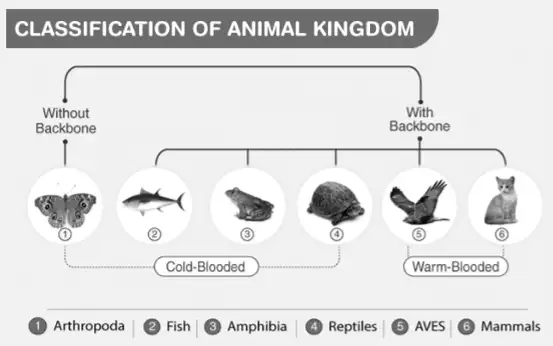
Diagram illustrating the classification hierarchy within the Animal Kingdom
Example: Consider a newly discovered marine species with segmented body and jointed appendages. Based on these features, it would be classified under the phylum Arthropoda, which is part of Kingdom Animalia.
Distinguishing Chordates from Non-Chordates
Understanding the Role of the Notochord in Animal Grouping
The presence or absence of a notochord—a flexible, rod-like structure resembling cartilage—is a primary criterion for dividing animals into two broad categories: chordates and non-chordates. Animals possessing a notochord at any stage of their life cycle are classified as chordates. It is important to note that not all chordates are vertebrates; some invertebrates also exhibit a notochord during development.
Example: The lancelet is an invertebrate that has a notochord throughout its life, classifying it as a chordate despite lacking a vertebral column.
Characteristics and Classification of Non-Chordates
Non-chordates lack a notochord and generally exhibit simpler body structures. This group includes diverse phyla such as Porifera, Coelenterata, Platyhelminthes, Annelida, Arthropoda, Mollusca, and Echinodermata. These animals are typically triploblastic and may be coelomate or pseudocoelomate. Their respiration occurs via gills, tracheae, or directly through the body surface. Reproduction can be sexual or asexual, with fertilization mostly external but sometimes internal. Most non-chordates have an open circulatory system and often lack distinct sexes.
Example: An earthworm, belonging to the phylum Annelida, is a coelomate non-chordate with segmented body and reproduces sexually with internal fertilization.
Key Features and Subdivisions of Chordates
Chordates are bilaterally symmetrical, triploblastic, and coelomate animals with a complex organ-system level of organization. Besides the notochord, they possess a hollow dorsal nerve cord, pharyngeal gill slits, and a post-anal tail at some stage. Their circulatory system is closed. The notochord may be transient or persistent depending on the species. The phylum Chordata is divided into three subphyla: Urochordata, Cephalochordata, and Vertebrata.
Example: The sea squirt (Ascidians) belongs to Urochordata, where the notochord is present only in the larval tail, and adults are sessile.
Exploring the Subphyla of Chordates
Subphylum Urochordata: Marine Tunicates
Urochordates, also known as Tunicata, are marine animals enveloped by a tough outer covering called a tunic. Their larvae are free-swimming and possess a notochord in the tail, which disappears as they mature into sessile adults. These animals are mostly hermaphroditic.
Example: Ascidians are common tunicates that attach to underwater surfaces and filter feed.
Subphylum Cephalochordata: Fish-like Marine Creatures
Cephalochordates are small, fish-like marine animals with a notochord extending along the entire body length. They have a large pharynx with numerous gill slits and exhibit separate sexes.
Example: Amphioxus, also called lancelet, is a representative cephalochordate used extensively in evolutionary studies.
Subphylum Vertebrata: Animals with Backbone
Vertebrates possess a notochord only during embryonic development, which is replaced by a vertebral column in adults. They have a multi-chambered heart, paired appendages for movement, and kidneys for excretion and osmoregulation. Vertebrates are the only chordates with a developed brain as part of their central nervous system.
Example: Humans, birds, and fishes are all vertebrates characterized by an internal skeleton and complex organ systems.
Classification and Features of Vertebrate Classes
Class Pisces: Aquatic Fishes
Fishes are aquatic vertebrates with streamlined bodies and paired fins for swimming. They are generally cold-blooded, though some species like the opah can regulate their body temperature. Their skeletons may be cartilaginous or bony, and respiration occurs through gills. They lack eyelids to keep their eyes moist underwater.
Example: Rohu is a bony fish commonly found in freshwater habitats.
Class Amphibia: Dual Life Animals
Amphibians are cold-blooded vertebrates that require aquatic environments for egg-laying. They have moist, smooth skin aiding in respiration and typically possess two pairs of limbs. Their eyes are prominent and protected by multiple eyelids.
Example: Frogs and salamanders are typical amphibians exhibiting metamorphosis from aquatic larvae to terrestrial adults.
Class Reptilia: Scaled Cold-Blooded Creatures
Reptiles are ectothermic animals covered with scales or bony plates called osteoderms. They lack external ears and some, like snakes, are deaf but can sense vibrations and infrared radiation. Their adaptations allow them to thrive in diverse terrestrial habitats.
Example: The tortoise and wall lizard are common reptiles with protective scales.
Class Aves: Warm-Blooded Feathered Flyers
Birds have streamlined bodies optimized for flight, with forelimbs modified into wings powered by strong breast muscles. Feathers provide insulation, waterproofing, and aid in flight. They are warm-blooded and possess beaks adapted for various functions. Birds are considered descendants of certain dinosaur groups.
Example: Parrots and pigeons are familiar birds exhibiting diverse feeding habits.
Class Mammalia: Hair-Covered Warm-Blooded Animals
Mammals are distinguished by the presence of mammary glands and hair-covered skin. They have two pairs of limbs adapted for various activities and external ears called pinnae. Mammals maintain a constant body temperature and exhibit complex behaviors.
Example: Lions, bats, and humans are mammals with diverse lifestyles and habitats.
Quick Reference: Summary of Animal Kingdom Classification
Category | Key Features | Examples |
|---|---|---|
Non-Chordates | No notochord; open circulatory system; respiration via gills/trachea/body surface | Earthworm, Starfish, Sponges |
Chordates | Notochord present; closed circulatory system; dorsal nerve cord; post-anal tail | Sea Squirt, Amphioxus, Vertebrates |
Urochordata | Marine; tunic covering; notochord in larval tail; sessile adults | Ascidians, Doliolum |
Cephalochordata | Fish-like; notochord along body; large pharynx with gill slits | Amphioxus |
Vertebrata | Vertebral column replaces notochord; complex organ systems; brain present | Fish, Amphibians, Reptiles, Birds, Mammals |
Class Pisces | Aquatic; fins; gill respiration; cold-blooded (mostly) | Rohu, Dogfish |
Class Amphibia | Moist skin; two pairs of limbs; aquatic egg-laying; cold-blooded | Frog, Toad |
Class Reptilia | Scaly skin; ectothermic; no external ears; some sense vibrations | Snake, Tortoise |
Class Aves | Feathers; wings; warm-blooded; beaks; flight adaptations | Parrot, Pigeon |
Class Mammalia | Hair; mammary glands; warm-blooded; external ears | Lion, Bat, Human |
Glossary of Key Terms
Term | Definition |
|---|---|
Taxonomy | The science of classifying and naming organisms. |
Notochord | A flexible rod-like structure providing support in chordates. |
Chordates | Animals possessing a notochord at some life stage. |
Non-Chordates | Animals lacking a notochord. |
Phylum | A major taxonomic group below kingdom and above class. |
Urochordata | Subphylum of chordates with tunic-covered marine animals. |
Cephalochordata | Subphylum of small fish-like chordates with extended notochord. |
Vertebrata | Chordates with a vertebral column replacing the notochord. |
Osteoderms | Bony plates or scales found in reptiles. |
Endothermic | Organisms that regulate their internal body temperature. |
Frequently Asked Questions
What is the main difference between chordates and non-chordates?
Chordates have a notochord at some stage of development, while non-chordates do not possess this structure.
Are all chordates vertebrates?
No, some chordates like lancelets and tunicates are invertebrates but still have a notochord during their life cycle.
How do amphibians differ from reptiles?
Amphibians have moist skin and require water for reproduction, whereas reptiles have scaly skin and are adapted to terrestrial life.
What unique feature distinguishes mammals from other vertebrates?
Mammals possess mammary glands and hair, and they are warm-blooded with complex brain development.
Why are birds considered descendants of dinosaurs?
Birds share many anatomical features with theropod dinosaurs, indicating an evolutionary relationship.