Comprehensive Overview of the Animal Kingdom
Fundamental Characteristics and Classification of Animals
Distinctive Features of the Animal Kingdom
Animals are multicellular, eukaryotic organisms classified under Kingdom Animalia. Unlike plants and fungi, animals lack rigid cell walls and obtain energy primarily through consuming other organisms, either plants or animals. This kingdom encompasses millions of species exhibiting a vast range of traits, with some sharing common features while others differ significantly.
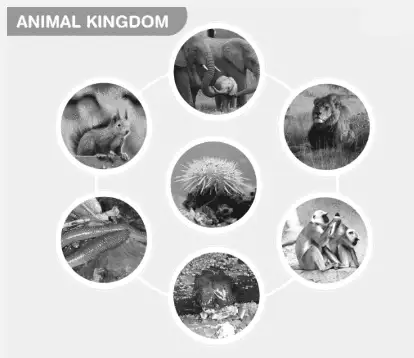
Illustration representing the diversity within the Animal Kingdom
Animals are distinguished from algae, plants, and fungi by their lack of cell walls and their heterotrophic mode of nutrition, digesting food internally. Most animals are motile at some stage of their life cycle, setting them apart from other kingdoms.
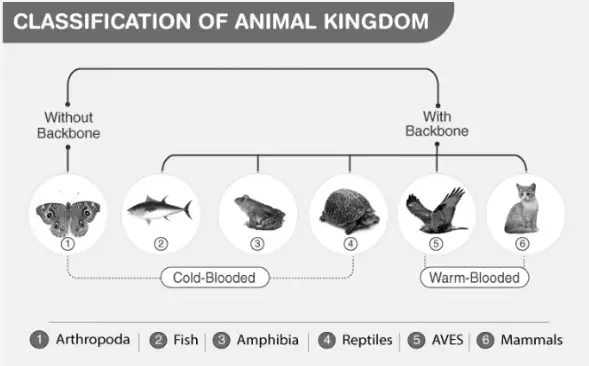
Classification framework of the Animal Kingdom based on key traits
Example Problem
Identify two key characteristics that differentiate animals from plants and fungi.
Solution:
Animals lack rigid cell walls, whereas plants and fungi have them.
Animals are heterotrophic and digest food internally, unlike plants which are autotrophic and fungi which absorb nutrients externally.
Exploring Protozoa and Bryozoans: Unique Animal Groups
Understanding Protozoa and Their Feeding Mechanisms
Protozoa are unicellular eukaryotes exhibiting animal-like traits such as movement and predation. They acquire nutrients through osmotrophy, absorbing dissolved substances across their membranes, or by phagocytosis, engulfing food particles using extensions called pseudopodia.
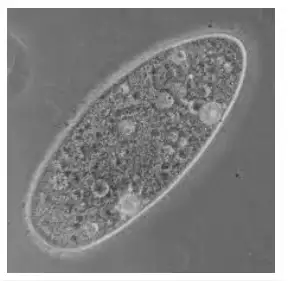
Microscopic image showcasing Protozoa
Example Problem
Explain how protozoa obtain their food and mention two methods involved.
Solution:
Protozoa absorb nutrients directly through their cell membrane by osmotrophy.
They also capture food particles by phagocytosis, using pseudopodia to engulf prey.
Characteristics and Lifestyle of Bryozoans
Bryozoans, often called moss animals, are mostly colonial filter feeders found in aquatic environments ranging from freshwater to deep marine trenches. They use a crown of ciliated tentacles to filter food particles from water. Individual units within colonies, called zooids, perform specialized functions such as feeding and excretion but are not independent organisms.
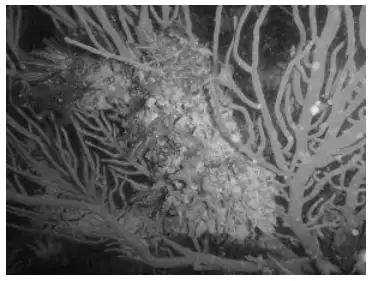
Colony of Bryozoans displaying tentacles used for feeding
Example Problem
Describe the feeding mechanism of bryozoans and explain the role of zooids in their colonies.
Solution:
Bryozoans filter food particles from water using ciliated tentacles arranged in a crown.
Zooids are individual members of the colony responsible for specific tasks like feeding and waste removal, but they cannot survive independently.
Vertebrate Diversity and Organizational Complexity
Classification and Features of Vertebrates
Vertebrates are animals characterized by the presence of a backbone. This group includes jawless fish, jawed fish such as sharks and ray-finned fish, amphibians, reptiles, birds, and mammals. They vary greatly in size, from tiny frogs like Paedophryne amanuensis to the massive blue whale. Vertebrates exhibit diverse adaptations such as amphibians' dual life in water and land, reptiles' scaly skin, birds' feathers, and mammals' varied habitats.
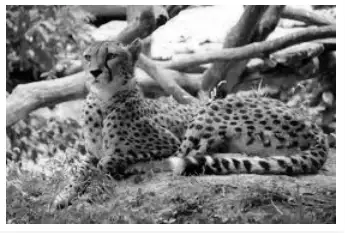
The image shows a cheetah lying on the ground in a natural setting with trees and branches around. Step-by-step explanation for high school students: 1. This is a cheetah, the fastest land animal. 2. It has a slender body with distinctive black spots on its fur. 3. The cheetah uses its speed to catch prey, like antelopes. 4. It often rests in shaded areas to save energy after running. 5. This image helps us understand the animal's appearance and natural behavior.
Examples of vertebrate animals across different classes
Example Problem
List three distinct characteristics that differentiate mammals from reptiles.
Solution:
Mammals have hair or fur, while reptiles have scaly skin.
Mammals are warm-blooded; reptiles are cold-blooded.
Mammals typically give birth to live young, whereas most reptiles lay eggs.
Levels of Structural Organization in Animals
Animals exhibit various levels of structural complexity:
Cellular Level: Organisms consist of loosely associated cells forming cell clusters.
Tissue Level: Cells with similar functions group to form tissues.
Organ Level: Tissues combine to form organs with specific functions, as seen in flatworms (Platyhelminthes).
Organ System Level: Organs organize into systems performing distinct physiological roles.
Example Problem
Explain the difference between tissue level and organ system level of organization with examples.
Solution:
Tissue level involves groups of similar cells working together, e.g., muscle tissue in worms.
Organ system level includes multiple organs working collectively, e.g., the digestive system in humans.
Patterns in Animal Body Systems and Symmetry
Animals display various body system arrangements and symmetry types:
Circulatory System: Open systems pump blood into body cavities (e.g., arthropods), while closed systems circulate blood through vessels (e.g., annelids).
Digestive System: Complete systems have two openings (mouth and anus), found in chordates; incomplete systems have a single opening serving both functions, as in flatworms.
Body Symmetry: Bilateral symmetry divides the body into mirror-image halves (e.g., humans), radial symmetry arranges body parts around a central axis (e.g., starfish), and asymmetry lacks any symmetry (e.g., sponges).
Example Problem
Classify the following animals based on their body symmetry: starfish, sponge, and earthworm.
Solution:
Starfish exhibits radial symmetry.
Sponge shows asymmetry.
Earthworm has bilateral symmetry.
Quick Reference Summary
Aspect | Key Features | Examples |
|---|---|---|
Protozoa | Unicellular, motile, feed by osmotrophy or phagocytosis | Amoeba, Paramecium |
Bryozoans | Colonial filter feeders with ciliated tentacles | Bugula, Plumatella |
Vertebrates | Backbone present, diverse classes with specialized features | Frogs, Birds, Mammals |
Circulatory System | Open (blood in cavities) and Closed (blood in vessels) | Arthropods (open), Annelids (closed) |
Digestive System | Complete (two openings) and Incomplete (one opening) | Chordates (complete), Platyhelminthes (incomplete) |
Body Symmetry | Bilateral, Radial, Asymmetrical | Earthworm (bilateral), Starfish (radial), Sponge (asymmetrical) |
Glossary of Key Terms
Term | Definition |
|---|---|
Animalia | The kingdom comprising multicellular, eukaryotic organisms that are heterotrophic and mostly motile. |
Phagocytosis | Process by which cells engulf solid particles to ingest food. |
Osmotrophy | Absorption of dissolved nutrients through the cell membrane. |
Zooid | An individual animal within a colonial organism, often specialized for certain functions. |
Vertebrate | Animals possessing a backbone or spinal column. |
Scutes | Thickened, horny or bony plates found on reptiles. |
Bilaterial Symmetry | Body plan where left and right halves are mirror images. |
Radial Symmetry | Body plan arranged around a central axis, like spokes on a wheel. |
Asymmetry | Lack of any symmetry in body structure. |
Complete Digestive System | Digestive tract with two separate openings: mouth and anus. |
Frequently Asked Questions
What distinguishes animals from plants and fungi?
Animals lack cell walls, are heterotrophic with internal digestion, and are generally motile, unlike plants and fungi.
How do protozoa differ from other animals?
Protozoa are unicellular and exhibit animal-like behaviors such as movement and predation, feeding via osmotrophy or phagocytosis.
What are the main types of body symmetry in animals?
Animals can have bilateral symmetry, radial symmetry, or be asymmetrical, depending on their body plan.
What is the difference between open and closed circulatory systems?
Open systems pump blood into body cavities, while closed systems circulate blood entirely within vessels.
Why is the digestive system called complete or incomplete?
A complete digestive system has two openings (mouth and anus), whereas an incomplete system has a single opening serving both functions.