Understanding Allergic Reactions and Autoimmune Disorders
Immune System Responses: Allergies and Autoimmune Conditions
Mechanisms Behind Allergic Reactions
Allergic reactions occur when the immune system overreacts to harmless environmental substances known as allergens. These allergens can include pollen, dust mites, animal dander, certain foods, and latex. The immune system produces a specific antibody called immunoglobulin E (IgE) in response to these allergens, triggering the release of chemicals like histamine and serotonin. This chemical release causes symptoms such as sneezing, itching, watery eyes, rashes, and breathing difficulties. Allergies primarily affect the skin and mucous membranes but can involve multiple organs.
Modern lifestyles and weakened immunity have increased the prevalence of allergies worldwide. Treatment often involves antihistamines, steroids, and in severe cases, adrenaline injections to counteract life-threatening reactions.
Visual representation of allergies and autoimmune responses
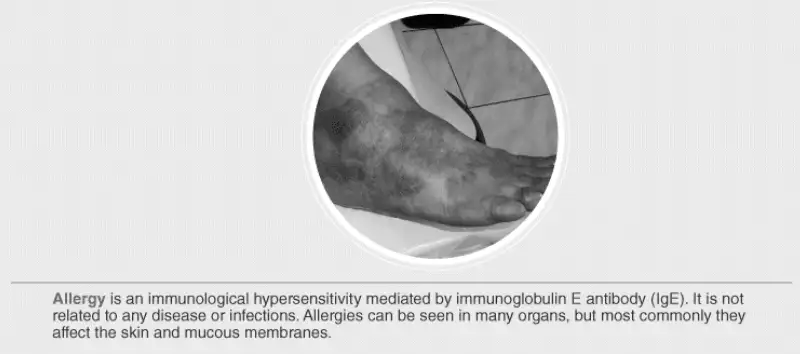
This image shows a swollen foot with visible skin discoloration, likely due to an allergic reaction. Below the image is text explaining that an allergy is an immune system hypersensitivity caused by the immunoglobulin E (IgE) antibody, mainly affecting skin and mucous membranes. Step-by-step explanation for high school students: 1. An allergy happens when the body's immune system overreacts to something harmless, like pollen or certain foods. 2. The immune system makes a special antibody called IgE. 3. This antibody triggers symptoms like swelling, redness, or itching, usually on the skin or mucous membranes. 4. Allergies are not caused by infections or diseases but by this immune response. 5. The swelling in the foot seen here is a possible sign of such an allergic reaction.
Understanding Autoimmune Disorders
Autoimmunity arises when the immune system mistakenly targets the body's own healthy cells and tissues, leading to autoimmune diseases. Normally, the immune system distinguishes between self and foreign cells through acquired immunity and memory. However, genetic factors or unknown triggers can cause this self-reactivity. Common autoimmune diseases include rheumatoid arthritis, Addison’s disease, Graves’ disease, and polymyositis.
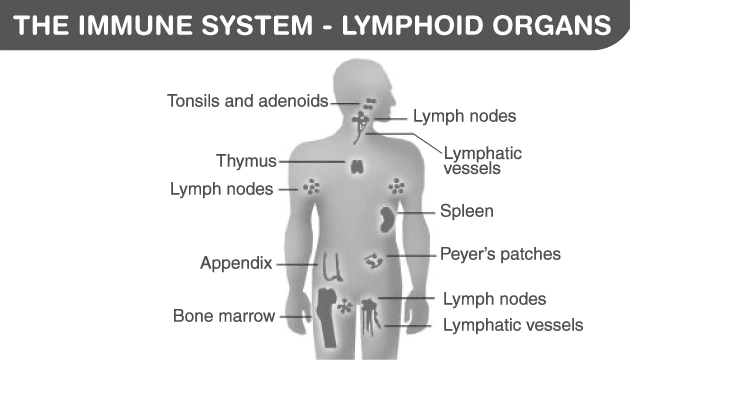
Lymphoid organs playing a role in immune system function
Example Problem: Identifying Autoimmune Disease Symptoms
A patient reports persistent joint pain, swelling, and fatigue. Blood tests reveal antibodies attacking joint tissues. Identify the likely autoimmune condition and explain the immune response involved.
Solution:
The symptoms suggest rheumatoid arthritis, an autoimmune disorder where the immune system attacks joint linings.
Autoantibodies target synovial membranes, causing inflammation and tissue damage.
This leads to pain, swelling, and reduced joint function.
Comparing Allergic and Autoimmune Responses
Both allergies and autoimmune diseases involve heightened immune activity, but their triggers and targets differ. Allergies are reactions to external substances, while autoimmunity involves the immune system attacking the body's own cells. Common symptoms such as fatigue, itching, redness, and swelling can appear in both conditions due to immune activation.
Example Problem: Distinguishing Between Allergy and Autoimmunity
A patient experiences skin redness and itching after exposure to pet dander. Another patient has joint inflammation without exposure to allergens. Explain which condition each patient likely has and why.
Solution:
The first patient likely has an allergy triggered by pet dander, an external allergen.
The second patient’s joint inflammation without allergen exposure suggests an autoimmune disease.
Allergies involve IgE antibodies reacting to foreign substances; autoimmunity involves immune attack on self-tissues.
Summary Table: Allergies vs Autoimmune Diseases
Aspect | Allergies | Autoimmune Diseases |
|---|---|---|
Cause | Immune reaction to external allergens | Immune attack on body's own cells |
Antibody Involved | Immunoglobulin E (IgE) | Autoantibodies targeting self-antigens |
Common Symptoms | Sneezing, itching, rashes, watery eyes | Joint pain, fatigue, swelling, organ dysfunction |
Treatment | Antihistamines, steroids, adrenaline | Immunosuppressants, anti-inflammatory drugs |
Examples | Hay fever, food allergies, eczema | Rheumatoid arthritis, Graves’ disease, Addison’s disease |
Key Terms and Definitions
Term | Definition |
|---|---|
Allergen | A normally harmless substance that triggers an allergic reaction. |
Immunoglobulin E (IgE) | An antibody involved in allergic responses. |
Autoimmunity | Immune system attacking the body's own healthy cells. |
Autoimmune Disease | A disorder caused by immune responses against self-tissues. |
Histamine | A chemical released during allergic reactions causing symptoms. |
Antihistamine | A drug that blocks histamine effects to relieve allergy symptoms. |
Adrenaline (Epinephrine) | A hormone used to treat severe allergic reactions. |
Rheumatoid Arthritis | An autoimmune disease affecting joints causing inflammation. |
Acquired Immunity | Immune system's ability to recognize and remember specific pathogens. |
Antibody | A protein produced by the immune system to identify and neutralize foreign objects. |
Frequently Asked Questions
What defines an allergic reaction?
An allergic reaction is an immune system response triggered by harmless substances called allergens, involving IgE antibodies and chemical mediators like histamine.
How does autoimmunity differ from allergies?
Autoimmunity involves the immune system attacking the body's own cells, whereas allergies are reactions to external substances.
What is an autoimmune disease?
It is a condition where the immune system mistakenly targets and damages healthy body tissues.
Can allergies and autoimmune diseases have similar symptoms?
Yes, both can cause symptoms like itching, redness, and fatigue due to immune system activation.
What are common treatments for allergies and autoimmune disorders?
Allergies are treated with antihistamines, steroids, and adrenaline in severe cases; autoimmune diseases often require immunosuppressive medications.