Understanding Adaptations in Living Organisms
How Organisms Adjust to Their Surroundings
Defining Adaptation in Nature
Adaptation refers to the process by which living beings modify their physical features and behaviours to thrive in their specific environments. This dynamic adjustment enables survival amid varying climatic and ecological conditions. With millions of species worldwide, each has evolved unique traits to fit their habitats effectively.
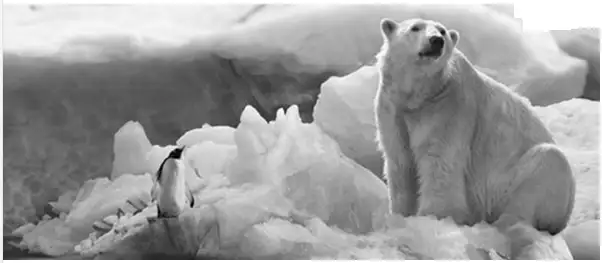
For example, desert dwellers like camels and cacti have developed mechanisms to endure extreme heat and dryness, while polar bears possess thick fur to withstand freezing temperatures.
Adaptations of Animals To Climate Change
Example Problem
A species of lizard lives in a desert where daytime temperatures reach up to 45°C and nights drop to 10°C. Describe how this lizard might adapt structurally and behaviourally to survive these temperature extremes.
Solution:
Structural Adaptation: The lizard may have light-colored skin to reflect sunlight and reduce heat absorption during the day.
Behavioural Adaptation: It might be active during cooler parts of the day, such as early morning or late evening, and seek shelter underground during peak heat.
Distinct Forms of Adaptations in Flora and Fauna
Physical Traits That Enhance Survival
Structural adaptations involve changes in an organism’s body parts that improve its chances of survival. These include modifications in shape, color, or texture that help in camouflage, protection, or obtaining food.
For instance, whales possess baleen plates that act as filters to trap small sea creatures, while woodpeckers have strong, pointed beaks to drill into trees and find insects.
Example Problem
A bird species has developed a curved beak suited for extracting nectar from flowers. Explain how this structural adaptation benefits the bird.
Solution:
The curved beak allows the bird to reach deep into flowers to access nectar, which is a primary food source.
This adaptation also aids in pollination, as the bird transfers pollen while feeding.
Such specialization reduces competition for food by exploiting a unique resource.
Behavioural Changes to Cope with Environment
Behavioural adaptations are actions or habits developed by organisms to survive environmental challenges. These include migration, hibernation, dormancy, and camouflage behaviours.
Examples include bears and bats hibernating during winter to conserve energy, birds migrating to warmer regions when food is scarce, and plants entering dormancy to pause growth during unfavorable conditions.
Example Problem
Explain why some bird species migrate seasonally and how this behaviour helps their survival.
Solution:
Migration allows birds to move to areas with more abundant food and suitable climate.
It helps avoid harsh weather conditions that could threaten their survival.
This behaviour ensures access to breeding grounds and resources necessary for raising offspring.
Internal Mechanisms Supporting Adaptation
Physiological Adjustments in Organisms
Physiological adaptations involve internal changes at the cellular or organ level that enable organisms to cope with environmental stresses. These include alterations in metabolism, hormone levels, and cellular functions.
Examples include venom production in certain animals for defense or hunting, thick fur to retain heat in cold climates, and the ability of desert animals to store water efficiently within their cells.
Adaptations of Animals To Hot Deserts
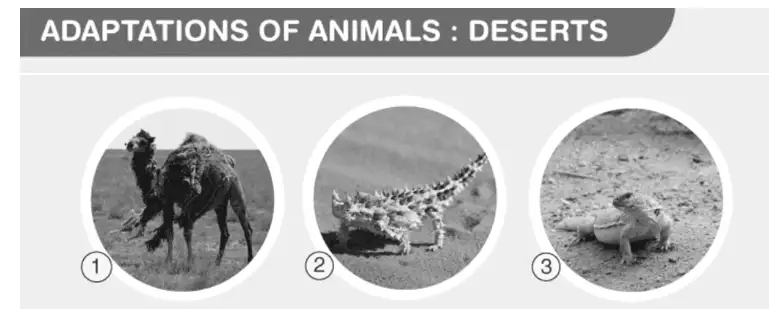
Plants in arid regions also show physiological adaptations, such as cacti storing water in their stems and having reduced leaves to minimize water loss.
Humans exhibit physiological adaptations too, like acclimatization to high altitudes by increasing red blood cell production.
Example Problem
A desert rodent can survive long periods without drinking water. Describe the physiological adaptations that enable this survival.
Solution:
The rodent’s kidneys concentrate urine to reduce water loss.
Its cells can tolerate dehydration by shrinking without damage.
It stores fat in its tail or body, which metabolizes to produce water internally.
Quick Reference: Summary of Adaptation Types
Adaptation Type | Description | Example |
|---|---|---|
Structural | Physical features that aid survival | Whale’s baleen plates filtering food |
Behavioural | Actions or habits developed to survive | Bird migration to warmer climates |
Physiological | Internal body processes and functions | Venom production in snakes |
Glossary of Key Terms
Term | Meaning |
|---|---|
Adaptation | Changes in organisms to survive in their environment |
Camouflage | Coloration or pattern that helps organisms blend with surroundings |
Hibernation | A state of inactivity during cold seasons to conserve energy |
Migration | Seasonal movement of animals to favorable habitats |
Dormancy | Temporary suspension of growth or activity in plants or animals |
Physiological Adaptation | Internal functional changes aiding survival |
Structural Adaptation | Physical body modifications for survival |
Behavioural Adaptation | Changes in behaviour to cope with environment |
Baleen | Filter-feeding system in whales |
Venom | Poison produced by some animals for defense or hunting |
Frequently Asked Questions
What is the main purpose of adaptation in living organisms?
Adaptation helps organisms survive and reproduce by adjusting their physical traits or behaviours to environmental conditions.
How does camouflage benefit animals?
Camouflage allows animals to blend into their surroundings, helping them avoid predators or sneak up on prey.
Can plants also show behavioural adaptations?
Yes, plants exhibit behaviours like dormancy, where growth pauses during unfavorable conditions to conserve resources.
What is an example of physiological adaptation in humans?
Humans acclimatize to high altitudes by producing more red blood cells to improve oxygen transport.
Why do some animals hibernate?
Hibernation helps animals conserve energy and survive periods when food is scarce and temperatures are low.