Fundamentals of Carbon-Based Compounds
Classification and Characteristics of Carbon Compounds
Understanding Saturated Carbon Molecules
Carbon atoms can bond with hydrogen and other carbon atoms to form compounds where all carbon-carbon connections are single bonds. These compounds, known as saturated hydrocarbons or alkanes, have carbon atoms linked in chains or rings without any double or triple bonds. A typical example is ethane, which consists of two carbon atoms connected by a single bond and bonded to six hydrogen atoms to fulfill carbon's valency.

Example Problem
Calculate the number of hydrogen atoms in a saturated hydrocarbon with three carbon atoms arranged in a straight chain.
Solution: For saturated hydrocarbons (alkanes), the general formula is \( C_nH_{2n+2} \).
Given \( n = 3 \), number of hydrogen atoms is:
\[ 2 \times 3 + 2 = 8 \]
Therefore, the molecular formula is \( C_3H_8 \), which corresponds to propane.
Exploring Unsaturated Carbon Compounds
When carbon atoms form double or triple bonds with each other, the resulting compounds are called unsaturated hydrocarbons. These include alkenes, which contain at least one carbon-carbon double bond, and alkynes, which have at least one triple bond. For instance, ethene is an alkene with two carbon atoms connected by a double bond and four hydrogen atoms.

Example Problem
Determine the molecular formula of an alkyne with four carbon atoms arranged in a straight chain.
Solution: Alkynes follow the general formula \( C_nH_{2n-2} \).
For \( n = 4 \), the number of hydrogen atoms is:
\[ 2 \times 4 - 2 = 6 \]
Thus, the molecular formula is \( C_4H_6 \), which corresponds to butyne.
Unique Bonding and Chain Formation in Carbon
The Role of Catenation in Carbon Chemistry
Carbon's remarkable ability to form long chains and rings by bonding with other carbon atoms is known as catenation. This property allows carbon to create complex molecules with diverse structures. Additionally, carbon can form multiple bonds (double and triple) with itself and other electronegative elements such as oxygen and nitrogen through pπ-pπ overlap, enhancing molecular diversity.
Example Problem
Explain why carbon can form a variety of allotropes based on its bonding capabilities.
Answer:
- Carbon atoms can bond to each other forming chains and rings (catenation).
- It can form single, double, and triple bonds due to pπ-pπ bonding.
- These bonding variations lead to different structural arrangements, resulting in allotropes like diamond, graphite, and graphene.
Structural Variations and Occurrence of Carbon Compounds
Forms of Carbon Compound Arrangements
Carbon compounds exist in several structural forms based on how carbon atoms are connected:
- Straight Chains: Carbon atoms linked in a linear sequence without branches, typical of low molecular weight hydrocarbons like propane.
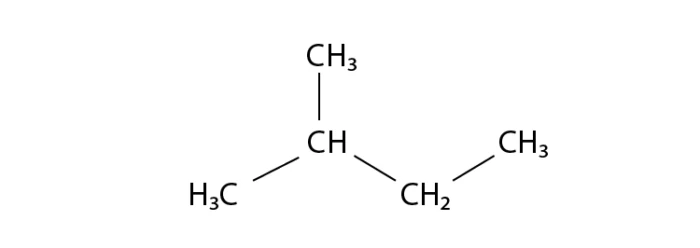
- Branched Chains: Carbon atoms connected such that some atoms bond to more than two carbons, common in higher molecular weight hydrocarbons like isopentane.
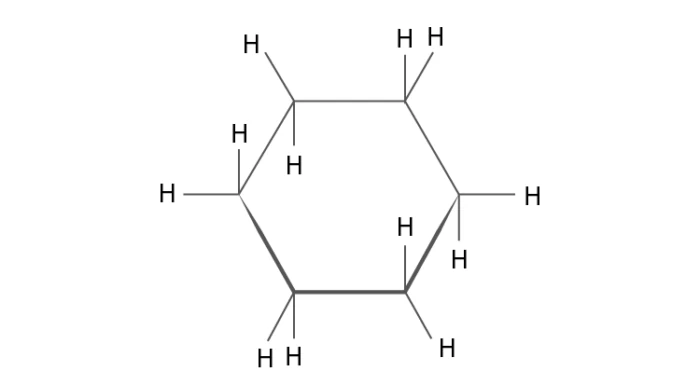
- Cyclic Structures: Carbon atoms arranged in closed loops or rings, forming cyclic compounds such as cyclohexane.
Example Problem
Identify the type of carbon compound formed when six carbon atoms are connected in a closed ring with single bonds.
Solution: When six carbon atoms form a closed loop with single bonds, the compound is cyclic and saturated. This structure corresponds to cyclohexane, a cyclic alkane.
Bonding Hybridization in Carbon Molecules
Explaining the Hybridization in Ethene
In molecules like ethene (C2H4), each carbon atom forms three sigma bonds and one pi bond due to the presence of a double bond between the carbons. This bonding arrangement requires sp2 hybridization, where one s orbital mixes with two p orbitals to form three sp2 hybrid orbitals, leaving one unhybridized p orbital to form the pi bond.
Example Problem
Why is sp2 hybridization necessary to describe bonding in ethene?
Answer:
- Each carbon in ethene is bonded to three atoms (two hydrogens and one carbon).
- To accommodate three sigma bonds, carbon undergoes sp2 hybridization.
- The remaining unhybridized p orbital forms a pi bond with the adjacent carbon, creating the double bond.
Quick Reference: Key Points on Carbon Compounds
| Aspect | Description | Example |
|---|---|---|
| Saturated Hydrocarbons | Carbon atoms connected by single bonds only | Ethane (C2H6) |
| Unsaturated Hydrocarbons | Contain double or triple carbon-carbon bonds | Ethene (C2H4), Butyne (C4H6) |
| Catenation | Ability of carbon to form chains and rings | Long carbon chains, cyclic compounds |
| Hybridization | Mixing of atomic orbitals to form new hybrid orbitals | sp3 in alkanes, sp2 in alkenes |
| Structural Forms | Straight chains, branched chains, cyclic rings | Propane, Isopentane, Cyclohexane |
Glossary of Important Terms
| Term | Definition |
|---|---|
| Alkane | A saturated hydrocarbon with single bonds only |
| Alkene | An unsaturated hydrocarbon containing at least one double bond |
| Alkyne | An unsaturated hydrocarbon with at least one triple bond |
| Catenation | The ability of carbon atoms to bond with each other forming chains and rings |
| Hybridization | The mixing of atomic orbitals to form new hybrid orbitals |
| Pi Bond (π bond) | A bond formed by the sideways overlap of p orbitals |
| Sigma Bond (σ bond) | A bond formed by the head-on overlap of orbitals |
| Unsaturated Hydrocarbon | Hydrocarbon containing double or triple bonds |
| Cyclic Compound | A compound where carbon atoms form a closed ring |
| Valency | The combining capacity of an atom |
Frequently Asked Questions
What defines a saturated carbon compound?
Saturated carbon compounds have carbon atoms connected exclusively by single bonds, with hydrogen atoms filling the remaining valencies.
How does catenation influence carbon chemistry?
Catenation allows carbon atoms to form long chains and rings, enabling the creation of a vast variety of organic molecules.
Why is sp2 hybridization important in ethene?
Because each carbon in ethene forms three sigma bonds and one pi bond, sp2 hybridization explains the bonding and geometry of the molecule.
What is the difference between alkanes and alkenes?
Alkanes are saturated hydrocarbons with single bonds, while alkenes are unsaturated hydrocarbons containing at least one double bond.
How are cyclic carbon compounds formed?
Cyclic compounds form when carbon atoms bond in a closed loop, creating ring structures such as cyclohexane.