CLASS 9 . SCIENCE . EXPLORATION . EXPLORING MIXTURES-AND-THEIR-SEPARATION
Chapter 5 : Exploring Mixtures and their Separation
Ch 5
SCIENCE
CLASS 9
Mixtures Classification
Homogeneous Mixtures
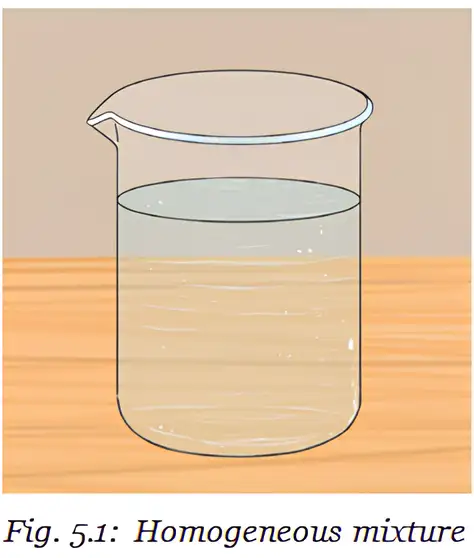
Homogeneous mixtures have uniform composition throughout. The solute dissolves completely in the solvent, making the mixture look the same everywhere. Examples include sugar dissolved in water, vinegar, and soda. These mixtures are also called solutions.
Heterogeneous Mixtures
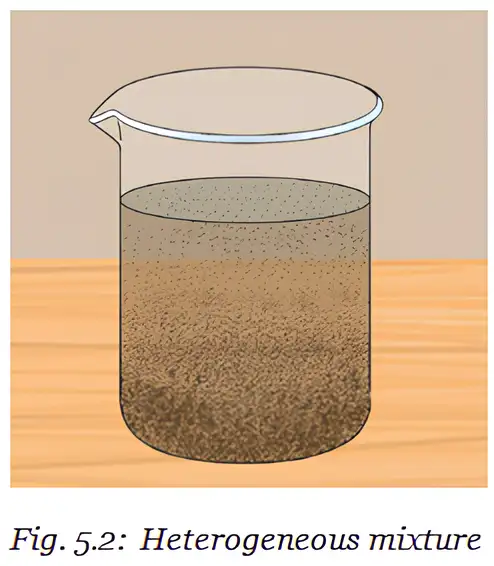
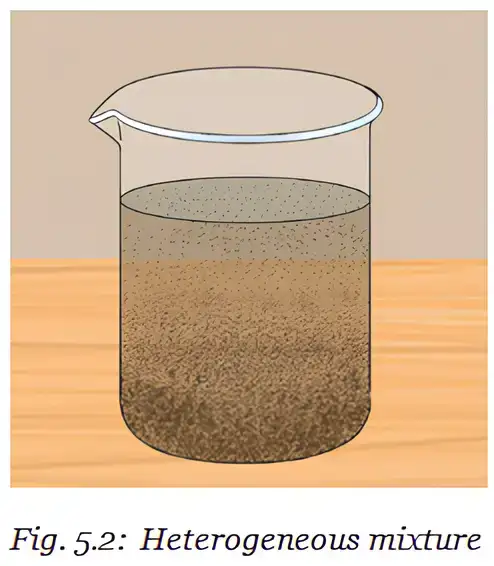
Heterogeneous mixtures have non-uniform composition. The different components are visible and may settle over time. Examples include sand in water and oil in water. These mixtures show separate parts distinctly.
Solved Examples
Example: Identify whether the following mixtures are homogeneous or heterogeneous: (a) Salt dissolved in water, (b) Sand in water.
Solution:
(a) Salt dissolves completely in water forming a uniform solution, so it is homogeneous.
(b) Sand particles do not dissolve and settle in water, so it is heterogeneous.
Practice Set
- Level 1: Define homogeneous and heterogeneous mixtures with examples.
- Level 2: Explain why oil and water form a heterogeneous mixture.
- Level 3: Describe how you would separate a mixture of sand and water.
Answer Key
- Level 1: Homogeneous mixtures have uniform composition (e.g., sugar in water). Heterogeneous mixtures have visible different parts (e.g., sand in water).
- Level 2: Oil and water do not mix due to different densities and polarities, forming separate layers.
- Level 3: Use filtration to separate sand from water as sand settles and can be filtered out.
Concentration of Solutions
Definition and Importance
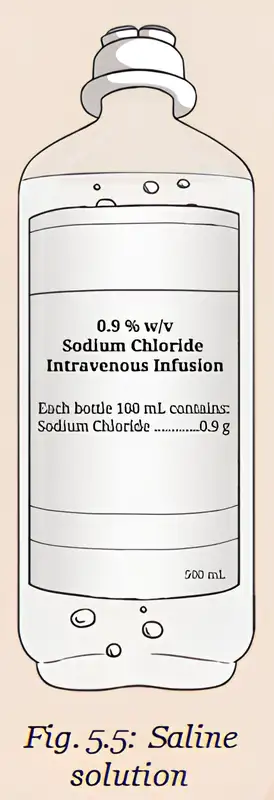
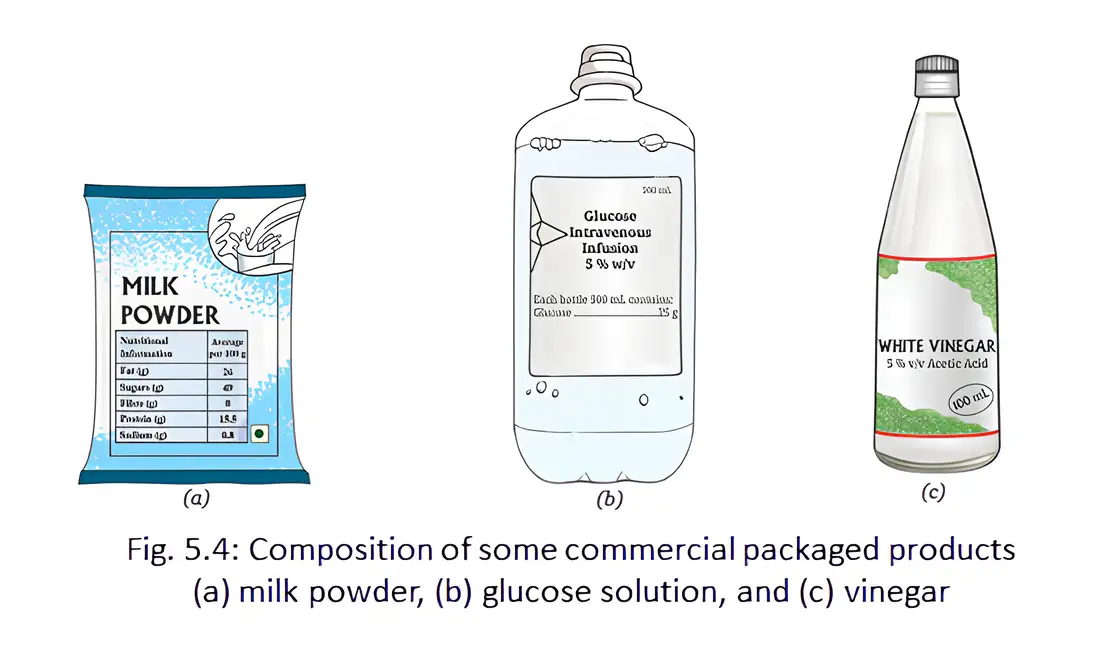
Concentration is the amount of solute dissolved in a given amount of solvent or solution. It is important to prepare solutions with correct proportions, such as Oral Rehydration Solution (ORS) or pesticide sprays, to ensure effectiveness and safety.
Methods to Express Concentration
Concentration can be expressed as:
- Mass by mass percentage (% m/m): grams of solute per 100 grams of solution.
- Mass by volume percentage (% m/v): grams of solute per 100 millilitres of solution.
- Volume by volume percentage (% v/v): millilitres of solute per 100 millilitres of solution.
Solved Examples
Example 1: Calculate mass by mass percentage if 10 g salt is dissolved in 90 g water.
Solution:
Total mass = 10 g + 90 g = 100 g
Mass by mass % = (10/100) × 100 = 10%
Example 2: Calculate mass by volume percentage if 5 g glucose is dissolved in 100 mL solution.
Solution:
Mass by volume % = (5/100) × 100 = 5%
Example 3: Calculate volume by volume percentage if 1 mL pesticide is mixed in 100 mL solution.
Solution:
Volume by volume % = (1/100) × 100 = 1%
Practice Set
- Level 1: What is concentration in a solution?
- Level 2: Calculate the mass by mass percentage if 15 g salt is dissolved in 85 g water.
- Level 3: A juice concentrate of 30 mL is mixed with 270 mL water. Calculate the % v/v concentration of the juice.
Answer Key
- Level 1: Concentration is the amount of solute dissolved in a given amount of solvent or solution.
- Level 2: Total mass = 15 + 85 = 100 g; % m/m = (15/100) × 100 = 15%
- Level 3: % v/v = (30/300) × 100 = 10%
Solubility and Crystallization
Solubility
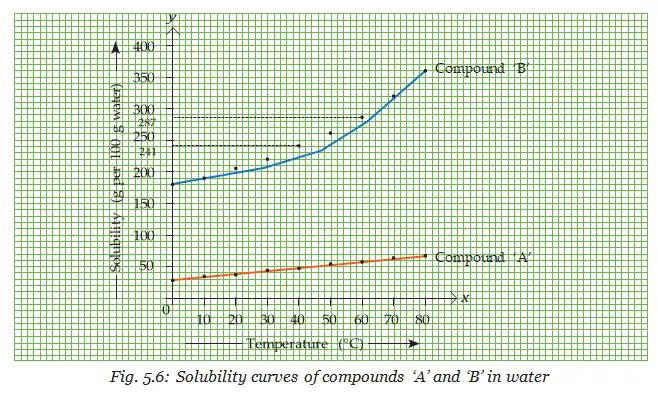
Solubility is the maximum amount of solute that can dissolve in a fixed amount of solvent at a given temperature. It varies with temperature; generally, solubility of solids increases with temperature, while gases decrease.
Crystallization
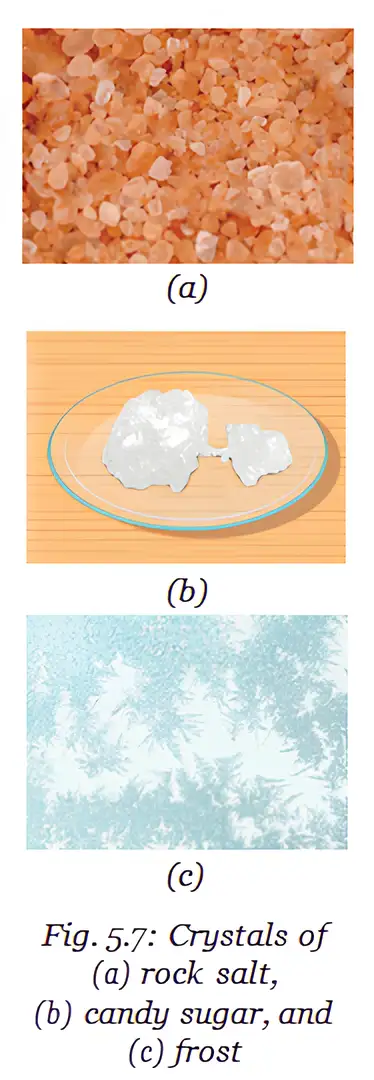
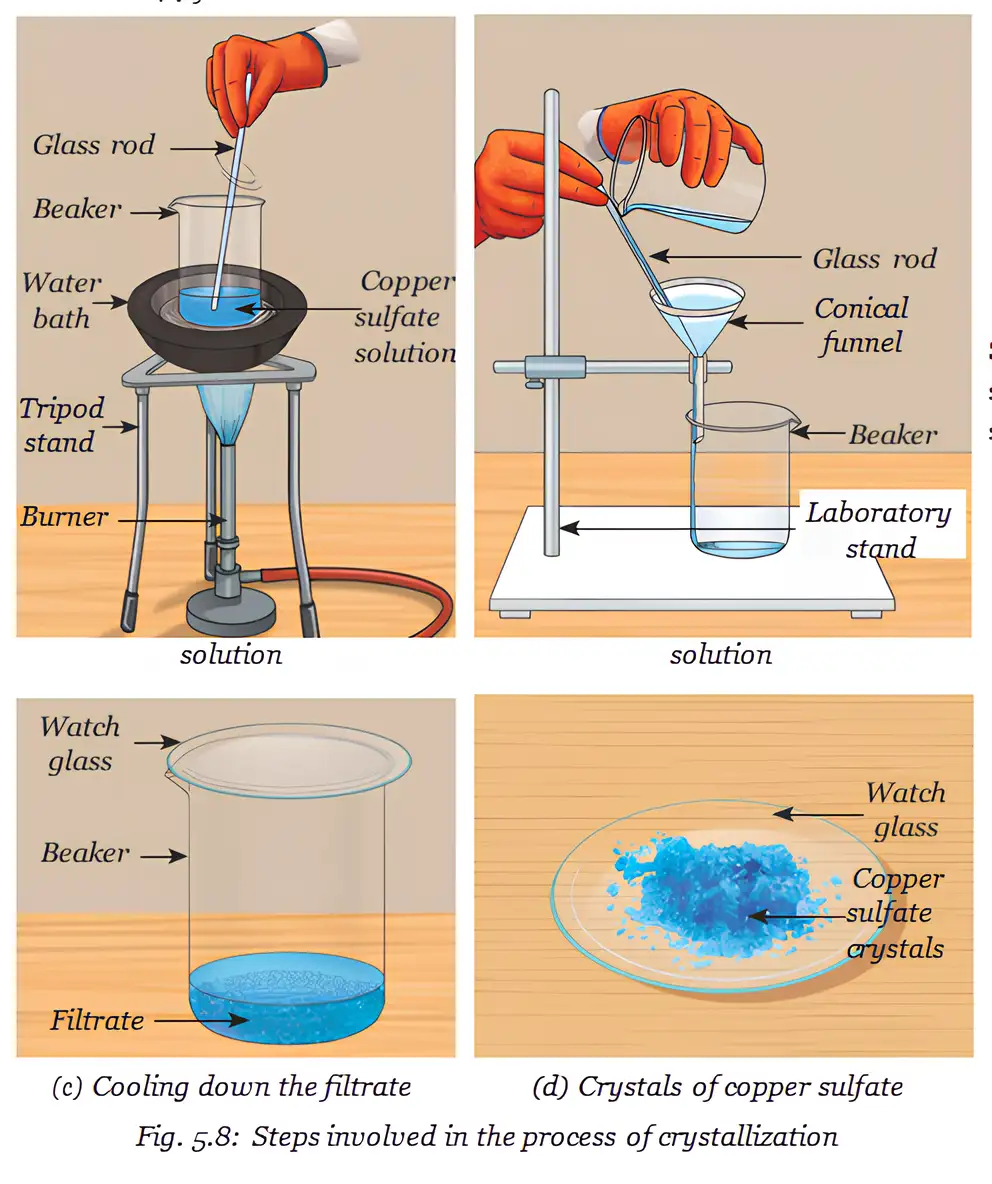
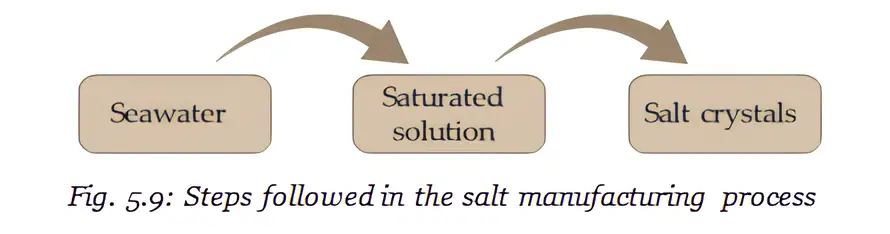
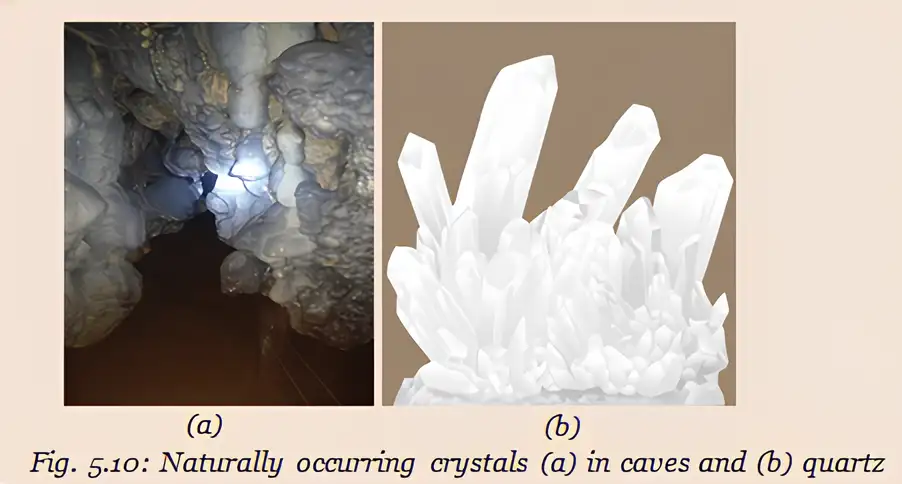
Crystallization is the process of forming pure solid crystals from a saturated solution by cooling. It is used to purify substances and separate solids from mixtures.
Solved Examples
Example: If 287 g of compound B is dissolved in 100 g water at 60 °C and cooled to 40 °C where solubility is 241 g, how much solid crystallizes?
Solution:
Amount crystallized = 287 g - 241 g = 46 g
Practice Set
- Level 1: Define solubility.
- Level 2: Explain why solubility changes with temperature.
- Level 3: Describe the crystallization process to obtain pure crystals.
Answer Key
- Level 1: Solubility is the maximum amount of solute that dissolves in a solvent at a given temperature.
- Level 2: Solubility changes because temperature affects the ability of solvent to dissolve solute; solids usually dissolve more at higher temperatures.
- Level 3: Heat to prepare saturated solution, filter impurities, cool slowly to form crystals, then collect and dry crystals.
Distillation
Process Explanation
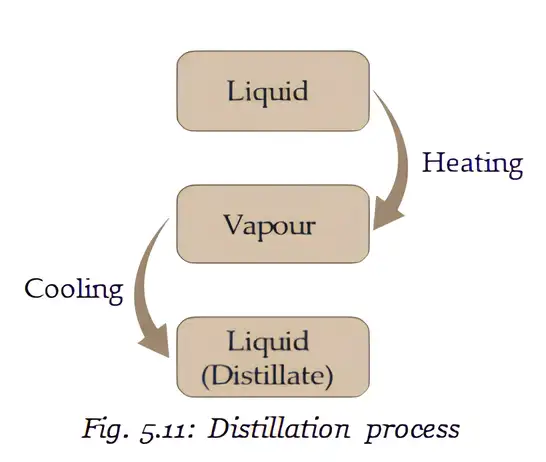
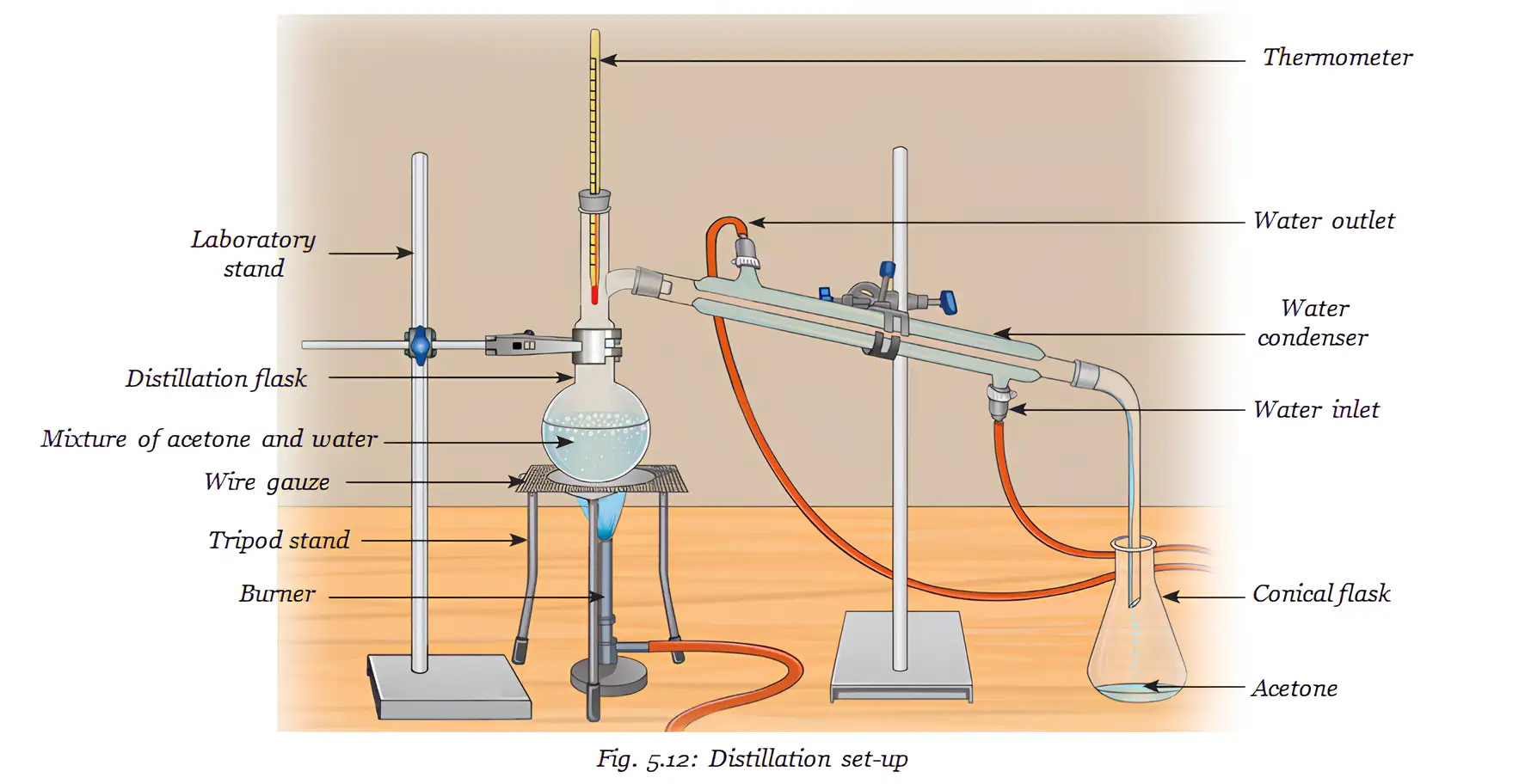
Distillation separates two miscible liquids with different boiling points by heating the mixture to vaporize the lower boiling liquid, then cooling the vapor to collect it as a pure liquid.
Applications
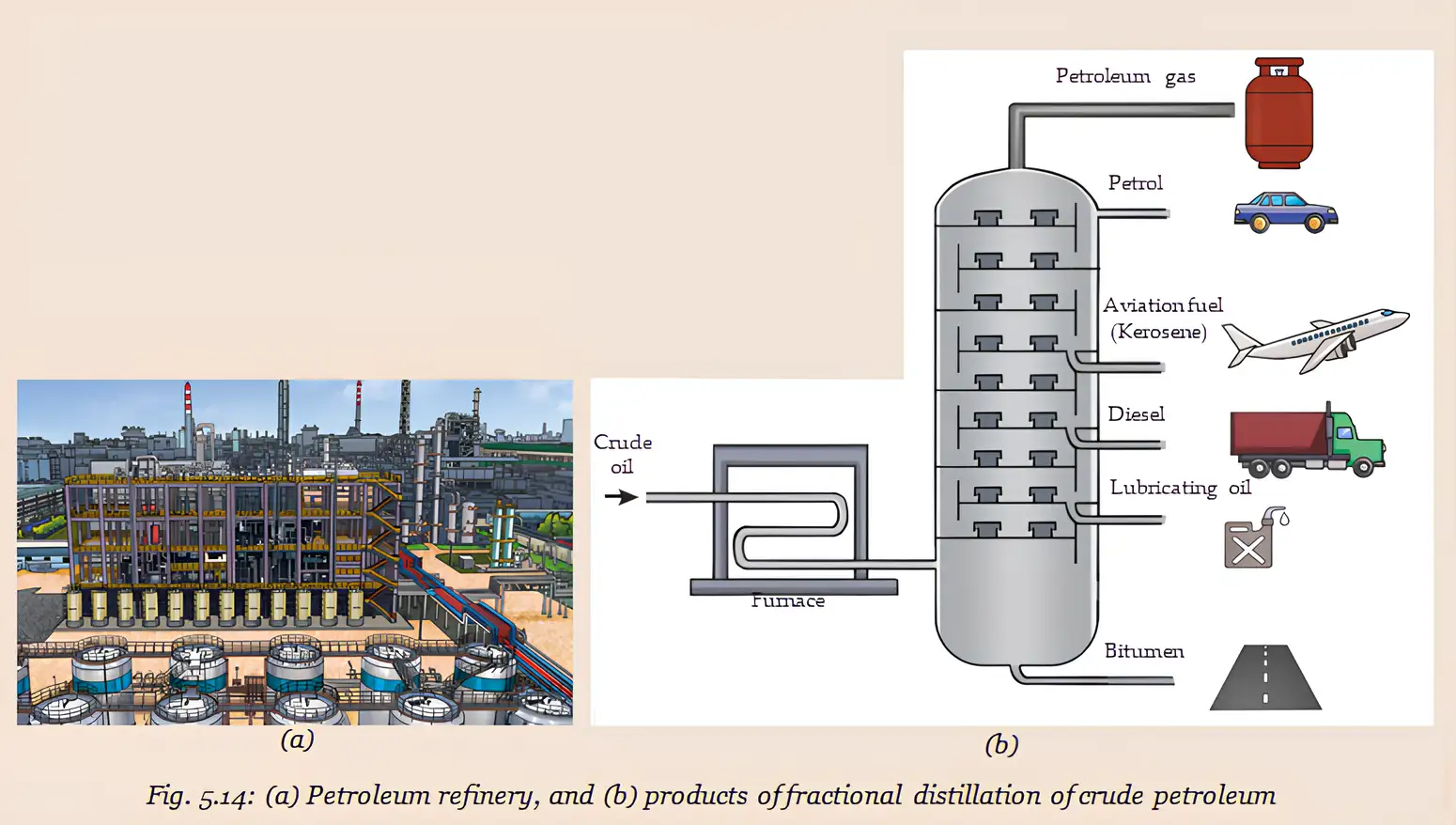
Used to purify liquids, separate acetone from water, and in petroleum refining to separate crude oil into fractions.
Solved Examples
Example: Separate acetone (boiling point 56 °C) from water (100 °C) by distillation.
Solution:
Heat mixture to about 56 °C, acetone vaporizes first, vapor is cooled and collected separately, leaving water behind.
Practice Set
- Level 1: What is distillation?
- Level 2: Why can acetone and water be separated by distillation?
- Level 3: Explain fractional distillation in petroleum refining.
Answer Key
- Level 1: Distillation is heating a liquid mixture to separate components based on boiling points.
- Level 2: Because acetone and water have different boiling points, acetone vaporizes first.
- Level 3: Fractional distillation separates crude oil into fractions by boiling point differences in a distillation column.
Paper Chromatography
Principle and Method
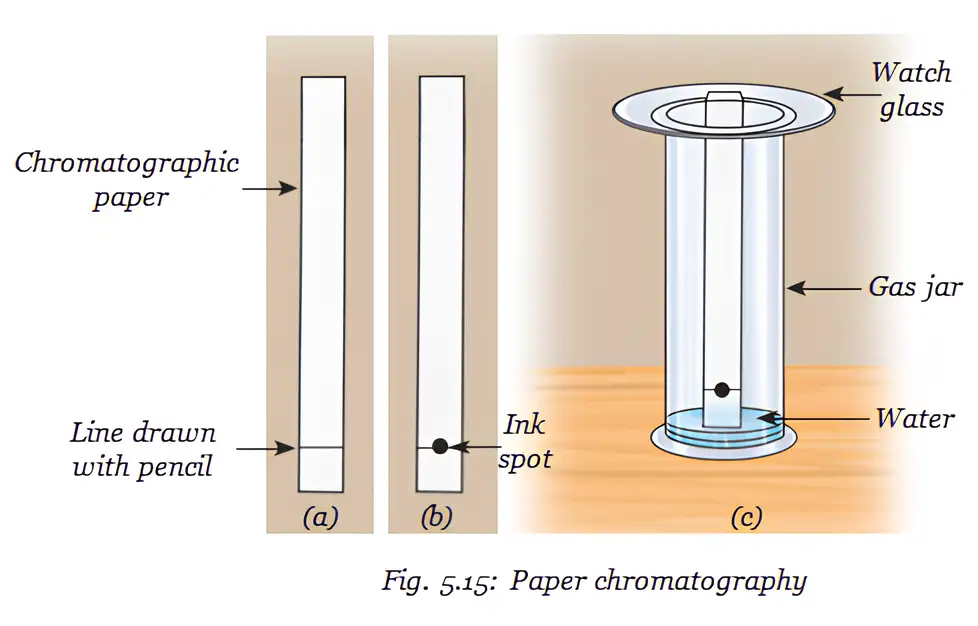
Paper chromatography separates components of a mixture based on their different rates of movement on paper with a solvent. The solvent carries substances up the paper, separating them by speed.
Applications
Used to separate pigments in inks, dyes, and plant extracts.
Solved Examples
Example: Separate black ink components using paper chromatography.
Solution:
Draw a pencil line on paper, place ink spot, dip paper in solvent, observe separated colors as solvent rises.
Practice Set
- Level 1: What is paper chromatography?
- Level 2: Why is the pencil line used instead of pen?
- Level 3: How would you separate pigments from flower petals?
Answer Key
- Level 1: A method to separate mixture components based on movement on paper with solvent.
- Level 2: Pencil does not dissolve in solvent, pen ink may interfere with results.
- Level 3: Extract pigments with solvent, apply on paper, run chromatography to separate colors.
Separating Immiscible Liquids
Method Using Separating Funnel
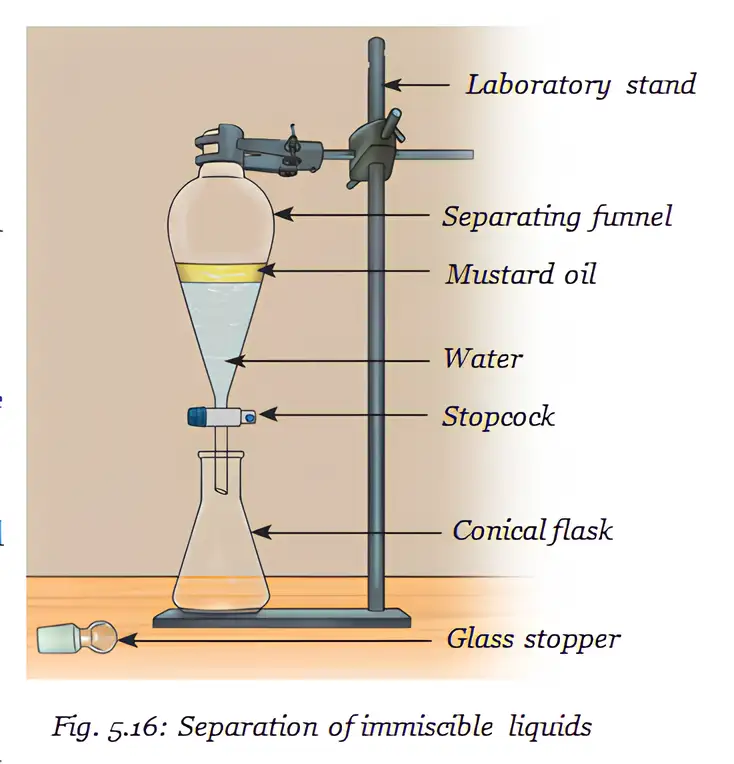
Immiscible liquids like oil and water form separate layers due to different densities. A separating funnel allows collection of each layer separately by draining the denser liquid first.
Solved Examples
Example: Separate mustard oil and water using a separating funnel.
Solution:
Pour mixture in funnel, allow layers to form, open stopcock to drain water layer, then collect oil layer.
Practice Set
- Level 1: What are immiscible liquids?
- Level 2: Why do oil and water separate into layers?
- Level 3: Describe the steps to separate two immiscible liquids.
Answer Key
- Level 1: Liquids that do not mix and form separate layers.
- Level 2: Due to differences in density and polarity, they do not mix.
- Level 3: Use separating funnel, allow layers to settle, drain bottom layer, collect top layer.
Sublimation
Process Explanation
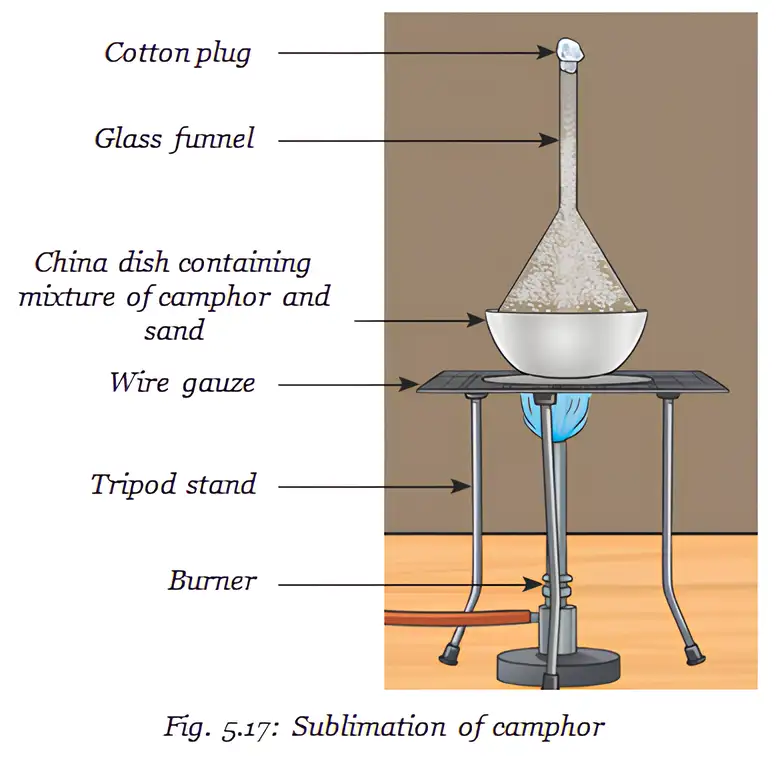
Sublimation is the transition of a solid directly into vapor without becoming liquid, and deposition is the reverse. Camphor and naphthalene undergo sublimation.
Applications
Used to separate substances like camphor from sand.
Solved Examples
Example: Separate camphor from sand by sublimation.
Solution:
Heat mixture gently, camphor vaporizes and deposits on cooler surface, sand remains.
Practice Set
- Level 1: Define sublimation.
- Level 2: How does sublimation help in separation?
- Level 3: Suggest other substances that can be separated by sublimation.
Answer Key
- Level 1: Sublimation is solid changing directly to vapor without liquid phase.
- Level 2: Sublimable substances vaporize leaving non-sublimable solids behind.
- Level 3: Naphthalene, dry ice can be separated by sublimation.
Suspensions and Colloids
Suspensions
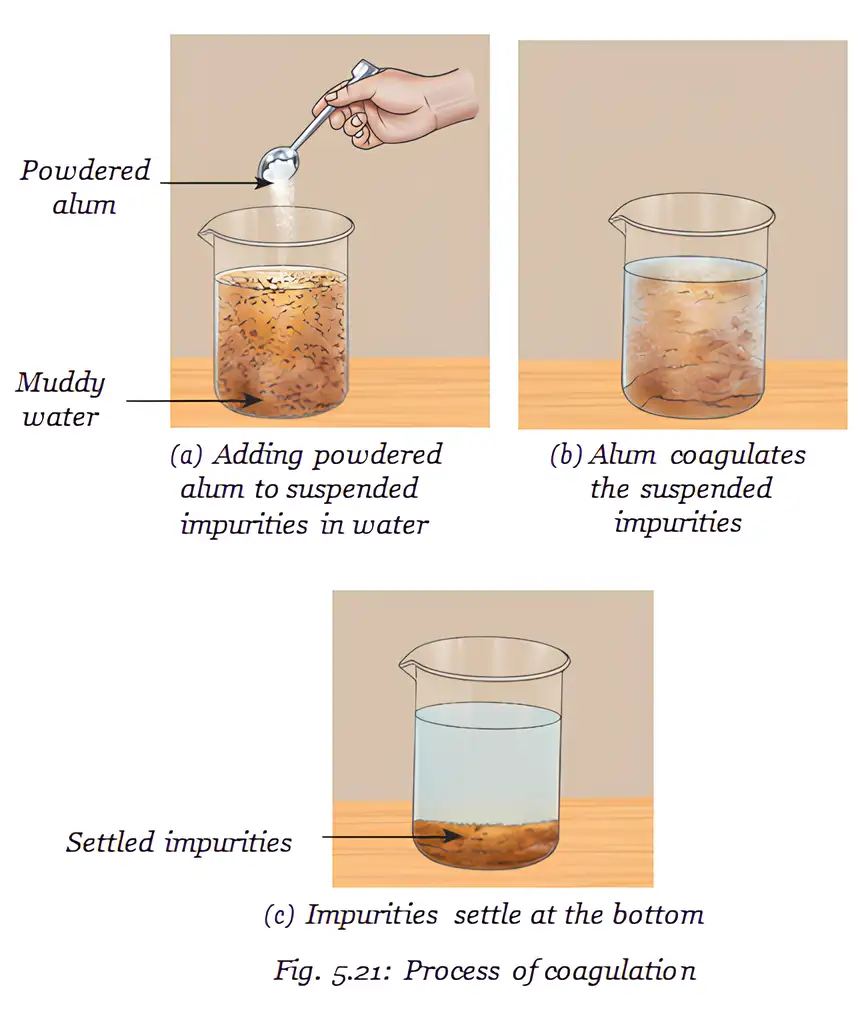
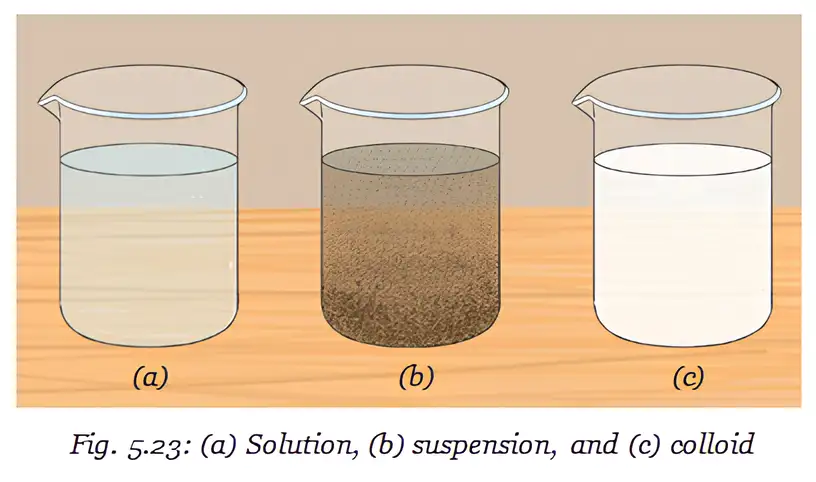
Suspensions are heterogeneous mixtures where solid particles are suspended in a liquid but settle over time. Examples include sand in water and tea leaves in water.
Colloids
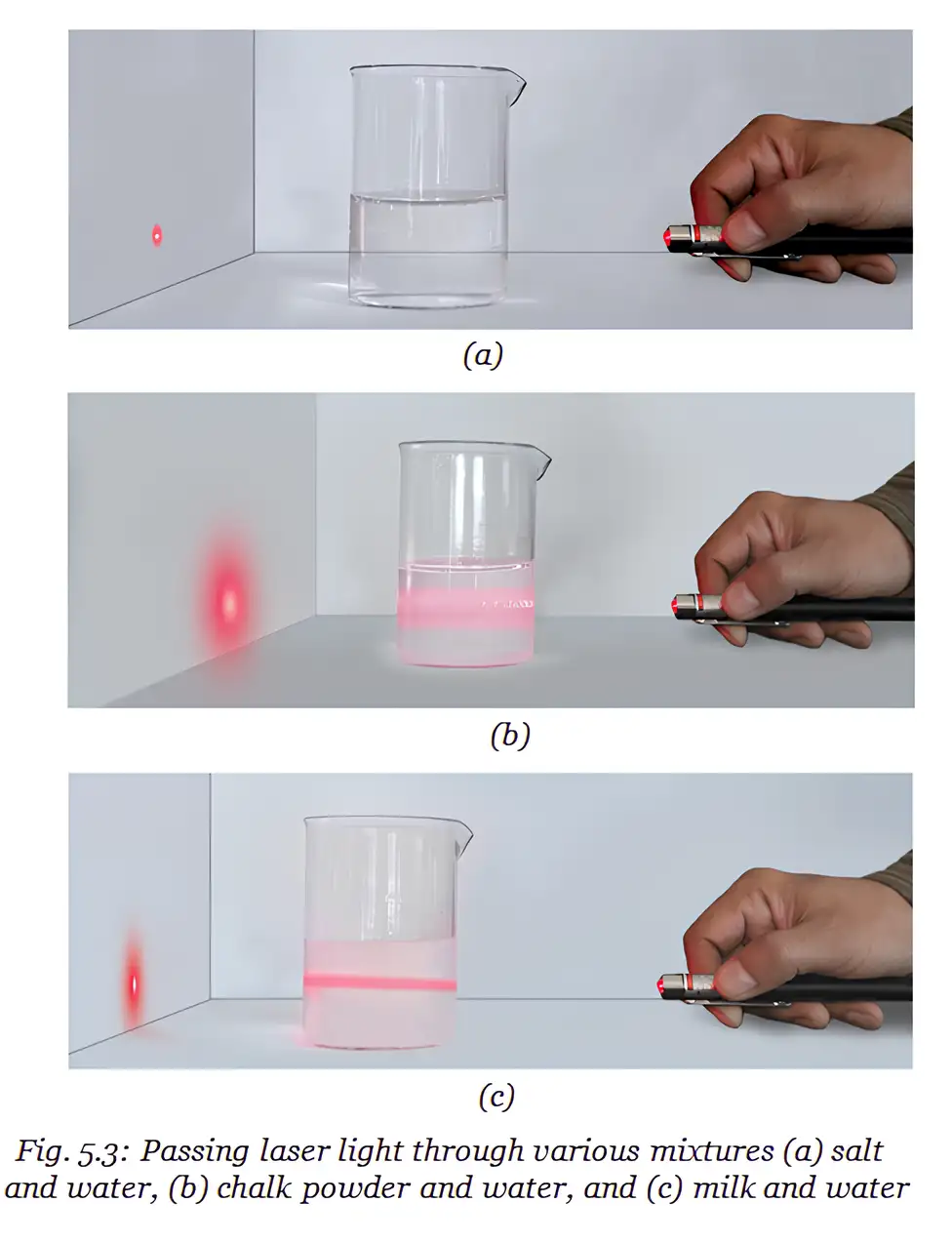
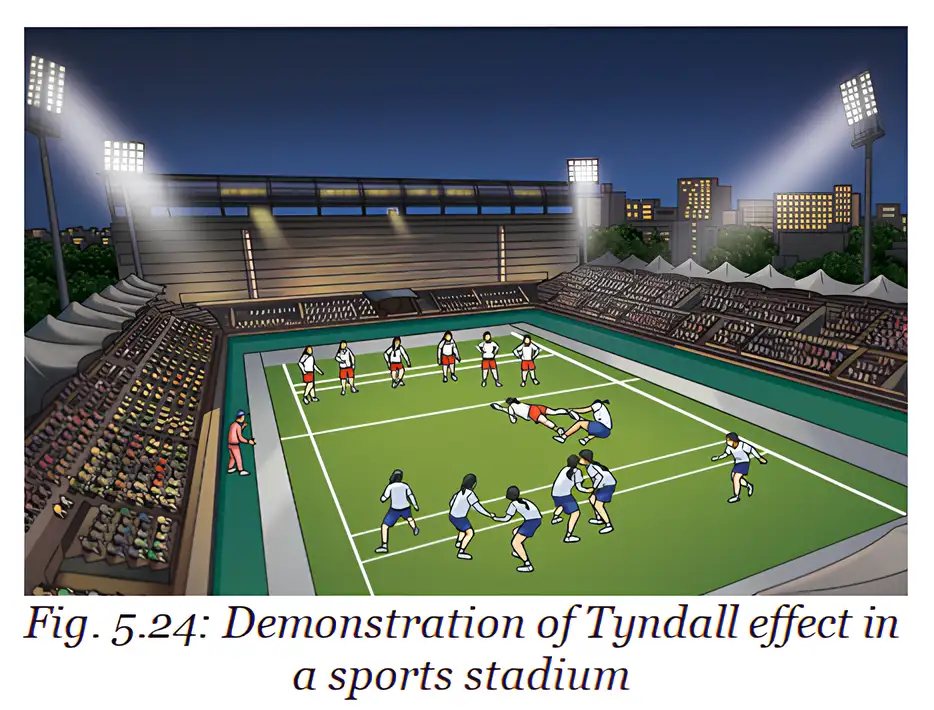
Colloids have particles larger than solutions but smaller than suspensions. They do not settle and scatter light (Tyndall effect). Examples include milk, blood, and ice cream.
Solved Examples
Example: Differentiate between suspension and colloid.
Solution:
Suspensions have larger particles that settle; colloids have smaller particles that remain dispersed and scatter light.
Practice Set
- Level 1: What is a suspension?
- Level 2: Explain the Tyndall effect.
- Level 3: How is blood classified and why?
Answer Key
- Level 1: A suspension is a heterogeneous mixture with visible particles that settle.
- Level 2: Tyndall effect is light scattering by particles in colloids or suspensions.
- Level 3: Blood is a colloid because it has dispersed particles that do not settle and scatter light.
Quick Reference Table
Mixtures Classification
- Homogeneous Mixtures: Uniform composition throughout; solute dissolves completely in solvent. Examples: sugar solution, vinegar.
- Heterogeneous Mixtures: Non-uniform composition; components visible and may settle. Examples: sand in water, oil and water.
Concentration of Solutions
- Mass by mass percentage (% m/m): grams of solute per 100 grams of solution.
- Mass by volume percentage (% m/v): grams of solute per 100 millilitres of solution.
- Volume by volume percentage (% v/v): millilitres of solute per 100 millilitres of solution.
Solubility and Crystallization
- Solubility: Maximum amount of solute dissolved in solvent at a given temperature.
- Crystallization: Formation of pure solid crystals from a saturated solution by cooling.
Distillation
- Separates miscible liquids based on boiling point differences.
- Used in purification and petroleum refining.
Paper Chromatography
- Separates mixture components based on movement rates on paper with solvent.
- Used for pigments and dyes.
Separating Immiscible Liquids
- Uses separating funnel to separate liquids like oil and water based on density.
Sublimation
- Solid changes directly to vapor without liquid phase; used to separate substances like camphor.
Suspensions and Colloids
- Suspensions: Heterogeneous mixtures with visible particles that settle.
- Colloids: Particles dispersed evenly, do not settle, scatter light (Tyndall effect).
Common Mistakes and Misconceptions
- Confusing solutions with suspensions: Solutions are homogeneous mixtures where solute dissolves completely, while suspensions have visible particles that settle over time.
- Assuming all mixtures can be separated by simple filtration: Some mixtures require special techniques like centrifugation or distillation for effective separation.
- Mixing up evaporation and boiling: Evaporation occurs at all temperatures on the surface, while boiling happens at a specific temperature throughout the liquid.
- Believing immiscible liquids mix: Liquids like oil and water do not mix and form separate layers due to differences in density and polarity.
- Ignoring the importance of concentration: Incorrect proportions in solutions like ORS or pesticides can lead to ineffective or harmful results.
- Overlooking the Tyndall effect: Not recognizing that scattering of light helps distinguish colloids and suspensions from true solutions.
- Assuming all solids dissolve more at higher temperatures: While most solids do, gases generally dissolve less as temperature increases.
- Misunderstanding crystallization: Cooling a saturated solution slowly allows pure crystals to form, rapid cooling leads to smaller crystals.
- Confusing sublimation with evaporation: Sublimation is solid to vapor without liquid phase; evaporation is liquid to vapor.
- Thinking alloys can be separated physically: Alloys are homogeneous mixtures of metals that cannot be separated by physical methods.
Glossary
- Alloy: A homogeneous mixture of two or more metals or a metal and a non-metal.
- Colloid: A mixture with particles larger than in solutions but smaller than in suspensions; particles do not settle and scatter light.
- Concentration: The amount of solute dissolved in a given amount of solvent or solution.
- Crystallization: The process of forming pure solid crystals from a saturated solution by cooling.
- Distillation: A method to separate miscible liquids based on differences in boiling points.
- Evaporation: The process where liquid changes into vapor at temperatures below boiling point.
- Heterogeneous Mixture: A mixture where components are not uniformly distributed and can be seen separately.
- Homogeneous Mixture (Solution): A mixture with uniform composition throughout.
- Immiscible Liquids: Liquids that do not mix and form separate layers.
- Mass by Mass Percentage (% m/m): Grams of solute per 100 grams of solution.
- Mass by Volume Percentage (% m/v): Grams of solute per 100 millilitres of solution.
- Paper Chromatography: A technique to separate components of a mixture based on their movement on paper with a solvent.
- Percentage Concentration: Expression of concentration as a percentage of solute in solution.
- Suspension: A heterogeneous mixture with visible particles that settle over time.
- Sublimation: Transition of a solid directly into vapor without passing through the liquid phase.
- Tyndall Effect: Scattering of light by particles in colloids or suspensions.
- Volume by Volume Percentage (% v/v): Millilitres of solute per 100 millilitres of solution.