CLASS 9 . SCIENCE . EXPLORATION . EXPLORATION ENTERING-THE-WORLD-OF-SECONDARY-SCIENCE
Chapter 1 : Exploration: Entering the World of Secondary Science
Ch 1
SCIENCE
CLASS 9
Science Exploration
Introduction to Scientific Study
Science exploration begins with curiosity and observation. Students learn by observing nature directly, using tools like magnifying glasses to examine leaves, test tubes to collect samples, and compasses to understand directions. This hands-on approach helps connect theoretical knowledge with real-world experiences.
Scientific Approach and Models
Science advances by asking questions, making observations, and building models. Models simplify complex natural systems by focusing on key features and ignoring less important details. For example, a moving car can be represented as a point in physics, atoms as spheres in chemistry, and cells as diagrams in biology. These simplifications help us understand and predict natural phenomena.
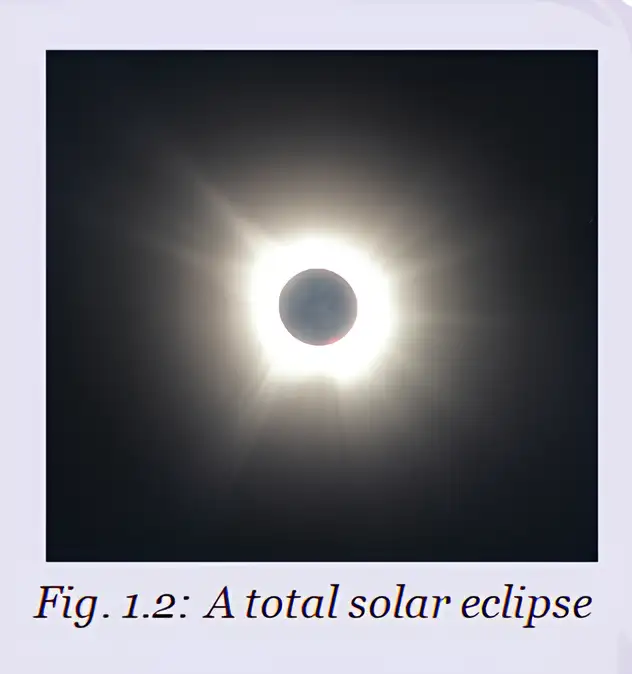
Symbols and Mathematics in Science
Scientific language uses precise terms, symbols, and units to communicate ideas clearly. Mathematics is a powerful tool in science, expressing relationships between quantities and enabling predictions. Understanding the context and quantities involved is essential before applying mathematical formulas.
Scientific Predictions and Testing
Science relies on making predictions based on evidence and testing them through experiments. Predictions are reasoned expectations, not guesses. When predictions fail, scientists re-examine their models and assumptions, which leads to improved understanding. This openness to revision is a strength of science.
Solved Examples
Example 1: Modeling a Cricket Shot
To predict if a cricket ball will cross the boundary without bouncing, include important details like the ball's mass, speed, and direction. Ignore less significant factors such as the bat's brand or ball color. This simplification helps create a useful model for prediction.
Example 2: Estimating Daily Air Intake
At rest, a person takes about 12–15 breaths per minute. With 1440 minutes in a day, this totals approximately 18,000–22,000 breaths daily. Each breath is about 0.5 liters, so the total air intake is roughly 10,000 liters per day. This estimate helps understand human respiration without exact measurements.
Example 3: Testing a Weather Prediction
To test the prediction "It will rain because the clouds look dark," ask measurable questions such as humidity levels, wind speed, and past weather patterns. This approach makes the prediction scientifically testable.
Practice Set
- Level 1: Why do scientists use simplified models instead of studying every detail?
- Level 2: Explain why scientific predictions are more reliable than guesses.
- Level 3: Imagine you want to model the time taken to travel from school to home by bicycle. What details would you include and what would you ignore? Justify your choices.
Answer Key
- Level 1: Simplified models focus on important features, making complex systems easier to understand and predict.
- Level 2: Scientific predictions are based on evidence and tested through experiments, unlike guesses which lack evidence.
- Level 3: Include details like distance, average speed, and route. Ignore factors like weather or traffic for a simple model. Ignoring some details helps focus on main factors affecting time.
Quick Reference Table
Models: Simplified representations focusing on key features to understand complex systems.
Scientific Prediction: Reasoned expectation based on evidence and testing.
Scientific Symbols: Letters representing quantities, e.g., m for mass, v for velocity.
Standard Units: Agreed measurements like kilogram for mass, meter for length.
Law: Describes observed natural patterns.
Theory: Explains why patterns occur, based on evidence.
Principle: Broad idea helping to understand situations.
Common Mistakes and Misconceptions
- Confusing scientific theories with guesses; theories are evidence-based explanations.
- Assuming all details must be included in models; simplification is necessary for understanding.
- Believing predictions are guesses; they are based on tested evidence.
- Ignoring the importance of standard units, leading to errors in measurement and communication.
Glossary
Model: A simplified representation of a system focusing on important aspects.
Prediction: A reasoned expectation of an outcome based on evidence.
Scientific Law: A statement describing a consistent natural pattern.
Theory: An explanation of why natural patterns occur, supported by evidence.
Principle: A broad concept that helps explain phenomena.
Standard Unit: An internationally agreed measurement unit.