CLASS 9 . SCIENCE . EXPLORATION . DESCRIBING MOTION-AROUND-US
Chapter 4 : Describing Motion Around Us
Ch 4
SCIENCE
CLASS 9
Motion in a Straight Line
Introduction to Motion
Motion is the change in position of an object with respect to a reference point over time. When an object moves along a straight path, it is said to be in linear motion or motion in a straight line. Examples include a car moving on a straight road, a train on straight tracks, or a ball falling vertically.
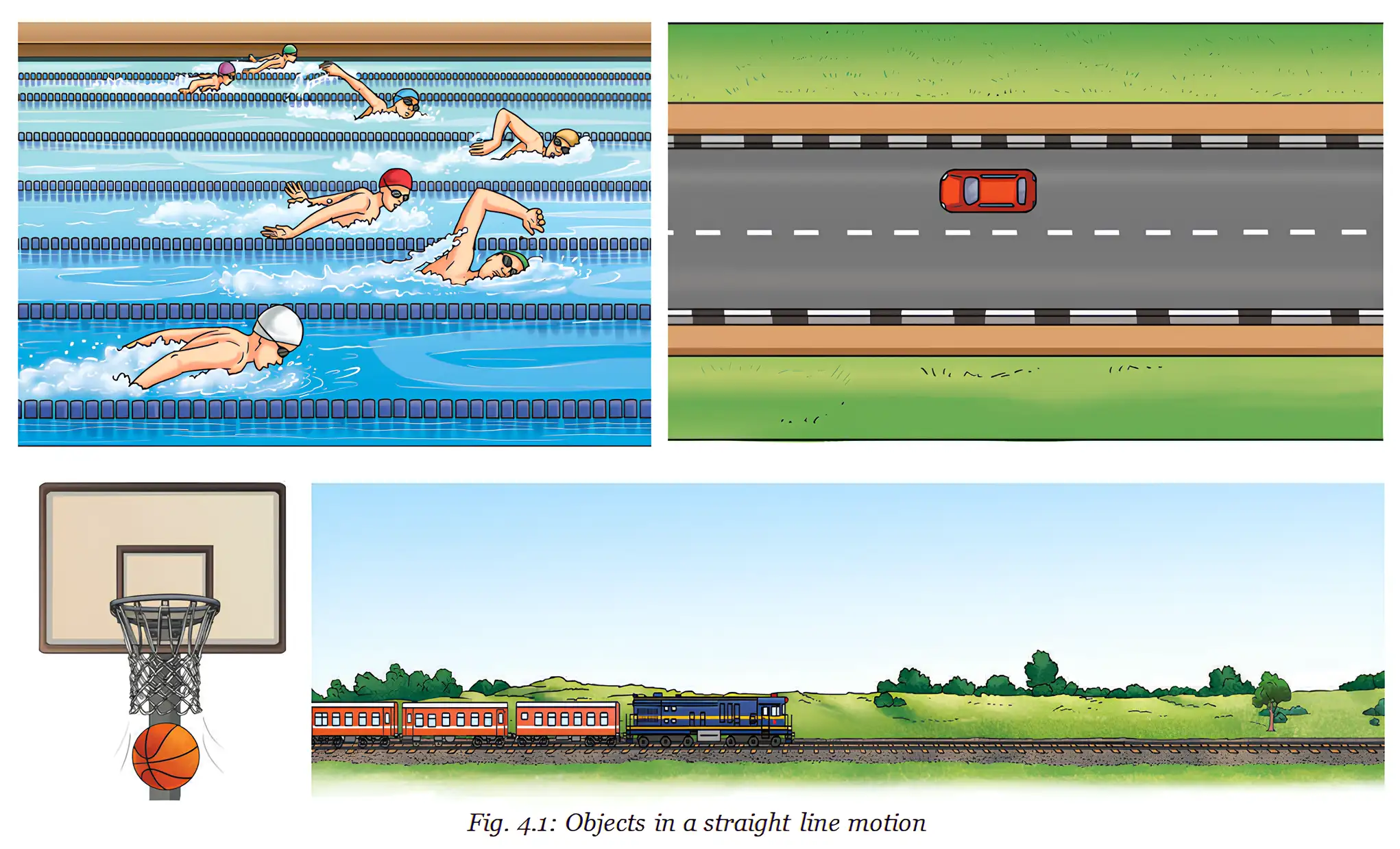
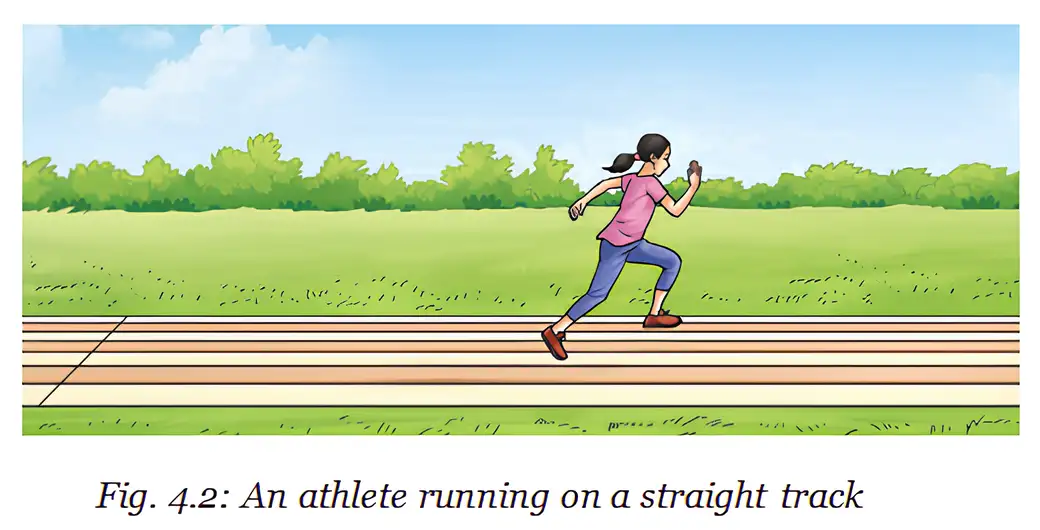
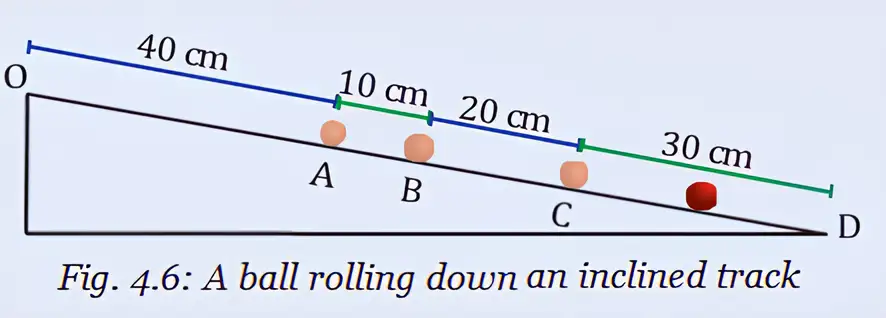
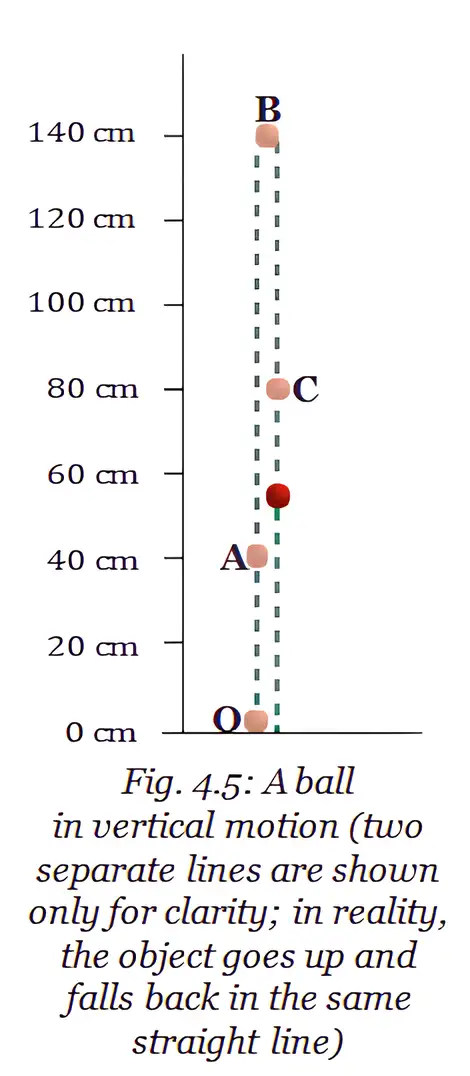
Describing Position
The position of an object is described by its distance and direction from a fixed reference point, called the origin. Position changes with time if the object is in motion. Direction is indicated by positive and negative signs along a straight line, with positions to the right of the origin taken as positive and to the left as negative.

Distance and Displacement
Distance travelled is the total length of the path covered by the object, irrespective of direction. Displacement is the net change in position from the initial to the final point, including direction. Displacement is a vector quantity, while distance is a scalar. The SI unit for both is the metre (m).
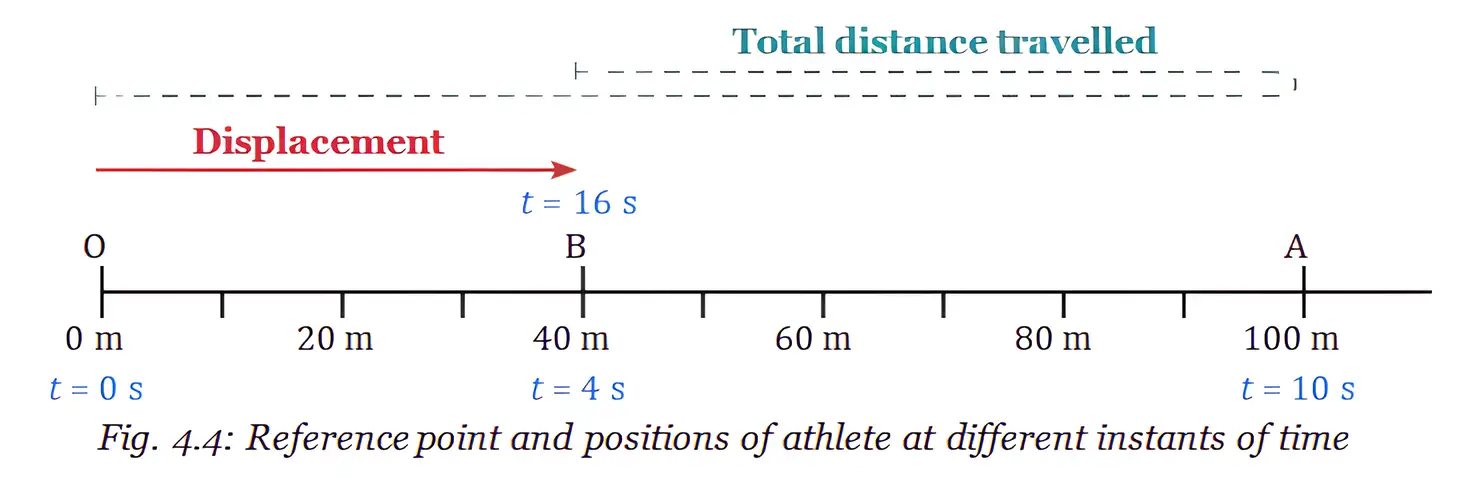

Average Speed and Average Velocity
Average speed is the total distance travelled divided by the time taken, and it has no direction. Average velocity is the displacement divided by the time interval and includes direction. Both are measured in metres per second (m/s). If an object moves in one direction without turning back, average speed equals the magnitude of average velocity.

Average Acceleration
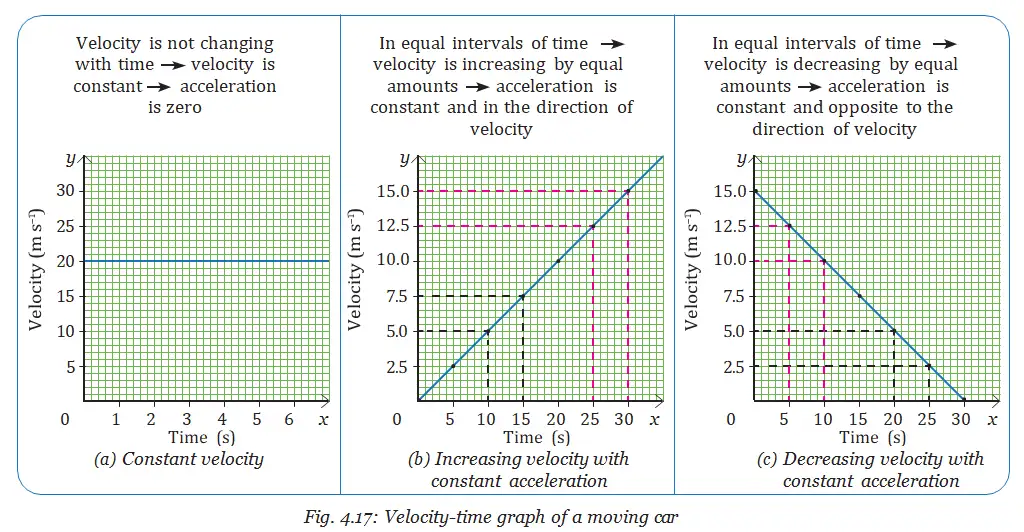
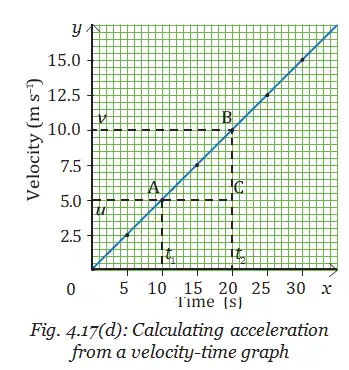
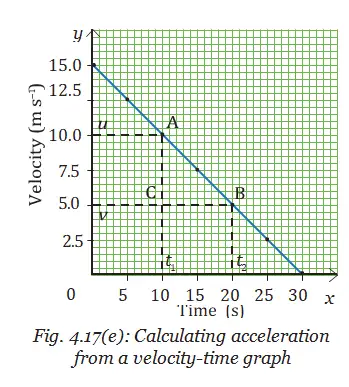
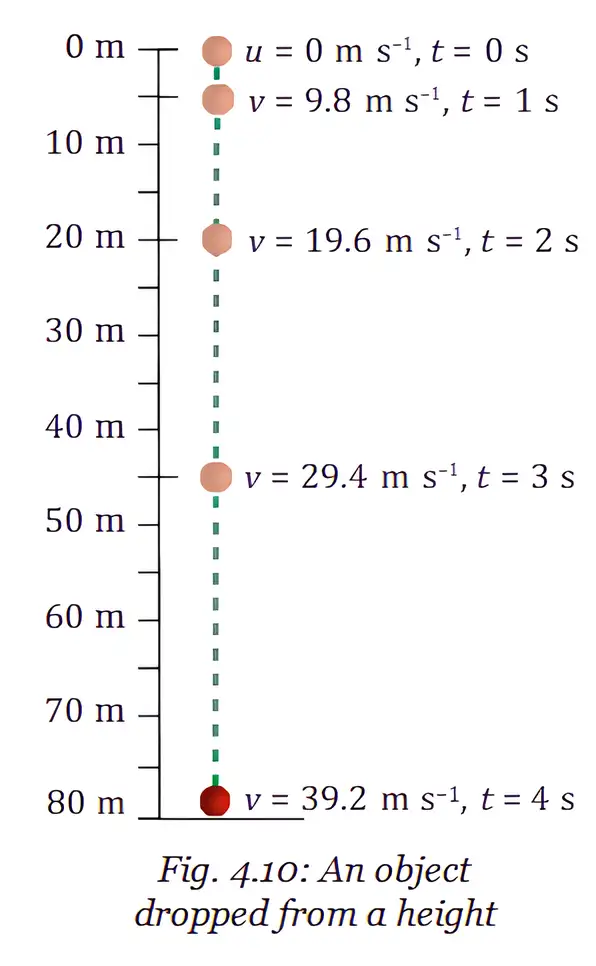
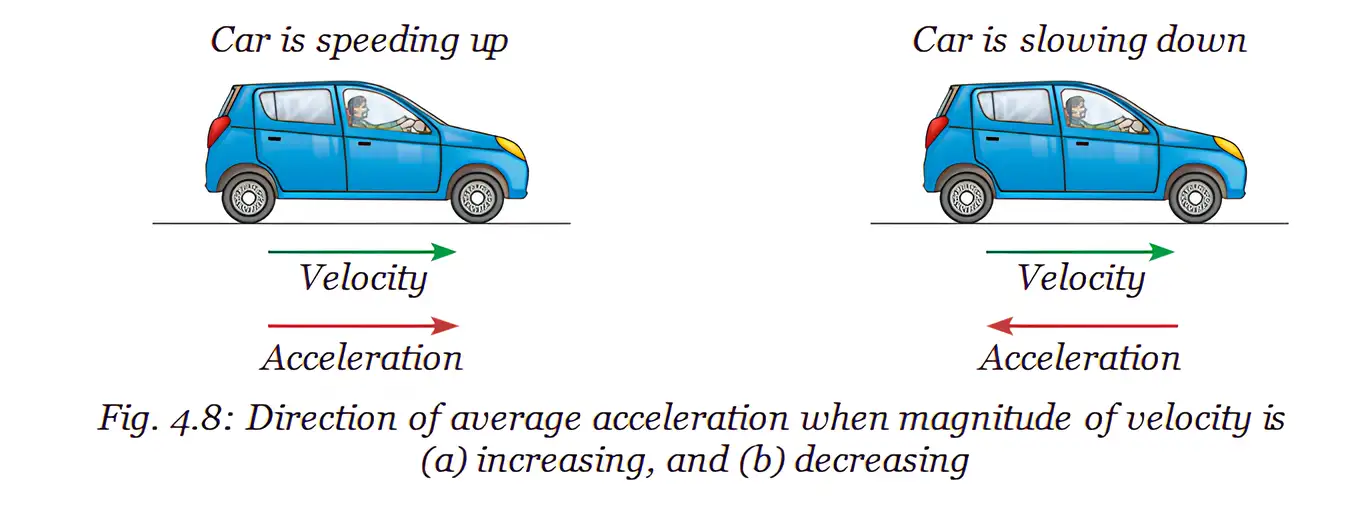
Average acceleration is the change in velocity divided by the time interval during which the change occurs. It is a vector quantity with magnitude and direction. The SI unit is metres per second squared (m/s²). Acceleration can be positive (speeding up) or negative (slowing down).
Graphs of Motion
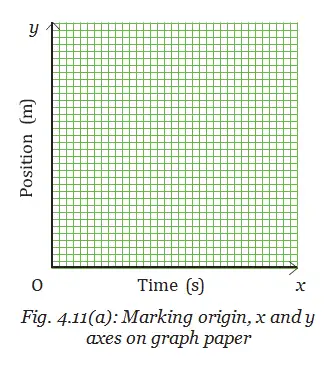
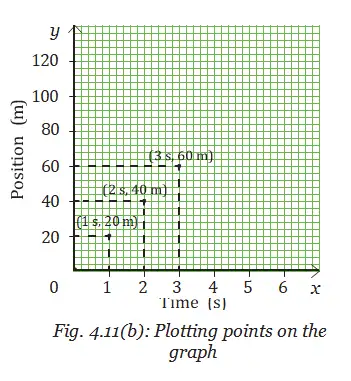
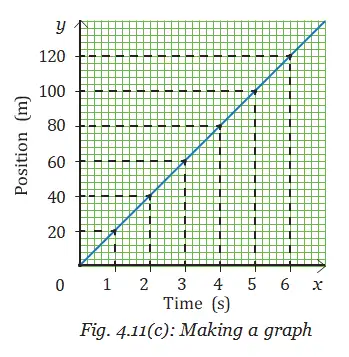
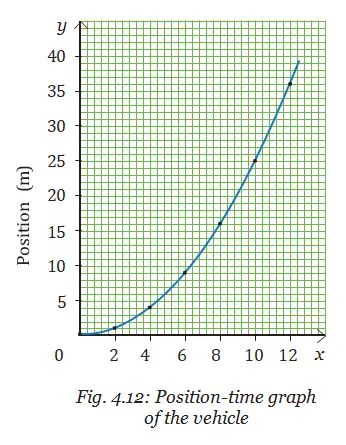
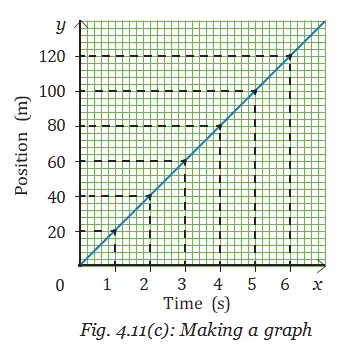
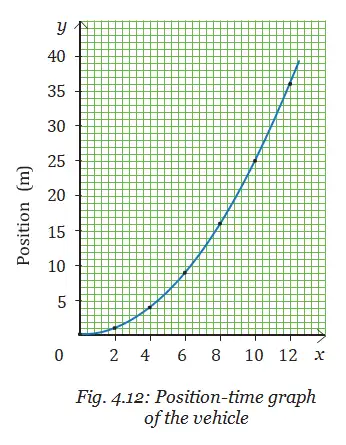
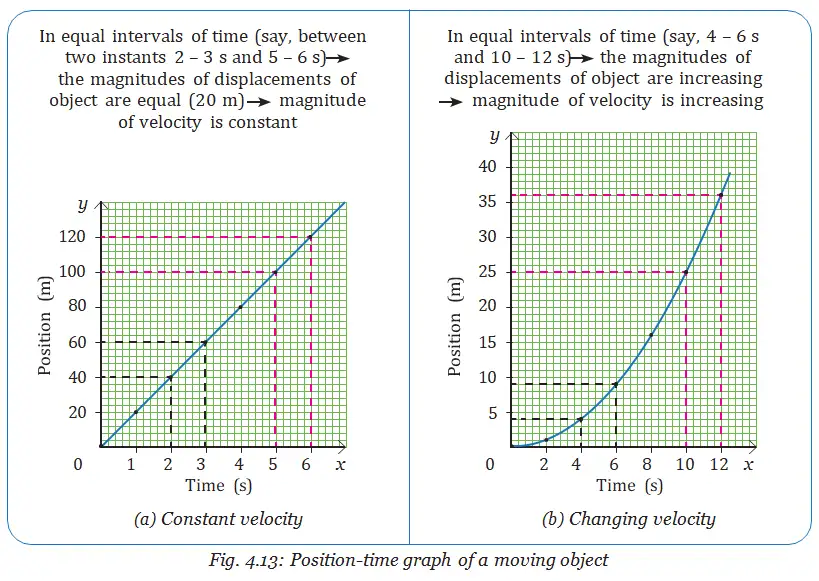
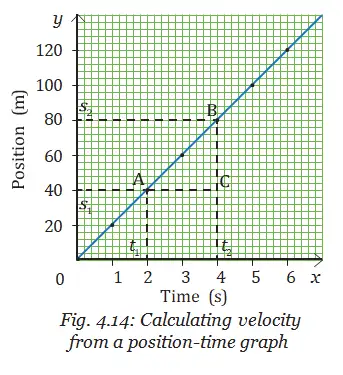
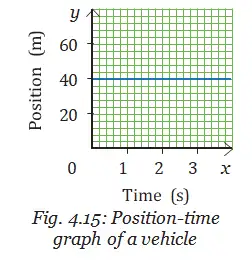
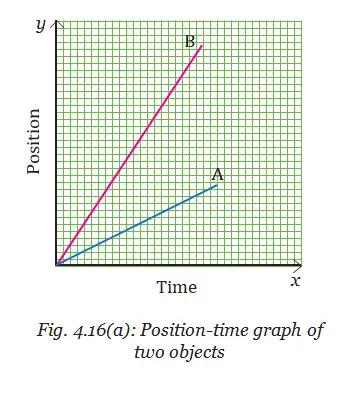
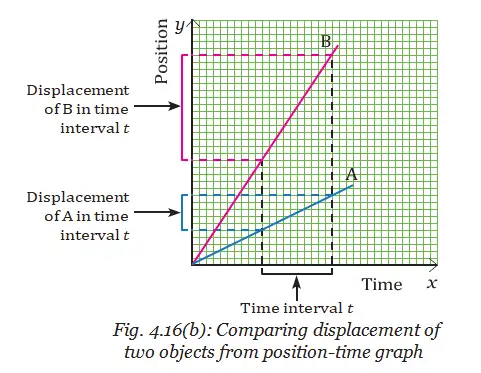
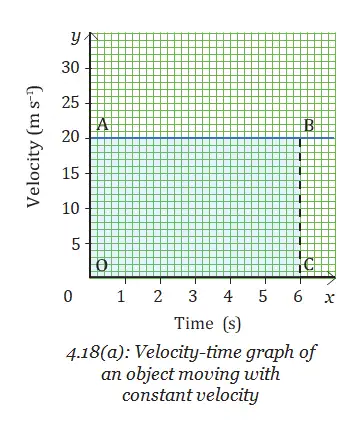
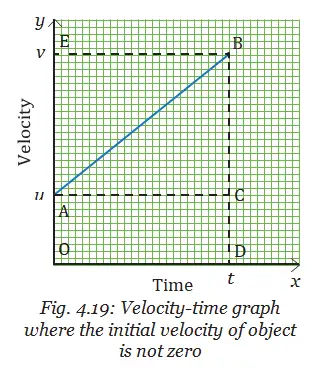
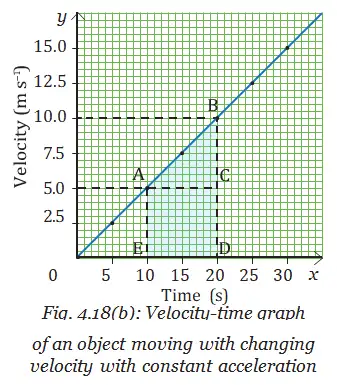
Graphs such as position-time and velocity-time graphs visually represent motion. The slope of a position-time graph gives velocity, while the slope of a velocity-time graph gives acceleration. The area under a velocity-time graph represents displacement.
Kinematic Equations
For motion with constant acceleration, the following equations relate displacement (s), initial velocity (u), final velocity (v), acceleration (a), and time (t):
- v = u + at
- s = ut + \( \frac{1}{2} \)at²
- v² = u² + 2as
Uniform Circular Motion
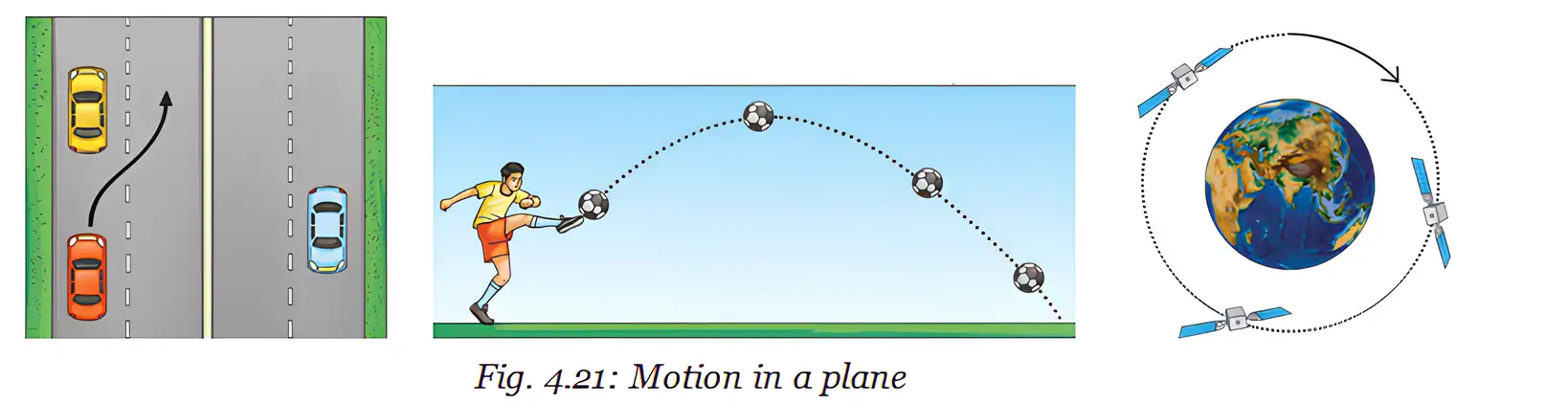
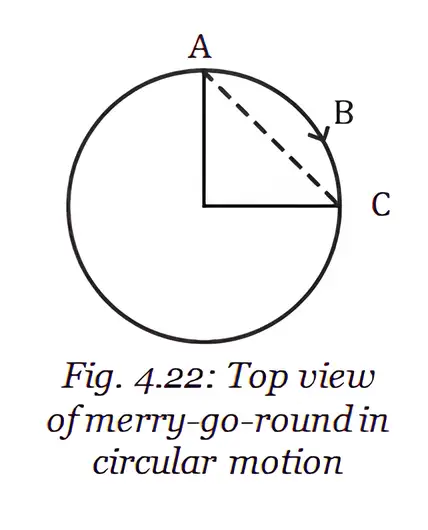
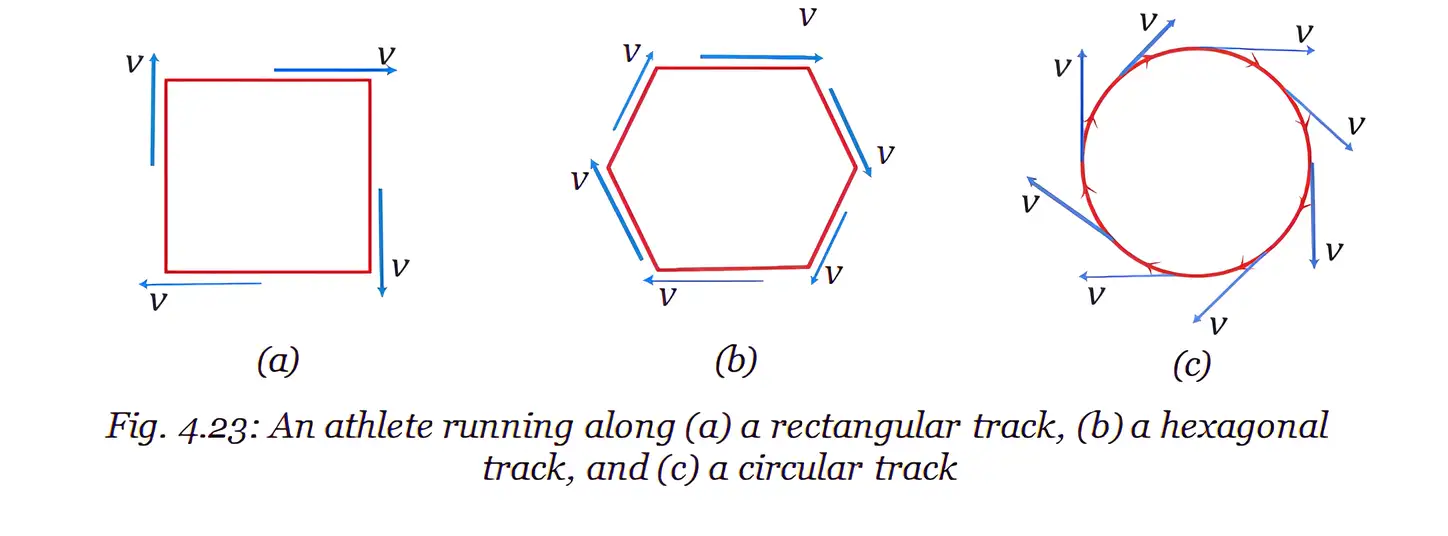
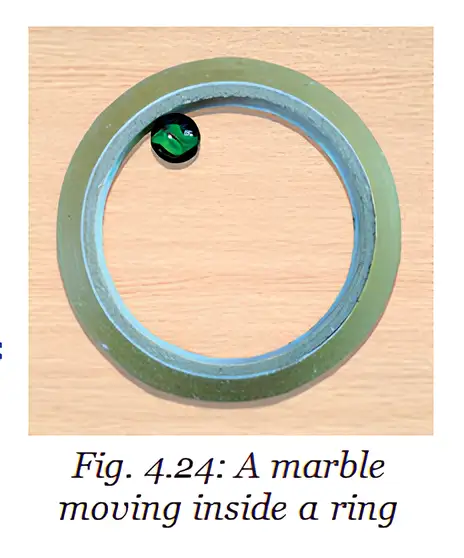
When an object moves in a circular path at constant speed, it is said to be in uniform circular motion. The distance travelled in one revolution is the circumference of the circle, 2πR, where R is the radius. The average speed is 2πR divided by the time period of one revolution. Although speed is constant, the direction of velocity changes continuously, resulting in acceleration.
Solved Examples
Example 1: Meeting Time of Two Postmen
Two postmen start walking towards each other from a distance of 210 yojanas. One travels 9 yojanas per day and the other 5 yojanas per day. Find the time taken for them to meet.
Solution:
Total distance covered per day = 9 + 5 = 14 yojanas
Time to meet = Total distance / combined speed = 210 / 14 = 15 days
Example 2: Average Speed and Velocity of a Swimmer
Sarang swims 25 m to the other end of a pool and back in 50 seconds. Find his average speed and average velocity.
Solution:
Total distance = 25 m + 25 m = 50 m
Displacement = 0 m (since he returns to the starting point)
Average speed = 50 m / 50 s = 1 m/s
Average velocity = 0 m / 50 s = 0 m/s
Example 3: Average Acceleration of a Bus
A bus moving at 36 km/h accelerates to 54 km/h in 10 seconds, then brakes to stop in 5 seconds. Find the average acceleration during acceleration and braking.
Solution:
Convert speeds to m/s: 36 km/h = 10 m/s, 54 km/h = 15 m/s
Acceleration phase:
a = (15 - 10) / 10 = 0.5 m/s²
Braking phase:
a = (0 - 15) / 5 = -3 m/s²
Example 4: Distance Travelled Before Stopping
A car moving at 54 km/h and 108 km/h applies brakes with acceleration -4 m/s². Find the stopping distance in each case.
Solution:
Convert speeds: 54 km/h = 15 m/s, 108 km/h = 30 m/s
Using v² = u² + 2as, with v = 0:
0 = u² + 2(-4)s
s = u² / 8
For 15 m/s: s = 225 / 8 = 28.1 m
For 30 m/s: s = 900 / 8 = 112.5 m
Practice Set
- Level 1: Define displacement and explain how it differs from distance.
- Level 1: What is the SI unit of acceleration?
- Level 2: A car moves 100 m east in 5 seconds and then 40 m west in 2 seconds. Calculate the average velocity for the entire trip.
- Level 3: A vehicle accelerates uniformly from 20 m/s to 40 m/s in 10 seconds. Calculate the acceleration and distance travelled during this time.
Answer Key
- Displacement is the net change in position including direction, while distance is the total path length without direction.
- SI unit of acceleration is metre per second squared (m/s²).
- Displacement = 100 m - 40 m = 60 m east; Total time = 5 + 2 = 7 s; Average velocity = 60 / 7 ≈ 8.57 m/s east.
- Acceleration = (40 - 20) / 10 = 2 m/s²; Distance = ut + 1/2 at² = 20×10 + 0.5×2×100 = 200 + 100 = 300 m.
Quick Reference Table
Key Terms and Formulas:
- Displacement: Net change in position (vector)
- Distance: Total path length (scalar)
- Average speed = Total distance / Time
- Average velocity = Displacement / Time
- Average acceleration = Change in velocity / Time
- Kinematic equations for constant acceleration:
- v = u + at
- s = ut + 1/2 at²
- v² = u² + 2as
- Uniform circular motion speed: v = 2πR / T
Common Mistakes and Misconceptions
- Confusing distance with displacement; displacement includes direction, distance does not.
- Assuming average speed and average velocity are always equal; they differ if direction changes.
- Forgetting to convert units properly, especially km/h to m/s.
- Misinterpreting graphs; slope of position-time graph gives velocity, not acceleration.
- Believing acceleration only occurs when speed changes; acceleration also occurs when direction changes.
Glossary
- Displacement: Vector quantity representing net change in position.
- Distance: Scalar quantity representing total path length travelled.
- Velocity: Speed with direction; rate of change of displacement.
- Speed: Scalar quantity; rate of change of distance.
- Acceleration: Rate of change of velocity with time.
- Uniform Circular Motion: Motion in a circle at constant speed.