CLASS 9 . SCIENCE . EXPLORATION . CELL THE-BUILDING-BLOCK-OF-LIFE
Chapter 2 : Cell: The Building Block of Life
Ch 2
SCIENCE
CLASS 9
Cell Observation
Microscope and Cell Types
A microscope is an instrument that magnifies tiny objects that cannot be seen with the naked eye. Scientists use microscopes to observe cells and microorganisms from samples. Different types of cells include plant cells, bacterial cells, and animal cells. Plant cells are green with a large central part, bacterial cells are smaller with various shapes, and animal cells are round with a nucleus inside. Studying these cells helps us understand the basic units of life.
Limit of Resolution and Microscopes
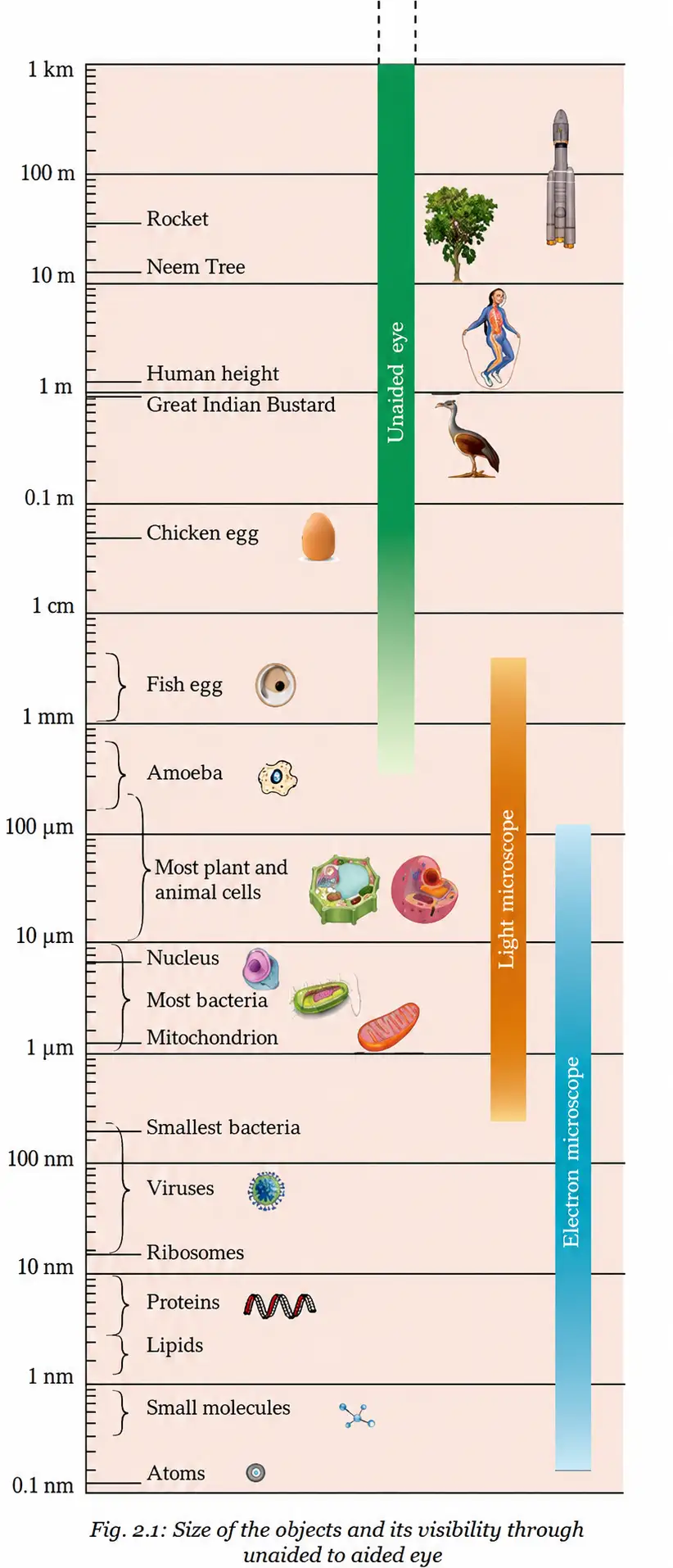
The human eye can distinguish two points separated by about 0.1 mm as distinct, which is called the limit of resolution. Cells are usually smaller than this limit, so microscopes are needed to see them. Light microscopes use lenses to magnify objects up to about 1000 times, while electron microscopes use beams of electrons to see much smaller structures at the nanometre scale.
Microscope Parts and Usage
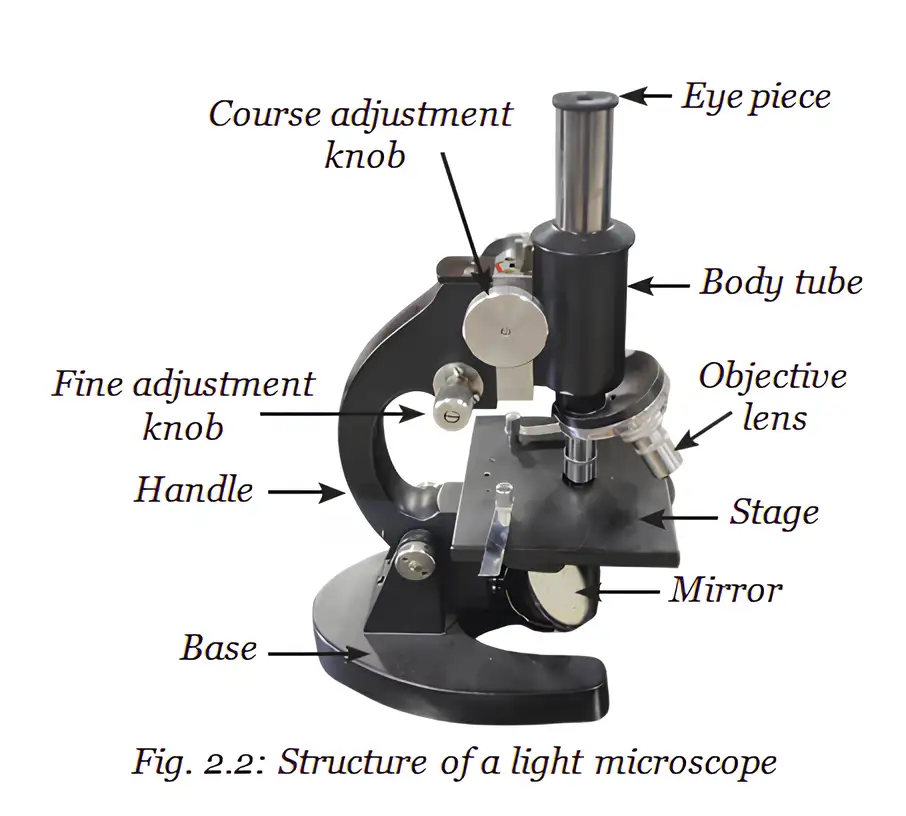
A light microscope consists of parts such as the eyepiece, objective lenses, stage, mirror, coarse and fine adjustment knobs, body tube, handle, and base. The specimen is placed on the stage, light is directed through it using the mirror, and the image is viewed through the eyepiece. Adjustments are made to focus and magnify the image clearly.
Cell Membrane
Structure and Function
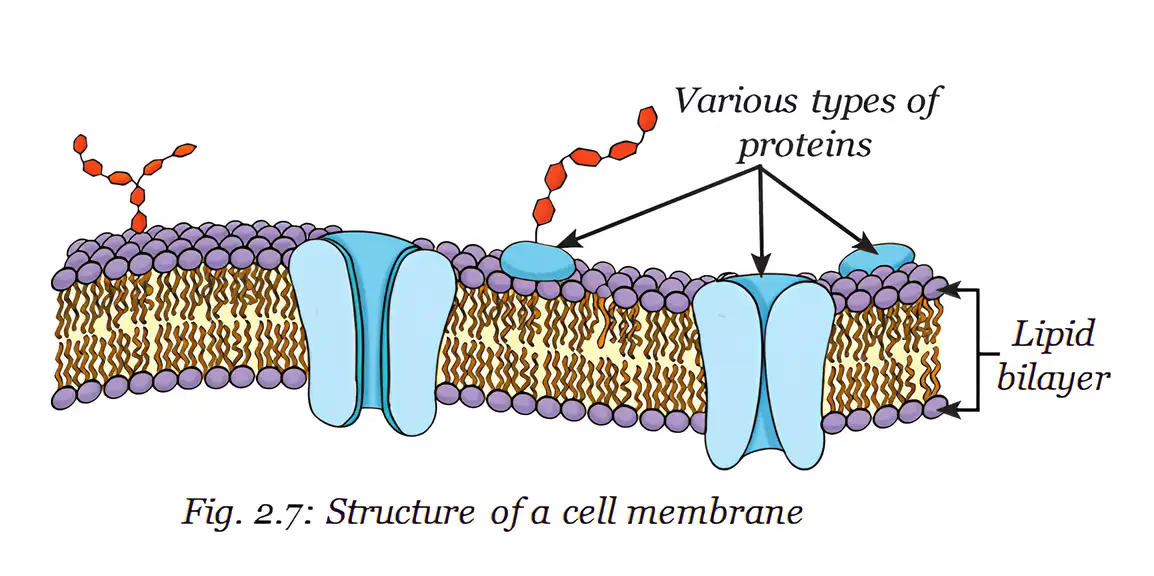
The cell membrane, also called the plasma membrane, is a thin boundary surrounding the cell. It is selectively permeable, allowing some substances to pass while blocking others. It is made of a lipid bilayer with embedded proteins, which help in transport and communication. The fluid mosaic model describes the membrane as a flexible and dynamic structure.
Osmosis and Cell Interaction
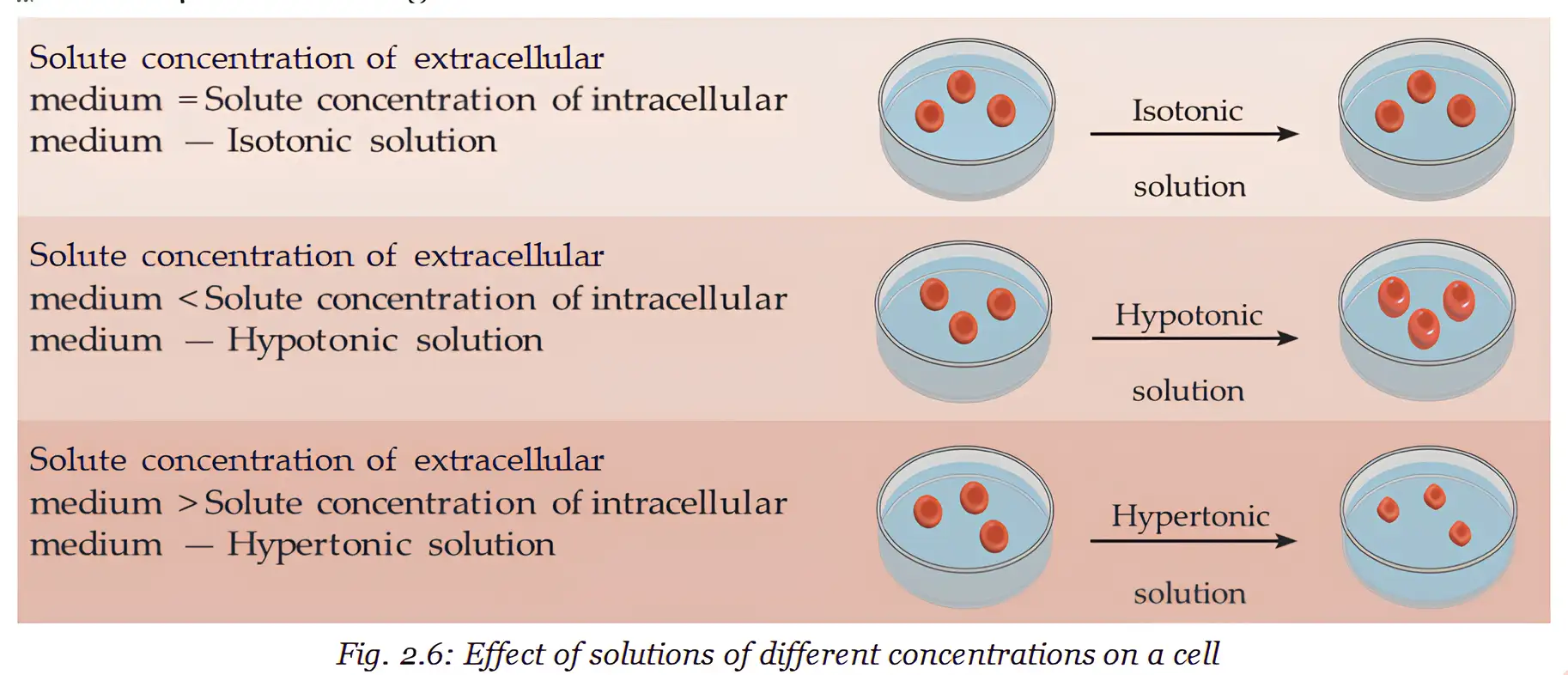
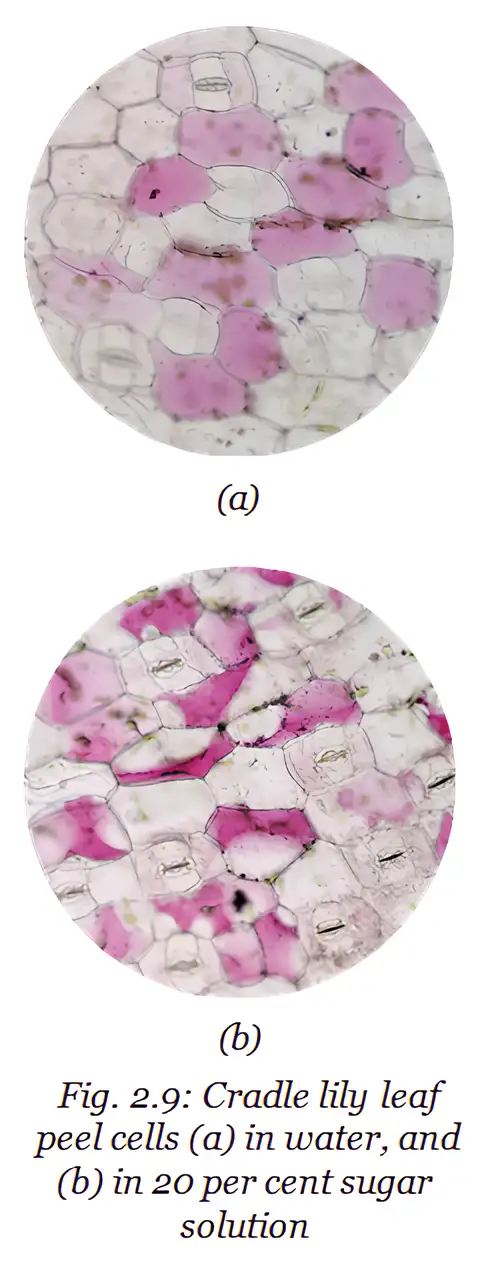
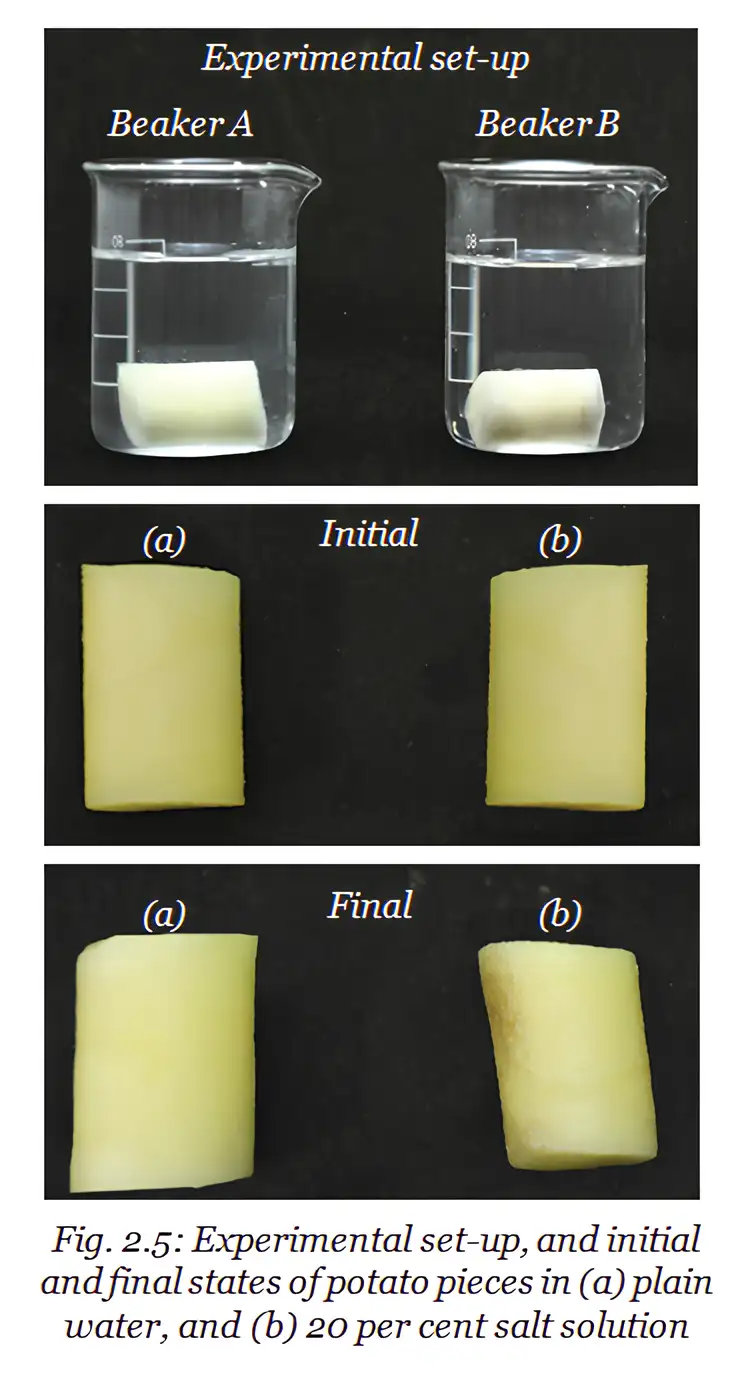
Osmosis is the movement of water across a selectively permeable membrane from a region of low solute concentration to high solute concentration. Experiments with potato pieces in water and salt solutions demonstrate osmosis, where water moves into or out of cells causing swelling or shrinking. Cells respond differently in isotonic, hypotonic, and hypertonic solutions based on solute concentration.
Cell Wall in Plants
Plant cells have an additional rigid cell wall outside the cell membrane, made mainly of cellulose. The cell wall provides structural support, maintains shape, and protects against environmental stresses. It is permeable to water and minerals, aiding in absorption. Animal cells lack a cell wall, which allows them flexibility in shape.
Cell Structure
Types of Cells
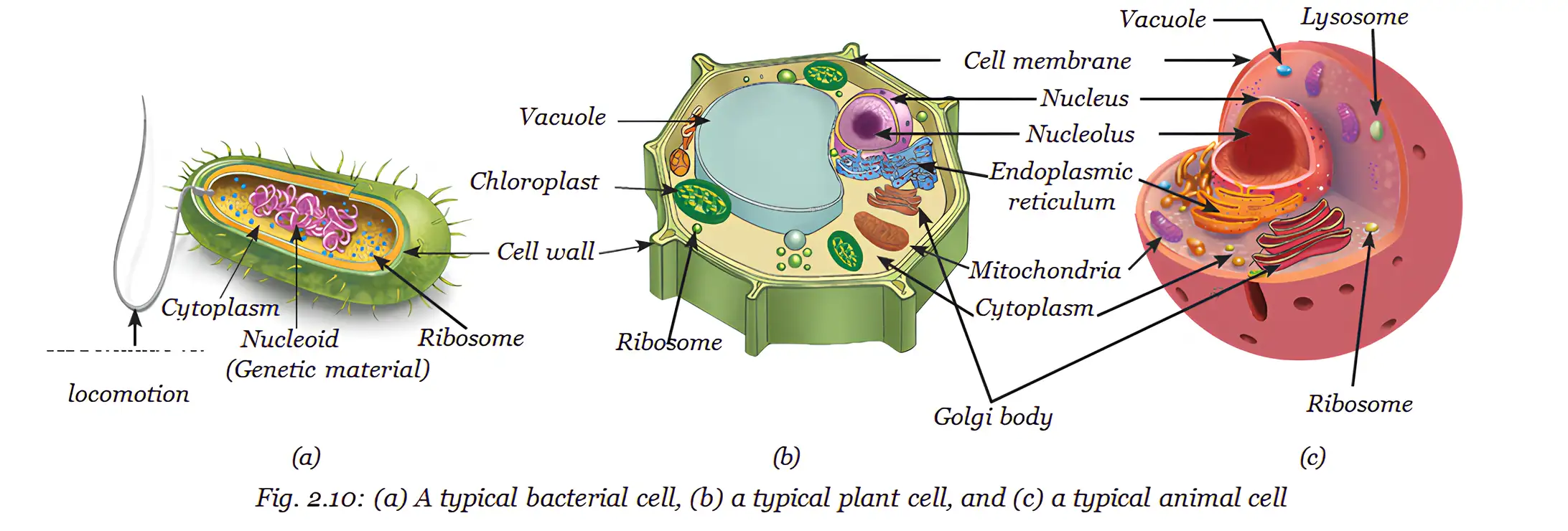
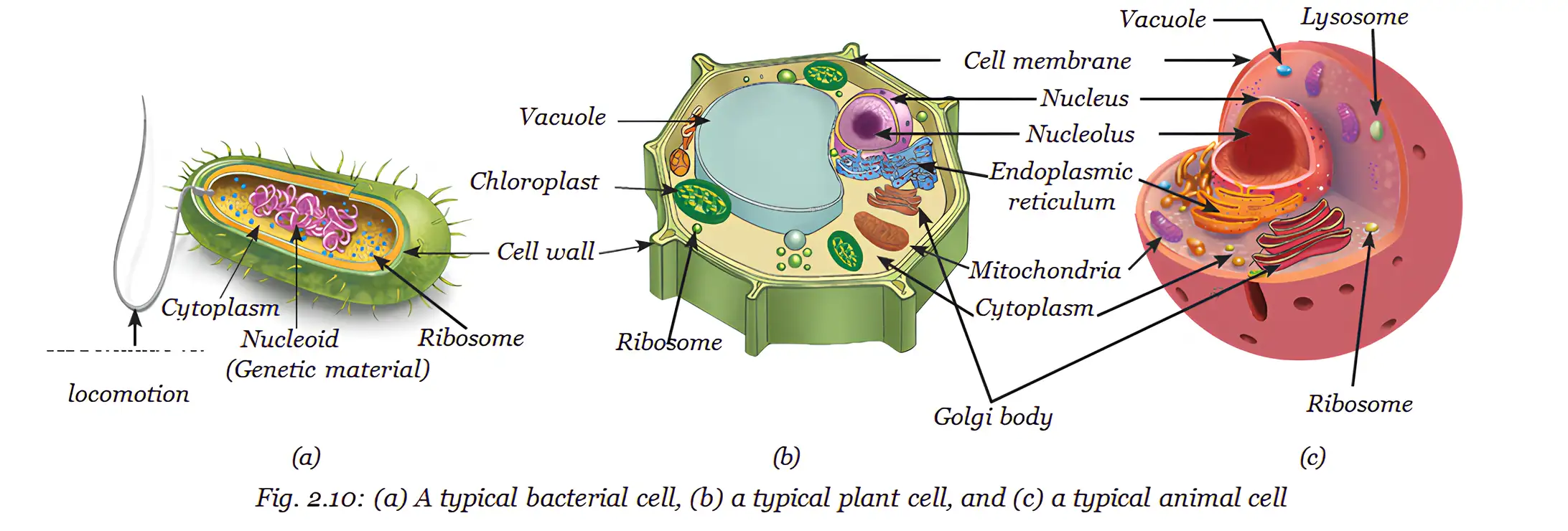
Cells are broadly classified into prokaryotic and eukaryotic cells. Prokaryotic cells, like bacteria, lack a well-defined nucleus and membrane-bound organelles. Eukaryotic cells, found in plants and animals, have a defined nucleus and various organelles. Cells contain cytoplasm, nucleus, and other organelles that perform specific functions.
Organelles and Their Functions
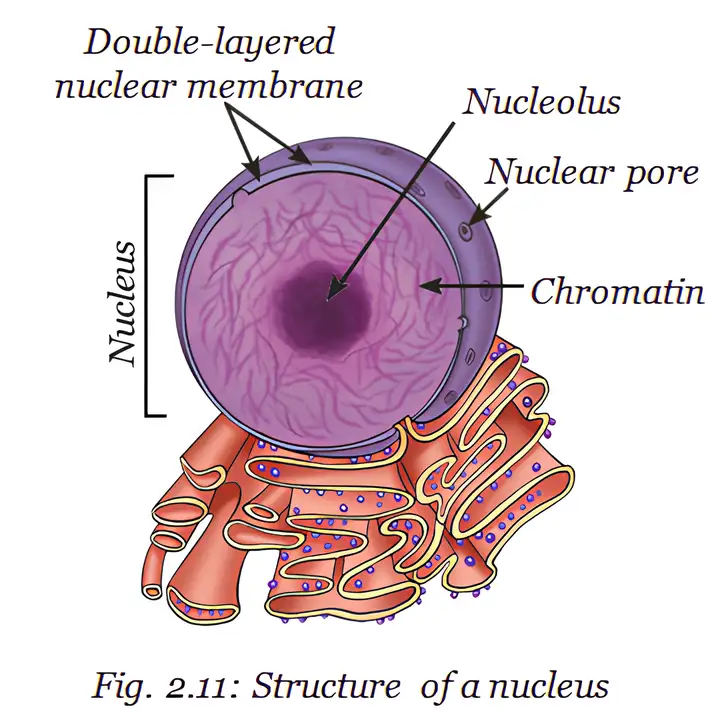
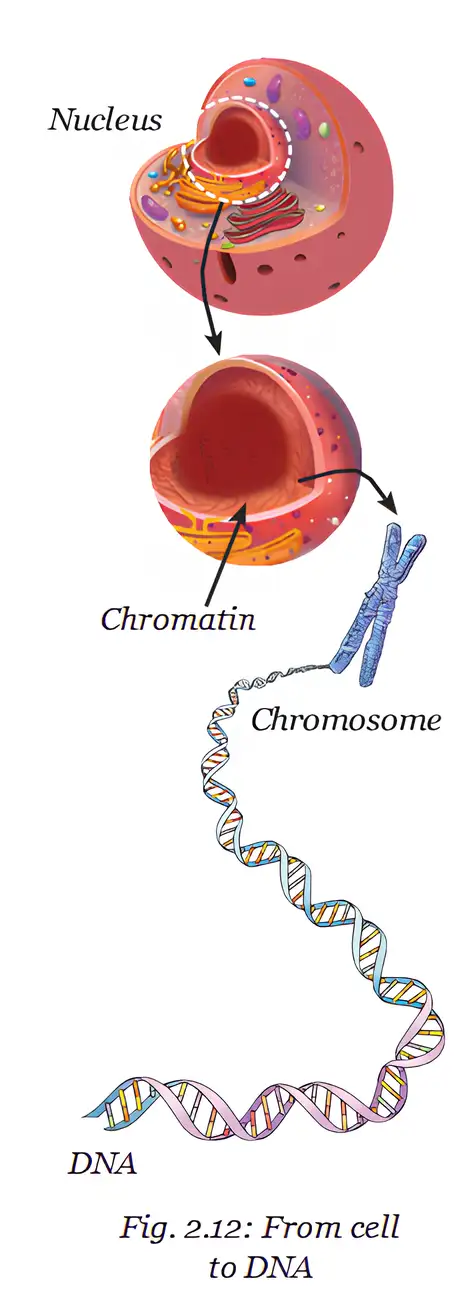
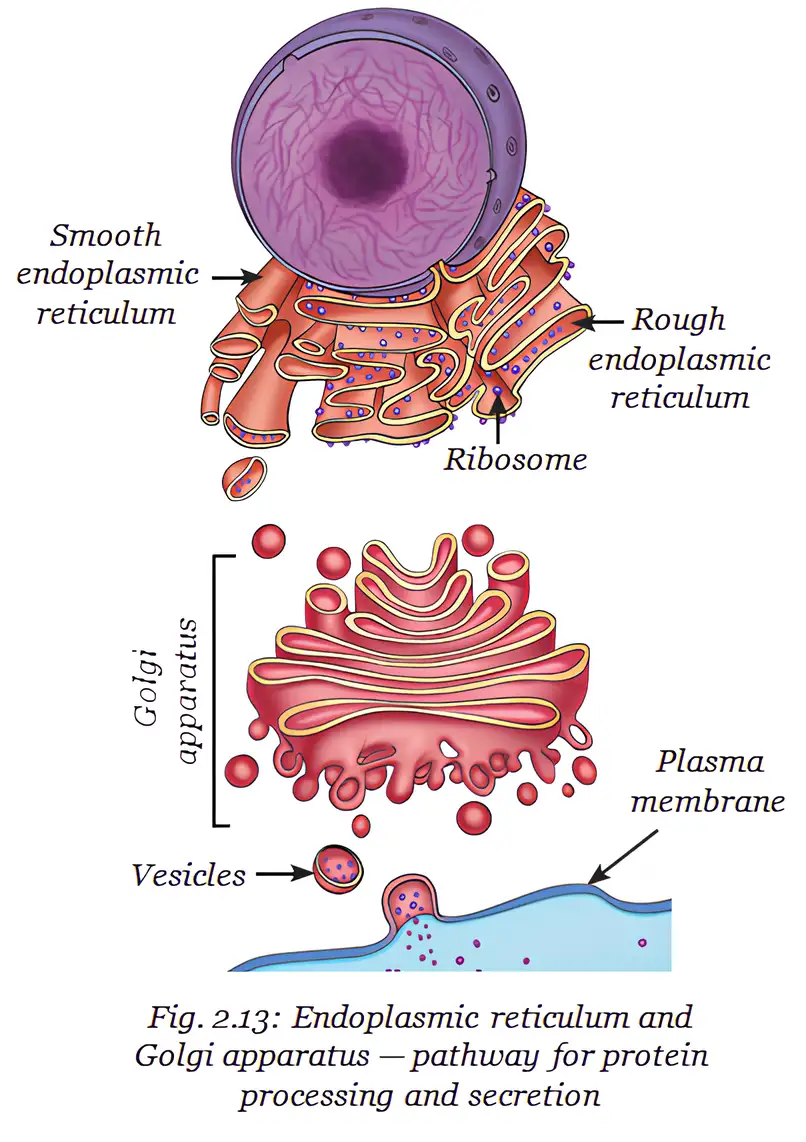
Key organelles include the nucleus (control center with DNA), ribosomes (protein synthesis), endoplasmic reticulum (protein and lipid synthesis), Golgi apparatus (modification and packaging), lysosomes (waste breakdown), mitochondria (energy production), plastids (photosynthesis and storage in plants), and vacuoles (storage and support).
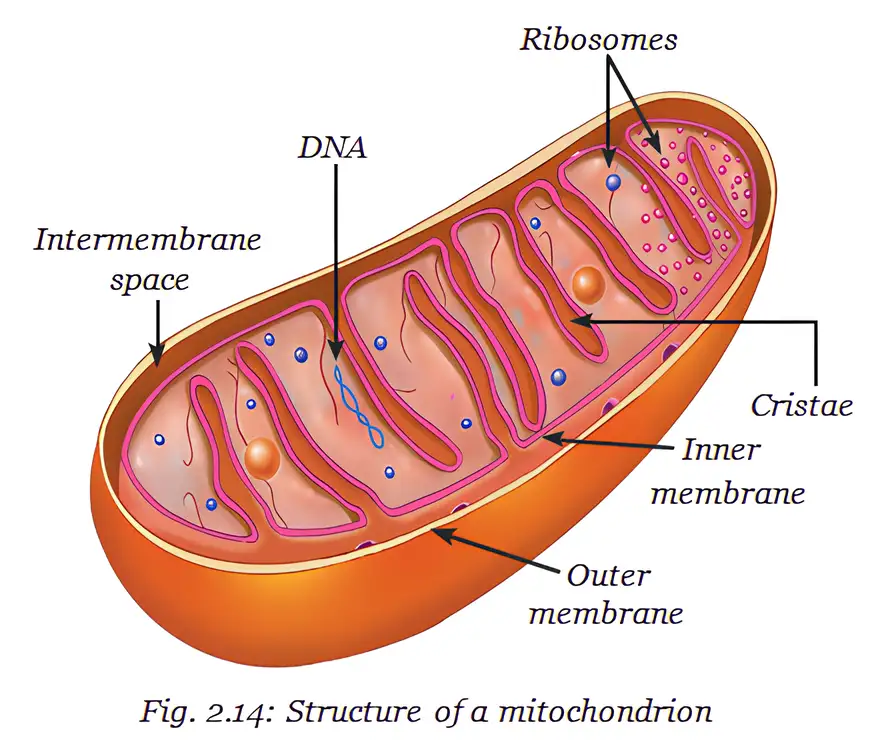
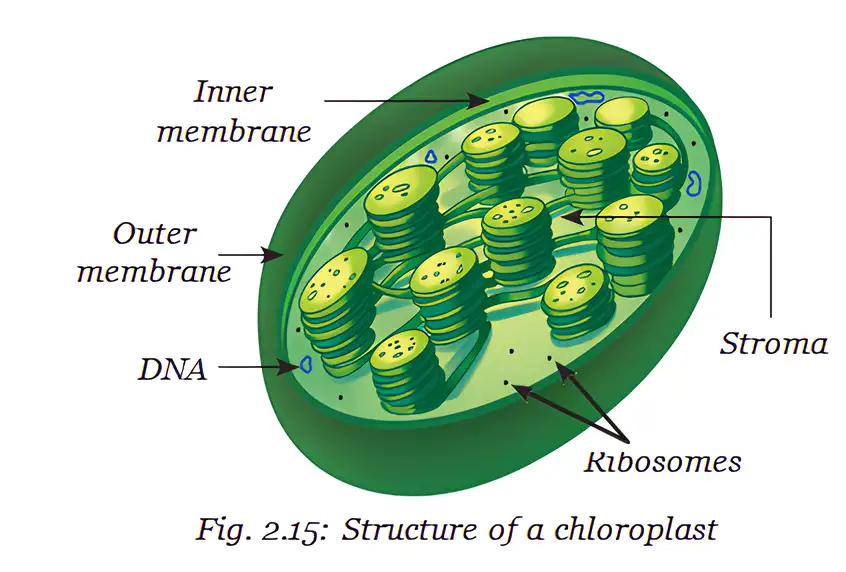
Differences Between Cell Types
Bacterial cells have a nucleoid region instead of a nucleus and lack membrane-bound organelles. Plant cells have a cell wall, chloroplasts, and large vacuoles, while animal cells lack these but have lysosomes. These differences reflect their functions and roles in organisms.
Cell Division
Importance and Types
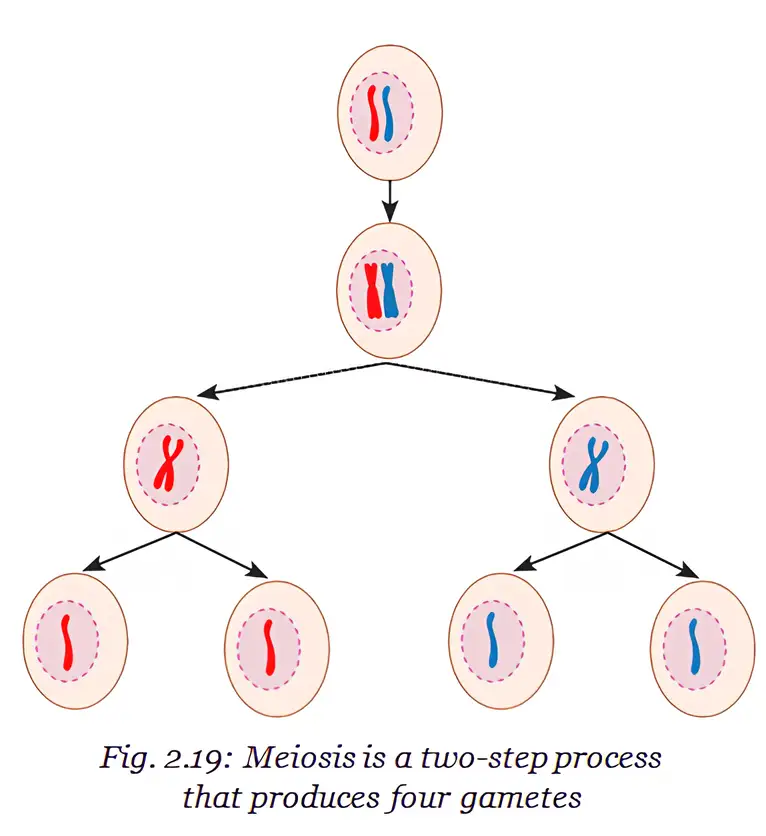
Cell division is the process by which new cells form from existing cells, enabling growth, repair, and reproduction. The two main types are mitosis and meiosis. Mitosis produces two identical daughter cells for growth and repair, while meiosis produces four genetically diverse gametes for sexual reproduction.
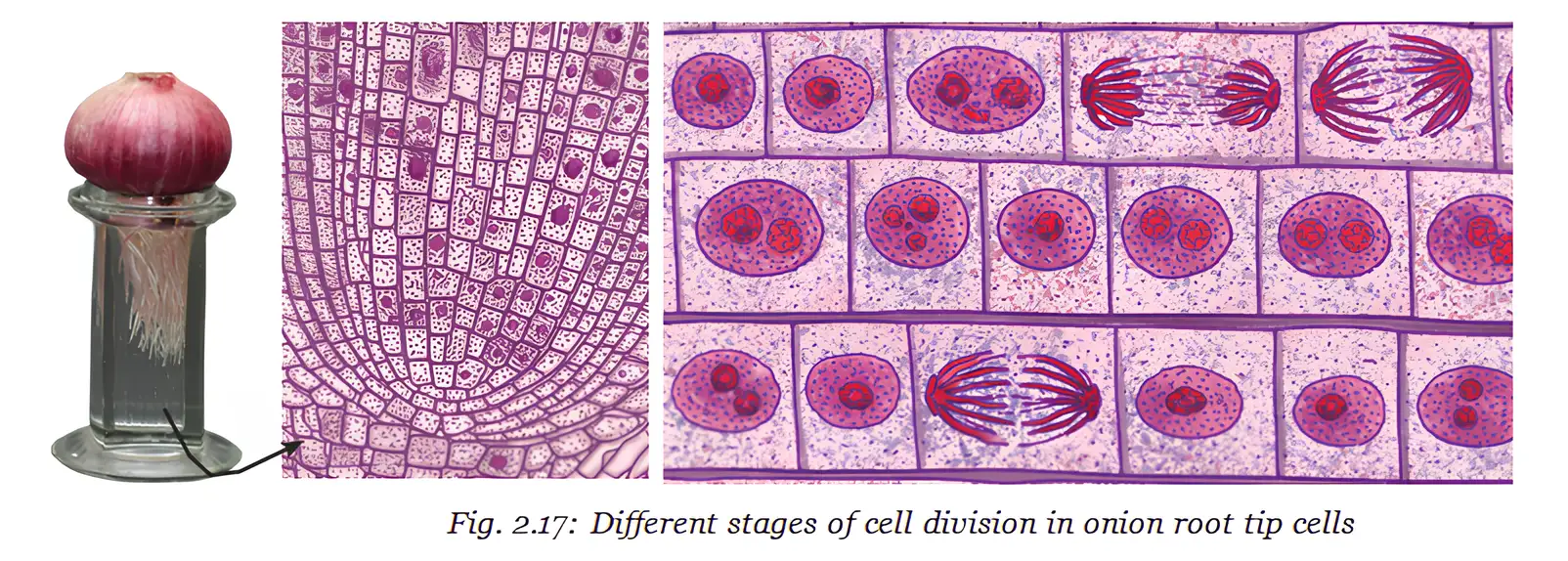
Mitosis Process
Mitosis involves the duplication and separation of chromosomes to form two identical cells. It ensures genetic consistency across body cells and supports growth and tissue repair.
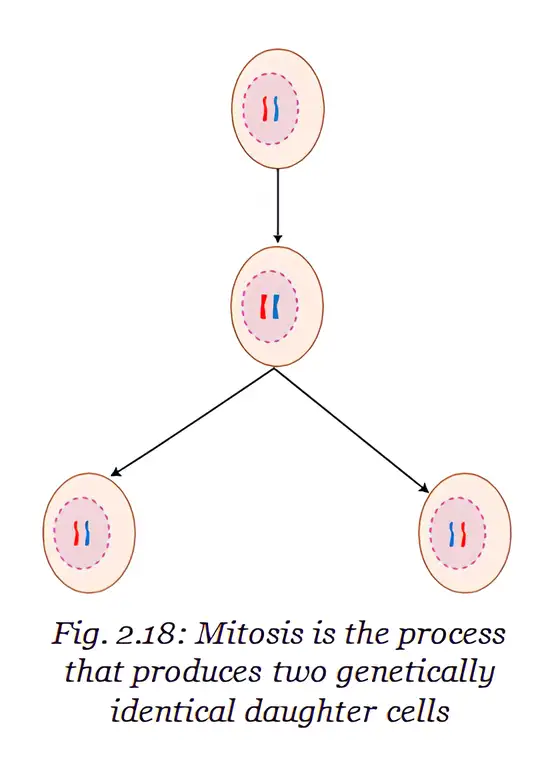
Meiosis Process
Meiosis occurs in reproductive organs and involves two divisions, reducing chromosome number by half to produce gametes. This process introduces genetic variation essential for sexual reproduction.
Cell Cycle and Control
Cell division is tightly regulated. Errors in mitosis can cause tumors, while errors in meiosis can lead to genetic disorders. Normal cells stop dividing when in contact with neighbors (contact inhibition), but cancer cells lose this control and divide uncontrollably.
Solved Examples
Example 1: Estimating the size of an onion peel cell using a microscope.
Given: Diameter of visible field = 5 mm = 5000 µm; Number of cells along diameter = 25.
Solution: Size of one cell = Diameter of visible field / Number of cells = 5000 µm / 25 = 200 µm.
Example 2: Calculating total magnification of a microscope.
Given: Eyepiece magnification = 10X; Objective lens magnification = 10X.
Solution: Total magnification = Eyepiece magnification × Objective lens magnification = 10 × 10 = 100X.
Practice Set
- Level 1: What is the function of the cell membrane?
- Level 1: Name two organelles found only in plant cells.
- Level 2: Explain the difference between prokaryotic and eukaryotic cells.
- Level 3: Describe the process of osmosis and its importance in plant cells.
- Level 3: Calculate the size of a cell if 30 cells fit along a 6 mm diameter field of view.
Answer Key
- Level 1: The cell membrane controls the movement of substances in and out of the cell and protects the cell.
- Level 1: Chloroplasts and cell wall.
- Level 2: Prokaryotic cells lack a defined nucleus and membrane-bound organelles, while eukaryotic cells have a defined nucleus and organelles.
- Level 3: Osmosis is the movement of water across a selectively permeable membrane from low to high solute concentration. It helps plant cells absorb water from the soil and maintain turgidity.
- Level 3: Size of cell = 6000 µm / 30 = 200 µm.
Quick Reference Table
Cell Observation: Microscopes magnify cells beyond the limit of human eye resolution (0.1 mm). Light microscopes use lenses; electron microscopes use electron beams.
Cell Membrane: Selectively permeable lipid bilayer with proteins; controls substance movement.
Osmosis: Water movement through membrane from low to high solute concentration.
Cell Wall: Rigid outer layer in plant cells made of cellulose; provides support.
Prokaryotic Cells: No nucleus, no membrane-bound organelles, unicellular.
Eukaryotic Cells: Defined nucleus, membrane-bound organelles, unicellular or multicellular.
Organelles: Nucleus (DNA), ribosomes (protein synthesis), ER (protein/lipid synthesis), Golgi (packaging), lysosomes (waste), mitochondria (energy), plastids (photosynthesis/storage), vacuoles (storage/support).
Cell Division: Mitosis produces identical cells; meiosis produces gametes with half chromosomes.
Common Mistakes and Misconceptions
- Confusing prokaryotic cells with eukaryotic cells; prokaryotes lack a true nucleus.
- Assuming all cells have a cell wall; only plant, fungi, and bacteria have cell walls.
- Believing osmosis is the movement of solutes; it is the movement of water.
- Thinking mitosis and meiosis are the same; they have different purposes and outcomes.
- Assuming all cells can be seen with a light microscope; some require electron microscopes.
Glossary
- Cell Membrane: Thin boundary controlling substance movement in cells.
- Osmosis: Movement of water across a selectively permeable membrane.
- Prokaryotic Cell: Cell without a defined nucleus or membrane-bound organelles.
- Eukaryotic Cell: Cell with a defined nucleus and membrane-bound organelles.
- Organelles: Specialized structures within a cell performing specific functions.
- Mitosis: Cell division producing two identical daughter cells.
- Meiosis: Cell division producing four gametes with half chromosome number.