CLASS 9 . SCIENCE . EXPLORATION . ATOMIC FOUNDATIONS-OF-MATTER
Chapter 9 : Atomic Foundations of Matter
Ch 9
SCIENCE
CLASS 9
Water Sources
Children discuss various methods of collecting and using water from different sources such as rain, taps, rivers, and hand pumps. Understanding these sources helps appreciate the importance of clean water and its availability.
Water is essential for life and can be obtained from various sources. Rainwater is collected during rainfall and can be stored for use. Taps provide water supplied through pipelines from reservoirs or groundwater. Rivers are natural flowing water bodies that serve as a source of fresh water. Hand pumps extract groundwater from wells or boreholes. Understanding these sources helps in managing water resources effectively and ensuring access to clean water for daily needs.
Physical and Chemical Changes
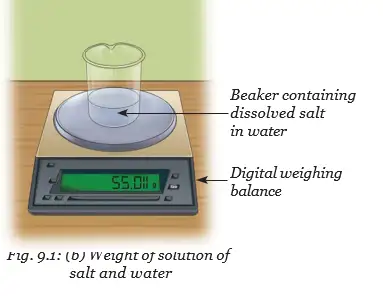
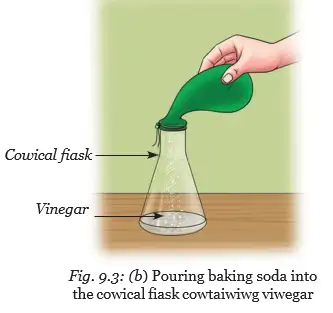
Physical changes involve changes in state or form without altering the substance's chemical identity, such as dissolving salt in water. Chemical changes involve the formation of new substances, such as the reaction between baking soda and vinegar producing carbon dioxide gas.
Physical changes are changes in the physical state or appearance of a substance without altering its chemical composition. Examples include melting, freezing, dissolving, and tearing. In a physical change, the substance can often be recovered in its original form. Chemical changes result in the formation of new substances with different properties. These changes involve breaking and forming chemical bonds. For example, when baking soda reacts with vinegar, carbon dioxide gas is produced, indicating a chemical change.
Law of Conservation of Mass
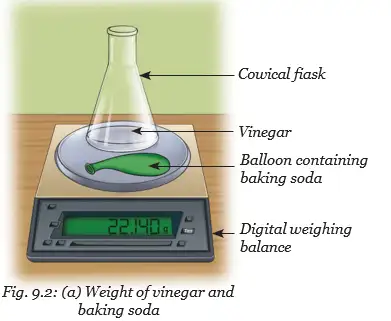
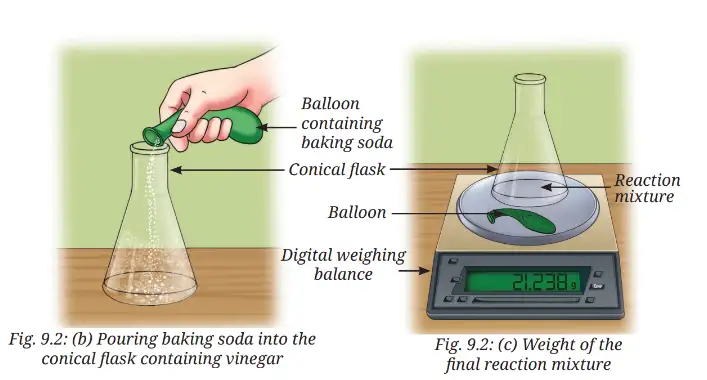
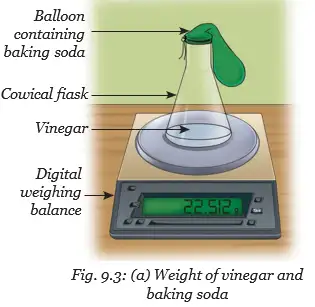
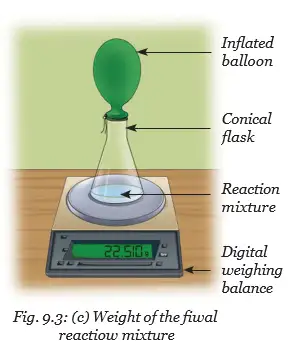
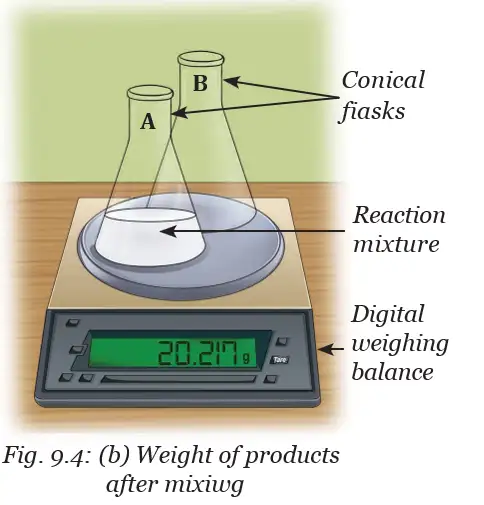
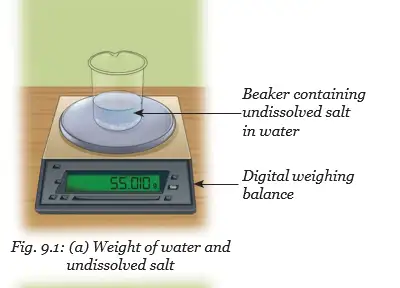
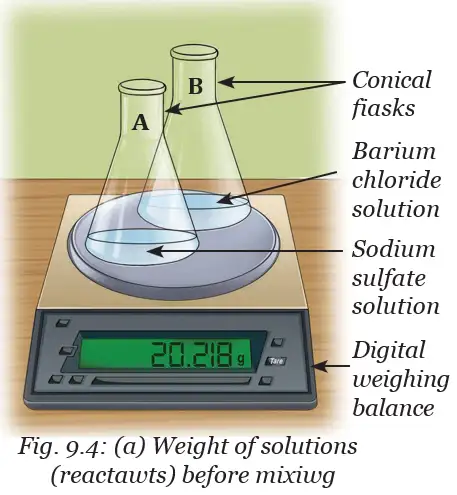
This fundamental law states that mass is neither created nor destroyed in a chemical reaction. Experiments demonstrate that the total mass before and after a chemical reaction remains constant, even when gases are produced, provided the system is closed.
The Law of Conservation of Mass states that in a chemical reaction, the total mass of the reactants equals the total mass of the products. This means that mass is neither created nor destroyed during the reaction. Experiments using closed systems, where gases produced are contained, show that the mass before and after the reaction remains constant. This law is fundamental to understanding chemical processes and balancing chemical equations.
Law of Constant Proportions
Also known as the Law of Definite Proportions, it states that elements combine in fixed mass ratios to form compounds. For example, water always contains hydrogen and oxygen in a 1:8 mass ratio regardless of the source.
The Law of Constant Proportions, also called the Law of Definite Proportions, states that a chemical compound always contains the same elements combined in a fixed ratio by mass, regardless of the source or method of preparation. For example, water from different sources always contains hydrogen and oxygen in a mass ratio of 1:8. This law supports the idea that compounds have a definite chemical composition.
Dalton's Atomic Theory
Dalton proposed that matter is made of indivisible atoms, atoms of the same element are identical, and atoms combine in simple whole number ratios to form compounds. This theory explains the fixed proportions in compounds and conservation of mass in reactions.
Dalton's Atomic Theory proposed that all matter is made up of tiny indivisible particles called atoms. Atoms of the same element are identical in mass and properties, while atoms of different elements differ. Atoms combine in simple whole number ratios to form compounds. This theory explains why elements combine in fixed proportions and why mass is conserved in chemical reactions. It laid the foundation for modern chemistry.
Covalent Bonding
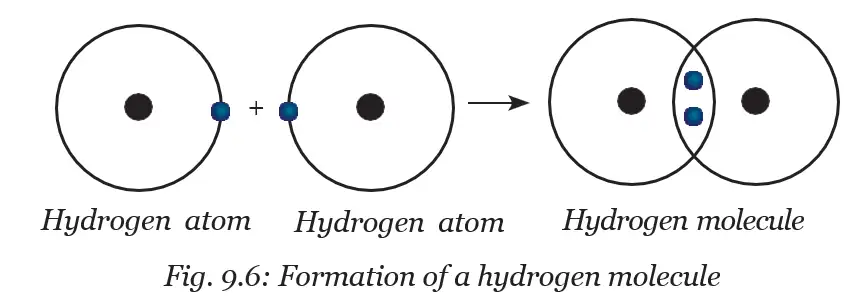
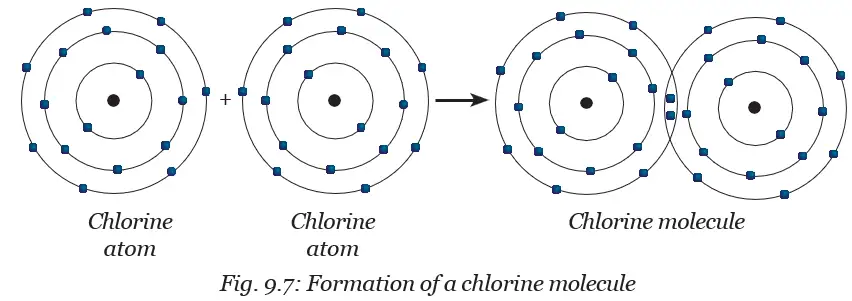
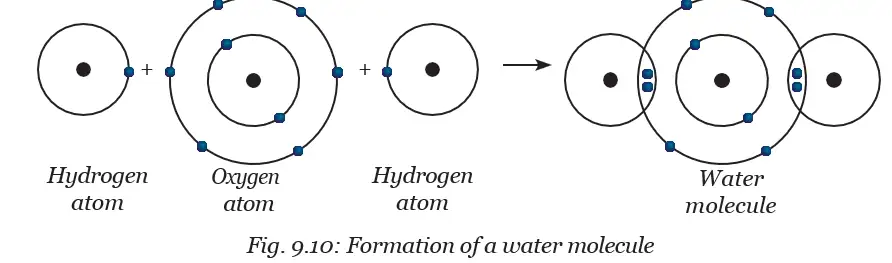
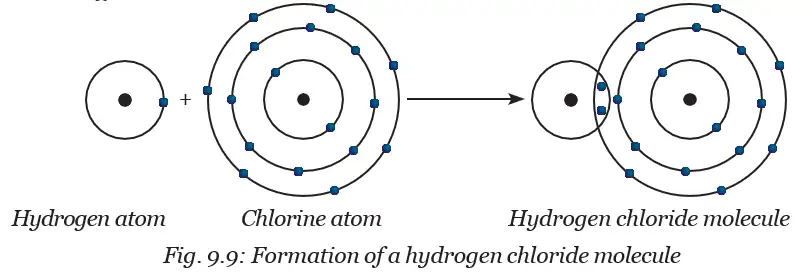
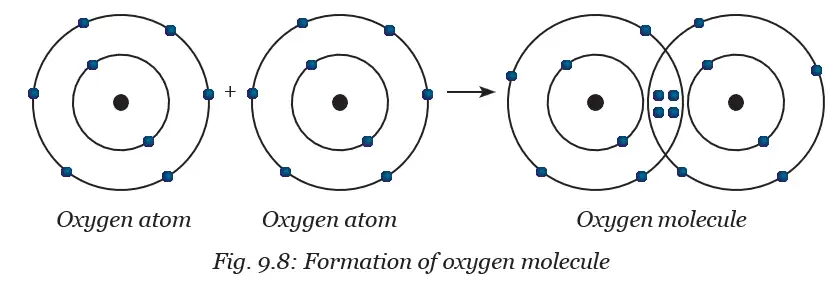
Covalent bonds form when atoms share electrons to achieve stable electronic configurations. Examples include hydrogen (H₂), chlorine (Cl₂), oxygen (O₂), and compounds like hydrogen chloride (HCl) and water (H₂O).
Covalent bonding occurs when two atoms share one or more pairs of electrons to achieve stable electronic configurations, usually completing their valence shells. In molecules like hydrogen (H₂), two hydrogen atoms share one pair of electrons forming a single covalent bond. Chlorine (Cl₂) and oxygen (O₂) molecules also form covalent bonds by sharing electrons. Compounds such as hydrogen chloride (HCl) and water (H₂O) are formed by covalent bonds between different elements, resulting in stable molecules.
Ionic Bonding
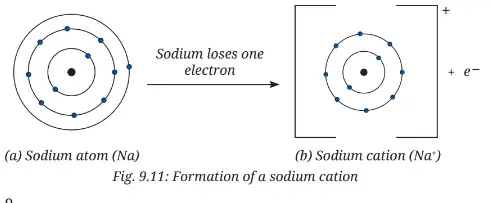
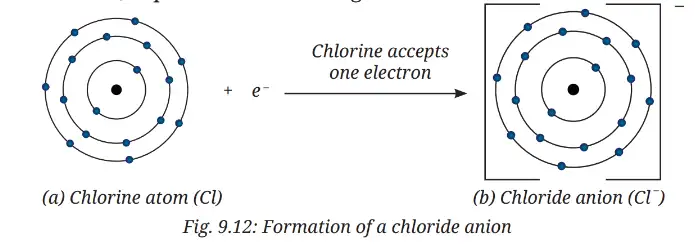
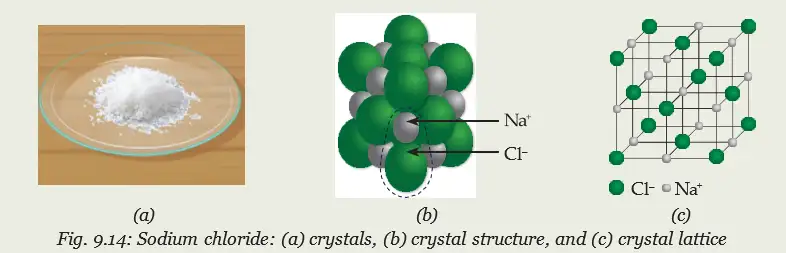
Ionic bonds form by the transfer of electrons from one atom to another, creating positively charged cations and negatively charged anions. These ions attract each other to form ionic compounds like sodium chloride (NaCl).
Ionic bonds are formed when one atom transfers one or more electrons to another atom. This transfer creates ions: the atom losing electrons becomes a positively charged cation, and the atom gaining electrons becomes a negatively charged anion. The opposite charges attract each other, resulting in a strong electrostatic force called an ionic bond. For example, in sodium chloride (NaCl), sodium loses one electron to become Na+, and chlorine gains one electron to become Cl–. These ions attract each other to form the ionic compound NaCl.

Naming Chemical Compounds
Covalent compounds use prefixes to indicate the number of atoms, while ionic compounds are named by listing the cation first followed by the anion. Polyatomic ions have specific names and valencies.
Covalent compounds are named using prefixes to indicate the number of atoms of each element present in the molecule. The first element retains its name, while the second element's name ends with '-ide'. Prefixes such as mono-, di-, tri-, tetra-, etc., specify the number of atoms. For example, CO is carbon monoxide, and CO2 is carbon dioxide.
Ionic compounds are named by stating the cation (positive ion) first, followed by the anion (negative ion). The names of simple anions end with '-ide'. For example, NaCl is sodium chloride. Polyatomic ions, which consist of multiple atoms, have specific names and valencies, such as sulfate (SO42–) and hydroxide (OH–).
Properties of Ionic and Covalent Compounds
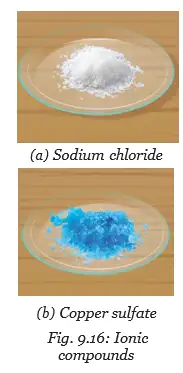
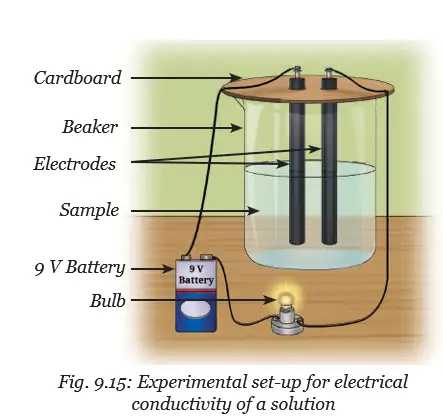
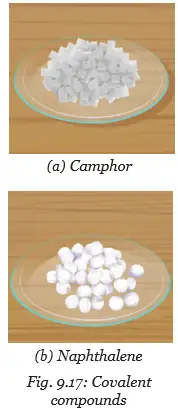
Ionic compounds are generally soluble in water and conduct electricity when dissolved, while covalent compounds may be insoluble in water and do not conduct electricity. Ionic compounds have high melting and boiling points compared to covalent compounds.
Ionic compounds are generally soluble in water because the polar water molecules can separate the positive and negative ions. When dissolved, ionic compounds conduct electricity due to the free movement of ions. However, ionic compounds do not conduct electricity in solid form because the ions are fixed in place within the crystal lattice.
Covalent compounds are often insoluble in water but may dissolve in non-polar solvents like kerosene or petrol. They do not conduct electricity in either solid or dissolved form because they do not produce ions in solution. Additionally, ionic compounds typically have high melting and boiling points due to strong ionic bonds, whereas covalent compounds have lower melting and boiling points because of weaker intermolecular forces.
Molecular and Formula Unit Mass
Molecular mass is the sum of atomic masses in a molecule of a covalent compound. Formula unit mass is the sum of atomic masses in the simplest ratio of ions in an ionic compound.
The molecular mass of a covalent compound is the sum of the atomic masses of all atoms in its molecule. For example, the molecular mass of water (H2O) is calculated as (2 × 1 u) + (16 u) = 18 u.
In ionic compounds, the simplest ratio of ions is called the formula unit. The formula unit mass is the sum of the atomic masses of the ions in this ratio. For example, the formula unit mass of sodium oxide (Na2O) is (2 × 23 u) + (16 u) = 62 u.
Solved Examples
Example 9.1: Verifying Law of Conservation of Mass
Mass of calcium carbonate = 4.0 g
Mass of hydrochloric acid = 2.92 g
Total mass of reactants = 4.0 g + 2.92 g = 6.92 g
Mass of carbon dioxide = 1.76 g
Mass of water = 0.72 g
Mass of calcium chloride = 4.44 g
Total mass of products = 1.76 g + 0.72 g + 4.44 g = 6.92 g
Since total mass of reactants equals total mass of products, the law is obeyed.
Example 9.2: Calculating Mass of Carbon Dioxide Produced
Given: 12 g carbon + 32 g oxygen → 44 g carbon dioxide
For 2.4 g carbon, mass of carbon dioxide produced = (44/12) × 2.4 = 8.8 g
Example 9.3: Mass of Chlorine in Sodium Chloride
Mass ratio Na:Cl = 23:35.5
If 46 g sodium reacts, chlorine needed = (35.5/23) × 46 = 71 g
Example 9.4: Molecular Mass of Water
Atomic masses: H = 1 u, O = 16 u
Molecular mass = (1 × 2) + 16 = 18 u
Example 9.5: Molecular Mass of Carbon Dioxide
Atomic masses: C = 12 u, O = 16 u
Molecular mass = 12 + (16 × 2) = 44 u
Example 9.6: Formula Unit Mass of Sodium Oxide
Atomic masses: Na = 23 u, O = 16 u
Formula unit mass = (23 × 2) + 16 = 62 u
Example 9.7: Formula Unit Mass of Calcium Nitrate
Atomic masses: Ca = 40 u, N = 14 u, O = 16 u
Formula unit mass = 40 + 2 × (14 + 3 × 16) = 164 u
Practice Set
Conceptual Questions
- Level 1: What is the difference between a physical change and a chemical change?
- Level 2: Explain why the mass remains constant during a chemical reaction according to the Law of Conservation of Mass.
Application-based Question
- Level 3: Design an experiment to verify the Law of Conservation of Mass using vinegar and baking soda.
Answer Key
- Physical change involves change in form without new substances; chemical change produces new substances.
- Mass remains constant because matter is neither created nor destroyed in chemical reactions.
- Use a closed system with vinegar and baking soda, measure mass before and after reaction; mass remains constant.
Quick Reference Table
Law of Conservation of Mass: Mass is neither created nor destroyed in a chemical reaction; the total mass of reactants equals the total mass of products.
Law of Constant Proportions: Elements combine in fixed mass ratios to form compounds, regardless of the source.
Dalton's Atomic Theory: Matter is made of indivisible atoms; atoms of the same element are identical; atoms combine in simple whole number ratios to form compounds.
Covalent Bond: A chemical bond formed by sharing electrons between atoms.
Ionic Bond: A chemical bond formed by the transfer of electrons, resulting in attraction between oppositely charged ions.
Molecule: An electrically neutral group of atoms bonded together, capable of independent existence.
Formula Unit: The simplest whole number ratio of ions in an ionic compound.
Molecular Mass: Sum of atomic masses of atoms in a molecule.
Formula Unit Mass: Sum of atomic masses of ions in the formula unit of an ionic compound.
Common Mistakes and Misconceptions
Common Mistakes:
- Confusing physical changes with chemical changes; physical changes do not produce new substances.
- Believing mass changes during chemical reactions; mass is conserved in a closed system.
- Assuming all compounds have variable composition; compounds have fixed mass ratios of elements.
- Using incorrect prefixes or omitting them when naming covalent compounds.
- Thinking ionic compounds conduct electricity in solid form; they conduct only when molten or dissolved.
- Misinterpreting molecular mass and formula unit mass; molecular mass applies to molecules, formula unit mass to ionic compounds.
Misconceptions:
- Atoms are indivisible; atoms contain subatomic particles but are indivisible in chemical reactions.
- All elements exist as molecules; some elements like helium exist as single atoms.
- Electrons are transferred in covalent bonds; electrons are shared, not transferred, in covalent bonding.
Glossary
Atom: The smallest unit of an element that retains its chemical properties and consists of protons, neutrons, and electrons.
Cation: A positively charged ion formed when an atom loses one or more electrons.
Anion: A negatively charged ion formed when an atom gains one or more electrons.
Covalent Bond: A chemical bond formed by the sharing of electrons between atoms.
Ionic Bond: A chemical bond formed by the transfer of electrons from one atom to another, resulting in attraction between oppositely charged ions.
Compound: A substance formed when two or more elements chemically combine in fixed ratios.
Law of Conservation of Mass: A fundamental law stating that mass is neither created nor destroyed in a chemical reaction.
Law of Constant Proportions: Also called the Law of Definite Proportions; it states that elements combine in fixed mass ratios to form compounds.
Molecule: An electrically neutral group of two or more atoms held together by chemical bonds, capable of independent existence.
Molecular Mass: The sum of the atomic masses of all atoms in a molecule.
Formula Unit: The simplest whole number ratio of ions in an ionic compound.
Formula Unit Mass: The sum of the atomic masses of all atoms in a formula unit of an ionic compound.
Valence Electrons: Electrons present in the outermost shell of an atom that participate in chemical bonding.
Octet Rule: The tendency of atoms to gain, lose, or share electrons to have eight electrons in their valence shell for stability.
Polyatomic Ion: A charged ion composed of two or more atoms covalently bonded, acting as a single ion.
Electron Configuration: The arrangement of electrons in the shells or energy levels around the nucleus of an atom.
Effervescence: The rapid escape of gas from a liquid, often observed as bubbling or fizzing during a chemical reaction.
Crystal Lattice: A three-dimensional arrangement of ions or atoms in a crystalline solid.
Atomic Number: The number of protons in the nucleus of an atom, defining the element.
Atomic Mass: The average mass of atoms of an element, measured in atomic mass units (u).
Electron Transfer: The process by which electrons move from one atom to another during ionic bonding.
Electron Sharing: The process by which atoms share electrons to form covalent bonds.