Bharat Our Land Summary
"Bharat Our Land" is a patriotic poem by Subramania Bharati that celebrates the natural beauty, cultural heritage, and spiritual richness of India. The poem highlights the grandeur of the Himalayas, the sacredness of the Ganga river, the wisdom of ancient scriptures like the Upanishads, and the historical significance of the land through its gallant warriors and sages. It praises India as a unique and peerless nation with a glorious past and a rich cultural legacy.
Key Elements
- Themes: Patriotism, pride in natural beauty, reverence for spiritual wisdom, cultural heritage, and historical greatness.
- Literary Devices: Personification (e.g., "The generous Ganga is ours"), repetition ("she’s peerless, let’s praise her!"), imagery (vivid descriptions of mountains, rivers, and sages), and alliteration.
- Important Quotes: "The mighty Himavant is ours", "The generous Ganga is ours", "The sacred Upanishads are ours", "Of hoary antiquity is Bharat, she’s peerless, let’s praise her!"
Textual Evidence and Explanation
The poem opens with the majestic Himalayas (Himavant) symbolizing strength and grandeur. The Ganga river is described as generous and graceful, emphasizing its sacredness. The Upanishads represent ancient spiritual knowledge, and the mention of gallant warriors and sages reflects India’s rich history and culture. The repeated phrase "she’s peerless, let’s praise her!" reinforces the poet’s deep admiration and pride.
Practice Set
Level 1 – Easy
- Who is the poet of "Bharat Our Land"?
- Name two natural features mentioned in the poem.
- What does the phrase "she’s peerless" mean?
Level 2 – Moderate
- Explain the significance of the Ganga river as described in the poem.
- Identify two literary devices used in the poem with examples.
- What does the poet mean by "Of hoary antiquity is Bharat"?
Level 3 – Challenging
- Discuss how the poem reflects the cultural and spiritual heritage of India.
- Analyze the use of repetition in the poem and its effect on the reader.
- Write a short note on the importance of sages and warriors in the poem.
Answer Key
- Level 1: 1. Subramania Bharati 2. Himalayas and Ganga river 3. It means she is unmatched or incomparable.
- Level 2: 1. The Ganga is described as generous and graceful, symbolizing purity and sacredness. 2. Personification - "The generous Ganga is ours"; Repetition - "she’s peerless, let’s praise her!" 3. It means India is ancient and has a long, glorious history.
- Level 3: 1. The poem highlights India’s spiritual texts, sages, and historical warriors, showing its rich cultural heritage. 2. Repetition emphasizes pride and admiration, making the poem more rhythmic and memorable. 3. Sages represent wisdom and spiritual knowledge; warriors symbolize bravery and protection of the land.
Quick Reference
- Poet: Subramania Bharati
- Main themes: Patriotism, nature, spirituality, history
- Key literary devices: Personification, repetition, imagery
- Important lines: "The mighty Himavant is ours", "she’s peerless, let’s praise her!"
Glossary
- Himavant: The Himalayas, the great mountain range in India.
- Upanishads: Ancient Indian spiritual texts forming the basis of Hindu philosophy.
- Hoary antiquity: Very old or ancient times.
- Peerless: Without equal; unmatched.
Reflect and Respond Activities
This section includes activities designed to deepen understanding of the poem "Bharat Our Land" through reflection and discussion.
Activity 1: National Anthem Table Completion
Students are asked to recall lines from the Indian National Anthem and complete a table listing states/provinces, mountain ranges, and rivers mentioned in it. This exercise helps organize geographical knowledge related to India’s diverse landscape.
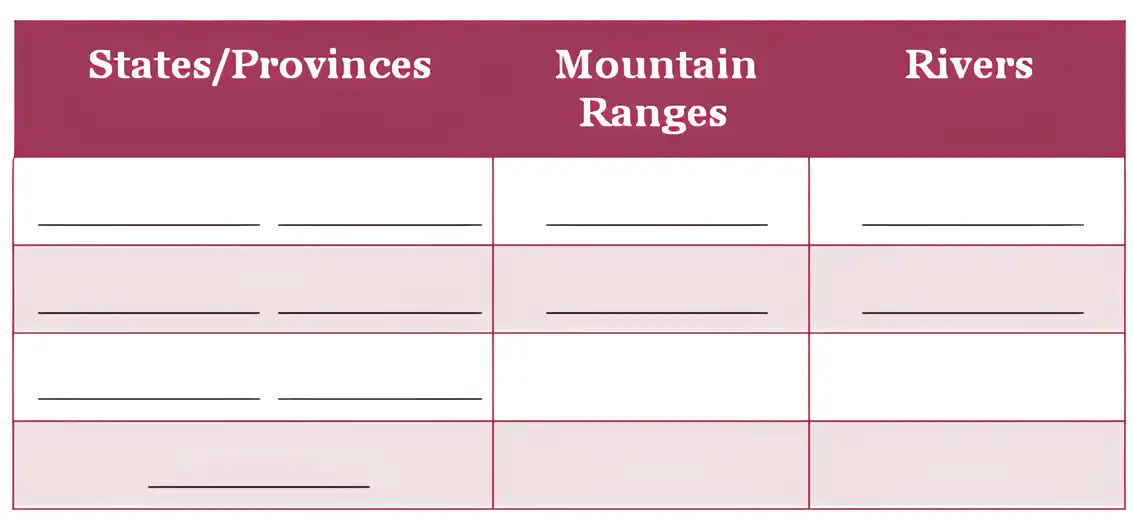
Step-by-step instructions:
- Identify different states or provinces mentioned in the anthem.
- Find the mountain ranges located in those states or provinces.
- Identify major rivers flowing through or near those states or provinces.
- Fill the table accordingly to organize the information clearly.
Activity 2: Discussion on the Phrase ‘जय हे’ (Jaya he)
Students work in pairs to discuss the meaning and significance of the words ‘जय हे’ (Jaya he) from the last two lines of the National Anthem. They share their interpretations with classmates and the teacher, fostering a deeper appreciation of the anthem’s message of victory and praise.
Activity 3: Vocabulary and Meaning
Students read underlined words from the poem and choose the odd one out that does not match the meaning of the word. This helps build vocabulary and understanding of synonyms.
- 1. Peerless: valuable, incomparable, unmatched (odd one out: valuable)
- 2. Sanctified: blessed, purified, applauded (odd one out: applauded)
- 3. Auspicious: fortunate, fantastic, favourable (odd one out: fantastic)
- 4. Hoary antiquity: ancient times, recent past, time immemorial (odd one out: recent past)
Practice Set
Level 1 – Easy
- What is the purpose of completing the table related to the National Anthem?
- What do the words ‘जय हे’ (Jaya he) mean?
- Choose the correct synonym for the word ‘peerless’ from the options given.
Level 2 – Moderate
- Explain why the phrase ‘जय हे’ is important in the National Anthem.
- Identify the odd word out from the given sets and explain why.
- How does discussing these words help in understanding the poem better?
Level 3 – Challenging
- Write a short paragraph on how reflecting on the National Anthem and poem enhances your sense of patriotism.
- Discuss the importance of vocabulary exercises in learning poetry.
- Explain how group discussions can deepen comprehension of literary texts.
Answer Key
- Level 1: 1. To organize and learn about India’s states, mountains, and rivers mentioned in the anthem. 2. ‘जय हे’ means victory or praise. 3. Incomparable or unmatched.
- Level 2: 1. It expresses praise and victory for the nation. 2. Peerless: valuable is odd because it does not mean unmatched; Sanctified: applauded is odd because it means praised, not purified; Auspicious: fantastic is odd because it does not mean fortunate; Hoary antiquity: recent past is odd because it means not ancient. 3. It helps understand the meaning and emotions behind the poem’s words.
- Level 3: 1. Reflecting on the anthem and poem builds pride and love for the country. 2. Vocabulary exercises improve understanding and appreciation of poetry. 3. Group discussions allow sharing ideas and clarifying meanings, enhancing comprehension.
Quick Reference
- ‘जय हे’ means victory and praise.
- Vocabulary exercises help in understanding synonyms and meanings.
- Group discussions promote deeper literary understanding.
Glossary
- Peerless: Without equal; unmatched.
- Sanctified: Made holy or purified.
- Auspicious: Favorable or fortunate.
- Hoary Antiquity: Very ancient times.