CLASS 8 . SOCIAL SCIENCE . EXPLORING SOCIETY INDIA AND BEYOND PART I . NATURAL RESOURCES-AND-THEIR-USE
Chapter 1 : Natural Resources and Their Use
Ch 1
SOCIAL SCIENCE
CLASS 8
Introduction to Natural Resources
Natural resources are materials and substances that occur in nature and are valuable to humans. They include air, water, soil, minerals, forests, and fossil fuels. These resources are essential for sustaining life and supporting human activities. When humans use elements of nature for sustenance or create new things from them, these elements become resources. For example, trees are part of the environment, but when their wood is used to make furniture, they are considered a resource.
For a natural entity to be called a resource, it must be technologically accessible, economically feasible to exploit, and culturally acceptable. The Earth holds many treasures formed over millions of years, such as water, air, soil, coal, petroleum, precious stones, metal ores, and timber.
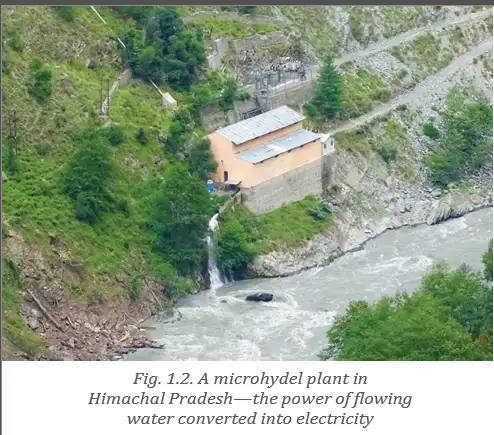
The image shows a microhydel plant in Himachal Pradesh that generates electricity using the natural flow of water from a river. This is an example of harnessing natural resources for energy.
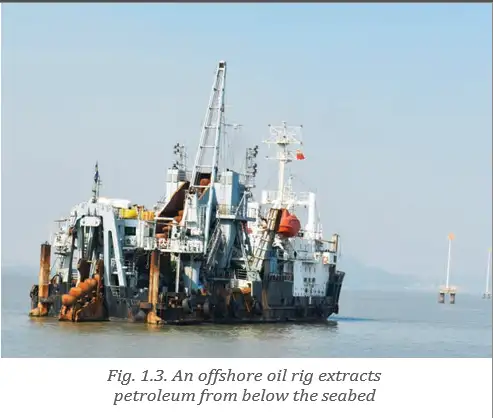
The image shows an offshore oil rig extracting petroleum from beneath the seabed, illustrating the use of non-renewable natural resources.
When Does Nature Become a Resource?
Nature includes all life and non-life forms that exist independently of humans. When humans use these elements for survival or create products from them, they become resources. Accessibility, economic feasibility, and cultural acceptance determine whether a natural element is considered a resource.
Exam Question
Q: What conditions must be met for a natural element to be considered a resource?
A: It must be technologically accessible, economically feasible to exploit, and culturally acceptable.
Categorisation of Natural Resources
Natural resources can be categorised based on their uses or their renewability.
Resources Essential for Life
These include air, water, and food, which are vital for life. They come from the atmosphere, rivers, soil, and living organisms. Humans cannot create these resources.
Resources for Materials
Humans use natural resources to create physical objects for utility or beauty, such as wood for furniture or marble for sculptures. India's geographical diversity provides a wide variety of such resources.
Resources for Energy
Energy resources include coal, water, petroleum, natural gas, sunlight, and wind. These are essential for electricity, transportation, and production processes.
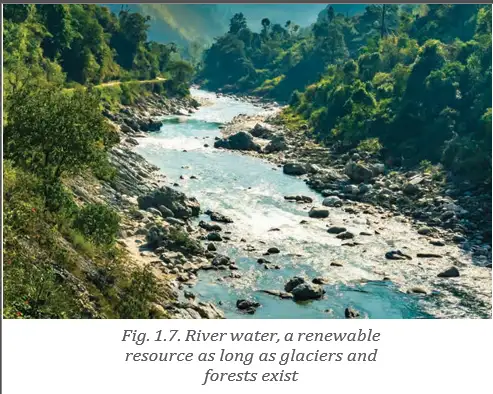
The image shows a flowing river, a renewable resource that is replenished naturally through rain and melting glaciers.
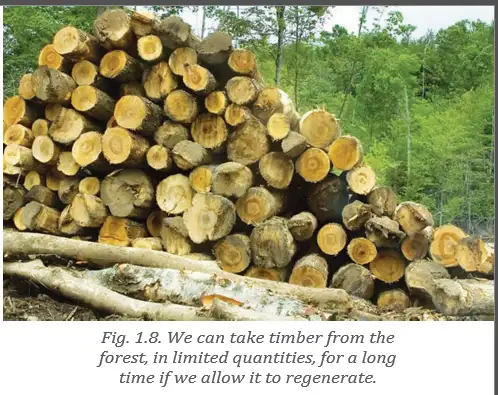
The image shows timber being harvested carefully to maintain sustainability.
Renewable and Non-Renewable Resources
Renewable resources can be replenished naturally over time, such as solar energy, wind energy, flowing water, and timber. Non-renewable resources, like fossil fuels and minerals, take millions of years to form and cannot be replenished at the rate they are used.
Exam Question
Q: What is the difference between renewable and non-renewable resources?
A: Renewable resources can be naturally replenished over time, while non-renewable resources cannot be replenished at the rate they are consumed.
Distribution and Importance of Natural Resources
Natural resources are unevenly distributed across the world and within countries. This uneven distribution influences human settlements, trade, international relations, and conflicts. Many wars have been fought over control of natural resources.
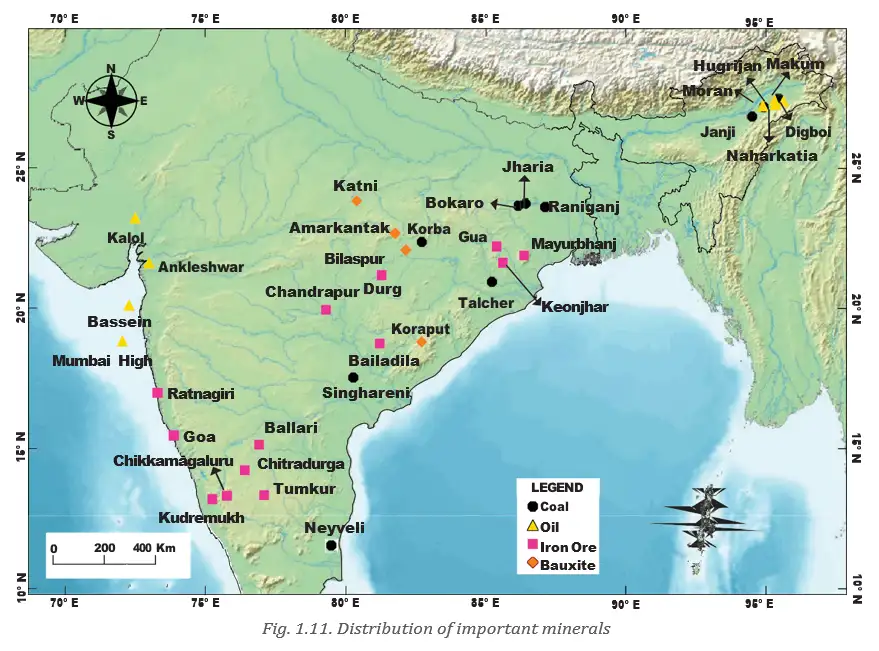
The map shows the distribution of important minerals like coal, oil, iron ore, and bauxite across India.
Economic and Social Impacts
Industries near natural resources create employment and economic opportunities but can also lead to displacement and conflicts over sacred places. Trade based on natural resources has historically fueled the development of empires.
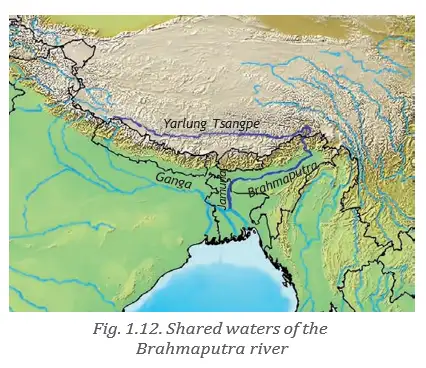
The map shows shared water resources of the Brahmaputra River flowing through Tibet, India, and Bangladesh, highlighting the need for cooperation in resource sharing.
Exam Question
Q: How does the uneven distribution of natural resources affect human societies?
A: It influences settlements, trade, economic development, and can lead to conflicts over resource control.
Responsible Use and Stewardship of Natural Resources
Sustaining life on Earth requires respecting nature and using natural resources wisely. Renewable resources must be used in a way that allows restoration and regeneration, while non-renewable resources should be used judiciously to last longer.
Restoration and Regeneration of Renewable Resources
Examples include groundwater extraction for irrigation and soil management. Over-extraction of groundwater in Punjab has led to depletion and health hazards due to pesticide contamination. Traditional practices like water harvesting and organic farming help restore natural cycles.
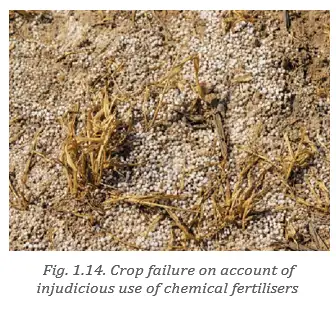
The image shows soil degradation caused by overuse of chemical fertilizers.
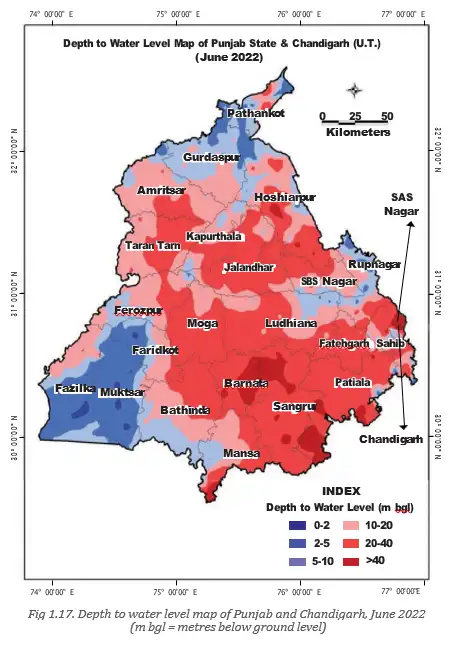
The map shows groundwater levels in Punjab, indicating areas of severe depletion.
Exam Question
Q: What are the consequences of over-extracting groundwater?
A: It leads to depletion of water resources, increased extraction costs, and potential health hazards from contamination.
Use of Sustainable Materials and Renewable Energy
Cement production is highly polluting, but alternative materials like mud, stone, and recycled plastics are being used to reduce environmental impact. India leads in renewable energy initiatives like the International Solar Alliance, promoting solar power to reduce fossil fuel dependence.
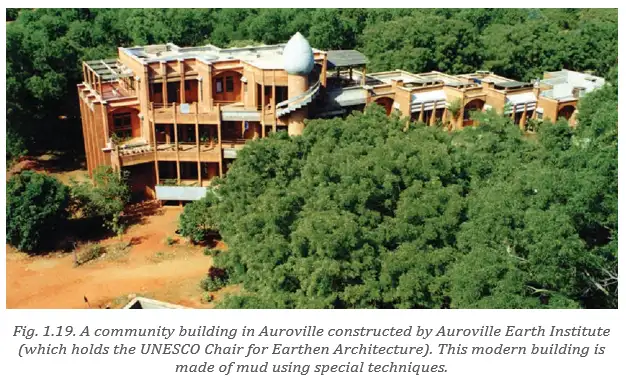
The image shows an eco-friendly building made of mud in Auroville, demonstrating sustainable architecture.
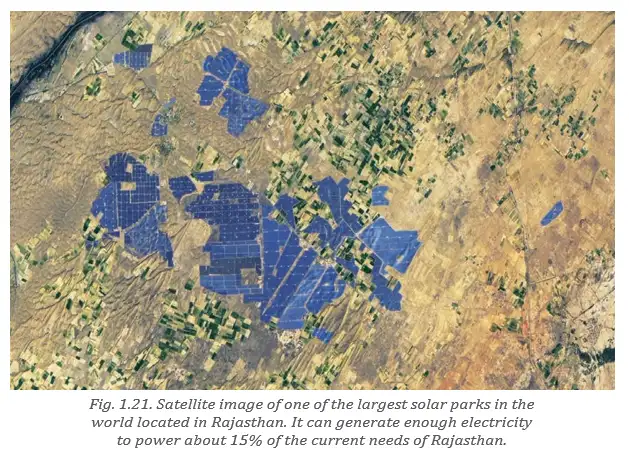
The image shows a large solar park in Rajasthan producing renewable energy.
Exam Question
Q: How can renewable energy help in sustainable development?
A: Renewable energy reduces dependence on fossil fuels, lowers pollution, and supports long-term environmental health.
Summary and Key Points
- Natural resources are materials from nature valuable to humans.
- They can be categorised as renewable or non-renewable.
- Uneven distribution affects economic and social development.
- Responsible use and stewardship are essential for sustainability.
- Traditional and modern practices can help restore and conserve resources.
- Renewable energy initiatives are crucial for future development.
Solved Examples
Example 1: Categorising Resources
Question: Classify the following as renewable or non-renewable resources: solar energy, coal, timber, petroleum.
Answer: Solar energy and timber are renewable resources; coal and petroleum are non-renewable resources.
Example 2: Effects of Over-Exploitation
Question: What are the effects of over-exploitation of groundwater?
Answer: Over-exploitation leads to depletion of groundwater, increased extraction costs, and contamination from pesticides, affecting health and agriculture.
Practice Set
Easy
- Define natural resources.
- Give two examples of renewable resources.
- What is meant by the term 'resource'?
Moderate
- Explain the difference between renewable and non-renewable resources.
- Describe the impact of uneven distribution of natural resources.
- What are the consequences of over-extraction of groundwater?
Challenging
- Discuss the concept of the natural resource curse and how India has addressed it.
- Explain the importance of stewardship in the use of natural resources.
- Describe the role of traditional practices in sustainable resource management.
Answer Key
- Natural resources are materials and substances that occur in nature and are valuable to humans.
- Examples of renewable resources include solar energy and timber.
- A resource is a natural element that is accessible, economically feasible, and culturally acceptable for use.
- Renewable resources can be replenished naturally; non-renewable cannot.
- Uneven distribution affects settlements, trade, and can cause conflicts.
- Over-extraction of groundwater leads to depletion and contamination.
- The natural resource curse refers to resource-rich regions experiencing slower economic growth; India has invested in industries to avoid this.
- Stewardship means using resources responsibly to ensure sustainability.
- Traditional practices like organic farming and water harvesting support sustainable management.
Quick Reference
- Natural Resources: Materials from nature valuable to humans.
- Renewable Resources: Resources that can be replenished naturally.
- Non-Renewable Resources: Resources that cannot be replenished at the rate of use.
- Resource Curse: Economic paradox where resource-rich areas may not prosper.
- Stewardship: Responsible management of natural resources.
- Restoration and Regeneration: Natural processes that renew ecosystems.
- International Solar Alliance: Coalition promoting solar energy among sunshine-rich countries.
Glossary
- Arghyam: Offering, generally of water, as a mark of respect or gratitude.
- Renewable Resources: Natural resources that can be replenished naturally over time.
- Non-Renewable Resources: Resources that cannot be replenished at the rate they are consumed.
- Resource Curse: The paradox where resource-rich regions may experience slower economic growth.
- Stewardship: The responsible use and management of natural resources.
- Vṛikṣhāyurveda: Ancient Indian botanical science focusing on the care of plants and trees.