CLASS 8 . SOCIAL SCIENCE . EXPLORING SOCIETY INDIA AND BEYOND PART I . FACTORS OF-PRODUCTION
Chapter 7 : Factors of Production
Ch 7
SOCIAL SCIENCE
CLASS 8
Factors of Production
Every product around us is created through a production process that uses various resources or inputs. These inputs, known as factors of production, include land, labour, capital, and entrepreneurship. Technology acts as a crucial facilitator, enabling more efficient production. Businesses combine these factors to produce goods and services, which generate economic activities and opportunities.
For example, Ratna runs a small restaurant called Pause Point. To start her business, she had to select a location, arrange money for rent and equipment, hire staff, and plan operations. This illustrates how different factors of production come together in real life.
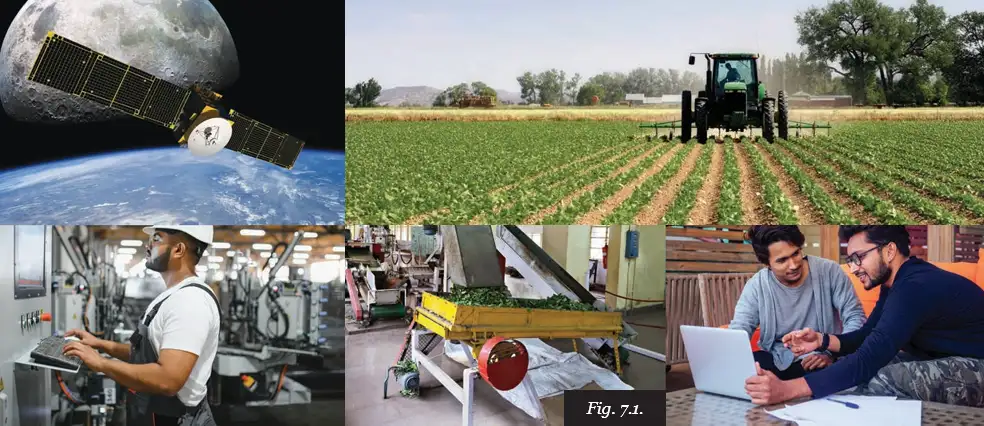
This image shows the use of technology in agriculture and production, from satellites monitoring weather to machinery processing products and people using computers to improve farming methods.
What are the factors of production?
The factors of production are land, labour, capital, and entrepreneurship. They are the inputs used to produce goods and services.
How are these factors interconnected?
These factors complement each other and are combined in varying proportions depending on the product. For example, agriculture relies more on labour, while manufacturing may require more capital. Efficient use of all factors is essential for productive output.
What is the role of human capital in production, and what are its facilitators?
Human capital refers to the knowledge, skills, and abilities of people that enhance their productivity. Education, training, and good health are key facilitators that improve human capital, enabling individuals to perform better in their work.
Land and Natural Resources
In economics, 'land' includes not only geographical land but also natural resources such as soil, forests, water, minerals, and sunlight. These resources are essential inputs for production. Businesses either purchase land or pay rent to use it.
LET’S EXPLORE
Identify items in your local economic activities that can be classified as land or natural resources.
Labour and Human Resources
Labour involves the physical and mental effort used in production. Different workers contribute various skills and knowledge to create goods and services. Human capital is the quality of labour, enhanced by education and training.
Skill
The ability to perform a job well through practice and training.
People as a Resource
Human beings apply their knowledge, skills, and decision-making abilities in economic activities. For example, police officers maintain law and order, scientists invent technologies, and chefs develop recipes. The quality of labour depends on their expertise and dedication.
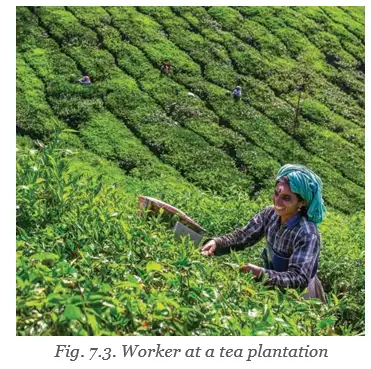
This image shows a worker picking tea leaves on a plantation, illustrating labour in agriculture.
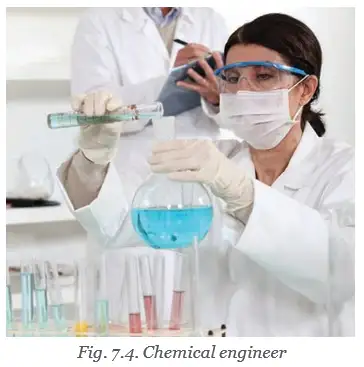
A chemical engineer working in a lab demonstrates skilled labour in industry.
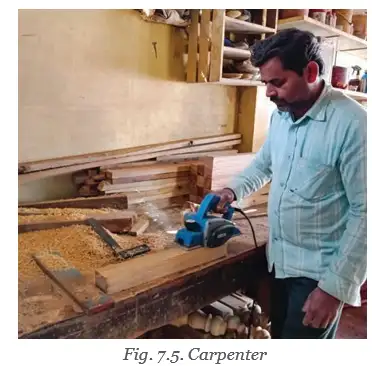
A carpenter using tools shows manual skilled labour.

A software developer represents knowledge-based labour.
Facilitators of Human Capital
Education and Training
Education provides knowledge and prepares individuals to solve problems. Training develops specific skills needed for jobs. Together, they enhance human capital.
Training
The process of learning skills required for a particular job.
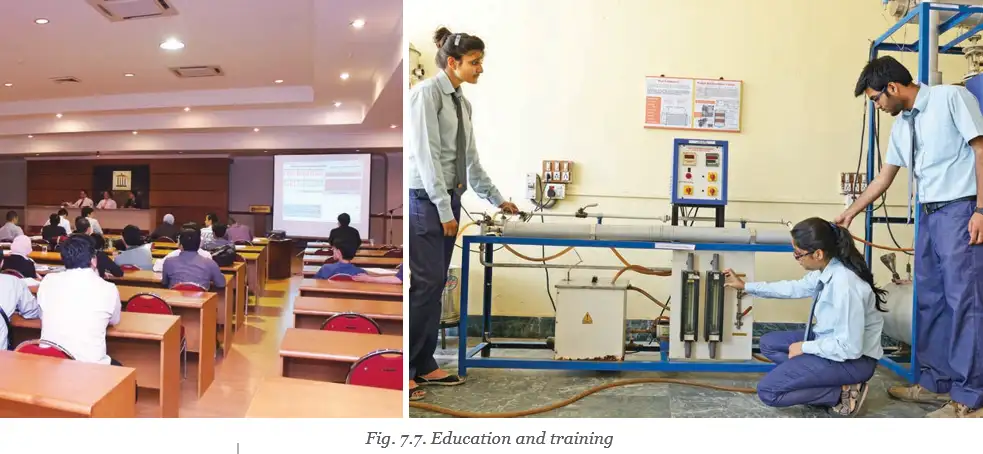
This image shows students learning theory in a classroom and applying it in a laboratory, highlighting education and training.
Healthcare
Good health supports learning and productivity. Healthy workers perform better and contribute more effectively.
THINK ABOUT IT
How do infrastructure and healthcare systems contribute to developing human capital?
Challenges to Human Capital
Despite progress, India faces challenges in developing human capital, such as literacy gaps and skill shortages. The adult literacy rate is 85% for males and 70% for females as of 2023. Lack of education and skills can limit economic growth and individual opportunities.
Productivity
The ability to do more work in a given time period.
Adult Literacy Rate
The percentage of people aged 15 and above who can read and write with understanding.
THINK ABOUT IT
Consider how dropping out of school affects future opportunities and how businesses suffer when skilled workers are unavailable.
India has a young population, which can be a demographic dividend if quality education, health, and training are accessible.
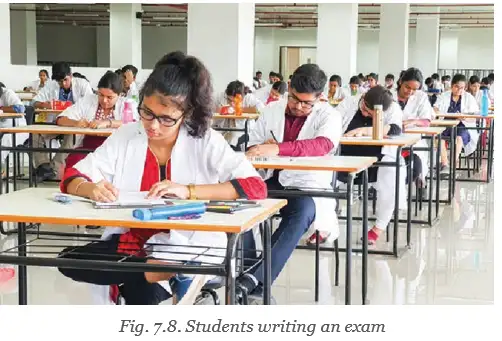
Students taking exams demonstrate the importance of education in building human capital.
THINK ABOUT IT
Are some jobs more important than others? What happens if essential services are not performed?
India’s Ancient Skill Heritage
Work was traditionally seen as an expression of devotion and perfection. Skills and knowledge were passed down generations, as seen in the Ĝhilpa ĜhÃstras, ancient texts detailing art and craft techniques. For example, sculptors followed precise guidelines for temple construction.
Generations of families contributed to India’s rich artistic and architectural heritage through dedication and skill.
Stitched Shipbuilding
Ancient Indians used a unique stitching technique to build ships by sewing wooden planks together, allowing flexibility for maritime trade across the Indian Ocean. This technique declined after European arrival but is still used for small fishing boats.
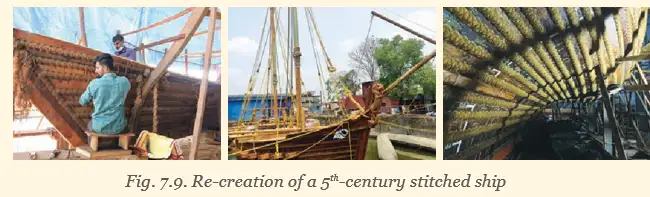
This image shows the process of building a stitched ship without nails, highlighting ancient craftsmanship.
LET’S EXPLORE
Discuss reasons for the decline of indigenous techniques and identify traditional skills and products from your region.
Capital
Capital includes monetary resources and human-made assets like machinery, tools, equipment, vehicles, shops, and factories used in production. Businesses obtain capital from personal savings, loans, or by raising funds through stock markets.
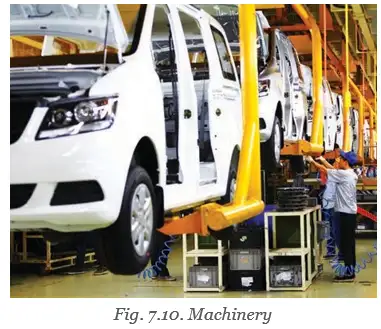
This image shows a car assembly line where machinery and workers build vehicles efficiently.

The State Bank of India provides financial services including loans, which help businesses and individuals invest and grow.
Capital
Any asset, physical or financial, used to produce goods and services.
Interest
Money paid by a borrower to a lender for using their money over time.
Dividend
Money paid regularly by a company to shareholders from its profits.
LET’S EXPLORE
Identify a local factory and estimate the capital invested and equipment used.
Entrepreneurship
Entrepreneurship involves starting a business or creating new solutions. Entrepreneurs take risks, gather resources, and work hard to make their ideas successful, creating jobs and benefiting society.
Startup
An entrepreneurial venture with limited resources aiming for rapid growth, often leveraging technology.
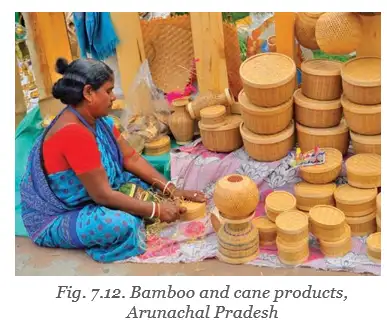
This image shows artisans making and selling bamboo and cane products, preserving traditional skills and supporting livelihoods.
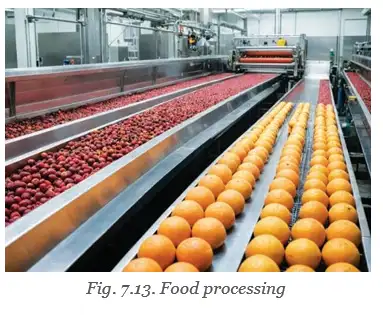
Fruit processing lines use technology to clean and sort fruits efficiently.
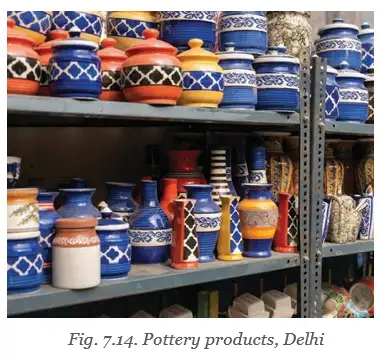
Pottery involves shaping and decorating clay items for household use and art.
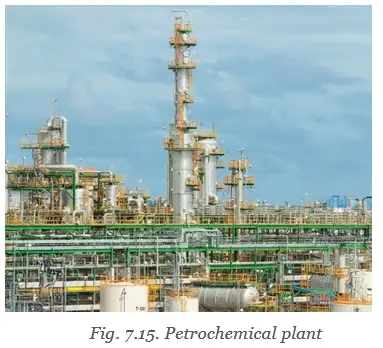
Petrochemical plants process raw materials to produce chemicals used in everyday products.
An entrepreneur’s vision brings innovative products and services to market, creating jobs and improving society. Entrepreneurs combine resources, take risks, and make decisions to run their businesses successfully.
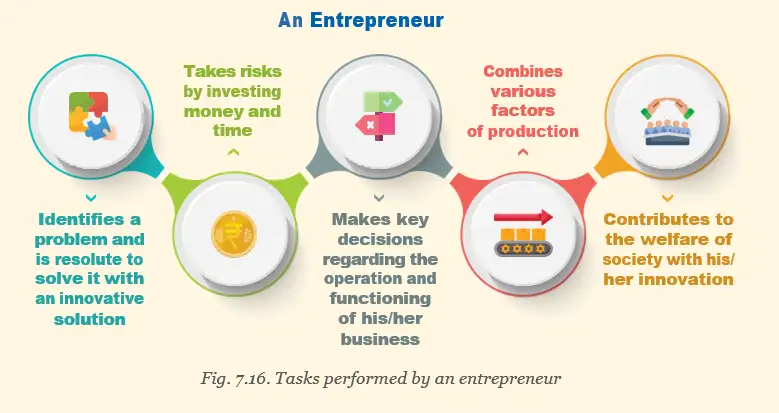
This image illustrates the key tasks of an entrepreneur: identifying problems, taking risks, making decisions, combining resources, and innovating.
J.R.D. Tata was a pioneering Indian entrepreneur who founded Tata Airlines and expanded the Tata Group into various industries. He believed businesses should serve society and was awarded the Bharat Ratna in 1992.
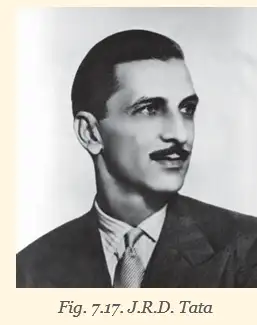
THINK ABOUT IT
What lessons can young entrepreneurs learn from J.R.D. Tata? How does existing knowledge help in solving problems? Is profit the only motivation? What other traits are important for success?
Technology
Technology is the application of scientific knowledge to production and daily life. It includes simple tools like pulleys and wheelbarrows as well as advanced systems like drones and robots.
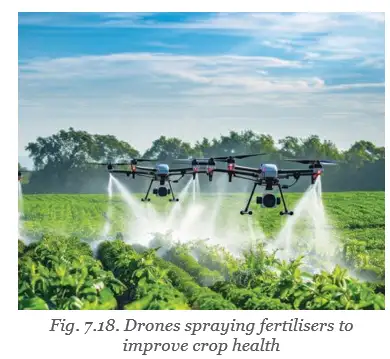
Drones can spray fertilizers precisely over crops, saving time and resources.
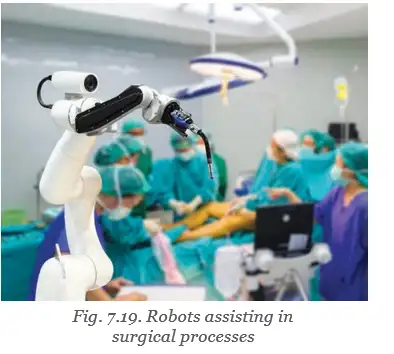
Robotic arms assist surgeons in performing precise operations.
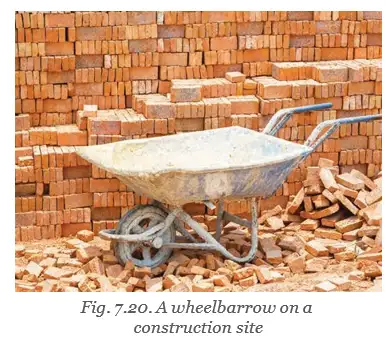
Wheelbarrows help carry heavy materials easily on construction sites.
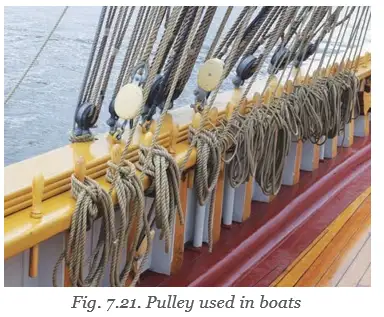
Pulleys reduce effort needed to lift heavy objects, used in boats and other settings.
Technology evolves by replacing old tools with better ones, improving efficiency and quality of life.
Technology Paving the Way for Knowledge and Jobs
Online platforms like SWAYAM and the National Career Service provide free courses and job opportunities, breaking geographical barriers and enhancing skills.

A student attending an online class demonstrates how technology enables remote learning.
LET’S EXPLORE
Discuss technological advancements impacting your community and imagine inventions to solve problems.
Interconnection of Factors of Production
The factors of production—land, labour, capital, entrepreneurship, and technology—are combined in different proportions depending on the product. For example, agriculture is labour-intensive, while semiconductor manufacturing is capital-intensive.
These factors complement each other; missing or misusing any can reduce efficiency or halt production. New technologies can change the balance, such as machines reducing labour needs in farming.
Inputs come from various geographic locations, and businesses combine them to produce goods and services. However, supply chain disruptions, like during the COVID-19 pandemic, can halt production.
DON’T MISS OUT
India is the world’s second-largest mobile phone manufacturer after China in 2025. The mobile phone assembly process involves research and development, factory setup, raw material procurement, assembly, testing, packaging, and distribution.
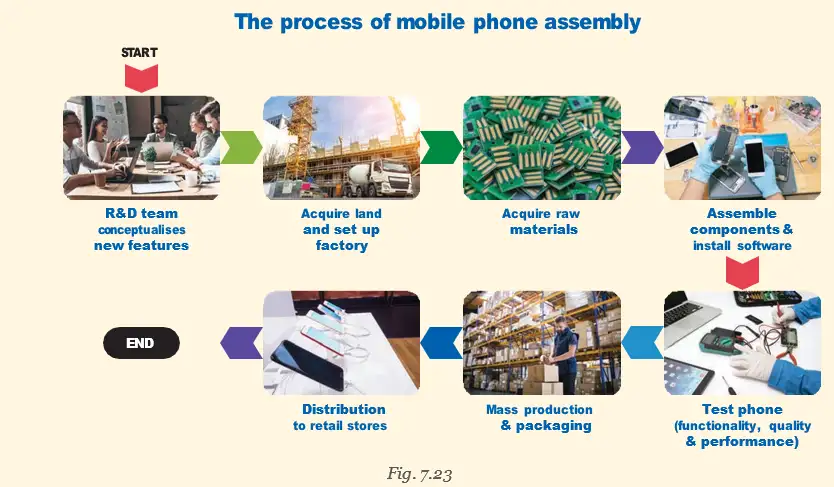
Human effort is involved at every stage, from design to production, requiring coordination of various experts and resources.
Environmental and Social Responsibilities of Businesses
Production uses natural resources that are limited and can be polluted if not managed responsibly. For example, leather factories in Tamil Nadu contribute to the economy but can pollute rivers and soil. Improper disposal of electronic waste also harms the environment.
Producers must adopt sustainable practices to reduce waste, avoid pollution, and protect resources for future generations.
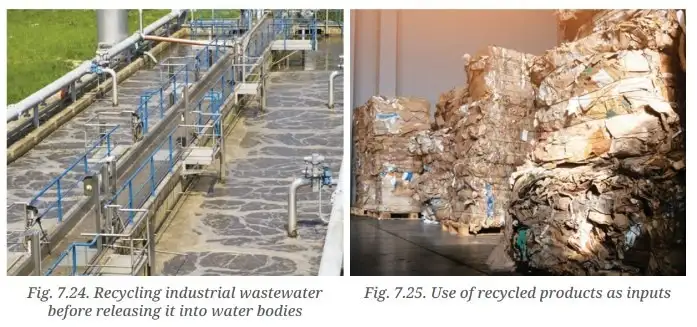
This image shows industrial wastewater treatment and recycling processes that help protect the environment.
Businesses have responsibilities towards workers, including fair compensation, safe working conditions, skill development, and respecting workplace rights.
Corporate Social Responsibility (CSR) encourages companies to address social and environmental concerns, benefiting society and biodiversity.
India was the first country to mandate CSR by law in 2014, requiring companies to spend 2% of their average profits on CSR activities.
Summary
- Land, labour, capital, and entrepreneurship are factors of production used in combination to produce goods and services.
- Human capital, enhanced by education, training, and health, improves labour quality and productivity.
- Technology facilitates production and access to knowledge and jobs.
- Factors of production are interconnected and geographically distributed.
- Businesses have environmental and social responsibilities to ensure sustainable and fair practices.
Solved Examples
Example 1:
Question: What are the four main factors of production? Explain each briefly.
Answer: The four main factors of production are:
- Land: Natural resources like soil, water, minerals used in production.
- Labour: Physical and mental effort of people in producing goods and services.
- Capital: Human-made assets like machinery, tools, money used in production.
- Entrepreneurship: The initiative and risk-taking ability to start and manage a business.
Example 2:
Question: How does technology help in production?
Answer: Technology applies scientific knowledge to improve production processes, making them faster, more efficient, and of better quality. Examples include machinery in factories, drones in agriculture, and online platforms for learning and jobs.
Practice Set
Easy
- Define the term 'factors of production'.
- List two examples of natural resources included in 'land'.
Moderate
- Explain the difference between labour and human capital.
- What role does entrepreneurship play in production?
Challenging
- Discuss how technology can change the proportion of factors used in production with an example.
- Why is sustainable use of natural resources important in production?
Answer Key
- Factors of production are the resources used to produce goods and services: land, labour, capital, and entrepreneurship.
- Examples: soil, water, minerals, forests.
- Labour is the physical and mental effort used in production; human capital is the quality of labour enhanced by education, skills, and health.
- Entrepreneurship involves starting and managing a business, combining other factors to produce goods and services.
- Technology can reduce labour needs by automating tasks, e.g., machines in agriculture reduce manual labour.
- Sustainable use ensures resources are available for future generations and prevents environmental damage.
Quick Reference
- Land: Natural resources used in production.
- Labour: Human effort in production.
- Capital: Assets used to produce goods and services.
- Entrepreneurship: Business initiative and risk-taking.
- Human Capital: Skills and knowledge enhancing labour.
- Technology: Application of scientific knowledge.
- Corporate Social Responsibility: Business commitment to social and environmental welfare.
Glossary
- Capital
- Assets, physical or financial, used to produce goods and services.
- Demographic Dividend
- Economic growth potential from a large working-age population.
- Dividend
- Money paid to shareholders from company profits.
- Entrepreneur
- A person who starts and manages a business, taking risks.
- Human Capital
- Skills, knowledge, and abilities of people that increase productivity.
- Labour
- Physical and mental effort used in production.
- Land
- Natural resources used in production.
- Productivity
- Ability to produce more output in a given time.
- Technology
- Application of scientific knowledge to practical tasks.