CLASS 8 . SCIENCE . CURIOSITY . LIGHT MIRRORS-AND-LENSE
Chapter 10 : Light: Mirrors and Lense
Ch 10
SCIENCE
CLASS 8
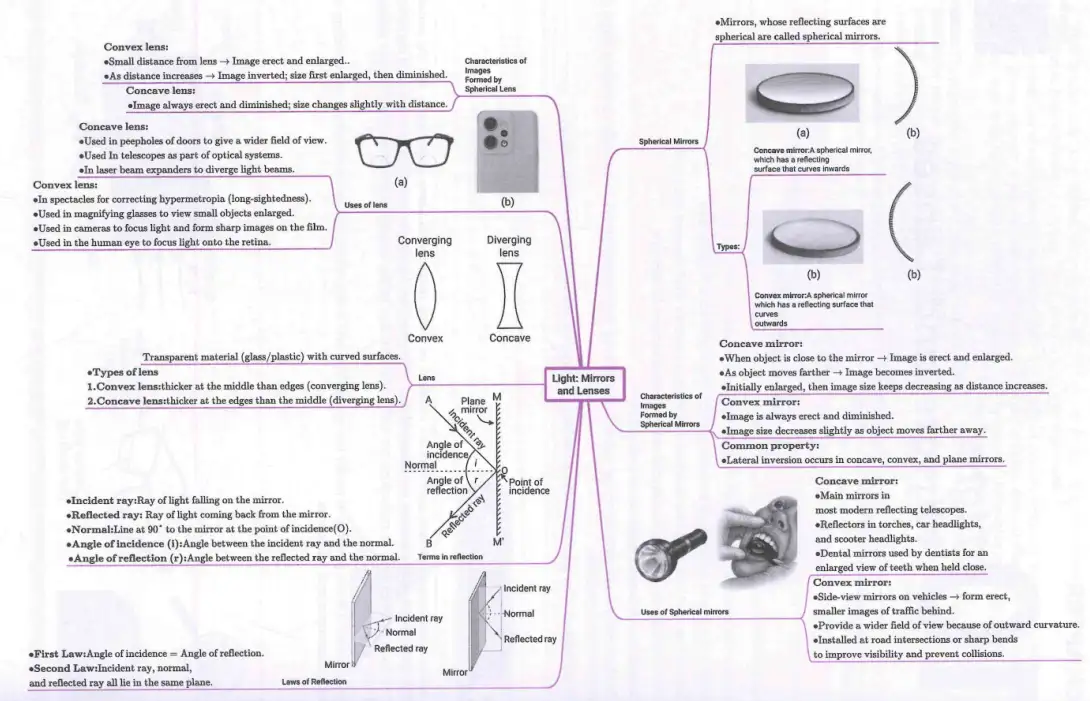
Spherical Mirrors
Definition and Types
Mirrors with reflecting surfaces that are parts of a sphere are called spherical mirrors. They can be of two types based on the curvature of their reflecting surface:
- Concave Mirror: The reflecting surface curves inward, like the inside of a bowl.
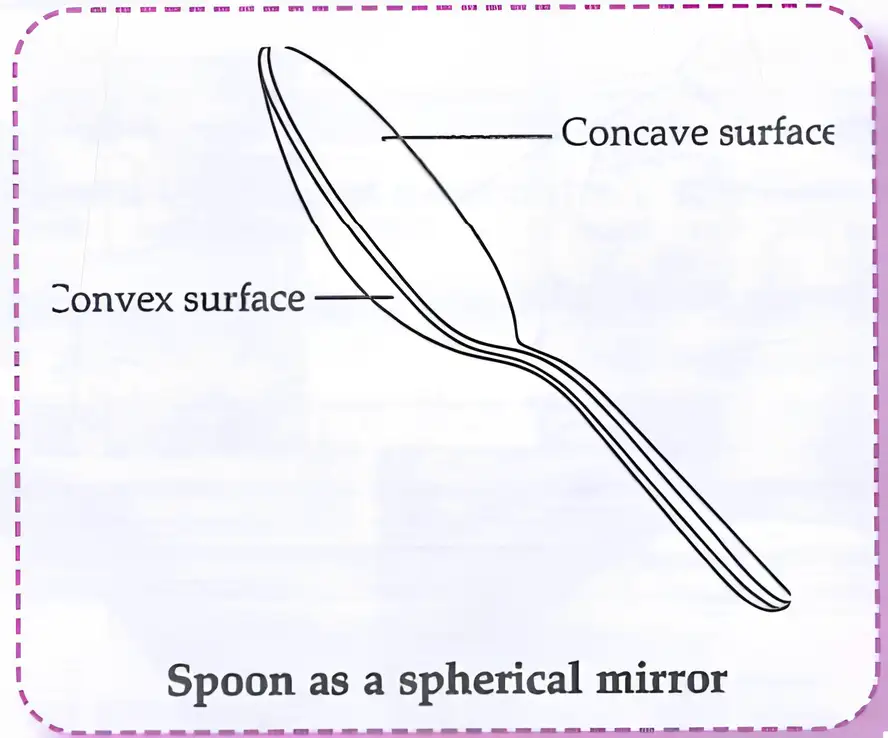
- Convex Mirror: The reflecting surface curves outward, like the back of a spoon.
Structure and Properties
A spherical mirror is considered as a part of an imaginary hollow glass sphere. The reflective coating is applied on the back of the glass for convex mirrors and on the outer curved surface for concave mirrors so that the inner surface acts as the reflecting surface.
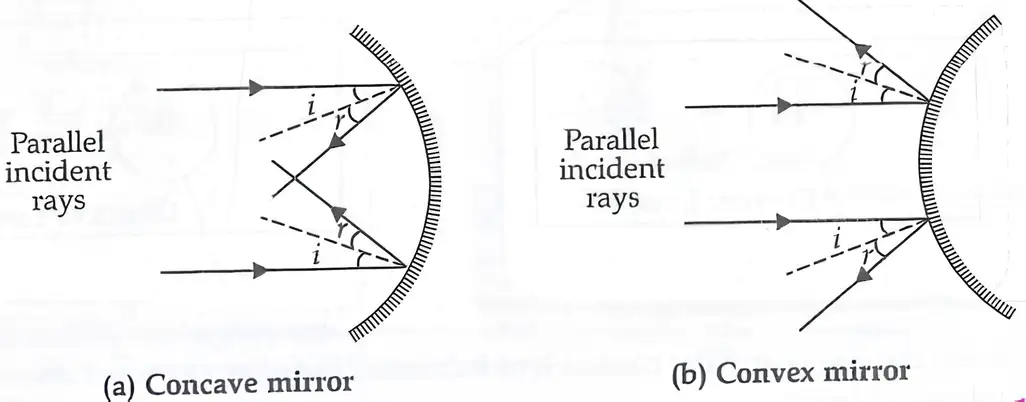
Concave mirrors converge light rays, focusing them to a point, while convex mirrors diverge light rays, spreading them out.
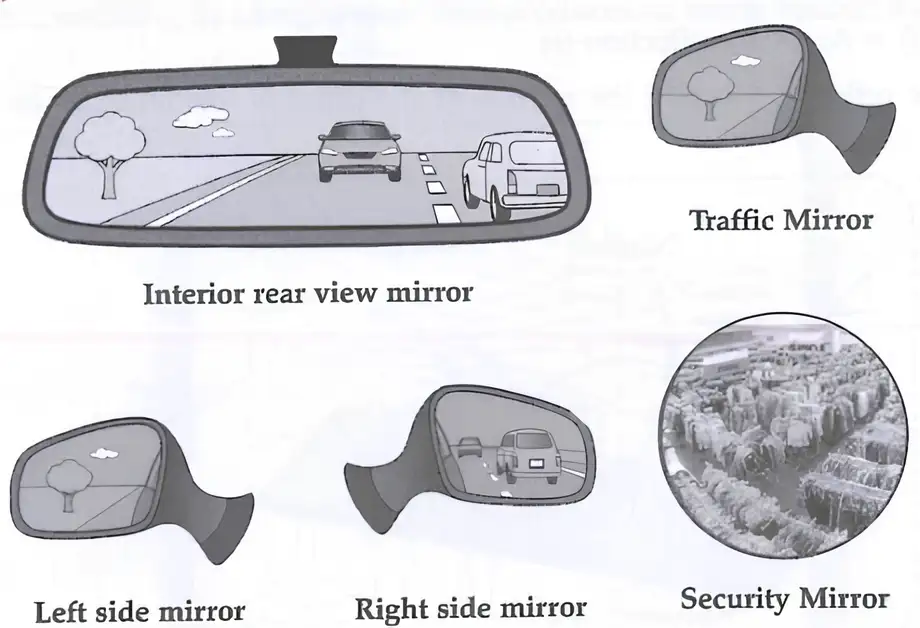
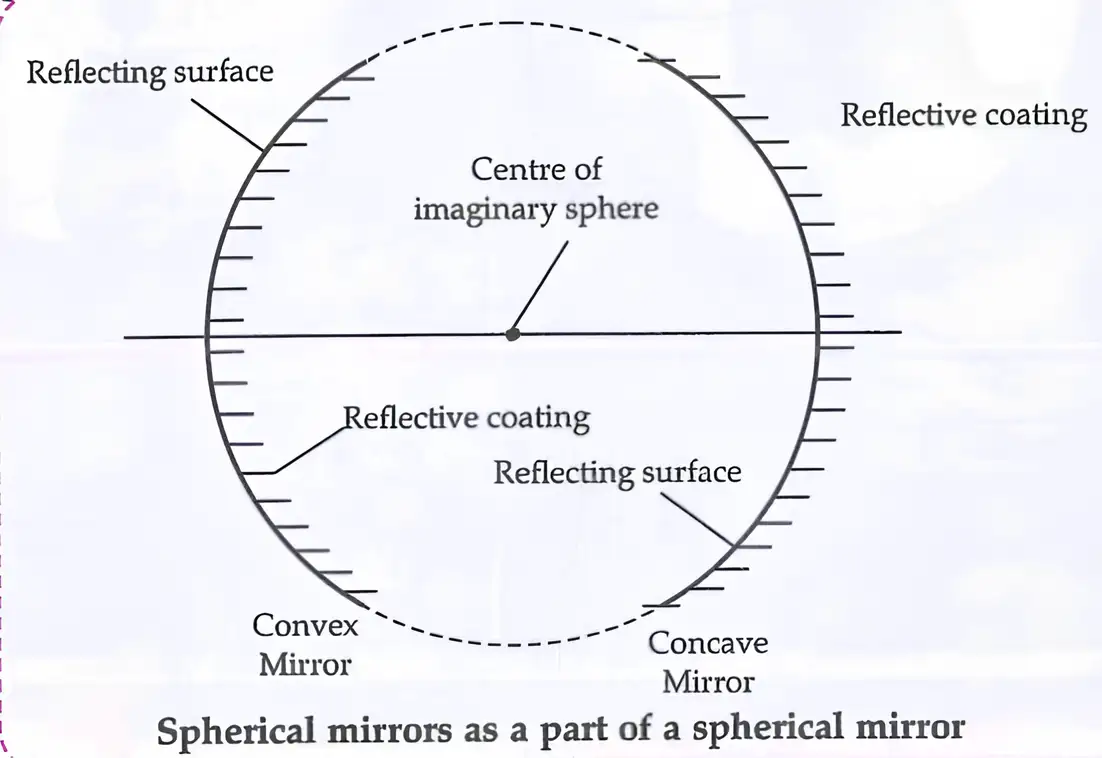
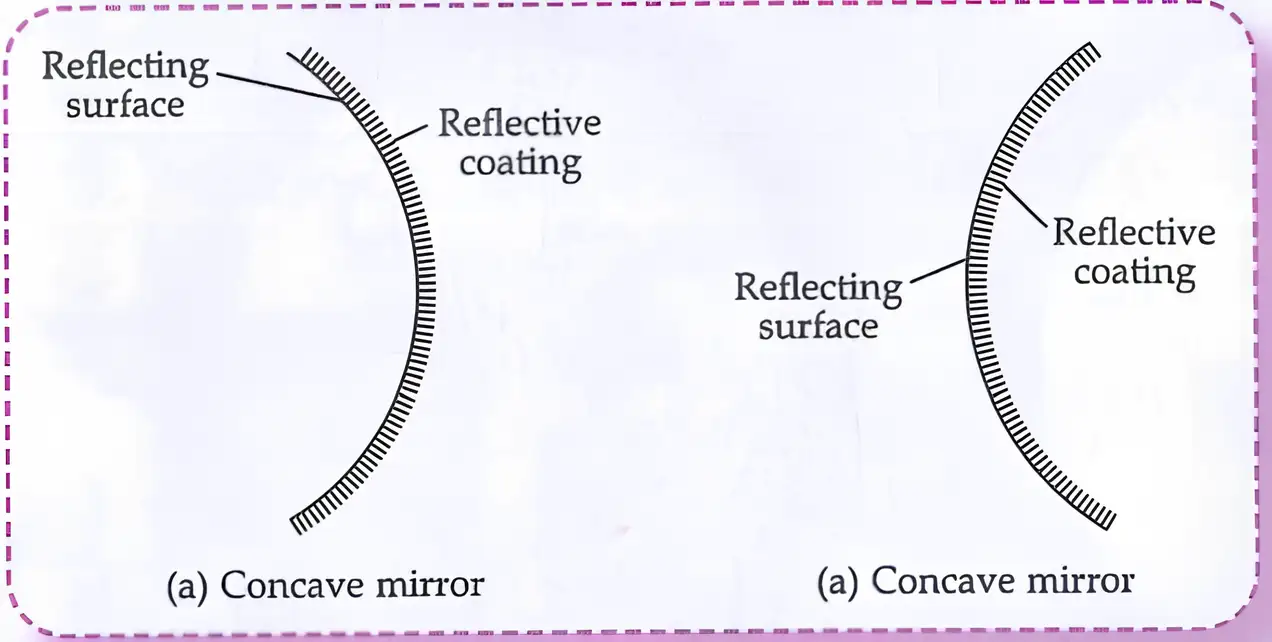
Examples in Daily Life
A spoon demonstrates both types of spherical mirrors: its inner surface acts as a concave mirror and the outer surface as a convex mirror.
Solved Examples
Example 1: Describe the difference in image formation by concave and convex mirrors when an object is placed close to them.
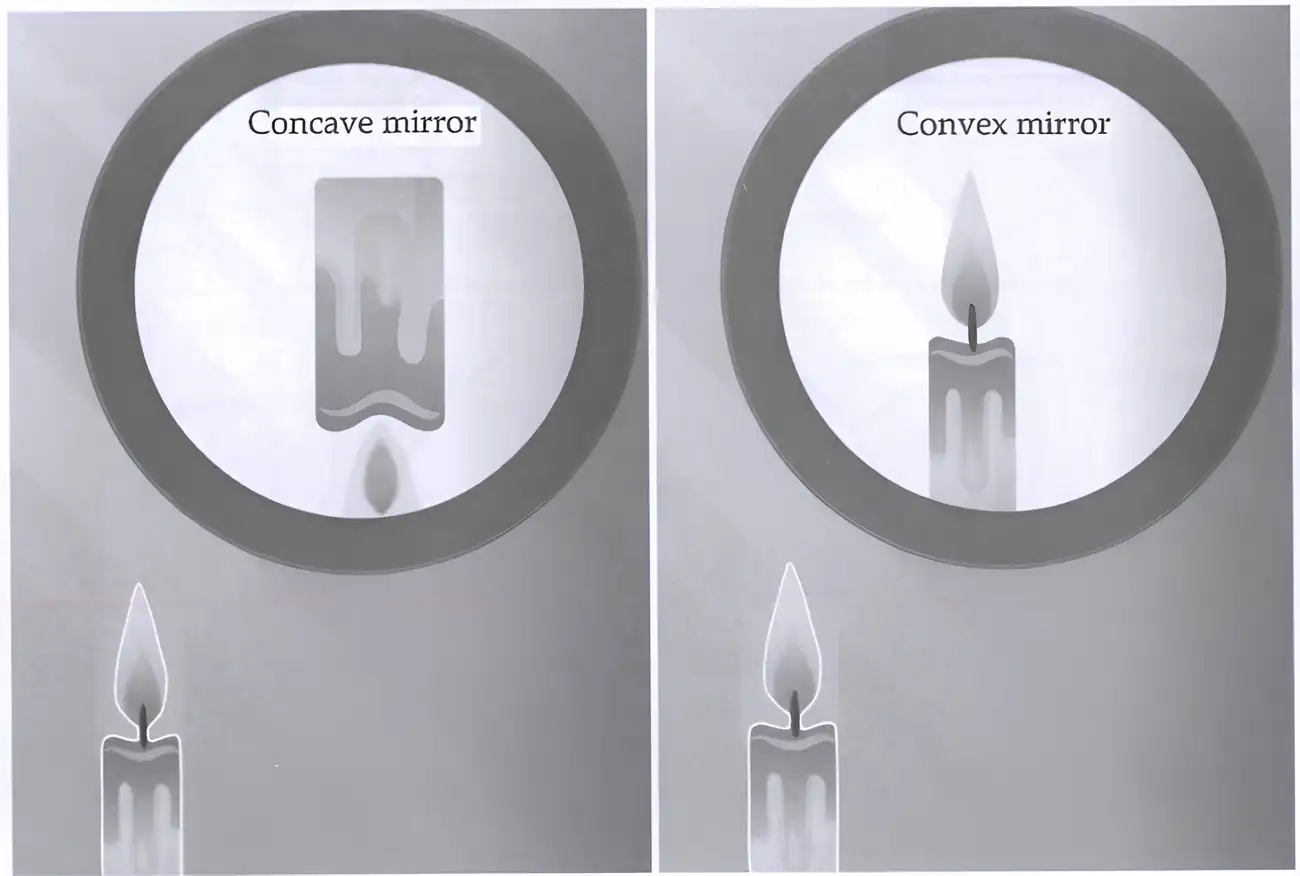
Solution: When an object is placed close to a concave mirror, it forms an erect and enlarged image. In contrast, a convex mirror forms an erect and diminished image of the object.
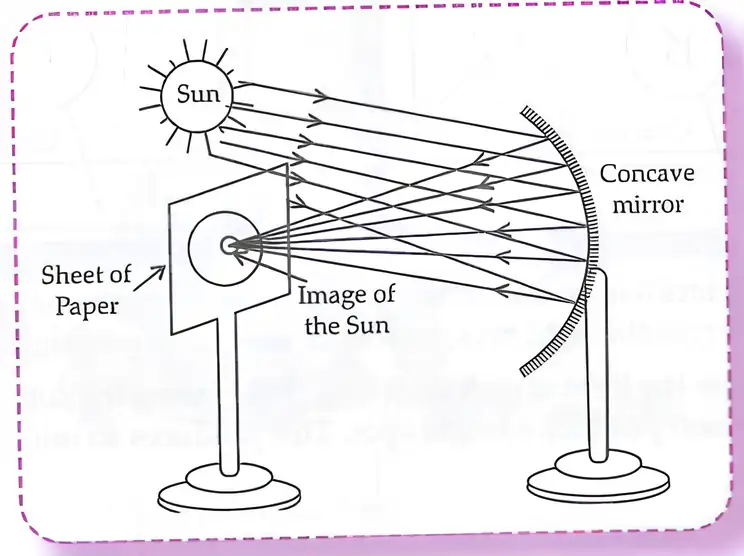
Example 2: Explain why a concave mirror can be used to focus sunlight to ignite a paper.
Solution: A concave mirror converges parallel rays of sunlight to a focal point. When a piece of paper is placed at this focal point, the concentrated light produces enough heat to ignite the paper.
Practice Set
- Level 1: What is the shape of the reflecting surface of a concave mirror?
- Level 2: How does the image formed by a convex mirror differ from that formed by a concave mirror when the object is far away?
- Level 3: Explain the use of concave mirrors in solar concentrators.
Answer Key
- Level 1: The reflecting surface of a concave mirror is curved inward.
- Level 2: A convex mirror forms a smaller, erect image regardless of the object's distance, while a concave mirror forms an inverted image that changes size depending on the object's distance.
- Level 3: Concave mirrors in solar concentrators focus sunlight onto a small area to produce heat, which can be used to generate steam and electricity or for cooking.
Image Formation
By Spherical Mirrors
The image formed by spherical mirrors depends on the type of mirror and the position of the object:
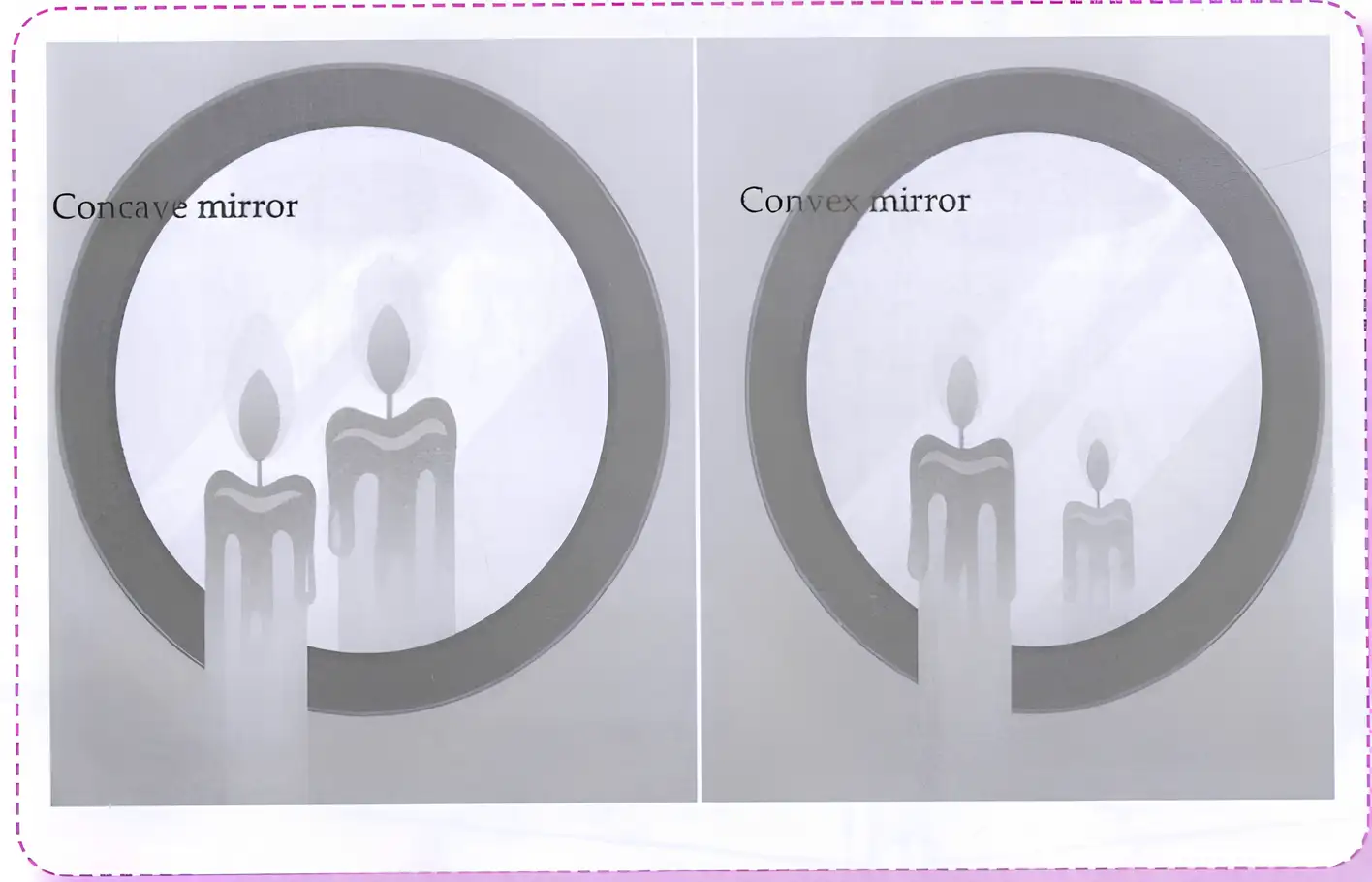
- Concave Mirror: Can form both erect and inverted images. When the object is close, the image is erect and enlarged; when far, the image is inverted and varies in size.
- Convex Mirror: Always forms erect, diminished images regardless of object distance.
Lateral Inversion
Both concave and convex mirrors exhibit lateral inversion when the image formed is virtual.
Solved Examples
Example 1: What type of image is formed by a convex mirror when an object is placed in front of it?
Solution: A convex mirror always forms a virtual, erect, and diminished image of the object.
Example 2: Describe the change in image size formed by a concave mirror as the object moves away from the mirror.
Solution: As the object moves away from a concave mirror, the image changes from erect and enlarged to inverted and diminished in size.
Practice Set
- Level 1: What kind of image does a convex mirror form?
- Level 2: How does the image formed by a concave mirror change with object distance?
- Level 3: Why does a concave mirror produce a magnified image when the object is close?
Answer Key
- Level 1: A convex mirror forms a virtual, erect, and diminished image.
- Level 2: The image changes from erect and enlarged to inverted and diminished as the object moves away.
- Level 3: When the object is close, the reflected rays diverge, and the brain perceives a magnified virtual image behind the mirror.
Lenses
Definition and Types
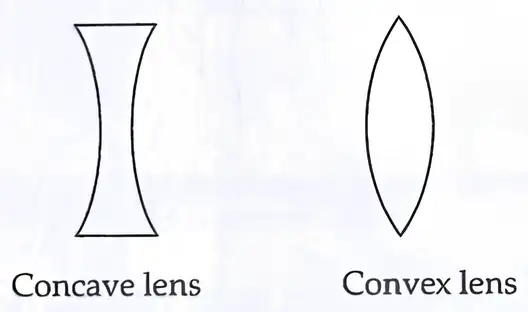
A lens is a transparent material bounded by two curved surfaces. There are two main types:
- Convex Lens: Thicker at the middle than at the edges; converges light rays.
- Concave Lens: Thicker at the edges than at the middle; diverges light rays.
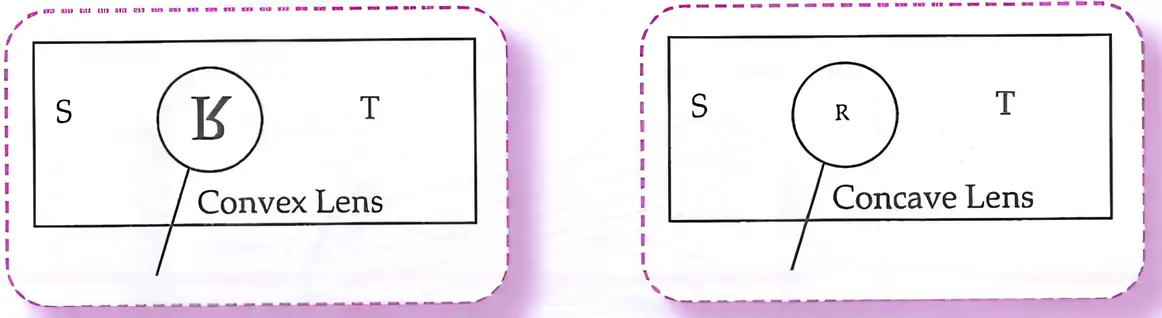
Image Formation by Lenses
Convex lenses can form both erect and inverted images depending on the object's distance. Concave lenses always form erect, diminished images.
Uses of Lenses
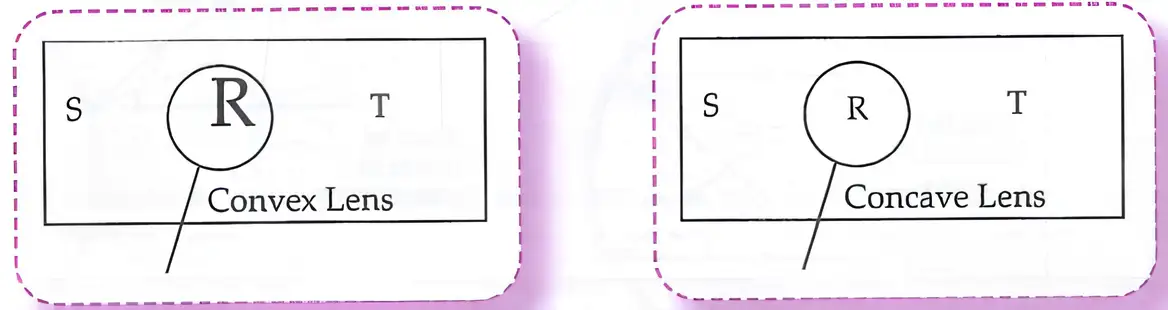
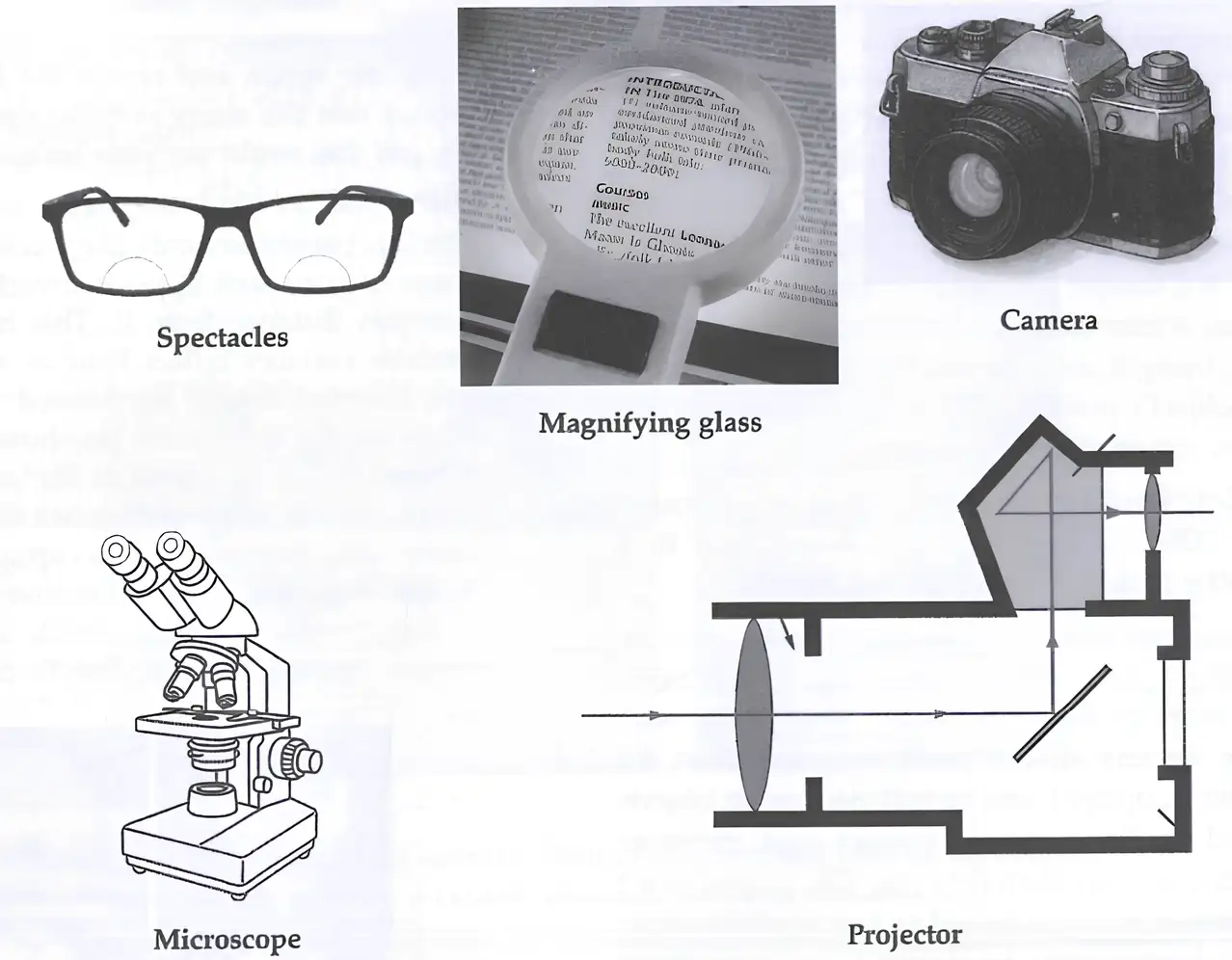
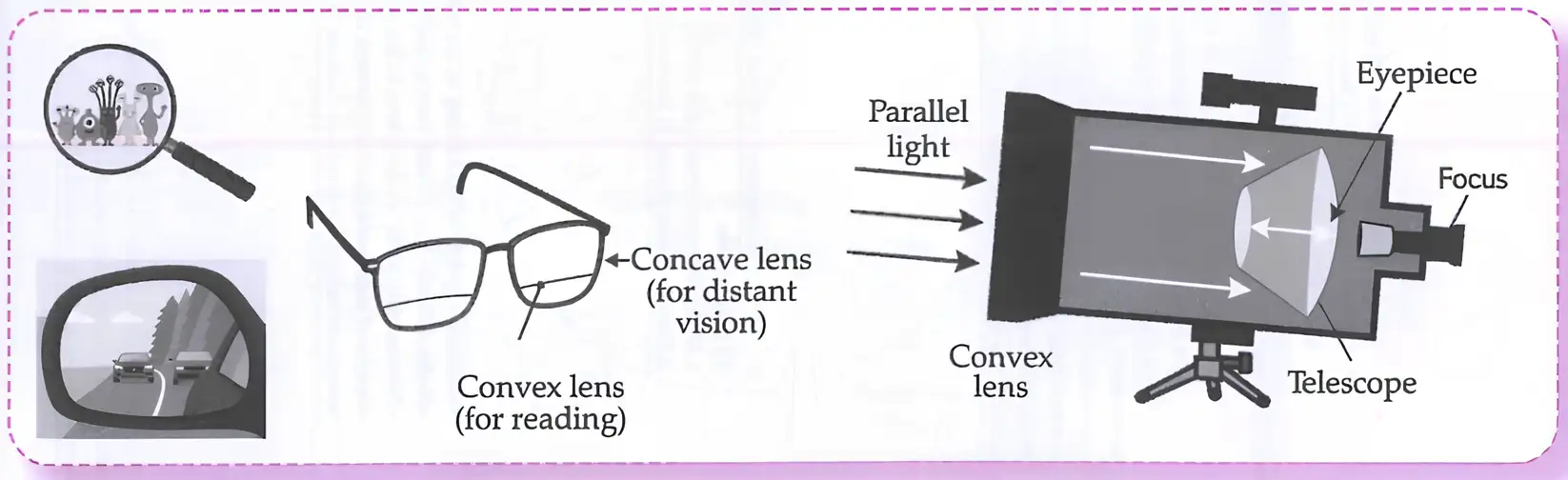
- Convex lenses are used in eyeglasses for farsightedness, cameras, microscopes, telescopes, and magnifying glasses.
- Concave lenses are used in eyeglasses for nearsightedness, peepholes, and some optical instruments.
Solved Examples
Example 1: What type of image is formed by a convex lens when the object is close to it?
Solution: The convex lens forms an erect and magnified image when the object is close.
Example 2: Explain why a convex lens can ignite paper when focused on sunlight.
Solution: A convex lens converges parallel rays of sunlight to a focal point, concentrating heat enough to ignite paper placed at that point.
Practice Set
- Level 1: What is the shape of a concave lens?
- Level 2: How does the image formed by a convex lens change as the object moves away?
- Level 3: Describe the use of convex lenses in optical instruments.
Answer Key
- Level 1: A concave lens is thinner in the middle and thicker at the edges.
- Level 2: The image changes from erect and magnified to inverted and diminished as the object moves away.
- Level 3: Convex lenses are used to focus light and magnify images in instruments like cameras, microscopes, and telescopes.
Reflection
Basic Concepts
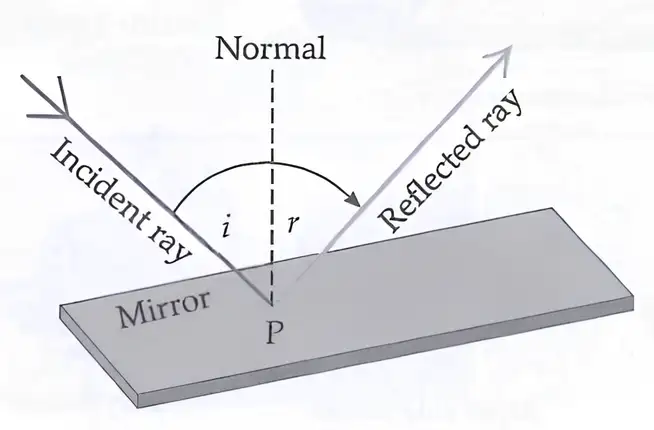
Reflection is the change in direction of light when it strikes a surface and bounces back.
The ray of light striking the surface is called the incident ray, and the ray bouncing back is the reflected ray. The line perpendicular to the surface at the point of incidence is called the normal.
Laws of Reflection
- The angle of incidence is equal to the angle of reflection.
- The incident ray, reflected ray, and normal all lie in the same plane.
Reflection in Spherical Mirrors
Spherical mirrors follow the same laws of reflection. However, due to their curved surfaces, the reflected rays may converge or diverge, forming different types of images.
Solved Examples
Example 1: State the laws of reflection.
Solution: The angle of incidence equals the angle of reflection, and the incident ray, reflected ray, and normal lie in the same plane.
Example 2: Explain why a concave mirror can focus sunlight to a point.
Solution: The concave mirror's curved surface causes parallel rays of sunlight to reflect and converge at a focal point, concentrating light and heat.
Practice Set
- Level 1: What is the normal in reflection?
- Level 2: Why do reflected rays from a concave mirror converge?
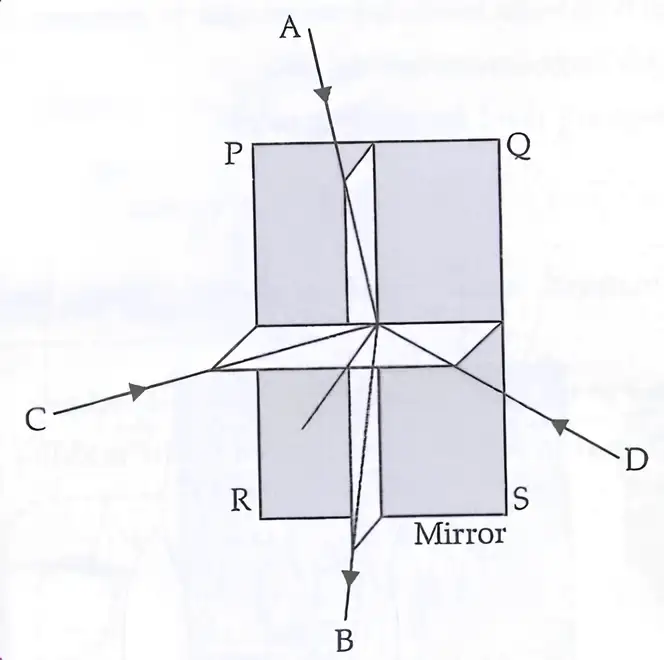
- Level 3: Describe the path of light rays when they strike two mirrors placed at right angles.
Answer Key
- Level 1: The normal is a line perpendicular to the reflecting surface at the point of incidence.
- Level 2: Because the concave mirror's surface curves inward, the reflected rays converge at a focal point.
- Level 3: Light rays incident on two mirrors at right angles reflect off both mirrors, splitting into different directions according to the laws of reflection.
Quick Reference Table
- Concave Mirror: Reflecting surface curves inward; converges light rays to a focal point.
- Convex Mirror: Reflecting surface curves outward; diverges light rays, forming virtual images.
- Convex Lens: Thicker at the center; converges light rays to form real or virtual images depending on object distance.
- Concave Lens: Thicker at edges; diverges light rays, always forming virtual, diminished images.
- Law of Reflection: Angle of incidence equals angle of reflection; incident ray, reflected ray, and normal lie in the same plane.
- Image Formation by Concave Mirror: Erect and enlarged when object is close; inverted and varies in size when object is far.
- Image Formation by Convex Mirror: Always erect, virtual, and diminished regardless of object distance.
- Image Formation by Convex Lens: Erect and magnified when object is close; inverted and varies with distance.
- Image Formation by Concave Lens: Always erect, virtual, and diminished.
- Applications of Concave Mirrors: Dental mirrors, shaving mirrors, headlights, solar concentrators, reflecting telescopes.
- Applications of Convex Mirrors: Vehicle side mirrors, traffic mirrors, security mirrors, streetlamp reflectors.
- Applications of Convex Lenses: Eyeglasses for farsightedness, cameras, microscopes, telescopes, magnifying glasses.
- Applications of Concave Lenses: Eyeglasses for nearsightedness, peepholes, optical instruments.
Common Mistakes and Misconceptions
- Confusing the types of images formed by concave and convex mirrors; concave mirrors can form both real and virtual images depending on object distance, while convex mirrors always form virtual images.
- Assuming convex lenses always form inverted images; they form erect images when the object is within the focal length.
- Believing concave lenses can form real images; they only form virtual images.
- Mixing up the curvature of concave and convex mirrors; concave mirrors curve inward, convex mirrors curve outward.
- Forgetting that the angle of incidence equals the angle of reflection in all mirrors, including spherical mirrors.
- Thinking that images formed by convex mirrors are always the same size; image size decreases slightly as object distance increases.
- Assuming that concave mirrors always produce magnified images; image size depends on object distance.
- Overlooking lateral inversion in virtual images formed by spherical mirrors.
- Misunderstanding the role of lenses in correcting vision defects; convex lenses correct farsightedness, concave lenses correct nearsightedness.
Glossary
- Concave Mirror: A spherical mirror with reflecting surface curved inward.
- Convex Mirror: A spherical mirror with reflecting surface curved outward.
- Convex Lens: A lens thicker at the center that converges light rays.
- Concave Lens: A lens thicker at the edges that diverges light rays.
- Focal Point: The point where parallel rays of light converge or appear to diverge after reflection or refraction.
- Image: The reproduction of an object formed by reflection or refraction of light rays.
- Real Image: An image formed when reflected or refracted rays actually meet; can be projected on a screen.
- Virtual Image: An image formed when reflected or refracted rays appear to meet; cannot be projected on a screen.
- Angle of Incidence: The angle between the incident ray and the normal to the surface.
- Angle of Reflection: The angle between the reflected ray and the normal to the surface.
- Normal: A line perpendicular to the reflecting or refracting surface at the point of incidence.
- Lateral Inversion: The reversal of the left and right sides in the image formed by a mirror.