CLASS 8 . SCIENCE . CURIOSITY . HOW NATURE-WORKS-IN-HARMON
Chapter 12 : How Nature Works in Harmon
Ch 12
SCIENCE
CLASS 8
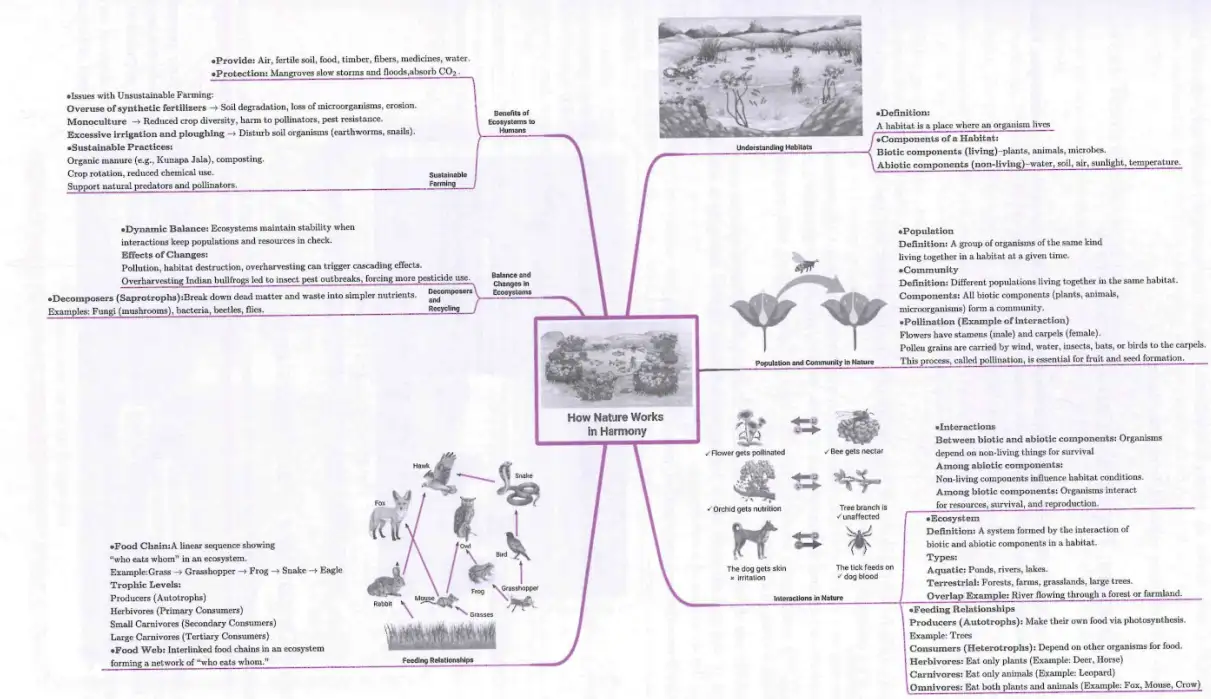
Habitats
Definition and Components
A habitat is the natural environment where an organism lives and obtains all its needs such as food, water, shelter, and suitable conditions for reproduction. Habitats vary widely, including deserts, forests, oceans, ponds, and mountains.
Biotic and Abiotic Components
Habitats consist of biotic components, which are living organisms like plants, animals, and microorganisms, and abiotic components, which are non-living physical factors such as air, sunlight, water, soil, temperature, and minerals.
Types of Habitats
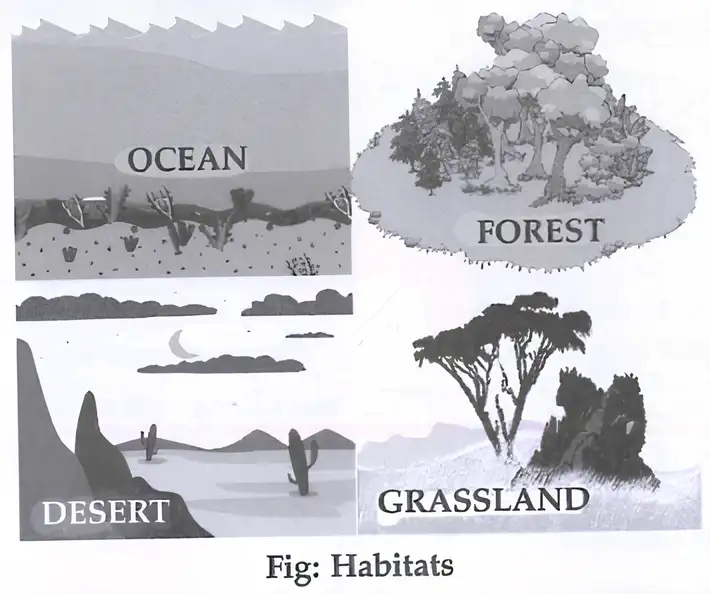
Examples include ocean habitats with aquatic life, forest habitats rich in trees and animals, desert habitats with dry conditions and specialized organisms, and grassland habitats dominated by grasses and supporting diverse wildlife.
Solved Examples
Example: Identify the biotic and abiotic components in a forest habitat.
Solution: Biotic components include trees, birds, mammals, insects, fungi, and microorganisms. Abiotic components include sunlight, air, soil, water, temperature, and minerals.
Practice Set
- Level 1: What is a habitat? Give two examples.
- Level 2: Differentiate between biotic and abiotic components with examples.
- Level 3: Explain how abiotic factors influence the types of organisms found in a habitat.
Answer Key
- Level 1: A habitat is the natural place where an organism lives and gets its needs. Examples: forest, ocean.
- Level 2: Biotic components are living things like plants and animals; abiotic components are non-living things like water and soil.
- Level 3: Abiotic factors such as temperature, water availability, and soil type determine which organisms can survive in a habitat.
Population and Community
Population
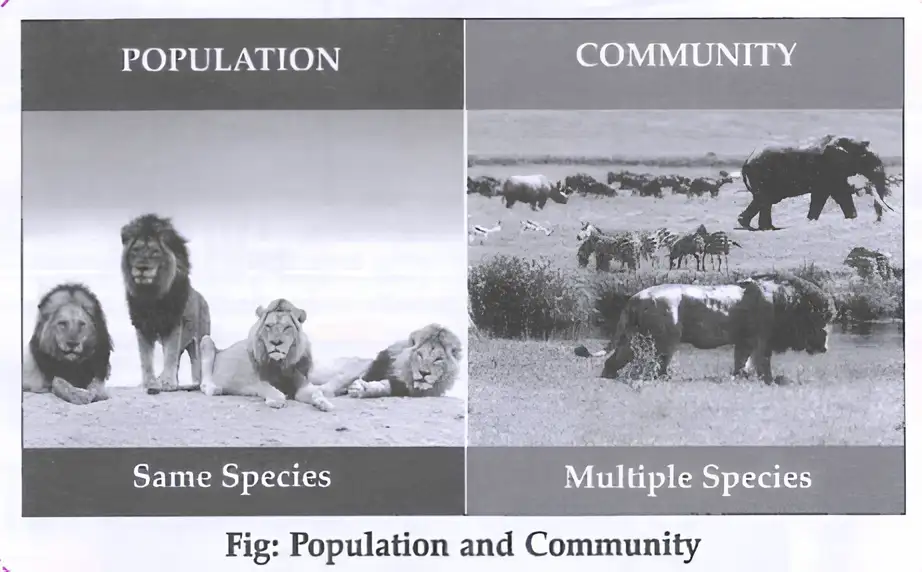
A population is a group of individuals of the same species living in a specific area at the same time, capable of interacting and reproducing.
Community
A community consists of all different populations of organisms living and interacting in the same area, forming a collection of various species.
Dynamics and Interactions
Communities are dynamic, constantly changing due to competition, cooperation, and environmental factors. They thrive through balance among species and their interactions.
Solved Examples
Example: Give an example of a population and a community in a forest.
Solution: Population: All the lions in the forest. Community: Lions, deer, monkeys, birds, trees, insects, and microorganisms living together.
Practice Set
- Level 1: Define population with an example.
- Level 2: What is a community? How is it different from a population?
- Level 3: Explain how abiotic factors can affect community dynamics.
Answer Key
- Level 1: Population is a group of same species living together, e.g., all lions in a forest.
- Level 2: Community includes all populations of different species living together; population is only one species.
- Level 3: Abiotic factors like temperature and rainfall influence species survival and interactions, affecting community structure.
Ecosystems
Definition and Components
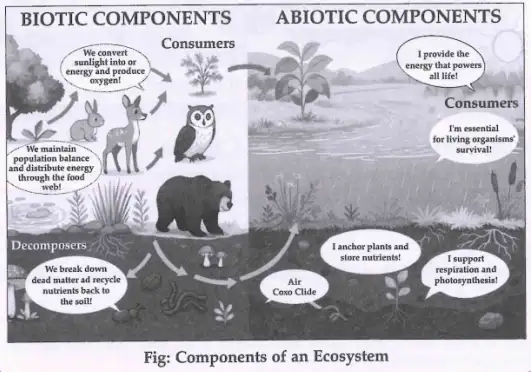
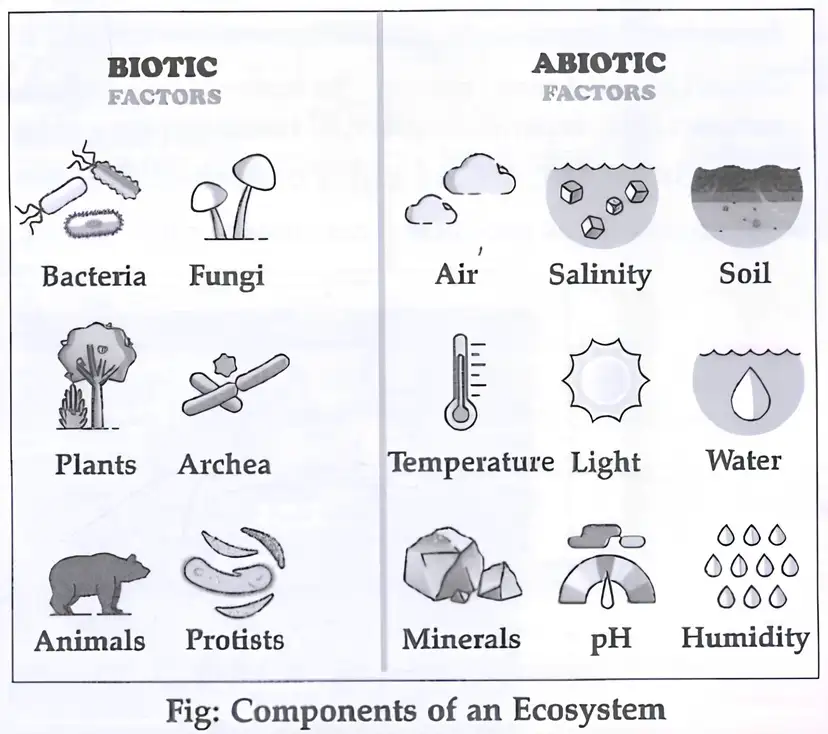
An ecosystem is a system formed by the interaction of biotic (living) and abiotic (non-living) components in an environment.
Abiotic Components
These include sunlight, water, air, soil, temperature, and minerals, which are essential for the survival and growth of living organisms.
Biotic Components
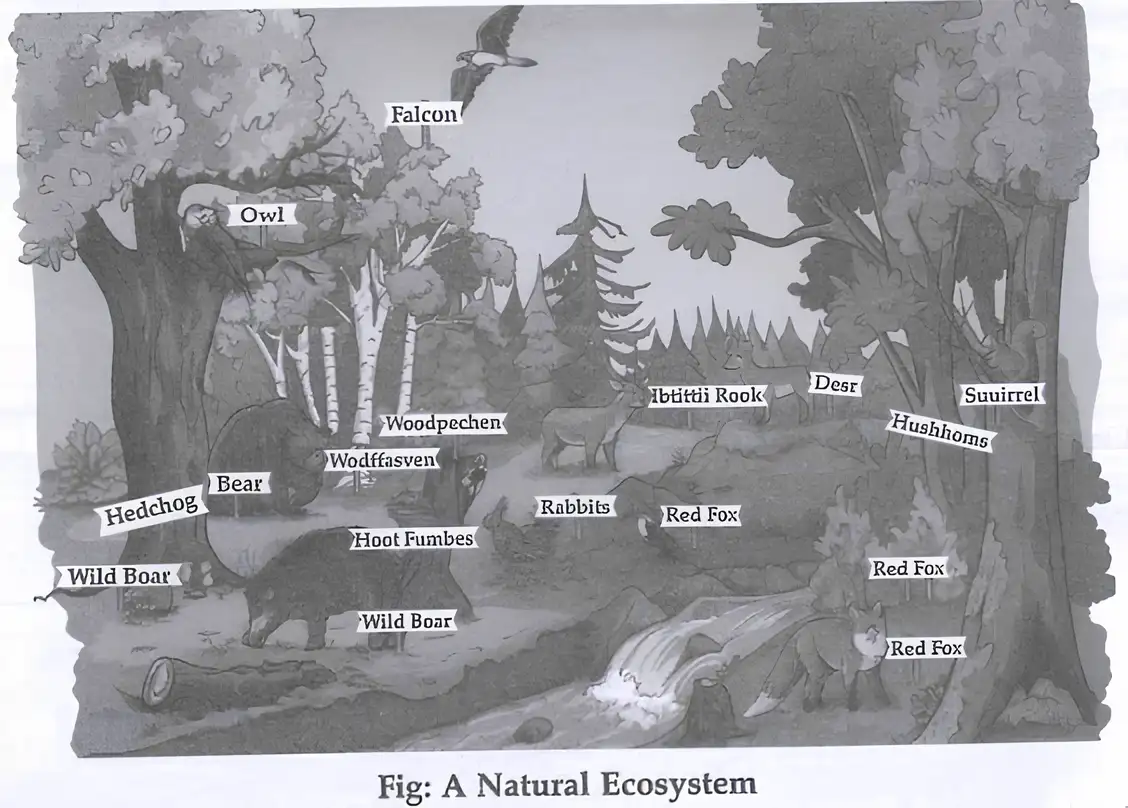
Living organisms in an ecosystem are classified as producers (make their own food), consumers (eat other organisms), and decomposers (break down dead matter).
Types of Ecosystems
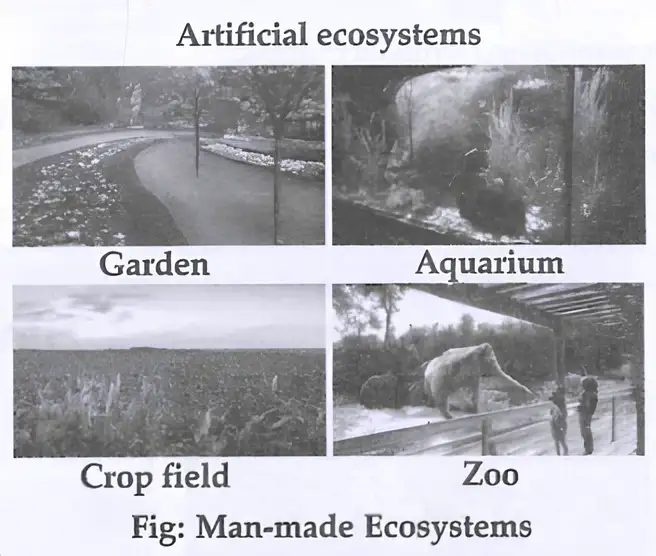
Natural ecosystems occur without human interference and include terrestrial (forests, grasslands, deserts) and aquatic (freshwater and marine) ecosystems. Artificial ecosystems are human-made, such as farms, aquariums, and urban areas.
Solved Examples
Example: Name the three groups of biotic components in an ecosystem and give one example of each.
Solution: Producers: plants; Consumers: deer; Decomposers: fungi.
Practice Set
- Level 1: What is an ecosystem? List its two main components.
- Level 2: Differentiate between natural and artificial ecosystems with examples.
- Level 3: Explain the role of decomposers in an ecosystem.
Answer Key
- Level 1: An ecosystem is a community of living and non-living things interacting. Components: biotic and abiotic.
- Level 2: Natural ecosystems occur naturally (forests), artificial are human-made (farms).
- Level 3: Decomposers break down dead matter, recycling nutrients back to soil for plants.
Feeding Relationships
Food Chains
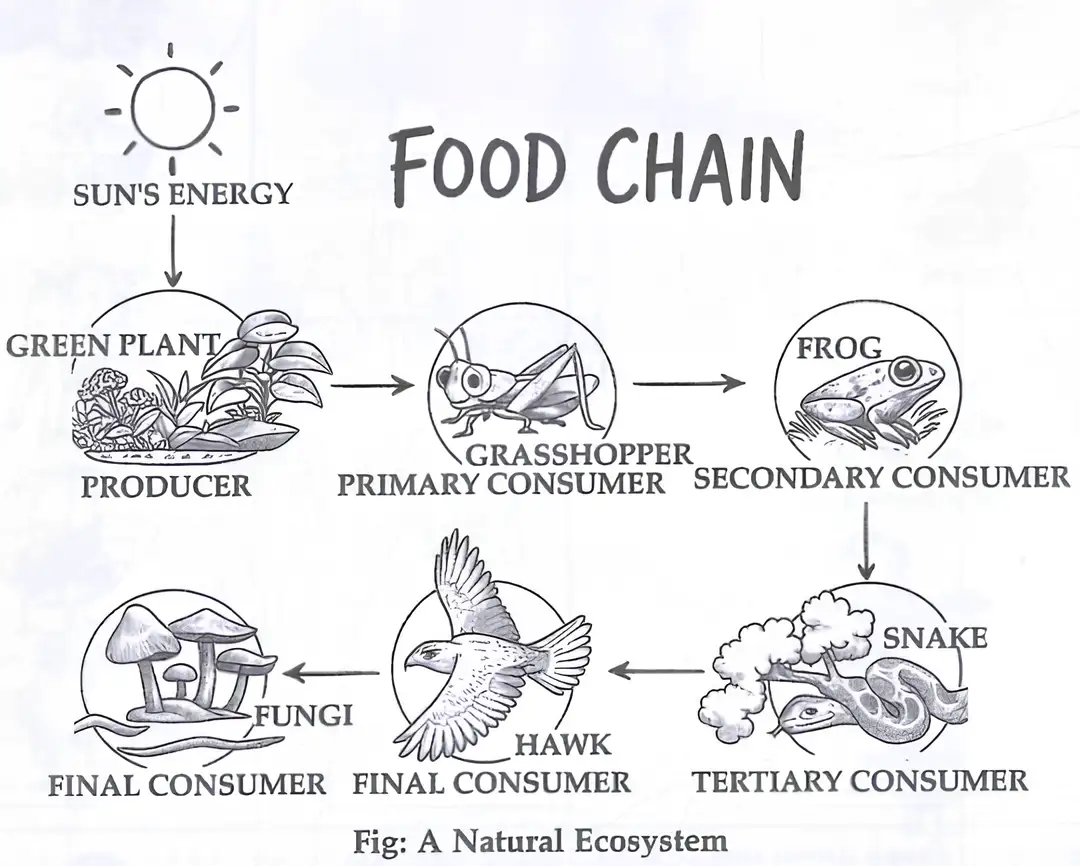
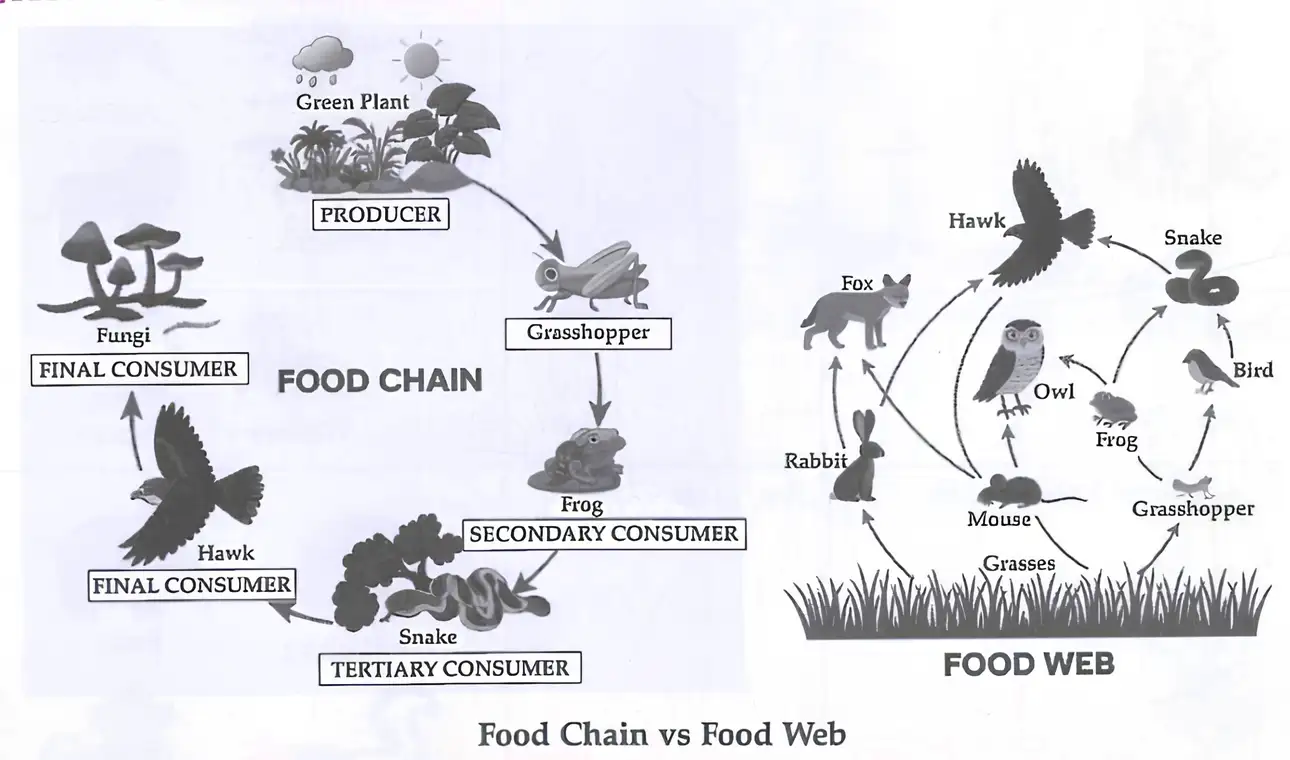
A food chain is a linear sequence showing how energy flows from producers to consumers and decomposers in an ecosystem.
Trophic Levels
Organisms occupy different trophic levels: producers (plants), primary consumers (herbivores), secondary consumers (carnivores), tertiary consumers (top predators), and decomposers.
Food Webs
A food web is a complex network of interconnected food chains showing multiple feeding relationships, providing greater stability and realism.
Solved Examples
Example: Construct a simple food chain starting from a plant.
Solution: Sunlight → Grass (producer) → Grasshopper (primary consumer) → Frog (secondary consumer) → Snake (tertiary consumer) → Hawk (top predator) → Decomposers (fungi).
Practice Set
- Level 1: Define a food chain and name its first trophic level.
- Level 2: What is a food web? How does it differ from a food chain?
- Level 3: Explain why food webs provide more stability to ecosystems than food chains.
Answer Key
- Level 1: A food chain shows energy flow; first level is producers (plants).
- Level 2: Food web is interconnected food chains; food chain is linear.
- Level 3: Food webs allow alternative food sources, so species survive if one food source disappears.
Species Interactions
Mutualism
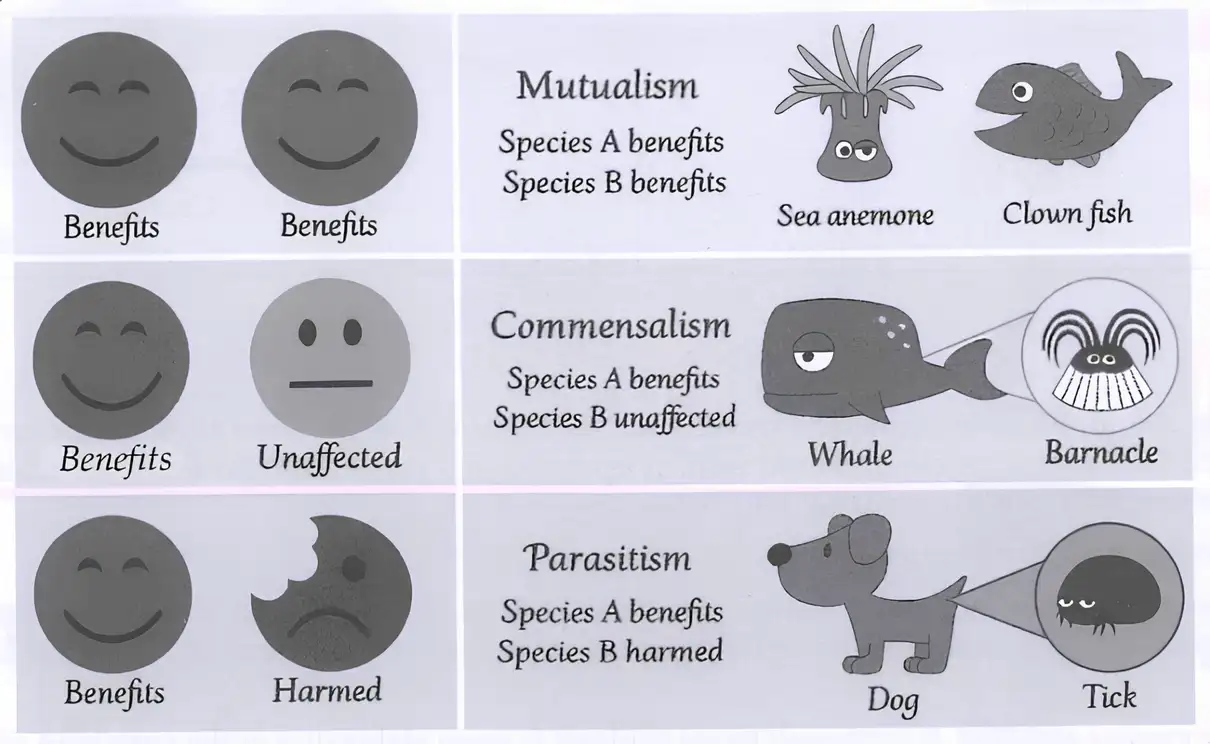
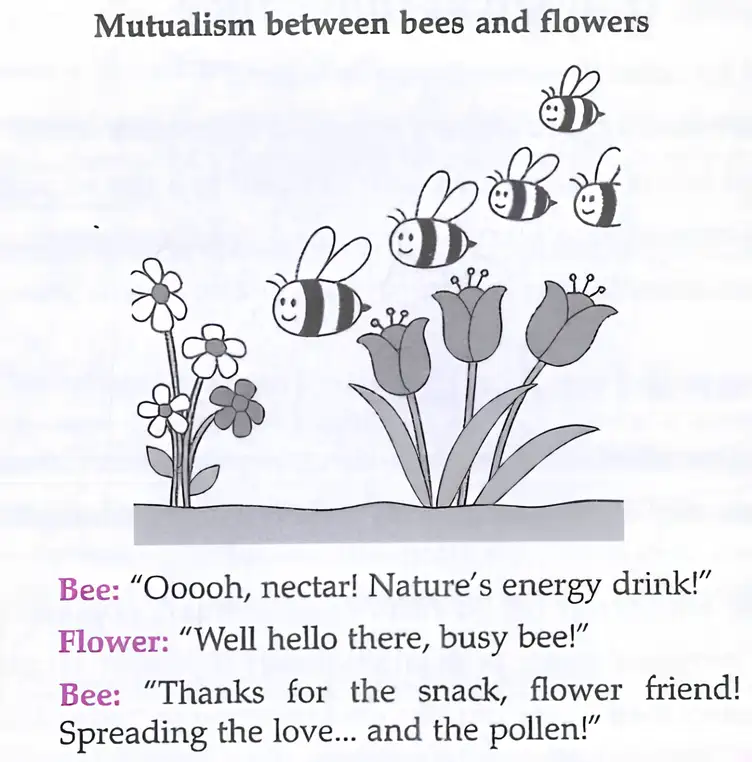
A relationship where both species benefit, such as bees pollinating flowers while feeding on nectar.
Commensalism
One species benefits and the other is unaffected, for example, orchids growing on trees.
Parasitism
One species benefits at the expense of the other, such as ticks feeding on dogs.
Solved Examples
Example: Give an example of mutualism and explain the benefits to both species.
Solution: Bees and flowers: bees get nectar for food; flowers get pollinated for reproduction.
Practice Set
- Level 1: Define mutualism with an example.
- Level 2: What is parasitism? Give an example.
- Level 3: Compare and contrast commensalism and parasitism.
Answer Key
- Level 1: Mutualism is both species benefit; example: bees and flowers.
- Level 2: Parasitism benefits one and harms other; example: ticks on dogs.
- Level 3: Commensalism benefits one without harm; parasitism harms one species.
Decomposers
Role in Ecosystems
Decomposers break down dead plants and animals into simpler substances, recycling nutrients back into the soil, which supports plant growth.
Examples
Common decomposers include fungi, bacteria, earthworms, and dung beetles.
Importance
Without decomposers, dead matter would accumulate, and nutrient cycles would stop, harming ecosystem health.
Solved Examples
Example: Explain what would happen if decomposers were removed from an ecosystem.
Solution: Dead organic matter would accumulate, nutrients would not recycle, plants would lack nutrients, and the ecosystem would collapse.
Practice Set
- Level 1: What are decomposers? Name two examples.
- Level 2: Describe the process of decomposition.
- Level 3: Why are decomposers essential for nutrient cycling?
Answer Key
- Level 1: Decomposers break down dead matter; examples: fungi, bacteria.
- Level 2: Decomposers break dead matter into nutrients that return to soil.
- Level 3: They recycle nutrients, maintaining soil fertility and ecosystem balance.
Ecological Imbalance
Causes
Ecological imbalance occurs due to pollution, deforestation, overfishing, climate change, and habitat destruction.
Effects
Loss of biodiversity, disruption of food chains, increased pests, and conflicts between humans and wildlife.
Examples
Pollution in ponds kills plants, reduces oxygen, kills fish, increases insects, leading to pesticide use and further environmental harm.
Solved Examples
Example: Describe the chain of events caused by pollution in a pond ecosystem.
Solution: Pollution kills plants → oxygen drops → fish die → insect population rises → insects invade farms → pesticides used → environmental damage.
Practice Set
- Level 1: What is ecological imbalance?
- Level 2: How does deforestation affect ecosystems?
- Level 3: Explain the impact of pesticide use on ecosystems.
Answer Key
- Level 1: Ecological imbalance is disruption in ecosystem balance.
- Level 2: Deforestation destroys habitats, reduces biodiversity, and causes conflicts.
- Level 3: Pesticides harm non-target species, pollute soil and water, and disrupt food chains.
Sustainable Farming
Problems with Modern Farming
Excessive use of chemicals harms soil health, reduces biodiversity, and pollutes water bodies.
Sustainable Practices
Use of compost and manure, crop rotation, mixed cropping, and natural pest control to maintain soil and ecosystem health.
Traditional Knowledge
Vrikshayurveda, ancient Indian science, promotes harmony with nature and careful observation of plants.
Solved Examples
Example: List two sustainable farming practices and their benefits.
Solution: Crop rotation prevents soil depletion; natural pest control reduces chemical use.
Practice Set
- Level 1: What is sustainable farming?
- Level 2: How does crop rotation benefit soil?
- Level 3: Explain the importance of traditional knowledge like Vrikshayurveda in farming.
Answer Key
- Level 1: Farming that maintains ecological balance and soil health.
- Level 2: Crop rotation prevents nutrient depletion and controls pests.
- Level 3: Traditional knowledge guides sustainable practices respecting nature.
Conservation
Protected Areas
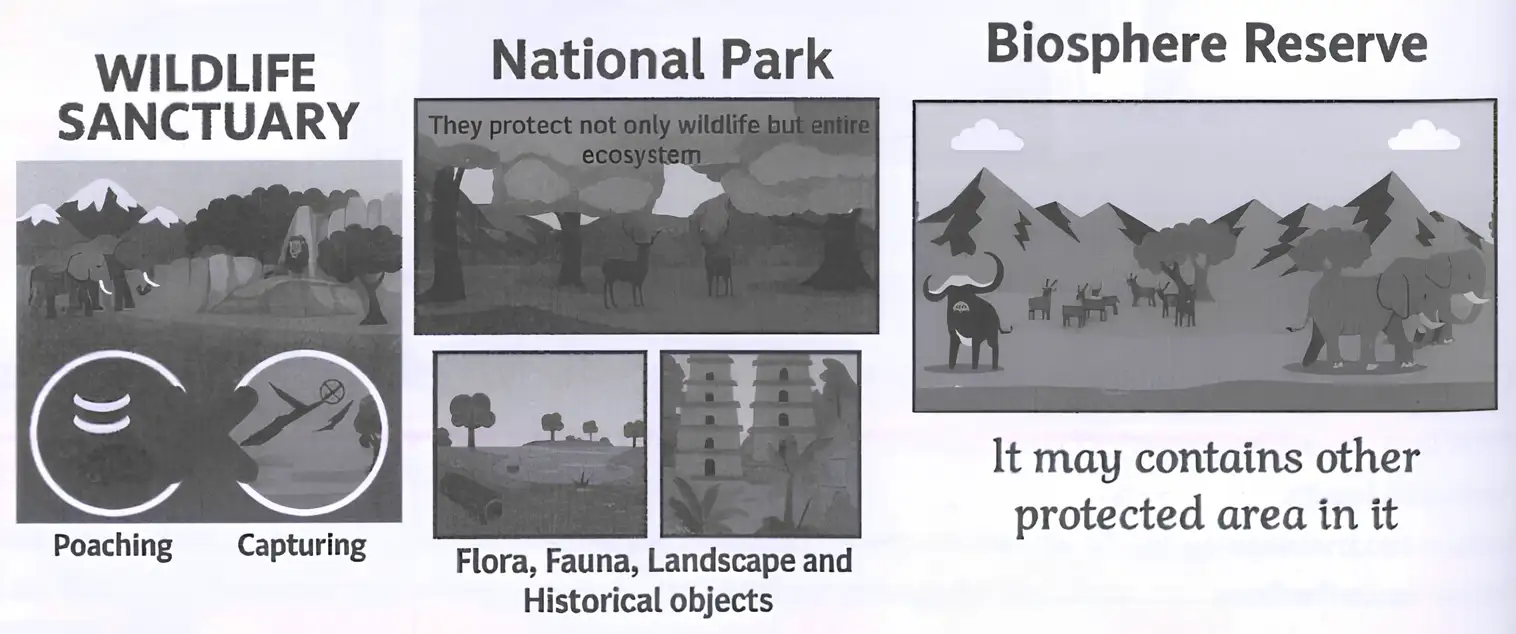
National parks, wildlife sanctuaries, and biosphere reserves protect wildlife, plants, and ecosystems.
Conservation Efforts
Reforestation, animal corridors, and breeding programs help restore habitats and protect endangered species.
Example: Sundarbans
The Sundarbans is the world’s largest mangrove forest, protecting coastal areas and supporting biodiversity but threatened by human activities and pollution.
Solved Examples
Example: Name three types of protected areas and their purpose.
Solution: National parks protect entire ecosystems; wildlife sanctuaries protect specific species; biosphere reserves conserve large areas including parks and sanctuaries.
Practice Set
- Level 1: What is a national park?
- Level 2: How do breeding programs help conservation?
- Level 3: Discuss the importance of the Sundarbans ecosystem.
Answer Key
- Level 1: A protected area conserving wildlife and habitats.
- Level 2: Breeding programs increase endangered species populations.
- Level 3: Sundarbans protect coasts, support biodiversity, and regulate climate.
Quick Reference Table
- Habitat: Natural environment where organisms live and obtain resources.
- Population: Group of individuals of the same species in an area.
- Community: Different populations living and interacting in one area.
- Ecosystem: Interaction of biotic and abiotic components in an environment.
- Producers: Organisms that make their own food through photosynthesis.
- Consumers: Organisms that eat other organisms for energy.
- Decomposers: Organisms that break down dead matter and recycle nutrients.
- Food Chain: Linear sequence showing energy flow from producers to consumers.
- Food Web: Network of interconnected food chains showing complex feeding relationships.
- Mutualism: Interaction where both species benefit.
- Commensalism: One species benefits, the other is unaffected.
- Parasitism: One species benefits at the expense of the other.
- Ecological Imbalance: Disruption of ecosystem balance due to natural or human causes.
- Sustainable Farming: Farming practices that maintain soil health and ecological balance.
- Protected Areas: Designated regions for conservation of wildlife and habitats.
Common Mistakes and Misconceptions
- Confusing Population and Community: Remember, population is one species; community includes many species.
- Mixing Abiotic and Biotic Factors: Abiotic are non-living (water, soil); biotic are living (plants, animals).
- Assuming Food Chains are Circular: Energy flows in one direction; food chains are linear, not cycles.
- Overlooking Decomposers: Decomposers are essential for nutrient recycling; ignoring them disrupts ecosystem balance.
- Misidentifying Species Interactions: Mutualism benefits both; parasitism harms one; commensalism benefits one without affecting the other.
- Ignoring Human Impact: Pollution and deforestation cause ecological imbalance; sustainable practices are necessary.
- Assuming Artificial Ecosystems are Self-sustaining: They require human management and inputs.
- Confusing Food Web and Food Chain: Food web is complex and interconnected; food chain is simple and linear.
Glossary
Habitat: The natural home or environment of an organism.
Biotic Components: Living parts of an ecosystem, including plants, animals, and microorganisms.
Abiotic Components: Non-living physical and chemical factors like air, water, and soil.
Population: Group of individuals of the same species living in a specific area.
Community: All populations of different species living and interacting in an area.
Ecosystem: A system formed by the interaction of living organisms with their physical environment.
Producers: Organisms that produce their own food through photosynthesis.
Consumers: Organisms that consume other organisms for energy.
Decomposers: Organisms that break down dead organic matter and recycle nutrients.
Food Chain: A sequence showing who eats whom in an ecosystem.
Food Web: A network of interconnected food chains.
Mutualism: A relationship where both species benefit.
Commensalism: A relationship where one species benefits and the other is unaffected.
Parasitism: A relationship where one species benefits and the other is harmed.
Ecological Imbalance: Disruption in the natural balance of an ecosystem.
Sustainable Farming: Farming methods that protect the environment and maintain soil fertility.
Protected Areas: Regions designated for the conservation of wildlife and natural resources.