CLASS 7 . SOCIAL SCIENCE . EXPLORING SOCIETY INDIA AND BEYOND PART I . UNDERSTANDING MARKETS
Chapter 12 : Understanding Markets
Ch 12
SOCIAL SCIENCE
CLASS 7
Introduction to Markets
What is a Market?
A market is a place where the buying and selling of goods and services takes place. It is not always a physical space; markets can take many forms, including shops, stalls, shopping complexes, or even online platforms.
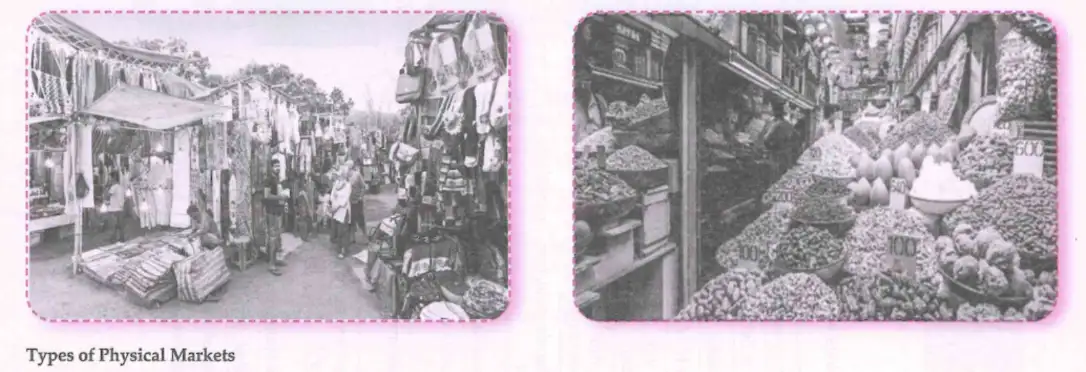
The image shows two types of physical markets: a street market with various goods like clothes and bags displayed outdoors, and a bustling spice market with many types of spices and other food items arranged in piles. Physical markets are places where buyers and sellers meet face-to-face, important for local trade and providing a variety of goods to customers.
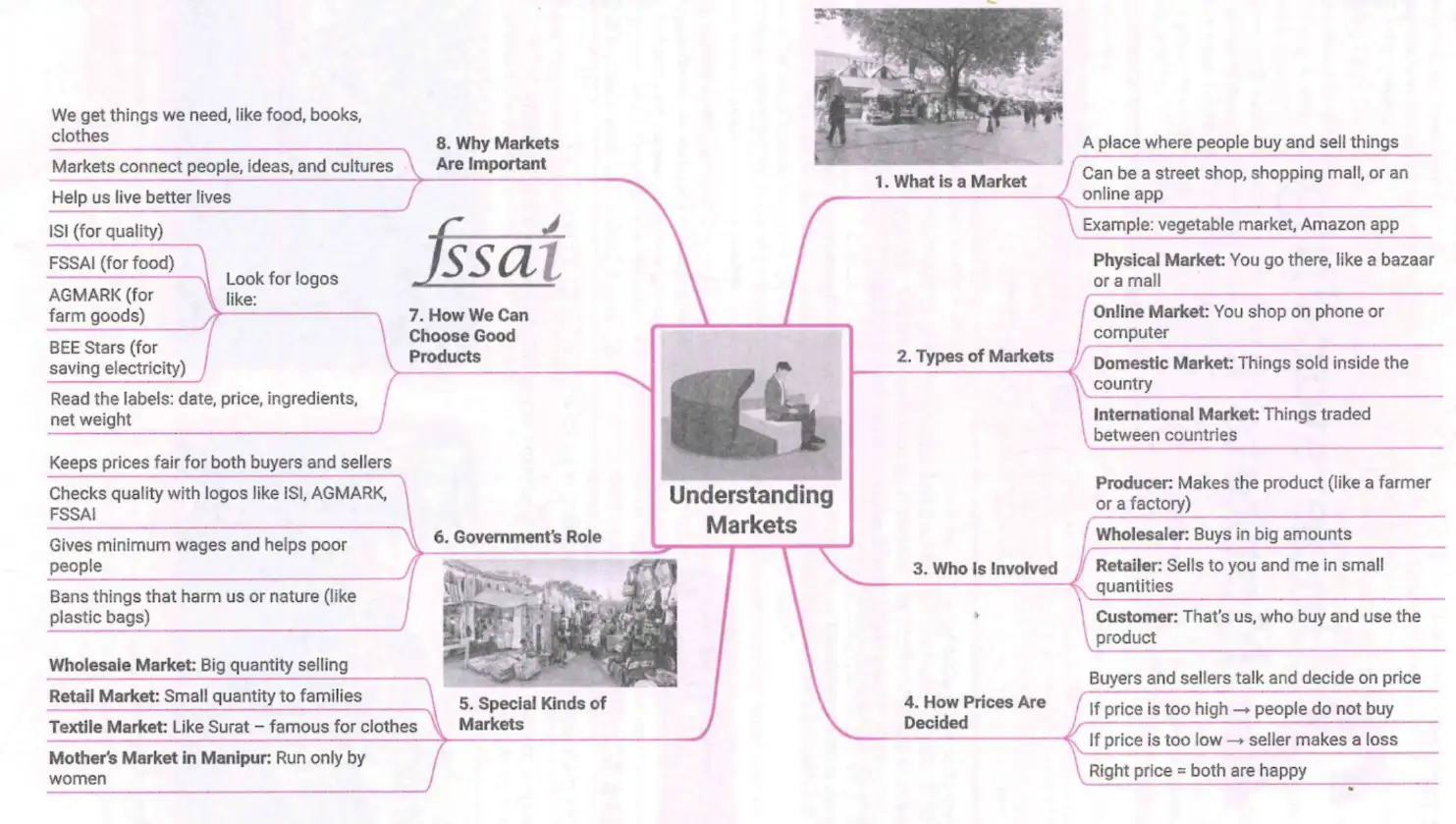
This mind map explains what markets are, different types of markets, who is involved, how prices are decided, special market types, the government's role, how to choose good products, and why markets are important.
Who is Involved in the Market?
Markets involve three main groups: producers (people who make or grow goods), traders (wholesalers and retailers who buy and sell goods), and consumers (people who buy goods for personal use).

The flowchart shows how products move from production to end users: factories make products, wholesalers buy in bulk, retailers buy smaller amounts from wholesalers, and customers buy products from retailers for personal use.
Example Question
Q: What are the main groups involved in a market?
A: Producers, traders (wholesalers and retailers), and consumers.
Hampi Bazaar - A Sixteenth Century Indian Market
Hampi Bazaar was a famous and vibrant marketplace located in Hampi, Karnataka, the capital of the Vijayanagara Empire from the fourteenth to sixteenth centuries. It was a major trading centre known for its wealth and international trade.
Features of Hampi Bazaar
- Structural Layout: A long street about 1 km with stone-pillared pavilions used as shops, store rooms, and rest places.
- Goods Sold: Spices, silk, pearls, gold, horses, precious stones, and textiles, including imports from Persia, Arabia, and Europe.
- Traders: Merchants from across India and abroad. Portuguese traveller Domingo Paes wrote about its wealth and vibrancy.
- Cultural Hub: Centre for festivals, religious processions, and music, closely linked to temple activities.
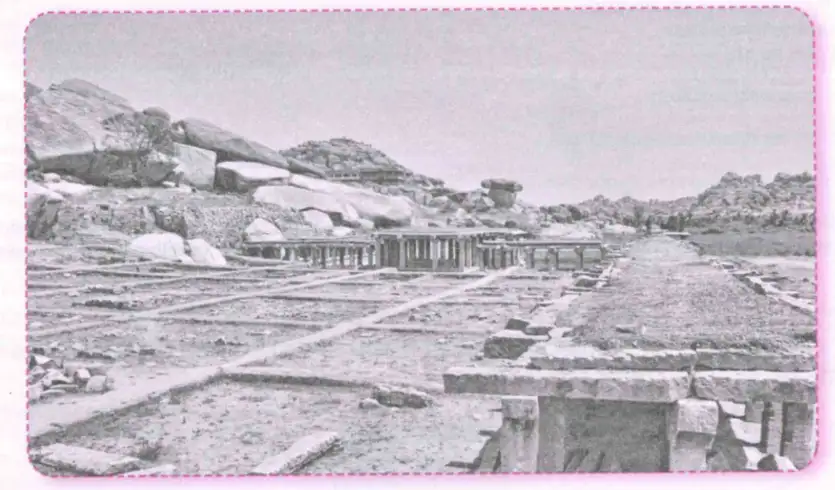
The image shows the ruins of the ancient city of Hampi, including stone structures and a grid-like layout indicating careful city planning.
Importance of Hampi Bazaar
Hampi Bazaar was a symbol of India’s rich trade history, showcasing the connection between religion, economy, and society. It was a well-planned market with international trade links in the sixteenth century.
Example Question
Q: What made Hampi Bazaar an important market in the sixteenth century?
A: Its well-planned layout, variety of goods including international imports, and its role as a cultural and economic hub.
Who is Involved in the Market?
Markets involve three main groups:
- Producers: People who make or grow goods, such as farmers or factory workers.
- Traders: Wholesalers and retailers who buy goods from producers and sell them to others.
- Consumers: People who buy goods for personal use.
Chain of Markets
Goods pass through a chain of people before reaching consumers: Producer → Wholesaler → Retailer → Consumer.
Example: A farmer grows wheat, a wholesaler buys in bulk, a retailer buys from the wholesaler, and the consumer buys wheat from the shop.
Example Question
Q: Describe the chain of markets through which goods pass before reaching the consumer.
A: Goods move from producers to wholesalers, then to retailers, and finally to consumers.
Prices and Markets
Many Buyers and Sellers in a Market
Having many buyers and sellers leads to competition. Sellers compete to offer better prices and quality, while buyers compare options before purchasing.
How Prices Are Affected
- If there are many sellers, competition increases, and sellers may lower prices to attract buyers, causing prices to go down.
- If there are many buyers (high demand), sellers may increase prices, causing prices to go up.
Prices are affected by supply and demand. The interaction between buyers and sellers decides the final price, keeping the market dynamic but sometimes creating unfair situations if one group has more power.
Example
In a vegetable market, many sellers selling tomatoes cause the price to drop, while few tomatoes but many buyers cause the price to rise.
Example Question
Q: How does the number of buyers and sellers affect prices in a market?
A: More sellers increase competition and lower prices; more buyers increase demand and raise prices.
Markets Around Us
Markets are places where buying and selling of goods and services take place. They can be of many types and forms.
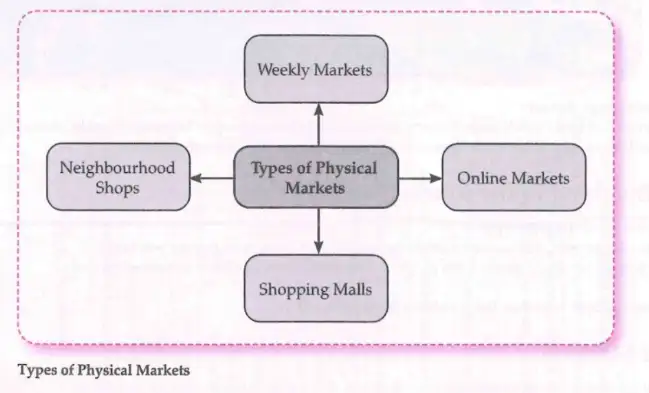
Types of physical markets include weekly markets, neighbourhood shops, shopping malls, and online markets.
Physical Markets
1. Weekly Markets
- Set up on specific days in different areas with temporary stalls.
- Prices are usually low as sellers don’t pay shop rent.
- Example: Local vegetable or clothes market every Monday or Sunday.
2. Neighbourhood Shops
- Fixed shops selling daily-use items.
- Convenient and often offer credit (udhaar) to regular customers.
- Example: Kirana stores, medical shops.
3. Shopping Complexes or Malls
- Large buildings with many shops inside.
- Expensive, branded items, air-conditioned and organised.
4. Online Market (E-Market)
A virtual market that works through the internet, available 24/7 with home delivery and online payments.
Examples include Amazon, Flipkart, Swiggy, Zomato, and Urban Company.
Example Question
Q: Name four types of physical markets and give an example of each.
A: Weekly markets (local vegetable market), neighbourhood shops (kirana store), shopping malls (large branded stores), online markets (Amazon).
Domestic Markets
What is a Domestic Market?
The domestic market refers to buying and selling goods and services within the boundaries of a country, where both producer and consumer belong to the same country.
Features
- Uses national currency (e.g., Indian Rupee in India).
- Includes all types of markets: local shops, malls, online stores, wholesale and retail.
- Products are made for local needs.
- Fewer legal formalities compared to international trade.
Examples
- Buying rice from a grocery store in your city.
- A furniture company in Rajasthan selling sofas in Delhi.
Benefits
- Quick and easier delivery.
- Supports local businesses and employment.
- Lower transportation costs.
Over 80% of all trade in India happens in the domestic market.
Example Question
Q: What are the benefits of domestic markets?
A: Quick delivery, support for local businesses, and lower transportation costs.
International Markets
What is an International Market?
An international market refers to buying and selling goods and services between two or more countries, also called foreign trade or global trade.
Main Activities
- Import: Buying goods from other countries.
- Export: Selling goods to other countries.
Features
- Involves multiple currencies.
- Requires international laws and trade agreements.
- Needs shipping, customs, taxes, and documentation.
- Connects countries globally.
Examples
- India exports tea, spices, cotton, and software to the USA and Europe.
- India imports crude oil from the Middle East and electronics from China.
- Samsung (Korean company) sells phones in India.
Benefits
- Brings in foreign money through exports.
- Provides access to goods not available locally.
- Boosts industrial growth and international relations.
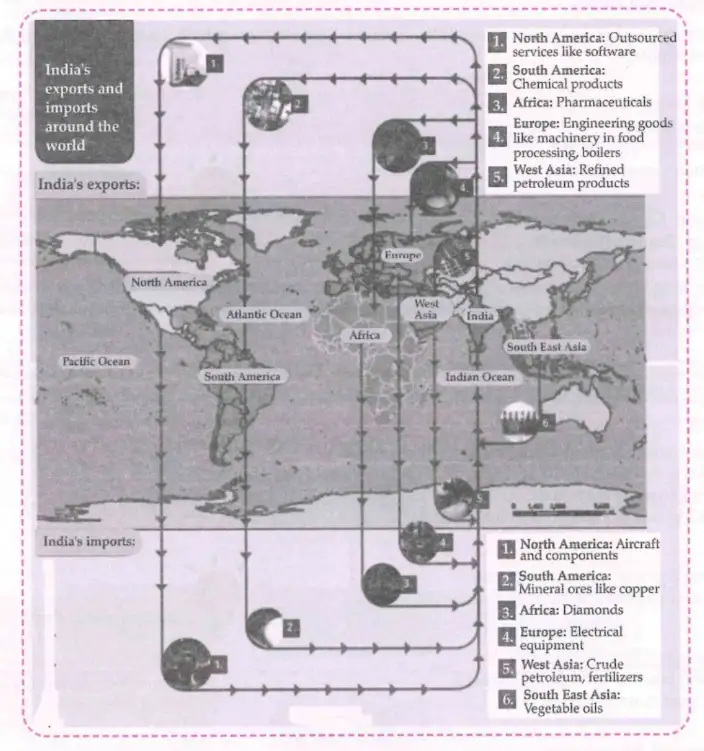
The world map highlights India's major exports and imports with different continents, showing global trade links.
Example Question
Q: What are the two main activities in international markets?
A: Importing goods from other countries and exporting goods to other countries.
Wholesale and Retail Markets
Wholesale Markets
Goods are sold in bulk to retailers, not individual consumers. Wholesalers buy large amounts from producers and sell to shopkeepers or small sellers.
Examples include grain mandis, fruit and vegetable wholesale markets, and big warehouses supplying stores like D-Mart or Big Bazaar.
Features of Wholesale Markets
- Bulk selling of goods.
- Lower prices due to bulk buying discounts.
- Buyers are retailers, not final consumers.
- Located near production areas or big cities to reduce transport costs.
- Wholesalers act as middlemen between producers and retailers.
Retail Markets
Retail markets sell goods in small quantities directly to final consumers for personal use, not for resale.
Features of Retail Markets
- Sells in small quantities (piece by piece, packet by packet).
- Final buyer is the consumer.
- Higher prices than wholesale due to added profit margin.
- Wide variety of products and brands.
- Located close to consumers in neighbourhoods, markets, malls, and online.
- Customer service and product display are important.
Example Question
Q: What is the difference between wholesale and retail markets?
A: Wholesale markets sell goods in bulk to retailers at lower prices, while retail markets sell goods in small quantities directly to consumers at higher prices.
Role of Markets in People’s Lives
Markets facilitate the exchange of goods and services between producers (farmers and factory workers) and consumers (people who buy and use goods).
Key Roles of Markets
- Connecting producers and consumers.
- Providing goods and services like food, clothes, and electronics.
- Setting prices based on supply and demand.
Why are Markets Important?
- Variety of Choices: Markets offer many options to choose from, such as different brands of biscuits, clothes, or mobile phones.
- Employment: Markets provide jobs for shopkeepers, delivery persons, and transporters.
- Economic Growth: Growth of markets boosts trade and business, helping the economy become stronger.
Example Question
Q: List three reasons why markets are important in our lives.
A: They provide variety of choices, create employment, and contribute to economic growth.
Role of Government in the Market
The government ensures that markets function smoothly, fairly, and effectively.
Key Roles of Government
- Regulation of Prices: Setting price ceilings for essential goods to prevent high prices during scarcity.
- Providing Infrastructure: Building mandis and supporting market development in urban areas.
- Ensuring Fair Competition: Monitoring companies to prevent monopolies and price fixing.
- Preventing Unfair Practices: Protecting consumers through laws like the Consumer Protection Act.
- Providing Public Goods and Services: Ensuring access to healthcare, education, and national defence.
- Maintaining Law and Order: Providing security and enforcing business regulations.
Azadpur Mandi in Delhi is Asia’s largest fruit and vegetable market, handling 5000 tonnes of produce daily.
Example Question
Q: How does the government help in regulating markets?
A: By regulating prices, providing infrastructure, ensuring fair competition, preventing unfair practices, providing public goods, and maintaining law and order.
Assessing Quality of Products and Services
How Can Consumers Assess Quality?
- Check the label for ingredients, expiry date, and certification marks.
- Look for certification marks like ISI, FSSAI, BIS, Eco Mark, AGMARK, Fair Trade Certified, CE Mark, GMO-Free, and Recyclable Symbol.
- Read consumer reviews and ratings.
- Compare prices to ensure fair value.
- Check warranties or guarantees.
- Test the service quality through personal experience and reviews.
Example Question
Q: Name three certification marks that help consumers assess product quality.
A: ISI Mark, FSSAI Mark, BIS Mark.
Glossary
- Needs: Essential requirements for survival like food, water, clothing, and shelter.
- Wants: Desires that are not essential for survival.
- Trade: Buying and selling or exchange of goods and services.
- Price: The amount at which a buyer is willing to buy and a seller is willing to sell goods or services.
- Inputs for production: Materials and resources used to produce goods and services.
- Manufacturer: A person or company that makes goods for sale.
- Import: Buying goods or services from other countries.
- Export: Selling goods or services produced in one country to buyers in another country.
- Demand: Quantity of a product consumers are willing and able to purchase at a given price and time.
- Supply: Quantity of a product sellers are willing and able to sell at a given price and time.
- Public goods: Services or commodities accessible to all members of society without diminishing availability for future use.
Solved Examples
Example 1
Q: Explain the difference between a wholesale market and a retail market.
A: Wholesale markets sell goods in large quantities to retailers at lower prices, while retail markets sell goods in small quantities directly to consumers at higher prices.
Example 2
Q: What role does the government play in ensuring fair competition in markets?
A: The government monitors companies to prevent monopolies, price fixing, and unfair trade practices through agencies like the Competition Commission of India.
Practice Set
Easy
- What is a market?
- Name two types of physical markets.
- Who are the main groups involved in a market?
Moderate
- Explain the chain of markets from producer to consumer.
- What are the features of a domestic market?
- List three roles of the government in markets.
Challenging
- Describe the importance of Hampi Bazaar in the sixteenth century.
- How do supply and demand affect prices in a market?
- Explain how consumers can assess the quality of products.
Answer Key
- A market is a place where buying and selling of goods and services takes place.
- Weekly markets, neighbourhood shops.
- Producers, traders, consumers.
- Goods move from producers to wholesalers, then retailers, and finally consumers.
- Uses national currency, includes all market types, products made for local needs, fewer legal formalities.
- Regulating prices, providing infrastructure, ensuring fair competition.
- Hampi Bazaar was a well-planned market with international trade links and cultural significance.
- Prices go down with many sellers (competition) and go up with many buyers (high demand).
- By checking labels, certification marks, reviews, prices, warranties, and testing services.
Quick Reference
- Market: Place for buying and selling goods and services.
- Types of Markets: Physical (weekly, shops, malls), online, domestic, international.
- Participants: Producers, traders, consumers.
- Price Determination: Based on supply and demand.
- Government Role: Regulation, infrastructure, fair competition, consumer protection.
- Quality Assessment: Labels, certification marks, reviews.