CLASS 7 . SOCIAL SCIENCE . EXPLORING SOCIETY INDIA AND BEYOND PART II . THE STATE-THE-GOVERNMENT-AND-YOU
Chapter 6 : The State, the Government, and You
Ch 6
SOCIAL SCIENCE
CLASS 7
The State, the Government, and You
“The greatest punishment for being unwilling to rule is being ruled by someone worse than oneself.” – Socrates, Greek philosopher (in ‘The Republic’ by Plato c. 380 BCE)
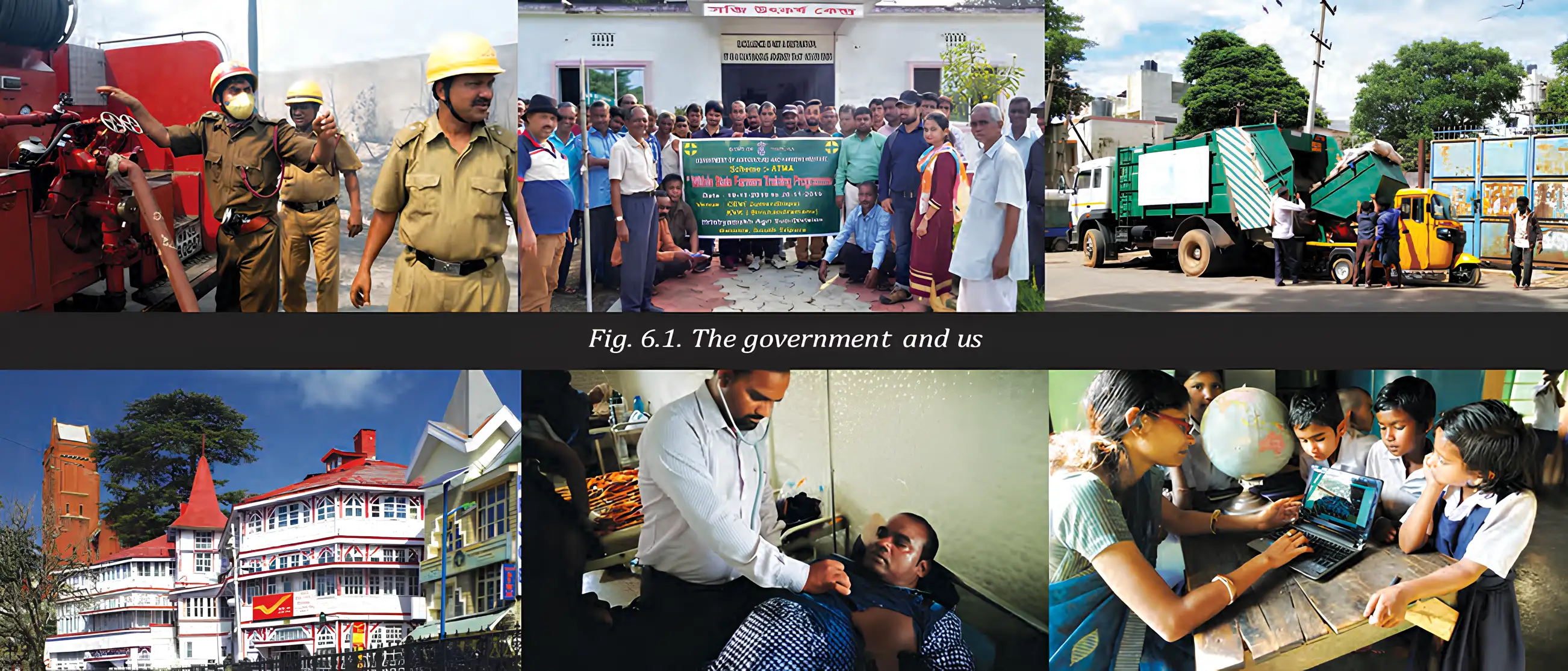
The government supports the community in many ways such as fire safety, organizing group activities, waste management, postal services, healthcare, and education. These services improve daily life for everyone by protecting people, informing citizens, keeping cities clean, delivering mail, treating patients, and educating children.
The Big Questions?
- What is the difference between a state and a government?
- What is the difference between a democracy and a republic? What makes India a democratic republic?
- How do citizens engage with the government in day-to-day life? How can one make government work for the people?
What is a State?
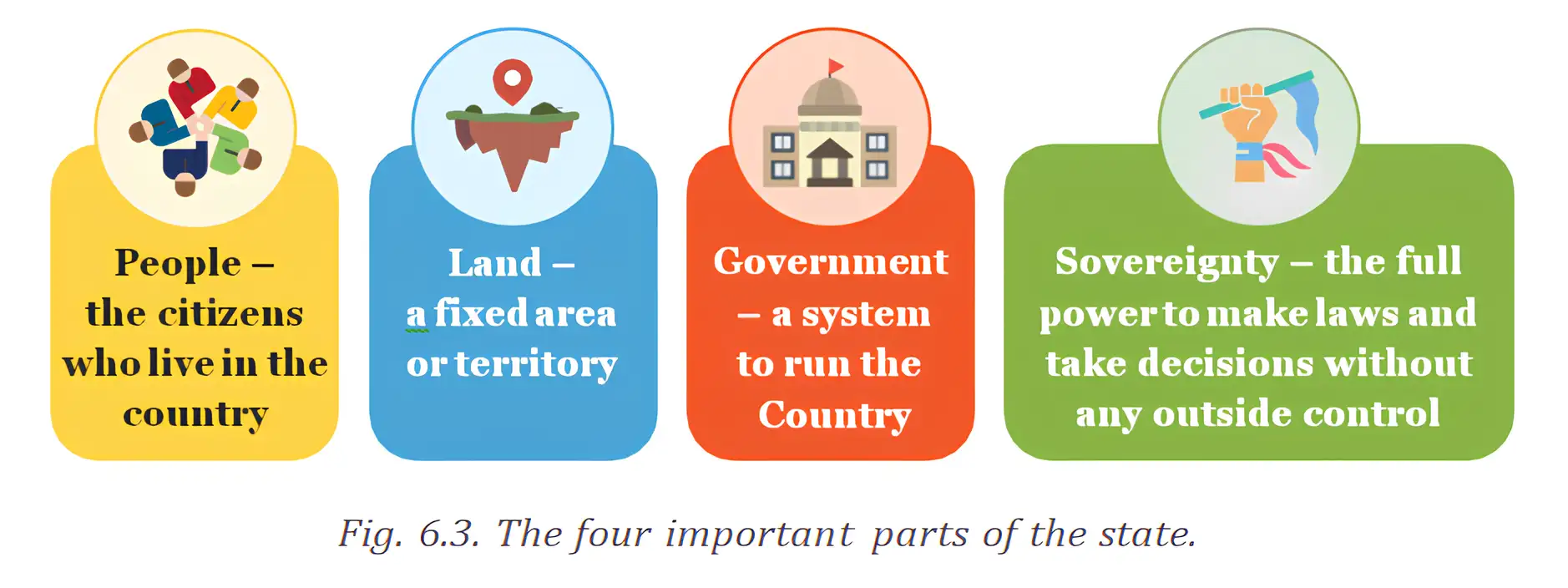
A state (or a nation) is a political organisation that has the authority to govern a defined territory and its population. It has four important parts:
- People: The citizens who live in the country.
- Land: A fixed area or territory that belongs to the state.
- Government: The system or organisation that runs the country.
- Sovereignty: The full power to make laws and decisions without interference from outside forces.
Though the words ‘state’ and ‘government’ are often used interchangeably, they are different. The state is a larger concept including the population, territory, government, and sovereignty. The government is the group that runs the country, makes and enforces laws, and resolves disputes. The government can change after elections, but the state remains the same.
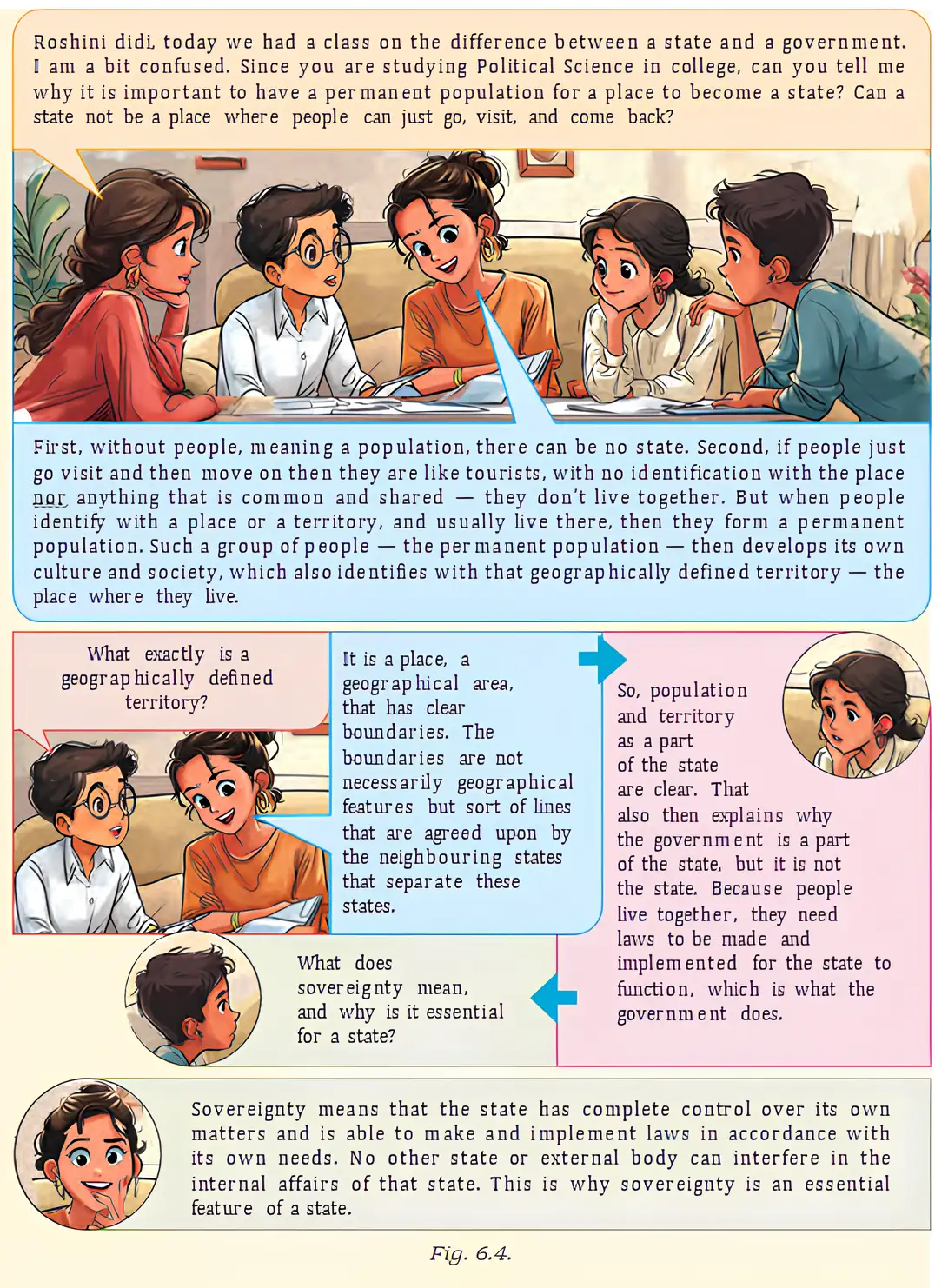
What is a Government?
The government is a group of people or a system that runs the country. It includes leaders, ministers, and officials who:
- Make laws
- Enforce laws
- Resolve disputes
The government acts on behalf of the state and is the face of the state that people interact with daily. It runs the daily work of the state and is responsible for governance.
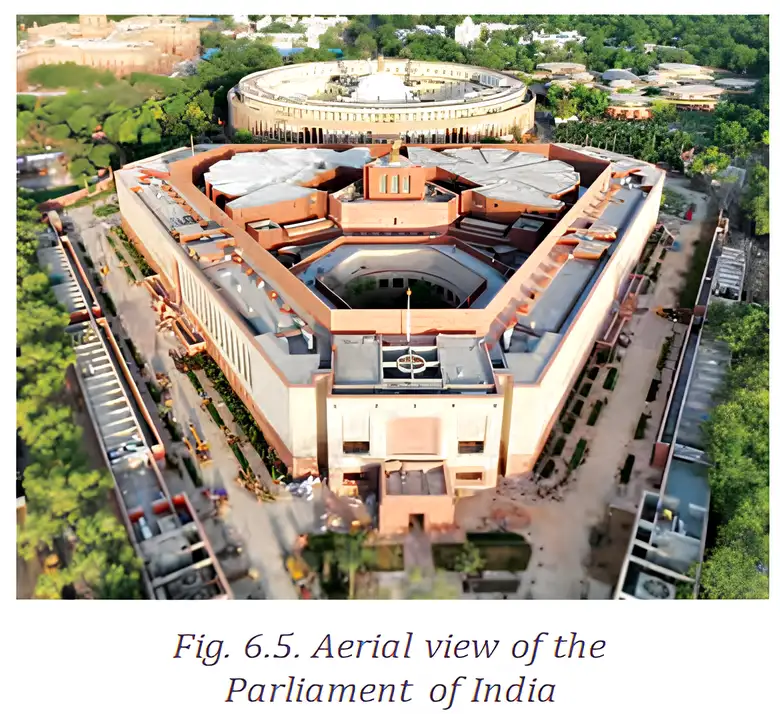
The Parliament of India is where lawmakers meet to make and pass laws. It has two houses: the Lok Sabha and the Rajya Sabha.
People, Police, and the Government
The police maintain law and order within each state and are part of the state government. They work with courts and prisons and contribute to social change by promoting safety and justice. They must respect and protect constitutional rights.
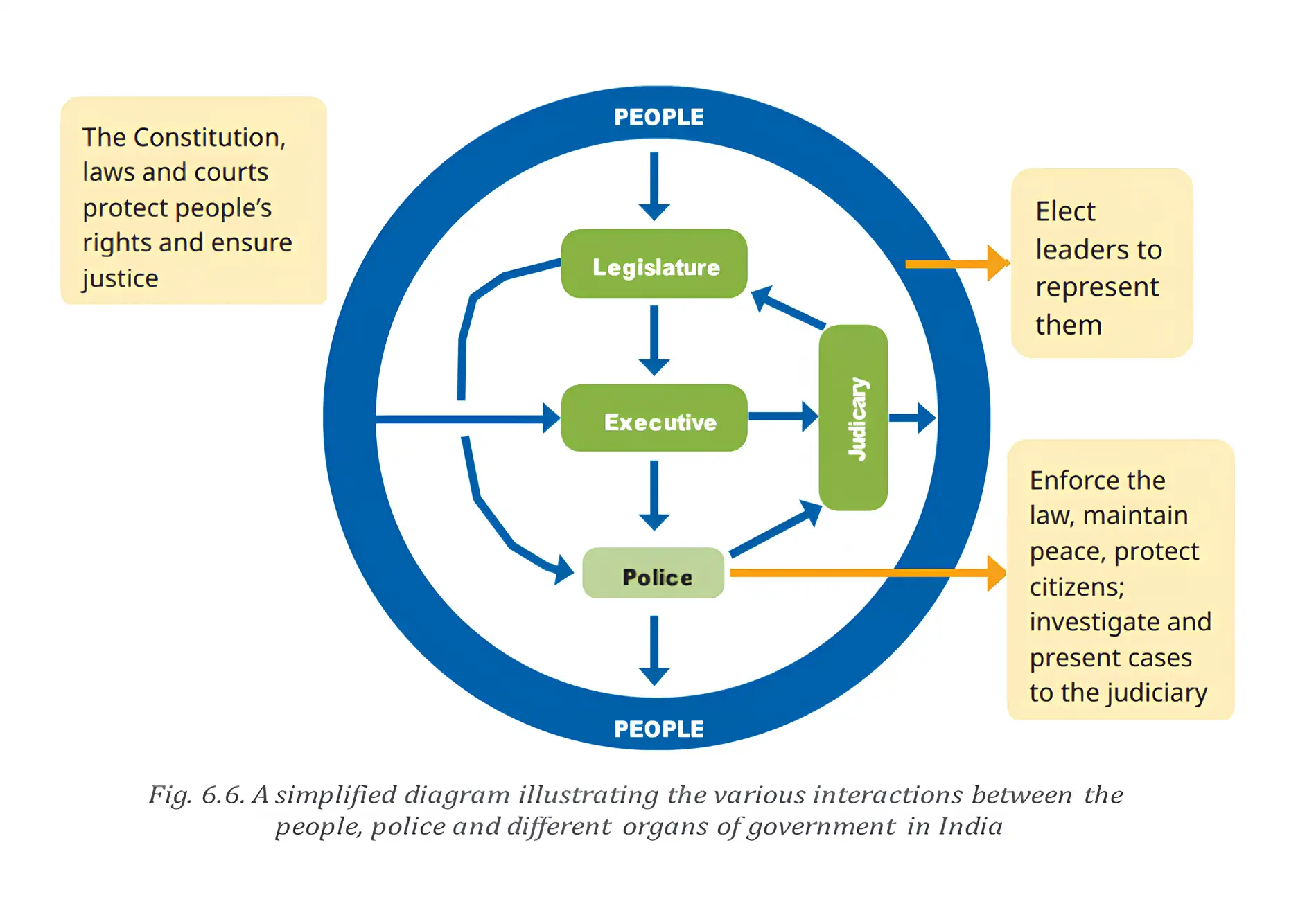
Branches of Government
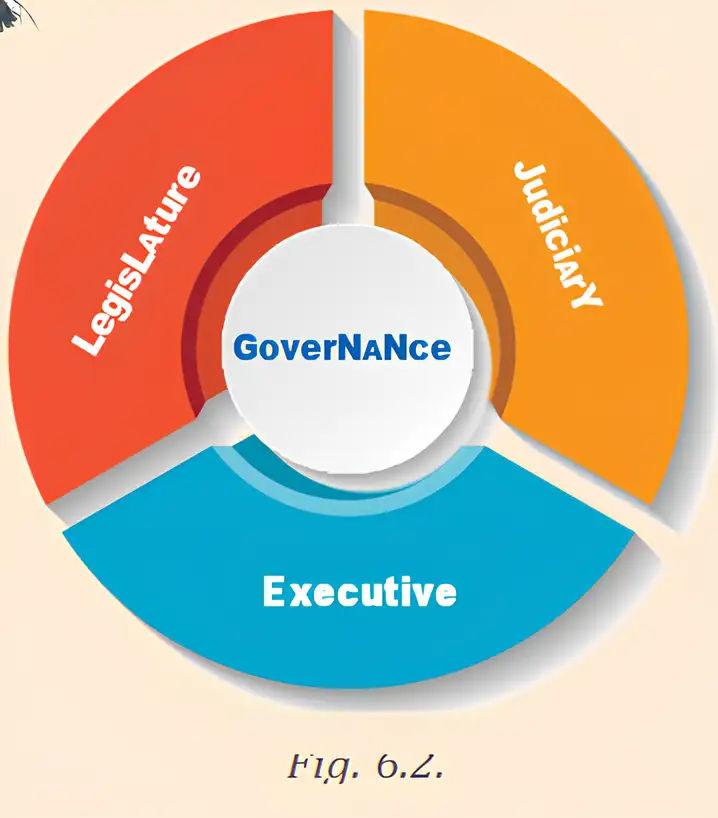
Governance is divided into three branches to maintain balance and fairness:
- Legislature: Makes laws.
- Executive: Enforces laws and runs day-to-day government.
- Judiciary: Interprets laws and ensures justice.
Difference Between Democracy and Republic
A democracy means rule by the people, where citizens have the power to choose their government through free and fair elections.
A republic is a form of government where the head of state is elected (directly or indirectly) and not hereditary. The powers of rulers are limited by a constitution or laws.
India is both a democracy and a republic because its head of state, the president, is elected and the government is accountable to the people.
India, a Republic that Protects the Rights of All
India’s constitution guarantees fundamental rights to all citizens and limits the power of the government to protect these rights. This prevents the dominance of the majority over minorities.
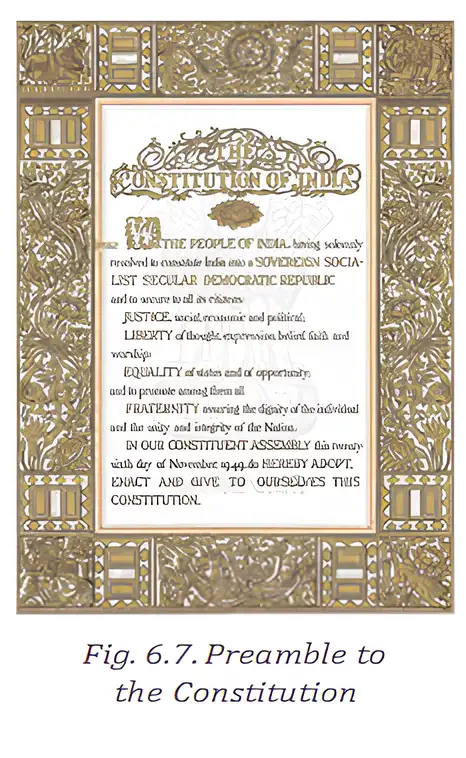
The Preamble to the Constitution declares India to be a Sovereign, Socialist, Secular, Democratic Republic and promises justice, liberty, equality, and fraternity to all citizens.
Dominance of the Majority
This is a situation where the interests of the majority are pursued at the expense of minority rights. The Constitution protects against this by ensuring rule of law and fundamental rights.
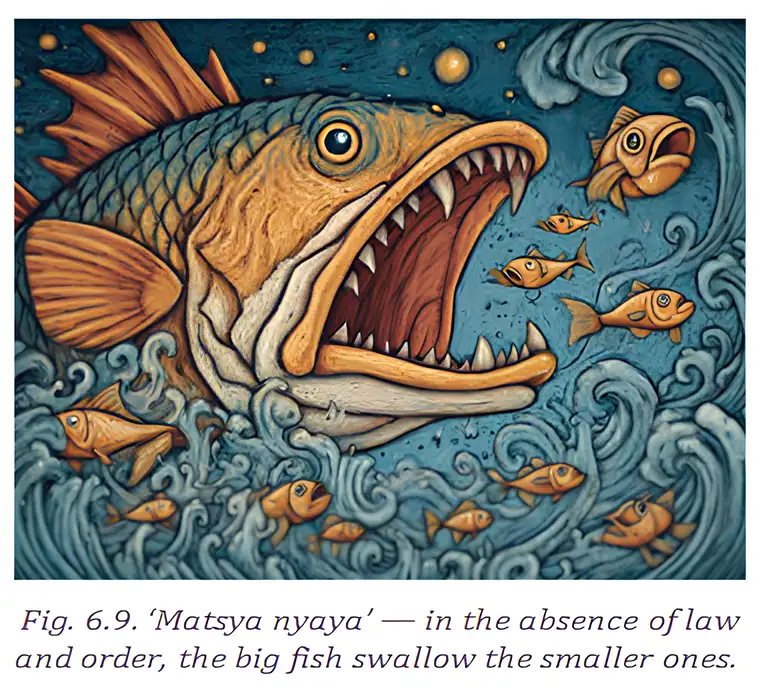
The concept of Matsya Nyaya warns that without law and order, the powerful (big fish) will dominate and harm the weak (small fish), highlighting the need for justice and fairness.
Legislature: The Lawmaking Body
The legislature makes laws for the country and represents the people. States have their own legislatures to make laws for the state.
Executive: The Law-Implementing and Policymaking Body
The executive implements laws made by the legislature and makes policy decisions. It has two parts:
- Political executive: Elected leaders like the prime minister and ministers who make decisions and represent the country.
- Permanent executive: Bureaucrats or civil servants who are appointed and implement policies regardless of which party is in power.

Bureaucrats implement laws and schemes, connect citizens with the government, and keep records of government work.

The bureaucracy is hierarchical and works at various levels including district and block. Examples include the Indian Administrative Service (IAS), Indian Police Service (IPS), and Indian Foreign Service (IFS).
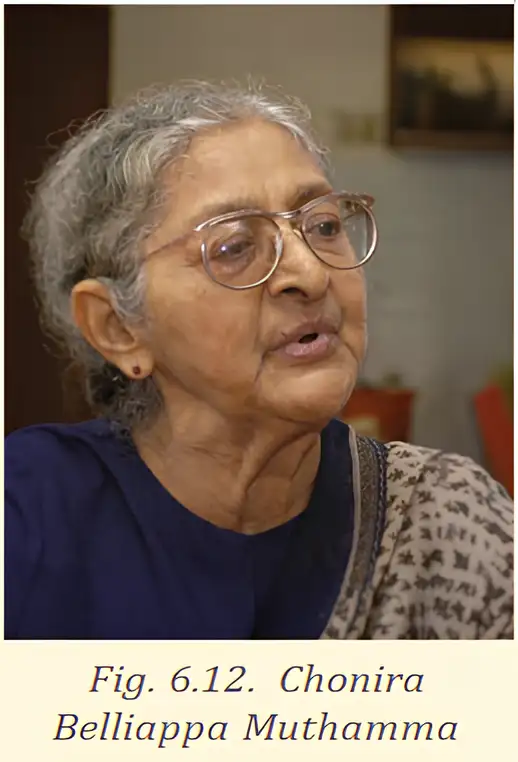
Chonira Belliappa Muthamma was the first woman to join the Indian Foreign Service and fought against gender discrimination in public service, marking a milestone in gender equality.
Judiciary: The Watchdog
The judiciary ensures laws are followed, settles disputes, protects rights, and checks the fairness of laws. It is independent from the government to maintain justice.
The judiciary protects the rule of law, ensuring everyone, including the government, follows the law.
Three Levels of Government in India
India has three levels of government to manage its vast and diverse population:
- Central (Union) government: Handles national matters like defence and foreign affairs.
- State governments: Manage state issues like police, health, and agriculture.
- Local governments: Work in villages, towns, and cities to solve local problems like water supply and street lighting.
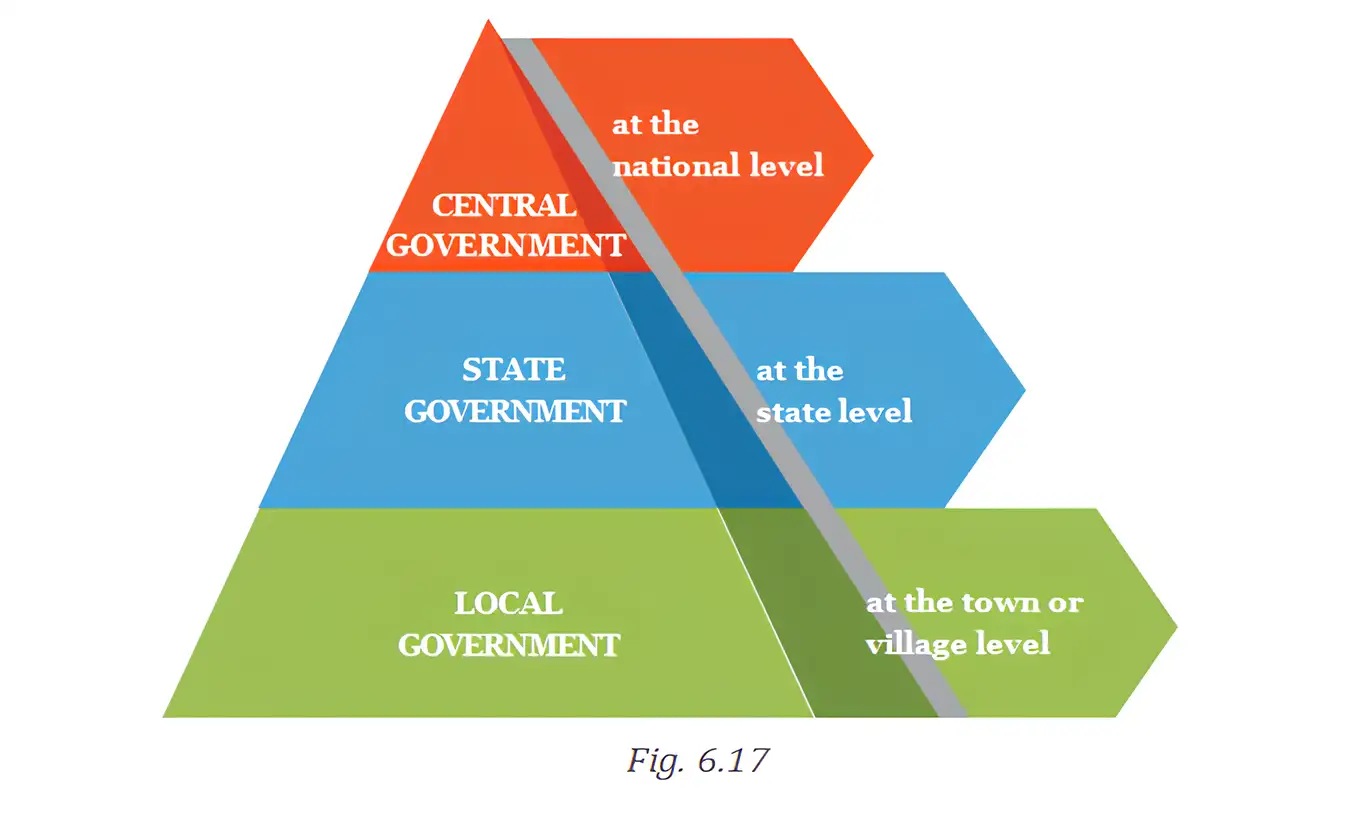
Decentralisation means spreading power so local issues are solved locally, while bigger issues are handled by higher levels of government.
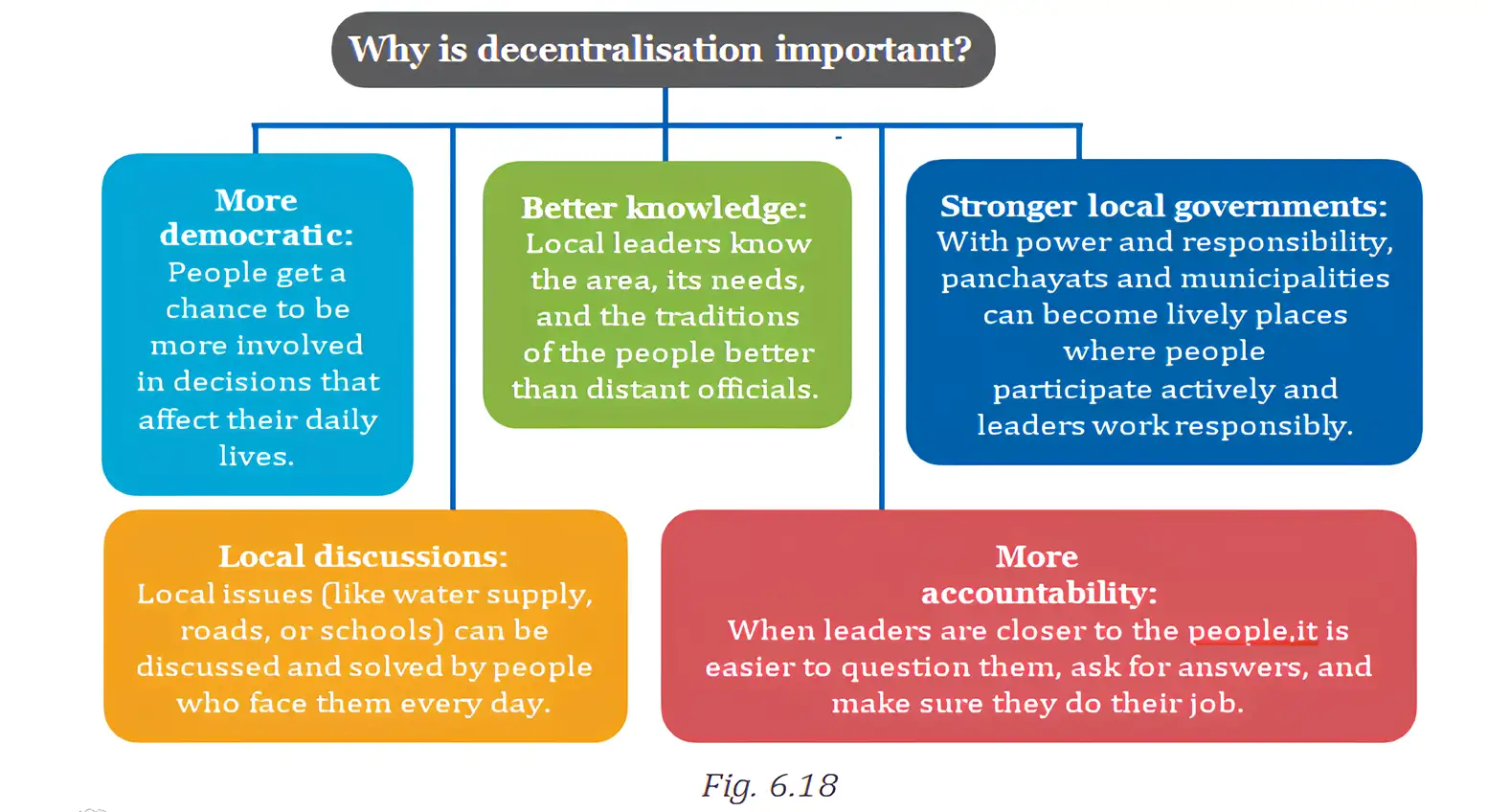
Mahatma Gandhi advocated for decentralisation and self-sufficient village governments called gram swaraj.
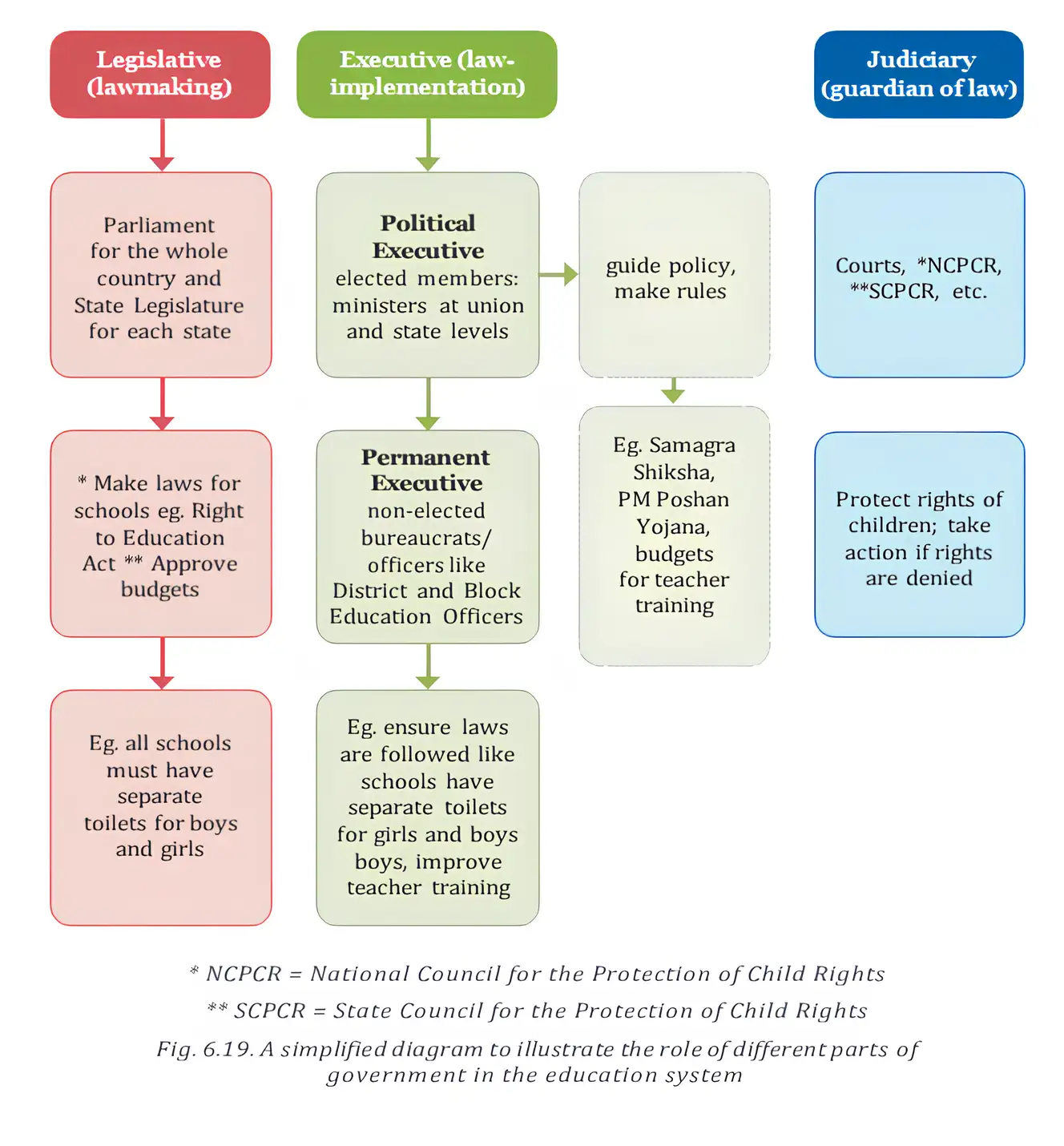
Working of the Three Levels of the School Education System
Each level of government plays a role in education:
- Legislature: Makes laws like the Right to Education Act and approves budgets.
- Executive: Implements laws and policies through elected leaders and permanent officials.
- Judiciary: Protects children's rights and ensures laws are followed.
How Citizens Can Engage with the Government
Citizens can make the government work for them by:
- Filing grievances through government offices or online portals like the Public Grievances Portal.
- Using the Right to Information Act to request information about government actions.
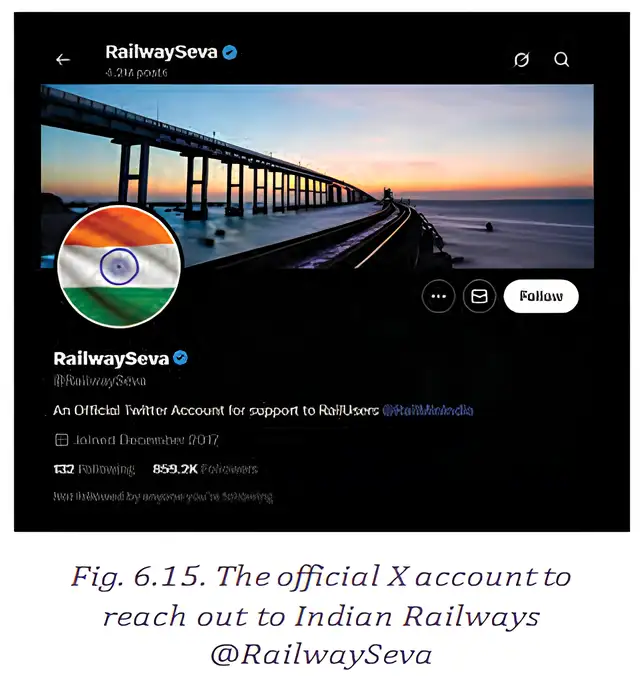
- Using media and social media to raise issues and communicate with officials.
- Joining or forming civil society organisations to advocate for change.
- Writing to political representatives.
- Voting in elections to choose responsible leaders.
Example: The Silent Valley Movement successfully stopped a hydroelectric project to protect biodiversity, showing the power of citizen action.

Summary
- The state includes citizens, territory, government, and sovereignty.
- A republic elects its head of state and limits power through a constitution.
- The three pillars of government are legislature, executive, and judiciary.
- India has three levels of government: union, state, and local.
- The Constitution ensures checks and balances and cooperation among government organs and levels.
- The media and civil society play important roles in democracy.
- The permanent executive (bureaucracy) implements laws and policies.