CLASS 7 . SOCIAL SCIENCE . EXPLORING SOCIETY INDIA AND BEYOND PART I . THE CONSTITUTION-OF-INDIA-AN-INTRODUCTION
Chapter 10 : The Constitution of India - An Introduction
Ch 10
SOCIAL SCIENCE
CLASS 7
Introduction to the Constitution of India
The Constitution of India is the supreme rulebook that guides our nation’s governance and protects citizens’ rights. It was drafted by the Constituent Assembly between 1946 and 1949 and came into effect on 26 January 1950, now celebrated as Republic Day. Shaped by India’s freedom struggle, cultural values, and global influences, it ensures democracy, justice, and equality for all.
What is a Constitution?
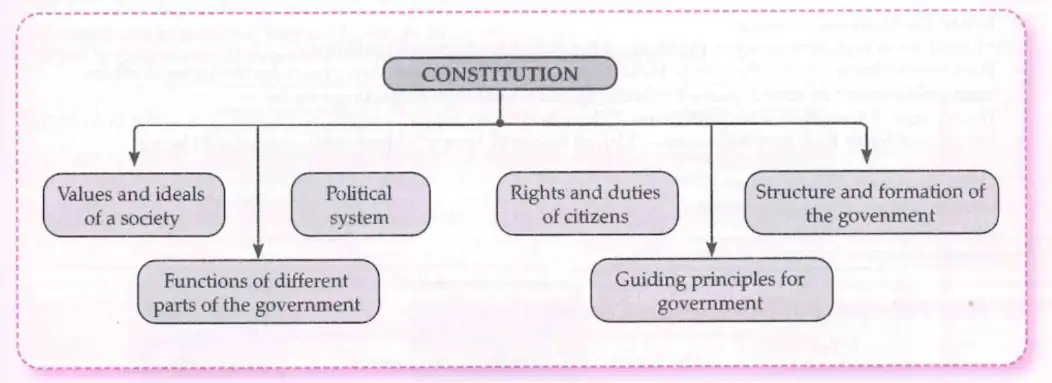
A Constitution is a document that lays down the basic rules and principles of a nation. It defines the structure of government, the principle of checks and balances to ensure fairness, responsibility and accountability among the three organs of the government, the rights and duties of citizens, and the long-term goals of the country.
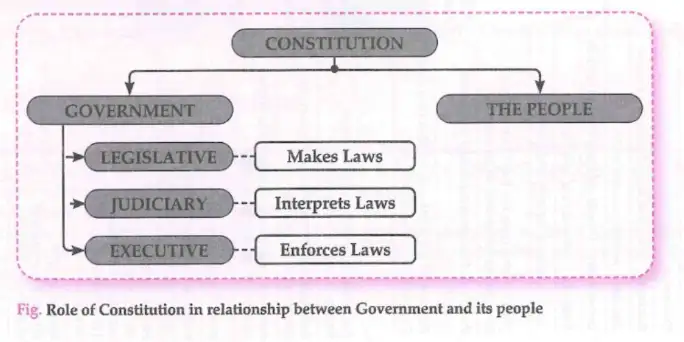
The Constitution connects the Government and the People by defining how the Government works. The Government has three branches:
- Legislative - Makes Laws
- Judiciary - Interprets Laws
- Executive - Enforces Laws
These branches work together to serve the People according to the Constitution.
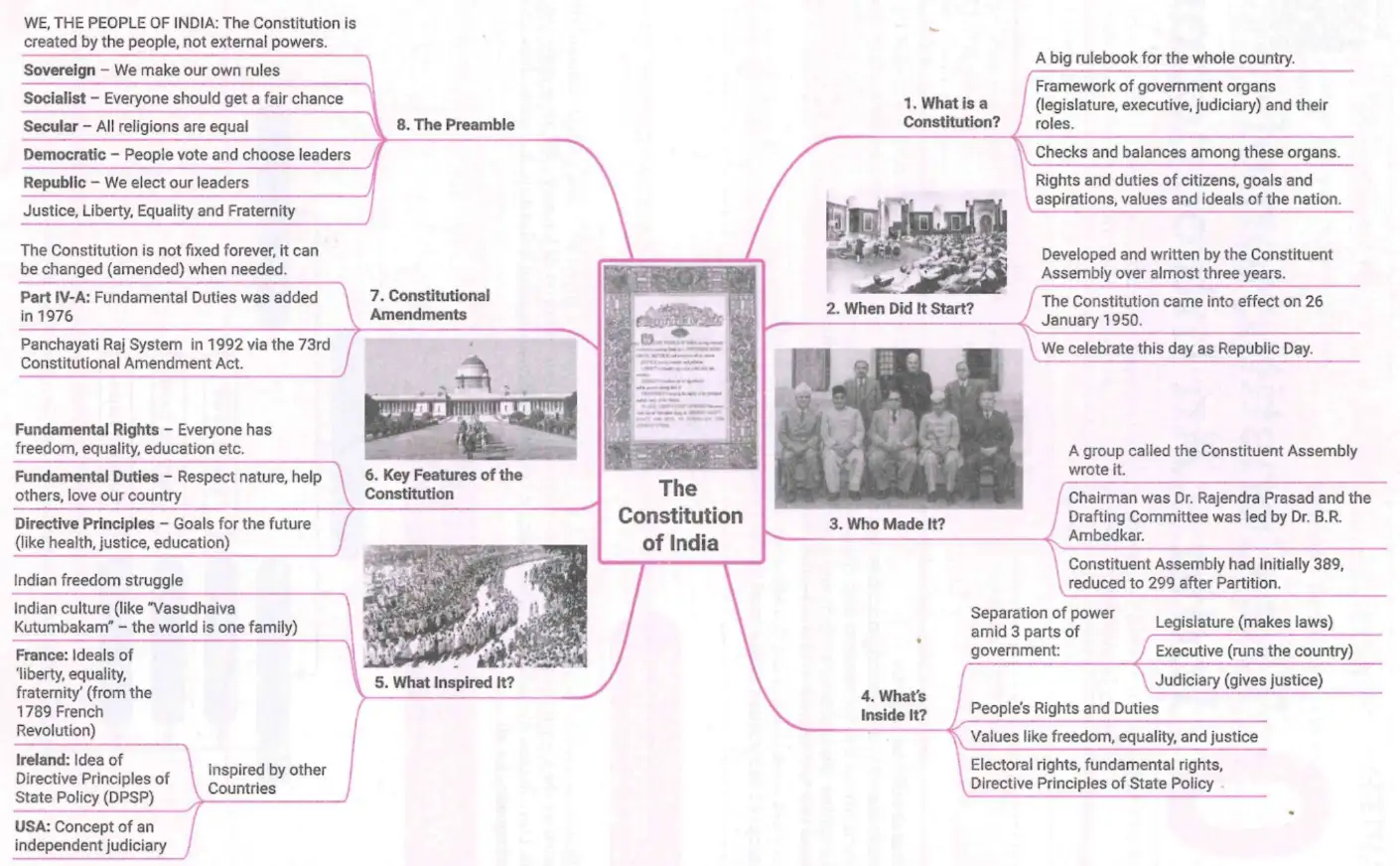
The Constitution is like a big rulebook for a country, defining government roles, checks and balances, and citizens' rights and duties. It was made by the Constituent Assembly with leaders like Dr. Rajendra Prasad and Dr. B.R. Ambedkar. It separates government powers into three parts: Legislature, Executive, and Judiciary. It also lists people's rights and duties. It was inspired by India's freedom struggle, culture, and ideas from France, Ireland, and the USA. Key parts include Fundamental Rights, Fundamental Duties, and Directive Principles for future goals. The Preamble states core values like democracy, equality, justice, and liberty, showing the Constitution is created by the people of India.
Exam Question
Q: What are the three branches of the government defined by the Constitution of India?
A: The three branches are the Legislature (makes laws), the Executive (enforces laws), and the Judiciary (interprets laws).
Importance of the Constitution
The Constitution is essential for the proper functioning of the governance of the country. It enlists the type of government and how it functions, how laws are made and enforced, and the rights and freedoms of citizens. It ensures fairness, accountability, and justice in governance and reflects national values like equality, freedom, and justice.
Quick Example
Without traffic signals, there would be chaos on the roads. Similarly, without a Constitution, a country would be disorderly.
Exam Question
Q: Why is a Constitution necessary for a country?
A: A Constitution is necessary because it provides the rules for governance, protects citizens' rights, ensures justice and fairness, and maintains order in the country.
Making of the Indian Constitution
On 9th December 1946, the Constituent Assembly was formed to draft the Constitution of free India. Initially, it had 389 members but later reduced to 299 (including 15 women) after the Partition of India, representing different regions and communities. Dr. Rajendra Prasad was the Chairman of the Assembly, and Dr. B. R. Ambedkar headed the Drafting Committee, which prepared the initial text of the Constitution. By 26th November 1949, the Constitution was ready and implemented on 26th January 1950, celebrated as Republic Day.
Exam Question
Q: Who was the Chairman of the Constituent Assembly and who headed the Drafting Committee?
A: Dr. Rajendra Prasad was the Chairman of the Constituent Assembly, and Dr. B. R. Ambedkar headed the Drafting Committee.
Influences on the Indian Constitution
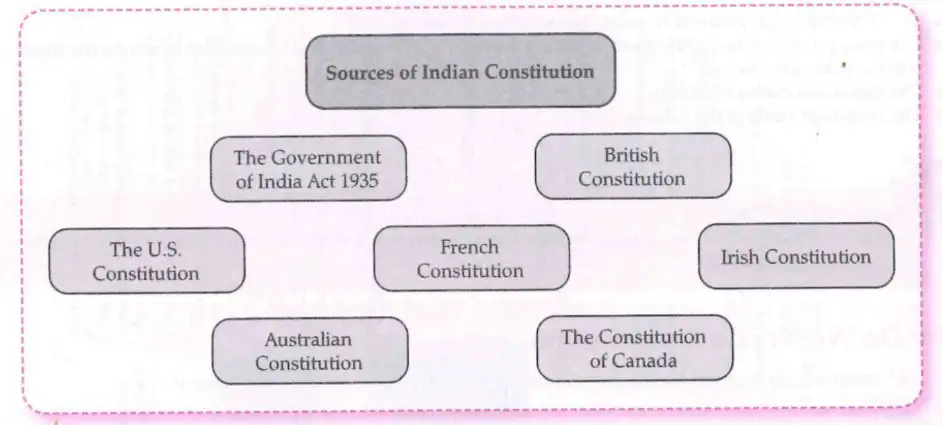
The Indian Constitution was shaped by studying different existing constitutions. The Government of India Act 1935 was a major influence. Constitutions of countries like the United States, Britain, France, Ireland, Australia, and Canada provided ideas and frameworks. By combining these sources, India created a unique Constitution suitable for its own needs, developing a strong legal and governmental system.
A. Indian Freedom Movement
Many key values like equality, justice, fraternity, freedom, and preservation of Indian heritage and culture learned from the Indian Freedom Movement were included in the Constitution. Several leaders of the freedom movement were members of the Constituent Assembly and helped add their experience and ideas.
B. Indian Civilisational Heritage
The Constitution kept alive many ideals of Indian heritage and traditions. It promotes the idea of India being one unified country, acceptance of others' views, considering nature as sacred, pursuit of learning and knowledge, and respecting women. The concept of Vasudhaiva Kutumbakam – “The world is one family” – and Sarve Bhavantu Sukhinah – “May all beings be happy” – are reflected in the spirit of the Constitution.
C. Other Countries’ Constitutions
France contributed the idea of “Liberty, Equality, Fraternity.” The USA inspired the independent judiciary. Ireland influenced the Directive Principles of State Policy.
Exam Question
Q: Name two countries whose constitutions influenced the Indian Constitution and mention one idea from each.
A: France influenced the idea of “Liberty, Equality, Fraternity,” and the USA influenced the concept of an independent judiciary.
Key Features of the Indian Constitution
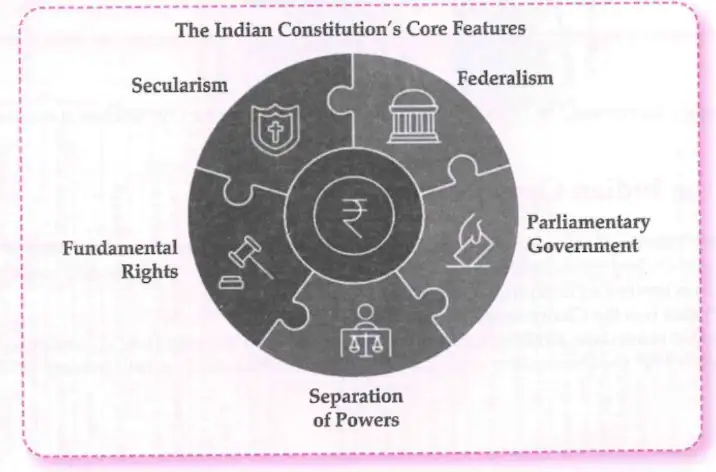
The Indian Constitution has key features that work together like puzzle pieces. These include Secularism, Federalism, Parliamentary Government, Separation of Powers, and Fundamental Rights. These features make the Constitution strong and fair.
A. Three Organs of Government
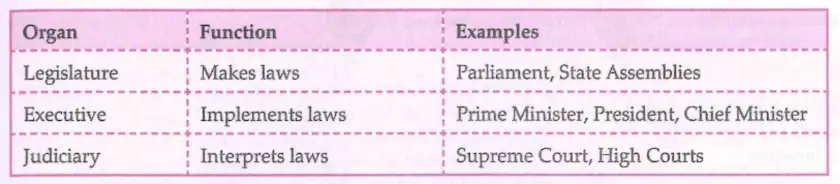
The three branches of government are:
- Legislature: Makes laws (Parliament, State Assemblies)
- Executive: Implements laws (Prime Minister, President, Chief Minister)
- Judiciary: Interprets laws (Supreme Court, High Courts)
Mnemonic to remember organs: L-E-J = Lawmakers, Executors, Judges
B. Fundamental Rights
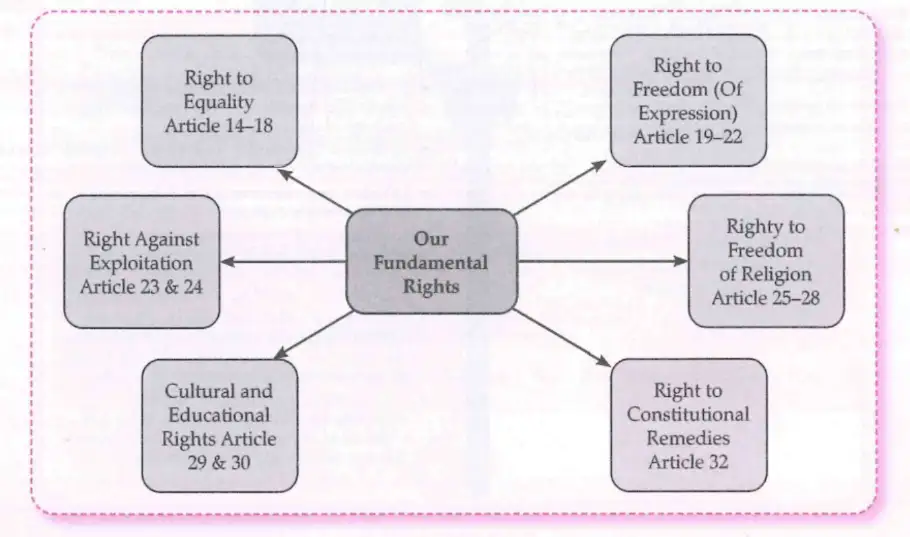
Fundamental Rights are a set of rights granted by the Constitution of India to every citizen to ensure individual liberty and equality. They are enforceable by law.
Examples include:
- Right to Equality (Articles 14-18) – No discrimination
- Right to Freedom (Articles 19-22) – Speech, religion, etc.
- Right against Exploitation (Articles 23-24) – No child labour
- Right to Education (Article 21A) – Free and compulsory for children
- Right to Freedom of Religion (Articles 25-28)
- Cultural and Educational Rights (Articles 29-30)
- Right to Constitutional Remedies (Article 32) – Heart and soul of Constitution
Exam Question
Q: What is the significance of Fundamental Rights in the Indian Constitution?
A: Fundamental Rights guarantee individual liberty and equality to all citizens and are enforceable by law, protecting basic freedoms.
C. Fundamental Duties
Fundamental Duties are moral obligations upon all citizens to promote patriotism and uphold national unity.
Examples include respecting the National Flag and Anthem, protecting the environment and heritage, and promoting harmony and unity.
D. Directive Principles of State Policy
These are non-enforceable guidelines for the government to create a better society.
Examples include social justice (equal pay for men and women), environmental protection, and free healthcare and education.

Interesting Fact: Directive Principles of State Policy guide the government in creating a just society and, though not enforceable by law, are fundamental to governance.
Exam Question
Q: What is the difference between Fundamental Rights and Directive Principles of State Policy?
A: Fundamental Rights are enforceable by law and protect individual freedoms, while Directive Principles are guidelines for the government to promote welfare and are not enforceable by law.
The Constitution as a Living Document
The Constitution is not rigid; it can be amended to meet the changing needs of society. Amendments require debate in Parliament and sometimes public opinion. For example, Fundamental Duties were added in 1976.
Exam Question
Q: Why is the Indian Constitution called a living document?
A: Because it can be amended and changed according to the needs of the society over time.
The Preamble – India’s Guiding Light
The Preamble is an introduction to the Constitution that enlists its core values. It begins with the words “We, the People of India,” showing that the Constitution derives its authority from the citizens. It defines India as a sovereign, socialist, secular, democratic republic and emphasizes justice, liberty, equality, and fraternity.
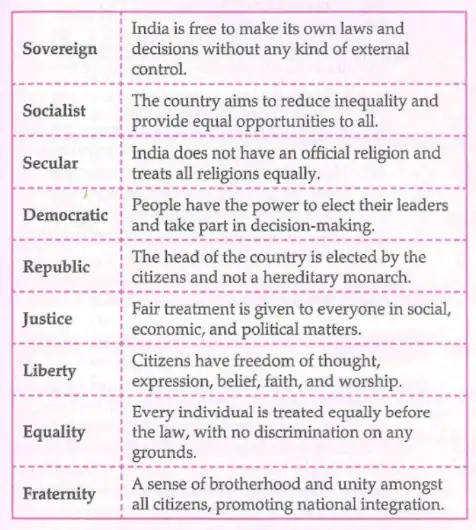
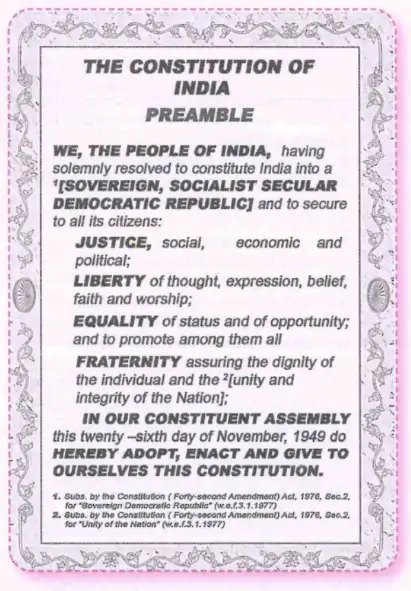
Mnemonic to remember the core values of the Preamble: S³-D-R-J-L-E-F (Sovereign, Socialist, Secular, Democratic, Republic, Justice, Liberty, Equality, Fraternity). You can also remember it as – Some Smart Students Don’t Really Just Learn Every Fact.
Exam Question
Q: What does the Preamble of the Indian Constitution signify?
A: The Preamble signifies the core values and guiding principles of India, including sovereignty, socialism, secularism, democracy, justice, liberty, equality, and fraternity, and shows that power comes from the people.
Keywords
- Helium: A gas used to preserve the Constitution in a glass case as it does not react with paper or ink.
- Accountability: Being responsible for one’s actions and answerable to others, especially in government.
- Checks and balances: A system ensuring no one part of the government becomes too powerful.
- Fraternity: A feeling of brotherhood and togetherness among all citizens.
- Moral obligations: Responsibilities based on what is right and good, even if not enforced by law.
- Non-enforceable: Not backed by law but important for guiding actions.
Solved Examples
Example 1:
Question: Explain the role of the three branches of government as per the Indian Constitution.
Answer: The Legislature makes laws, the Executive implements laws, and the Judiciary interprets laws. These branches work together to ensure the government functions fairly and effectively.
Example 2:
Question: What are Fundamental Duties and why are they important?
Answer: Fundamental Duties are moral obligations of citizens to promote patriotism and national unity. They encourage citizens to respect national symbols, protect the environment, and promote harmony.
Practice Set
Easy
- What is the Constitution?
- Name the three branches of the government.
- When did the Indian Constitution come into effect?
Moderate
- Explain the significance of Fundamental Rights.
- What are Directive Principles of State Policy?
- Who was the Chairman of the Constituent Assembly?
Challenging
- Discuss the influences on the Indian Constitution from other countries.
- Explain why the Constitution is called a living document.
- Describe the core values enshrined in the Preamble.
Answer Key
Easy
- A Constitution is a document that lays down the basic rules and principles of a nation.
- The three branches are Legislature, Executive, and Judiciary.
- The Indian Constitution came into effect on 26 January 1950.
Moderate
- Fundamental Rights guarantee individual liberty and equality and are enforceable by law.
- Directive Principles are guidelines for the government to promote welfare and are not enforceable by law.
- Dr. Rajendra Prasad was the Chairman of the Constituent Assembly.
Challenging
- The Indian Constitution was influenced by the Government of India Act 1935 and constitutions of the USA, Britain, France, Ireland, Australia, and Canada.
- It is called a living document because it can be amended to meet changing societal needs.
- The Preamble enshrines values like sovereignty, socialism, secularism, democracy, justice, liberty, equality, and fraternity.
Quick Reference
- Constituent Assembly: Formed in 1946 to draft the Constitution.
- Republic Day: 26 January 1950, when the Constitution came into effect.
- Fundamental Rights: Basic rights guaranteed to citizens.
- Directive Principles: Guidelines for government policy.
- Fundamental Duties: Moral responsibilities of citizens.
- Preamble: Introduction stating the Constitution’s core values.
Glossary
- Constitution: The supreme law of the land that defines government structure and citizens' rights.
- Legislature: The branch of government that makes laws.
- Executive: The branch that enforces laws.
- Judiciary: The branch that interprets laws.
- Secularism: No official religion; equal treatment of all religions.
- Federalism: Division of power between central and state governments.
- Amendment: A formal change or addition to the Constitution.
- Preamble: The introductory statement of the Constitution’s purpose and guiding principles.