CLASS 7 . SOCIAL SCIENCE . EXPLORING SOCIETY INDIA AND BEYOND PART II . INFRASTRUCTURE ENGINE-OF-INDIA-S-DEVELOPMENT
Chapter 7 : Infrastructure: Engine of India’s Development
Ch 7
SOCIAL SCIENCE
CLASS 7
Physical Infrastructure in India
Physical infrastructure refers to the tangible structures and facilities that support the functioning of cities and villages. It includes transportation systems such as roads, bridges, railways; utilities like electricity and water pipelines; communication networks including internet and telephone lines; and energy infrastructure such as windmills and solar parks. Over the years, India has developed a vast network of physical infrastructure that connects urban and rural areas, enabling trade, communication, and access to essential services.
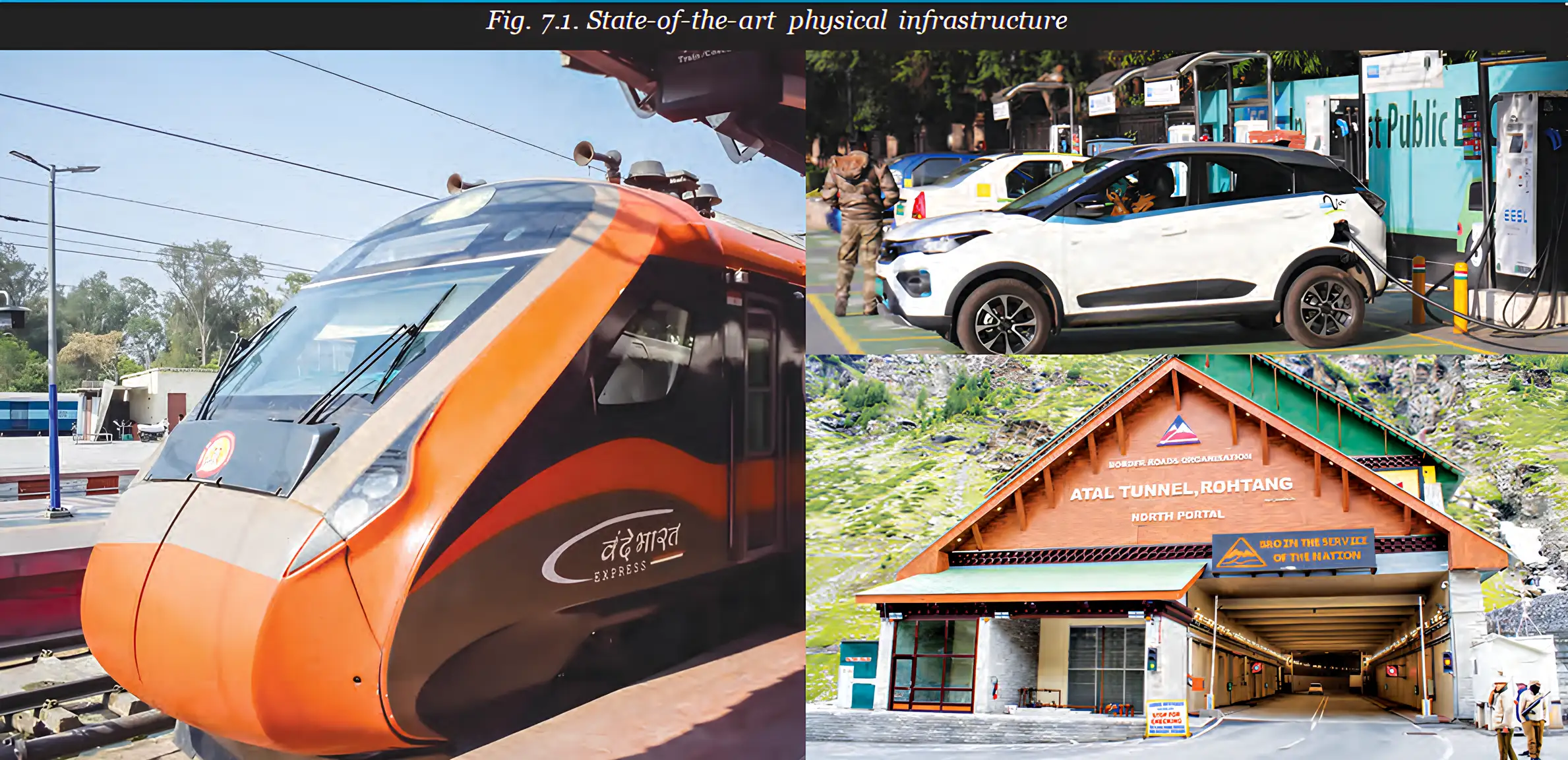
The image above shows modern physical infrastructure including a high-speed train, an electric car charging station, and the Atal Tunnel, highlighting advancements in transport technology, eco-friendly energy use, and improved connectivity in difficult terrains.
Introduction
Imagine a day without roads, electricity, or communication networks. Physical infrastructure is the backbone that supports daily life, enabling transportation, communication, and access to utilities. It has transformed over time from basic roads and waterways to advanced systems like high-speed trains and digital communication networks.
Exam Question
Q: What is physical infrastructure and why is it important for a country’s development?
A: Physical infrastructure consists of tangible structures like roads, bridges, railways, electricity, water supply, and communication networks. It is important because it facilitates transportation, trade, communication, and access to essential services, thereby supporting economic growth and improving quality of life.
Transportation Infrastructure
Transportation infrastructure includes roads, highways, railways, metro systems, air transport, and ports. It connects different regions, supports trade, enables mobility, and plays a vital role in economic development and national security.
a) Road and Highway Network
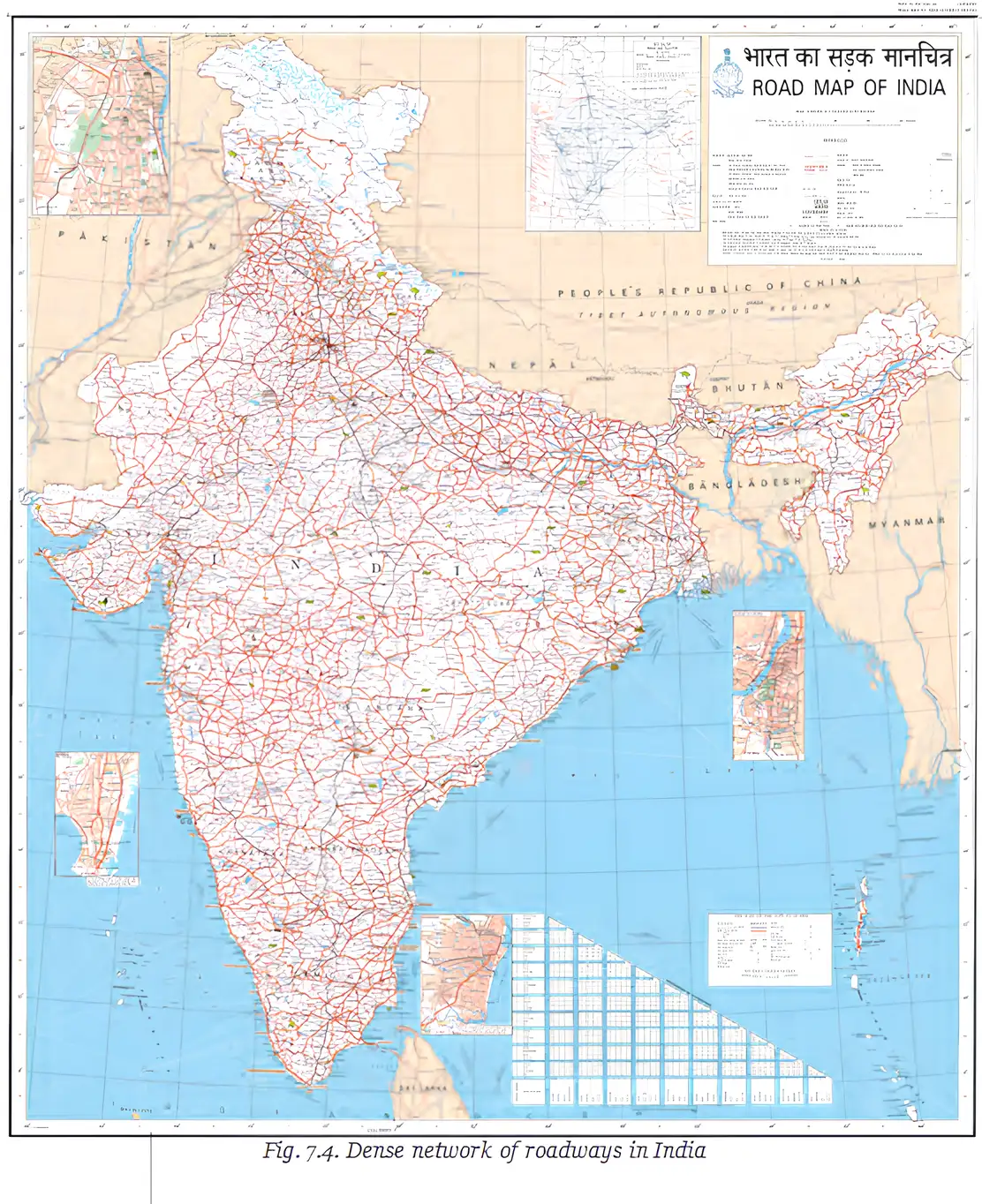
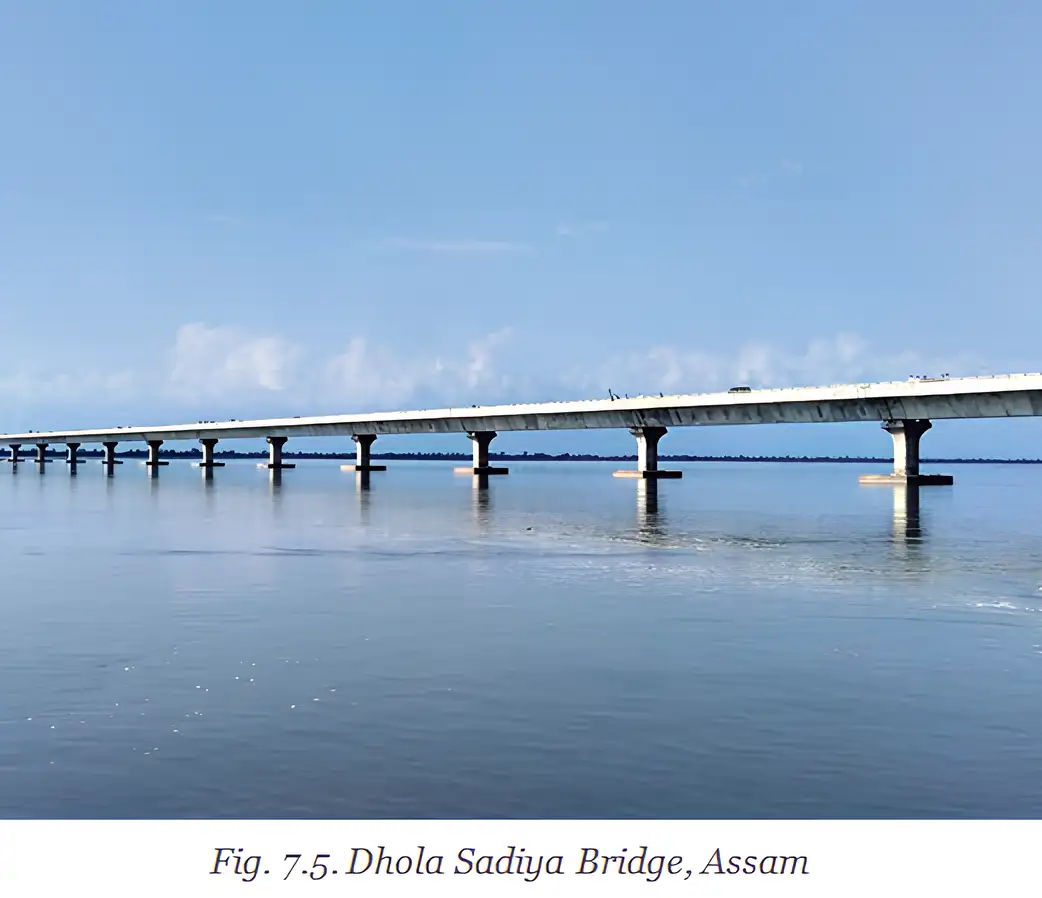
India has the second-largest road network in the world. Roads range from local village roads to national highways and expressways. Bridges and tunnels help overcome difficult terrains. Notable examples include the Dhola Sadiya Bridge in Assam and Meghalaya’s living root bridges, which are natural and eco-friendly.

Exam Question
Q: How do bridges and tunnels contribute to road infrastructure in India?
A: Bridges and tunnels help connect regions separated by rivers, valleys, or mountains, enabling smooth transportation where roads alone cannot be built. They reduce travel time, support trade, and improve connectivity in difficult terrains.
b) Indian Railway Network
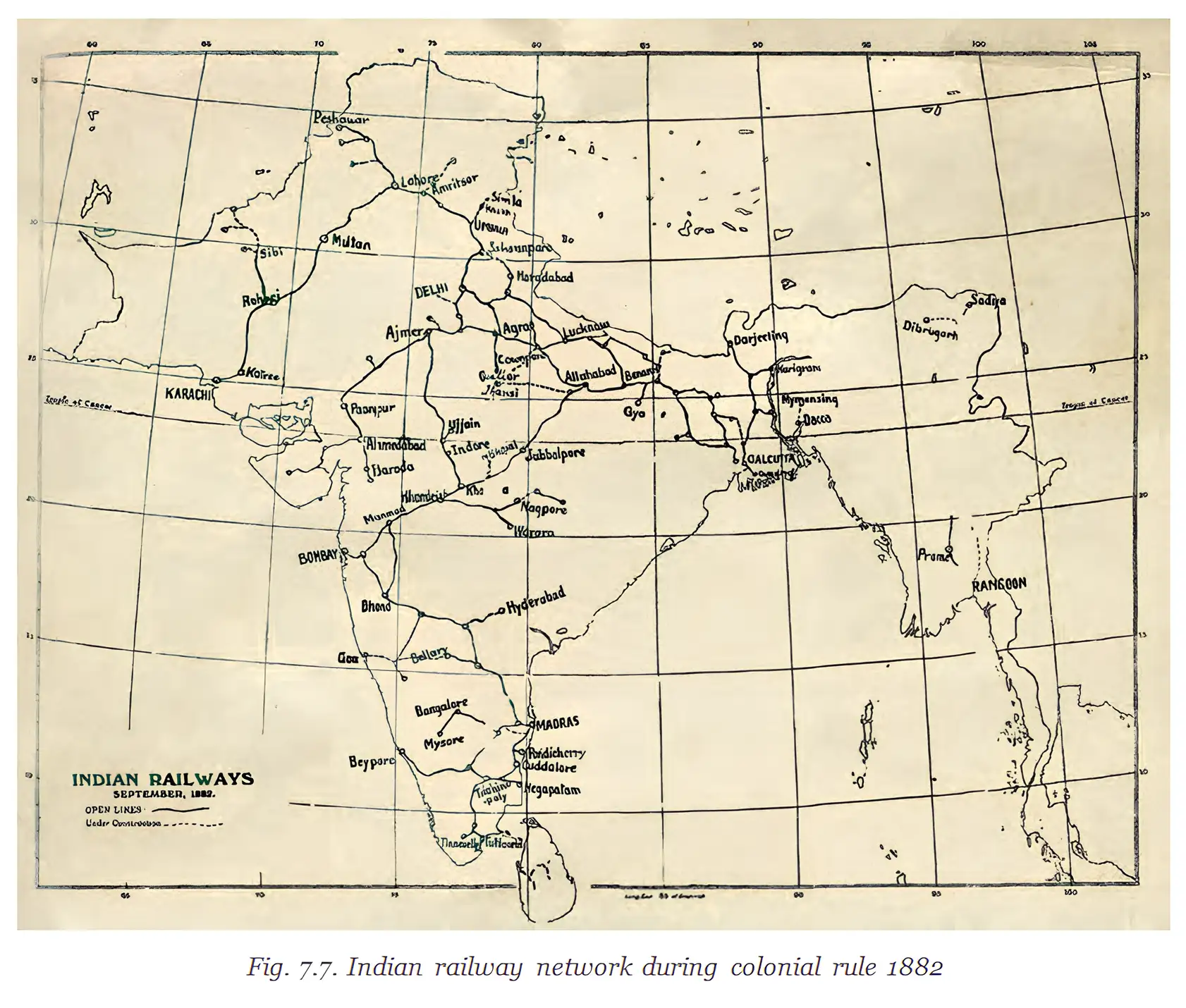
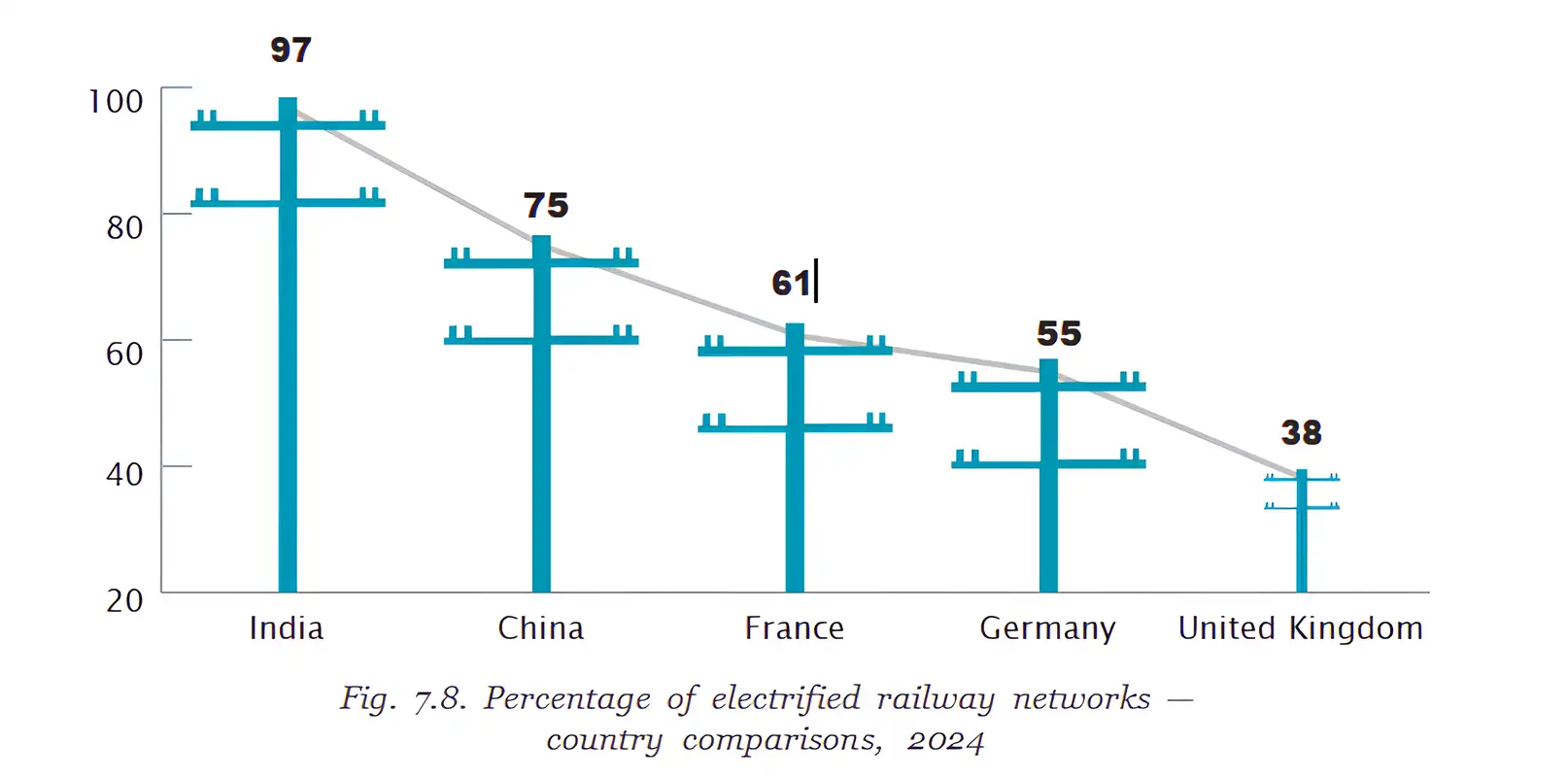
Introduced by the British in 1853, Indian Railways has grown into the fourth-largest railway system globally. It carries millions of passengers daily and is a major employer. The network is increasingly electrified, aiming for 100% electric trains by 2025, reducing pollution and improving efficiency.

Exam Question
Q: What were the main purposes of the railway system introduced by the British in India?
A: The railways were introduced to transport raw materials to ports for export, move British goods across India, facilitate troop movement, and help the British control the territory more effectively.
c) Metro Train Systems
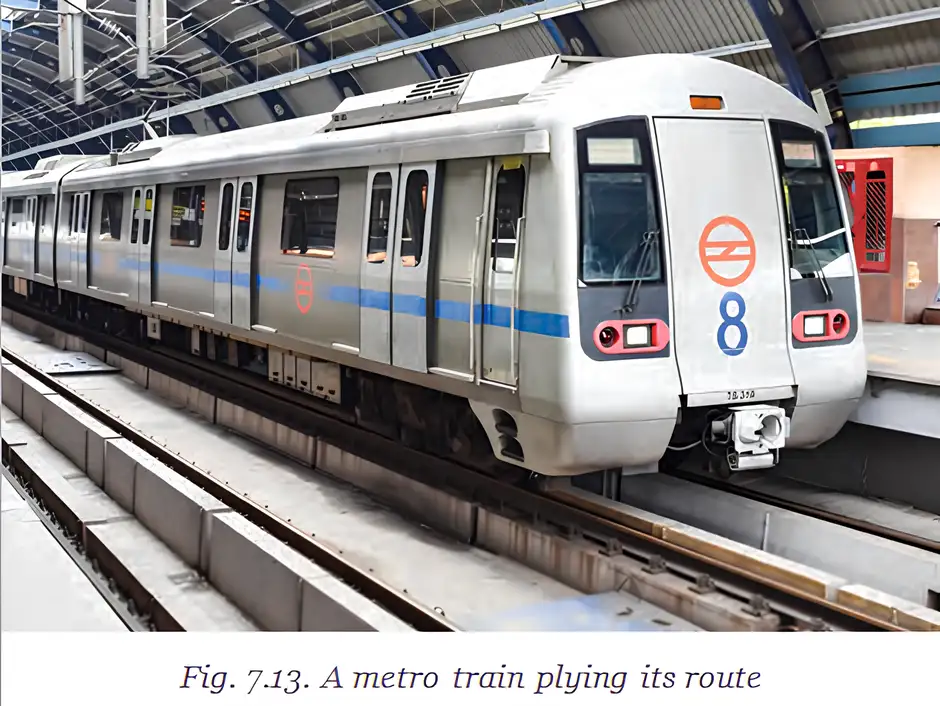
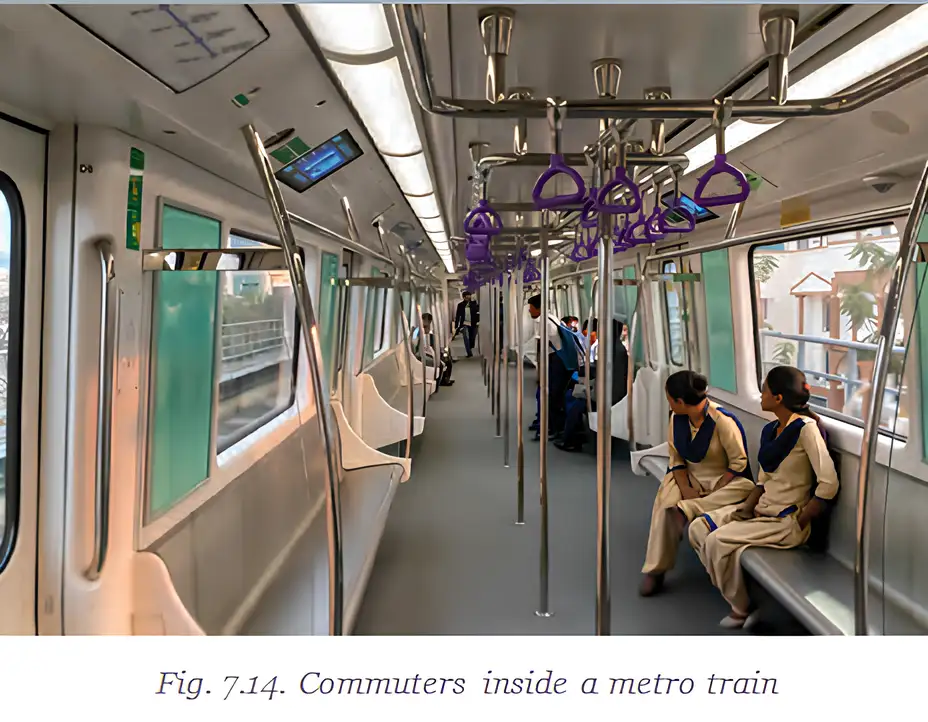
Metro trains operate in 23 Indian cities, providing fast, reliable, and eco-friendly urban transport. They reduce traffic congestion and pollution by running on electricity, with some systems using solar power.
Exam Question
Q: How do metro train systems benefit urban areas?
A: Metro trains provide fast and reliable transportation, reduce road traffic and pollution, and offer a clean energy alternative by using electricity, improving urban mobility and quality of life.
d) Air Transport
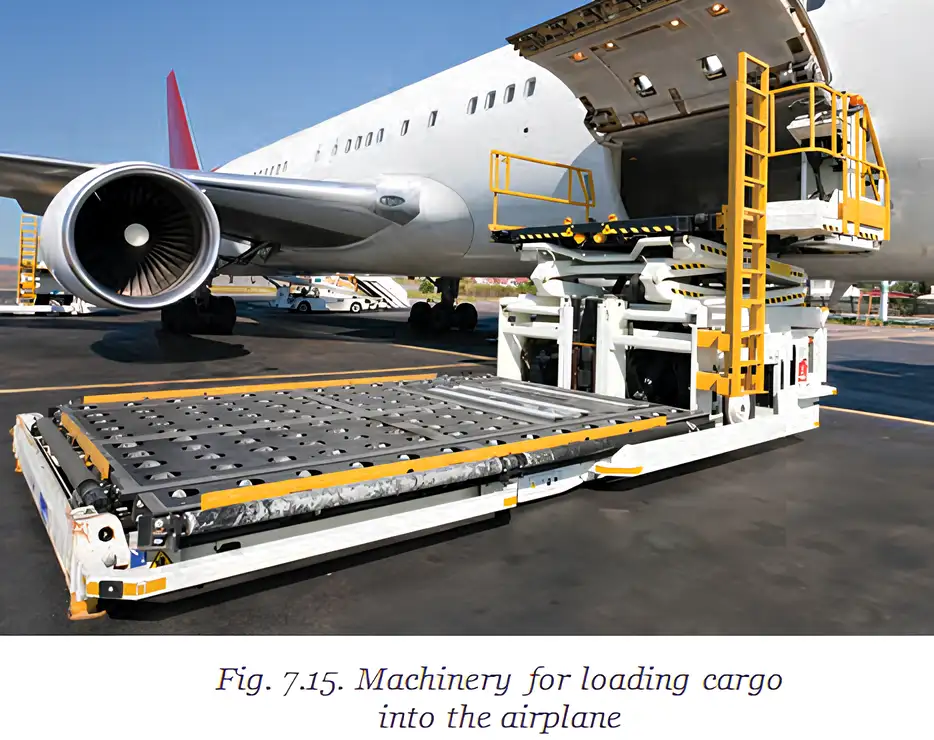
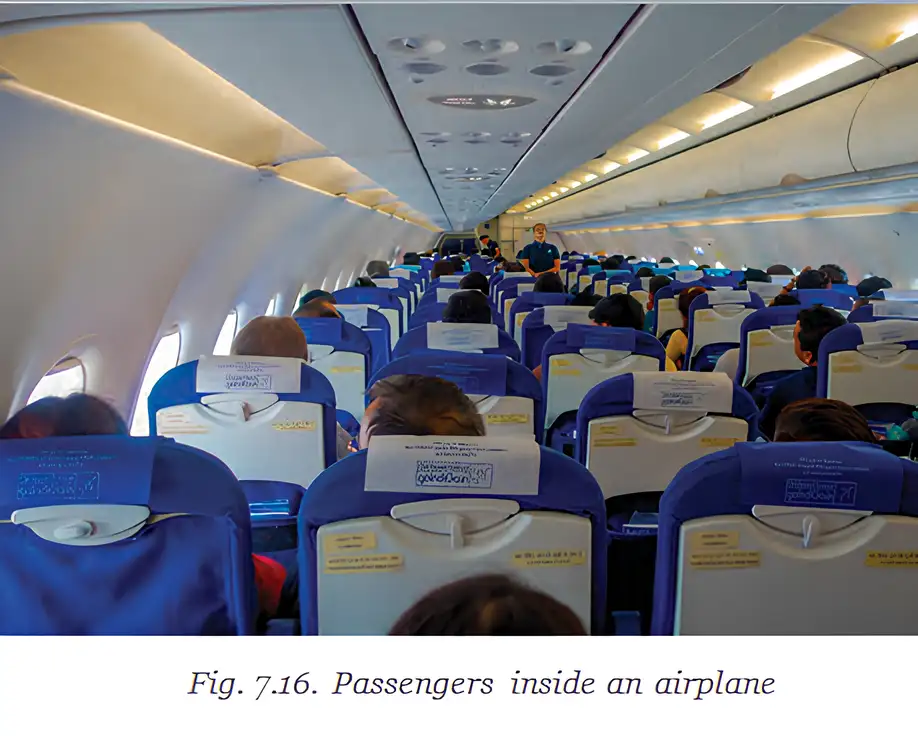
Air transport is the fastest mode of travel, connecting people and places within and across countries. It is vital for passenger travel, cargo transport, and disaster relief. India has the third-highest domestic air traffic globally, with modern airports like Kempegowda International Airport designed for efficiency and sustainability.
Exam Question
Q: Why is air transport important for India?
A: Air transport provides the fastest connection for people and goods, supports trade, helps in disaster relief by reaching difficult terrains, and connects India domestically and internationally.
e) Shipping and Ports
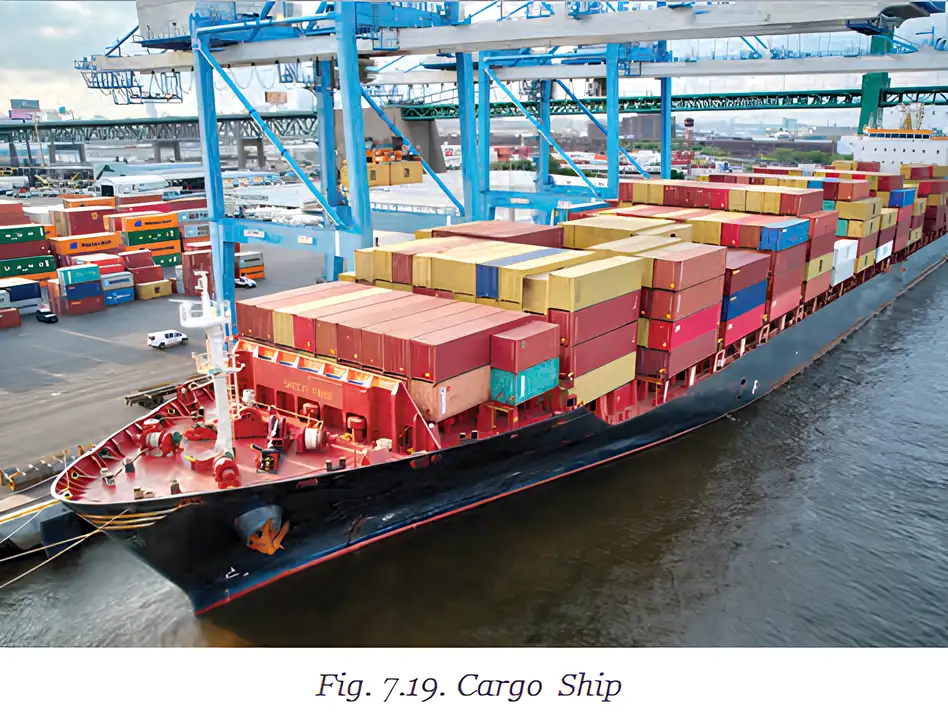
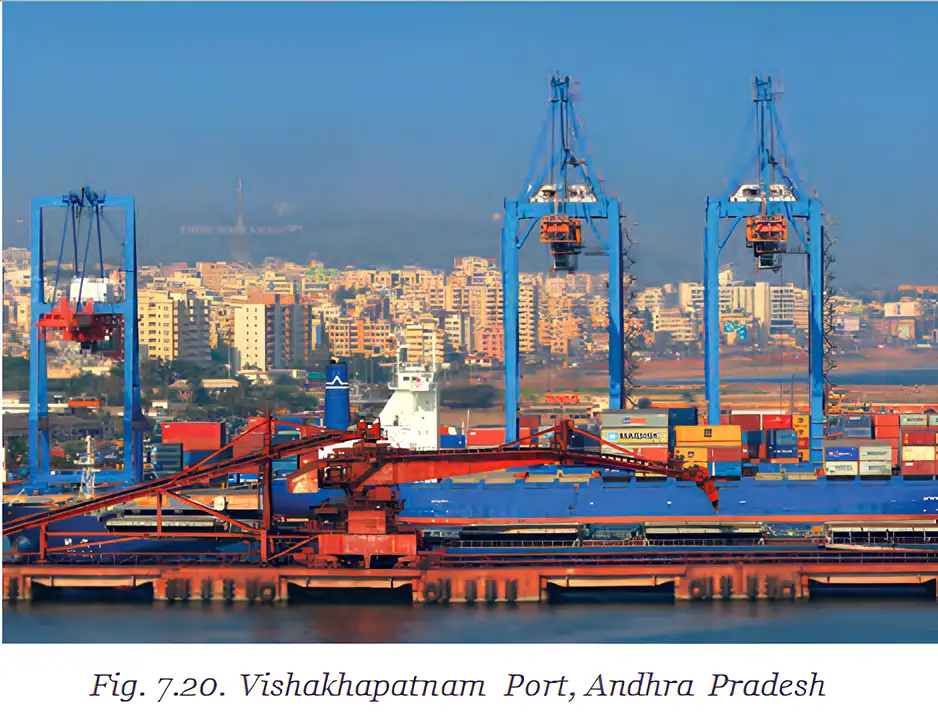
India’s coastline of approximately 11,100 km supports trade through shipping. Ships carry heavy goods over long distances, docking at major and minor ports. India has 12 major and 217 minor ports, with cargo volume increasing significantly in recent years.
Exam Question
Q: What role do ports play in India’s economy?
A: Ports serve as transfer points for goods transported by ships, facilitating international trade and supporting the economy by connecting India to global markets.
Communication Infrastructure
Communication infrastructure includes the physical and technological systems that enable the transmission of information, such as cables, wireless devices, towers, satellites, and data centers. It has evolved from manual message delivery to instant digital communication, supporting education, emergency response, e-commerce, and e-governance.
Evolution of Communication
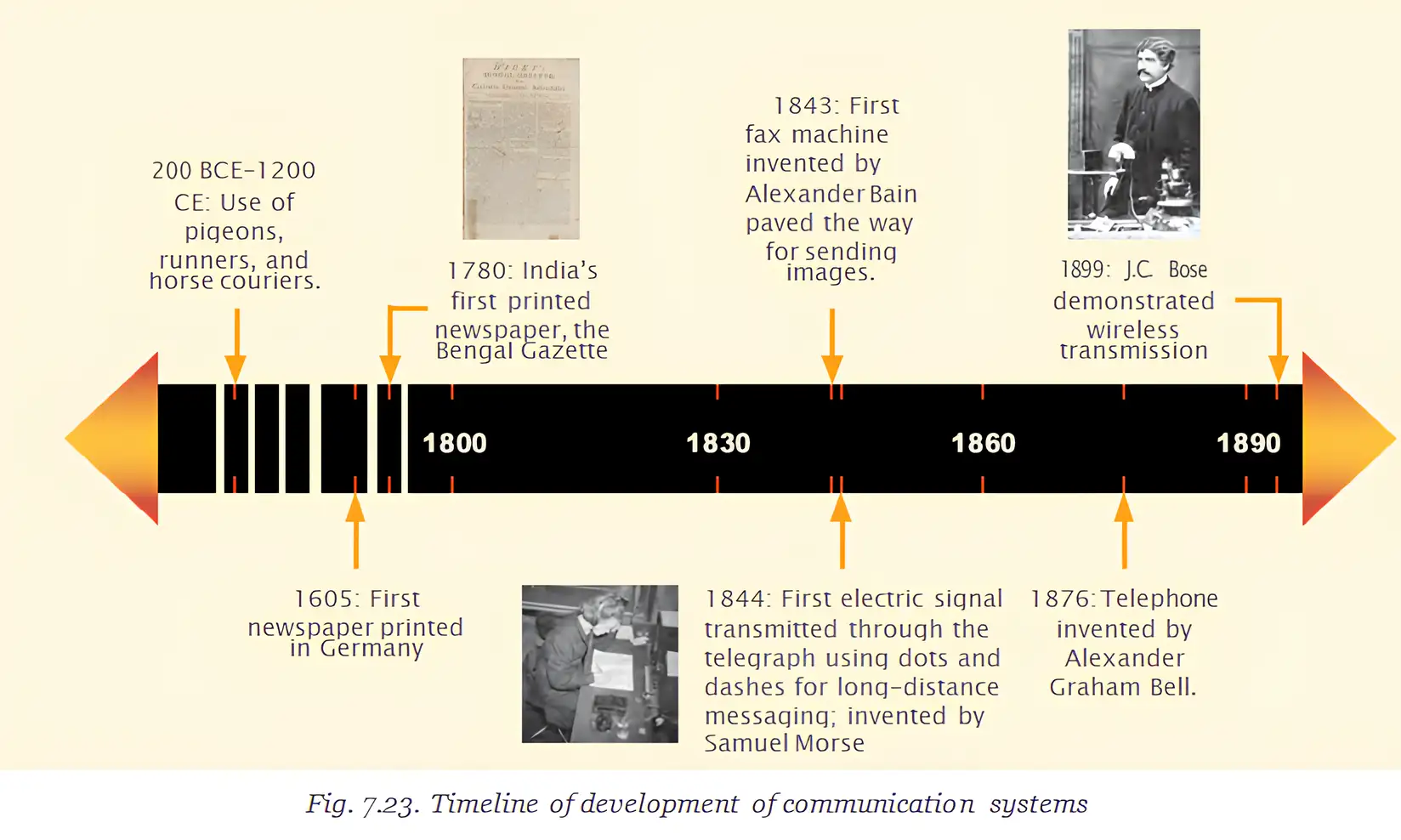
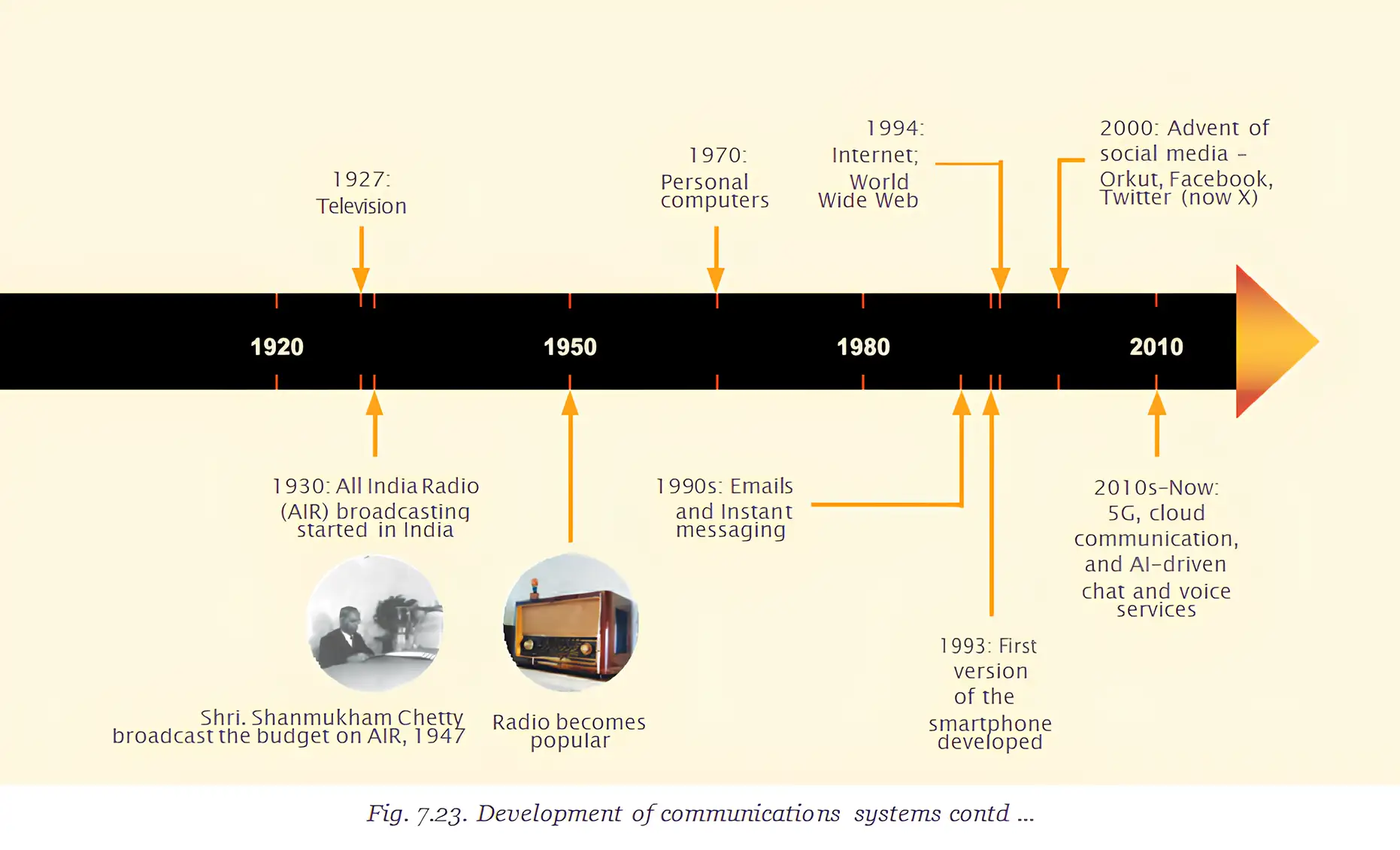
From ancient methods like pigeons and runners to newspapers, telegraph, telephone, radio, television, internet, and smartphones, communication technology has rapidly advanced, making global connectivity possible.
Exam Question
Q: How has communication infrastructure improved the quality of life in India?
A: It enables access to education through online classes, supports emergency responses, facilitates e-commerce and e-governance, and connects people across distances quickly and efficiently.
J.C. Bose and Wireless Transmission
Jagadish Chandra Bose was an Indian scientist who pioneered wireless transmission using microwaves in 1895. He invented devices crucial for early wireless communication but did not patent them, which limited international recognition. His work laid the foundation for modern wireless technology.

Exam Question
Q: Who was J.C. Bose and what was his contribution to communication technology?
A: J.C. Bose was an Indian scientist who demonstrated wireless transmission of signals in 1895 and invented key devices for early wireless systems, contributing significantly to the development of modern communication technology.
Maintenance and Sustainability of Infrastructure
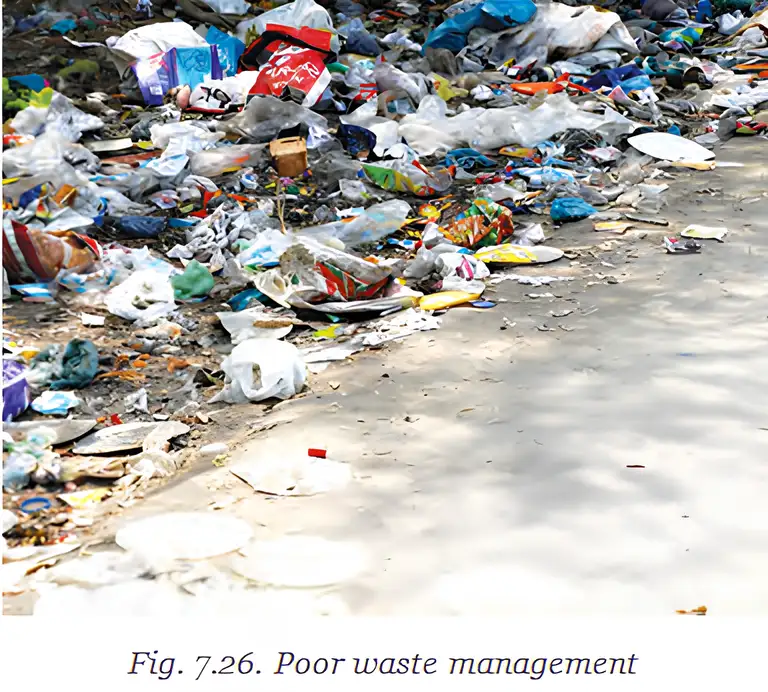
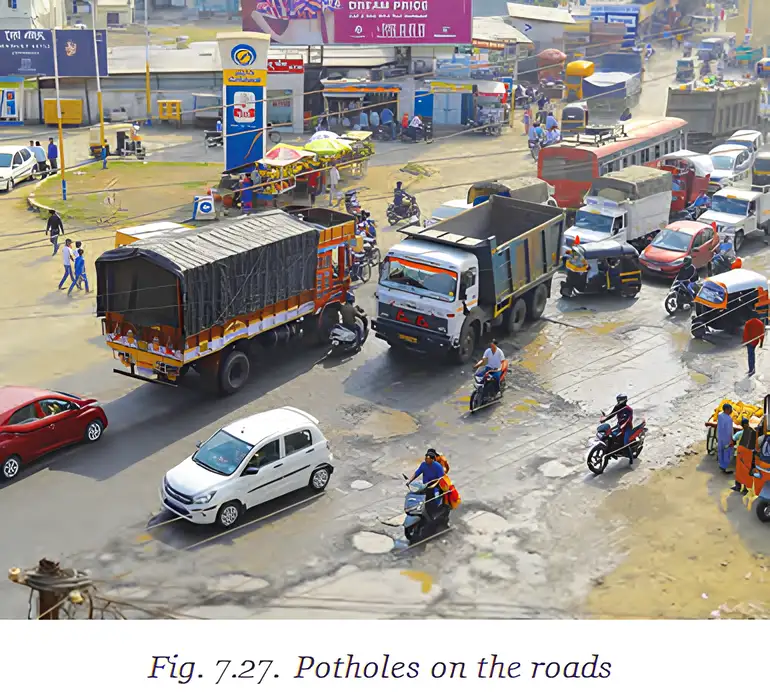
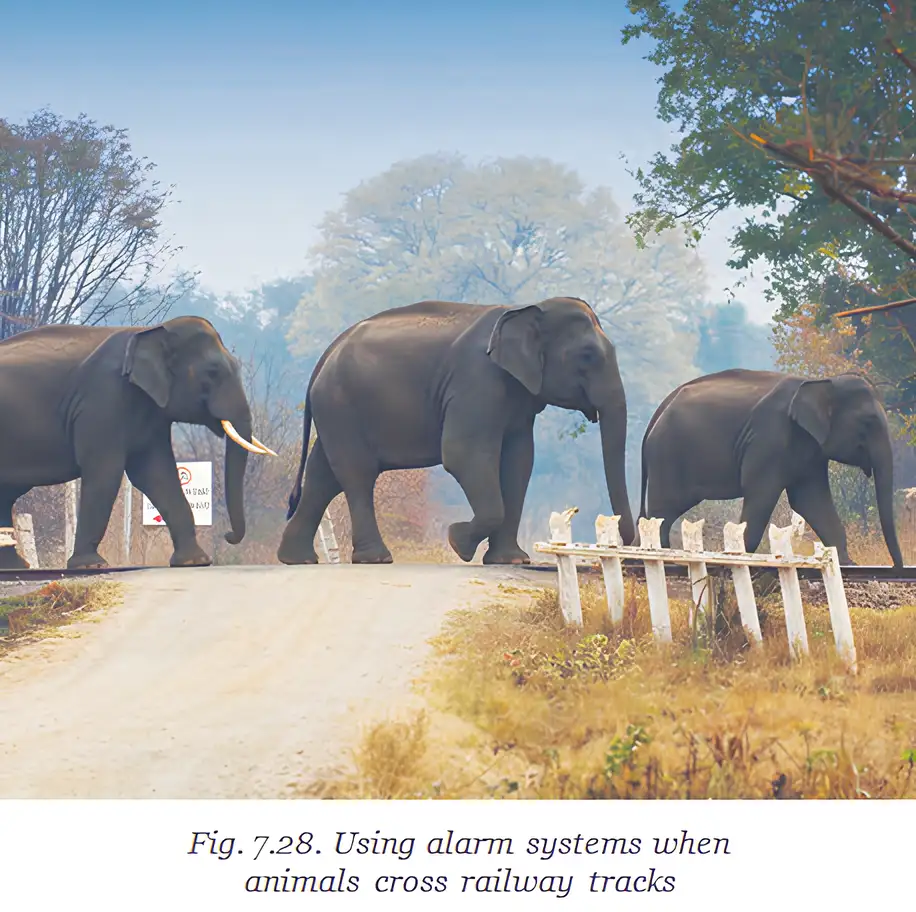
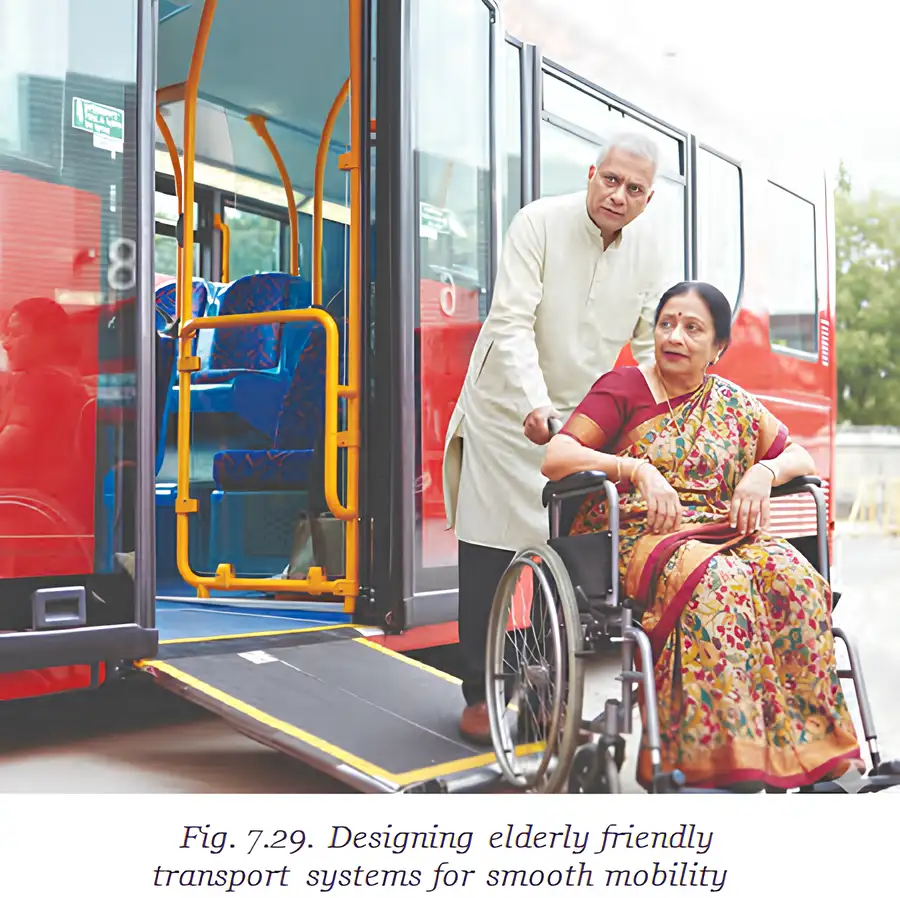
Maintaining infrastructure is a collective responsibility. Challenges include littering, damage to roads, and inadequate municipal services. Sustainable infrastructure uses cleaner energy and eco-friendly materials, considers accessibility for all, and minimizes environmental harm.
Exam Question
Q: Why is it important to maintain and sustain infrastructure?
A: Proper maintenance ensures infrastructure remains functional and safe, supports economic activities, and improves quality of life. Sustainable practices reduce environmental impact and make infrastructure accessible to all, including vulnerable groups.
Infrastructure in the Arthashastra
The ancient text Arthashastra by Kautilya detailed the development and maintenance of roads and waterways, specifying road widths and penalizing damage to infrastructure. It highlights the role of the state and community in infrastructure management.
Exam Question
Q: What does the Arthashastra say about infrastructure development and maintenance?
A: The Arthashastra prescribes specific standards for road construction and maintenance, assigns responsibilities to the state and local bodies, and recommends penalties for damaging public infrastructure to ensure its preservation.
Solved Examples
Example 1: Explain how the Dhola Sadiya Bridge has impacted transportation in Northeast India.
Answer: The Dhola Sadiya Bridge connects Assam and Arunachal Pradesh, replacing unreliable ferry services. It provides year-round access, reduces travel time by four hours, supports trade by enabling farmers to transport produce quickly, and improves access to healthcare and emergency services.
Example 2: Describe the significance of electrification in Indian Railways.
Answer: Electrification reduces dependence on coal and diesel, lowers pollution, improves energy efficiency, and supports faster and cleaner train operations. India aims for 100% electrification by 2025, making its railways more sustainable.
Practice Set
Easy
- What are the main components of physical infrastructure?
- Name two major ports in India.
Moderate
- Explain the role of communication infrastructure in e-governance.
- How do living root bridges differ from conventional bridges?
Challenging
- Discuss the impact of the Indian railway network on economic development during British rule.
- Suggest ways to make infrastructure more sustainable and accessible.
Answer Key
- Main components of physical infrastructure include transportation systems, utilities, communication networks, and energy infrastructure.
- Two major ports in India are Mumbai Port and Chennai Port.
- Communication infrastructure enables e-governance by providing digital platforms for citizens to access government services, file complaints, and obtain information efficiently.
- Living root bridges are natural, grown from tree roots guided over time, making them eco-friendly and self-strengthening, unlike conventional man-made bridges.
- The Indian railway network facilitated resource extraction, troop movement, and market integration, boosting trade and control during British rule.
- Sustainable infrastructure can be achieved by using clean energy, eco-friendly materials, ensuring accessibility for all, and promoting community responsibility for maintenance.
Quick Reference
- Physical Infrastructure: Roads, bridges, railways, utilities, communication, energy.
- Transportation: Roads (local to national highways), railways, metro, air transport, ports.
- Communication: Evolution from pigeons to digital networks; supports education, commerce, governance.
- Maintenance: Collective responsibility; sustainable and accessible infrastructure.
- Arthashastra: Ancient guidelines on infrastructure standards and penalties.
Glossary
- Physical Infrastructure: Tangible structures supporting societal functions.
- Expressways: High-speed roads connecting major cities.
- Electrification: Using electricity to power systems, reducing pollution.
- E-governance: Government services delivered through digital communication.
- E-commerce: Buying and selling goods online.
- Patent: Legal right to exclusively make or use an invention.
- Living Root Bridge: A natural bridge formed by guided tree roots.
- TEU (Twenty-foot Equivalent Unit): Standard measure for shipping containers.
Chronology of Communication Development
| Time Period / Year | Event / Change | Importance |
|---|---|---|
| 200 BCE - 1200 CE | Use of pigeons, runners, horse couriers | Early message delivery methods |
| 1605 | First newspaper printed in Germany | Beginning of mass communication |
| 1780 | First newspaper in India (Bengal Gazette) | Spread of information in India |
| 1844 | Invention of telegraph by Samuel Morse | Long-distance electric communication |
| 1876 | Invention of telephone by Alexander Graham Bell | Voice communication over distances |
| 1895 | Wireless transmission demonstrated by J.C. Bose | Foundation of wireless communication |
| 1927 | Introduction of television | Visual communication |
| 1994 | Internet and World Wide Web available | Global digital communication |
| 2010s - Present | Advancements in 5G, cloud, AI communication | Rapid, intelligent communication systems |