CLASS 7 . SOCIAL SCIENCE . EXPLORING SOCIETY INDIA AND BEYOND PART I . HOW THE-LAND-BECOMES-SACRED
Chapter 8 : How the Land Becomes Sacred
Ch 8
SOCIAL SCIENCE
CLASS 7
Introduction to Sacredness
Sacredness refers to the cultural, spiritual, or religious significance attached to specific locations, landscapes, or features. It is the quality of being holy or divine, deserving of awe and respect. This concept helps people connect with their faith, spirituality, or cultural heritage, providing a sense of meaning, purpose, and belonging.
Sacredness can be found in various forms such as sacred sites (temples, shrines, mosques, churches), sacred texts (scriptures, epics), and sacred rituals (ceremonies, prayers, practices).
What is Sacredness?
Sacredness means finding anything of profound religious or spiritual significance that is deserving of reverence and respect.
Exam Question
Q: What does sacredness mean in the context of culture and religion?
A: Sacredness means the cultural, spiritual, or religious importance attached to places, objects, or practices that are considered holy or divine and deserving of respect.
Religions from Outside India
Religions that originated outside India include Islam, Christianity, Judaism, and Zoroastrianism. These religions have distinct beliefs and sacred sites different from those that originated in India.
Religions that began in India include Hinduism, Sikhism, Buddhism, and Jainism. These religions have shaped the cultural and spiritual landscape of India.
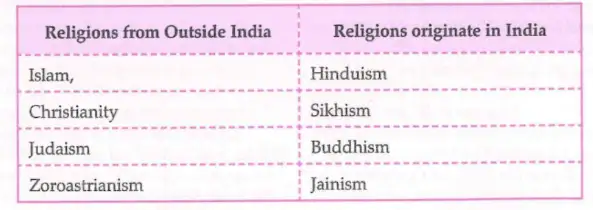
This table helps distinguish between foreign and native religions in India.
Exam Question
Q: Name two religions that originated outside India and two that originated in India.
A: Outside India: Islam and Christianity; In India: Hinduism and Buddhism.
Sacred Sites and Pilgrimages
Sacred sites are specific religious places such as temples, churches, mosques, stupas, and shrines that hold spiritual importance. Pilgrimages are journeys undertaken to these sacred places for worship and spiritual growth.
India has been a destination for pilgrims for thousands of years, with sites spread across the country from Kanyakumari in the south to Badrinath, Kedarnath, and Amarnath in the Himalayas.
Definition of Pilgrimage
Travelling to an important location considered sacred in a religion or belief system is called a pilgrimage. In India, these journeys are known as tīrthayātrās, and the pilgrims are called tīrthayātrīs.
Exam Question
Q: What is a pilgrimage and why is it important in Indian religions?
A: A pilgrimage is a journey to a sacred place for religious purposes. It is important as it allows devotees to connect spiritually, seek blessings, and participate in religious traditions.
Sacred Places in Buddhism
In Buddhism, places visited by the Buddha or where his relics are kept are considered sacred. Two important stupas in India are:
- Mahabodhi Stūpa in Bodh Gaya, Bihar – where Buddha attained enlightenment.
- Great Stūpa in Sanchi, Madhya Pradesh – a relic stupa containing important remains.

Exam Question
Q: Name one sacred Buddhist site in India and its significance.
A: The Mahabodhi Stūpa in Bodh Gaya is sacred because it is the place where Buddha attained enlightenment.
Sacred Places in Sikhism
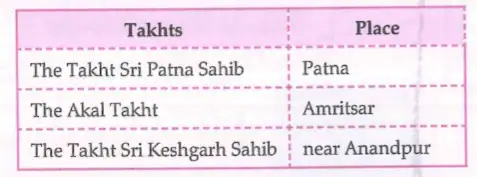
The Takhts are centres of spiritual power in Sikhism. Important Takhts include:
- Sri Patna Sahib in Patna
- Akal Takht in Amritsar
- Sri Keshgarh Sahib near Anandpur
The Golden Temple (Harmandir Sahib) in Amritsar is a major sacred site known for its gold-plated structure and peaceful surroundings.

Exam Question
Q: What is the significance of the Akal Takht in Sikhism?
A: The Akal Takht is one of the five Takhts and serves as a centre of spiritual and temporal authority in Sikhism.
Sacred Places in Jainism
Jain Tirthas are locations where Tirthankaras achieved spiritual liberation or meditated. These include Mount Abu, Girnar, and Shatrunjaya hill in Gujarat.
There are 24 Tirthankaras in Jainism, each with unique teachings. Pilgrimages to these sites are important for spiritual growth.
Exam Question
Q: What are Tirthas in Jainism?
A: Tirthas are sacred places connected to the lives and teachings of the Tirthankaras, where devotees go for pilgrimage and spiritual progress.
More Sacred Sites
Natural features such as mountains, rivers, trees, plants, animals, and stones are often considered sacred in various religions.
In Hinduism, many natural elements are worshipped as deities, reflecting the belief in a divine presence throughout nature.
Exam Question
Q: Why are rivers and trees considered sacred in Hinduism?
A: Rivers and trees are considered sacred because they are believed to embody divine presence and are worshipped as manifestations of gods and goddesses.
Sacred Geography in India
India's sacred geography includes holy sites dispersed throughout the country, connected by religious traditions such as the Chār Dhām Yatra, which includes four pilgrimage sites:
- Badrinath (North)
- Dwarka (West)
- Puri (East)
- Rameswaram (South)
The 12 Jyotirlingas and 51 Shakti Pithas are other important sacred sites in Hinduism.

Exam Question
Q: What is the Char Dham Yatra?
A: The Char Dham Yatra is a pilgrimage to four sacred Hindu sites located in the north, south, east, and west of India.
Sacred Ecology
Sacred ecology refers to the understanding that natural environments such as forests, mountains, and rivers are holy spaces (puṇyakshet) where geography, culture, and spirituality come together.
This belief has helped in preserving and protecting nature as humans are seen as part of the natural world.
Exam Question
Q: How does sacred ecology contribute to environmental conservation?
A: Sacred ecology promotes respect and protection of natural environments by viewing them as holy, encouraging sustainable practices and preservation.
Rivers and Sangams (Confluence of Rivers)
Rivers have been revered in India since the Vedic era. The Rigveda contains hymns invoking 19 important rivers.
Water-related ceremonies and pilgrimages to river origins and confluences are common. Rivers like the Ganga and Yamuna are respectfully called 'Ganga ji' and 'Yamuna ji'.
The Kumbh Mela is a major religious festival held every 12 years at four locations where drops of divine nectar fell according to legend: Haridwar, Prayagraj, Nashik, and Ujjain.

Exam Question
Q: What is the significance of the Kumbh Mela?
A: The Kumbh Mela is a sacred festival where millions gather to bathe in holy rivers, believed to cleanse sins and bring blessings.
Mountains and Forests
Mountains are often associated with myths, gods, and heroes due to their height and are seen as gateways from Earth to heaven.
Many pilgrimage sites and temples are located on hilltops. Forests and sacred groves are protected natural areas considered homes of deities, helping preserve biodiversity.
Exam Question
Q: Why are sacred groves important in Indian culture?
A: Sacred groves are protected forests believed to be the abode of gods, helping conserve nature and maintain ecological balance.
Pilgrimage and Trade
Historic trade routes in India, such as Uttarapatha and Dakshinapatha, connected pilgrims and traders, facilitating the exchange of goods like cotton, spices, sandalwood, gold, diamonds, pearls, and shells.
This interaction enriched cultures and economies across regions.

Exam Question
Q: How did pilgrimage routes contribute to trade in ancient India?
A: Pilgrimage routes facilitated trade by connecting different regions, allowing merchants and pilgrims to exchange goods and ideas.
Sacred Geography beyond India
The concept of sacred geography is not unique to India. Ancient Greece, Native American cultures, and the Maoris also have sacred sites such as mountains, groves, and rivers that hold spiritual significance.
Exam Question
Q: Give an example of sacred geography outside India.
A: Ancient Greece had many sacred sites like Mount Olympus, considered the home of the gods.
Solved Examples
Example 1
Question: Explain the significance of the Mahabodhi Stūpa.
Answer: The Mahabodhi Stūpa in Bodh Gaya is significant because it marks the place where Buddha attained enlightenment, making it a major pilgrimage site for Buddhists.
Example 2
Question: What is the Char Dham Yatra and why is it important?
Answer: The Char Dham Yatra is a pilgrimage to four sacred Hindu sites located in the north, south, east, and west of India. It is important as it represents a spiritual journey covering the major directions of the country.
Practice Set
Easy
- What is a pilgrimage?
- Name two sacred rivers in India.
Moderate
- List the four sites of the Char Dham Yatra.
- Explain the significance of sacred groves.
Challenging
- Describe how pilgrimage routes contributed to trade in ancient India.
- Compare sacred geography in India with that of another culture.
Answer Key
- What is a pilgrimage? A journey to a sacred place for religious purposes.
- Name two sacred rivers in India. Ganga and Yamuna.
- List the four sites of the Char Dham Yatra. Badrinath, Dwarka, Puri, Rameswaram.
- Explain the significance of sacred groves. They are protected forests considered homes of deities, helping preserve biodiversity.
- Describe how pilgrimage routes contributed to trade in ancient India. They connected regions, allowing exchange of goods and ideas between pilgrims and traders.
- Compare sacred geography in India with that of another culture. Both India and Ancient Greece have sacred mountains and groves considered homes of gods, showing a spiritual connection to nature.
Quick Reference
- Sacredness: Cultural or religious significance attached to places or objects.
- Pilgrimage (Tīrthayātrā): Journey to a sacred place.
- Takht: Sikh spiritual seat.
- Tirtha: Sacred crossing place or pilgrimage site.
- Jyotirlingas: 12 sacred shrines dedicated to Shiva.
- Kumbh Mela: Major religious festival held every 12 years at four locations.
Glossary
- Pilgrimage
- Travelling to a sacred place for religious reasons.
- Shrine
- A place considered sacred due to its connection to the divine or a holy person.
- Relic
- A part of a saint or spiritual figure's body or belongings kept for reverence.
- Tirtha
- A sacred place symbolizing spiritual transition.
- Tirthankara
- A spiritual teacher in Jainism who guides others to liberation.
- Takht
- Spiritual seat or throne in Sikhism.
- Jyotirlinga
- One of the twelve sacred shrines dedicated to Lord Shiva.
- Kumbh Mela
- A large Hindu festival held every 12 years at four sacred river sites.