CLASS 7 . SOCIAL SCIENCE . EXPLORING SOCIETY INDIA AND BEYOND PART I . CLIMATES OF-INDIA
Chapter 3 : Climates of India
Ch 3
SOCIAL SCIENCE
CLASS 7
Introduction to Climates of India
Climates of India introduces the concept of climate and explains how it differs from weather. It explains how factors like latitude, altitude and winds influence India’s diverse climate. The chapter also covers the monsoon, seasonal variations and the impact of climate on agriculture, economy and daily life across different regions of India.
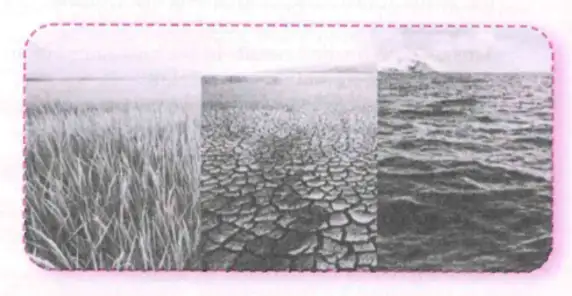
This image shows three different natural environments side by side: a field with tall grass or crops, cracked dry soil likely representing drought or desert conditions, and a body of water with waves. The healthy plants indicate good soil and water conditions, the cracked soil shows drought effects, and the water body emphasizes the importance of water for life and environment.
Exam Question
Q: What factors influence the diverse climate of India?
A: Factors such as latitude, altitude, winds, and monsoon patterns influence the diverse climate of India.
Weather, Seasons and Climate
Weather
Weather refers to the atmospheric conditions at a particular place and time, including temperature, humidity, rainfall and wind speed. It changes frequently and can vary from day to day or even hour to hour.
Season
India experiences four main seasons:
- Winter (December to February): Cool and dry weather.
- Summer (March to May): Hot and dry weather.
- Monsoon (June to September): Rainy season with heavy rainfall due to the southwest monsoon winds.
- Autumn (October to November): Pleasant weather with a drop in humidity and temperature.
Climate
Climate refers to the average weather conditions of a place over a long period (usually 30 years or more). Unlike weather, climate remains more constant and helps in defining the overall weather pattern of a region, such as tropical, desert or temperate climates.
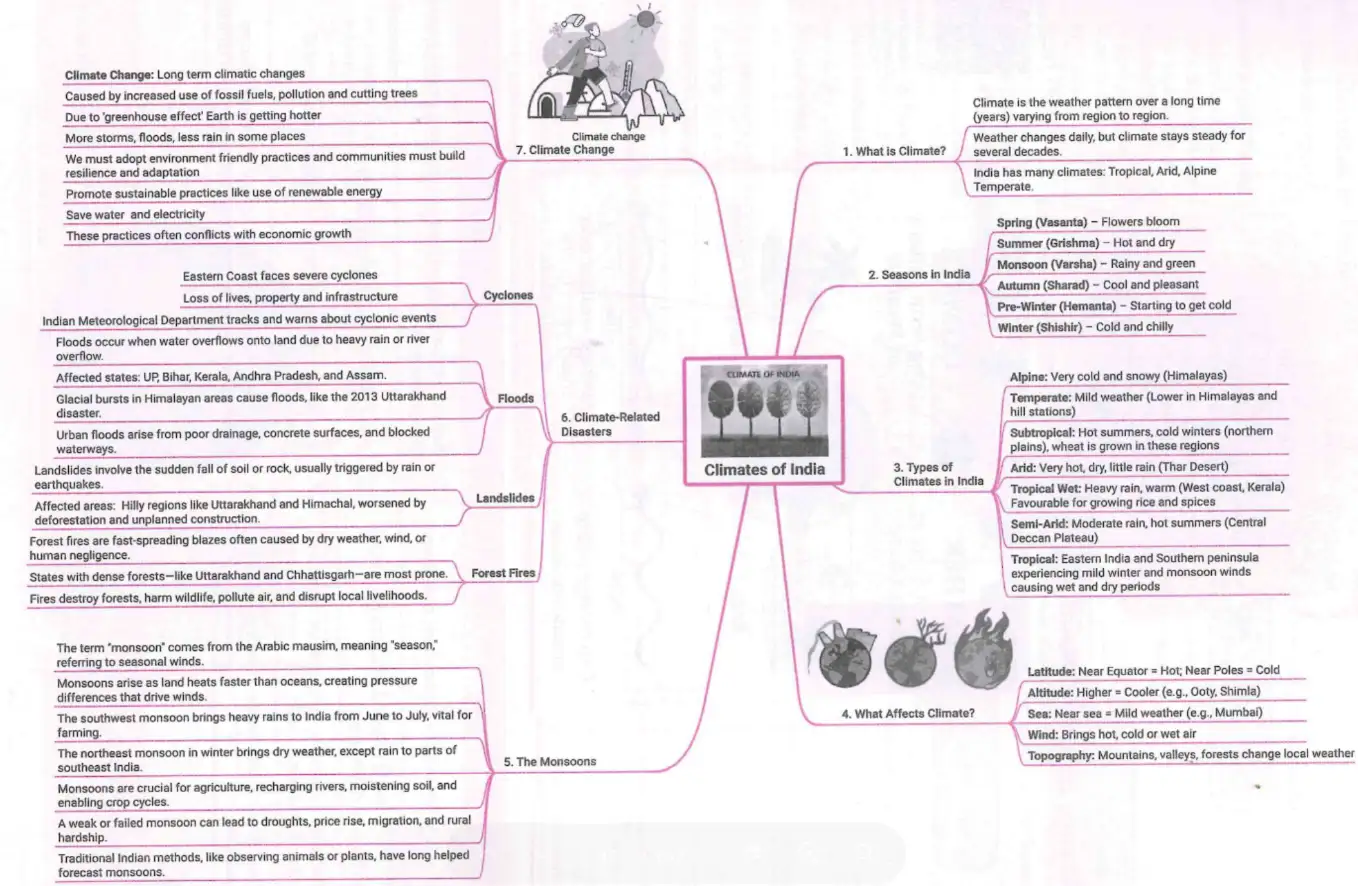
This mind map explains various aspects of India's climate including seasons, types of climates, factors affecting climate, monsoons, climate-related disasters, and climate change.
Exam Question
Q: How does climate differ from weather?
A: Weather is the short-term atmospheric condition at a place and time, while climate is the average weather pattern over a long period, usually 30 years or more.
Types of Climates in India
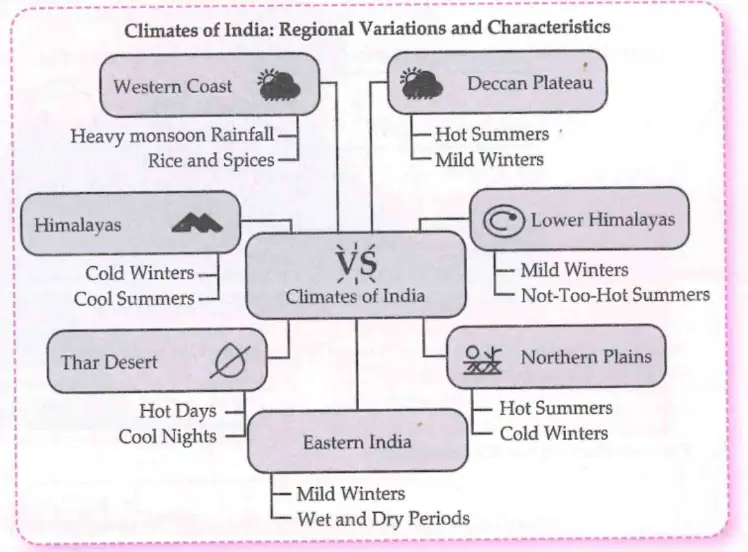
India has several distinct climate zones with varying weather characteristics across regions such as the Western Coast, Deccan Plateau, Himalayas, Northern Plains, Thar Desert, and others.
India has four main types of climates:
(1) Tropical Rainy Climate
- Found in southern India, the west coast and Andaman and Nicobar Islands.
- Hot and humid with heavy rainfall during the monsoon.
- Example: Kerala, Andaman and Nicobar Islands.
(2) Tropical Dry Climate
- Found in interior and western India.
- Hot summers with very little rainfall.
- Example: Rajasthan, Gujarat.
(3) Temperate Climate
- Found in hilly and Himalayan regions.
- Cool summers and cold winters with some snowfall.
- Example: Himachal Pradesh, Uttarakhand.
(4) Cold Climate
- Found in high-altitude Himalayan regions.
- Very cold winters, cool summers and frequent snowfall.
- Example: Leh-Ladakh, Sikkim.
Exam Question
Q: Name the four main types of climates found in India with one example each.
A: Tropical Rainy (Kerala), Tropical Dry (Rajasthan), Temperate (Himachal Pradesh), Cold (Leh-Ladakh).
Factors Determining Climate
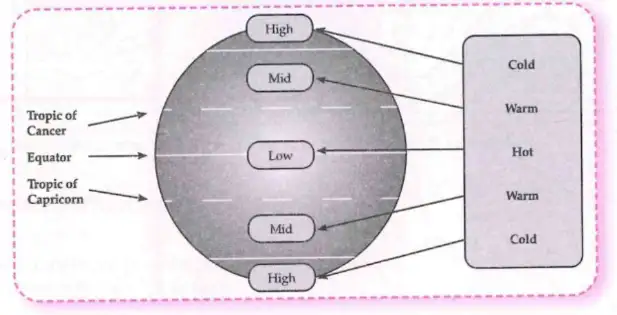
1. Latitude
The distance from the equator affects temperature. Places near the equator are warmer, while those farther away, like the poles, are cooler.
2. Altitude
Height above sea level affects temperature. Higher altitudes are cooler; the climate becomes colder as you go higher into the mountains.
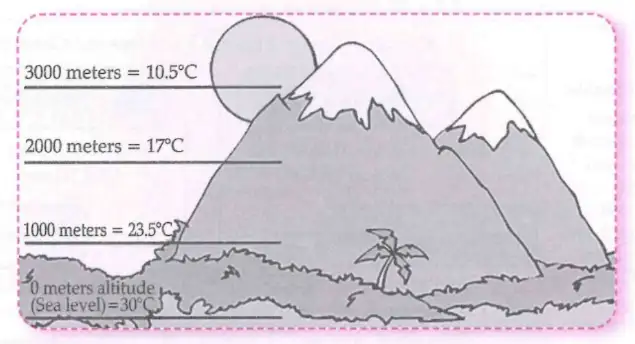
Temperature decreases with increasing altitude: 3,000 m = 10.5 °C, 2,000 m = 17 °C, 1,000 m = 23.5 °C.
3. Distance from the Sea (Continentality)
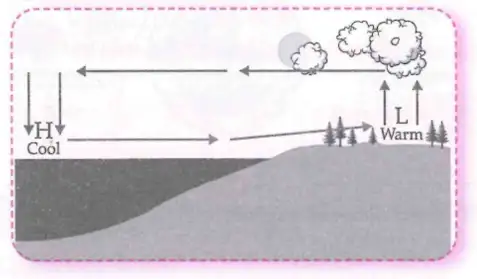
Coastal areas have a more moderate climate with less extreme temperatures, while inland areas experience more temperature variations.
4. Winds
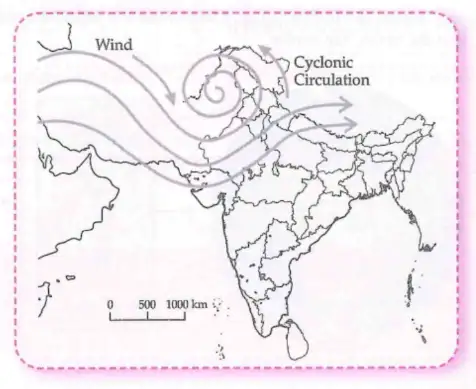
Winds carry moisture and influence rainfall. For example, the monsoon winds bring heavy rain to most parts of India. Cyclonic circulation winds affect the temperature of a region.
5. Topography
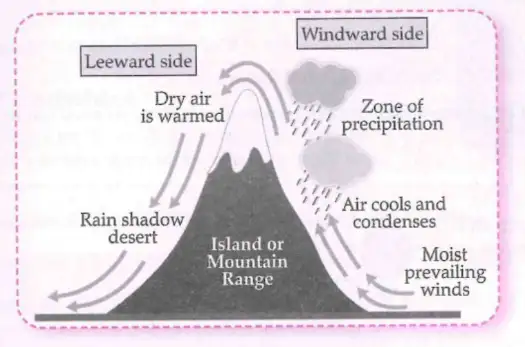
Mountains and valleys influence climate by affecting wind and rainfall patterns. Windward sides of mountains receive heavy rainfall, while the leeward side remains dry (rain shadow area). Hilly areas are cooler than plains.
Exam Question
Q: List the five main factors that determine the climate of a region.
A: Latitude, Altitude, Distance from the Sea, Winds, and Topography.
The Monsoons
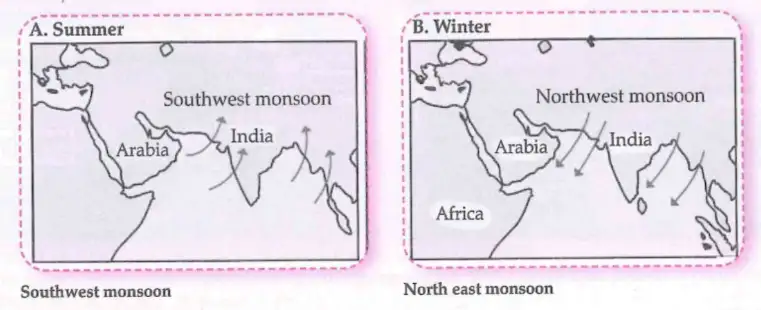
Monsoons are seasonal winds that bring heavy rainfall to India, especially from June to September. They are caused by the difference in temperature between land and sea.
Two Main Types of Monsoons
- Southwest Monsoon: Brings most of the rain to India (June–September).
- Northeast Monsoon: Brings rain to parts of South India (October–November).
Monsoons are very important for agriculture, as most farmers depend on this rain to grow crops.
Interesting Fact: Monsoon rains support nearly 60% of India’s agriculture, making it the backbone of the rural economy.
Exam Question
Q: What causes the monsoon winds and why are they important for India?
A: Monsoon winds are caused by temperature differences between land and sea. They bring heavy rainfall essential for agriculture in India.
How Climate Affects Our Lives
Agriculture
Crops need the right temperature and rainfall. Too much or too little rain can destroy crops.
Industry
Some industries like food and cotton need water. Floods, droughts or storms can stop factory work.
Economy
Farming and factories provide jobs. Bad climate leads to poor crops, less production and economic loss. Good climate supports better income and growth.
Exam Question
Q: How does climate impact agriculture and the economy?
A: Climate affects crop growth and industrial activities. Favorable climate leads to good production and economic growth, while adverse climate causes losses.
India’s Diverse Weather and Climate-Related Disasters
India's vast size and geography lead to varied weather patterns, which can cause extreme weather conditions and natural disasters.
1. Cyclones
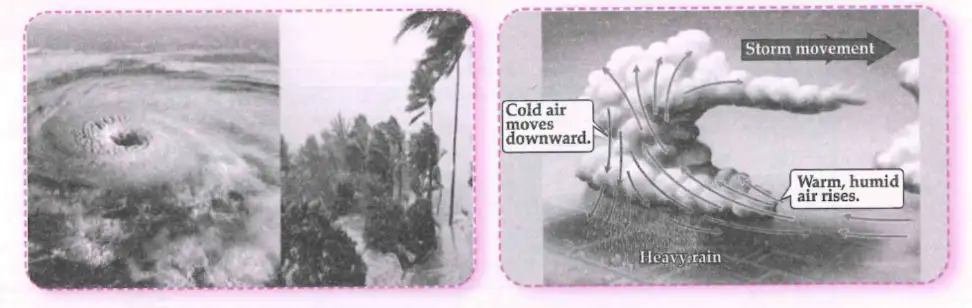
A cyclone is a powerful storm with very strong winds and heavy rain. It forms over warm ocean water and moves toward land, causing destruction.
How Do Cyclones Form?
- The sun heats up the ocean water.
- Warm water turns into water vapour and rises.
- This creates a low-pressure area.
- Air rushes in, bringing strong winds.
- Earth’s rotation causes the air to spin, forming a cyclone.
Effects of Cyclones
- Floods.
- Damage to homes and trees.
- Power cuts and loss of life.
Cyclone-Prone Areas in India
- Eastern coast: Odisha, West Bengal, Andhra Pradesh.
- Western coast: Gujarat, Maharashtra (less frequently).
Interesting Fact: In the Indian Ocean region, cyclones are also called Tropical Cyclones, while in other parts of the world, they may be called Hurricanes.
2. Floods
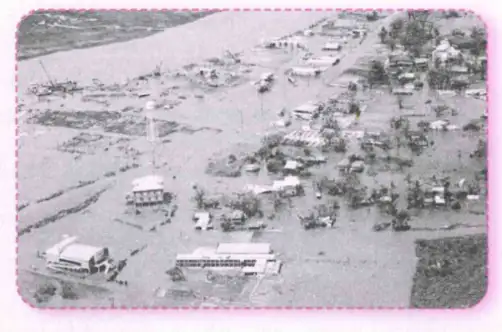
Floods happen when excessive rainfall or overflowing rivers submerge land with water.
Causes of Floods
- Heavy rainfall during the monsoon.
- Rivers overflowing their banks.
- Poor drainage systems in cities.
- Melting snow in mountains during summer.
Floods also occur in Himalayan regions when glacial lakes overflow.
Flood-Prone Areas in India
Assam, Bihar, West Bengal and parts of Uttar Pradesh often face floods during the monsoon.
Effects of Floods
- Damage to homes, crops and roads.
- Loss of life and livestock.
- Spread of diseases.
- Displacement of people.
3. Landslides
Landslides are the sudden movement of rock, soil or debris down a slope, often caused by heavy rain, earthquakes, deforestation or construction activities.
Causes
Rainfall, earthquakes, deforestation and unstable slopes.
Effects
Loss of life and property, blocked roads and environmental damage.
Prevention
Tree planting, proper drainage, avoiding construction on slopes and early warning systems.
Landslides occur mainly in the Himalayas, North-Eastern Hills, Western Ghats, Eastern Ghats and the Nilgiris.
4. Forest Fires
Forest fires are uncontrolled fires that spread through forested areas. They may be caused by natural factors like lightning and dry weather or by human activities.
Causes
Heatwaves, lightning, campfires and burning debris.
Effects
Loss of trees, death of wildlife and air pollution.
Prevention
Firebreaks, early warning systems, controlled burning and awareness programmes.
Forest fires are common in Uttarakhand, Himachal Pradesh, Western Ghats, Central India and North-East India.
Exam Question
Q: Name four climate-related disasters in India and one preventive measure for each.
A: Cyclones (early warning systems), Floods (better drainage), Landslides (tree planting), Forest Fires (controlled burning).
Climate Change
Climate change refers to long-term changes in Earth’s temperature and weather patterns, mainly caused by human activities like burning fossil fuels.
Causes
- Burning fossil fuels releases carbon dioxide.
- Deforestation.
- Industrial processes and agriculture release greenhouse gases.
Effects
- Rising global temperatures causing heatwaves and changing weather patterns.
- Melting glaciers and rising sea levels.
- Increased extreme weather events.
- Loss of habitats and species extinction.
Solutions
- Use renewable energy sources.
- Promote energy efficiency and reduce waste.
- Protect and restore forests.
- Encourage sustainable farming and transportation.
Interesting Fact: Global temperatures have risen by about 1.1 °C since the 19th century due to human activities.
Exam Question
Q: What are the main causes and effects of climate change?
A: Causes include burning fossil fuels, deforestation, and industrial emissions. Effects include rising temperatures, melting glaciers, extreme weather, and loss of biodiversity.
Keywords and Glossary
- Topography: The physical surface features of an area including mountains, hills, valleys, slopes, coasts, etc.
- Sustainable: Capable of being maintained over a long period.
- Resilience: The ability to withstand or recover quickly from difficulties.
- Mitigation: Steps taken to slow down global warming and reduce the causes of climate change.
- Monsoon: Seasonal winds that bring rain to India.
- Temperate Climate: A moderate climate, neither too hot nor too cold.
- Tropical Climate: A hot and humid climate found near the equator.
- Himalayas: A mountain range in northern India that influences the country’s climate.
Solved Examples
Example 1
Q: Explain why the windward side of a mountain receives more rainfall than the leeward side.
A: Moist winds rise on the windward side, cool and condense to form clouds causing rainfall. On the leeward side, descending air warms and dries, creating a rain shadow with less rainfall.
Example 2
Q: What is the significance of the southwest monsoon for India?
A: The southwest monsoon brings most of the annual rainfall, supporting agriculture and water resources essential for the economy and daily life.
Practice Set
Easy
- Define weather and climate.
- Name the four main seasons of India.
- What is a monsoon?
Moderate
- Explain the factors that determine the climate of a region.
- Describe the effects of floods in India.
- What causes cyclones and where do they commonly occur in India?
Challenging
- Discuss the impact of climate change on India’s environment and economy.
- Explain the rain shadow effect and its significance.
- How do altitude and latitude together influence the climate of India?
Answer Key
Easy
- Weather is the atmospheric condition at a place and time; climate is the average weather over a long period.
- Winter, Summer, Monsoon, Autumn.
- Monsoon is a seasonal wind bringing rain.
Moderate
- Latitude, altitude, distance from sea, winds, and topography determine climate.
- Floods cause damage to homes, crops, roads, loss of life, and spread diseases.
- Cyclones form over warm ocean water due to low pressure and spin caused by Earth’s rotation; common in eastern and western coasts.
Challenging
- Climate change causes rising temperatures, extreme weather, affecting agriculture, water resources, and economy.
- Rain shadow effect causes dry conditions on leeward side of mountains due to descending warm air.
- Latitude affects temperature zones; altitude causes temperature to decrease with height, together shaping diverse climates.
Quick Reference
- Weather: Short-term atmospheric conditions.
- Climate: Long-term average weather.
- Monsoons: Seasonal winds bringing rain.
- Factors affecting climate: Latitude, Altitude, Distance from Sea, Winds, Topography.
- Types of climates in India: Tropical Rainy, Tropical Dry, Temperate, Cold.
- Climate-related disasters: Cyclones, Floods, Landslides, Forest Fires.
- Climate Change: Long-term changes due to human activities.