CLASS 7 . SCIENCE . CURIOSITY . LIFE PROCESSES-IN-ANIMALS
Chapter 9 : Life Processes in Animals
Ch 9
SCIENCE
CLASS 7
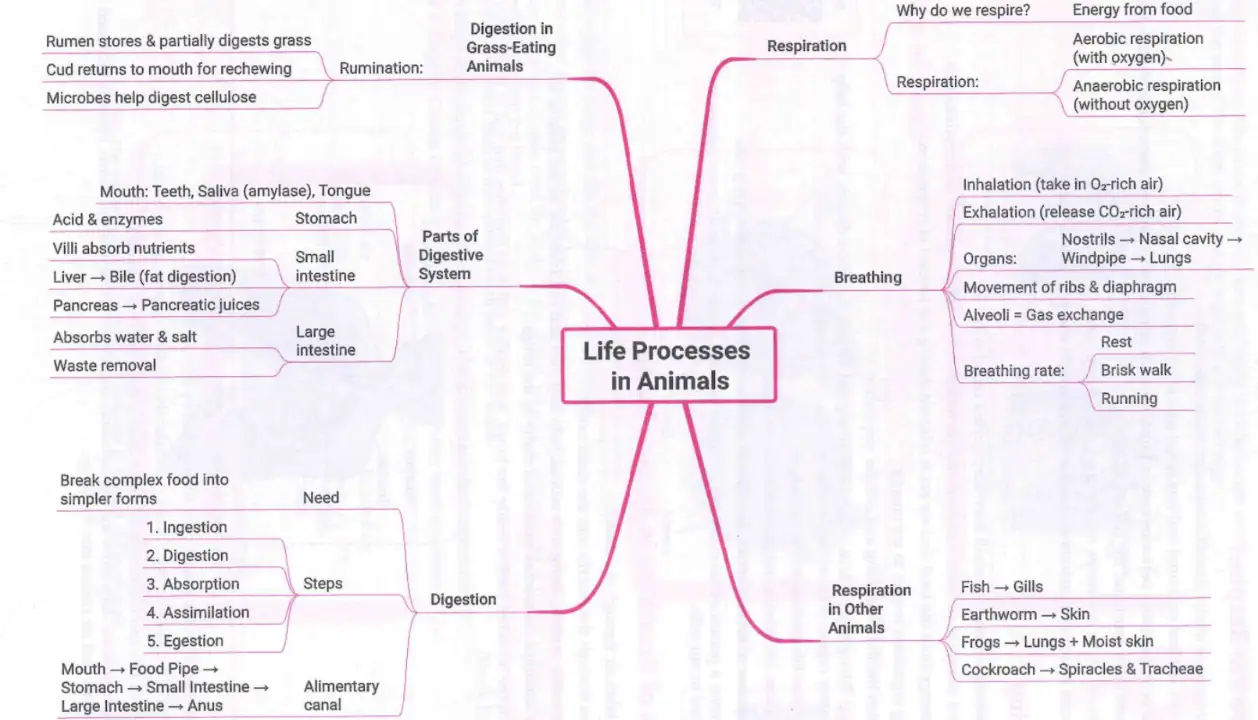
Life Processes
Introduction to Life Processes
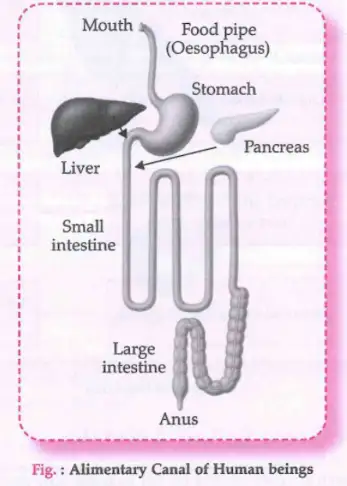
Life processes are essential functions that sustain living organisms. These include nutrition, respiration, excretion, and reproduction. All living beings require food for growth, energy, and maintaining health. While plants produce their own food through photosynthesis, animals depend on plants and other animals for nutrition. Food contains complex substances such as carbohydrates, proteins, and fats, which must be broken down into simpler forms to be utilized by the body. This breakdown process is called digestion, which occurs in the alimentary canal, a continuous tube starting from the mouth and ending at the anus. As food passes through this canal, it mixes with digestive juices and is chemically broken down into simpler molecules that are absorbed and transported to different parts of the body.
Why Do We Respire?
All living organisms are made up of cells, the smallest structural and functional units. Each cell performs vital functions like nutrition, transport, excretion, and reproduction, which require energy. Respiration is the process by which organisms convert nutrients into usable energy. This energy is essential for cells to carry out their functions effectively.
Breathing and Respiration
Breathing is the physical process of taking in oxygen-rich air and expelling carbon dioxide-rich air through respiratory organs. Respiration includes breathing and cellular respiration, where energy is released from food. Inhalation is the intake of oxygen-rich air, and exhalation is the release of carbon dioxide-rich air. The breathing rate is the number of breaths taken per minute and increases when the body requires more energy.
Process of Breathing in Humans
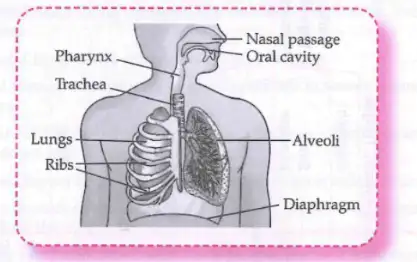
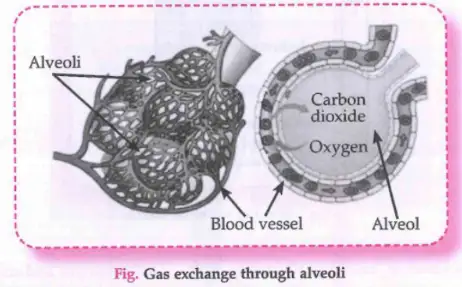
Air enters the body through the nostrils and passes into the nasal cavity, where tiny hairs and mucus trap dust and dirt. It then moves through the windpipe (trachea) into the lungs. Inside the lungs, the trachea branches into smaller tubes ending in alveoli, tiny balloon-like sacs where gas exchange occurs. The lungs are located in the chest cavity, protected by ribs, and separated from the abdomen by the diaphragm, a muscular sheet.
During inhalation, the ribs move up and outwards, and the diaphragm moves down, increasing the chest cavity's space and allowing air to rush into the lungs. During exhalation, the ribs move down and inwards, and the diaphragm moves up, reducing the chest cavity's space and pushing air out of the lungs.
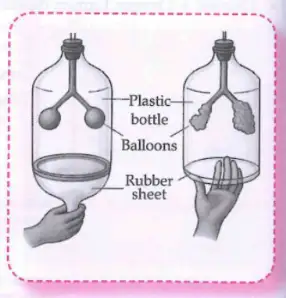
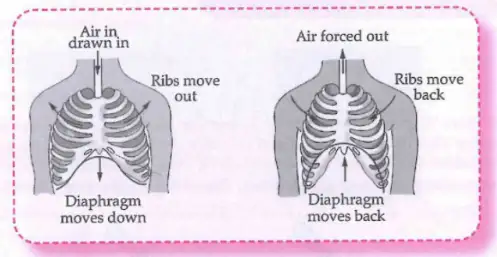
Exchange of Gases
Fresh air fills the alveoli during breathing. The thin walls of alveoli are surrounded by blood vessels. Blood carries carbon dioxide from the body to the alveoli, where it is released, and oxygen from the alveoli passes into the blood. Oxygen-rich blood is then transported to all parts of the body. Oxygen helps break down glucose to release energy in a process called respiration, summarized by the word equation: Glucose + Oxygen → Carbon dioxide + Water + Energy.
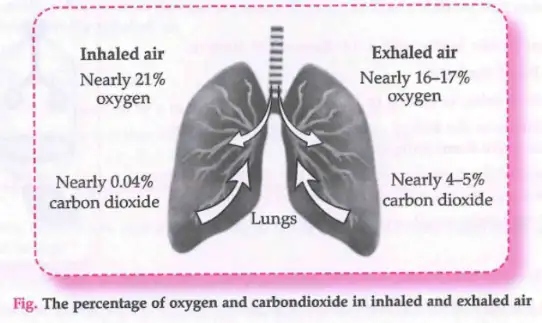
Respiration in Other Animals
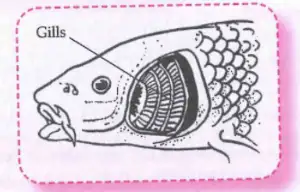
Different animals have various respiratory organs. For example, elephants, lions, cows, goats, frogs, lizards, snakes, and birds have lungs similar to humans. Earthworms use their moist skin for gas exchange. Tadpoles breathe through gills, while adult frogs use lungs and moist skin. Fish use gills to extract oxygen from water, and cockroaches breathe through spiracles connected to tracheae.
Modes of Taking Food
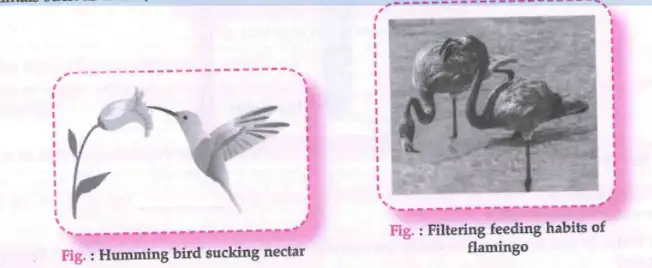
Animals have diverse feeding methods. Bees and hummingbirds suck nectar from flowers. Infants feed on mother's milk. Snakes like pythons swallow their prey whole. Aquatic animals such as ducks, whales, and sharks filter small food particles from water.
Human Digestive System and Digestion
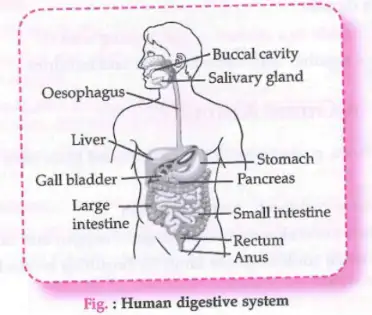
Food enters through the mouth (buccal cavity), where teeth tear and chew it, and saliva begins starch digestion. The food then travels down the food pipe (oesophagus) to the stomach, where it is mixed with digestive juices including hydrochloric acid and enzymes. The stomach partially digests proteins and transforms food into a semi-liquid mass.
From the stomach, food moves to the small intestine, a coiled tube about 6 meters long with finger-like villi that increase surface area for nutrient absorption. The liver produces bile stored in the gall bladder, which helps digest fats by breaking them into tiny droplets. The pancreas secretes enzymes that digest carbohydrates, fats, and proteins. Nutrients are absorbed into the bloodstream through the villi.
The large intestine is wider and shorter, about 1.5 meters long. It absorbs water and salts from undigested food, forming semi-solid feces stored in the rectum and expelled through the anus.
Digestion in Grass-Eating Animals
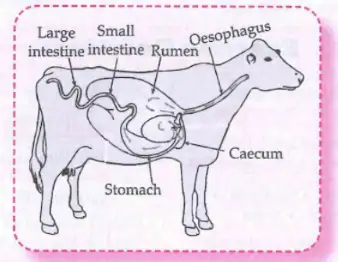
Grass-eating animals like cows have a special digestive process called rumination to digest cellulose. They have a rumen, a stomach part that stores swallowed grass and partially digests it with the help of microbes. The cud, partially digested food, is regurgitated and chewed again. The caecum further digests cellulose with bacterial help. Examples of ruminants include cattle, deer, horses, and rabbits.
Digestion in Birds
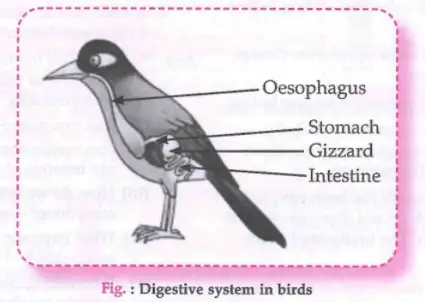
Birds lack teeth and use a muscular organ called the gizzard to grind food, often with the help of swallowed small stones (grit). Food passes through the oesophagus to the stomach, then to the gizzard, and finally to the intestine where digestion completes and nutrients are absorbed.
Solved Examples
Example 1: Why does a fish die when kept outside water even though there is oxygen in the surrounding air?
Solution: Fish use gills to extract oxygen from water. When out of water, the gills dry and stick together, preventing gas exchange. Without oxygen supply, the fish cannot survive.
Practice Set
- Level 1 (Easy): What is the main function of alveoli in the lungs?
- Level 2 (Moderate): Explain how the diaphragm and ribs help in the process of breathing.
- Level 3 (Challenging): Describe the process of rumination in grass-eating animals and explain its importance.
Answer Key
Level 1: Alveoli are tiny sacs in the lungs where oxygen is exchanged with carbon dioxide in the blood.
Level 2: During inhalation, ribs move up and out, and the diaphragm moves down, increasing chest cavity space and allowing air in. During exhalation, ribs move down and in, and the diaphragm moves up, decreasing chest cavity space and pushing air out.
Level 3: Rumination is the process where grass-eating animals store swallowed grass in the rumen, partially digest it with microbes, regurgitate it as cud, chew it again, and further digest cellulose in the caecum. This process helps digest cellulose, which is difficult to break down.
Quick Reference Table
Life Processes: Nutrition, respiration, excretion, reproduction.
Respiration: Process of releasing energy from food; includes breathing and cellular respiration.
Breathing: Inhalation (oxygen intake) and exhalation (carbon dioxide release).
Alimentary Canal: Mouth → Oesophagus → Stomach → Small Intestine → Large Intestine → Anus.
Digestive Enzymes: Saliva (starch digestion), stomach juices (protein digestion), pancreatic juice (carbohydrates, fats, proteins digestion), bile (fat emulsification).
Ruminants: Animals that chew cud to digest cellulose (e.g., cattle, deer).
Common Mistakes and Misconceptions
- Confusing breathing with respiration: Breathing is the physical process of air movement; respiration is the chemical process of energy release.
- Thinking all animals breathe through lungs: Some use skin, gills, or tracheae.
- Assuming digestion only occurs in the stomach: Digestion starts in the mouth and continues in the small intestine.
- Believing birds chew food: Birds use a gizzard to grind food instead of teeth.
Glossary
- Alveoli: Tiny air sacs in lungs where gas exchange occurs.
- Diaphragm: Muscular sheet that helps in breathing by changing chest cavity volume.
- Digestion: Breakdown of complex food into simpler substances.
- Inhalation: Breathing in oxygen-rich air.
- Exhalation: Breathing out carbon dioxide-rich air.
- Rumen: Part of the stomach in ruminants where partial digestion occurs.
- Villi: Finger-like projections in the small intestine that absorb nutrients.