CLASS 7 . SCIENCE . CURIOSITY . HEAT TRANSFER-IN-NATURE
Chapter 7 : Heat Transfer in Nature
Ch 7
SCIENCE
CLASS 7
Heat Transfer
Introduction to Heat Transfer
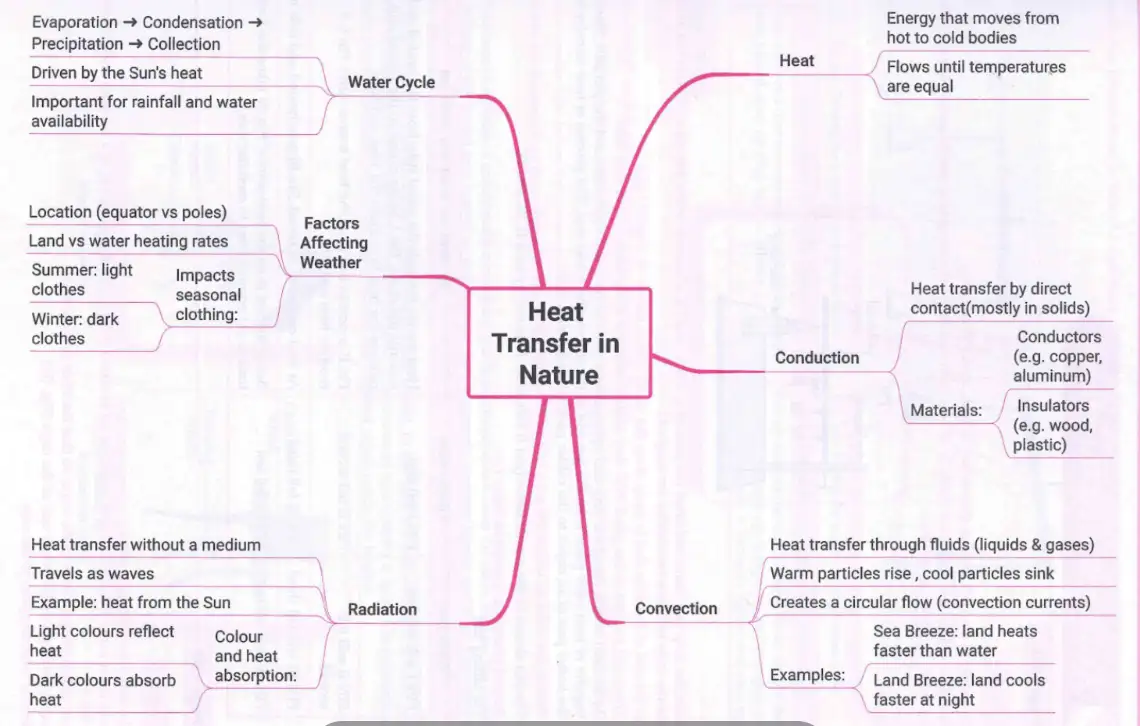
Heat is a form of energy that moves from a hotter object to a colder one until both reach the same temperature. This transfer of heat occurs in nature through three main methods: conduction, convection, and radiation.
Conduction
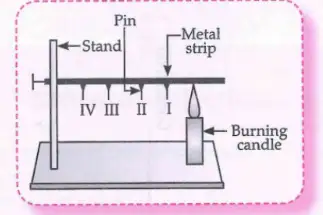
Conduction is the transfer of heat through direct contact between particles, mainly in solids. Metals are good conductors because their particles are closely packed and can transfer energy quickly. Materials like wood and plastic are insulators and do not conduct heat well.
Convection
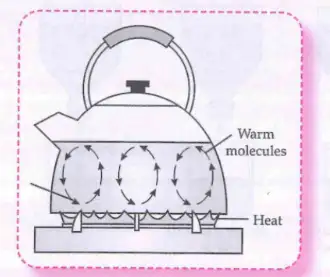
Convection occurs in fluids (liquids and gases) where heated particles become lighter and rise, while cooler, heavier particles sink. This movement creates convection currents that distribute heat throughout the fluid.
Radiation
Radiation is the transfer of heat through electromagnetic waves and does not require a medium. The Sun’s heat reaches the Earth through radiation.
Solved Examples
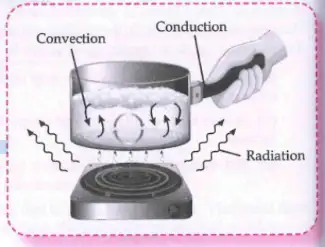
Example 1: Explain how heat is transferred when cooking food in a pot on a stove.
Solution: Heat from the stove reaches the pot by radiation. Then, heat travels through the pot’s metal by conduction to the handle. Inside the pot, the water heats up and circulates due to convection currents, spreading heat evenly.
Example 2: Why do metals feel colder than wood at room temperature?
Solution: Metals are good conductors of heat and quickly draw heat away from your hand, making them feel colder. Wood is an insulator and does not conduct heat well, so it feels warmer.
Practice Set
- Level 1: Name the three methods of heat transfer.
- Level 2: Why does warm air rise and cool air sink during convection?
- Level 3: Explain how radiation allows the Sun’s heat to reach the Earth.
Answer Key
- Level 1: Conduction, convection, and radiation.
- Level 2: Warm air rises because it becomes lighter as it heats up, while cool air sinks because it is heavier.
- Level 3: Radiation transfers heat through electromagnetic waves that can travel through the vacuum of space, allowing the Sun’s heat to reach Earth.
Water Cycle
Introduction to Water Cycle
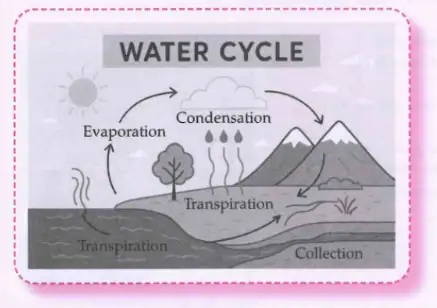
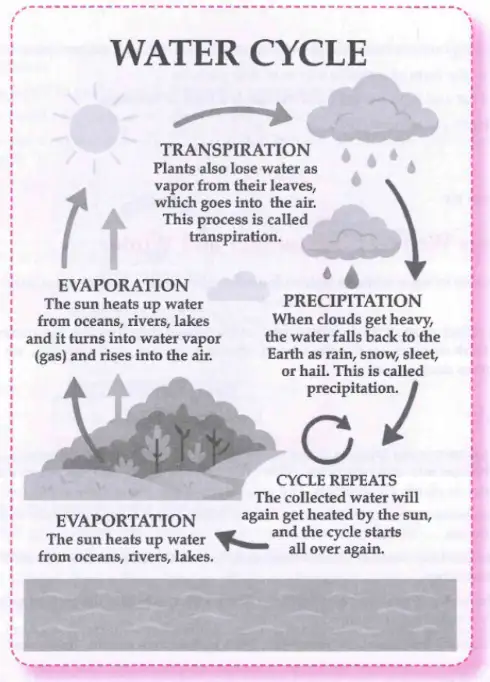
The water cycle is a continuous process where water moves through different stages in nature, driven by the Sun’s heat. It includes evaporation, transpiration, condensation, precipitation, and collection.
Evaporation and Transpiration
Evaporation is when water from oceans, rivers, and lakes turns into water vapor due to the Sun’s heat. Transpiration is the release of water vapor from plants’ leaves into the air.
Condensation and Precipitation
Water vapor cools and changes back into tiny droplets forming clouds (condensation). When clouds become heavy, water falls as rain, snow, sleet, or hail (precipitation).
Collection
Water collects in oceans, rivers, lakes, and underground aquifers, ready to start the cycle again.
Solved Examples
Example 1: Describe the role of the Sun in the water cycle.
Solution: The Sun heats water bodies causing evaporation. It also warms the air, enabling transpiration from plants. This heat energy drives the entire water cycle.
Example 2: What happens during condensation in the water cycle?
Solution: Water vapor cools in the atmosphere and changes into tiny water droplets, forming clouds.
Practice Set
- Level 1: What is evaporation?
- Level 2: Explain how precipitation occurs.
- Level 3: How do plants contribute to the water cycle?
Answer Key
- Level 1: Evaporation is the process where water changes from liquid to vapor due to heat.
- Level 2: Precipitation occurs when water droplets in clouds become heavy and fall to the Earth as rain, snow, sleet, or hail.
- Level 3: Plants release water vapor into the air through transpiration, adding moisture to the atmosphere.
Weather Effects
Factors Affecting Weather
Weather is influenced by location, such as proximity to the equator or poles, and differences in how land and water heat up. These factors affect temperature, wind, and rainfall patterns.
Sea Breeze and Land Breeze
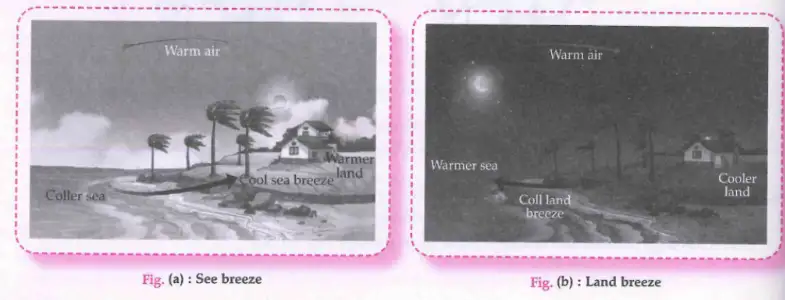
During the day, land heats faster than the sea, causing warm air to rise over land and cooler air to move in from the sea, creating a sea breeze. At night, land cools faster, and cooler air moves from land to sea, creating a land breeze.
Clothing and Weather
Light-colored clothes reflect heat and are comfortable in summer, while dark-colored clothes absorb heat and keep us warm in winter.
Solved Examples
Example 1: Why does a sea breeze occur during the day?
Solution: Land heats faster than the sea during the day, causing warm air to rise over land. Cooler air from the sea moves in to replace it, creating a sea breeze.
Example 2: Why do we wear dark clothes in winter?
Solution: Dark clothes absorb more heat, helping to keep the body warm during cold weather.
Practice Set
- Level 1: What causes a land breeze?
- Level 2: How does location affect weather?
- Level 3: Explain why light-colored clothes are preferred in summer.
Answer Key
- Level 1: A land breeze occurs at night when the land cools faster than the sea, causing cool air to move from land to sea.
- Level 2: Locations near the equator are hotter, while those near the poles are colder, affecting weather patterns.
- Level 3: Light-colored clothes reflect heat, keeping the body cooler in summer.
Soil and Water Interaction
Water Seepage Through Soil
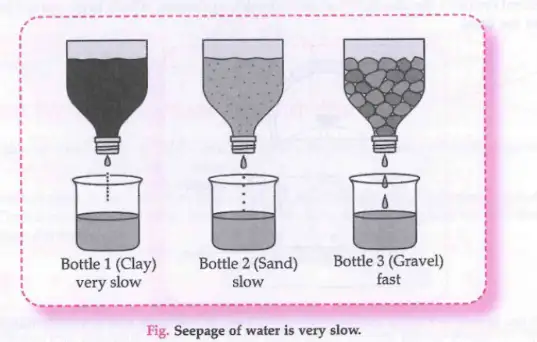
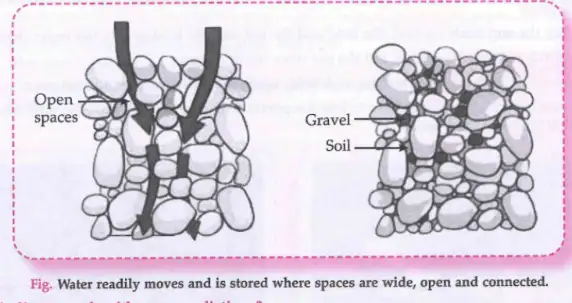
Water seeps through soil at different rates depending on the soil type. Clay has tightly packed particles and allows slow seepage, sand allows moderate seepage, and gravel has large spaces allowing fast seepage.
Infiltration and Aquifers
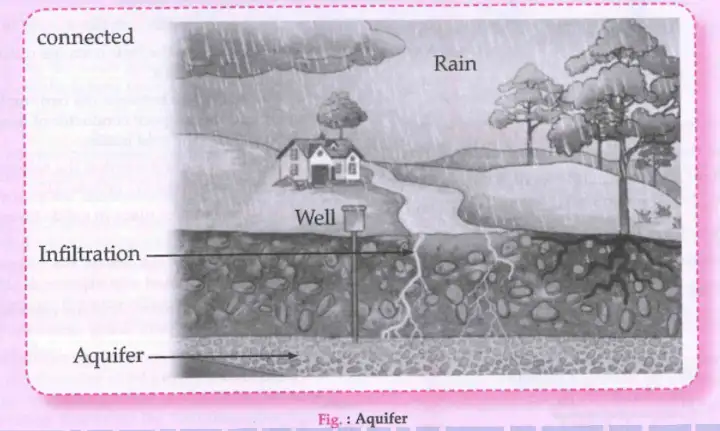
Infiltration is the process of water soaking into the soil. Aquifers are underground layers of rock or sediment that store water in their pores.
Solved Examples
Example 1: Why does water seep faster through gravel than clay?
Solution: Gravel has larger spaces between particles, allowing water to flow quickly, while clay’s particles are tightly packed, slowing water flow.
Example 2: What is infiltration?
Solution: Infiltration is the process where water soaks into the soil from the surface.
Practice Set
- Level 1: Define infiltration.
- Level 2: Compare water seepage in sand and clay.
- Level 3: Explain the role of aquifers in water storage.
Answer Key
- Level 1: Infiltration is the process of water soaking into the soil.
- Level 2: Water seeps faster through sand than clay because sand has larger particles and more space.
- Level 3: Aquifers store water underground in porous rocks or sediments, supplying water to wells and springs.
Quick Reference Table
Heat Transfer Methods: Conduction (solids), Convection (fluids), Radiation (waves)
Water Cycle Stages: Evaporation, Transpiration, Condensation, Precipitation, Collection
Weather Factors: Location, land and water heating differences
Soil Types and Water Seepage: Clay (slow), Sand (moderate), Gravel (fast)
Common Mistakes and Misconceptions
• Heat always moves from hot to cold, not the other way around.
• Conduction does not occur in gases effectively.
• Radiation does not require a medium to travel.
• Water vapor is not the same as liquid water.
• Sea breeze and land breeze depend on temperature differences, not just wind direction.
Glossary
Conduction: Transfer of heat through direct contact.
Convection: Transfer of heat by movement of fluids.
Radiation: Transfer of heat through electromagnetic waves.
Evaporation: Change of water from liquid to vapor.
Transpiration: Release of water vapor from plants.
Condensation: Change of water vapor to liquid droplets.
Precipitation: Water falling from clouds as rain, snow, etc.
Infiltration: Water soaking into the soil.
Aquifer: Underground water storage in porous rocks.