CLASS 7 . SCIENCE . CURIOSITY . EXPLORING SUBSTANCES-ACIDIC-BASIC-AND-NEUTRAL
Chapter 2 : Exploring Substances: Acidic, Basic, and Neutral
Ch 2
SCIENCE
CLASS 7
Acidic Basic Neutral Substances
Types of Substances
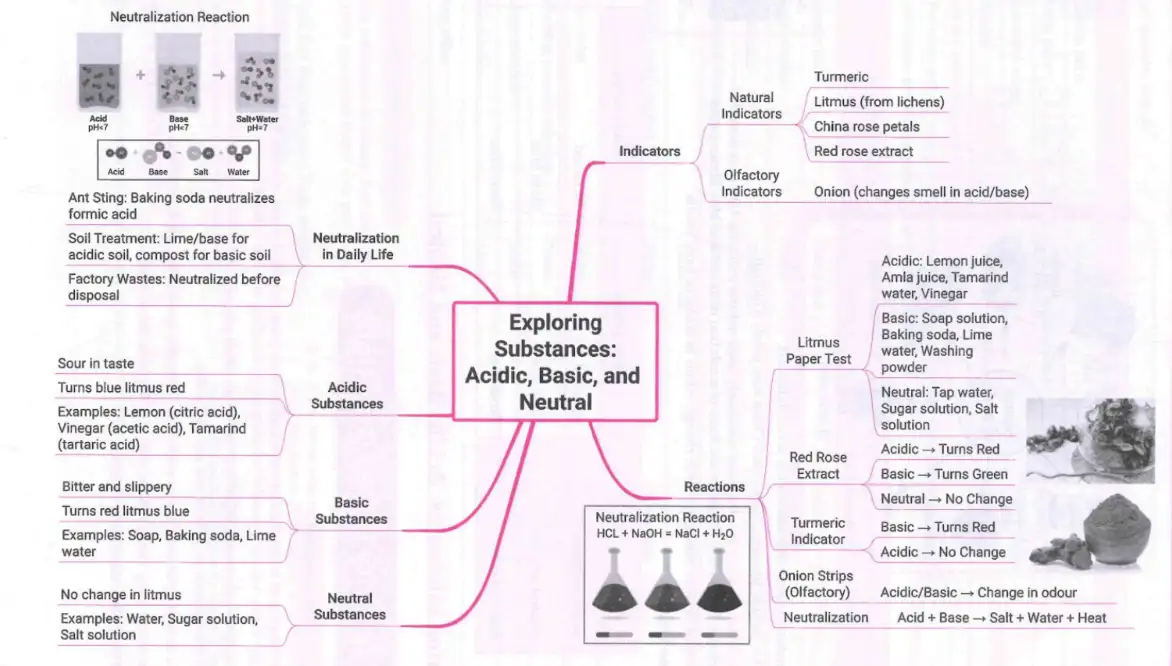
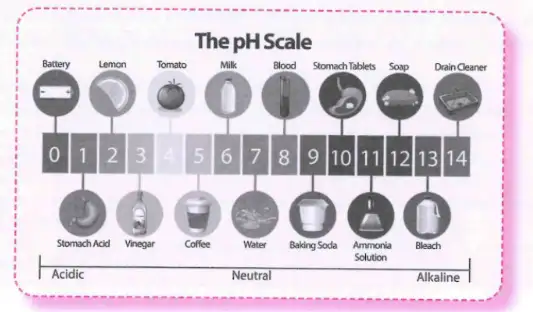
Substances can be classified as acidic, basic, or neutral based on their properties. Acidic substances taste sour and turn blue litmus paper red. Examples include lemon juice and vinegar. Basic substances taste bitter, feel slippery, and turn red litmus paper blue, such as soap and baking soda. Neutral substances do not change the color of litmus paper, like water and sugar solution.
Indicators
Indicators are special substances used to test whether a substance is acidic or basic. Natural indicators include turmeric, litmus (extracted from lichens), rose petals, and substances that change odor like onion. Litmus paper is commonly used in red and blue forms to identify acidity or basicity.
Litmus Paper Test
When tested with litmus paper, acidic solutions turn blue litmus red, basic solutions turn red litmus blue, and neutral solutions cause no change in either paper.
Neutralization Reaction
When an acid and a base are mixed, they neutralize each other, producing salt, water, and heat. This reaction is important in many daily life applications.
Daily Life Uses
- Baking soda neutralizes ant stings by counteracting formic acid.
- Lime is used to treat acidic soil to make it suitable for plants.
- Factory wastes are neutralized before disposal to prevent environmental harm.
Solved Examples
Example 1: Identify whether lemon juice and soap solution are acidic or basic using litmus test.
Solution:
- Lemon juice turns blue litmus paper red, so it is acidic.
- Soap solution turns red litmus paper blue, so it is basic.
Example 2: What happens when lemon juice is mixed with lime water?
Solution:
- Lemon juice is acidic and lime water is basic.
- When mixed, they neutralize each other, forming a salt and water.
- The color of red litmus paper changes from red to blue as the solution becomes basic, then back to red when more acid is added.
Practice Set
- Level 1: What color does blue litmus paper turn when dipped in vinegar?
- Level 2: Explain why baking soda feels slippery to touch.
- Level 3: Describe the neutralization reaction that occurs when an ant sting is treated with baking soda.
Answer Key
- Level 1: Blue litmus paper turns red in vinegar because vinegar is acidic.
- Level 2: Baking soda feels slippery because it is a basic substance that reacts with oils on the skin, producing a soapy feel.
- Level 3: The formic acid from the ant sting reacts with baking soda (a base) to form salt and water, neutralizing the acid and relieving pain.
Indicators
Natural Indicators
Natural indicators such as turmeric, litmus, and red rose petals change color in acidic or basic solutions. Litmus is extracted from lichens and is available as red and blue paper. Olfactory indicators like onion change odor in acidic or basic environments.
Preparation of Indicators
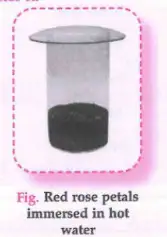
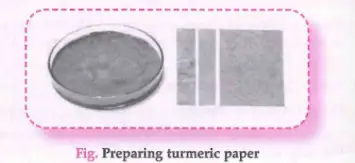
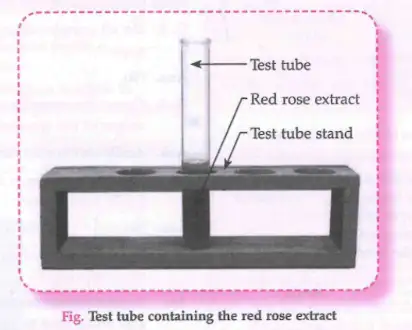
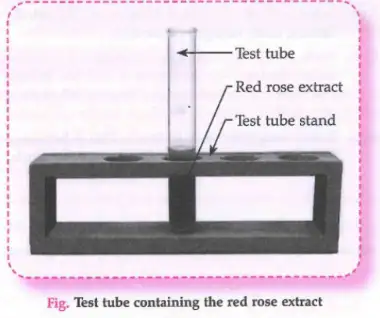
Red rose petals can be crushed and soaked in hot water to prepare an indicator solution. Turmeric paste can be used to make turmeric paper strips that change color in different solutions.
Testing with Indicators
When red rose extract is added to acidic solutions, it turns red; in basic solutions, it turns green. Turmeric paper remains yellow in acidic solutions and turns red in basic solutions.
Solved Examples
Example 1: How does red rose extract behave in lemon juice and soap solution?
Solution:
- In lemon juice (acidic), red rose extract turns red.
- In soap solution (basic), red rose extract turns green.
Example 2: What color change occurs when turmeric paper is dipped in amla juice?
Solution:
- Amla juice is acidic, so turmeric paper remains yellow.
Practice Set
- Level 1: What is the source of litmus?
- Level 2: Describe how to prepare turmeric paper.
- Level 3: Explain how olfactory indicators work with an example.
Answer Key
- Level 1: Litmus is extracted from lichens.
- Level 2: Mix turmeric powder with water to make a paste, dip filter paper in it, dry the paper, and cut into strips.
- Level 3: Olfactory indicators change smell in acidic or basic media; for example, onion smell changes when exposed to tamarind water (acidic) or baking soda solution (basic).
Neutralisation
Reaction Between Acids and Bases
When acids and bases react, they neutralize each other to form salt and water, releasing heat. This is called neutralization.
Examples in Daily Life
- Ant stings contain formic acid; baking soda neutralizes the acid to relieve pain.
- Soil acidity is treated with lime to make it suitable for plants.
- Factory wastes are neutralized before disposal to prevent pollution.
Observing Neutralisation
Adding lime water to lemon juice changes the solution from acidic to neutral and then basic, as indicated by litmus paper color changes.
Solved Examples
Example 1: What are the products of neutralization between hydrochloric acid and sodium hydroxide?
Solution:
- Hydrochloric acid (HCl) reacts with sodium hydroxide (NaOH) to form sodium chloride (NaCl) and water (H₂O).
Example 2: How does baking soda help in treating ant stings?
Solution:
- Baking soda (a base) neutralizes the formic acid from the ant sting, reducing pain and irritation.
Practice Set
- Level 1: What is formed when an acid reacts with a base?
- Level 2: Describe the neutralization process using lemon juice and lime water.
- Level 3: Explain why factory wastes need to be neutralized before disposal.
Answer Key
- Level 1: Salt and water are formed.
- Level 2: Lemon juice (acid) reacts with lime water (base) to form salt and water, changing the solution's pH from acidic to neutral or basic.
- Level 3: Factory wastes may be acidic or basic and can harm the environment; neutralization makes them safe for disposal.
Quick Reference Table
Acids: Substances that turn blue litmus red and taste sour (e.g., lemon juice, vinegar).
Bases: Substances that turn red litmus blue and feel slippery (e.g., soap solution, lime water).
Neutral Substances: Do not change litmus color (e.g., water, sugar solution).
Indicators: Litmus (from lichens), turmeric, red rose extract, olfactory indicators like onion.
Neutralization: Acid + Base → Salt + Water + Heat.
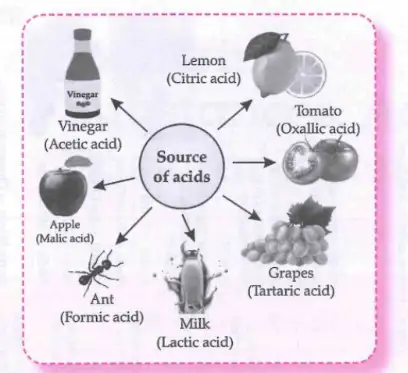
Examples of Acids in Nature: Citric acid (lemon), lactic acid (curd), acetic acid (vinegar).
Daily Uses: Baking soda for ant stings, lime for soil treatment, neutralization of factory wastes.
Common Mistakes and Misconceptions
• Not all sour-tasting substances are acids; some may be neutral or basic.
• Bases do not always taste bitter; some may be odorless or have other properties.
• Litmus paper color changes depend on the type of paper used (red or blue).
• Neutral substances do not change the color of either red or blue litmus paper.
• Neutralization always produces salt and water, but the salt formed varies depending on the acid and base.
Glossary
Acid: Substance that turns blue litmus red and tastes sour.
Base: Substance that turns red litmus blue and feels slippery.
Neutral Substance: Substance that does not change litmus color.
Indicator: Substance used to test acidity or basicity.
Litmus: Natural dye from lichens used as an indicator.
Neutralization: Reaction between acid and base producing salt and water.
Salt: Compound formed from neutralization of acid and base.