CLASS 7 . SCIENCE . CURIOSITY . EARTH MOON-AND-THE-SUN
Chapter 12 : Earth, Moon, and the Sun
Ch 12
SCIENCE
CLASS 7
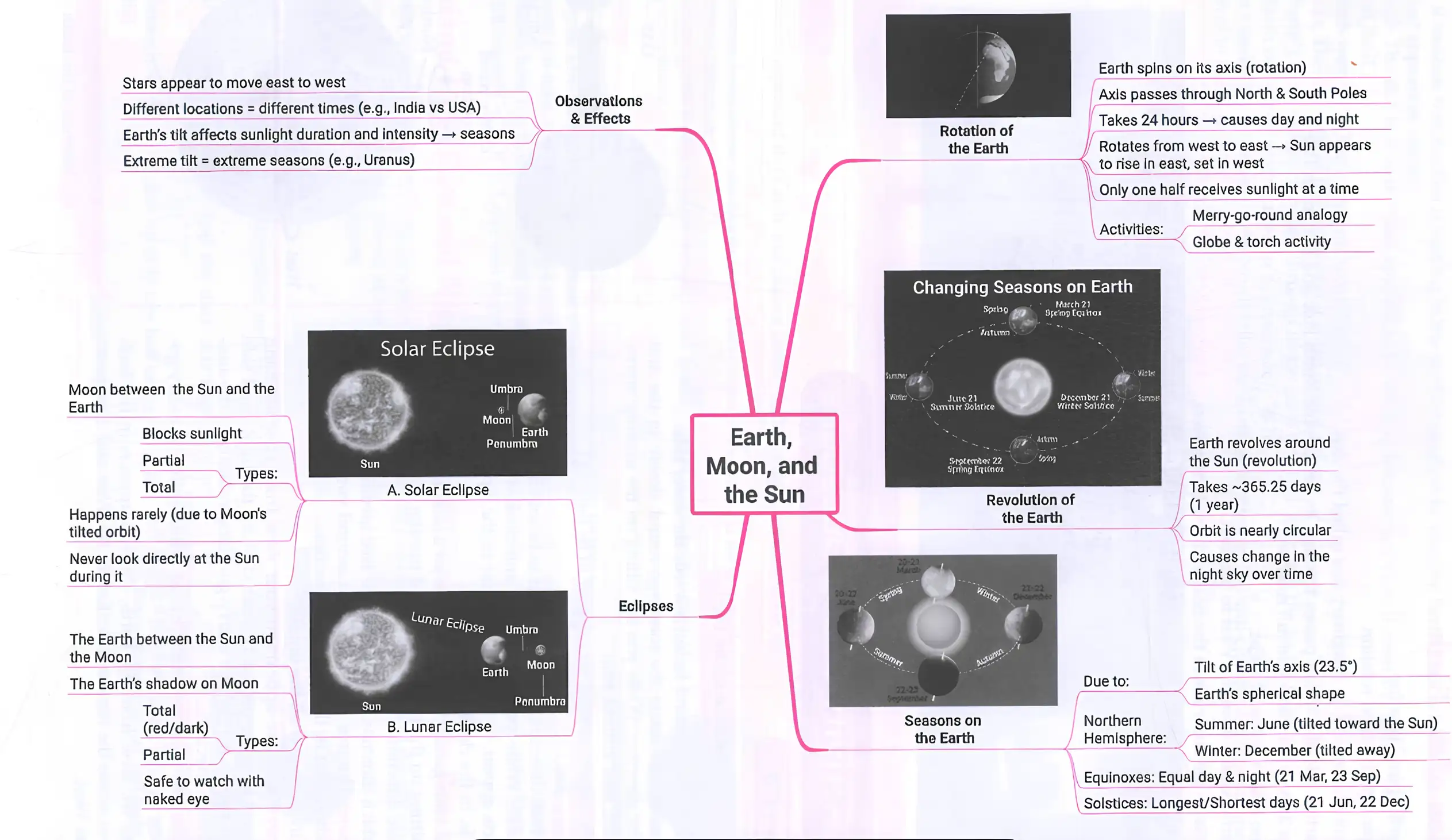
Earth Moon Sun
Introduction
We observe day and night, seasons, and eclipses due to the movements of the Earth, Moon, and Sun. The Earth rotates on its axis and revolves around the Sun, causing day and night as well as seasons. The Moon revolves around the Earth and causes lunar and solar eclipses. A solar eclipse occurs when the Moon blocks sunlight from reaching the Earth, while a lunar eclipse happens when the Earth blocks sunlight from reaching the Moon.
Earth's Rotation
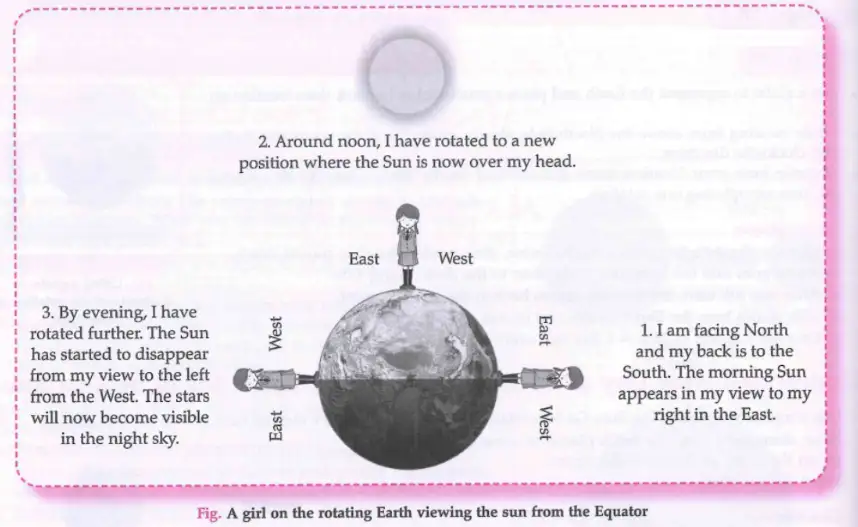
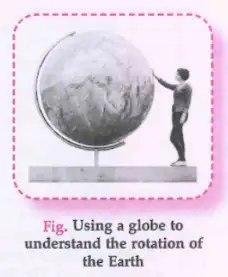
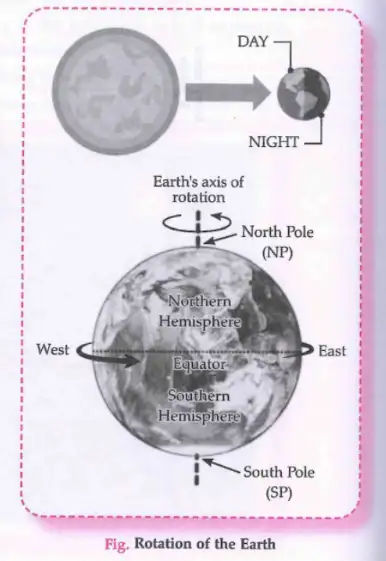
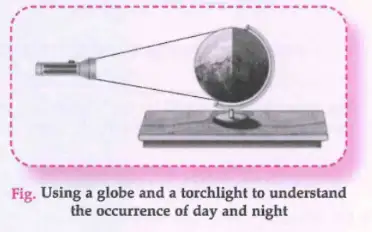
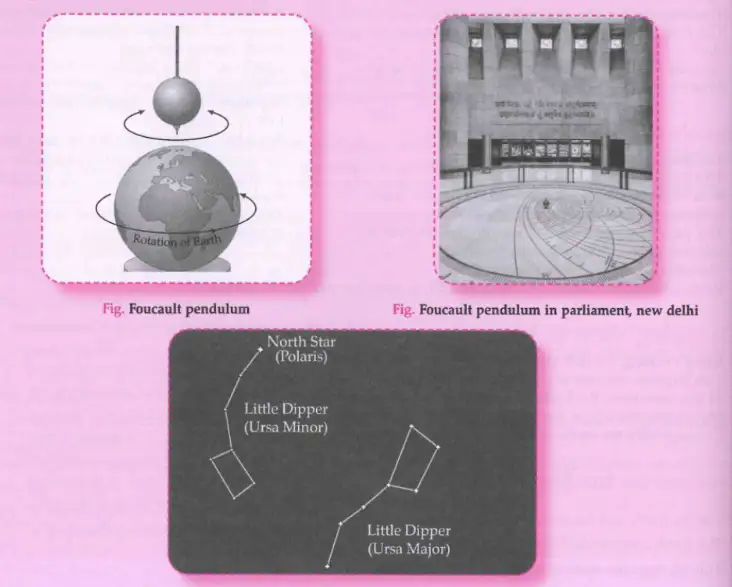
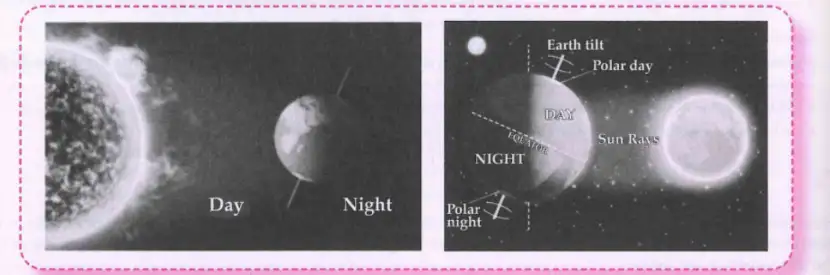
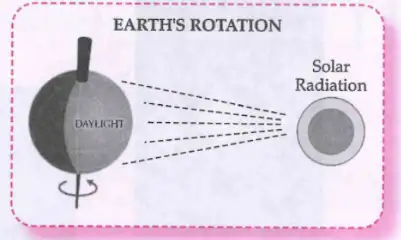
The Earth spins around an imaginary line called its axis, which passes through the North and South Poles. This spinning is called rotation and takes approximately 24 hours to complete one full turn. The Earth rotates from west to east, which causes the Sun to appear to rise in the east and set in the west. At any given time, only one half of the Earth receives sunlight, resulting in day on that side and night on the other.
Day and Night Cycle
As the Earth rotates, different parts move into and out of sunlight, creating the cycle of day and night. The side facing the Sun experiences daylight, while the opposite side is in darkness. This rotation explains why the Sun appears to move across the sky from east to west.
Earth's Revolution
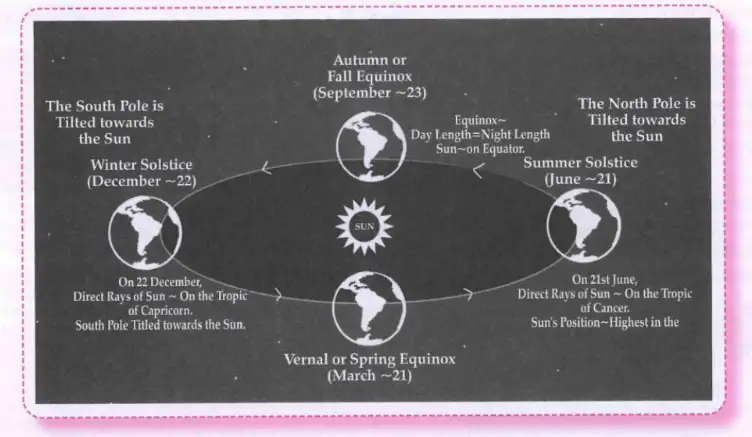
The Earth revolves around the Sun in a nearly circular path called its orbit. One complete revolution takes about 365 days and 6 hours, which constitutes one year. This revolution, combined with the tilt of the Earth's axis, causes changes in the seasons and the changing view of the night sky throughout the year.
Seasons
The Earth's axis is tilted at an angle of 23.5 degrees relative to its orbit around the Sun. This tilt remains constant as the Earth revolves, causing different parts of the Earth to receive varying amounts of sunlight during the year. When the Northern Hemisphere tilts towards the Sun, it experiences summer with longer days and more direct sunlight. Conversely, when it tilts away, it experiences winter with shorter days and less direct sunlight. The Southern Hemisphere experiences opposite seasons at the same time.
Eclipses
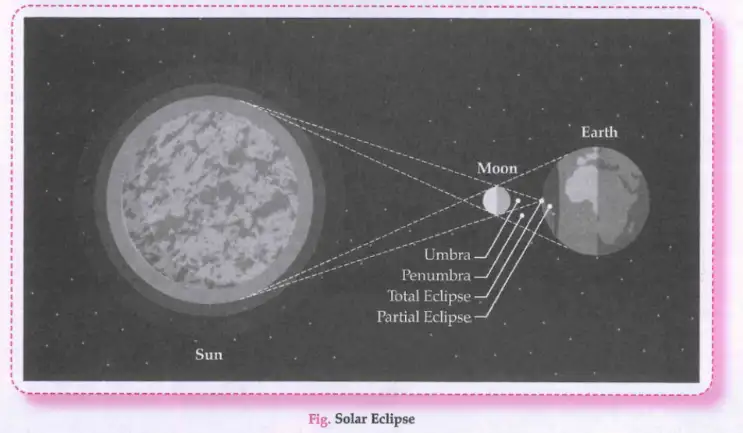
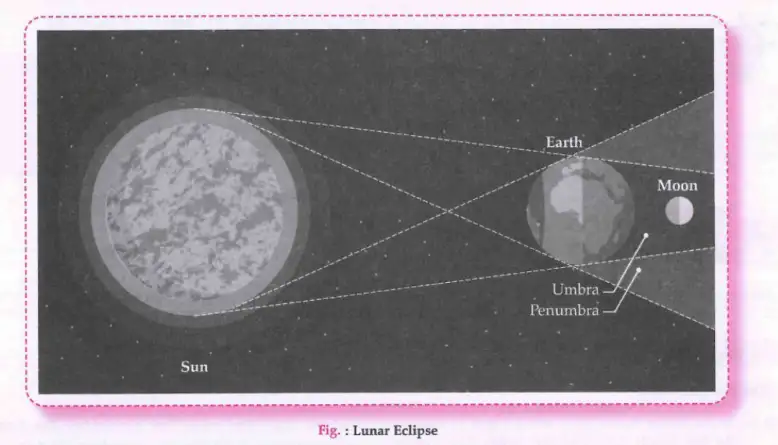
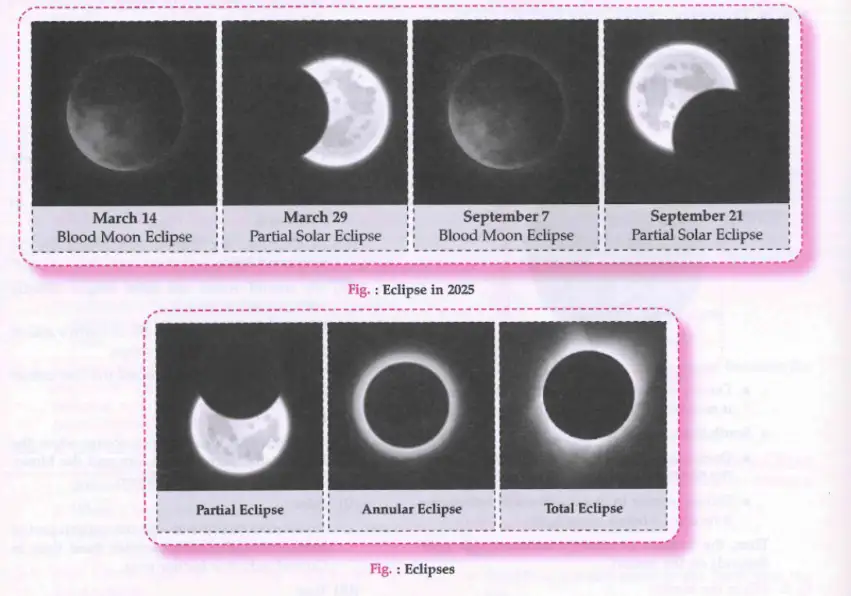
An eclipse occurs when one celestial body moves into the shadow of another, blocking light. A solar eclipse happens when the Moon comes between the Earth and the Sun, blocking sunlight from reaching parts of the Earth. A lunar eclipse occurs when the Earth comes between the Sun and the Moon, casting its shadow on the Moon. These events do not happen every month because the Moon's orbit is slightly tilted, preventing perfect alignment most of the time.
Solved Examples
Example 1: Explain why we experience day and night on Earth.
Solution: The Earth rotates on its axis once every 24 hours. As it spins, the side facing the Sun experiences daylight, while the opposite side is in darkness, causing night. This rotation causes the cycle of day and night.
Example 2: Why do seasons change on Earth?
Solution: The Earth's axis is tilted at 23.5 degrees relative to its orbit around the Sun. As the Earth revolves around the Sun, this tilt causes different hemispheres to receive varying amounts of sunlight at different times of the year, resulting in seasons.
Example 3: Describe the difference between a solar eclipse and a lunar eclipse.
Solution: A solar eclipse occurs when the Moon comes between the Earth and the Sun, blocking sunlight from reaching the Earth. A lunar eclipse happens when the Earth comes between the Sun and the Moon, casting its shadow on the Moon.
Practice Set
- Level 1 (Easy): What causes day and night on Earth?
- Level 2 (Moderate): Explain why the Northern Hemisphere experiences summer when the Earth is tilted towards the Sun.
- Level 3 (Challenging): Why do solar and lunar eclipses not occur every month despite the Moon orbiting the Earth every 29.5 days?
Answer Key
- Level 1: Day and night are caused by the Earth's rotation on its axis, which makes different parts of the Earth face towards or away from the Sun.
- Level 2: When the Northern Hemisphere tilts towards the Sun, it receives more direct sunlight and longer daylight hours, causing warmer temperatures and summer season.
- Level 3: Eclipses do not occur every month because the Moon's orbit is tilted about 5 degrees to the Earth's orbit around the Sun, so the Sun, Earth, and Moon do not always align perfectly.
Quick Reference Table
Rotation: Earth spins on its axis once every 24 hours causing day and night.
Revolution: Earth orbits the Sun once every 365 days causing the year and seasons.
Axis Tilt: 23.5 degrees tilt causes seasons due to varying sunlight angles.
Solar Eclipse: Moon blocks Sun's light from reaching Earth.
Lunar Eclipse: Earth blocks Sun's light from reaching Moon.
Common Mistakes and Misconceptions
Misconception 1: Seasons are caused by the Earth being closer or farther from the Sun.
Correction: Seasons are caused by the tilt of the Earth's axis, not by the distance from the Sun, which changes very little.
Misconception 2: The Sun moves around the Earth.
Correction: The Earth rotates on its axis, making the Sun appear to move across the sky.
Misconception 3: Eclipses happen every month.
Correction: Eclipses occur only when the Sun, Earth, and Moon align perfectly, which is rare due to the Moon's tilted orbit.
Glossary
Axis: An imaginary line around which the Earth rotates, passing through the North and South Poles.
Rotation: The spinning of the Earth on its axis, causing day and night.
Revolution: The movement of the Earth around the Sun, causing the year and seasons.
Orbit: The path followed by the Earth around the Sun.
Solar Eclipse: An event where the Moon blocks the Sun's light from reaching the Earth.
Lunar Eclipse: An event where the Earth blocks the Sun's light from reaching the Moon.
Seasons: Different times of the year characterized by varying weather caused by Earth's tilt and revolution.