CLASS 7 . SCIENCE . CURIOSITY . ADOLESCENCE A-STAGE-OF-GROWTH-AND-CHANGE
Chapter 6 : Adolescence: A Stage of Growth and Change
Ch 6
SCIENCE
CLASS 7
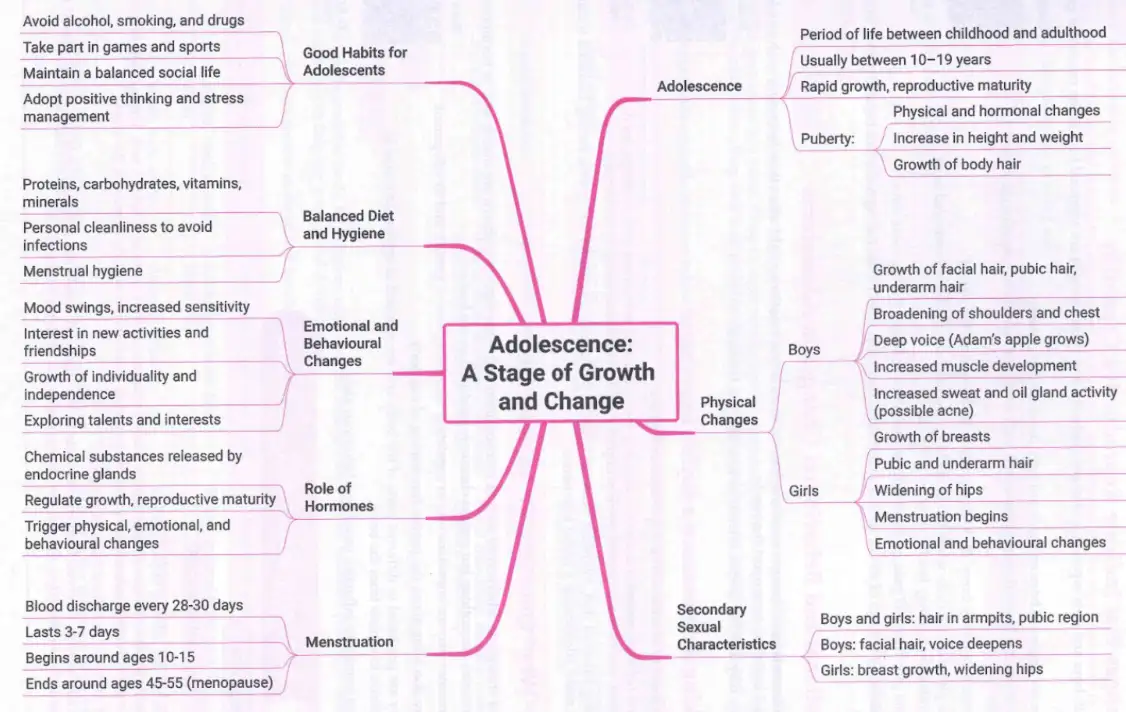
Adolescence
Definition and Overview
Adolescence is the transitional stage of growth and development between childhood and adulthood, typically occurring between the ages of 10 and 19 years. It is characterized by rapid physical, emotional, and psychological changes that prepare an individual for reproductive maturity and adult responsibilities.
Physical Changes During Adolescence
During adolescence, the body undergoes significant changes due to puberty. These include a sudden increase in height caused by the elongation of long bones, development of secondary sexual characteristics, and changes in body composition. Boys experience growth of facial and body hair, deepening of the voice due to enlargement of the larynx (Adam's apple), and increased muscle mass. Girls develop breasts, wider hips, and begin menstruation.
Secondary Sexual Characteristics
Secondary sexual characteristics are external features that distinguish males and females but are not directly involved in reproduction. In boys, these include facial hair growth, increased body hair, broader shoulders, and a deeper voice. In girls, these include breast development, growth of body hair in underarm and pubic areas, and widening of hips.
Emotional and Behavioral Changes
Adolescents experience mood swings and heightened sensitivity due to hormonal changes. They develop greater interest in new activities, hobbies, and friendships, and begin to seek independence. These emotional changes can lead to increased creativity, social awareness, and personal growth.
Role of Hormones
Hormones are chemical messengers produced by glands in the body that regulate growth, development, and mood during adolescence. They trigger physical changes such as puberty and influence emotional and behavioral patterns. Hormones are released in response to signals from the brain and help coordinate the body's transition to adulthood.
Good Habits for Adolescents
Maintaining good habits is essential for healthy development during adolescence. Adolescents should avoid harmful substances like alcohol, smoking, and drugs. Participation in sports and games promotes physical fitness. A balanced social life and positive thinking help manage stress and emotional well-being.
Balanced Diet and Hygiene
A balanced diet rich in proteins, vitamins, minerals, and carbohydrates supports growth and development. Personal hygiene, including cleanliness and menstrual hygiene for girls, is important to prevent infections and maintain health during this stage.
Menstruation
Menstruation is the monthly discharge of blood from the uterus, marking the onset of reproductive capability in girls. It typically begins between ages 10 and 15 and occurs every 28 to 30 days, lasting 3 to 7 days. Menstruation continues until menopause, which usually occurs between ages 45 and 55.
Solved Examples
Example 1: Explain why boys experience a deepening of the voice during adolescence.
Solution: During adolescence, the larynx (voice box) in boys grows larger and the vocal cords become longer and thicker due to the influence of male hormones (testosterone). This causes the voice to deepen and become huskier.
Example 2: Describe the importance of a balanced diet during adolescence.
Solution: A balanced diet provides essential nutrients such as proteins for muscle growth, vitamins and minerals for overall health, and carbohydrates for energy. These nutrients support the rapid physical growth and development occurring during adolescence and help maintain good health.
Practice Set
- Level 1 (Easy): What is adolescence and what age range does it cover?
- Level 2 (Moderate): List three secondary sexual characteristics that develop in girls during adolescence.
- Level 3 (Challenging): Explain how hormones influence emotional changes during adolescence and suggest two ways adolescents can manage mood swings.
Answer Key
- Level 1: Adolescence is the stage of growth between childhood and adulthood, usually from 10 to 19 years of age.
- Level 2: Three secondary sexual characteristics in girls are breast development, widening of hips, and growth of body hair in underarm and pubic areas.
- Level 3: Hormones act as chemical messengers that regulate mood and behavior, causing mood swings and increased sensitivity. Adolescents can manage mood swings by engaging in physical activities like sports and practicing positive thinking to reduce stress.
Physical Changes
Growth and Development
Physical changes during adolescence include rapid growth in height and weight, development of muscles, and changes in body shape. These changes are driven by hormonal activity and prepare the body for reproductive capability.
Changes in Boys
Boys experience growth of facial and body hair, broadening of shoulders, deepening of the voice, and increased muscle mass. The skin becomes rougher and sweat gland activity increases.
Changes in Girls
Girls develop breasts, wider hips, and begin menstruation. Body hair grows in the underarm and pubic areas. These changes signify the body's readiness for reproduction.
Solved Examples
Example 1: Why do girls develop wider hips during adolescence?
Solution: The widening of hips in girls during adolescence is due to the influence of female hormones (estrogen) which prepare the body for childbirth by expanding the pelvic region.
Example 2: What causes the increase in height during adolescence?
Solution: The increase in height is caused by the elongation of long bones in the arms and legs, stimulated by growth hormones released during puberty.
Practice Set
- Level 1 (Easy): Name two physical changes that occur in boys during adolescence.
- Level 2 (Moderate): Explain why skin becomes rougher and sweat gland activity increases during adolescence.
- Level 3 (Challenging): Describe the role of hormones in the development of secondary sexual characteristics.
Answer Key
- Level 1: Growth of facial hair and deepening of voice.
- Level 2: Increased activity of sweat glands helps regulate body temperature and skin becomes rougher due to hormonal changes.
- Level 3: Hormones such as testosterone and estrogen trigger the development of secondary sexual characteristics by stimulating growth of hair, changes in body shape, and other physical features.
Emotional Changes
Emotional Development
Adolescents experience strong emotions and mood swings due to hormonal fluctuations. They become more sensitive and develop a deeper understanding of themselves and others.
Behavioral Changes
There is increased interest in social activities, hobbies, and friendships. Adolescents seek independence and begin to make personal decisions about their lives.
Positive Growth
Engaging in creative activities, social work, and sports helps channel emotions positively. Developing good habits and managing stress contribute to healthy emotional development.
Solved Examples
Example 1: What are mood swings and why do they occur during adolescence?
Solution: Mood swings are rapid changes in emotions, caused by hormonal changes during adolescence that affect brain chemistry and emotional regulation.
Example 2: How can adolescents use their emotional changes for positive growth?
Solution: Adolescents can engage in creative activities, social initiatives, and sports to express emotions constructively and develop new skills.
Practice Set
- Level 1 (Easy): Define mood swings.
- Level 2 (Moderate): List two ways adolescents can manage emotional changes positively.
- Level 3 (Challenging): Explain the impact of emotional changes on adolescent behavior.
Answer Key
- Level 1: Mood swings are quick changes in emotions common during adolescence.
- Level 2: Participating in sports and practicing positive thinking.
- Level 3: Emotional changes can lead to increased sensitivity, mood swings, and a desire for independence, influencing social interactions and decision-making.
Hormones
Definition and Function
Hormones are chemical messengers produced by glands that regulate growth, development, mood, and reproductive functions during adolescence.
Production and Release
Hormones are produced in various glands such as the pituitary, thyroid, and gonads. They are released into the bloodstream in response to signals from the brain to coordinate bodily changes.
Effects on Adolescents
Hormones trigger physical changes like puberty, influence emotional states, and regulate reproductive functions such as menstruation in girls.
Solved Examples
Example 1: What role do hormones play in puberty?
Solution: Hormones initiate and regulate the physical changes of puberty, including growth spurts, development of secondary sexual characteristics, and reproductive maturity.
Example 2: How do hormones affect mood during adolescence?
Solution: Hormonal fluctuations affect brain chemistry, leading to mood swings and heightened emotional sensitivity.
Practice Set
- Level 1 (Easy): What are hormones?
- Level 2 (Moderate): Name two glands that produce hormones during adolescence.
- Level 3 (Challenging): Describe how hormones influence both physical and emotional changes during adolescence.
Answer Key
- Level 1: Hormones are chemical messengers that regulate body functions.
- Level 2: Pituitary gland and gonads (testes in boys, ovaries in girls).
- Level 3: Hormones trigger physical changes like growth and sexual development, and also affect mood and behavior by influencing brain activity.
Nutrition and Hygiene
Balanced Diet
A balanced diet includes proteins, vitamins, minerals, fats, and carbohydrates necessary for growth, energy, and overall health during adolescence.
Importance of Hygiene
Maintaining personal hygiene, including cleanliness and menstrual hygiene for girls, helps prevent infections and promotes well-being.
Healthy Habits
Adolescents should avoid harmful substances like alcohol, smoking, and drugs, and engage in physical activities to support healthy development.
Solved Examples
Example 1: Why is protein important in the diet of adolescents?
Solution: Proteins are essential for building and repairing body tissues, supporting muscle growth and overall development during adolescence.
Example 2: How does maintaining hygiene benefit adolescents?
Solution: Good hygiene prevents infections, promotes health, and supports confidence and social well-being.
Practice Set
- Level 1 (Easy): Name two nutrients important for adolescent growth.
- Level 2 (Moderate): List two good hygiene practices for adolescents.
- Level 3 (Challenging): Explain why avoiding harmful substances is important during adolescence.
Answer Key
- Level 1: Proteins and vitamins.
- Level 2: Regular bathing and menstrual hygiene.
- Level 3: Harmful substances can damage developing organs, affect brain function, and lead to addiction, hindering healthy growth.
Menstruation
Definition and Cycle
Menstruation is the monthly shedding of the uterine lining, resulting in blood discharge from the vagina. It typically occurs every 28 to 30 days and lasts for 3 to 7 days.
Onset and Duration
Menstruation usually begins between ages 10 and 15 and continues until menopause, which occurs between ages 45 and 55, marking the end of reproductive capability.
Physical and Emotional Effects
Some girls may experience pain or discomfort in the lower abdomen during menstruation. Emotional changes such as mood swings may also occur due to hormonal fluctuations.
Solved Examples
Example 1: What is the typical duration of a menstrual period?
Solution: A menstrual period usually lasts between 3 to 7 days.
Example 2: At what age does menstruation typically begin and end?
Solution: Menstruation typically begins between 10 and 15 years of age and ends with menopause between 45 and 55 years.
Practice Set
- Level 1 (Easy): What is menstruation?
- Level 2 (Moderate): How often does the menstrual cycle occur?
- Level 3 (Challenging): Describe two common symptoms experienced during menstruation.
Answer Key
- Level 1: Menstruation is the monthly discharge of blood from the uterus.
- Level 2: The menstrual cycle occurs every 28 to 30 days.
- Level 3: Common symptoms include lower abdominal pain and mood swings.
Quick Reference Table
Adolescence: Stage between childhood and adulthood (10-19 years).
Puberty: Physical changes leading to reproductive maturity.
Secondary Sexual Characteristics: External features like facial hair in boys, breast development in girls.
Hormones: Chemical messengers regulating growth and mood.
Menstruation: Monthly blood discharge marking reproductive capability in girls.
Balanced Diet: Includes proteins, vitamins, minerals, fats, and carbohydrates.
Hygiene: Personal cleanliness to prevent infections.
Mood Swings: Rapid emotional changes during adolescence.
Common Mistakes and Misconceptions
• Adolescence is not a disease but a natural stage of growth.
• Puberty does not occur at the same age for everyone; it varies individually.
• Secondary sexual characteristics are not directly involved in reproduction but indicate maturity.
• Menstruation is not harmful and is a sign of healthy reproductive function.
• Emotional changes are normal and not a sign of weakness or illness.
Glossary
Adolescence: The period of life between childhood and adulthood.
Puberty: The process of physical changes by which a child's body becomes an adult body capable of reproduction.
Hormones: Chemicals produced by glands that regulate body functions.
Secondary Sexual Characteristics: Physical features that appear during puberty distinguishing males and females.
Menstruation: The monthly shedding of the uterine lining in females.
Balanced Diet: A diet that provides all necessary nutrients in appropriate amounts.
Hygiene: Practices to maintain cleanliness and prevent disease.
Mood Swings: Rapid changes in emotional state.
Adam’s Apple: The protrusion of the thyroid cartilage in the throat, more prominent in males after puberty.
Addiction: Dependence on harmful substances like drugs or alcohol.