CLASS 6 . SCIENCE . CURIOSITY . TEMPERATURE AND-ITS-MEASUREMENT
Chapter 7 : TEMPERATURE AND ITS MEASUREMENT
Ch 7
SCIENCE
CLASS 6
Temperature and Measurement
Introduction to Temperature
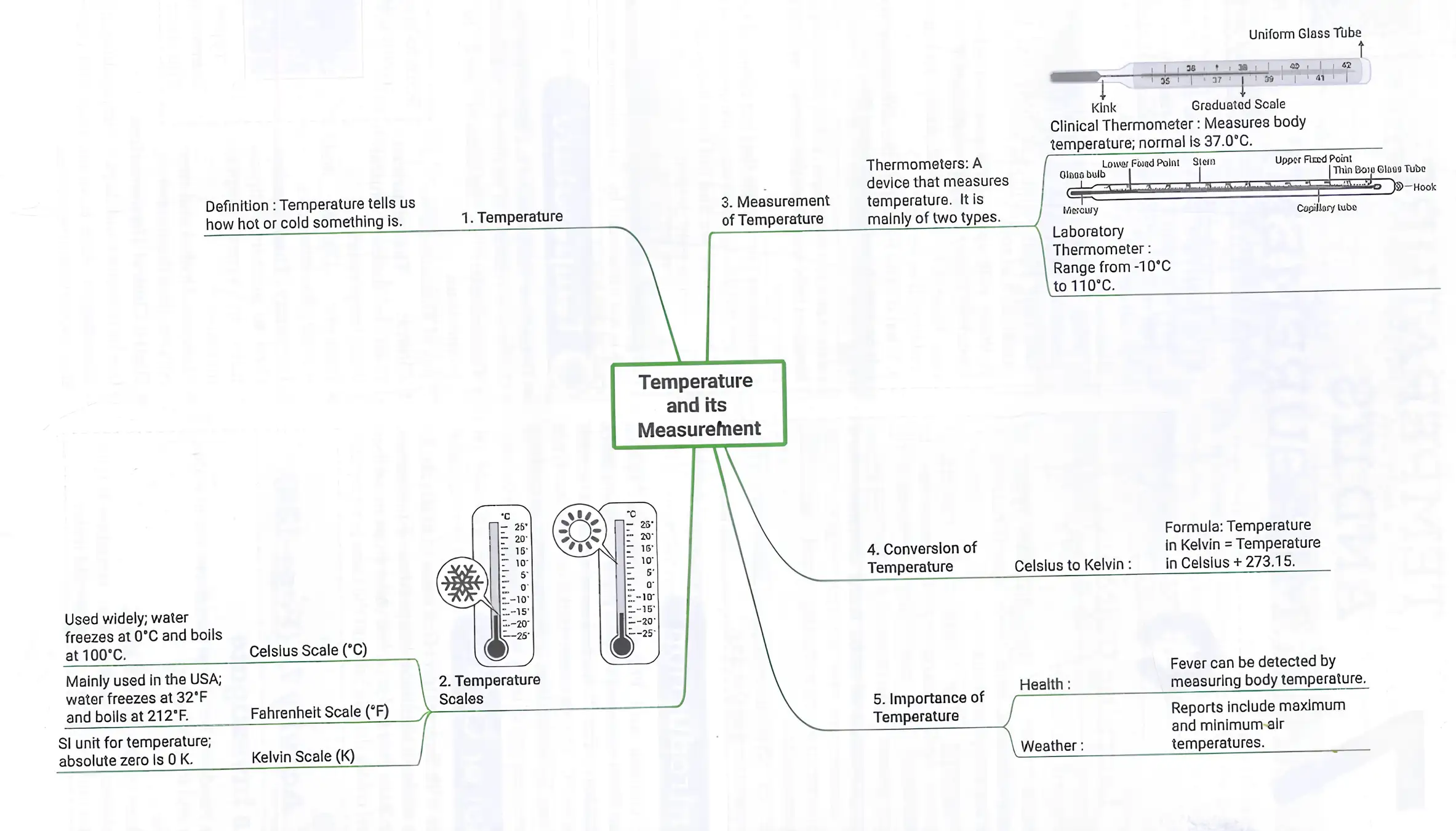
Temperature is a measure of how hot or cold an object or substance is. It quantifies the degree of hotness or coldness and is an important physical property that affects many natural phenomena and daily activities.
Limitations of Sense of Touch
Our sense of touch can be misleading when determining temperature. For example, water from a tap and water from an earthen pot may feel different even if they are at the same temperature. This is because our skin perceives temperature relative to previous exposure, not the actual temperature.
Thermometers and Their Types
A thermometer is an instrument used to measure temperature accurately. There are different types of thermometers:
- Clinical Thermometers: Used to measure human body temperature, such as mercury and digital thermometers.
- Laboratory Thermometers: Used in scientific experiments to measure a wide range of temperatures, typically using mercury or alcohol.
Digital Thermometers
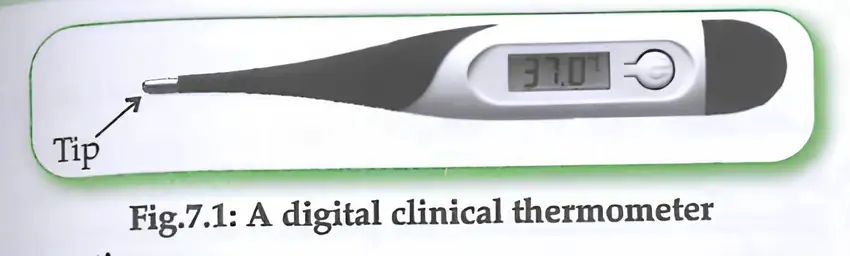
Digital clinical thermometers use heat sensors and display temperature readings digitally. They are more accurate, safer, and easier to read compared to mercury thermometers.
Precautions When Using Thermometers
- Clean the thermometer tip with soap and water before and after use.
- Avoid touching the tip with fingers to prevent contamination.
- Non-contact infrared thermometers can measure temperature from a distance, reducing the risk of disease transmission.
Measuring Body Temperature
Body temperature can be measured orally, under the armpit, or rectally. Digital thermometers are commonly used for convenience and accuracy. Normal body temperature averages around 37.0 °C but can vary slightly due to age, time of day, and activity level.
Temperature Scales
- Celsius (°C): Commonly used worldwide; water freezes at 0°C and boils at 100°C.
- Fahrenheit (°F): Used mainly in the United States; water freezes at 32°F and boils at 212°F.
- Kelvin (K): Used in scientific research; absolute zero is 0 K. Conversion: K = °C + 273.15.
Laboratory Thermometers
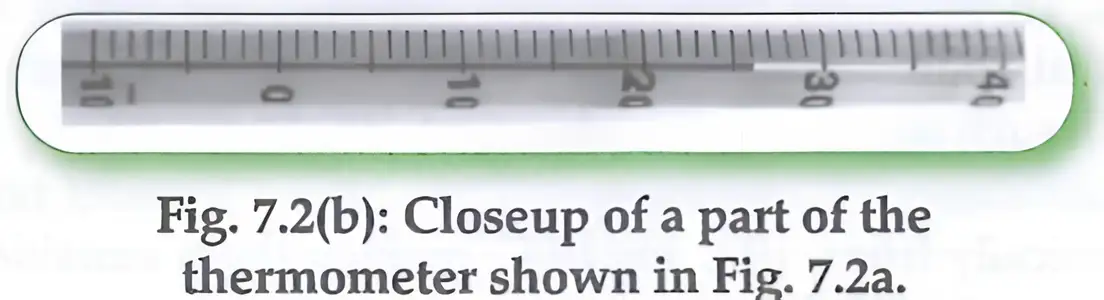
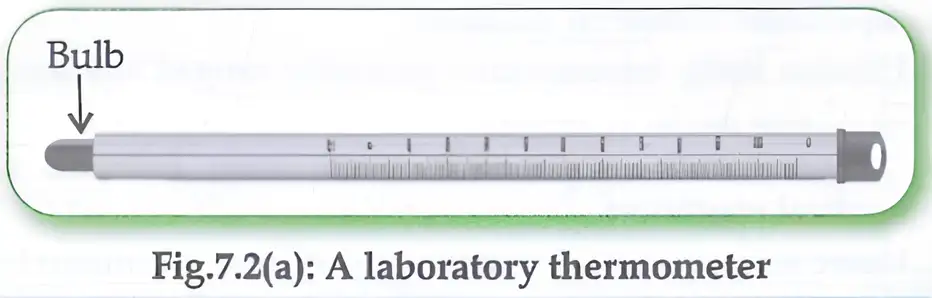
Laboratory thermometers are glass tubes with a bulb containing mercury or colored alcohol. The liquid expands or contracts with temperature changes, moving along a calibrated scale to indicate temperature. They measure temperatures typically from -10°C to 110°C.
Proper Use of Laboratory Thermometers
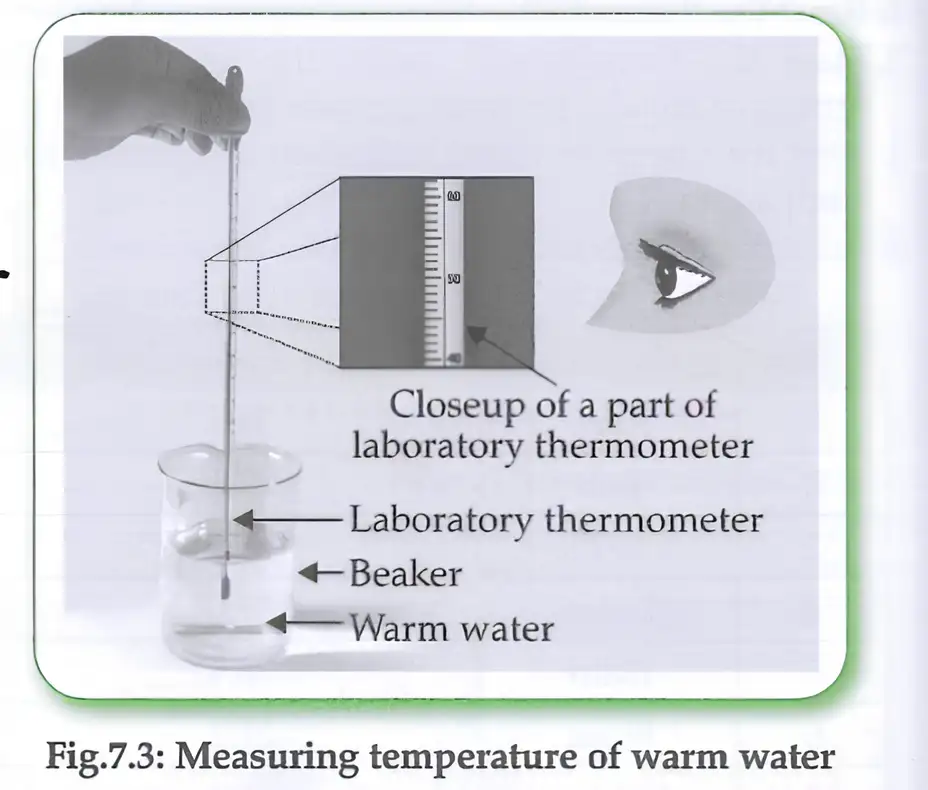
- Immerse the bulb in the substance without touching the container's sides or bottom.
- Hold the thermometer vertically and read the temperature at eye level.
- Note that the smallest temperature increment on typical laboratory thermometers is 1°C.
Air Temperature Measurement
Room thermometers measure ambient air temperature. Weather reports provide daily maximum and minimum temperatures, which vary due to seasonal and environmental factors.
Solved Examples
Example 1: Convert 25°C to Kelvin.
Solution:
Using the formula: Temperature in Kelvin = Temperature in Celsius + 273.15
25 + 273.15 = 298.15 K
Therefore, 25°C = 298.15 K.
Example 2: A clinical thermometer shows a body temperature of 99.5°F. Convert this to Celsius.
Solution:
Using the formula: °C = (°F - 32) × 5/9
(99.5 - 32) × 5/9 = 67.5 × 5/9 = 37.5°C
Therefore, 99.5°F = 37.5°C.
Example 3: A laboratory thermometer reads -5°C. Is this within its measuring range?
Solution:
Laboratory thermometers typically measure from -10°C to 110°C.
-5°C lies within this range, so the thermometer can measure this temperature.
Practice Set
- Level 1 (Easy): What is temperature a measure of?
- Level 1 (Easy): Name two types of thermometers and their uses.
- Level 2 (Moderate): Explain why the sense of touch is not reliable for measuring temperature.
- Level 3 (Challenging): Convert 310 K to Celsius and Fahrenheit.
Answer Key
- Level 1: Temperature measures the degree of hotness or coldness of an object or substance.
- Level 1: Clinical thermometers measure body temperature; laboratory thermometers measure temperatures in experiments.
- Level 2: The sense of touch is relative and influenced by previous exposure, so it can misinterpret actual temperature.
- Level 3: Celsius = 310 - 273.15 = 36.85°C; Fahrenheit = (36.85 × 9/5) + 32 = 98.33°F.
Quick Reference Table
- Temperature: Measure of hotness or coldness.
- Thermometer Types: Clinical (body temperature), Laboratory (experiments).
- Temperature Scales: Celsius (°C), Fahrenheit (°F), Kelvin (K).
- Conversion: K = °C + 273.15; °C = (°F - 32) × 5/9.
- Normal Body Temperature: Approximately 37.0 °C or 98.6 °F.
- Laboratory Thermometer Range: -10°C to 110°C.
Common Mistakes and Misconceptions
- Assuming the sense of touch accurately measures temperature.
- Confusing temperature scales and units.
- Using laboratory thermometers for body temperature measurement.
- Reading thermometer scale incorrectly by not viewing at eye level.
Glossary
- Temperature: Degree of hotness or coldness of a substance.
- Thermometer: Instrument to measure temperature.
- Clinical Thermometer: Thermometer used to measure human body temperature.
- Laboratory Thermometer: Thermometer used in scientific experiments.
- Celsius Scale: Temperature scale with water freezing at 0°C and boiling at 100°C.
- Fahrenheit Scale: Temperature scale with water freezing at 32°F and boiling at 212°F.
- Kelvin Scale: Absolute temperature scale used in science.