CLASS 6 . SCIENCE . CURIOSITY . NATURE S-TREASURES
Chapter 11 : NATURE’S TREASURES
Ch 11
SCIENCE
CLASS 6
Air
Importance of Air
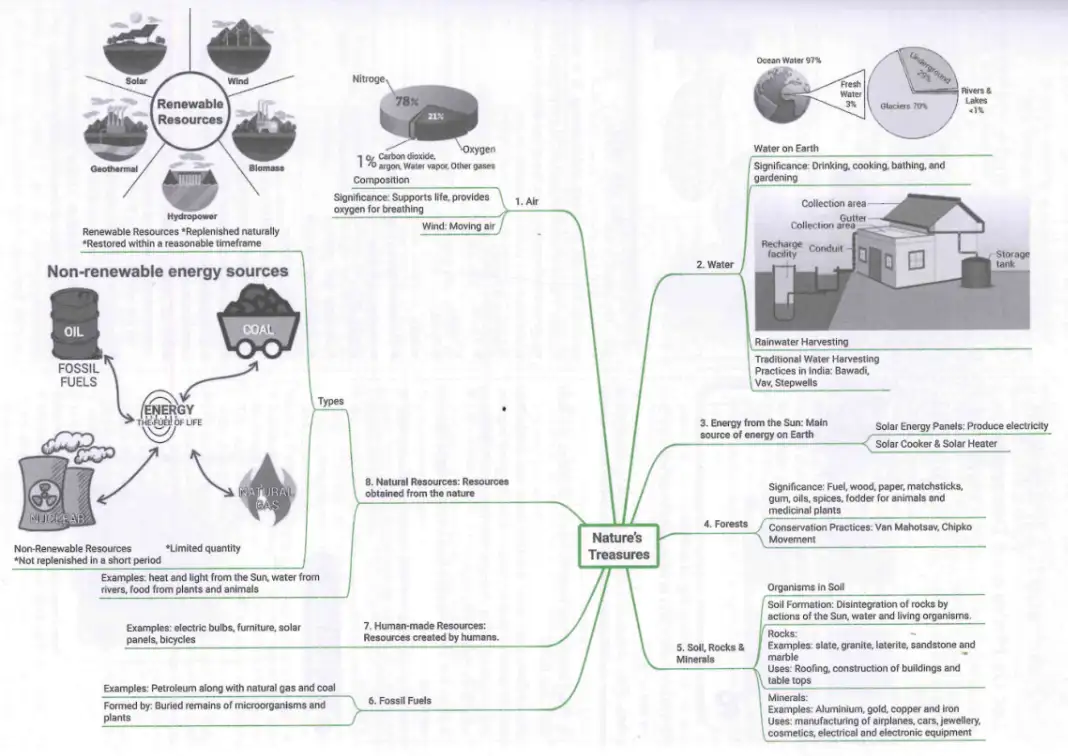
Air is the invisible mixture of gases that surrounds the Earth. It is essential for the survival of all living beings as it contains oxygen, which is necessary for respiration.
Composition of Air
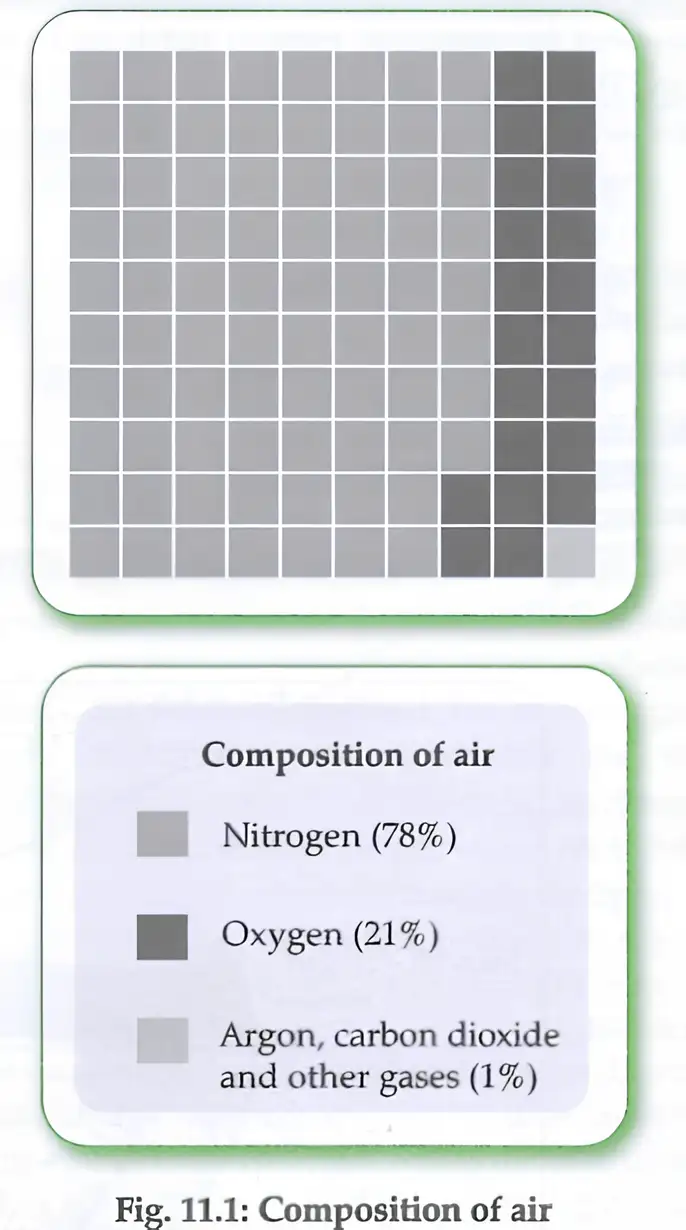
Air is a mixture of several gases. The major components are nitrogen (about 78%), oxygen (about 21%), and small amounts of argon, carbon dioxide, and other gases (about 1%).
Role of Air in Daily Life
Fresh air is vital for healthy lungs and overall well-being. It supports combustion, helps in pollination, and is involved in various natural processes.
Solved Examples
Example 1: What percentage of oxygen is present in the air we breathe?
Solution: Air contains approximately 21% oxygen by volume.
Example 2: Why is nitrogen present in large amounts in the air?
Solution: Nitrogen is inert and does not easily react with other substances, making it a stable component that dilutes oxygen and prevents rapid burning.
Practice Set
- Level 1: What is the main gas present in air?
- Level 2: Explain why oxygen is essential for living organisms.
- Level 3: Describe the composition of air and its significance.
Answer Key
- Level 1: Nitrogen is the main gas present in air.
- Level 2: Oxygen is essential because it is required for respiration, which releases energy for bodily functions.
- Level 3: Air is composed mainly of nitrogen (78%), oxygen (21%), and other gases (1%). This composition supports life, combustion, and various natural processes.
Water
Importance of Water
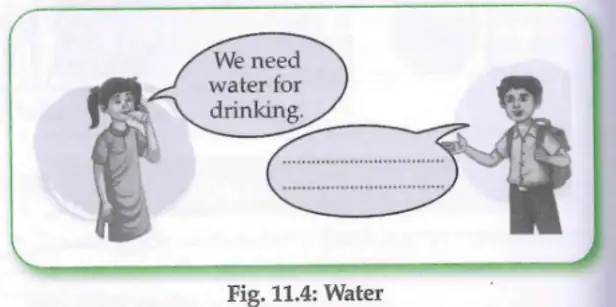
Water is essential for all living organisms. It is used for drinking, cooking, cleaning, agriculture, and industrial purposes.
Sources of Water
Water is found in rivers, lakes, ponds, rain, groundwater, oceans, glaciers, and reservoirs.
Availability and Conservation
Although water covers about two-thirds of the Earth's surface, most of it is saline and not suitable for drinking or agriculture. Freshwater is limited and must be conserved through methods like rainwater harvesting and efficient usage.
Solved Examples
Example 1: Name two sources of freshwater.
Solution: Rivers and lakes are two sources of freshwater.
Example 2: Why is it important to conserve water?
Solution: Freshwater is limited and essential for life; conserving it ensures availability for future generations and reduces environmental impact.
Practice Set
- Level 1: List three sources of water.
- Level 2: Explain why ocean water is not suitable for drinking.
- Level 3: Describe two methods to conserve water at home.
Answer Key
- Level 1: Rivers, lakes, and rain are sources of water.
- Level 2: Ocean water is saline (salty) and not suitable for drinking or irrigation.
- Level 3: Methods include turning off taps when not in use and collecting rainwater for reuse.
Energy from the Sun
Role of the Sun
The Sun provides heat and light essential for life on Earth. It drives processes like photosynthesis in plants and influences weather and climate.
Uses of Sunlight
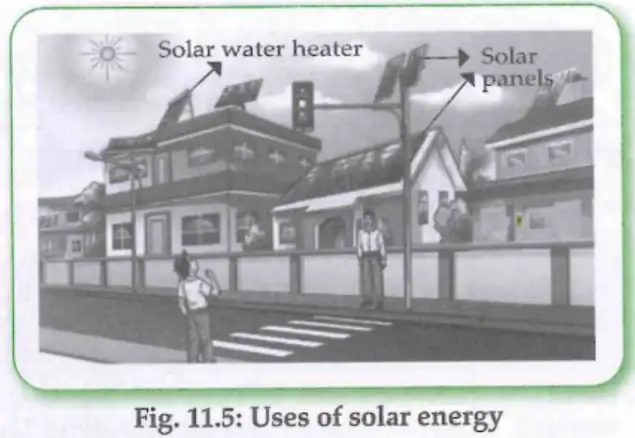
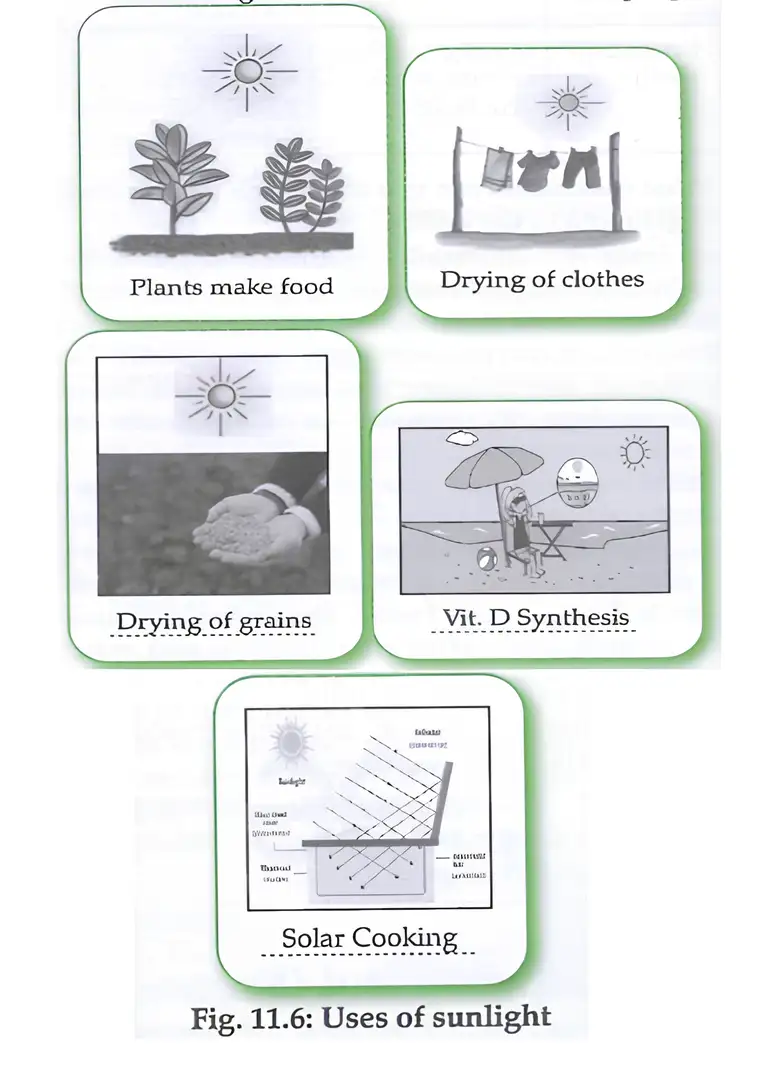
Sunlight is used for drying clothes and grains, cooking food using solar cookers, heating water, generating electricity through solar panels, and enabling plants to make food.
Photosynthesis
Plants use sunlight to convert carbon dioxide and water into food (glucose) and oxygen, a process called photosynthesis.
Solved Examples
Example 1: How do solar panels use sunlight?
Solution: Solar panels convert sunlight into electrical energy that can be used to power homes and devices.
Example 2: Why is sunlight important for plants?
Solution: Sunlight provides the energy plants need to perform photosynthesis and produce food.
Practice Set
- Level 1: Name two uses of sunlight in daily life.
- Level 2: Explain the process of photosynthesis in brief.
- Level 3: Describe how solar energy can be harnessed to generate electricity.
Answer Key
- Level 1: Drying clothes and cooking food using solar cookers.
- Level 2: Plants use sunlight to convert carbon dioxide and water into food and oxygen.
- Level 3: Solar panels capture sunlight and convert it into electricity through photovoltaic cells.
Forests
Importance of Forests
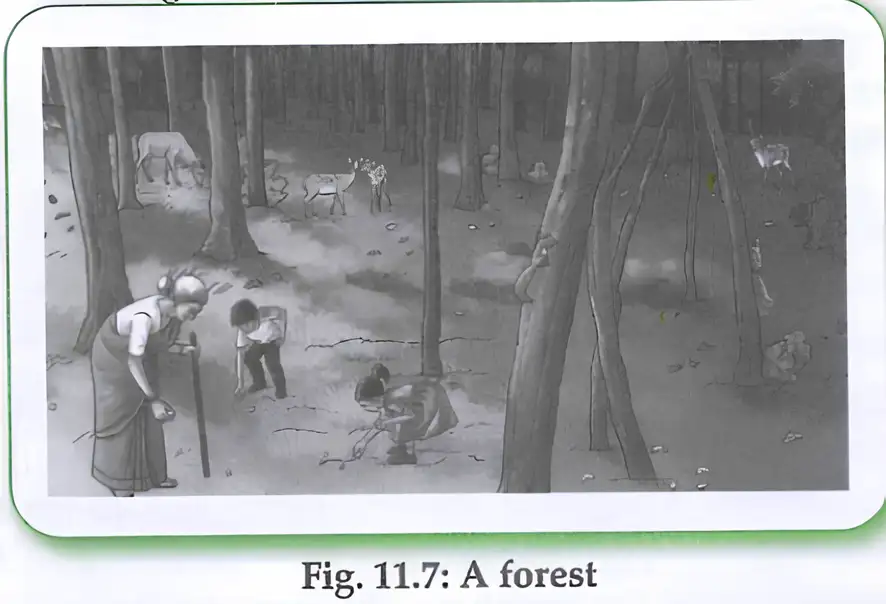
Forests provide habitat, food, and shelter to many animals and plants. They help maintain ecological balance and prevent soil erosion.
Forest Conservation
Human activities like deforestation reduce forest cover. Movements like the Chipko movement promote protecting trees by hugging them to prevent cutting.
Products from Forests
Forests provide timber, medicinal plants, resins, gums, fruits, nuts, and support biodiversity.
Solved Examples
Example 1: What is the Chipko movement?
Solution: A movement where people hugged trees to protect them from being cut down.
Example 2: Name two products obtained from forests.
Solution: Timber and medicinal plants.
Practice Set
- Level 1: Why are forests important for animals?
- Level 2: Explain how forests help prevent soil erosion.
- Level 3: Describe the significance of the Chipko movement.
Answer Key
- Level 1: Forests provide food and shelter to animals.
- Level 2: Tree roots hold soil together, preventing it from being washed away by rain.
- Level 3: The Chipko movement raised awareness about forest conservation by physically protecting trees from being cut.
Soil, Rocks and Minerals
Formation of Soil
Soil forms from the weathering of rocks and the decay of organic matter over thousands of years.
Components of Soil
Soil contains sand, clay, organic matter, earthworms, insects, and microorganisms.
Types and Uses of Rocks
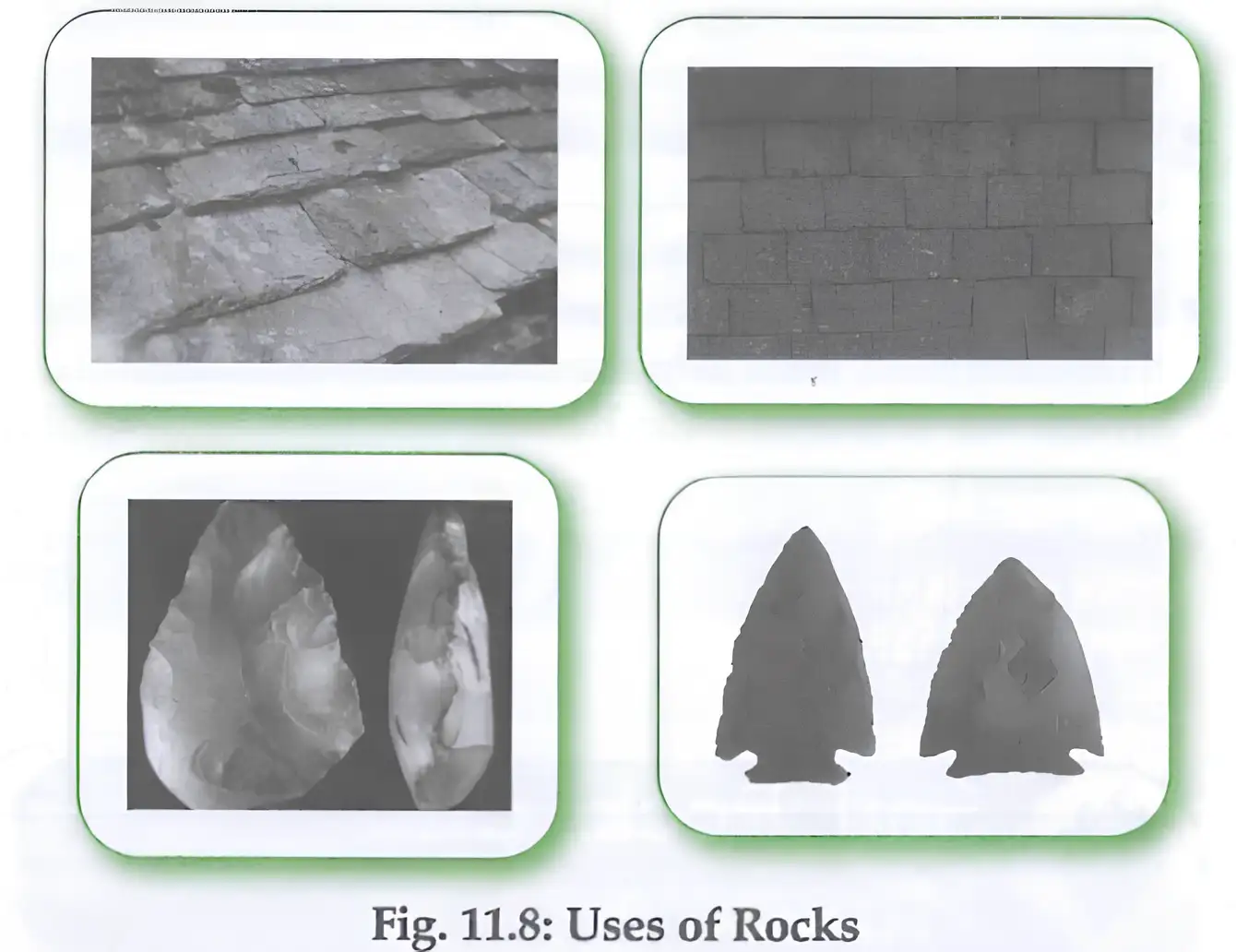
Rocks like granite, sandstone, marble, slate, and laterite are used in construction, flooring, roofing, and making tools.
Minerals
Minerals extracted from rocks are used in manufacturing metals, electronics, and jewelry.
Solved Examples
Example 1: What is soil made of?
Solution: Soil is made of rock particles, organic matter, air, water, and living organisms.
Example 2: Name two uses of rocks.
Solution: Rocks are used for building houses and making tools.
Practice Set
- Level 1: What are the main components of soil?
- Level 2: Explain how soil supports plant growth.
- Level 3: Describe the importance of minerals extracted from rocks.
Answer Key
- Level 1: Sand, clay, organic matter, air, water, and living organisms.
- Level 2: Soil provides nutrients, air, and water necessary for plant roots to grow.
- Level 3: Minerals are used in manufacturing metals, electronics, and other products essential for daily life.
Fossil Fuels
Definition and Formation
Fossil fuels are non-renewable energy sources formed from the remains of plants and animals over millions of years under high pressure and temperature.
Types and Uses
Petroleum, natural gas, and coal are common fossil fuels used for transportation, heating, electricity generation, and industrial processes.
Environmental Impact
Burning fossil fuels releases pollutants causing air pollution, climate change, and acid rain.
Alternatives
Electric vehicles, hybrid vehicles, public transport, cycling, and renewable energy sources help reduce fossil fuel consumption and pollution.
Solved Examples
Example 1: Name three fossil fuels.
Solution: Petroleum, natural gas, and coal.
Example 2: Why should we conserve fossil fuels?
Solution: They are non-renewable and their overuse causes environmental harm.
Practice Set
- Level 1: What are fossil fuels?
- Level 2: List two environmental problems caused by burning fossil fuels.
- Level 3: Suggest three ways to reduce fossil fuel consumption.
Answer Key
- Level 1: Fossil fuels are energy sources formed from ancient plant and animal remains.
- Level 2: Air pollution and climate change.
- Level 3: Use electric vehicles, promote public transport, and use renewable energy.
Natural Resources
Definition
Natural resources are materials obtained from nature that are essential for life and human activities.
Types
Natural resources can be renewable, like air, water, and forests, or non-renewable, like minerals, soil, and fossil fuels.
Human-Made Resources
Resources created by humans, such as electric bulbs, furniture, and bicycles, are made using natural resources.
Conservation
Using natural resources responsibly ensures their availability for future generations and maintains ecological balance.
Solved Examples
Example 1: What is a renewable resource?
Solution: A resource that can be replenished naturally within a short time.
Example 2: Give two examples of non-renewable resources.
Solution: Minerals and fossil fuels.
Practice Set
- Level 1: Define natural resources.
- Level 2: Differentiate between renewable and non-renewable resources.
- Level 3: Explain why conservation of natural resources is important.
Answer Key
- Level 1: Materials obtained from nature used to meet human needs.
- Level 2: Renewable resources replenish naturally; non-renewable do not replenish quickly.
- Level 3: Conservation ensures resources last for future use and maintains environmental balance.
Quick Reference Table
Air: A mixture of gases including nitrogen (78%), oxygen (21%), and other gases (1%) essential for life.
Water: Covers about two-thirds of Earth; freshwater is limited and vital for drinking, agriculture, and industry.
Energy from the Sun: Provides heat and light; drives photosynthesis and renewable energy technologies like solar panels.
Forests: Provide habitat, prevent soil erosion, and supply timber, medicinal plants, and other products.
Soil, Rocks and Minerals: Soil forms from weathered rocks and organic matter; rocks are used in construction; minerals are extracted for various uses.
Fossil Fuels: Non-renewable energy sources formed from ancient organic matter; include petroleum, coal, and natural gas.
Natural Resources: Materials from nature, renewable (air, water, forests) or non-renewable (minerals, fossil fuels); conservation is essential.
Common Mistakes and Misconceptions
Confusing Air Composition: Mistaking oxygen as the main component of air instead of nitrogen.
Water Usage: Assuming all water on Earth is usable; overlooking the difference between saline and freshwater.
Sunlight Energy: Believing solar energy is only for heating, not understanding its role in electricity generation and photosynthesis.
Forest Products: Thinking forests only provide timber, ignoring medicinal plants and biodiversity.
Soil and Rocks: Overlooking the role of organic matter and microorganisms in soil fertility.
Fossil Fuels: Underestimating environmental impacts of burning fossil fuels and the importance of alternatives.
Natural Resources: Confusing renewable and non-renewable resources or neglecting the need for conservation.
Glossary
Air: The invisible mixture of gases surrounding Earth, essential for respiration.
Water: A vital liquid resource necessary for life, agriculture, and industry.
Energy from the Sun: The source of heat and light that sustains life and powers renewable energy.
Forests: Large areas covered with trees and wildlife, important for ecological balance.
Soil: The upper layer of Earth’s surface composed of minerals, organic matter, air, and water, supporting plant life.
Rocks: Solid mineral materials forming Earth’s crust, used in construction and tools.
Minerals: Naturally occurring substances extracted from rocks, used in manufacturing and technology.
Fossil Fuels: Energy sources formed from ancient organic matter, including coal, petroleum, and natural gas.
Natural Resources: Materials obtained from nature, classified as renewable or non-renewable.
Renewable Resources: Resources that replenish naturally within a short time, such as air, water, and forests.
Non-renewable Resources: Resources that do not replenish quickly, like minerals and fossil fuels.
Photosynthesis: The process by which plants use sunlight to make food from carbon dioxide and water.
Chipko Movement: A forest conservation movement where people hugged trees to prevent cutting.
Rainwater Harvesting: Collecting and storing rainwater for future use to conserve water resources.
Solar Panels: Devices that convert sunlight into electrical energy.