CLASS 6 . SCIENCE . CURIOSITY . MINDFUL EATING-A-PATH-TO-A-HEALTHY-BODY
Chapter 3 : MINDFUL EATING: A PATH TO A HEALTHY BODY
Ch 3
SCIENCE
CLASS 6
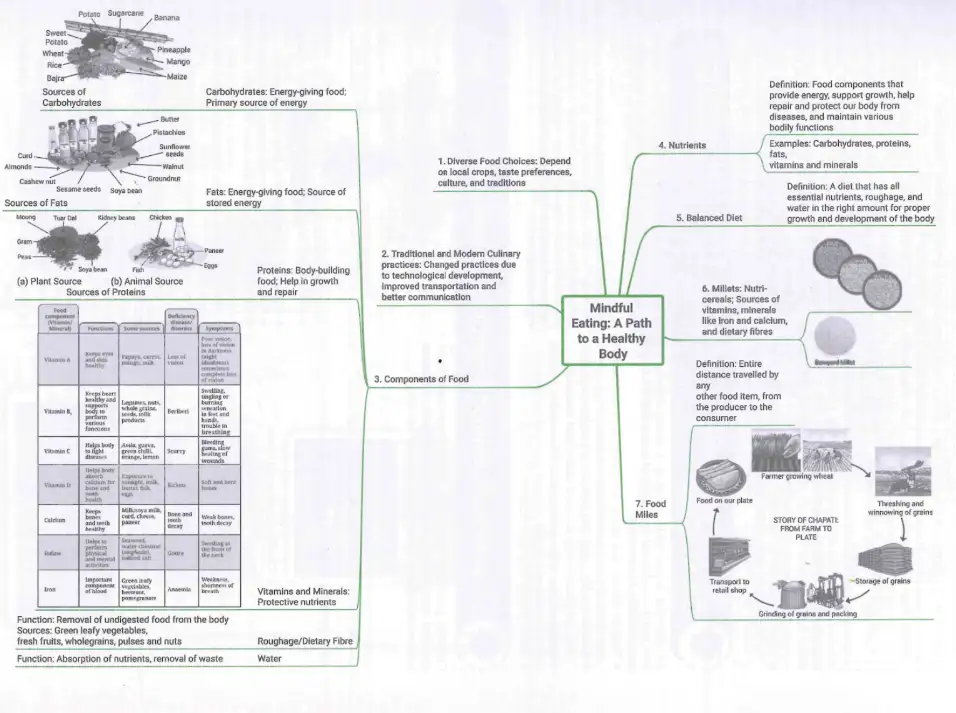
Mindful Eating
Importance of Food
Food is essential for the life of a living being. We eat food every day for the growth and maintenance of our body. It provides energy and nutrients necessary for various bodily functions.
Diversity in Food
Food habits vary across different regions and cultures. In India, each state has its own regional cuisine influenced by local agriculture, climate, and cultural practices. For example, North Indian diets are rich in wheat and dairy products, while South Indian diets include more rice and coconut-based dishes.
Food Sources and Nutrients
Food contains carbohydrates, fats, proteins, vitamins, minerals, dietary fibres, and water. Carbohydrates provide energy, fats store energy and maintain body warmth, proteins help in growth and repair, vitamins and minerals protect the body, fibres aid digestion, and water is essential for all bodily functions.
Cooking Practices
Traditional cooking methods include using a chulha (clay stove) and sil-batta (stone grinder), which are labor-intensive but believed to enhance flavor. Modern cooking uses gas stoves and electrical grinders, offering convenience and speed.

Food Journey
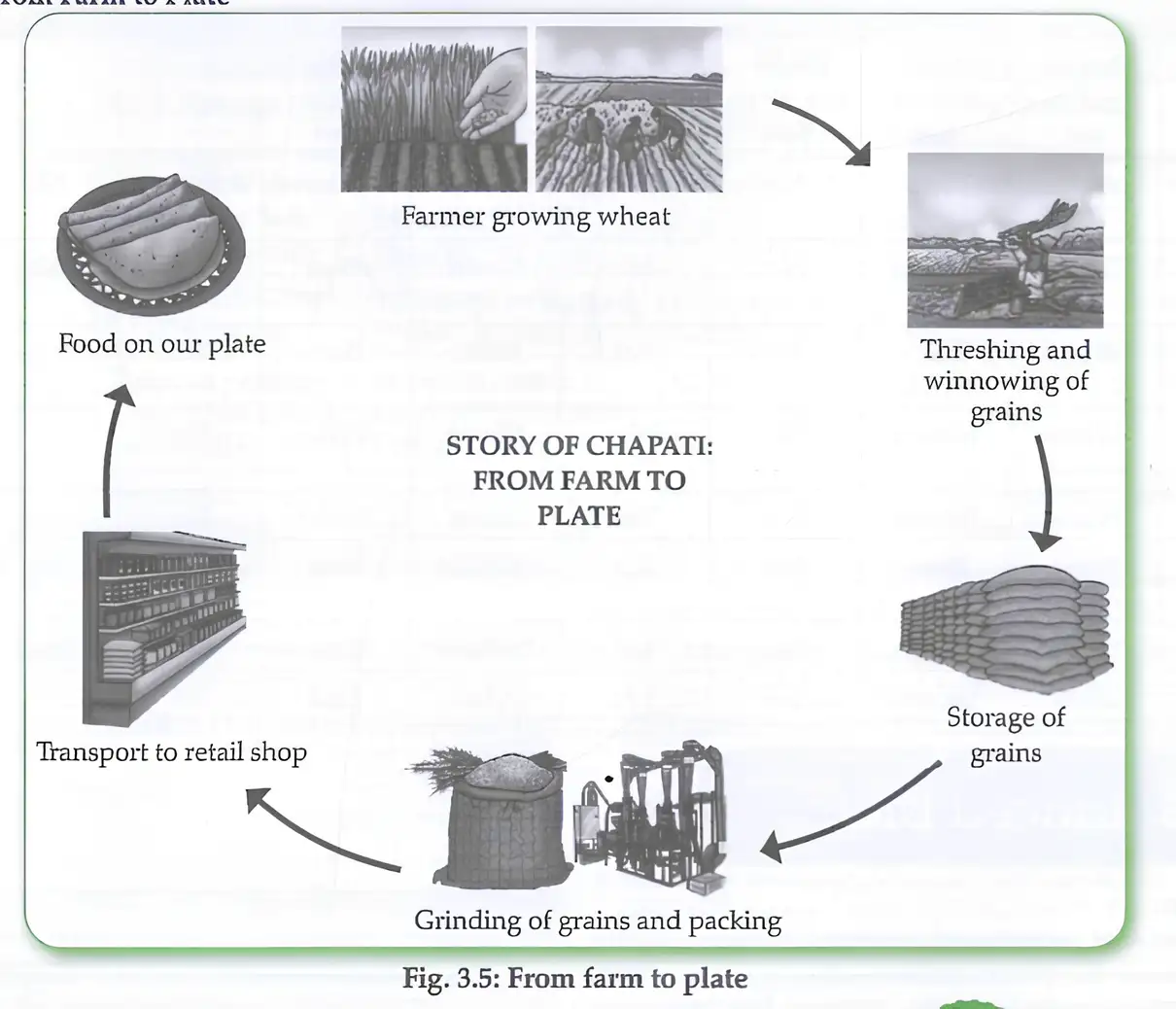
The journey of food from farm to plate involves farming, harvesting, storage, grinding and packing, transport, and consumption. Reducing food miles helps lower costs, reduce pollution, support local farmers, and keep food fresher.
Balanced Diet
A balanced diet includes all essential nutrients in the right amounts for proper growth and development. Nutritional needs vary by age, gender, activity, and health status. Including a variety of food groups ensures a balanced intake.
Solved Examples
Example 1: Identifying Food Sources
Question: Name three food items that provide carbohydrates.
Solution: Common sources of carbohydrates include rice, wheat, and potatoes. These foods provide energy for daily activities.
Example 2: Regional Food Influence
Question: How do local crops influence traditional food habits in Punjab and Tamil Nadu?
Solution: In Punjab, wheat and maize are staple crops, leading to dishes like makki di roti and parantha. In Tamil Nadu, rice and coconut are widely grown, influencing dishes such as idli and dosa.
Example 3: Cooking Methods Comparison
Question: Compare traditional and modern cooking methods in terms of nutrition and convenience.
Solution: Traditional methods like chulha and sil-batta enhance flavor and are natural but require more effort and time. Modern methods like gas stoves and electrical grinders are faster and convenient but may alter taste and depend on electricity.
Practice Set
- Level 1 – Easy: List three sources of carbohydrates commonly found in your diet.
- Level 2 – Moderate: Explain how regional crops influence traditional food habits in two different states.
- Level 3 – Challenging: Discuss the advantages and disadvantages of traditional versus modern cooking methods in terms of nutrition and convenience.
Answer Key
- Level 1: Sources of carbohydrates include rice, wheat, potatoes, and bananas.
- Level 2: In Punjab, wheat and maize are staple crops, leading to dishes like makki di roti. In Tamil Nadu, rice and coconut are widely grown, influencing dishes like idli and dosa.
- Level 3: Traditional methods like chulha and sil-batta enhance flavor and are natural but are labor-intensive and time-consuming. Modern methods like gas stoves and electrical grinders are convenient and fast but may alter taste and require electricity.
Components of Food
Carbohydrates
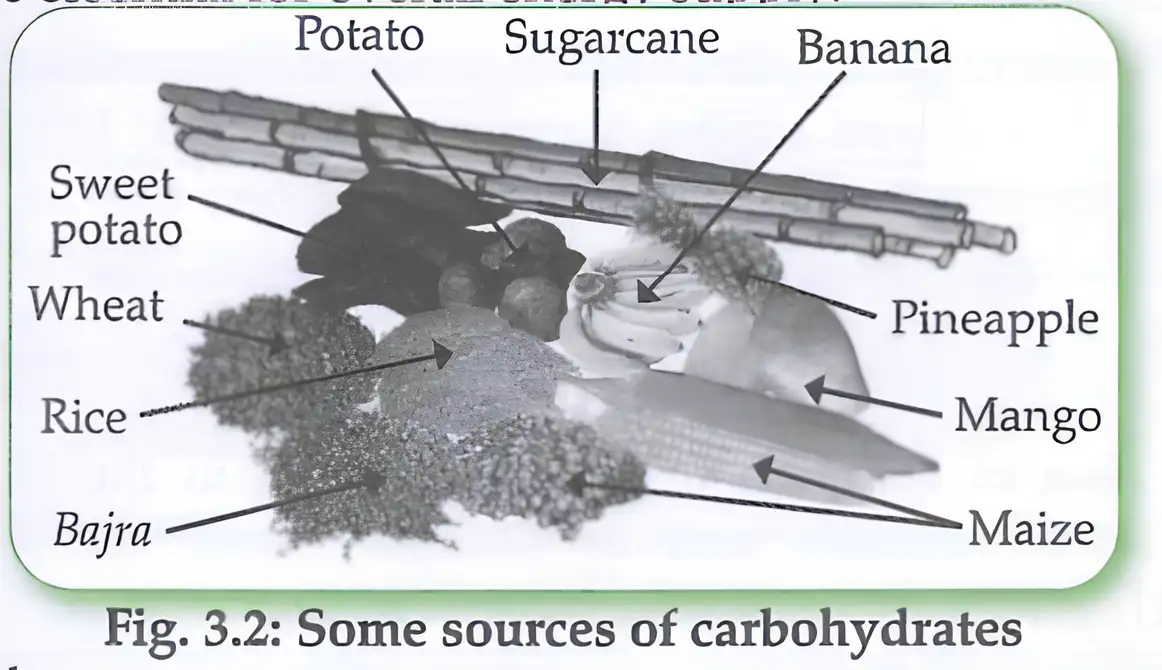
Carbohydrates are found in cereals such as wheat, rice, maize; vegetables like potatoes and sweet potatoes; and fruits such as bananas and mangoes. They are the primary source of energy for the body.
Fats
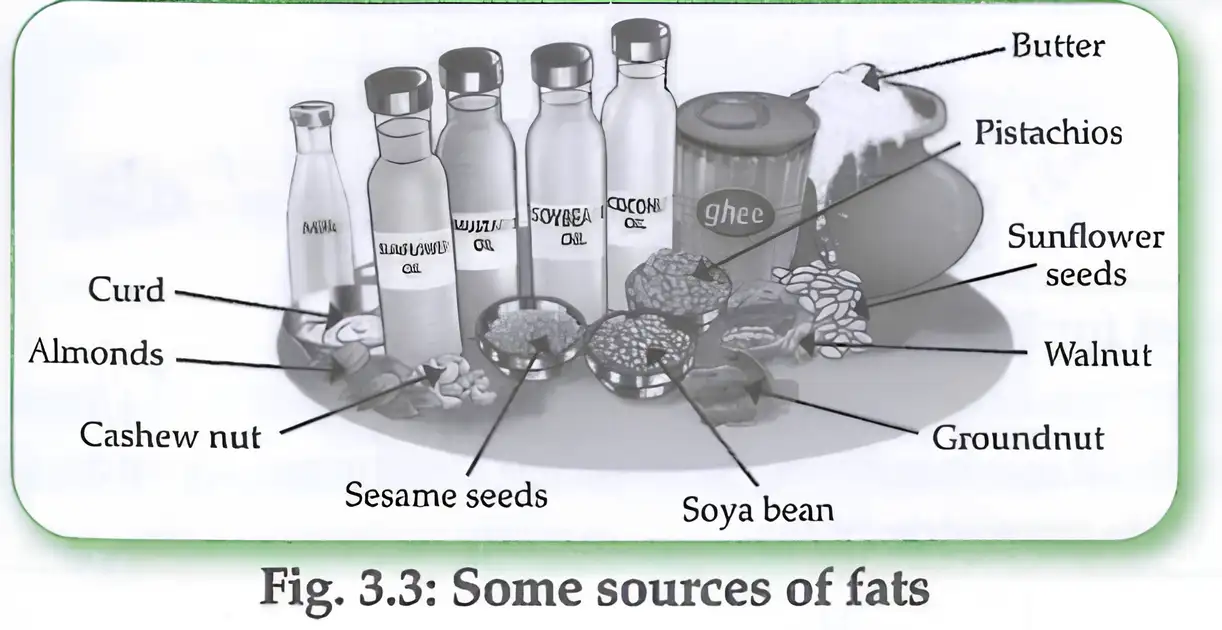
Fats are present in nuts, seeds, oils, ghee, butter, and dairy products. They provide stored energy and help maintain body warmth, especially in cold weather.
Proteins
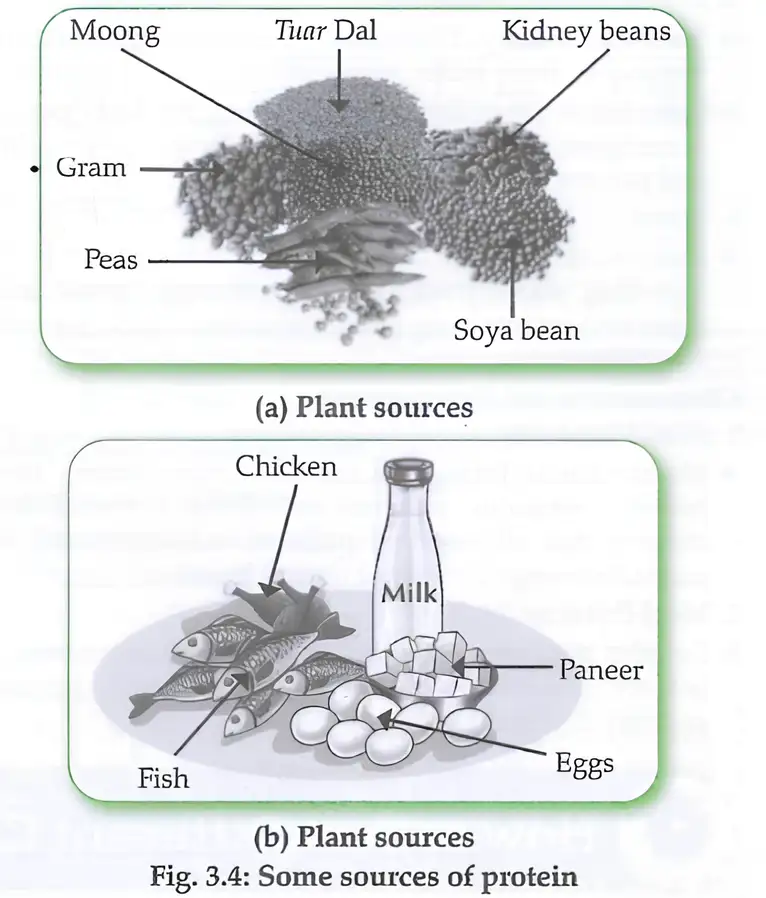
Proteins are found in animal products like milk, paneer, eggs, fish, meat, and plant sources such as pulses, beans, peas, and nuts. They are essential for growth, repair, and building muscles.
Vitamins and Minerals
These nutrients are found in fruits, vegetables, whole grains, and dairy products. They protect the body and help maintain health. For example, Vitamin C prevents scurvy.
Dietary Fibres (Roughage)
Fibres are present in green leafy vegetables, fresh fruits, whole grains, pulses, and nuts. They aid digestion and prevent constipation.
Water
Water is crucial for absorbing nutrients, removing waste, and maintaining hydration. It is essential for all bodily functions.
Solved Examples
Example 1: Carbohydrate and Protein Sources
Question: Name two food sources each for carbohydrates and proteins.
Solution: Carbohydrates can be found in rice and potatoes. Proteins are present in eggs and pulses.
Example 2: Role of Dietary Fibres
Question: Describe how dietary fibres aid digestion.
Solution: Dietary fibres help in smooth bowel movements by facilitating the removal of undigested food, preventing constipation and promoting digestive health.
Example 3: Vitamin Deficiency Effects
Question: Explain the effects of vitamin deficiency with an example.
Solution: Lack of Vitamin C causes scurvy, characterized by bleeding gums and weakness. Vitamins are essential for preventing such deficiency diseases.
Practice Set
- Level 1 – Easy: Name two food sources each for carbohydrates and proteins.
- Level 2 – Moderate: Describe the role of dietary fibres in digestion.
- Level 3 – Challenging: Explain the effects of vitamin deficiency with examples.
Answer Key
- Level 1: Carbohydrates: rice, potatoes; Proteins: eggs, pulses.
- Level 2: Dietary fibres help in smooth bowel movements by aiding the removal of undigested food, preventing constipation.
- Level 3: Vitamin deficiency can cause diseases; for example, lack of Vitamin C causes scurvy, characterized by bleeding gums and weakness.
Food Testing
Test for Starch
Use iodine solution on the food item. A blue-black color indicates the presence of starch.
Test for Fats
Place the food item on paper and press it. An oily patch indicates the presence of fat.
Test for Proteins
Make a paste of the food item, add water, copper sulphate solution, and caustic soda solution. A violet color indicates the presence of protein.
Solved Examples
Example 1: Testing for Starch
Question: What indicates the presence of starch when iodine solution is added?
Solution: A blue-black color appears when iodine solution is added to a food item containing starch.
Example 2: Testing for Fats
Question: How can you test for fats in a food sample?
Solution: Press the food item on paper; an oily patch on the paper indicates the presence of fat.
Example 3: Testing for Proteins
Question: Describe the procedure to test for proteins in a food item.
Solution: Make a paste of the food, add water, copper sulphate solution, and caustic soda solution. A violet color indicates the presence of protein.
Practice Set
- Level 1 – Easy: What color change indicates the presence of starch when iodine is added?
- Level 2 – Moderate: How can you test for fats in a food sample?
- Level 3 – Challenging: Describe the procedure to test for proteins in a food item.
Answer Key
- Level 1: Blue-black color indicates starch presence.
- Level 2: Press the food on paper; an oily patch shows fat presence.
- Level 3: Make a paste of the food, add water, copper sulphate, and caustic soda; violet color indicates protein.
Balanced Diet
Definition and Importance
A balanced diet contains all essential nutrients in proper amounts for good health, growth, and development. It includes carbohydrates, proteins, fats, vitamins, minerals, fibres, and water.
Nutritional Requirements
Requirements vary by age, gender, physical activity, and health. Children, adults, and elderly have different needs. Athletes require more energy and proteins.
Dietary Adjustments
To maintain a balanced diet, include a variety of food groups such as fruits, vegetables, grains, proteins, and healthy fats. Avoid excessive junk food which is high in calories but low in nutrients.
Millets
Millets like jowar, bajra, ragi, and sanwa are nutritious cereals rich in vitamins, minerals, and fibres, contributing to a balanced diet.
Food Fortification and Safety
Some foods are fortified with additional nutrients, like iodised salt, to improve nutritional quality. Food safety is regulated to ensure quality and health benefits.
Solved Examples
Example 1: Definition of Balanced Diet
Question: What is a balanced diet?
Solution: A balanced diet contains all essential nutrients in proper amounts for good health, growth, and development.
Example 2: Importance of Millets
Question: Why is it important to include millets in the diet?
Solution: Millets are rich in vitamins, minerals, and dietary fibres, which support overall health and nutrition.
Example 3: Impact of Junk Food
Question: Discuss the impact of junk food on health.
Solution: Junk food is high in calories, sugar, and fats but low in nutrients. Regular consumption can lead to obesity and related health problems.
Practice Set
- Level 1 – Easy: What is a balanced diet?
- Level 2 – Moderate: Why is it important to include millets in the diet?
- Level 3 – Challenging: Discuss the impact of junk food on health.
Answer Key
- Level 1: A diet containing all essential nutrients in proper amounts for good health.
- Level 2: Millets are rich in vitamins, minerals, and fibres, supporting overall health and nutrition.
- Level 3: Junk food is high in calories, sugar, and fats but low in nutrients, leading to obesity and health problems if consumed regularly.
Quick Reference Table
Mindful Eating Quick Reference
- Food Components: Carbohydrates, fats, proteins, vitamins, minerals, dietary fibres, and water.
- Regional Food Diversity: Influenced by local crops, climate, and culture.
- Cooking Methods: Traditional (chulha, sil-batta) and modern (gas stove, electrical grinder).
- Food Journey: Farming, harvesting, storage, processing, transport, consumption.
- Balanced Diet: Includes all essential nutrients in proper amounts.
- Millets: Nutritious cereals rich in vitamins, minerals, and fibres.
- Food Testing: Iodine test for starch, oily patch for fats, copper sulphate and caustic soda test for proteins.
- Food Fortification: Adding nutrients like iodine to salt to improve health.
Common Mistakes and Misconceptions
Common Mistakes
- Confusing sources of nutrients, e.g., mixing up carbohydrates and proteins.
- Assuming all fats are unhealthy; some fats are essential for body functions.
- Neglecting the importance of dietary fibres in digestion.
- Believing that modern cooking methods always preserve more nutrients; some nutrients may be lost.
- Ignoring the role of water in nutrient absorption and waste removal.
- Overlooking the impact of food miles on freshness and environment.
- Misunderstanding the concept of a balanced diet as eating only one type of food.
Misconceptions
- Junk food is tasty but not always unhealthy if eaten occasionally.
- Traditional cooking methods are always better than modern methods.
- All vitamins and minerals can be obtained from supplements instead of food.
- Food fortification is unnecessary if diet is balanced.
- Eating more food always means better nutrition.
Glossary
- Balanced Diet: A diet containing all essential nutrients in proper amounts for good health.
- Carbohydrates: Nutrients found in cereals, vegetables, and fruits that provide energy.
- Dietary Fibres (Roughage): Plant-based fibers that aid digestion and prevent constipation.
- Fats: Nutrients that provide stored energy and help maintain body warmth.
- Food Miles: The distance food travels from the farm to the consumer's plate.
- Fortification: The process of adding essential nutrients to food to improve its nutritional value.
- Junk Food: Foods high in calories, sugar, and fats but low in nutritional value.
- Millets: Nutritious small grains rich in vitamins, minerals, and dietary fibres.
- Nutrients: Substances in food that provide energy and support bodily functions.
- Proteins: Nutrients essential for growth, repair, and building muscles, found in animal and plant sources.
- Vitamins and Minerals: Protective nutrients that help maintain health and prevent diseases.
- Water: Essential for absorbing nutrients, removing waste, and maintaining hydration.