CLASS 6 . SCIENCE . CURIOSITY . MATERIALS AROUND-US
Chapter 6 : MATERIALS AROUND US
Ch 6
SCIENCE
CLASS 6
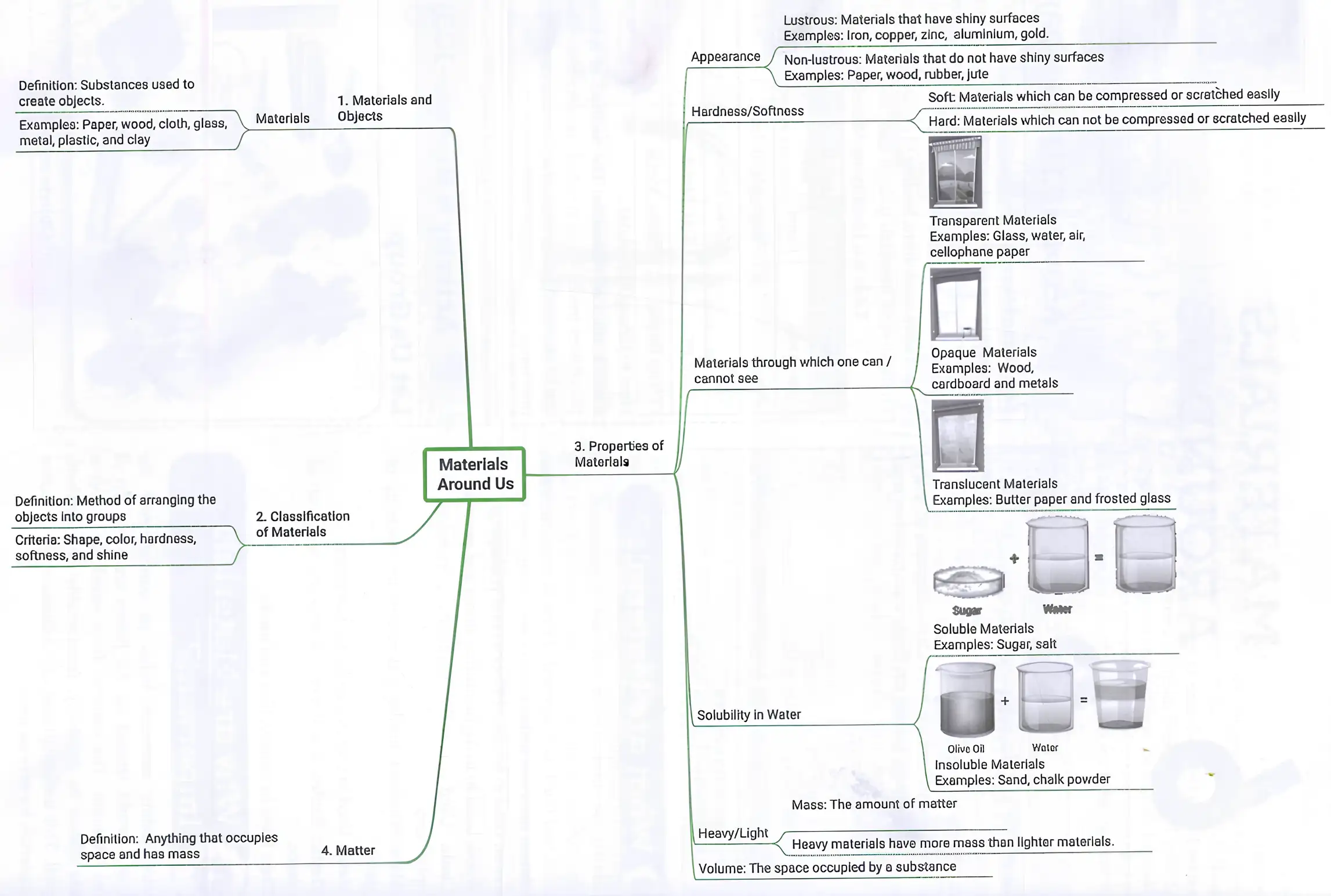
Materials
Definition and Examples
Materials are substances or mixtures of substances that make up objects in our everyday environment. Everything we see and touch is composed of one or more materials.
Common materials include paper, wood, cloth, glass, metal, plastic, and clay. Each material has specific uses such as paper in books and packaging, wood in furniture and pencils, cloth in garments and curtains, glass in windows and bottles, metal in utensils and tools, plastic in containers and toys, and clay in pottery and bricks.
Importance of Materials
Understanding materials helps us comprehend the physical world around us. The material from which an object is made affects its durability, functionality, and appearance. This knowledge guides the selection of appropriate materials for different uses.
Classification of Materials
Classification is the method of arranging objects into groups based on common properties. Objects can be classified by shape, material, colour, hardness, softness, shine, and other properties.
Grouping Based on Shape
Objects can be grouped as spherical (e.g., cricket ball, marble), cylindrical (e.g., ruler, pen), or rectangular (e.g., books, notebook).
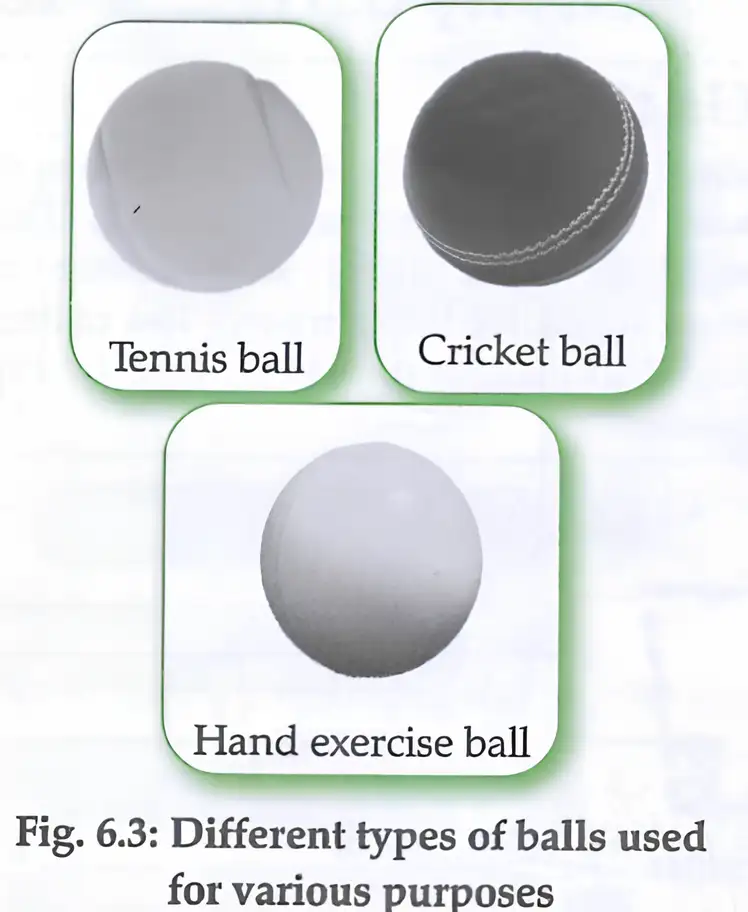
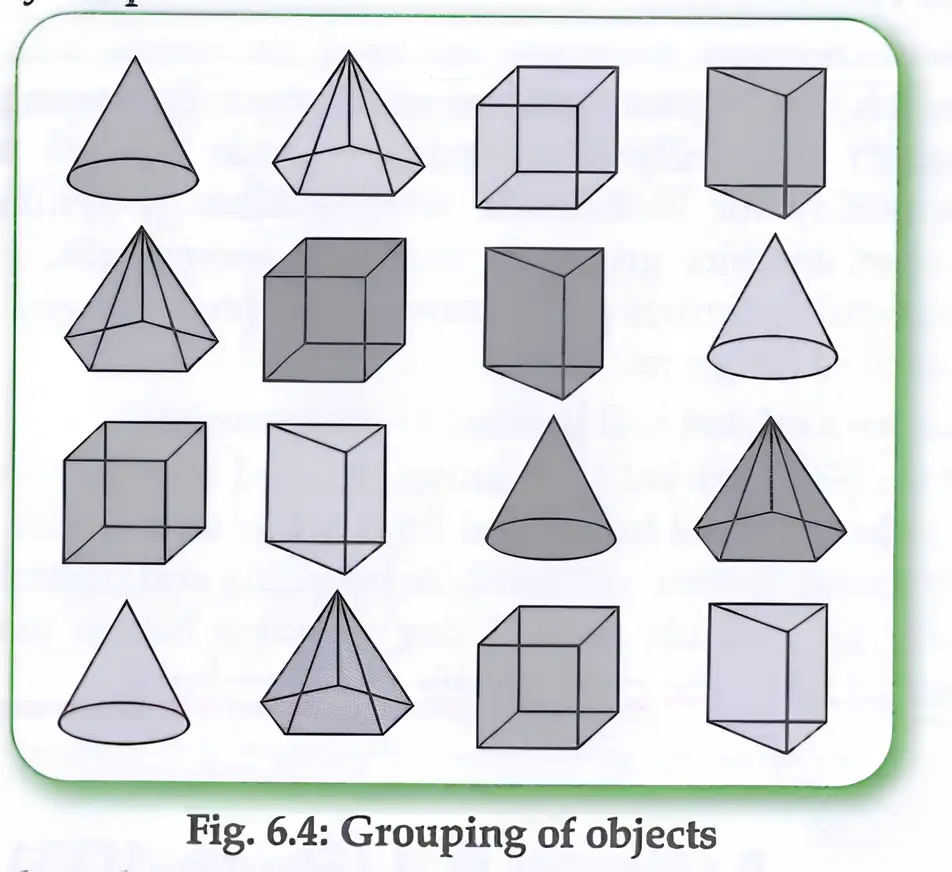
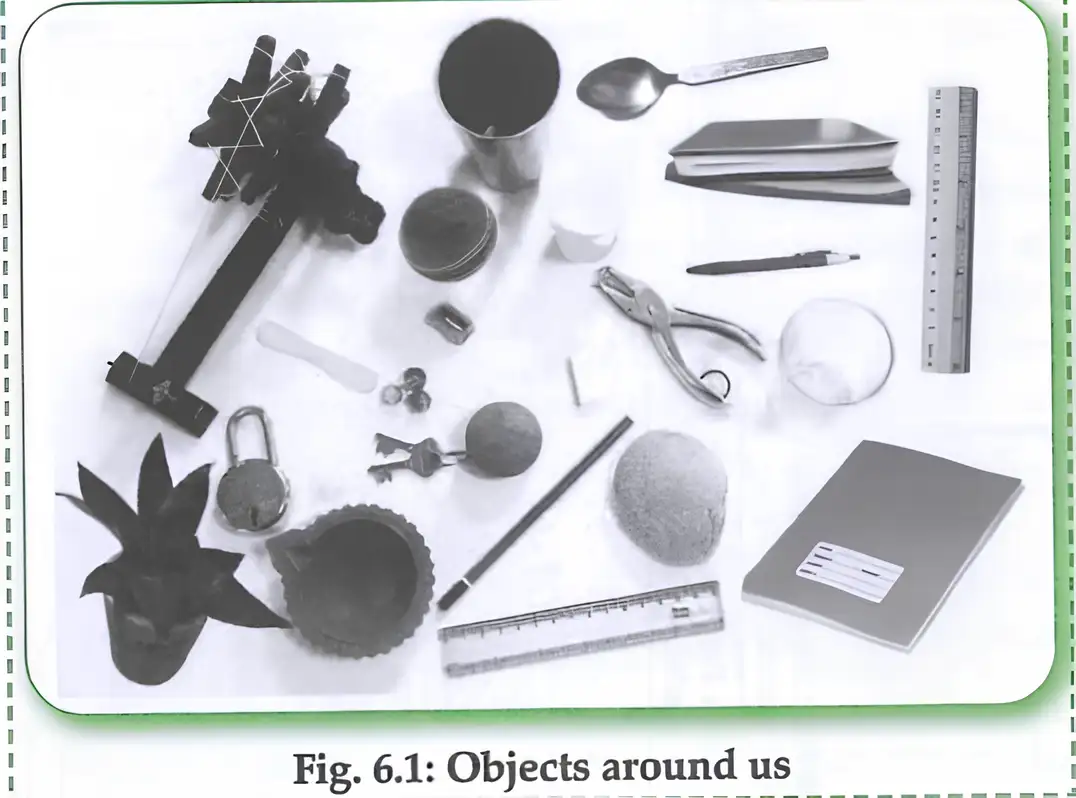
Grouping Based on Material
Materials include metal (spoon, lock), plastic (ruler, pen), wood (pencil, ice-cream stick), paper (books, paper cup), stone, glass (watch glass, marble), clay (planter, diya), cork, wool, leather, and rubber (eraser).
Grouping Based on Colour
Objects can be grouped by colours such as red (pencil, ball), green (plant, marble), blue (marble, pen), yellow (notebook, paper cup), white (eraser, stone), and silver (ruler, lock).
Grouping Based on Hardness and Shine
Materials can be hard (stone, metal objects) or soft (eraser, plant). They can also be shiny (metal objects) or dull (stone, paper cup).
Choosing Materials for Objects
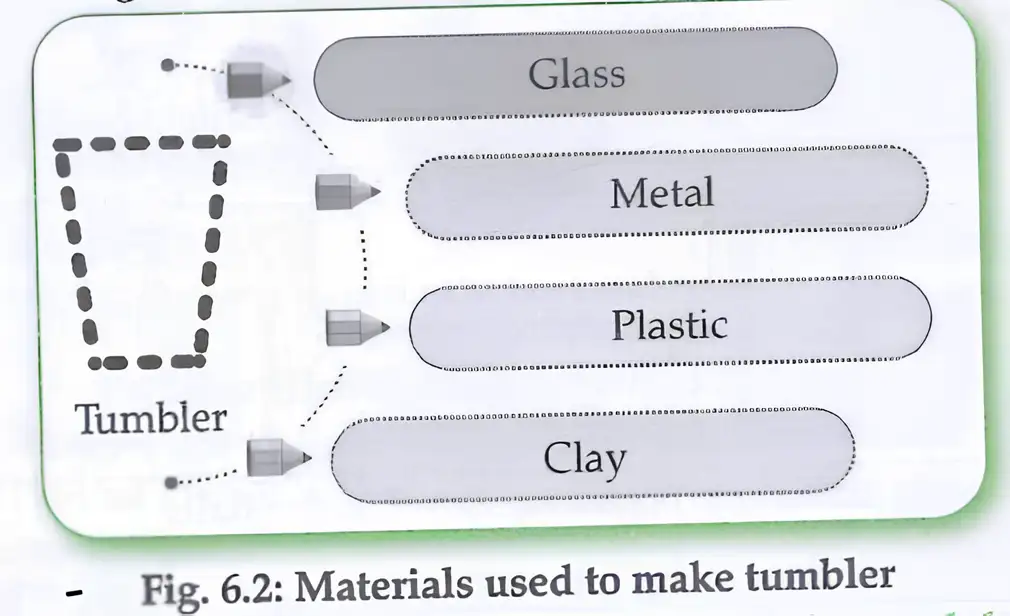
The choice of material depends on its properties and the intended use. For example, a tumbler must be made of a material that can hold liquids such as glass, plastic, or metal, while a sweater should be made of soft, warm materials like wool.
Properties of Materials
Materials have various properties that affect their use:
- Appearance: Lustrous materials like metals have shiny surfaces, while non-lustrous materials like wood and rubber do not.
- Hardness and Softness: Hard materials resist scratching and compression, while soft materials can be easily compressed or scratched.
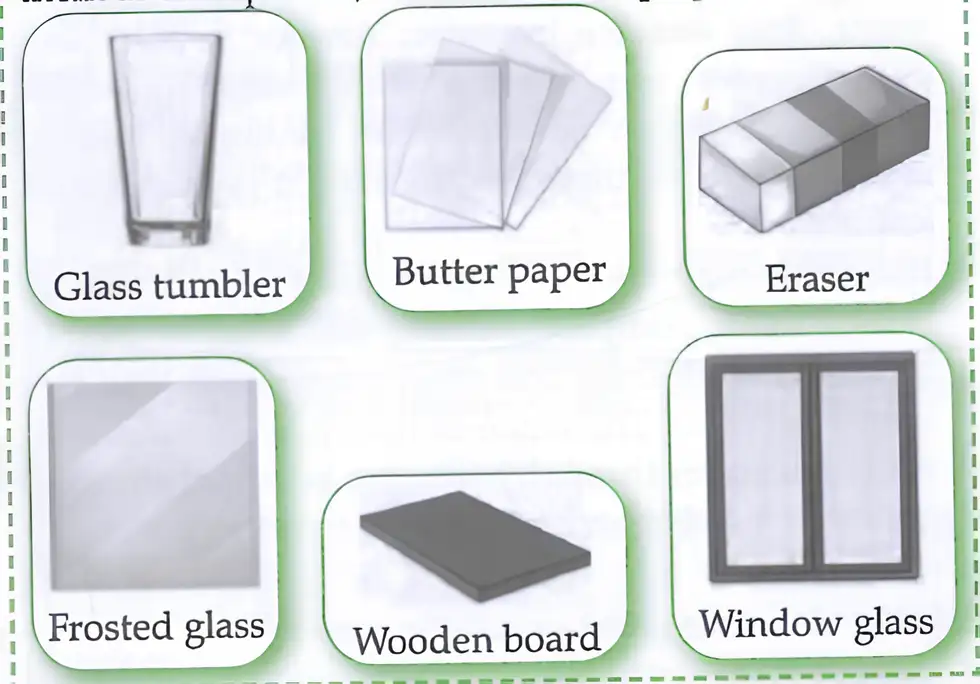
- Transparency: Materials can be transparent (allowing clear vision through them), translucent (allowing partial light passage), or opaque (not allowing light to pass).
- Solubility: Some materials dissolve in water (soluble), while others do not (insoluble).
- Floating and Sinking: Objects float or sink in water depending on their density relative to water.
- Mass and Volume: Mass is the amount of matter in an object, measured in grams or kilograms, and volume is the space occupied by the object, measured in litres or millilitres.
Solved Examples
Example 1: Identify the property of a metal spoon that makes it suitable for cooking.
Solution: A metal spoon is lustrous, hard, and heat-conductive. Its hardness makes it durable and resistant to scratches, while its lustrous surface is easy to clean. These properties make metal suitable for cooking utensils.
Example 2: Why does a wooden block float on water while a stone sinks?
Solution: Floating or sinking depends on density. Wood is less dense than water, so it floats. Stone is denser than water, so it sinks.
Practice Set
Conceptual Questions
- Level 1: Name three materials that are transparent.
- Level 2: Explain why plastic is used for making toys instead of glass.
Application-based Question
- Level 3: You want to make a container to store water that is lightweight, durable, and does not break easily. Which material would you choose and why?
Answer Key
Conceptual Questions
- Level 1: Glass, clear plastic, and water are transparent materials.
- Level 2: Plastic is used for toys because it is lightweight, durable, and does not break easily, unlike glass which is heavy and fragile.
Application-based Question
- Level 3: Plastic is the best choice because it is lightweight, durable, water-resistant, and does not break easily, making it ideal for water containers.
Quick Reference Table
Materials and Their Properties
- Paper: Used in books and packaging; non-lustrous, soft.
- Wood: Used in furniture and pencils; hard, opaque.
- Cloth: Used in garments; soft, flexible.
- Glass: Used in windows and bottles; transparent, hard.
- Metal: Used in utensils and tools; lustrous, hard.
- Plastic: Used in containers and toys; lightweight, durable.
- Clay: Used in pottery and bricks; hard, opaque.
Properties
- Lustrous: Shiny surface, e.g., metals.
- Hardness: Resistance to scratching or compression.
- Transparency: Transparent, translucent, opaque.
- Solubility: Ability to dissolve in water.
- Density: Determines floating or sinking in water.
Common Mistakes and Misconceptions
- Confusing transparency with translucency: Transparent materials allow clear vision, while translucent materials only allow partial light passage.
- Assuming all metals are heavy: Some metals like aluminum are lightweight.
- Believing all plastics are non-biodegradable: Some plastics are biodegradable.
- Thinking that hardness means unbreakable: Hard materials can still break under force.
- Assuming all materials dissolve in water: Many materials like sand and oil do not dissolve.
Glossary
- Material: Substance used to make objects.
- Matter: Anything that has mass and occupies space.
- Mass: Amount of matter in an object.
- Volume: Space occupied by an object.
- Lustrous: Having a shiny surface.
- Hardness: Resistance to scratching or deformation.
- Transparent: Allowing light to pass through clearly.
- Translucent: Allowing some light to pass but not clearly.
- Opaque: Not allowing light to pass through.
- Soluble: Able to dissolve in a solvent.
- Insoluble: Not able to dissolve in a solvent.
- Density: Mass per unit volume of a material.