CLASS 6 . SCIENCE . CURIOSITY . LIVING CREATURES-EXPLORING-THEIR-CHARACTERISTICS
Chapter 10 : LIVING CREATURES: EXPLORING THEIR CHARACTERISTICS
Ch 10
SCIENCE
CLASS 6
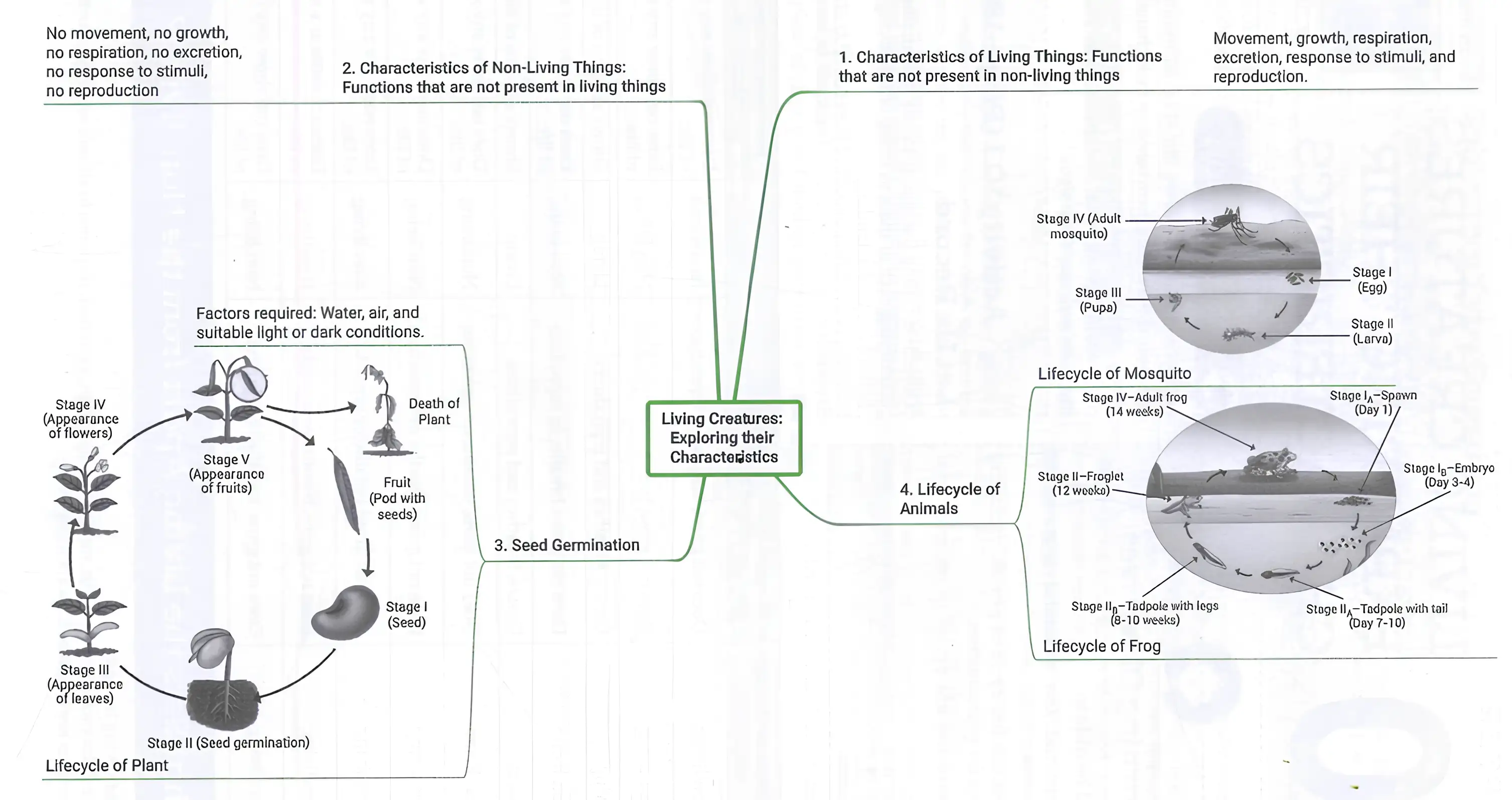
Living Creatures Characteristics
Introduction to Living and Non-living Things
Living beings and non-living things surround us. We distinguish them by their characteristics. Living beings show signs of life such as growth, respiration, reproduction, and movement. Non-living things do not exhibit these signs.
Activity: Identifying Living and Non-living Objects
By listing objects around us and describing their characteristics, we can identify them as living or non-living based on their ability to grow, breathe, reproduce, and respond to stimuli.
This table compares guesses and correct answers about whether items are living or non-living, explaining the reasons based on life characteristics.
Characteristics of Living Beings
Living beings exhibit movement, growth, nutrition, respiration, excretion, response to stimuli, and reproduction. These are essential traits that differentiate them from non-living things.
Movement in Living Beings
Animals move from place to place, but plants show specialized movements such as opening flowers, insect trapping by Drosera, and climbing by vines.
Growth
Growth is universal in living beings, resulting from cell division and nutrient absorption. Plants grow by photosynthesis and mineral absorption.
Respiration
Respiration involves oxygen intake and carbon dioxide release. Animals breathe through lungs or skin, while plants respire through stomata on leaves.
Excretion
Living organisms remove waste products. Animals excrete through sweat and urine; plants excrete excess water and minerals, visible as droplets on leaves.
Response to Stimuli
Living beings respond to environmental changes. Humans react to pain; plants like Mimosa fold leaves when touched, and amla leaves fold after sunset.
Reproduction
Reproduction ensures species survival. Animals give birth to young ones; plants produce seeds. Non-living things do not reproduce.
Death
When an organism no longer shows life characteristics despite resource availability, it is considered dead.
Solved Examples
Example 1: Identify if a pencil is living or non-living and justify.
Solution: A pencil is non-living because it does not grow, respire, reproduce, excrete, respond to stimuli, or move on its own.
Example 2: Explain why plants are considered living even though they do not move from place to place.
Solution: Plants exhibit movement through opening flowers, insect trapping, and climbing. They also grow, respire, excrete, respond to stimuli, and reproduce, fulfilling living criteria.
Practice Set
- Level 1 (Easy): List three characteristics that all living beings share.
- Level 2 (Moderate): Explain why a car is non-living even though it moves.
- Level 3 (Challenging): Describe how plants respond to stimuli with examples.
Answer Key
- Level 1: Movement, growth, respiration.
- Level 2: A car moves mechanically using fuel or electricity, not by biological processes. It does not grow, reproduce, respire, excrete, or respond to stimuli.
- Level 3: Plants respond to stimuli such as touch and light. For example, Mimosa folds its leaves when touched, and amla leaves fold after sunset.
Seed Germination
Process of Seed Germination
Seed germination is the process where a seed begins to grow into a new plant under favorable conditions. Water softens the seed coat, allowing the embryo to develop roots and shoots.
Conditions for Germination
Seeds require water, air, and suitable temperature. Light is not essential for germination but is needed for seedling growth. Some seeds require light or darkness specifically.
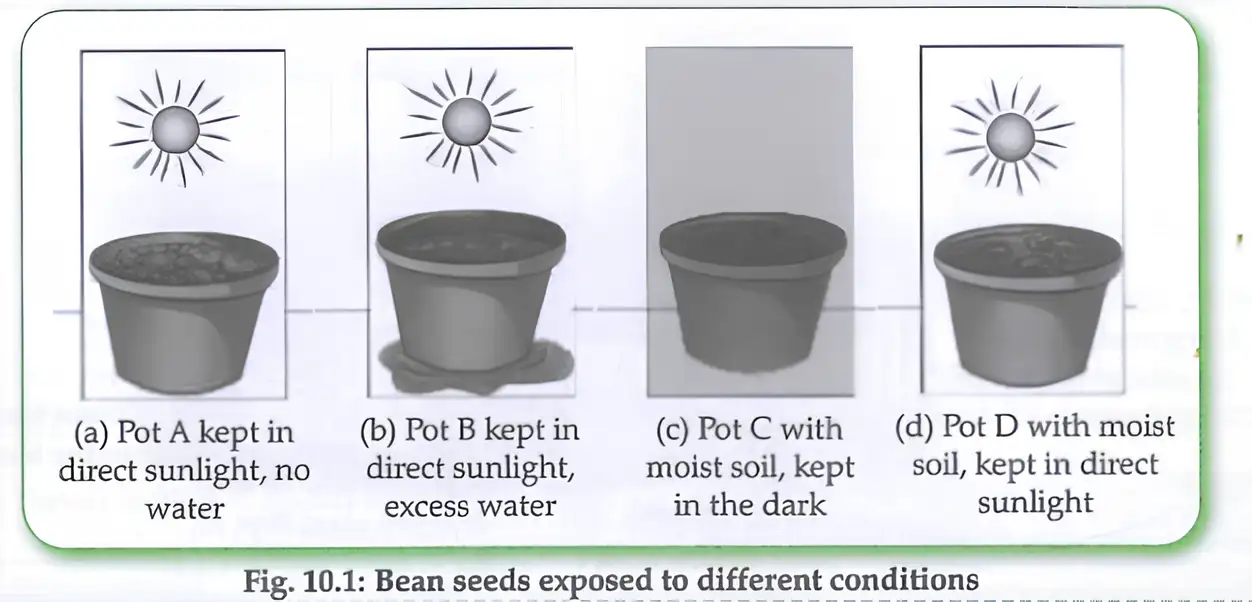
Experiment with bean seeds in different conditions shows that moisture is crucial, while light is not essential for germination.
Solved Examples
Example 1: Why did seeds in pot A (no water) not germinate?
Solution: Seeds need water to soften the seed coat and activate metabolic processes. Without water, germination cannot occur.
Example 2: Explain why excess water in pot B prevented germination.
Solution: Excess water saturates soil, displacing oxygen needed for respiration, causing seeds to drown and fail to germinate.
Practice Set
- Level 1 (Easy): What is the role of water in seed germination?
- Level 2 (Moderate): Why is air important for seed germination?
- Level 3 (Challenging): Design an experiment to test the effect of light on seed germination.
Answer Key
- Level 1: Water softens the seed coat and activates growth processes.
- Level 2: Air provides oxygen for respiration during germination.
- Level 3: Sow seeds in identical pots; keep one in light and one in dark; observe germination rates to assess light effect.
Plant Growth and Movement
Growth in Plants
Plants grow by cell division and elongation, increasing in size and developing roots, stems, and leaves.
Movement in Plants
Plants exhibit movements such as opening and closing flowers, insect trapping by Drosera, and climbing by vines for support.
Effect of Light on Growth
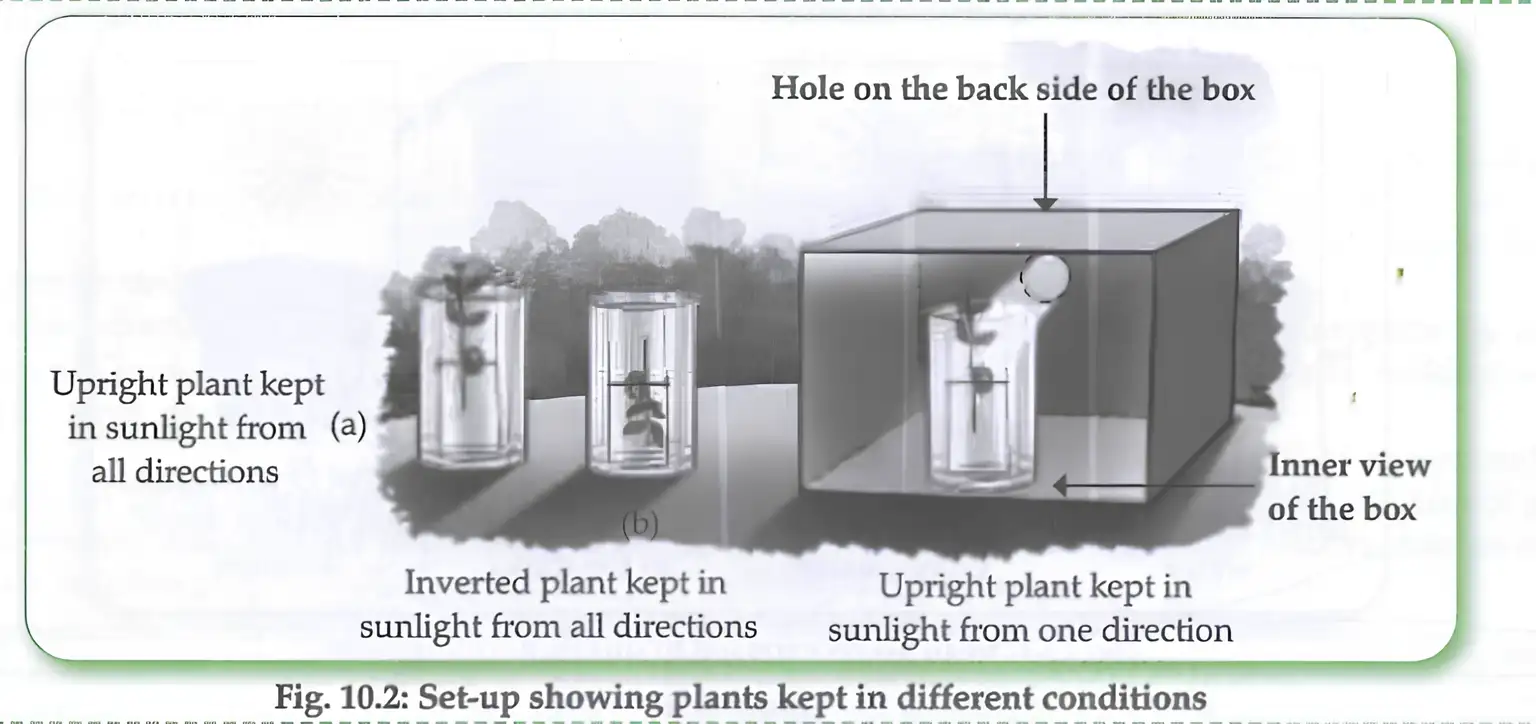
Plants grow shoots towards light (phototropism) and roots downward (geotropism), regardless of plant orientation.
Solved Examples
Example 1: What happens to the shoot and root growth when a plant is inverted?
Solution: The shoot bends and grows upward, and the root bends and grows downward, showing growth is directed by gravity and light.
Example 2: How does a plant respond when light comes from one direction?
Solution: The shoot grows towards the light source (positive phototropism), and the root grows away from light, continuing downward.
Practice Set
- Level 1 (Easy): Define phototropism and geotropism.
- Level 2 (Moderate): Explain why roots grow downward even when the plant is inverted.
- Level 3 (Challenging): Predict the growth direction of shoots and roots if a plant is placed horizontally with light from above.
Answer Key
- Level 1: Phototropism is growth towards light; geotropism is growth in response to gravity.
- Level 2: Roots grow downward due to gravity (positive geotropism) regardless of plant orientation.
- Level 3: Shoots grow upward towards light; roots grow downward due to gravity.
Life Cycle of Plants
Stages of Plant Life Cycle
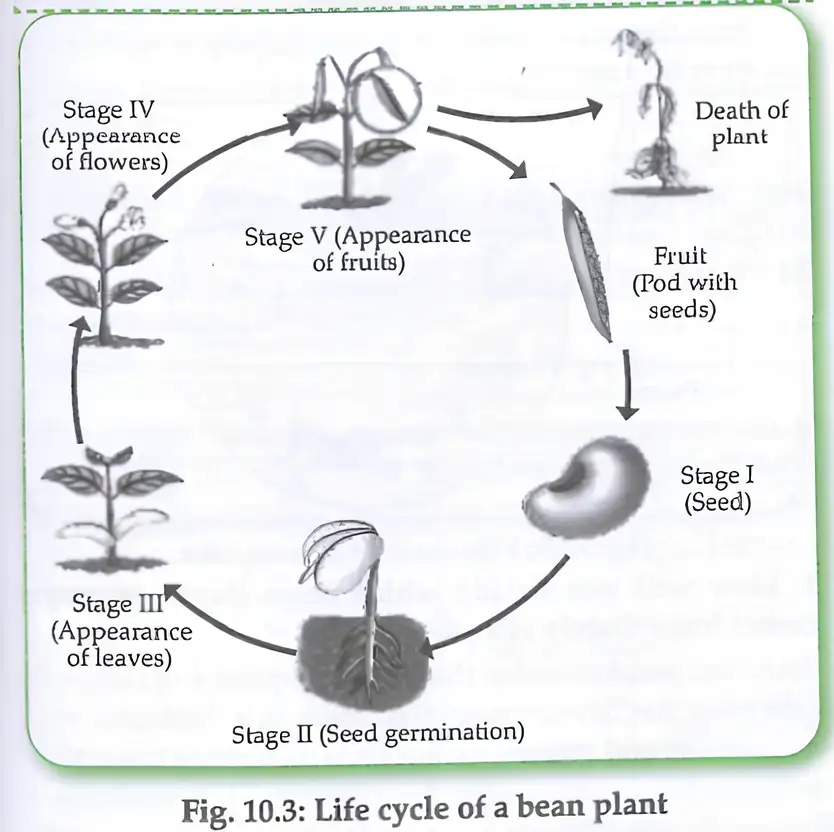
A plant's life cycle begins with a seed that germinates into a seedling, grows into a mature plant, produces flowers, fruits, and seeds, which then start the cycle anew.
Solved Examples
Example 1: How long does it take for the first flower to appear in a plant's life cycle?
Solution: The first flower appears around day 40 after seed planting.
Example 2: What happens after the flower petals wither and fall off?
Solution: The ovary of the flower develops into a fruit containing seeds.
Practice Set
- Level 1 (Easy): What is the first stage in a plant's life cycle?
- Level 2 (Moderate): Describe the changes that occur from seedling to mature plant.
- Level 3 (Challenging): Explain the importance of seed dispersal in the plant life cycle.
Answer Key
- Level 1: The seed stage.
- Level 2: Seedling grows leaves, stems, and flowers, becoming mature and capable of reproduction.
- Level 3: Seed dispersal helps spread offspring to new locations, reducing competition and aiding species survival.
Life Cycle of Animals
General Animal Life Cycle
Animals undergo stages of birth, growth, reproduction, and death. Some undergo metamorphosis, changing form during development.
Life Cycle of Mosquito
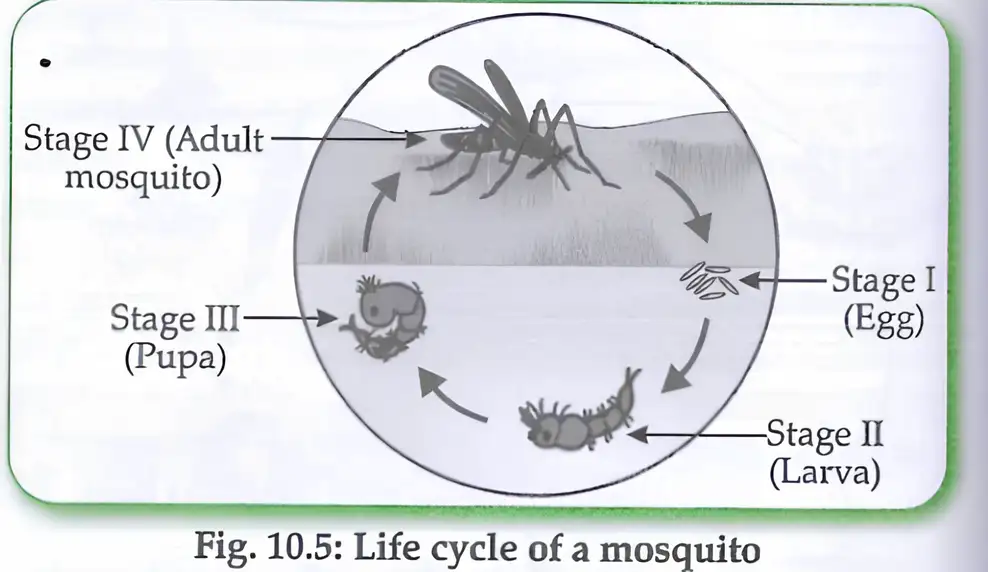
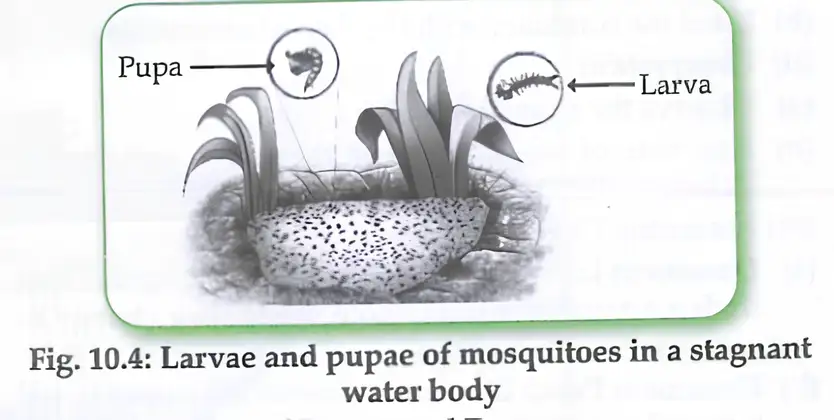
Mosquitoes lay eggs in stagnant water. Eggs hatch into larvae, which develop into pupae, and then into adult mosquitoes.
Preventing Mosquito Breeding
Eliminating stagnant water prevents mosquito breeding and reduces disease spread.
Life Cycle of Frog
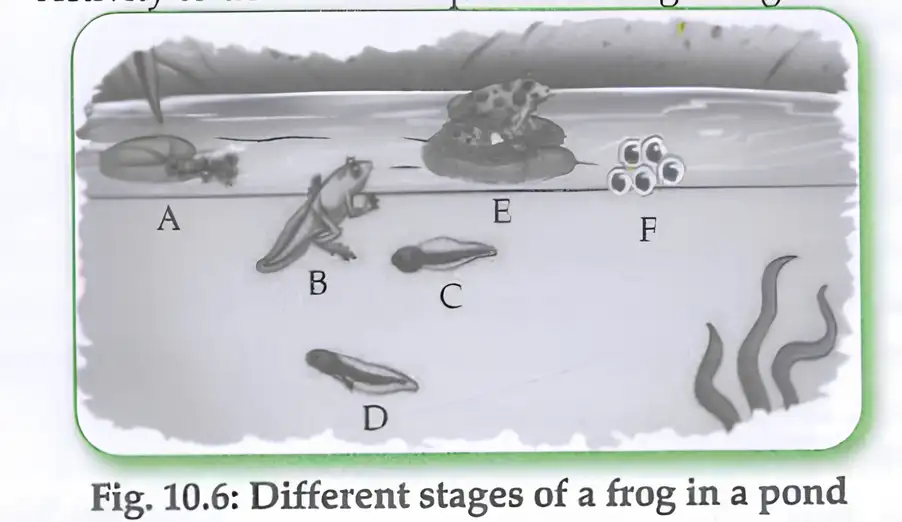
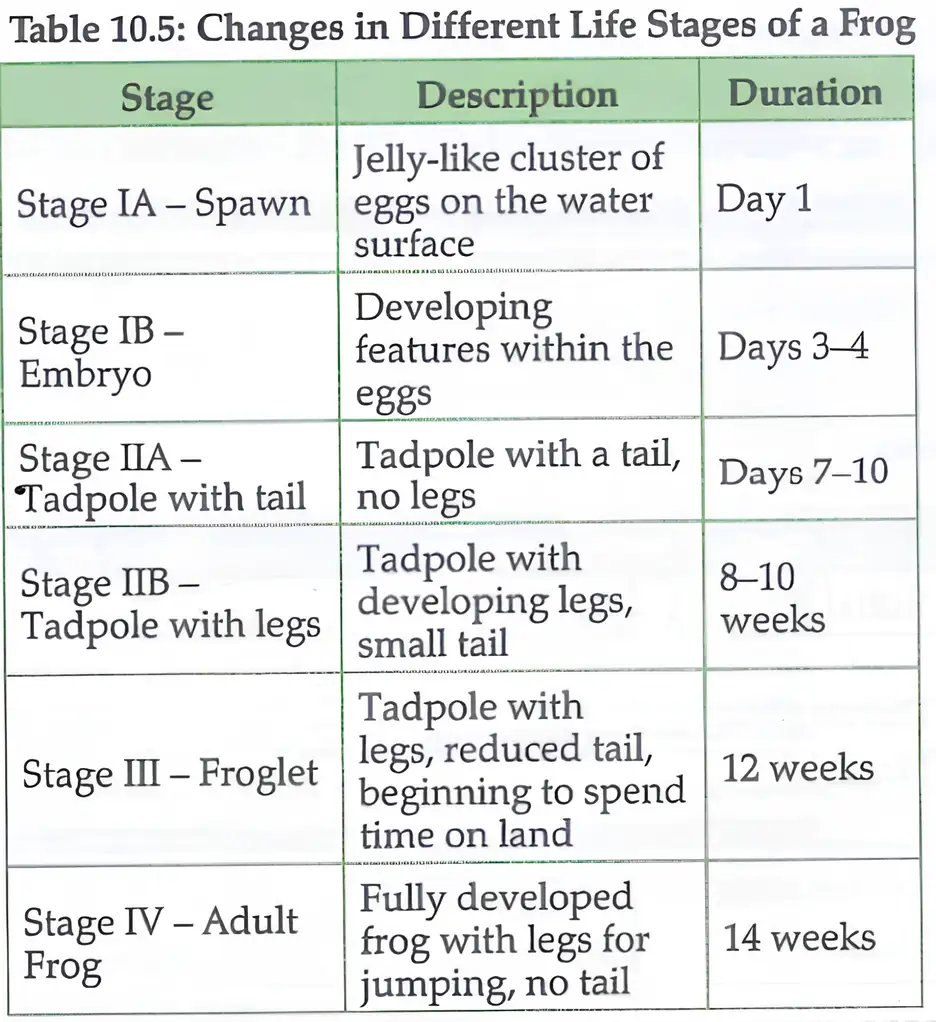
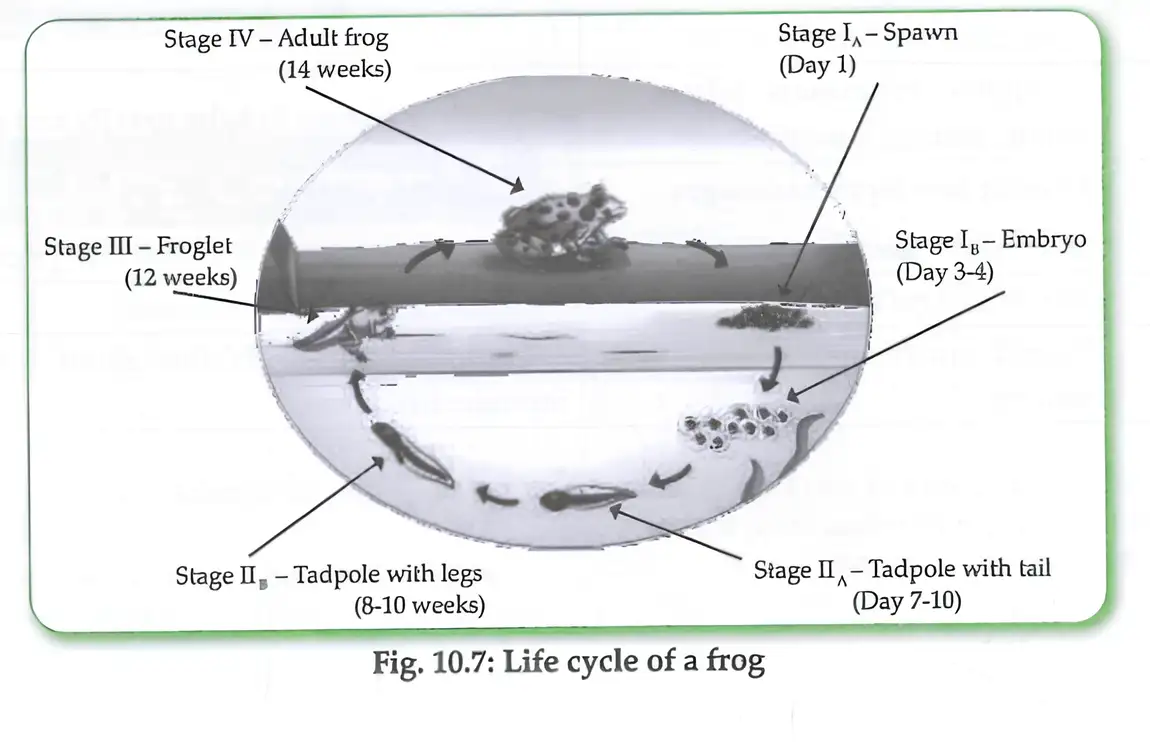
Frogs lay jelly-like eggs in water. Eggs hatch into tadpoles, which develop legs and lungs, becoming froglets and then adult frogs.
Solved Examples
Example 1: Describe the stages in the mosquito life cycle.
Solution: Egg laid on water, hatches into larva, develops into pupa, then adult mosquito emerges.
Example 2: What is unique about frog eggs compared to bird eggs?
Solution: Frog eggs are jelly-like and laid in clusters in water, unlike hard-shelled bird eggs.
Practice Set
- Level 1 (Easy): Name the four stages of the mosquito life cycle.
- Level 2 (Moderate): Explain why stagnant water should be avoided.
- Level 3 (Challenging): Compare the life cycles of a frog and a mosquito.
Answer Key
- Level 1: Egg, larva, pupa, adult.
- Level 2: Stagnant water is a breeding ground for mosquitoes, increasing disease risk.
- Level 3: Both have egg, larva, pupa, adult stages; frogs undergo metamorphosis with aquatic and terrestrial stages, mosquitoes remain aquatic until adulthood.
Quick Reference Table
Living Creatures Characteristics
- Movement: Living beings move or show internal movements; non-living things do not move on their own.
- Growth: Living beings grow by cell division and nutrient absorption; non-living things do not grow.
- Nutrition: Living beings require food for energy and growth; non-living things do not.
- Respiration: Living beings take in oxygen and release carbon dioxide; non-living things do not respire.
- Excretion: Living beings remove waste products; non-living things do not excrete.
- Response to Stimuli: Living beings react to environmental changes; non-living things do not respond.
- Reproduction: Living beings produce offspring; non-living things do not reproduce.
- Death: Living beings eventually die when they stop performing life functions.
Seed Germination
- Water: Softens seed coat and activates growth processes.
- Air: Provides oxygen for respiration during germination.
- Temperature: Suitable warmth is necessary for metabolic activities.
- Light: Not essential for germination but required for seedling growth; some seeds require specific light or dark conditions.
Plant Growth and Movement
- Growth: Plants grow by cell division and elongation, developing roots, stems, and leaves.
- Phototropism: Shoots grow towards light.
- Geotropism: Roots grow downward in response to gravity.
- Special Movements: Opening flowers, insect trapping, climbing for support.
Life Cycle of Plants
- Seed germinates into seedling.
- Seedling grows into mature plant.
- Plant produces flowers, fruits, and seeds.
- Seeds disperse to start new plants.
Life Cycle of Animals
- Stages include birth, growth, reproduction, and death.
- Some animals undergo metamorphosis (e.g., frogs, mosquitoes).
- Examples: Mosquito life cycle - egg, larva, pupa, adult.
- Frog life cycle - egg (spawn), tadpole, froglet, adult.
Common Mistakes and Misconceptions
Common Mistakes and Misconceptions
- Movement alone does not define living: Machines and vehicles move but are non-living because they lack other life characteristics.
- Plants are living despite immobility: Plants do not move from place to place but show internal movements and life processes.
- Seeds are living: Though inactive, seeds can germinate and grow under suitable conditions.
- Light is not always essential for germination: Most seeds germinate in dark but need light for seedling growth; some seeds require light or darkness specifically.
- Excretion occurs in plants: Plants excrete excess water and minerals, visible as droplets on leaves.
- Not all eggs are alike: Frog eggs are jelly-like and laid in clusters in water, unlike hard-shelled bird eggs.
- Roots grow downward regardless of plant orientation: Root growth is directed by gravity, not plant position.
- Stagnant water breeds mosquitoes: Ignoring stagnant water leads to mosquito breeding and disease spread.
Glossary
- Breathing: The process of taking in oxygen and releasing carbon dioxide for respiration.
- Excretion: Removal of waste products from the body to maintain internal balance.
- Germination: The process by which a seed develops into a new plant.
- Life Cycle: The series of stages an organism undergoes from birth to reproduction and death.
- Living: Having life; exhibiting characteristics such as growth, reproduction, and response to stimuli.
- Non-living: Objects or substances that do not possess characteristics of life.
- Nutrition: The process by which organisms obtain and use food for energy and growth.
- Movement: Change in position or location of an organism or part of it in response to stimuli.
- Reproduction: Biological process through which new organisms are produced.
- Response: Reaction of an organism to a stimulus.
- Stimulus: An external factor that elicits a response from an organism.
- Death: The cessation of all biological functions that sustain life.
- Respiration: Chemical process used by organisms to extract energy from food.
- Larva: An immature stage in some animals' life cycles, distinct from the adult form.
- Tadpole: The aquatic larval stage of a frog, with a tail and no legs.
- Froglet: Juvenile stage in a frog's life cycle, with developing legs and a smaller tail.
- Pupa: Developmental stage in some insects where the larva transforms into an adult.