CLASS 12-PCB . CHEMISTRY . CHEMISTRY PART II . ALCOHOLS PHENOLS-AND-ETHERS
Chapter 7 : Alcohols, Phenols And Ethers
Ch 7
CHEMISTRY
CLASS 12-PCB
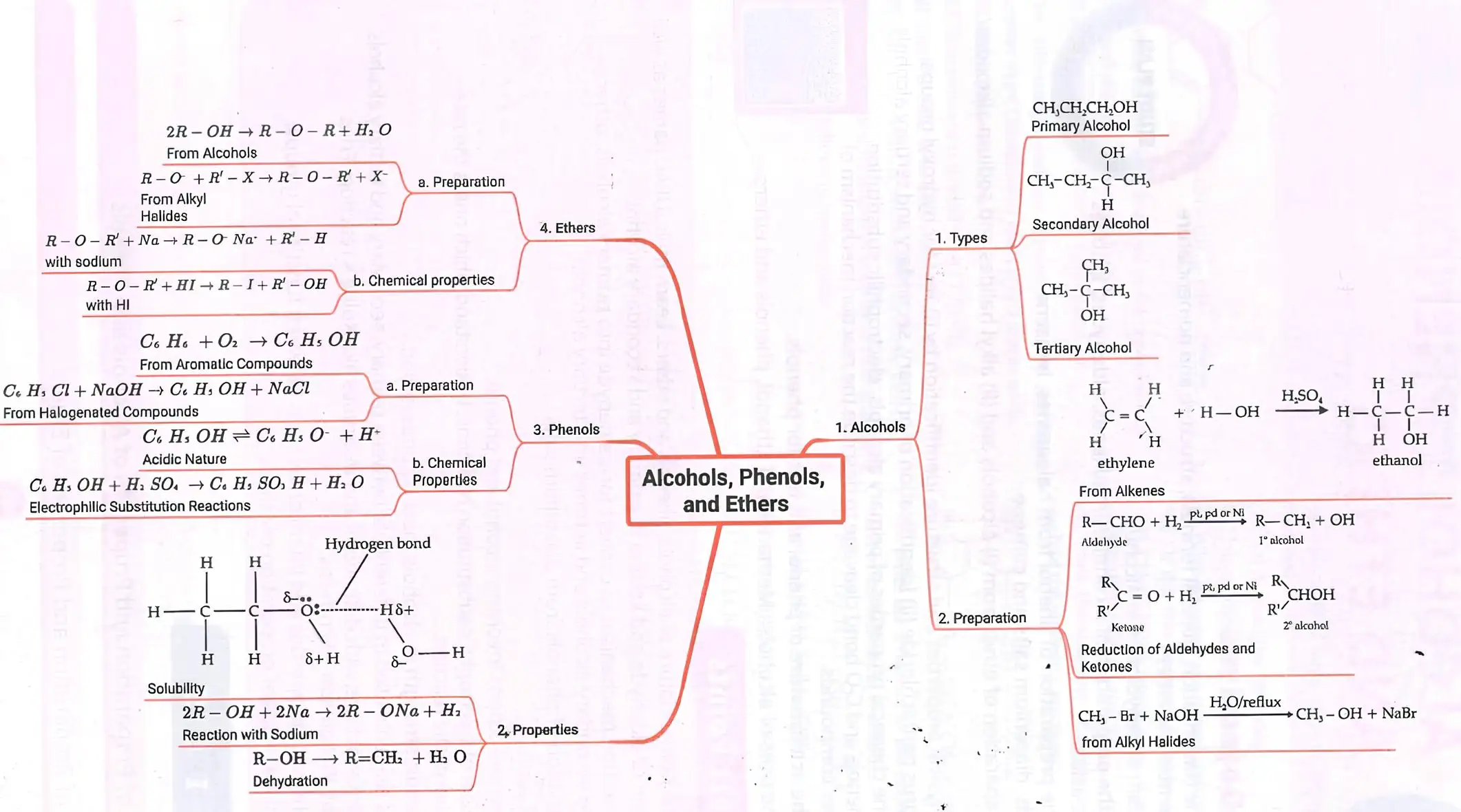
Alcohols, Phenols and Ethers
Introduction and Classification
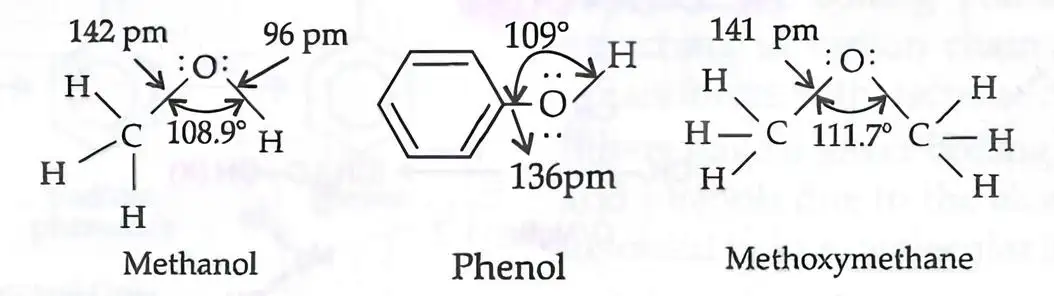
Alcohols, phenols, and ethers are important classes of organic compounds containing oxygen. Alcohols have one or more hydroxyl (–OH) groups attached to saturated carbon atoms. Phenols have hydroxyl groups attached directly to aromatic rings. Ethers contain an oxygen atom connected to two alkyl or aryl groups (R–O–R').
Alcohols: Types and Structure
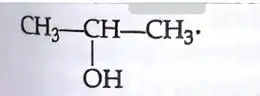
Alcohols are classified based on the number of hydroxyl groups: monohydric (one –OH), dihydric (two –OH, also called diols), trihydric (three –OH, triols), and polyhydric (more than three –OH groups). They are also classified by the carbon atom to which the –OH is attached: primary (1°), secondary (2°), and tertiary (3°) alcohols.
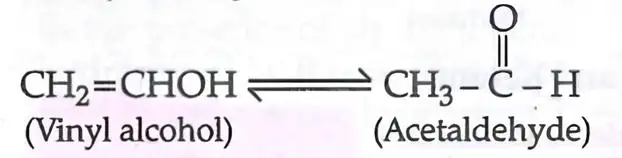
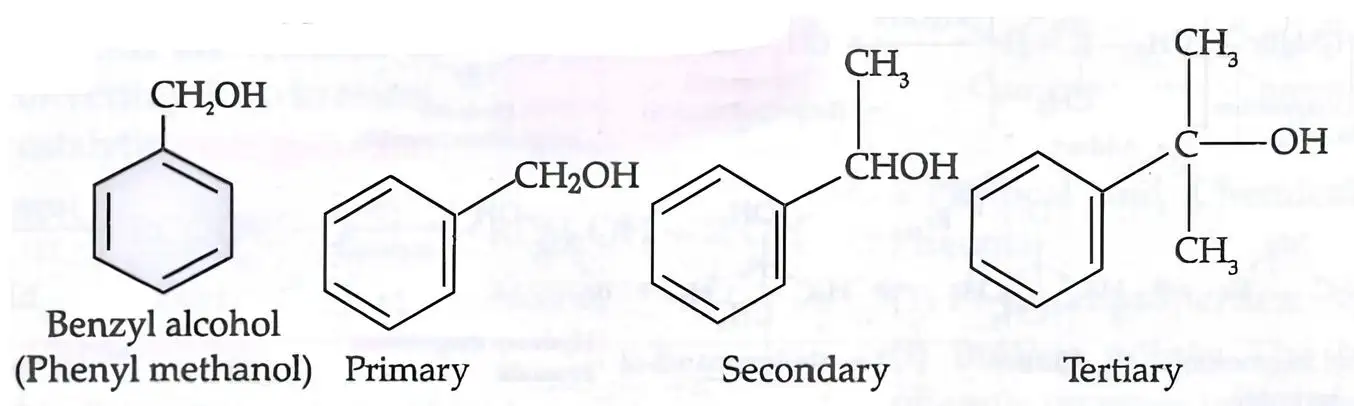
Phenols and Ethers
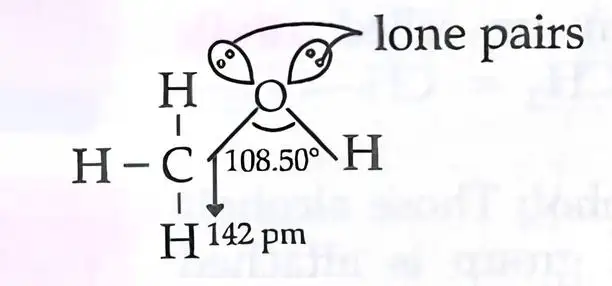
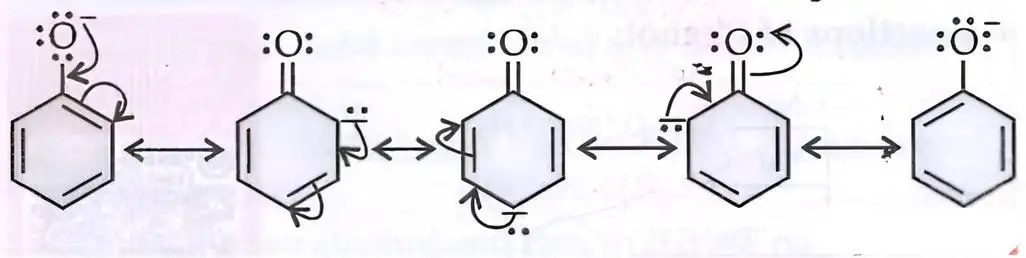
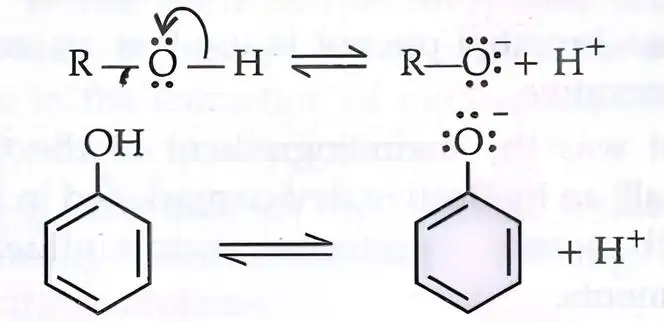
Phenols are aromatic compounds with hydroxyl groups attached to benzene rings, exhibiting acidic properties due to resonance stabilization of the phenoxide ion. Ethers are compounds with the general formula R–O–R', often volatile and with lower boiling points than alcohols due to lack of hydrogen bonding between molecules.
Preparation Methods
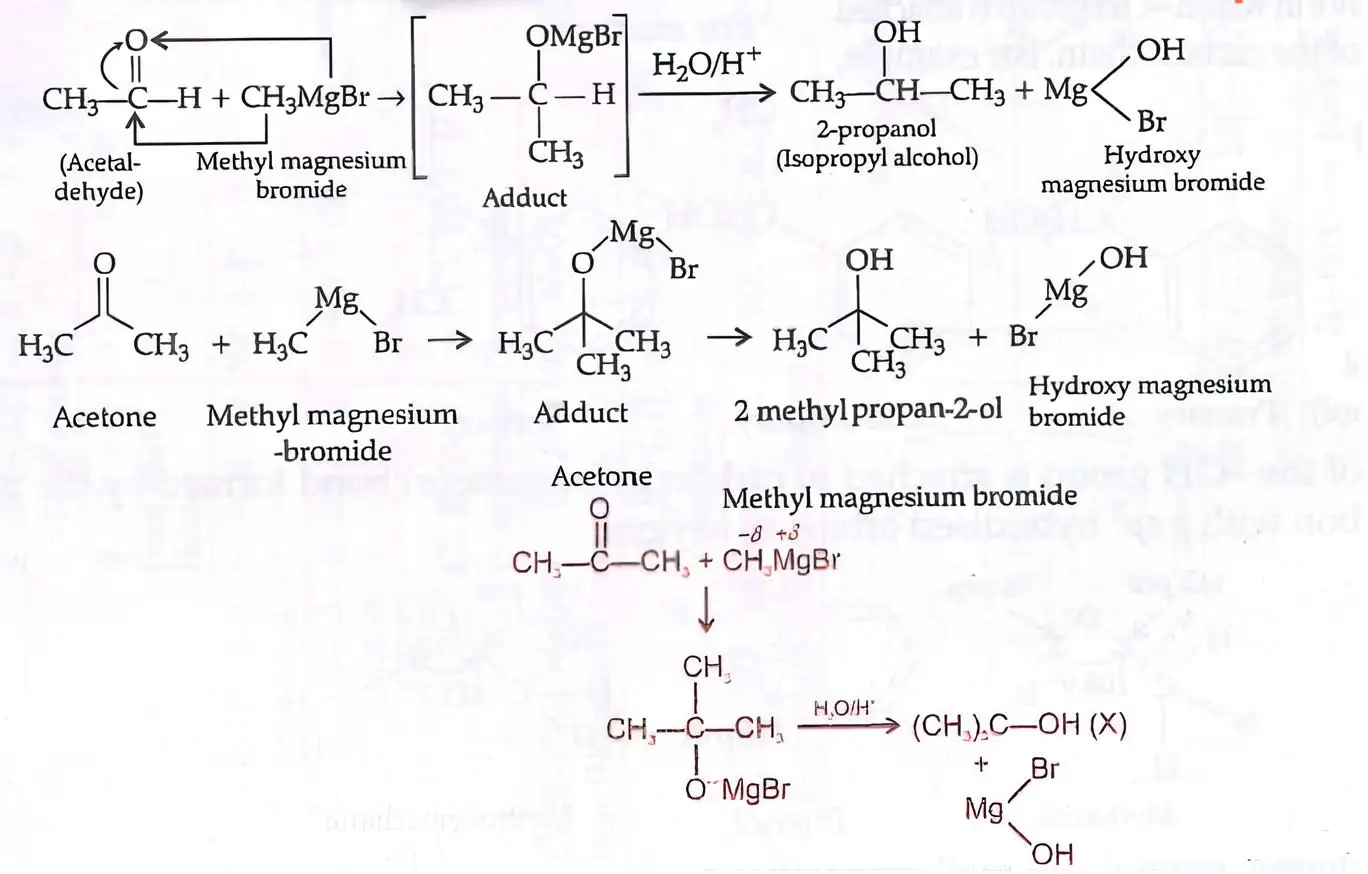
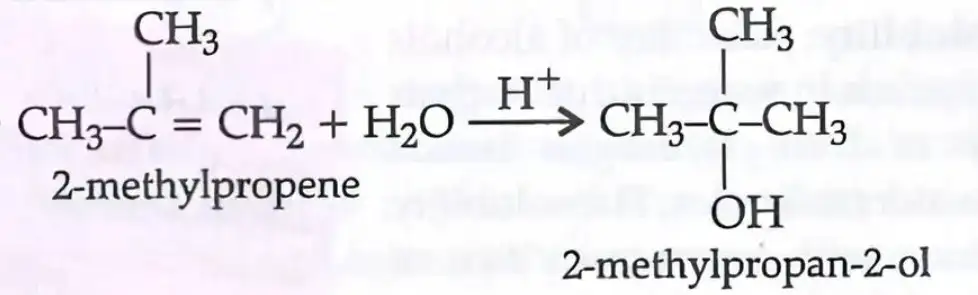
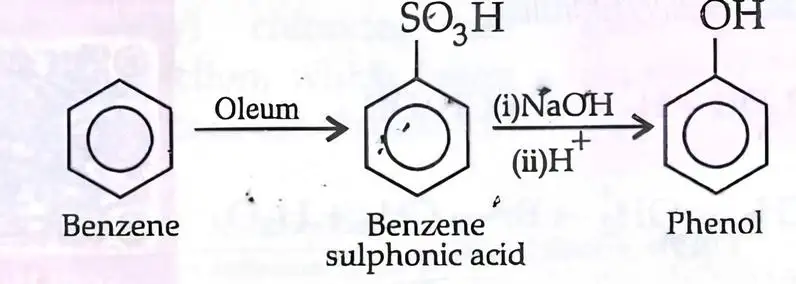
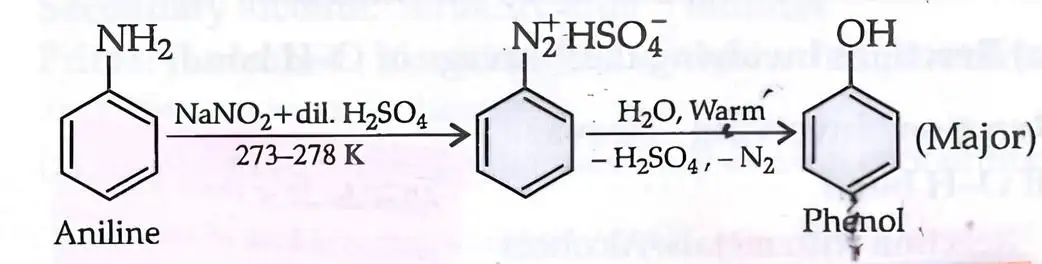
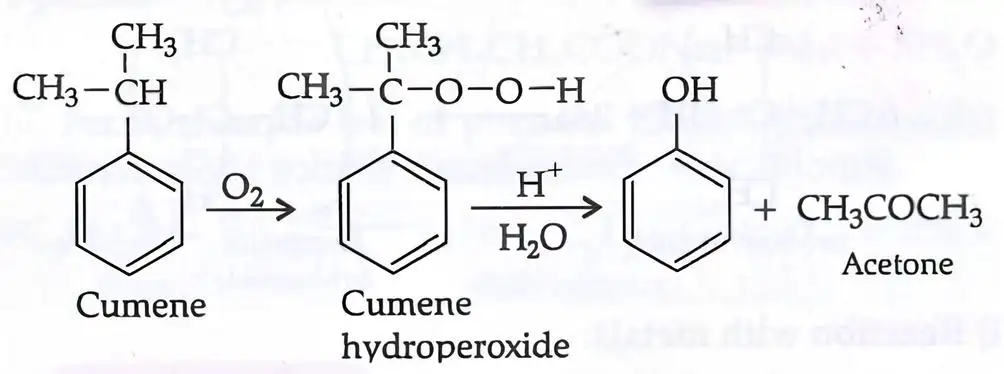
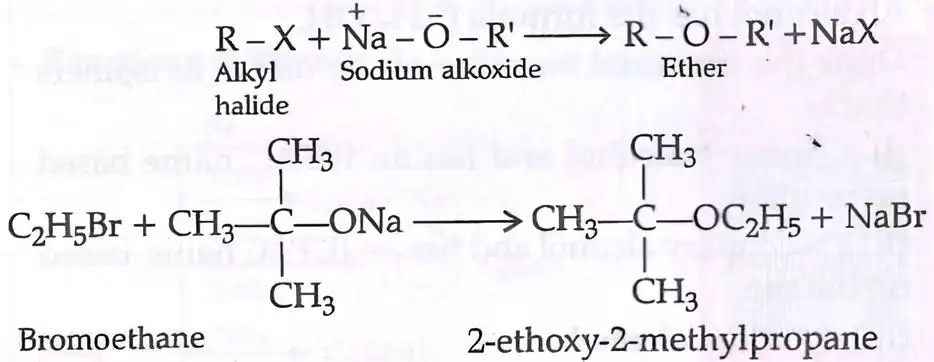
Alcohols can be prepared by hydrolysis of haloalkanes, reduction of aldehydes and ketones, hydration of alkenes, and hydroboration-oxidation. Phenols are prepared from aryl halides, benzene sulfonic acid, diazonium salts, and cumene oxidation. Ethers are synthesized by Williamson's synthesis, dehydration of alcohols, reaction of alkyl halides with silver oxide, and reaction of diazomethane with alcohols.
Physical and Chemical Properties
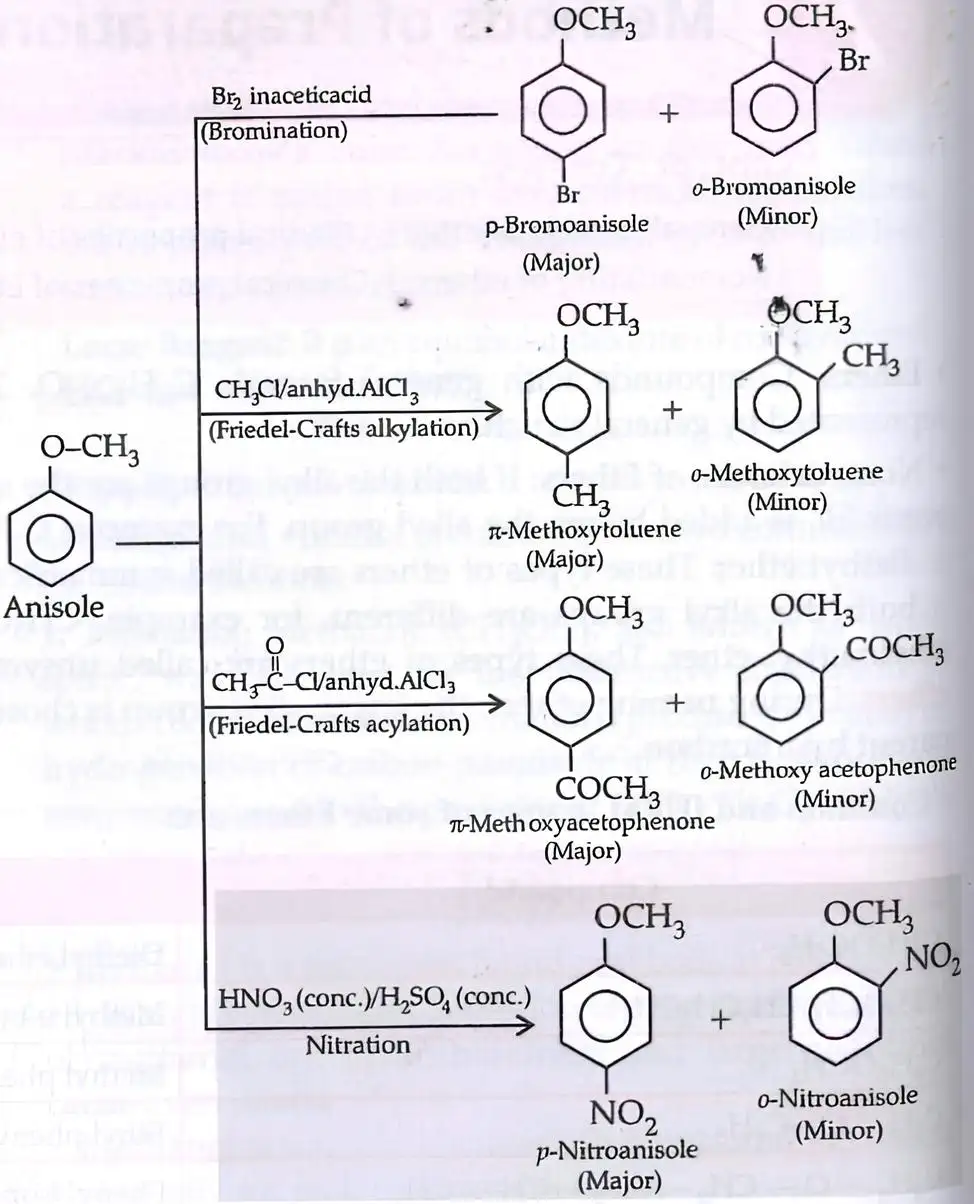
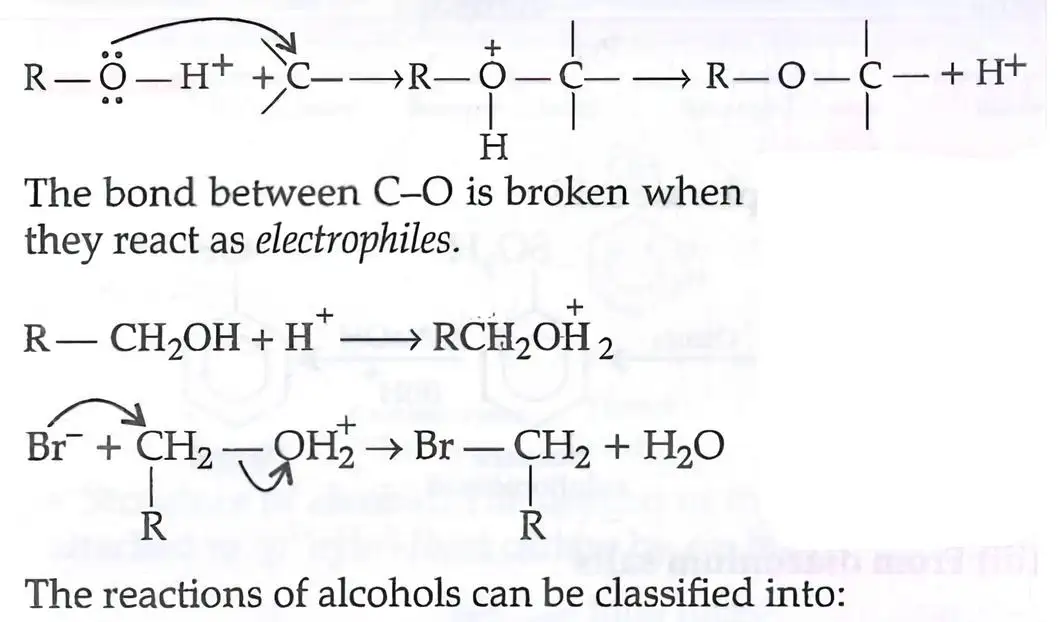
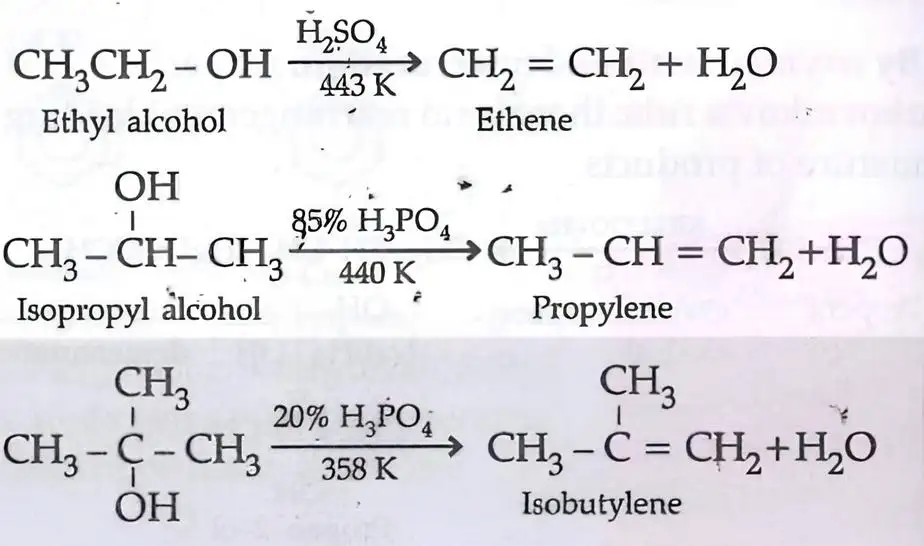
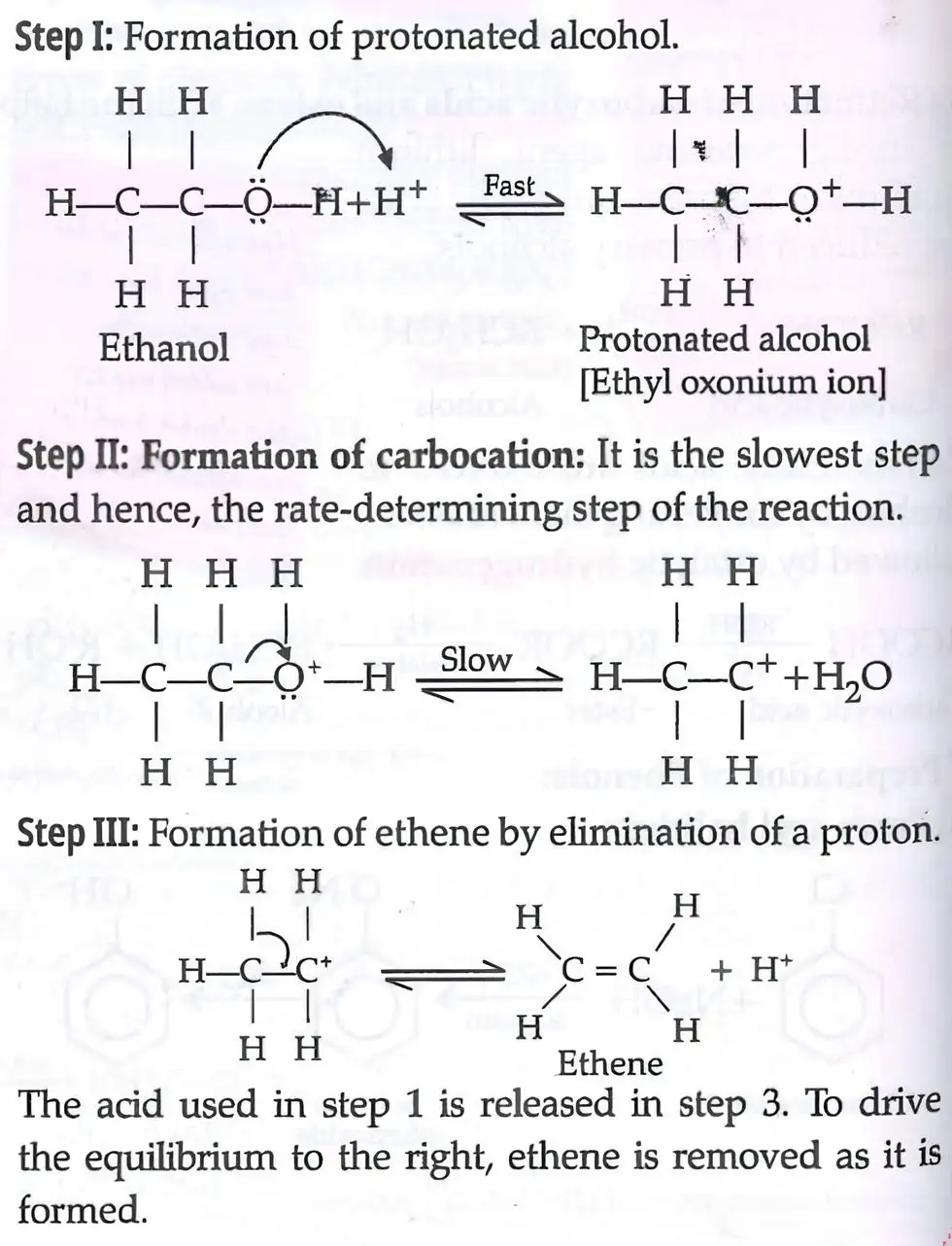
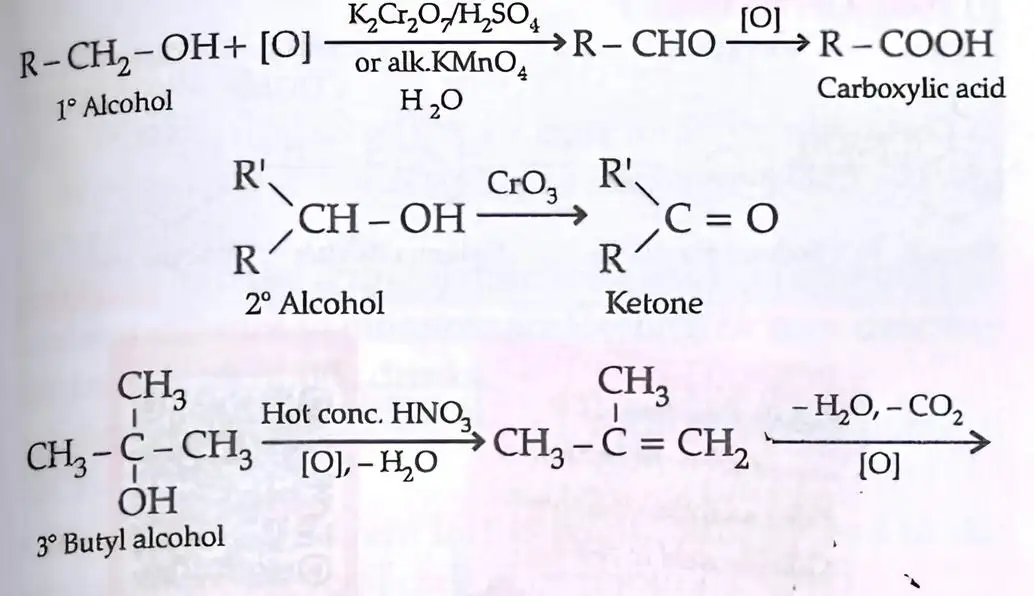
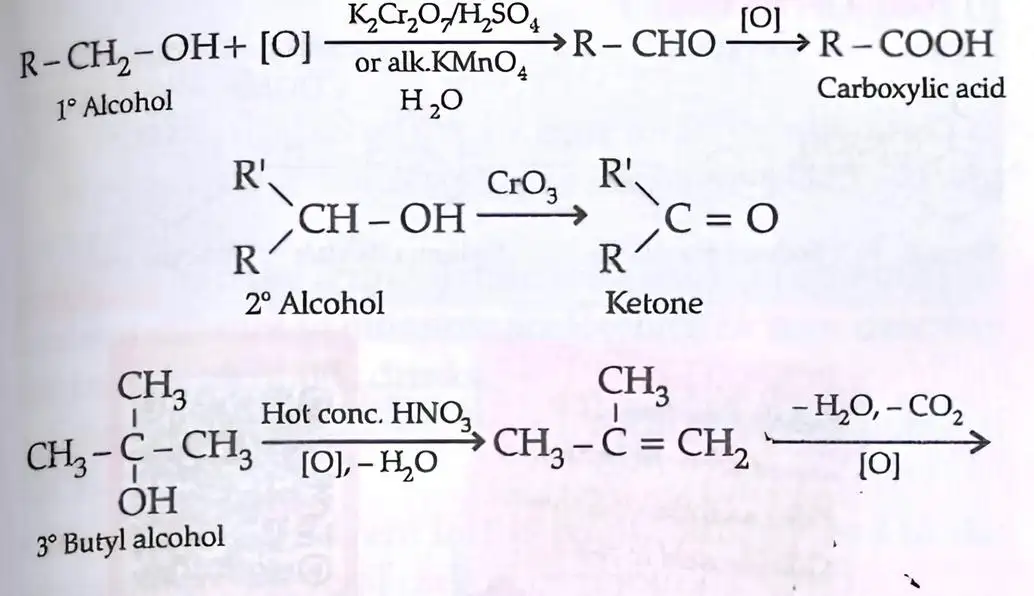
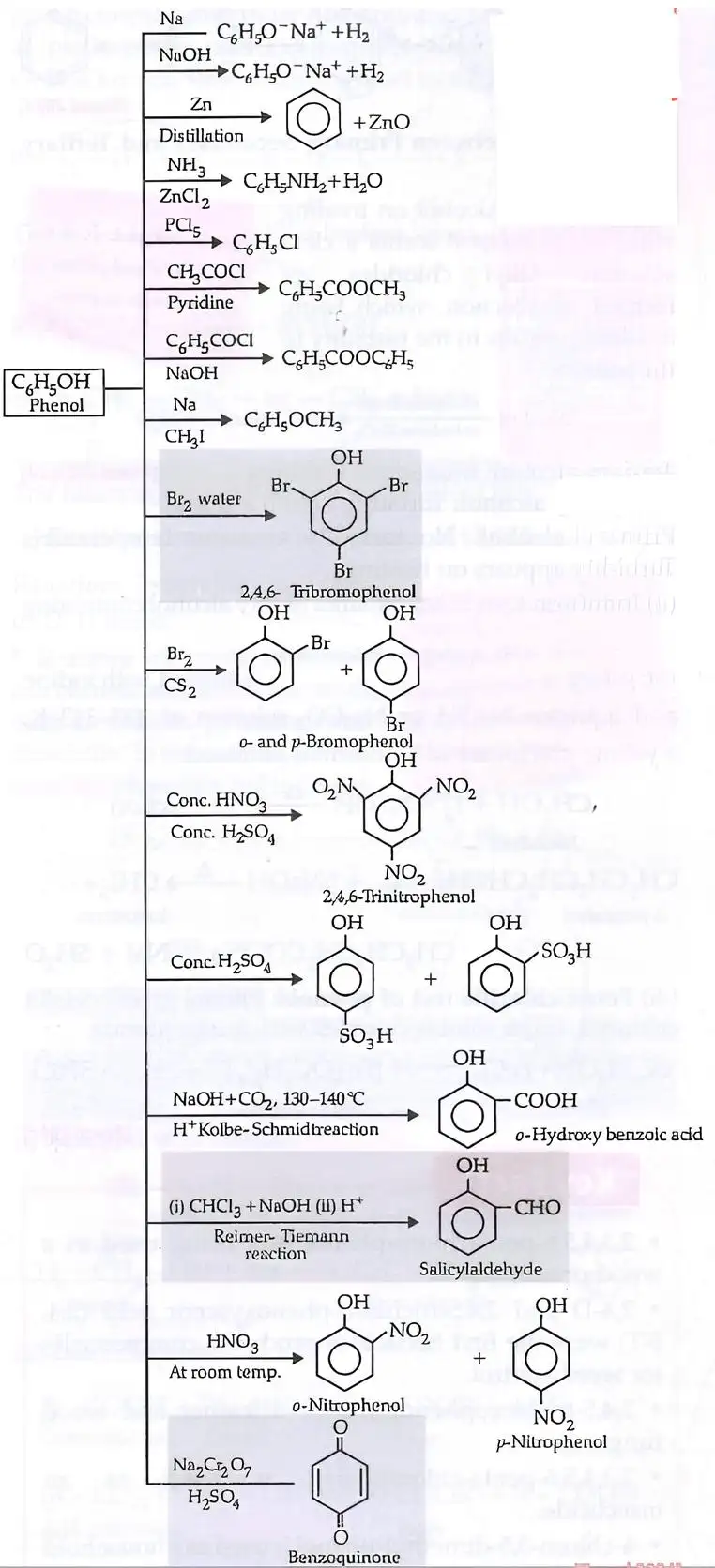
Alcohols and phenols exhibit hydrogen bonding, leading to higher boiling points and solubility in water. Ethers have lower boiling points and are less polar. Alcohols react with metals, acids, and undergo oxidation, dehydration, and substitution reactions. Phenols show characteristic reactions such as formation of phenoxide ions, electrophilic substitution, and complexation with ferric chloride. Ethers undergo cleavage with halogen acids and electrophilic substitution in aromatic ethers.


Acidity and Reactivity
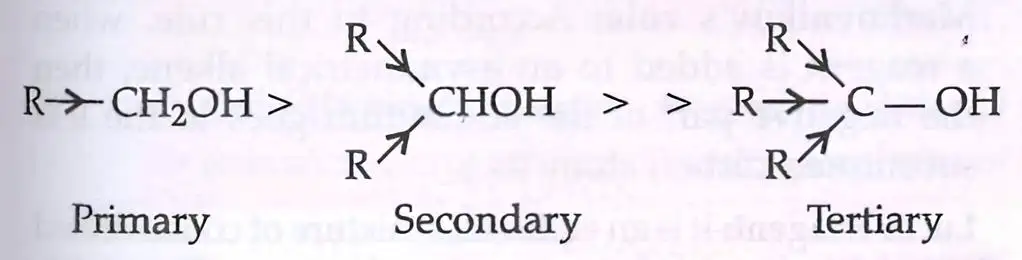
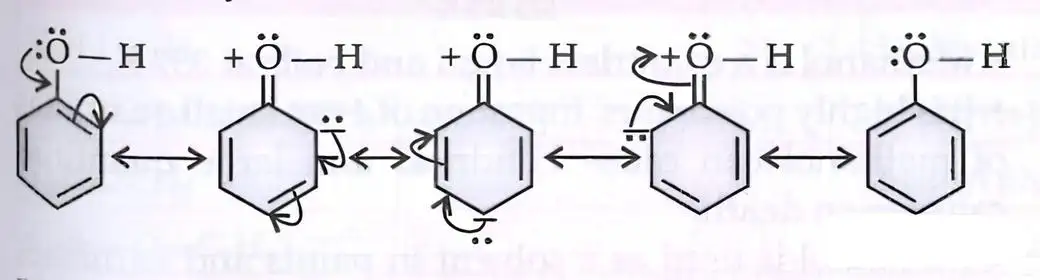
Phenols are more acidic than alcohols due to resonance stabilization of the phenoxide ion. The acidity of alcohols decreases from primary to tertiary due to electron-donating alkyl groups. Tests such as Lucas test, iodoform test, and ferric chloride test help distinguish between types of alcohols and phenols.
Solved Examples
Example 1: Identify the type of alcohol in CH₃CH₂OH and explain its classification.
Solution: CH₃CH₂OH (ethanol) has the –OH group attached to a carbon atom bonded to only one other carbon atom, making it a primary alcohol.
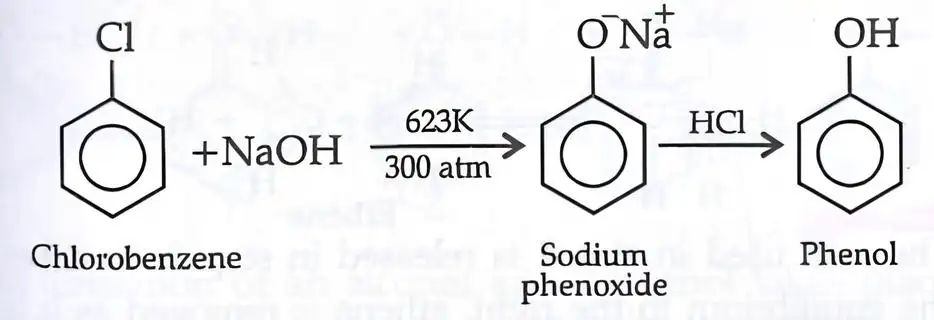
Example 2: Write the reaction for the preparation of phenol from chlorobenzene.
Solution: Chlorobenzene reacts with sodium hydroxide at high temperature and pressure to form sodium phenoxide, which on acidification yields phenol.
C₆H₅Cl + NaOH → C₆H₅ONa + NaCl
C₆H₅ONa + HCl → C₆H₅OH + NaCl
Example 3: Explain the Williamson synthesis of ethers with an example.
Solution: Williamson synthesis involves the reaction of an alkyl halide with a sodium alkoxide to form an ether.
For example, bromoethane reacts with sodium ethoxide to form diethyl ether:
C₂H₅Br + C₂H₅ONa → C₂H₅OC₂H₅ + NaBr

Practice Set
Conceptual Questions:
- Level 1: Define primary, secondary, and tertiary alcohols with examples.
- Level 2: Explain why phenols are more acidic than alcohols.
Application-based Question:
- Level 3: Predict the product when 2-propanol is oxidized with potassium dichromate.
Answer Key
Conceptual Questions:
- Level 1: Primary alcohols have the –OH group attached to a carbon bonded to one other carbon (e.g., ethanol), secondary to two carbons (e.g., isopropanol), tertiary to three carbons (e.g., tert-butanol).
- Level 2: Phenols are more acidic because the phenoxide ion formed after losing H⁺ is resonance stabilized, whereas alkoxide ions from alcohols are not.
Application-based Question:
- Level 3: Oxidation of 2-propanol (secondary alcohol) with potassium dichromate yields acetone (a ketone).
Quick Reference Table
- Alcohols: General formula CₙH₂ₙ₊₁OH; classified as primary, secondary, and tertiary based on the carbon atom bearing the –OH group; prepared by reduction of aldehydes and ketones, hydration of alkenes, and hydrolysis of haloalkanes.
- Phenols: Hydroxyl group attached directly to a benzene ring; acidic due to resonance stabilization of the phenoxide ion; prepared from aryl halides, benzene sulfonic acid, diazonium salts, and cumene oxidation.
- Ethers: General formula R–O–R'; prepared by Williamson synthesis, dehydration of alcohols, reaction of alkyl halides with silver oxide, and reaction of diazomethane with alcohols; have lower boiling points than alcohols because they do not form hydrogen bonds between their own molecules.
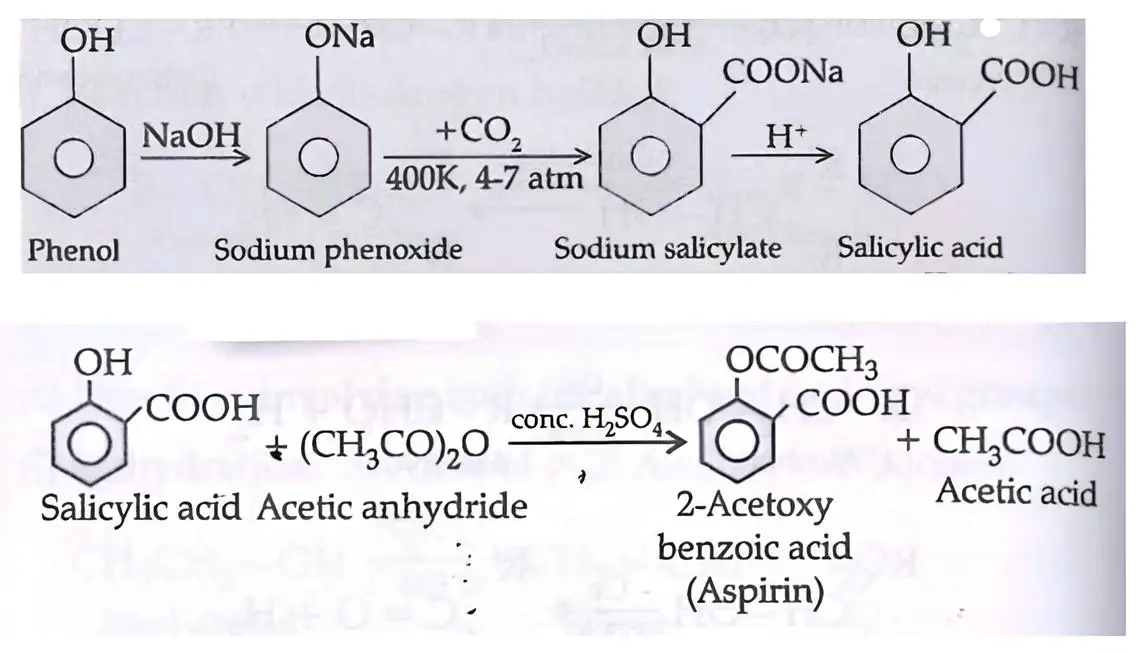
- Important Reactions: Kolbe reaction converts sodium phenoxide to salicylic acid; Fries rearrangement converts phenyl esters to hydroxy aryl ketones; Williamson synthesis forms ethers from alkyl halides and sodium alkoxides; Lucas test, iodoform test, and ferric chloride test are useful for distinguishing alcohols and phenols.
Common Mistakes and Misconceptions
- Confusing primary, secondary, and tertiary alcohols based on the number of hydroxyl groups instead of the carbon atom to which the –OH group is attached.
- Thinking phenols and alcohols have similar acidity; phenols are much more acidic because the phenoxide ion is resonance-stabilized.
- Assuming ethers show intermolecular hydrogen bonding like alcohols; they do not, so their boiling points are lower.
- Mixing up alcohols and phenols: phenols have the –OH group directly attached to a benzene ring, while alcohols have it attached to a saturated carbon atom.
- Forgetting that the acidity of alcohols decreases from primary to tertiary because alkyl groups donate electron density.
- Confusing Williamson synthesis with hydration of alkenes; Williamson synthesis uses an alkyl halide and a sodium alkoxide to form an ether.
- Assuming all alcohols give the iodoform test; only alcohols with the CH₃CH(OH)– group or ethanol respond positively.
- Using the Lucas test for phenols; Lucas reagent is used to distinguish primary, secondary, and tertiary alcohols, not phenols.
Glossary
- Alcohol: Organic compound with one or more hydroxyl groups attached to saturated carbon atoms.
- Phenol: Aromatic compound with hydroxyl group attached directly to benzene ring.
- Ether: Compound with an oxygen atom connected to two alkyl or aryl groups.
- Primary Alcohol: –OH attached to carbon bonded to one other carbon.
- Secondary Alcohol: –OH attached to carbon bonded to two other carbons.
- Tertiary Alcohol: –OH attached to carbon bonded to three other carbons.
- Williamson Synthesis: Method to prepare ethers by reaction of alkyl halides with sodium alkoxides.
- Kolbe Reaction: Carboxylation of sodium phenoxide to form salicylic acid.
- Fries Rearrangement: Rearrangement of phenyl esters to hydroxy aryl ketones.
- Lucas Test: Test used to distinguish primary, secondary, and tertiary alcohols based on the rate of turbidity formation.
- Iodoform Test: Test for alcohols containing the CH₃CH(OH)– group or for ethanol, giving a yellow precipitate of iodoform.
- Ferric Chloride Test: Test for phenols that gives a coloured complex with neutral ferric chloride solution.