CLASS 12-COMMERCE . ENGLISH . KALEIDOSCOPE . WHY THE-NOVEL-MATTERS
Chapter 17 : Why The Novel Matters
Ch 17
ENGLISH
CLASS 12-COMMERCE
Introduction to D. H. Lawrence
D. H. Lawrence, full name David Herbert Lawrence (1885-1930), was an English writer and poet renowned for his novels that explore human emotions, relationships, and social issues. His works, including the famous novel Lady Chatterley's Lover, challenged social norms and continue to influence literature studies.
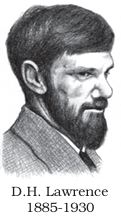
Lawrence was born in a coal-mining town to an uneducated miner father and an ambitious mother who was a teacher. He lived in various countries including Italy, Germany, Australia, Tahiti, and Mexico. His writings reflect a revolt against puritanism, mediocrity, and the dehumanisation caused by industrial society.
Key Elements
- Life span: 1885-1930
- Background: Son of a miner, lived in multiple countries
- Writing focus: Human relationships, emotions, social critique
- Famous work: Lady Chatterley's Lover
Practice Set
- Who was D. H. Lawrence and what themes did he explore in his writings?
- Describe the social background that influenced Lawrence's works.
- Explain why Lawrence's novels are still relevant today.
Answer Key
- D. H. Lawrence was an English writer known for novels exploring human emotions and social issues.
- He was born in a coal-mining town, son of a miner and a teacher, and lived in various countries.
- His novels challenge social norms and explore deep psychological themes, making them relevant.
Quick Reference
- D. H. Lawrence: English novelist and poet (1885-1930)
- Known for exploring human emotions and social issues
- Famous novel: Lady Chatterley's Lover
Glossary
- Puritanism: Strict moral and religious beliefs
- Dehumanisation: Loss of human qualities due to industrialisation
- Revolt: Strong resistance or rebellion
The Concept of Man Alive
Lawrence presents a philosophical idea that a human being is not just a body with a mind or soul but a living whole, which he calls "man alive." He argues that every part of the body, including the hand, is alive and an essential part of the self. This challenges traditional views that separate the mind or soul from the body.
Key Elements
- Man alive: The whole living person, beyond just body or mind
- Body and mind unity: The hand and brain are equally alive and part of the self
- Critique of philosophy and science: They often ignore the living whole and focus on parts or abstract ideas
- Life as central: Life is only found in the living body, not in abstract spirits or souls
Textual Evidence
"My hand is alive, it flickers with a life of its own... And whatever is me alive is me."
"Nothing is important but life... Life with a capital L is only man alive."
Practice Set
- Explain Lawrence's idea of "man alive" in your own words.
- How does Lawrence challenge the traditional separation of body and mind?
- What criticism does Lawrence make of philosophers and scientists regarding life?
Answer Key
- Lawrence sees a human as a living whole, where body and mind are inseparable.
- He argues that the hand is as alive as the brain, opposing the idea that mind is superior.
- He criticizes philosophers and scientists for ignoring the living whole and focusing on parts or abstract concepts.
Quick Reference
- Man alive = whole living person
- Body and mind are equally alive
- Life is central, not abstract spirit
Glossary
- Philosopher: A person who studies fundamental questions about existence and knowledge
- Copula: A linking verb that connects the subject to a complement (e.g., is, become)
- Spirit: Non-physical part of a person, often considered immortal
Importance of the Novel
Lawrence considers the novel the "one bright book of life" because it can communicate the whole living person, or "man alive," unlike other forms of knowledge such as philosophy, science, or poetry. Novels show the full complexity of human life, emotions, and change, helping readers understand themselves and others deeply.
Key Elements
- Novel as life: The novel reflects the whole human experience
- Comparison with other forms: Philosophy, science, and poetry only capture parts of life
- Change and integrity: Novels show characters living with change and complexity, not fixed patterns
- Examples of great novels: The Bible, Homer, Shakespeare as supreme old novels
Textual Evidence
"The novel is the book of life... it can make the whole man alive tremble."
"If a character keeps on being good or bad according to pattern, the novel falls dead."
Practice Set
- Why does Lawrence believe the novel is superior to other forms of knowledge?
- How do novels portray human integrity despite inconsistency?
- Discuss the role of change in the novel and in life according to Lawrence.
Answer Key
- Novels communicate the whole living person, unlike philosophy or science which focus on parts.
- Novels show characters true to themselves, living with change rather than fixed patterns.
- Change is essential for life and love; novels reflect this dynamic nature of human beings.
Quick Reference
- Novel = whole life experience
- Characters must live, not follow fixed patterns
- Change is vital for integrity and love
Glossary
- Integrity: Being true to oneself
- Pattern: A fixed or repeated way of behaving
- Tremulation: A vibration or movement, metaphor for emotional impact
Language Work and Grammar
This section focuses on vocabulary, verb classes, and pronunciation related to the text.
Vocabulary
- Non-English expressions such as "Mens sana in corpore sano" (Latin) meaning "a healthy mind in a healthy body".
- Latin roots like mens (mind), corpus (body), and sanare (to heal) help understand word formation.
Verb Classes
Sentences consist of noun phrases and verb phrases. Intransitive verbs take only a subject and may be followed by complements (prepositional phrases). Copulas (linking verbs) like be, become, and seem link the subject to a complement.
Examples from the text:
- "My hand is alive." (be + adjective)
- "The novel is supremely important." (be + adjective phrase)
- "You’re a novelist." (be + noun phrase)
- "The novel is the book of life." (be + noun phrase)
Practice Set
- Identify intransitive verbs and copulas in given sentences.
- Classify the complements as noun phrases or adjective phrases.
- Find other examples of copulas in the text.
Answer Key
- Examples of copulas: "is" in "My hand is alive" (adjective complement), "are" in "You’re a novelist" (noun complement).
- Intransitive verbs: "withers" in "The grass withers." Complements can be prepositional phrases.
Pronunciation of 'ch' and 'gh'
The letter combination "ch" can be pronounced in three ways:
- /k/ as in "chemical", "chameleon" (often words of Latin or Greek origin)
- /ʧ/ as in "church", "chalk" (most common pronunciation)
- /ʃ/ as in "champagne", "chef" (words of French origin)
Examples of "ch" in different positions:
- Word initial: "chameleon" (/k/), "char" (/ʧ/), "chef" (/ʃ/)
- Word medial: "mechanic" (/k/), "ketchup" (/ʧ/), "machine" (/ʃ/)
- Word final: "loch" (/k/), "catch" (/ʧ/), "cache" (/ʃ/)
The letter combination "gh" can be pronounced as:
- /g/ as in "ghost", "ghoul"
- /f/ as in "cough", "laughter"
- Silent as in "taught", "plough"
Practice Set
- Identify the pronunciation of "ch" in given words.
- Classify "gh" sounds in sample words as /g/, /f/, or silent.
- Find other words with "ch" and "gh" and guess their pronunciation.
Answer Key
- "Chameleon" pronounced /k/, "chalk" pronounced /ʧ/, "chef" pronounced /ʃ/.
- "Ghost" pronounced /g/, "cough" pronounced /f/, "taught" silent "gh".
Quick Reference
- "Ch" sounds: /k/, /ʧ/, /ʃ/ depending on word origin
- "Gh" sounds: /g/, /f/, or silent
- Copulas link subject to complement
Glossary
- Intransitive verb: A verb that does not take a direct object
- Copula: Linking verb connecting subject and complement
- Phoneme: Distinct unit of sound in a language
- Complement: Word or phrase that completes the meaning of a verb