CLASS 12-COMMERCE . ACCOUNTANCY . COMPANY ACCOUNTS AND ANALYSIS OF FINANCIAL ACCOUNTS . CASH FLOW-STATEMENT
Chapter 6 : Cash Flow Statement
Ch 6
ACCOUNTANCY
CLASS 12-COMMERCE
Cash Flow Statement
The Cash Flow Statement is a financial statement that shows the inflows and outflows of cash and cash equivalents during a specific period. It helps in understanding how cash is generated and used in business operations, investing, and financing activities. This statement is prepared in accordance with Accounting Standard-3 (Revised).
Key Definitions and Features:
- Cash and Cash Equivalents: Assets that are cash or can be converted into cash immediately.
- Cash Inflows: Transactions that increase cash and cash equivalents.
- Cash Outflows: Transactions that decrease cash and cash equivalents.
- Accounting Standard-3 (Revised): Provides guidelines for preparing the Cash Flow Statement.
Heads of Cash Flows as per AS-3 (Revised):
- Cash Flow from Operating Activities
- Cash Flow from Investing Activities
- Cash Flow from Financing Activities
Objectives of Preparing Cash Flow Statement:
- To depict sources and uses of cash.
- To facilitate formulation of financial policies such as dividend policy.
- To ascertain the liquidity position of the enterprise.
- To determine the net change in cash and cash equivalents.
- To study trends in cash receipts and payments.
Benefits of Cash Flow Statement:
- Provides accurate information about cash-based transactions.
- Helps in assessing future cash requirements by comparing past cash budgets.
- Assists management in financial decision-making and prioritizing activities.
- Reveals investing and financing cash transactions and helps evaluate financial structure.
- Helps identify profitability when compared with ratio analysis.
Practice Set:
- Level 1 – Easy: Define Cash Flow Statement and list its three main heads.
- Level 2 – Moderate: Explain the objectives of preparing a Cash Flow Statement.
- Level 3 – Challenging: Discuss the benefits of Cash Flow Statement for a business.
Answer Key:
- Cash Flow Statement shows inflows and outflows of cash and cash equivalents.
- Three main heads: Operating, Investing, and Financing Activities.
- Objectives include depicting cash sources and uses, liquidity assessment, and financial policy formulation.
- Benefits include accurate cash transaction information, future cash planning, and financial structure evaluation.
Quick Reference: Cash Flow Statement = Operating + Investing + Financing Activities cash flows.
Glossary:
- Cash Equivalents: Liquid assets convertible to cash immediately.
- Liquidity: Ability to meet short-term obligations.
Operating Activities
Operating Activities are the main revenue-generating activities of a business. They include transactions and events that affect net profit or loss and involve cash inflows and outflows related to day-to-day operations.
Examples of Cash Flow from Operating Activities:
- Cash sales of goods and services.
- Cash received from customers (trade receivables).
- Cash paid to suppliers (trade payables).
- Payments of operating expenses such as rent, wages, salaries, and taxes.
- Cash received as commission, fees, or royalties.
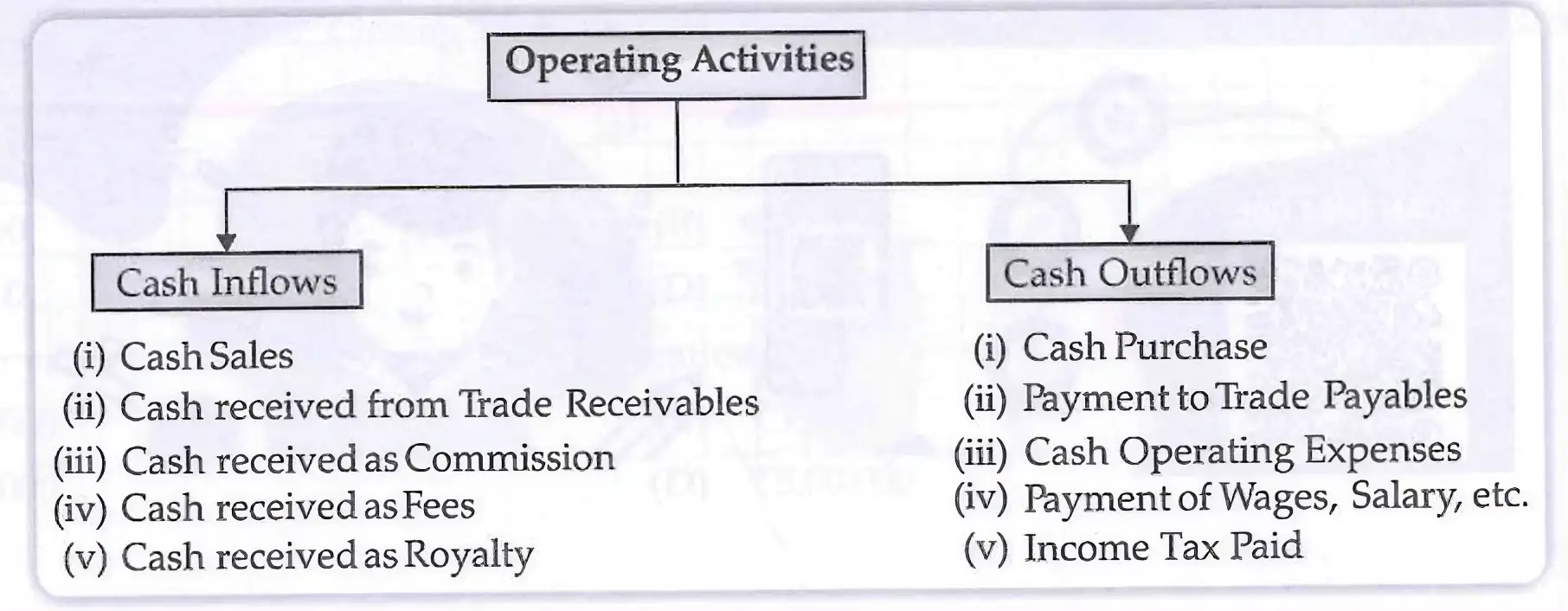
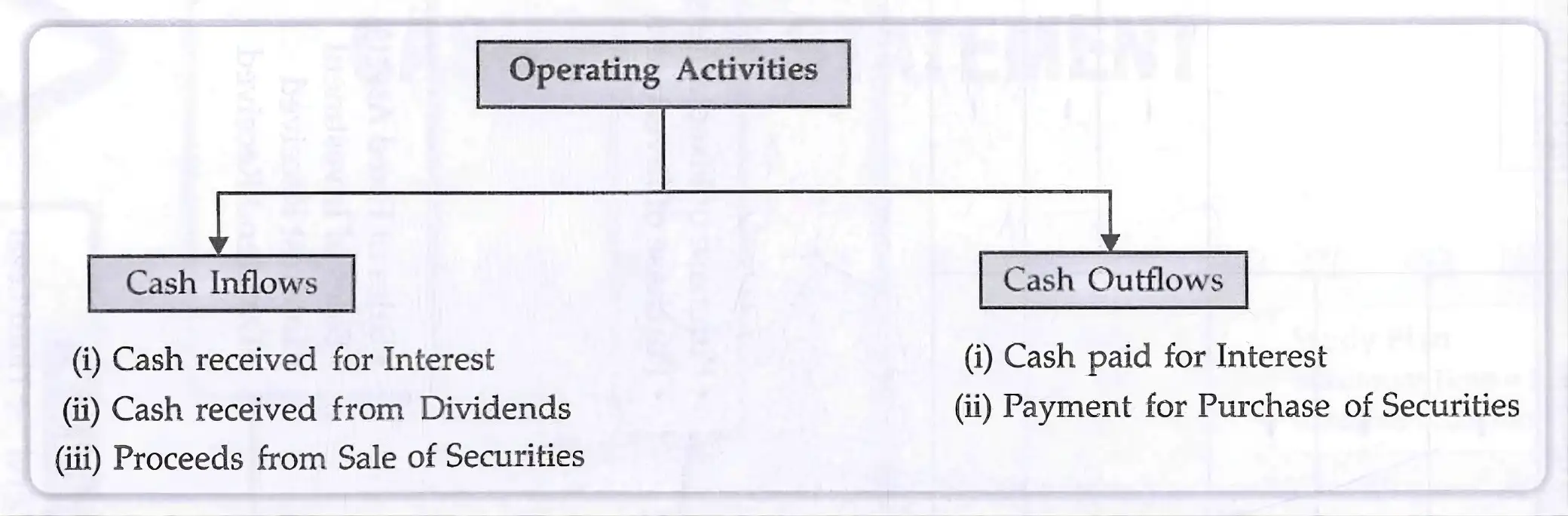
Operating Activities in Financial Companies: For financial companies, operating activities mainly involve dealing in securities.
- Cash inflows: Interest received, dividends received, sale of securities.
- Cash outflows: Interest paid, purchase of securities.
Practice Set:
- Level 1 – Easy: List two examples of cash inflows from operating activities.
- Level 2 – Moderate: Explain why operating activities are important for a business.
- Level 3 – Challenging: Differentiate between operating activities of manufacturing and financial companies.
Answer Key:
- Examples: Cash sales, cash received from customers.
- Operating activities generate revenue and affect net profit.
- Manufacturing companies focus on sales and expenses; financial companies focus on securities transactions.
Quick Reference: Operating activities = day-to-day business cash flows.
Glossary:
- Trade Receivables: Amounts owed by customers.
- Trade Payables: Amounts owed to suppliers.
Investing Activities
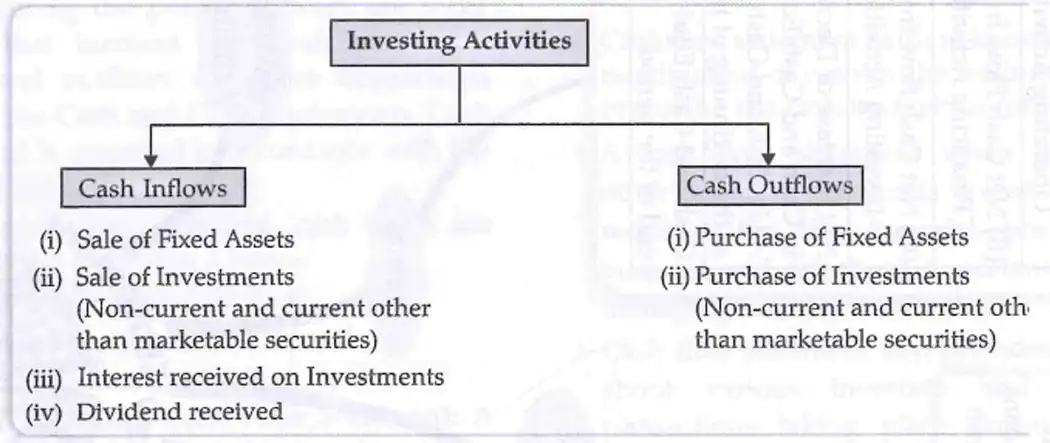
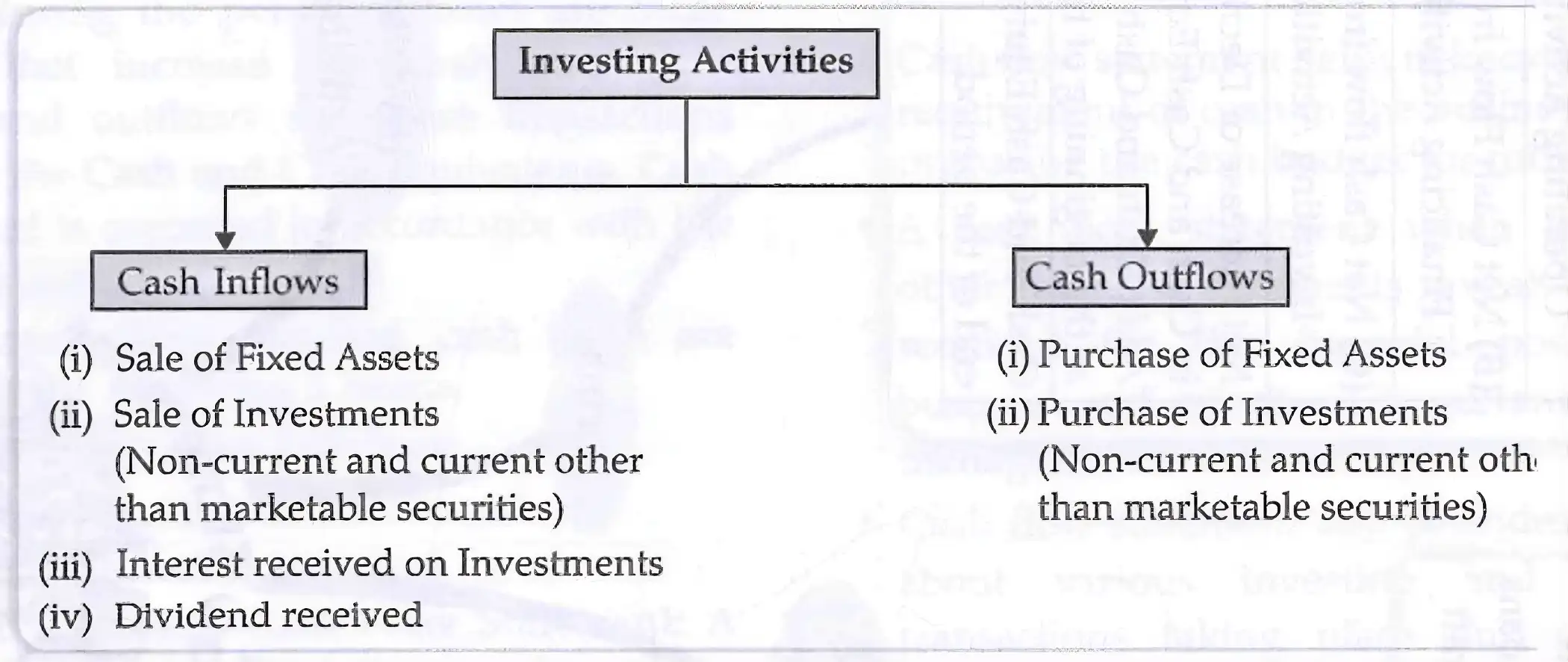
Investing Activities relate to acquisition and disposal of long-term assets and other investments not included in cash equivalents.
Examples of Cash Flow from Investing Activities:
- Cash inflows: Sale of fixed assets, sale of investments, interest received on investments, dividends received.
- Cash outflows: Purchase of fixed assets, purchase of investments.
Practice Set:
- Level 1 – Easy: Define investing activities with two examples.
- Level 2 – Moderate: Explain the significance of cash inflows from investing activities.
- Level 3 – Challenging: Prepare a simple cash flow calculation from investing activities given asset purchase and sale data.
Answer Key:
- Investing activities involve buying and selling long-term assets; examples include purchase and sale of machinery.
- Cash inflows indicate recovery of investments and income from investments.
- Net cash flow = Cash received from sale - Cash paid for purchase.
Quick Reference: Investing activities = cash flows from asset and investment transactions.
Glossary:
- Fixed Assets: Long-term tangible assets used in business.
- Investments: Assets held for earning income or capital appreciation.
Financing Activities
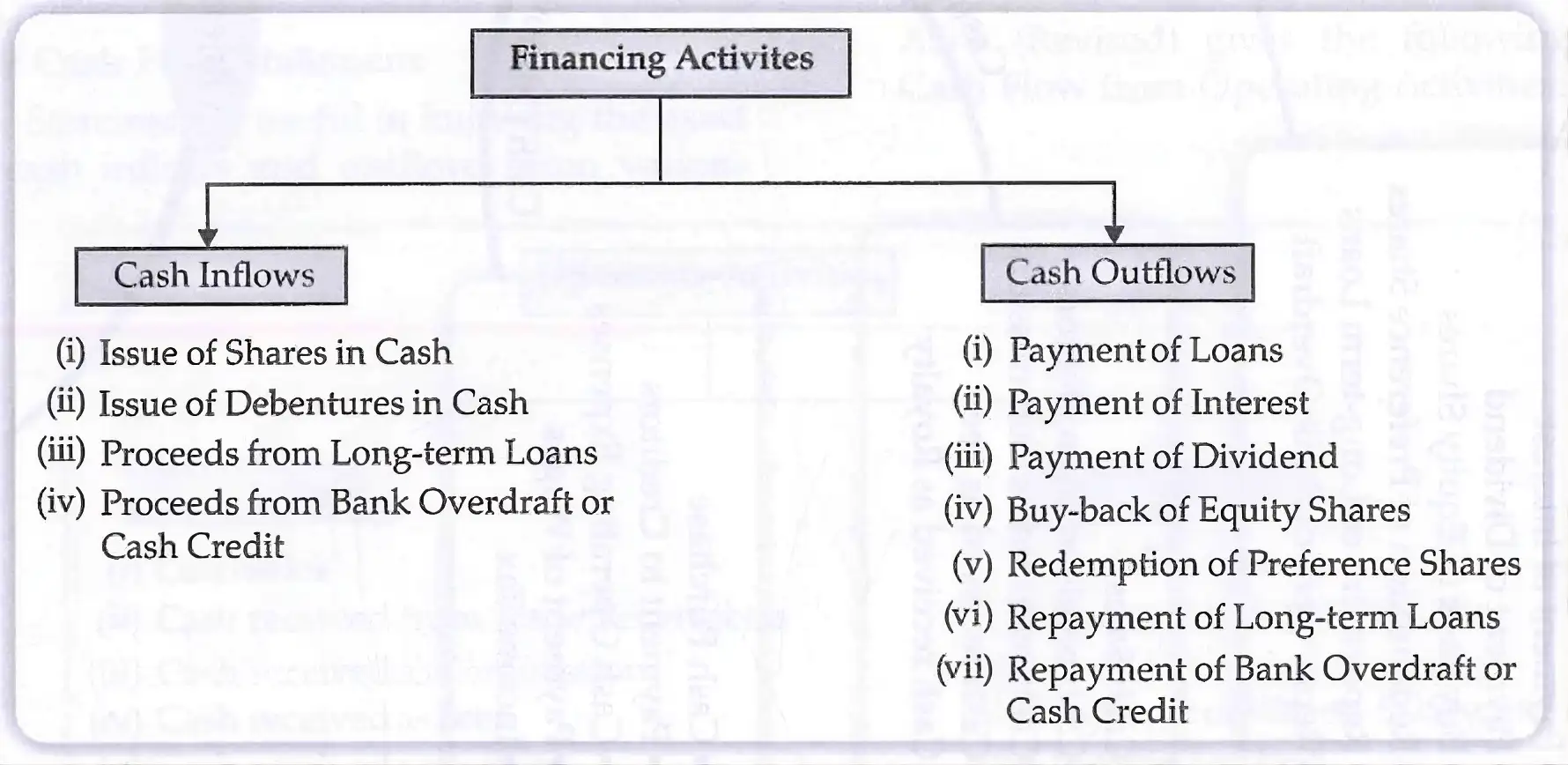
Financing Activities result in changes in the size and composition of the owners’ capital and borrowings of the business.
Examples of Cash Flow from Financing Activities:
- Cash inflows: Proceeds from issuing shares, debentures, long-term loans, and bank credit.
- Cash outflows: Repayment of loans, payment of interest and dividends, buyback of shares, redemption of preference shares, repayment of bank credit.
Practice Set:
- Level 1 – Easy: List two cash inflows and two cash outflows from financing activities.
- Level 2 – Moderate: Explain the importance of financing activities in cash flow management.
- Level 3 – Challenging: Prepare a cash flow statement format using the indirect method for financing activities.
Answer Key:
- Inflows: Issue of shares, long-term loans; Outflows: Loan repayment, dividend payment.
- Financing activities provide funds for business growth and capital structure management.
- Format includes listing inflows and outflows, calculating net cash from financing activities.
Quick Reference: Financing activities = cash flows related to capital and borrowings.
Glossary:
- Debentures: Long-term debt instruments issued by companies.
- Dividend: Distribution of profits to shareholders.
Preparation of Cash Flow Statement
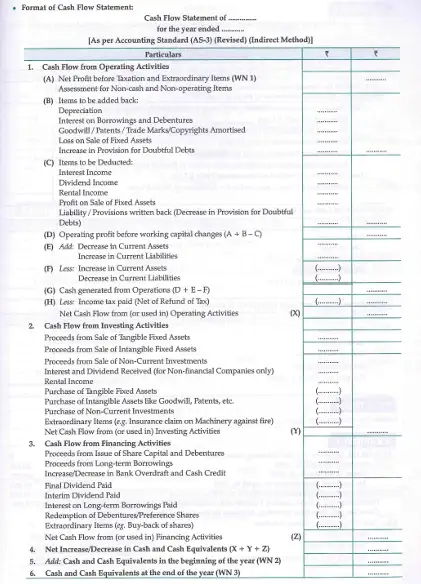
The Cash Flow Statement is prepared using the indirect method as per Accounting Standard-3 (Revised). It involves adjusting net profit for non-cash expenses and changes in working capital, and then adding cash flows from investing and financing activities.
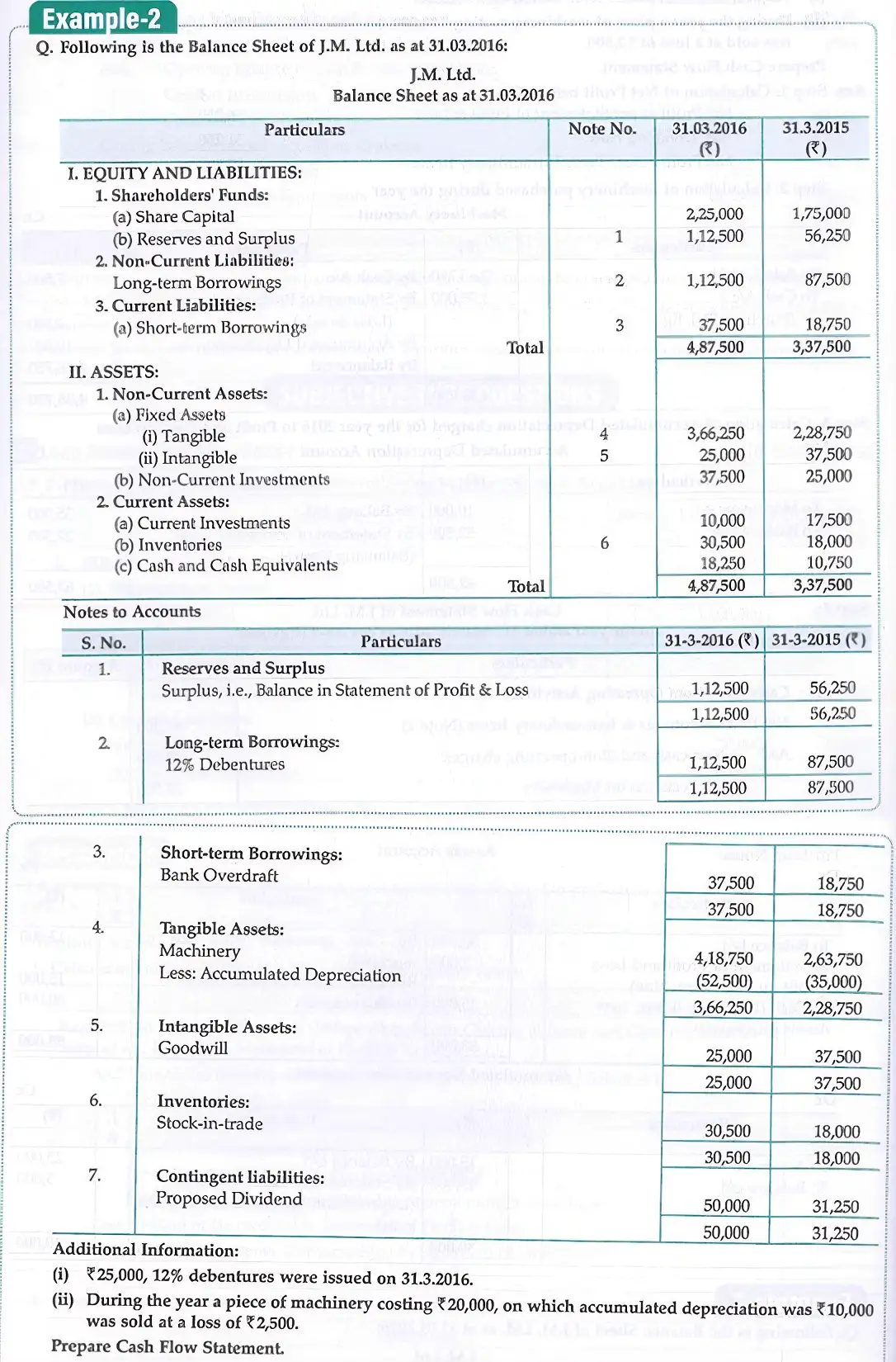
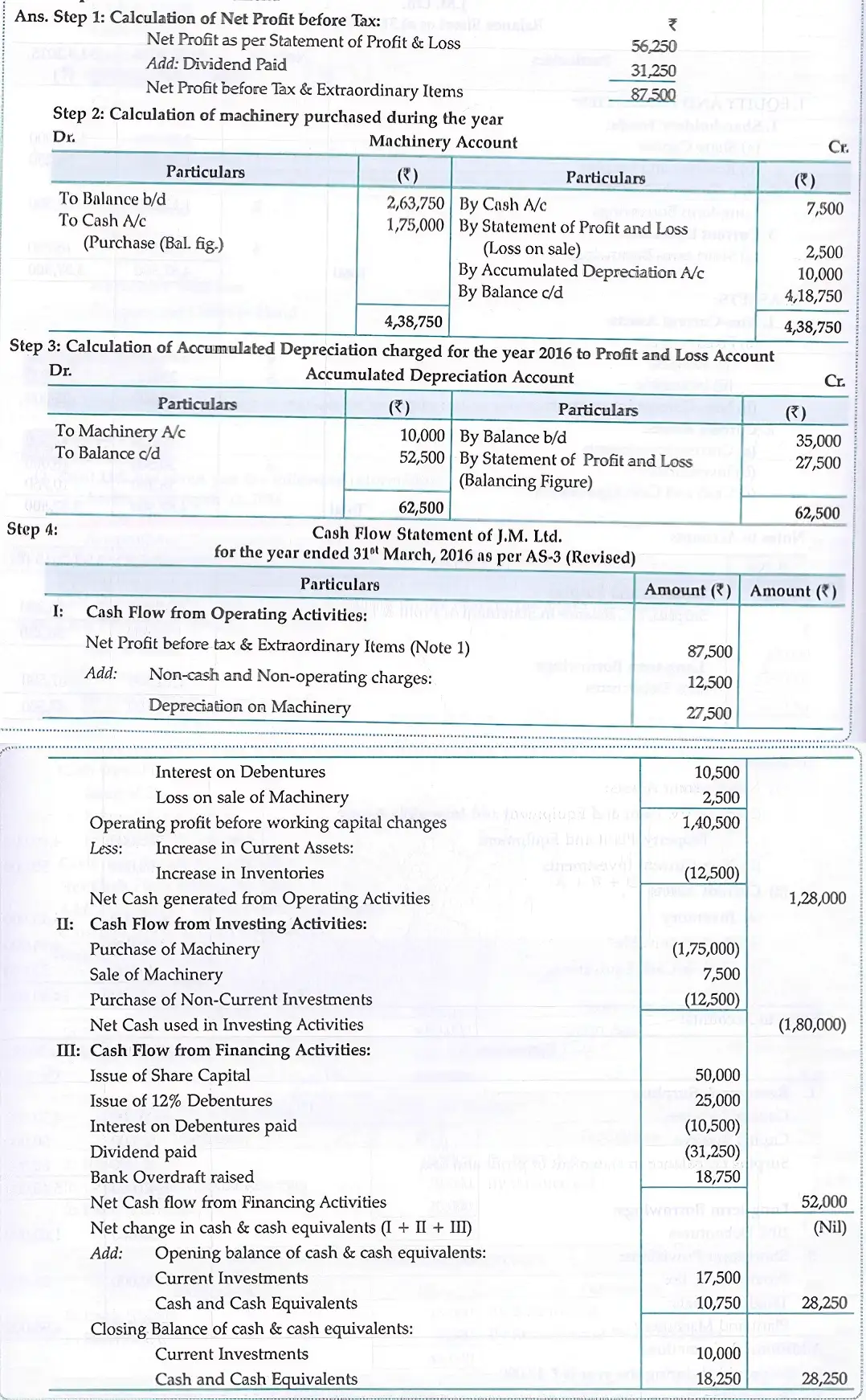
Step-by-step Explanation:
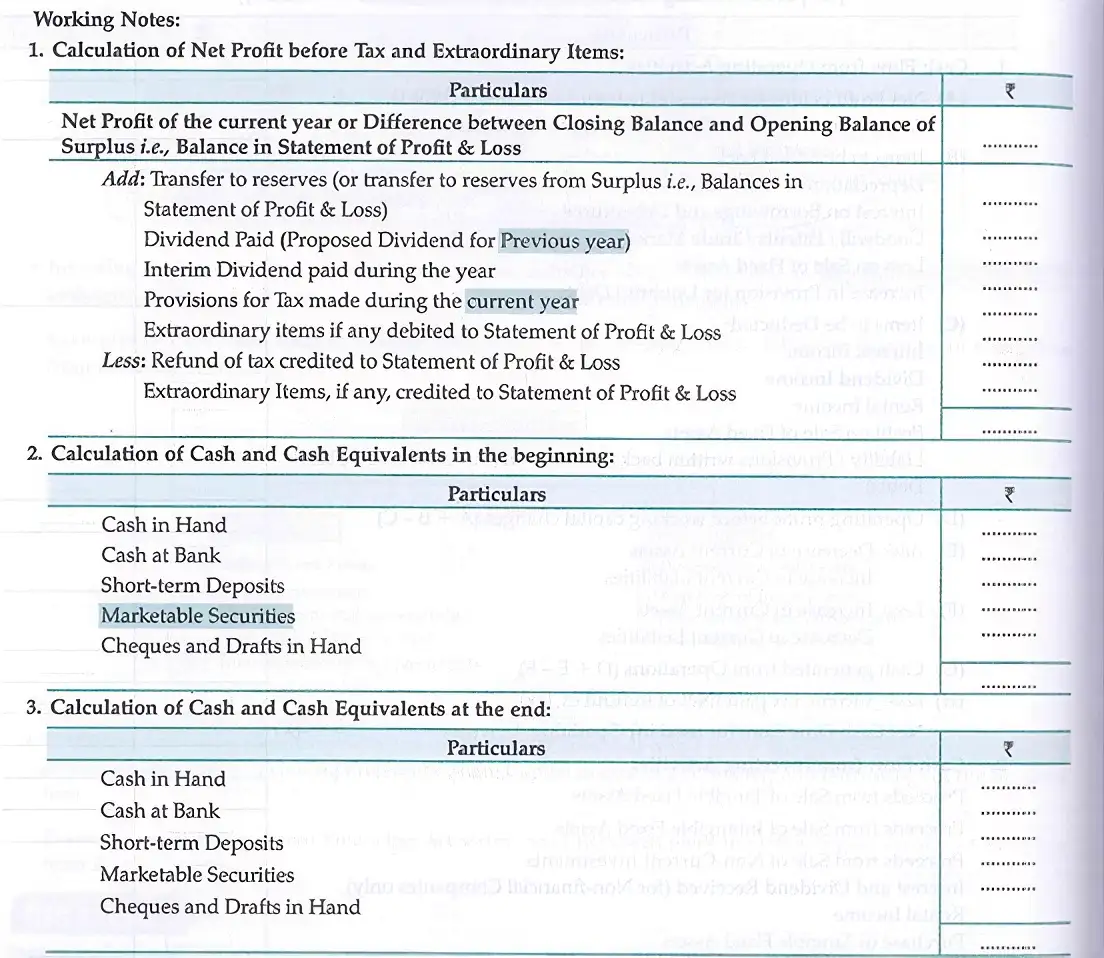
- Calculate net profit before tax and extraordinary items by adjusting net profit with dividends, reserves, and taxes.
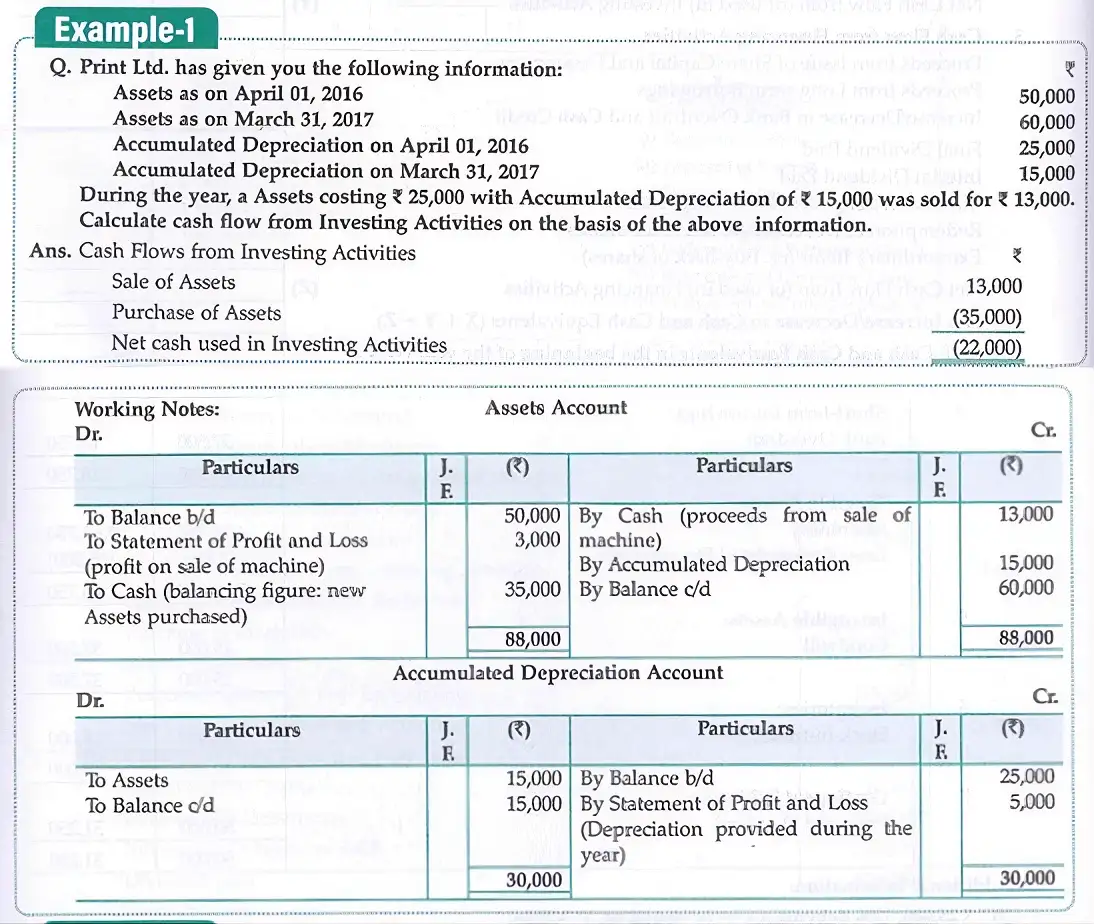
- Prepare asset and accumulated depreciation accounts to find cash used or received from asset transactions.
- Calculate cash flows from operating activities by adjusting net profit for non-cash expenses and working capital changes.
- Calculate cash flows from investing activities based on asset purchases and sales.
- Calculate cash flows from financing activities based on changes in capital and borrowings.
- Sum the three activities to find net increase or decrease in cash and cash equivalents.
- Adjust for opening cash balance to find closing cash balance.
Practice Set:
- Level 1 – Easy: What is the first step in preparing a cash flow statement using the indirect method?
- Level 2 – Moderate: Explain how depreciation affects the cash flow from operating activities.
- Level 3 – Challenging: Prepare a cash flow statement from given balance sheets and profit and loss data.
Answer Key:
- Start with net profit before tax and extraordinary items.
- Depreciation is a non-cash expense added back to net profit.
- Use working notes and adjustments to prepare the statement as per AS-3.
Quick Reference: Cash Flow Statement = Net Profit ± Non-cash items ± Working Capital changes + Investing + Financing Activities.
Glossary:
- Indirect Method: Preparing cash flow statement by adjusting net profit for non-cash transactions.
- Working Capital: Current assets minus current liabilities.