CLASS 11-PCB . CHEMISTRY . CHEMISTRY PART II . HYDROCARBONS
Chapter 9 : Hydrocarbons
Ch 9
CHEMISTRY
CLASS 11-PCB
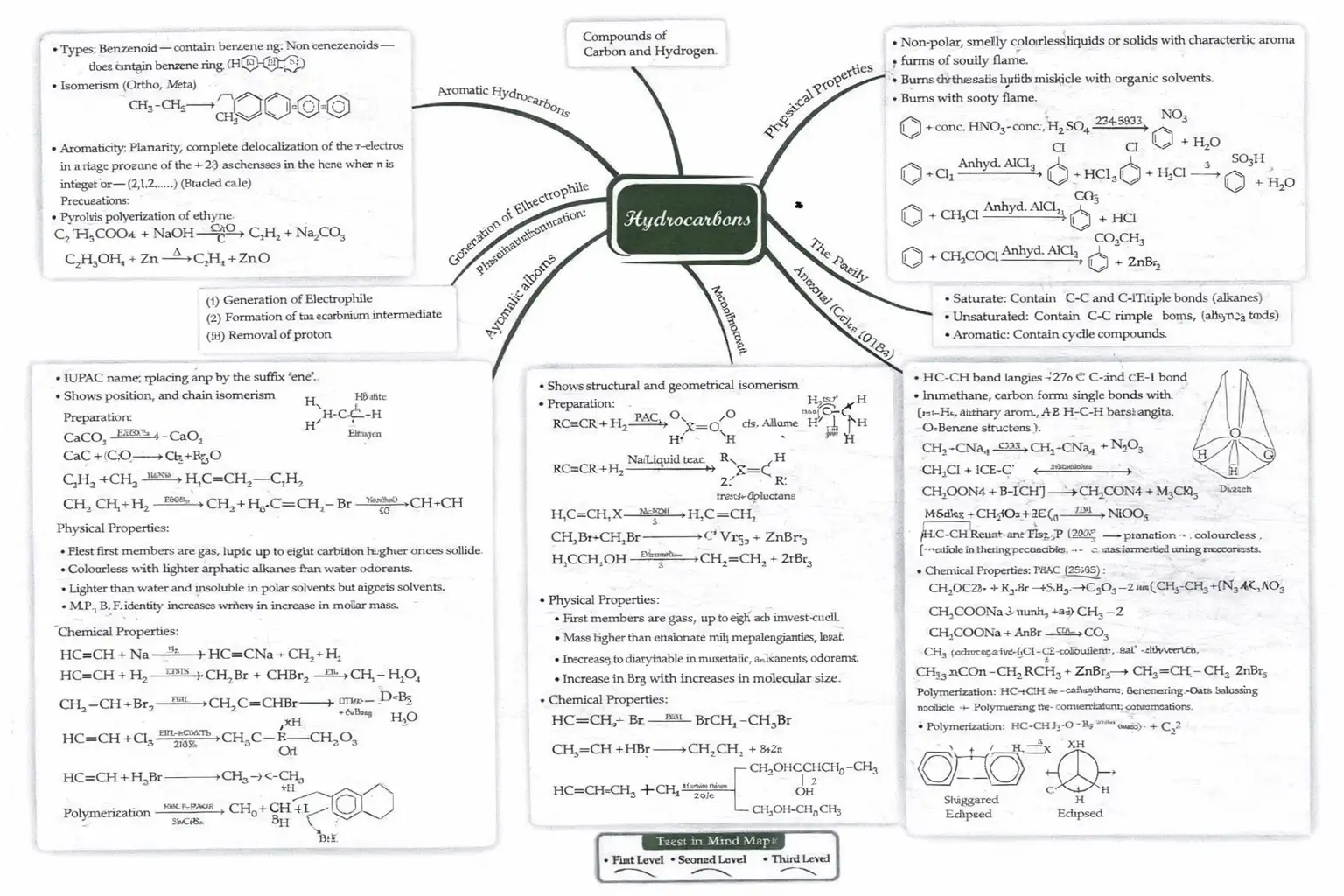
Hydrocarbons
Definition and Classification
Hydrocarbons are organic compounds composed exclusively of carbon and hydrogen atoms. They are primarily derived from coal and petroleum. Hydrocarbons are classified into three main categories:
- Saturated Hydrocarbons: Contain only single bonds between carbon atoms (C–C). Example: Ethane (CH₃–CH₃).
- Unsaturated Hydrocarbons: Contain one or more double (C=C) or triple (C≡C) bonds. Examples: Ethene (CH₂=CH₂), Ethyne (CH≡CH).
- Aromatic Hydrocarbons: Contain at least one aromatic ring, such as benzene (C₆H₆).
Alkanes
Alkanes are the simplest saturated hydrocarbons with the general formula CₙH₂ₙ₊₂, where n is a positive integer. They have strong C–C and C–H single bonds, making them relatively chemically inert. Alkanes are also called paraffins, meaning "little affinity" due to their low reactivity.
Methane (CH₄) is the first alkane, with a tetrahedral structure and bond angles of 109.5°. The bonds are formed by overlapping sp³ hybrid orbitals of carbon with s orbitals of hydrogen.
Isomerism and Alkyl Groups
Alkanes exhibit chain, position, and conformational isomerism. Carbon atoms are classified based on the number of carbons attached: primary (1°), secondary (2°), tertiary (3°), and quaternary (4°). Alkyl groups are substituents derived from alkanes by removing one hydrogen atom, with the general formula CₙH₂ₙ₊₁.
Writing IUPAC Structures
Steps to write the correct structure from an IUPAC name:
- Identify the longest carbon chain (parent alkane).
- Number the carbon atoms starting from the end nearest to substituents.
- Attach substituents to the correct carbon atoms based on numbering.
- Complete the valency of each carbon with hydrogen atoms.
Preparation of Alkanes
Alkanes can be prepared by several methods:
- Hydrogenation of Unsaturated Hydrocarbons: Unsaturated hydrocarbons react with hydrogen in the presence of catalysts like Ni, Pd, or Pt to form alkanes.
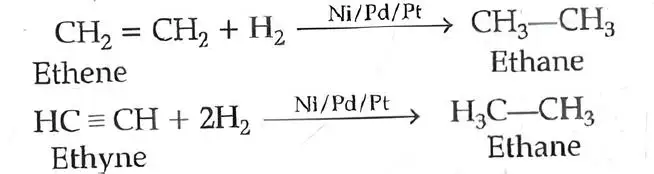
- Reduction of Alkyl Halides: Alkyl halides (except fluorides) react with zinc and dilute hydrochloric acid to form alkanes.
- Wurtz Reaction: Sodium metal reacts with alkyl halides in dry ether to couple alkyl groups, increasing carbon chain length.
- Decarboxylation: Sodium salts of carboxylic acids heated with soda lime produce alkanes with one less carbon atom.
- Kolbe’s Electrolytic Method: Electrolysis of sodium acetate in water produces ethane, carbon dioxide, hydrogen, and sodium hydroxide.
Physical Properties of Alkanes
Alkanes are non-polar molecules with weak van der Waals forces. The first four members (C₁ to C₄) are gases, C₅ to C₁₇ are liquids, and those with 18 or more carbons are solids at room temperature (298 K). They are colourless and odourless. Increased branching lowers boiling points due to decreased surface area and weaker intermolecular forces. Alkanes with even numbers of carbon atoms have higher melting points than adjacent odd-numbered alkanes.
Chemical Properties of Alkanes
Alkanes primarily undergo substitution reactions due to their saturated nature and strong C–H bonds. The most common chemical reactions of alkanes include:
- Substitution Reactions: One or more hydrogen atoms in alkanes are replaced by halogen atoms (halogenation), nitro groups, or sulphonic acid groups. For example, halogenation of methane with chlorine produces chloromethane and hydrochloric acid.
- Combustion: Alkanes burn in the presence of oxygen to produce carbon dioxide and water, releasing a large amount of heat. This makes them valuable as fuels.
- Controlled Oxidation: Under specific conditions and catalysts, alkanes can be oxidized to form useful chemicals such as methanol, formaldehyde, acetic acid, and alcohols.
- Isomerisation: Straight-chain alkanes can be converted into branched-chain isomers in the presence of catalysts like anhydrous aluminium chloride and hydrogen chloride gas.
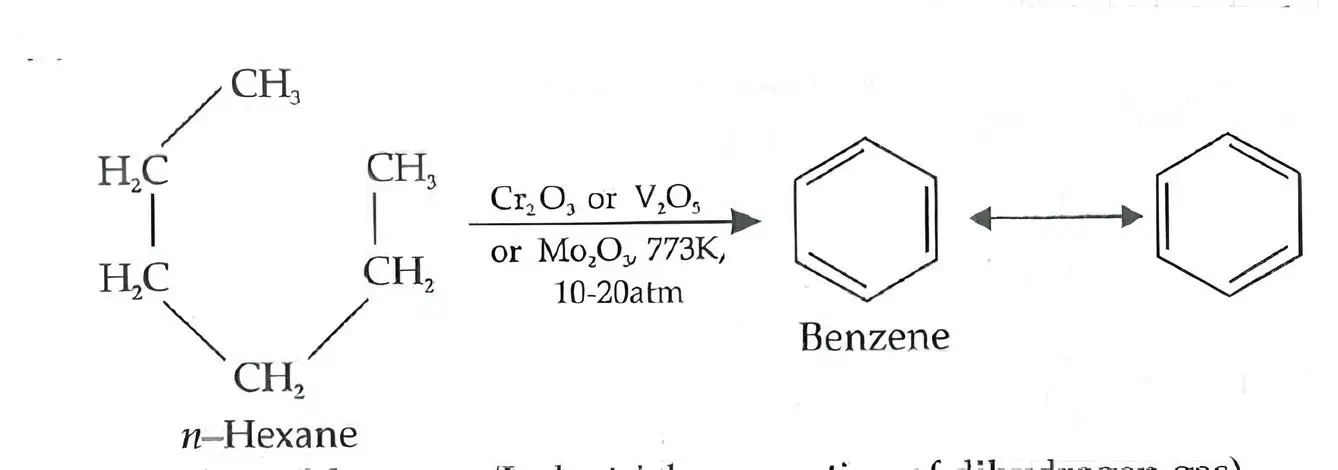
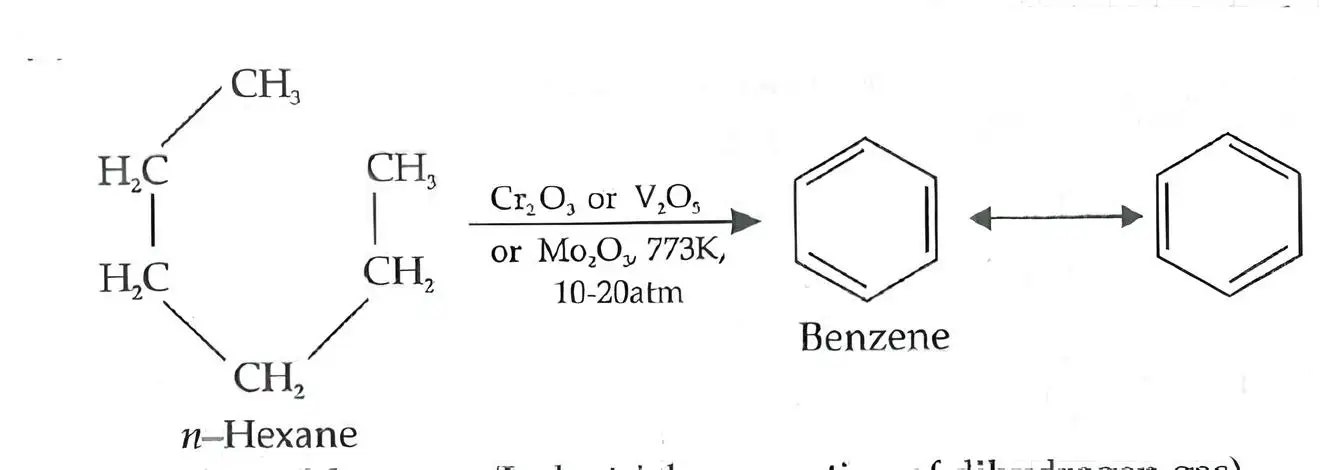
- Aromatization: Dehydrogenation and cyclization of alkanes can produce aromatic hydrocarbons like benzene and its homologues under high temperature and catalyst conditions.
- Reaction with Steam: Methane reacts with steam at high temperature in the presence of a nickel catalyst to produce carbon monoxide and hydrogen gas, an important industrial process for hydrogen production.
- Pyrolysis (Cracking): Heating higher alkanes causes their decomposition into lower alkanes and alkenes, which is useful in petroleum refining.
Substitution Reactions
Alkanes undergo substitution reactions where one or more hydrogen atoms are replaced by halogens or other groups, such as halogenation.
Mechanism of Halogenation
Initiation: Homolytic cleavage of chlorine molecule under light or heat produces chlorine radicals.
Cl₂ ʰᵛ⟶ 2Cl•
Propagation: Chlorine radical abstracts hydrogen from methane forming methyl radical and HCl.
Cl• + CH₄ ⟶ HCl + CH₃•
Methyl radical reacts with chlorine molecule to form chloromethane and regenerate chlorine radical.
CH₃• + Cl₂ ⟶ CH₃Cl + Cl•
Termination: Radicals combine to form stable molecules.
Cl• + Cl• ⟶ Cl₂
CH₃• + CH₃• ⟶ CH₃–CH₃
Cl• + CH₃• ⟶ CH₃Cl
Combustion
Alkanes burn in oxygen to produce carbon dioxide and water, releasing large amounts of heat, making them useful fuels.
Controlled Oxidation
Alkanes can be oxidized under controlled conditions to form useful chemicals such as methanol, formaldehyde, acetic acid, and alcohols using specific catalysts and conditions.

Isomerisation
n-Alkanes can isomerise to branched alkanes in the presence of anhydrous aluminium chloride and hydrogen chloride gas.
Aromatization
Dehydrogenation and cyclization of alkanes produce benzene and its homologues under high temperature and catalysts.
Reaction with Steam
Methane reacts with steam in the presence of nickel catalyst at high temperature to produce carbon monoxide and hydrogen gas, an industrial method for hydrogen production.
Pyrolysis
Heating higher alkanes causes decomposition into lower alkanes, a process called pyrolysis or cracking.
Conformations of Alkanes
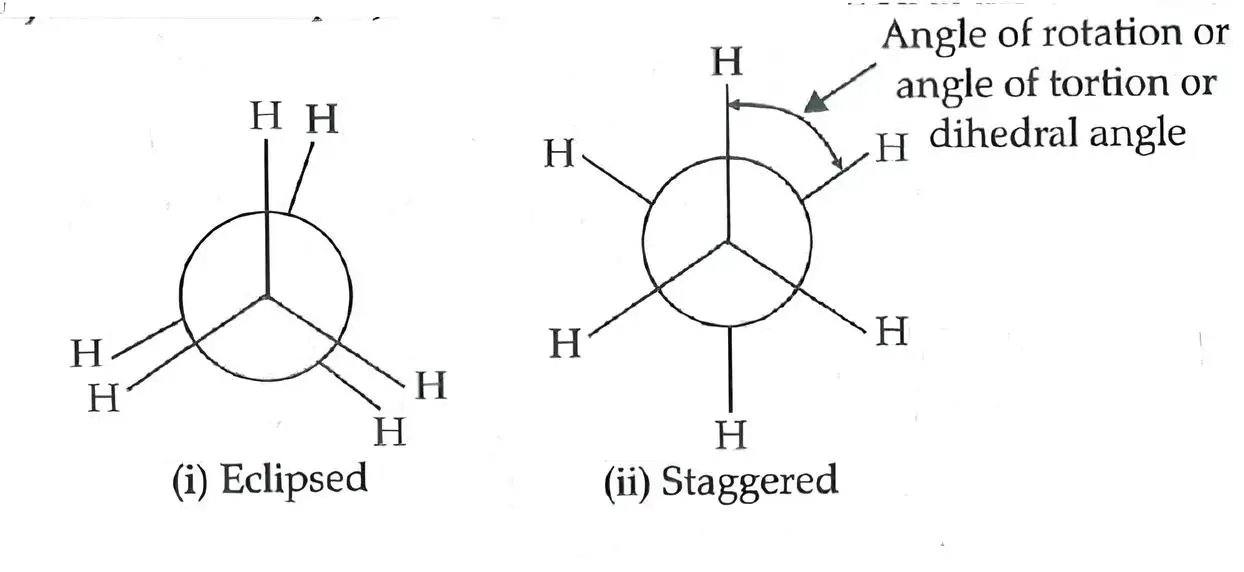
Alkanes have sigma (σ) bonds allowing free rotation about C–C bonds, resulting in different spatial arrangements called conformations or rotamers. Ethane shows eclipsed, staggered, and skew conformations. The staggered form is most stable due to less torsional strain.
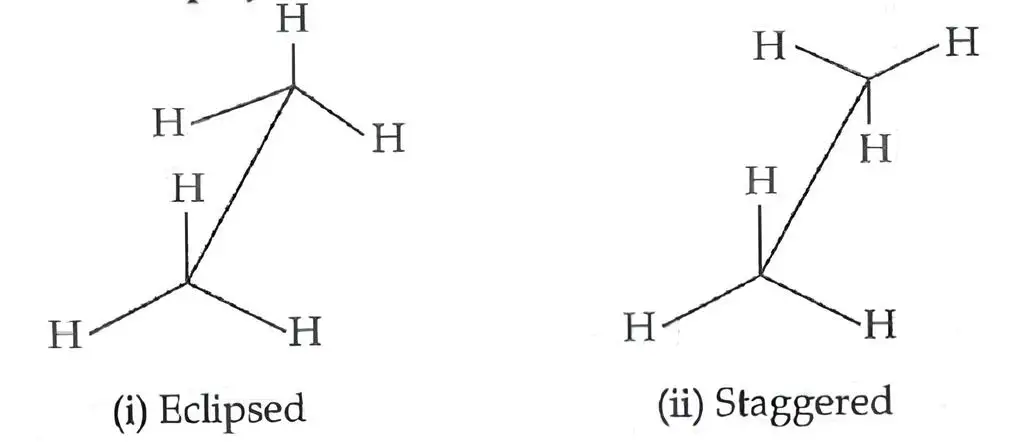
Sawhorse Projections
Newman Projections
Solved Examples
Example 1: Write the IUPAC name for CH₃–CH₂–CH(CH₃)–CH₃
Step 1: Identify the longest carbon chain: 4 carbons (butane).
Step 2: Number the chain from the end nearest the substituent: methyl group on carbon 3.
Step 3: Name the substituent and its position: methyl at carbon 3.
Answer: 3-methylbutane.
Example 2: Preparation of ethane by Wurtz reaction
Step 1: React methyl bromide (CH₃Br) with sodium metal (Na) in dry ether.
Step 2: Sodium removes bromine atoms and couples two methyl groups.
Step 3: Product formed is ethane (CH₃–CH₃) and sodium bromide (NaBr).
Practice Set
- Level 1: What is the general formula of alkanes?
- Level 2: Explain the mechanism of halogenation of methane.
- Level 3: Describe the Wurtz reaction and its significance in organic synthesis.
Answer Key
- Level 1: The general formula of alkanes is CₙH₂ₙ₊₂.
- Level 2: Halogenation involves initiation (Cl₂ homolysis), propagation (Cl• abstracts H from CH₄ forming CH₃• and HCl, CH₃• reacts with Cl₂ to form CH₃Cl and Cl•), and termination (radicals combine to form stable molecules).
- Level 3: Wurtz reaction couples two alkyl halides using sodium metal in dry ether to form a higher alkane, increasing carbon chain length.
Unsaturated Hydrocarbons
Alkenes
Alkenes are unsaturated hydrocarbons containing at least one carbon-carbon double bond (C=C) with sp² hybridisation and bond angles of 120°. They are also called olefins and have the general formula CₙH₂ₙ.
Examples include ethene (C₂H₄) and propene (C₃H₆).
Structure of Double Bond
The double bond consists of one sigma (σ) bond formed by head-on overlap of sp² orbitals and one pi (π) bond formed by sideways overlap of p orbitals. The C=C bond length (134 pm) is shorter than a C–C single bond (154 pm).
Nomenclature
- Select the longest carbon chain containing the double bond.
- Number the chain from the end nearest the double bond.
- Replace the suffix 'ane' with 'ene'.
Isomerism
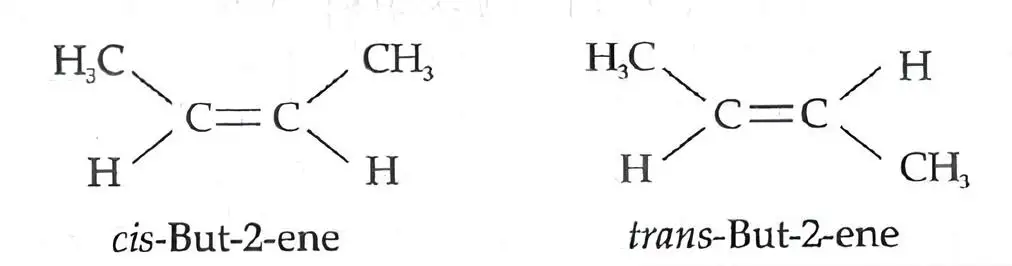
Alkenes exhibit chain, position, and geometrical (cis-trans) isomerism. Position isomers differ in the location of the double bond. Geometrical isomers differ in the spatial arrangement around the double bond; cis isomers have similar groups on the same side, trans on opposite sides.
Preparation of Alkenes
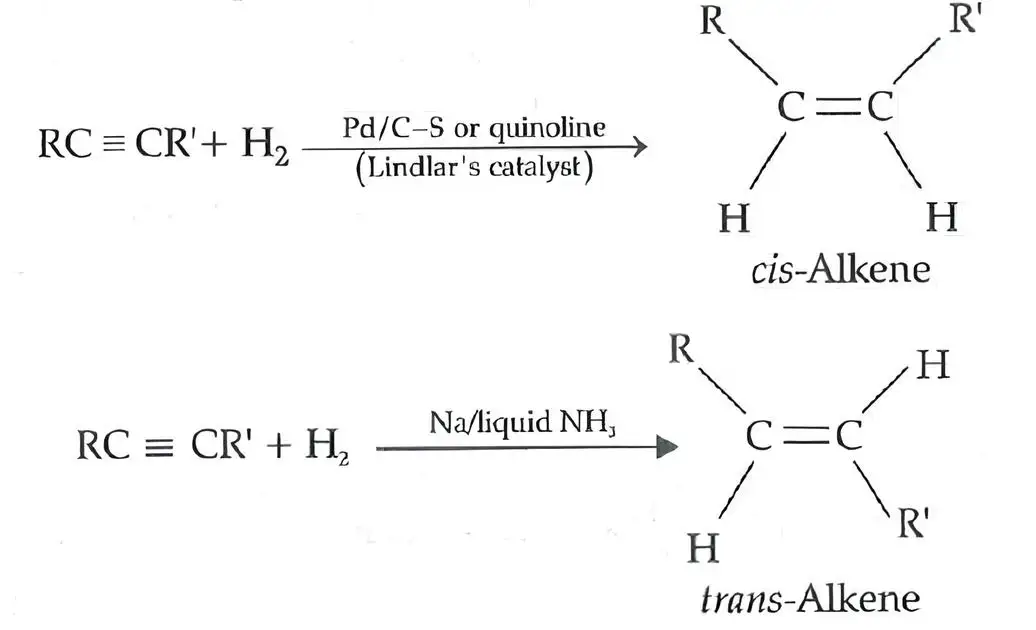
- From Alkynes: Partial hydrogenation of alkynes using Lindlar’s catalyst produces cis-alkenes; sodium in liquid ammonia produces trans-alkenes.
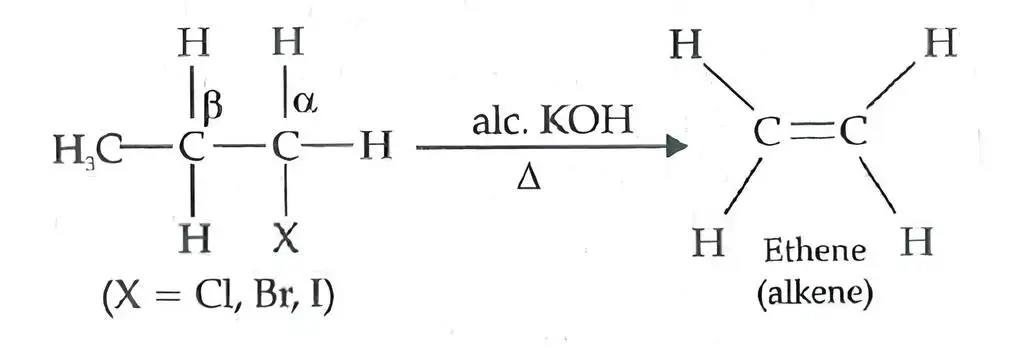
- From Alkyl Halides: Heating alkyl halides with alcoholic KOH causes dehydrohalogenation to form alkenes.
- From Vicinal Dihalides: Treatment with zinc removes halogens to form alkenes.
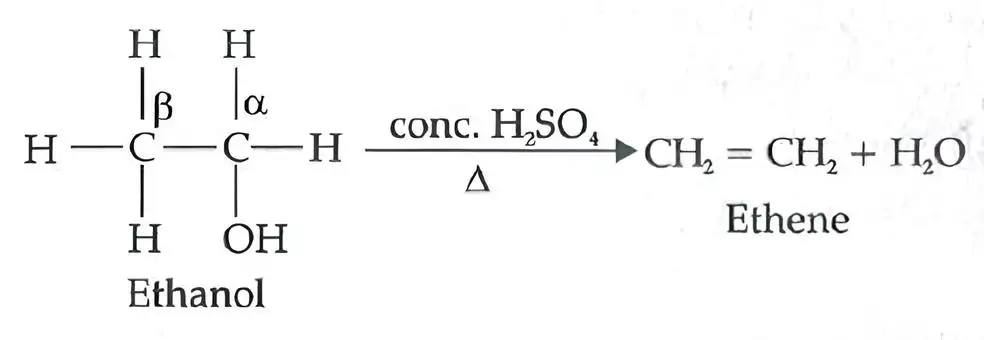
- From Alcohols: Acidic dehydration of alcohols with concentrated sulfuric acid forms alkenes.
Physical Properties
Alkenes are generally colourless and odourless, insoluble in water but soluble in nonpolar solvents. Boiling points increase with molecular size.
Chemical Properties
Alkenes undergo electrophilic addition reactions due to the presence of π electrons.
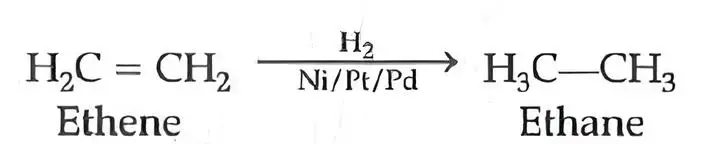
- Addition of Dihydrogen: Hydrogenation converts alkenes to alkanes using metal catalysts.
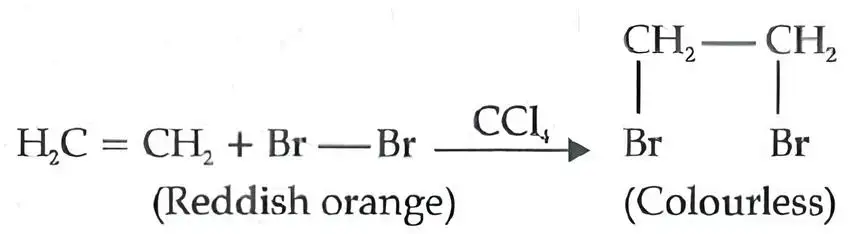
- Addition of Halogens: Halogens add across the double bond, decolourising bromine water.
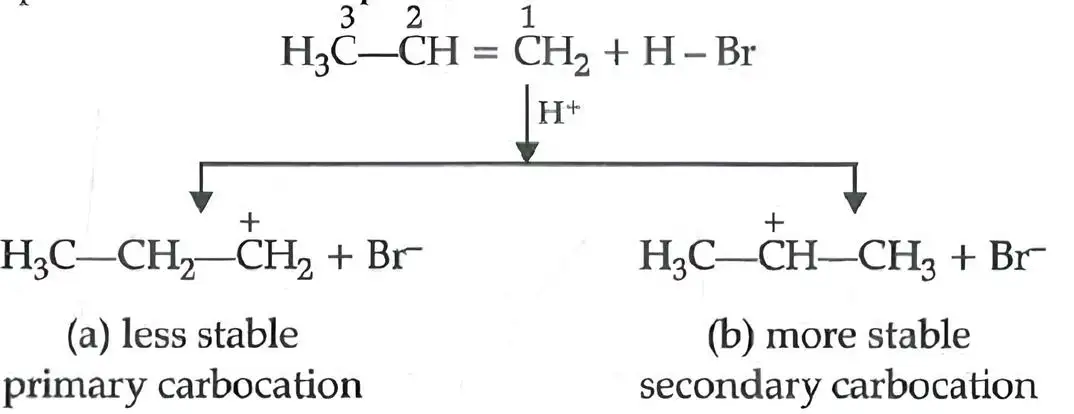
- Addition of Hydrogen Halides: Follows Markovnikov’s rule; in presence of peroxides, anti-Markovnikov addition occurs.
- Addition of Sulfuric Acid: Forms alkyl hydrogen sulfates.
- Addition of Water: Forms alcohols in presence of acid catalyst.
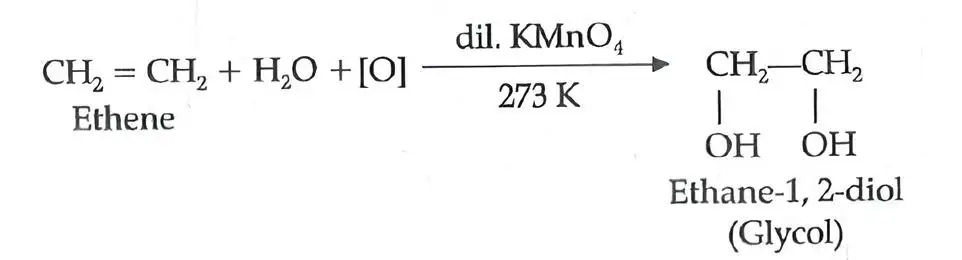
- Oxidation: Cold dilute KMnO₄ (Baeyer’s test) forms glycols; acidic KMnO₄ or K₂Cr₂O₇ oxidizes to ketones or acids.
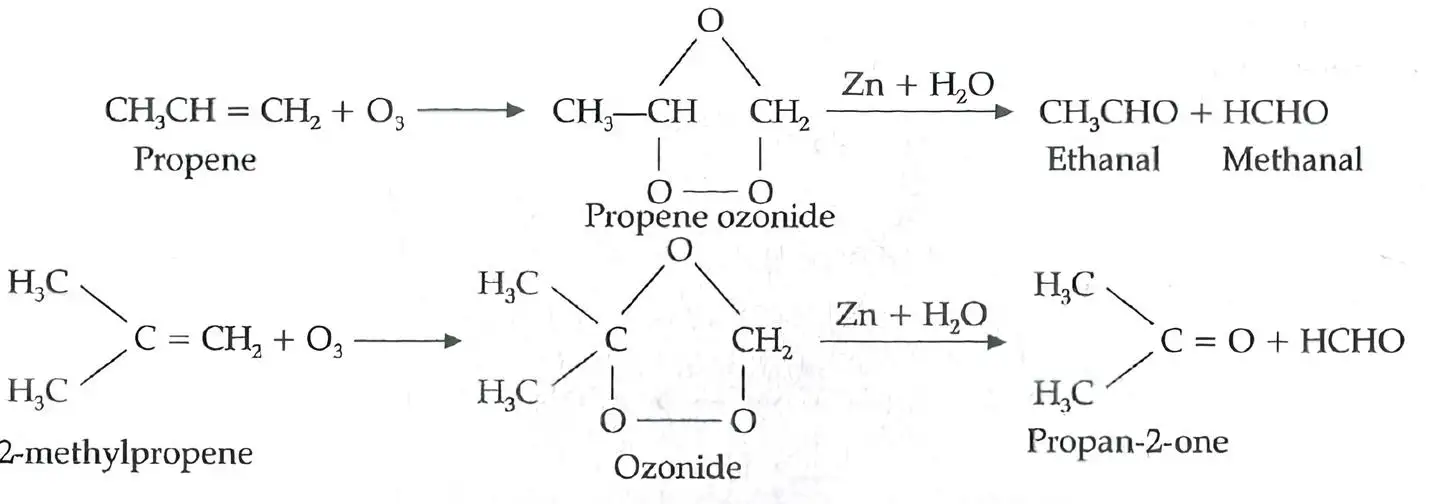
- Ozonolysis: Cleaves double bonds to form aldehydes or ketones.
- Polymerisation: Forms polymers like polythene from ethene.
Alkynes
Alkynes are unsaturated hydrocarbons containing at least one carbon-carbon triple bond with the general formula CₙH₂ₙ₋₂. The first member is ethyne (acetylene, C₂H₂).
Structure
In ethyne, carbon atoms are sp hybridised with a linear structure and bond angle of 180°. The triple bond consists of one sigma and two pi bonds.
Preparation of Alkynes
- From Calcium Carbide: Calcium carbide reacts with water to produce ethyne.
- From Vicinal Dihalides: Treatment with alcoholic KOH and sodamide converts vicinal dihalides to alkynes.

Physical Properties
Alkynes are colourless, weakly polar, and insoluble in water but soluble in organic solvents. Boiling and melting points increase with molecular mass.
Chemical Properties
Alkynes undergo electrophilic and nucleophilic addition reactions.
Alkynes react with sodium or sodium amide to form acetylides, releasing hydrogen or ammonia gas. This reaction distinguishes terminal alkynes from others.
Addition Reactions

Alkynes add protons and nucleophiles across the triple bond, following Markovnikov’s rule based on vinyl cation stability.
Examples include hydrogenation and halogenation of propyne.
These reactions serve as tests for unsaturation and produce aldehydes or ketones upon hydration.
Polymerization
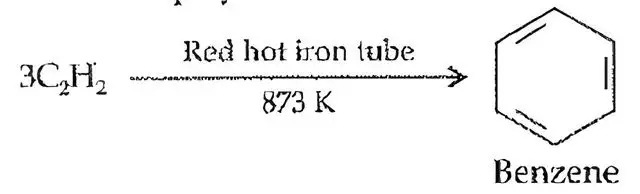
Alkyne polymerization can be linear, producing polyacetylene, or cyclic, producing benzene under high temperature.

Solved Examples
Example 1: Preparation of ethene from alkyl halide
Step 1: Heat alkyl halide with alcoholic KOH.
Step 2: Dehydrohalogenation occurs, removing halogen acid and forming alkene.
Step 3: Product is ethene (C₂H₄).
Example 2: Hydrogenation of ethene
Step 1: React ethene with hydrogen gas in presence of Ni catalyst.
Step 2: Double bond breaks and hydrogen atoms add to carbons.
Step 3: Product is ethane (C₂H₆).
Practice Set
- Level 1: What is the general formula of alkenes?
- Level 2: Explain Markovnikov’s rule with an example.
- Level 3: Describe the peroxide effect in addition of HBr to alkenes.
Answer Key
- Level 1: The general formula of alkenes is CₙH₂ₙ.
- Level 2: Markovnikov’s rule states that in addition of HX to unsymmetrical alkenes, the hydrogen attaches to the carbon with more hydrogens, and halide attaches to the carbon with fewer hydrogens. Example: Addition of HBr to propene forms 2-bromopropane as major product.
- Level 3: Peroxide effect causes anti-Markovnikov addition of HBr to alkenes via free radical mechanism, resulting in bromine attaching to the carbon with more hydrogens.
Aromatic Hydrocarbons
Introduction
Aromatic hydrocarbons, also called arenes, contain benzene rings. Benzenoids contain benzene rings, while non-benzenoids do not.
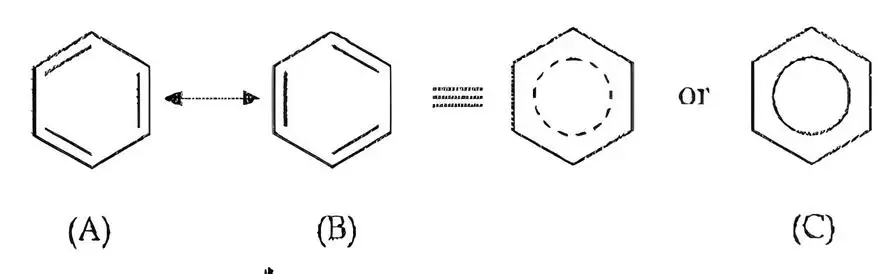
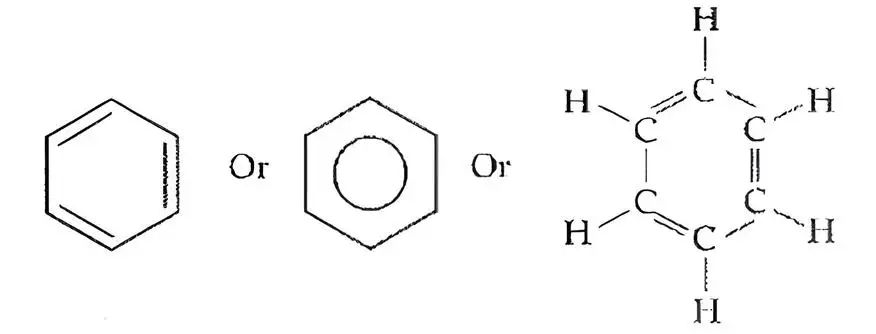
Benzene is a planar molecule with sp² hybridised carbons forming a hexagonal ring with alternating double bonds. It is resonance stabilized.
Isomerism
Disubstituted benzene compounds have ortho (1,2), meta (1,3), and para (1,4) isomers depending on substituent positions.
Structure of Benzene
August Kekule proposed benzene as a cyclic hexagon with alternating single and double bonds and one hydrogen per carbon.
Types of Aromaticity
- Aromatic: Cyclic, planar molecules following Huckel’s rule (4n+2 π electrons).
- Anti-aromatic: Cyclic, planar molecules with 4n π electrons.
- Non-aromatic: Cyclic, non-planar molecules without π electron delocalization.
Preparation of Benzene
- Cyclic Polymerisation of Ethyne: Heating acetylene in a red-hot iron tube forms benzene.
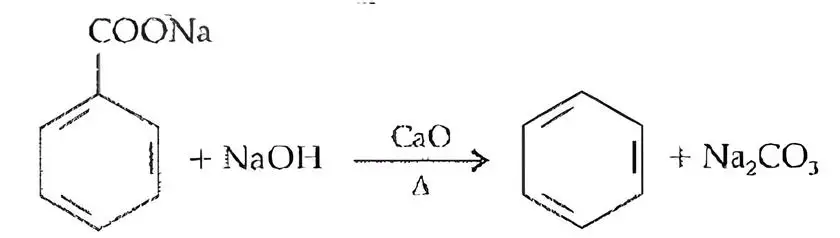
- Decarboxylation of Aromatic Acids: Sodium salts of benzoic acid heated with soda lime produce benzene.
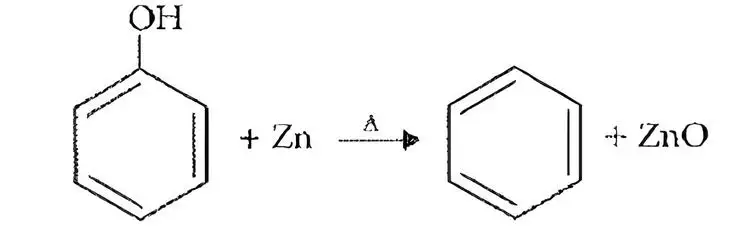
- Reduction of Phenol: Phenol vapours reduced over heated zinc dust yield benzene.
Physical Properties
Aromatic hydrocarbons are non-polar, colourless liquids or solids with characteristic aromas. Benzene is a good solvent and burns with a sooty flame.
Chemical Properties
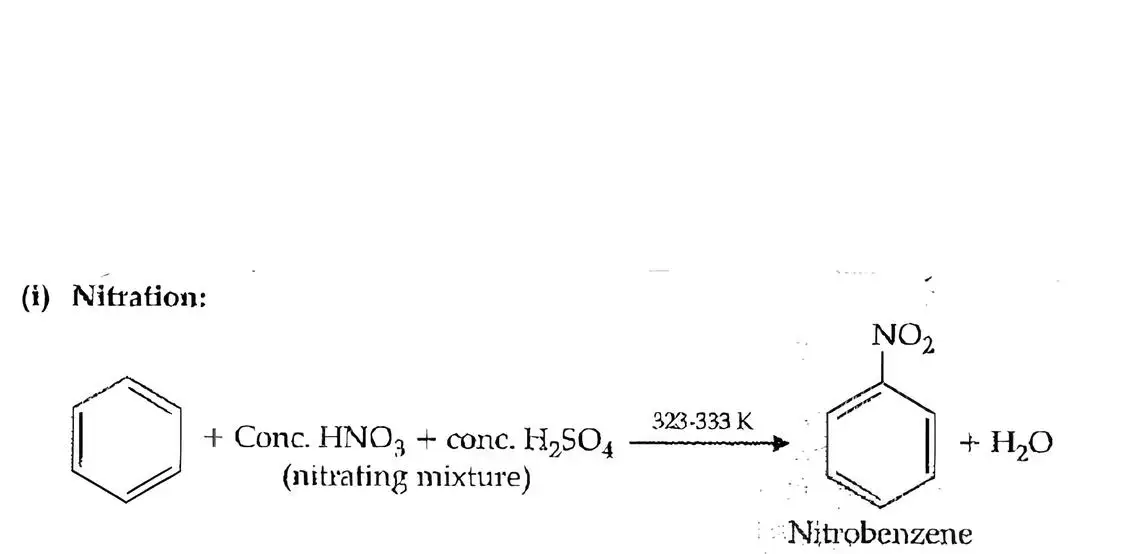
- Nitration: Benzene reacts with nitric and sulfuric acid mixture to form nitrobenzene.
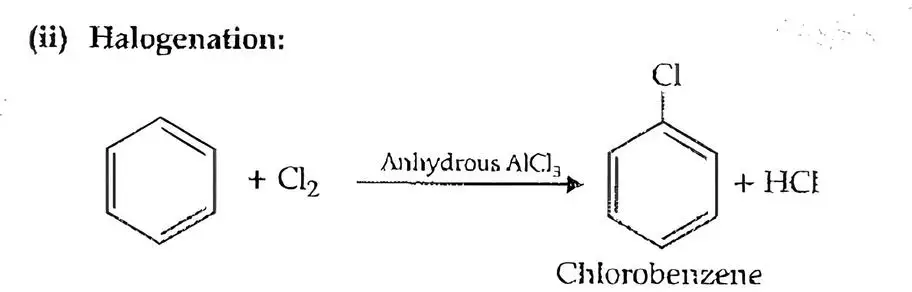
- Halogenation: Benzene reacts with chlorine in presence of AlCl₃ to form chlorobenzene.
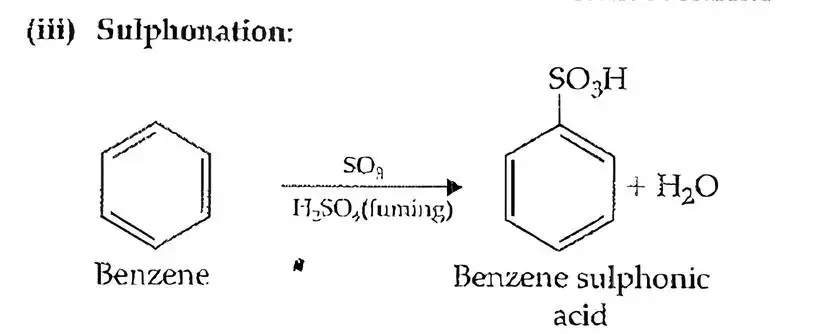
- Sulphonation: Reaction with SO₃ and H₂SO₄ forms benzene sulphonic acid.
- Friedel-Crafts Alkylation: Benzene reacts with alkyl halides and AlCl₃ to form alkylated benzene.
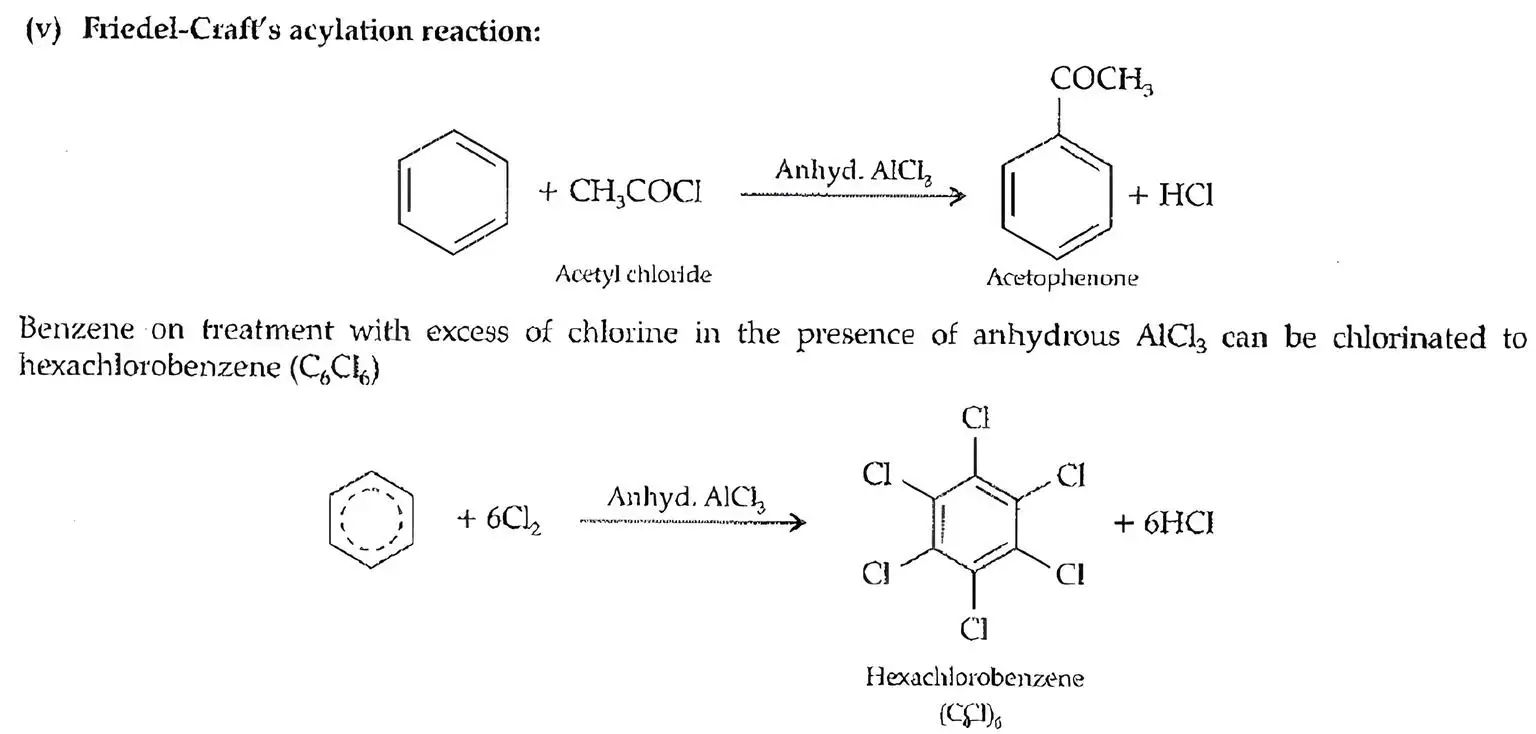
- Friedel-Crafts Acylation: Benzene reacts with acyl chlorides and AlCl₃ to form acetophenone.
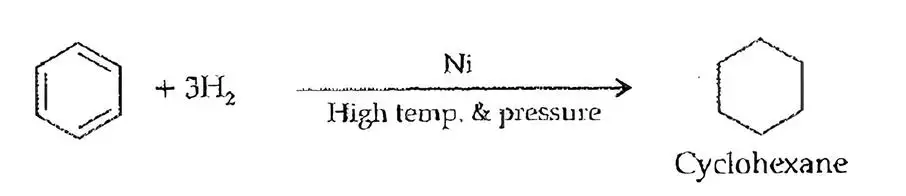
- Hydrogenation: Under vigorous conditions, benzene hydrogenates to cyclohexane.
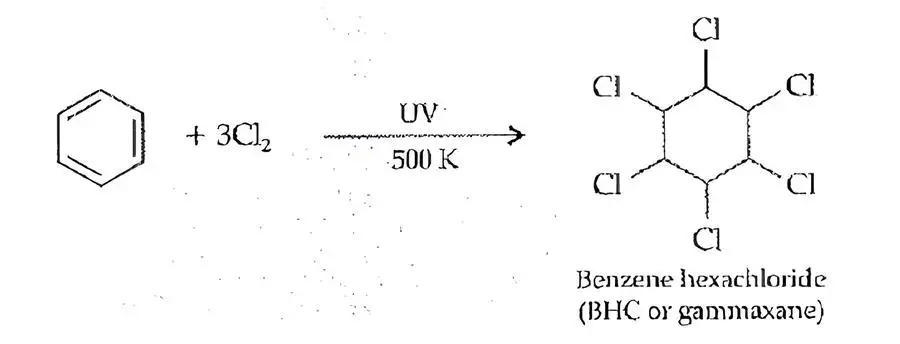
- Chlorination under UV: Benzene reacts with chlorine under UV light to form benzene hexachloride.
- Combustion: Benzene burns with a sooty flame producing CO₂ and H₂O.
Substituent Effects
Electron donating groups activate the ring and direct substitution to ortho and para positions. Electron withdrawing groups deactivate the ring and direct substitution to meta positions. Halogens are ortho-para directing but deactivating.
Mnemonics
PHMTOM: Para have High Melting Point Than Ortho and Meta.
m-directing Groups: Queen Elizabeth Second’s Navy Commands, Controls (Quarternary amino, Ester, Sulphonic acid, Nitro, Carbonyl, Carboxyl, Cyano)
o, p-directing Groups: AHA AHA P (Alkyl, Halogen, Alkoxyl, Amino, Hydroxyl, Amide, Phenyl)
Key Facts
- Originally, aromatic compounds were fragrant substances.
- Benzene was first prepared by heating benzoic or phthalic acid with calcium oxide.
- Most benzene is produced from petroleum.
- Heteroaromatics contain atoms other than carbon in the ring.
- Non-aromatic compounds do not follow Huckel’s or 4n π electron rules.
Solved Examples
Example 1: Preparation of benzene by cyclic polymerisation of ethyne
Step 1: Pass ethyne gas through a red-hot iron tube at 873 K.
Step 2: Ethyne molecules combine and rearrange to form benzene.
Example 2: Nitration of benzene
Step 1: Mix benzene with concentrated nitric acid and sulfuric acid.
Step 2: Heat the mixture to 323-333 K.
Step 3: Nitrobenzene and water are formed by electrophilic substitution.
Practice Set
- Level 1: What is the general formula of aromatic hydrocarbons?
- Level 2: Explain the difference between ortho, meta, and para isomers.
- Level 3: Describe the effect of substituent groups on electrophilic substitution in benzene.
Answer Key
- Level 1: Aromatic hydrocarbons contain benzene rings and have the general formula CₙHₙ or related structures.
- Level 2: Ortho isomers have substituents on adjacent carbons (1,2), meta on carbons separated by one carbon (1,3), and para on opposite carbons (1,4).
- Level 3: Electron donating groups activate the ring and direct substitution to ortho and para positions; electron withdrawing groups deactivate the ring and direct substitution to meta positions.
Quick Reference Table
Hydrocarbons
- General formula of alkanes: CₙH₂ₙ₊₂
- General formula of alkenes: CₙH₂ₙ
- General formula of alkynes: CₙH₂ₙ₋₂
- Classification: Saturated, Unsaturated, Aromatic
Alkanes
- Preparation: Hydrogenation, Reduction of alkyl halides, Wurtz reaction, Decarboxylation, Kolbe’s electrolytic method
- Chemical reactions: Substitution (halogenation), Combustion, Controlled oxidation, Isomerisation, Aromatization
- Physical properties: Non-polar, gases/liquids/solids depending on size, boiling point decreases with branching
Alkenes
- Preparation: From alkynes, alkyl halides, vicinal dihalides, alcohols
- Chemical reactions: Electrophilic addition (hydrogenation, halogenation, hydrogen halides, sulfuric acid, water), oxidation, ozonolysis, polymerisation
- Isomerism: Chain, position, geometrical (cis-trans)
Alkynes
- Preparation: From calcium carbide, vicinal dihalides
- Chemical reactions: Electrophilic and nucleophilic addition, polymerisation
- Physical properties: Colourless, weakly polar, insoluble in water
Aromatic Hydrocarbons
- Structure: Planar, resonance stabilized benzene ring
- Preparation: Cyclic polymerisation of ethyne, decarboxylation of aromatic acids, reduction of phenol
- Chemical reactions: Electrophilic substitution (nitration, halogenation, sulphonation, Friedel-Crafts alkylation and acylation), hydrogenation, chlorination under UV, combustion
- Substituent effects: Electron donating groups activate and direct ortho/para; electron withdrawing groups deactivate and direct meta
Common Mistakes and Misconceptions
- Confusing saturated and unsaturated hydrocarbons based on the presence of double or triple bonds.
- Assuming all hydrocarbons are reactive; alkanes are relatively inert.
- Mixing up cis and trans isomers in alkenes.
- Forgetting Markovnikov’s rule or peroxide effect in addition reactions.
- Misinterpreting resonance structures of benzene as alternating single and double bonds rather than delocalized electrons.
- Assuming all aromatic compounds contain benzene rings; some are non-benzenoids.
Glossary
- Alkane: Saturated hydrocarbon with single bonds only.
- Alkene: Unsaturated hydrocarbon with at least one double bond.
- Alkyne: Unsaturated hydrocarbon with at least one triple bond.
- Aromatic Hydrocarbon: Hydrocarbon containing benzene rings.
- Isomerism: Compounds with the same molecular formula but different structures.
- Markovnikov’s Rule: In addition reactions, the hydrogen attaches to the carbon with more hydrogens.
- Peroxide Effect: Anti-Markovnikov addition of HBr in presence of peroxides.
- Wurtz Reaction: Coupling of alkyl halides using sodium metal to form higher alkanes.
- Electrophilic Substitution: Reaction where an electrophile replaces a hydrogen atom in an aromatic ring.