CLASS 11-PCB . BIOLOGY . BIOLOGY . EXCRETORY PRODUCTS-AND-THEIR-ELIMINATION
Chapter 16 : Excretory Products And Their Elimination
Ch 16
BIOLOGY
CLASS 11-PCB
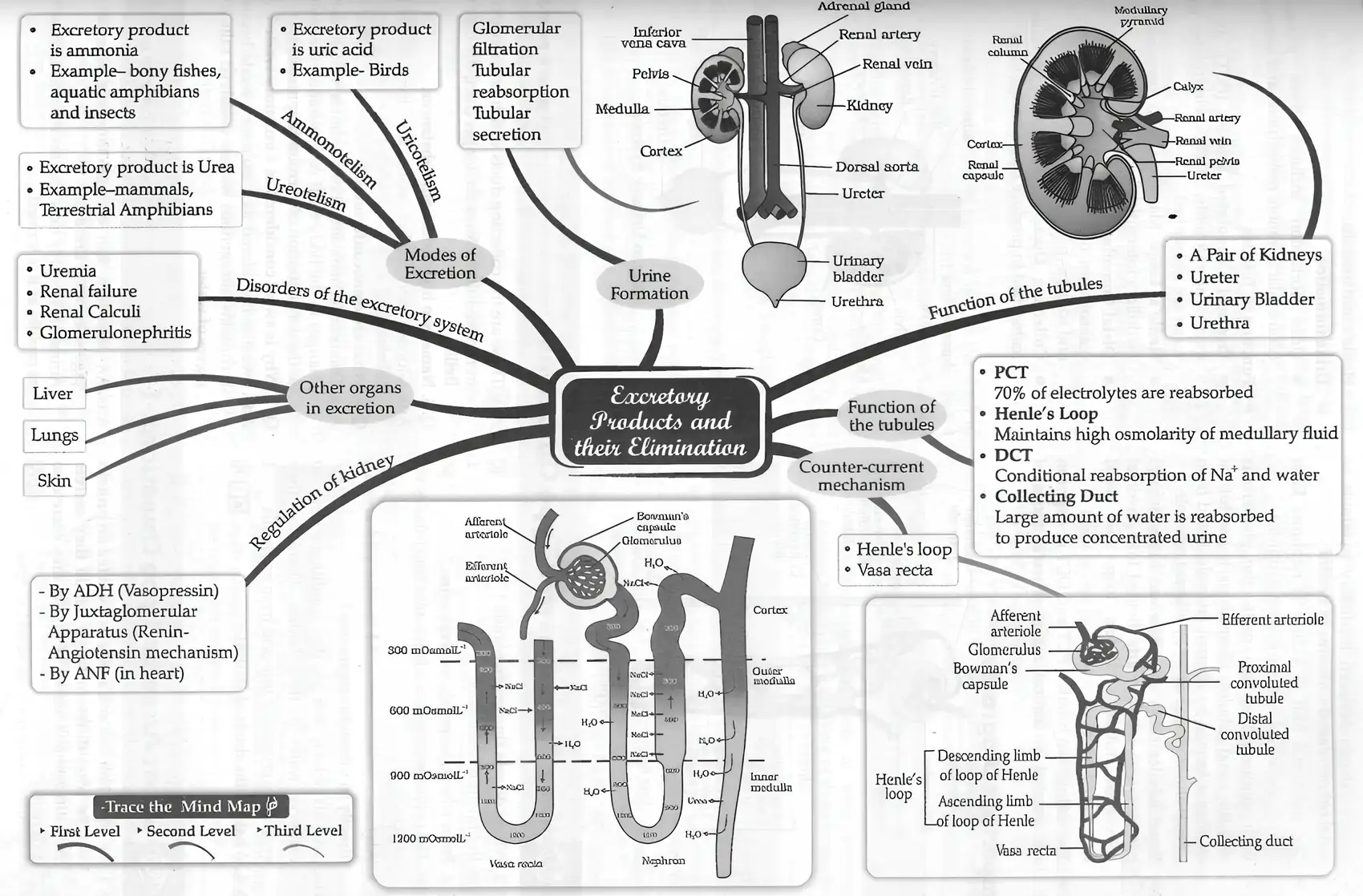
Modes of Excretion
Excretion Overview
Excretion is the process by which metabolic waste products are eliminated from the body to maintain the composition of body fluids and tissues. These waste products include ammonia, urea, uric acid, carbon dioxide, and ions such as sodium (Na⁺), potassium (K⁺), chloride (Cl⁻), phosphates, and sulphates.
Types of Excretion
Different animals excrete nitrogenous wastes in different forms depending on their habitat and physiology:
- Ammonotelism: Excretion of ammonia, which is highly toxic. Organisms that excrete ammonia are called ammonotelic. Examples include bony fishes, aquatic amphibians, and insects.
- Ureotelism: Excretion of urea, which is less toxic than ammonia. Organisms that excrete urea are called ureotelic. Examples include mammals and terrestrial amphibians.
- Uricotelism: Excretion of uric acid, the least toxic and least soluble nitrogenous waste. Organisms that excrete uric acid are called uricotelic. Examples include reptiles, birds, and land snails.
Excretory Structures in Various Animals
- Protonephridia (Flame Cells): Found in Platyhelminthes (e.g., Planaria), some annelids, and cephalochordates (e.g., Amphioxus).
- Nephridia: Present in earthworms and other annelids.
- Malpighian Tubules: Excretory structures in most insects, such as cockroaches.
- Antennal (Green) Glands: Found in crustaceans like prawns.
Human Excretory System
Components
The human excretory system consists of:
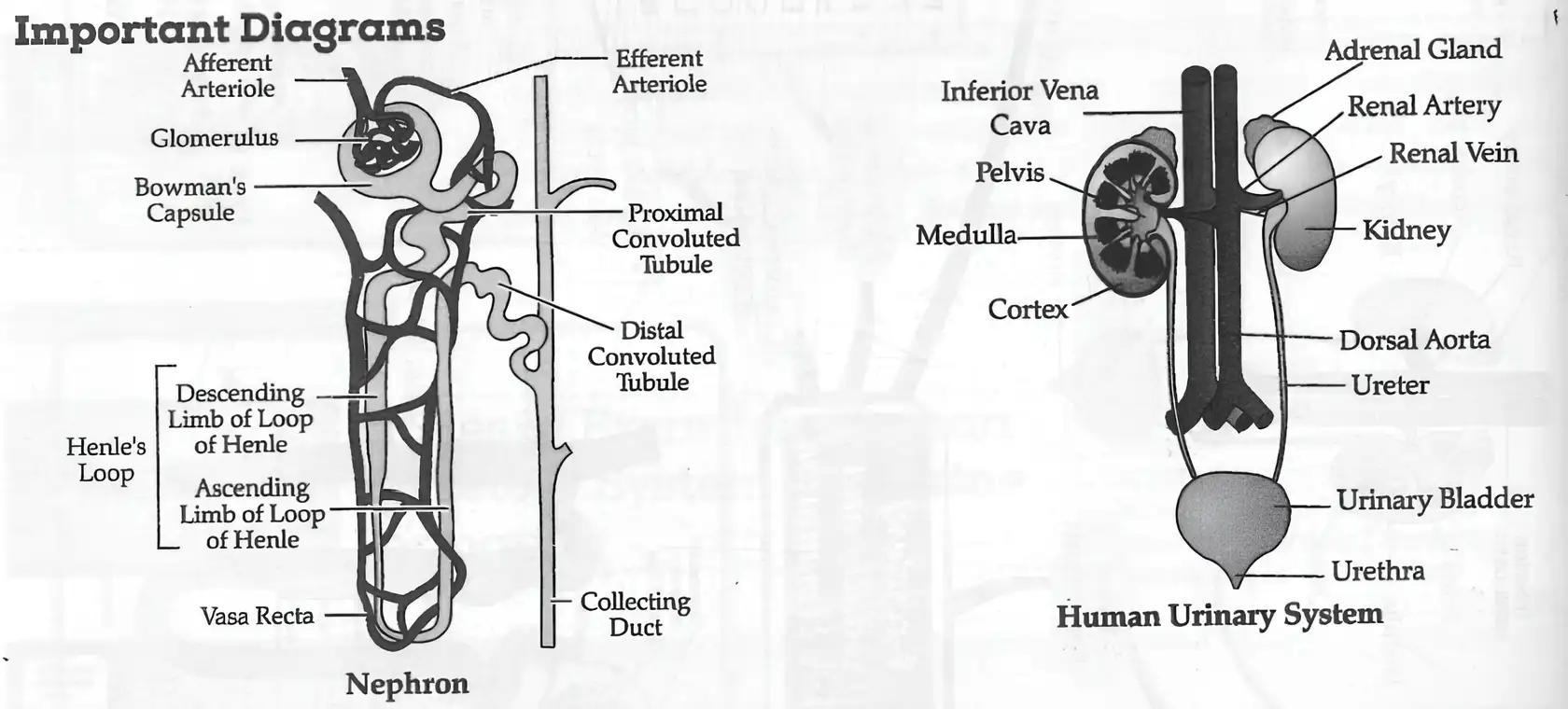
- A pair of kidneys
- A pair of ureters
- A urinary bladder
- A urethra
Kidney Structure
Kidneys are reddish-brown, bean-shaped organs located between the last thoracic and lumbar vertebrae. Each kidney has a notch on its inner side called the hilum, through which the ureter, blood vessels, and nerves enter.
Inside the hilum is the renal pelvis, a broad funnel-shaped space with projections called calyces. The kidney has two zones: the outer cortex and the inner medulla. The medulla is divided into medullary pyramids projecting into the calyx. The cortex extends between the medullary pyramids as renal columns called Columns of Bertini.
Nephron: Functional Unit
Each kidney contains about one million nephrons, the functional units responsible for urine formation. Each nephron consists of two parts:
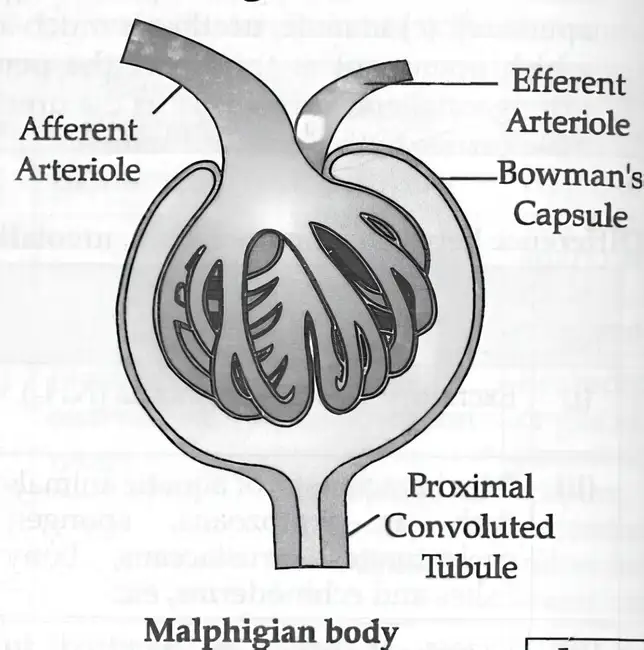
- Glomerulus: A tuft of capillaries formed by the afferent arteriole. Blood exits via the efferent arteriole.
- Renal Tubules: Begin with Bowman's capsule and continue as the proximal convoluted tubule (PCT), Henle's loop, and distal convoluted tubule (DCT).
The PCT and DCT are located in the cortex, while Henle's loop extends into the medulla.
Urine Formation
Processes Involved
Urine formation involves three main processes:
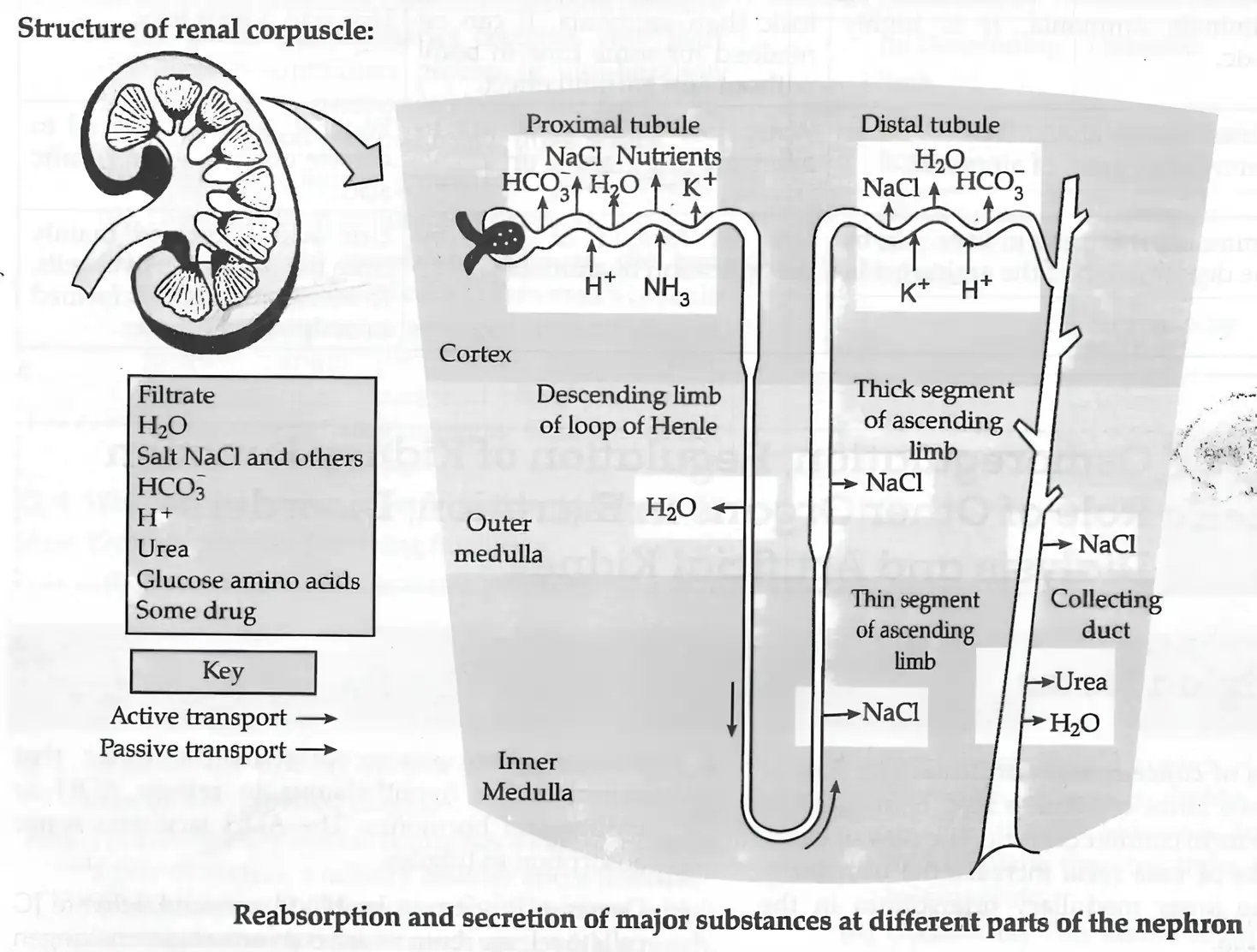
- Glomerular Filtration: Blood is filtered in the glomerulus, and the filtrate enters Bowman's capsule.
- Reabsorption: Useful substances such as nutrients, water, and electrolytes are reabsorbed from the filtrate back into the blood.
- Secretion: Additional waste substances are secreted into the filtrate from the blood.
Function of Kidney Tubules
- Proximal Convoluted Tubule (PCT): Reabsorbs 70-80% of electrolytes, water, and all important nutrients.
- Henle's Loop: Maintains high osmolarity of the medullary interstitial fluid, facilitating water reabsorption.
- Distal Convoluted Tubule (DCT): Responsible for conditional reabsorption of sodium ions and water; helps maintain pH and sodium-potassium balance.
- Collecting Duct: Reabsorbs large amounts of water to produce concentrated urine.
Regulation of Kidney Function
Counter Current Mechanism
The flow of filtrate in the two limbs of Henle's loop is in opposite directions, forming a counter current. The blood flow in the two limbs of the vasa recta also flows counter currently, increasing the osmolarity towards the inner medullary interstitium. This arrangement facilitates the concentration of urine.
Hormonal Control
Kidney function is regulated by hormonal feedback mechanisms involving the hypothalamus and the juxtaglomerular apparatus (JGA):
- Antidiuretic Hormone (ADH or Vasopressin): Released by the hypothalamus in response to osmoreceptor stimulation due to changes in blood volume or ion concentration. ADH increases water reabsorption in the tubules.
- Renin-Angiotensin System: Decreased glomerular blood pressure activates JG cells to release renin, which converts angiotensinogen to angiotensin I and II. These increase glomerular blood pressure and stimulate aldosterone release, which promotes sodium and water reabsorption.
Role of Other Organs
- Lungs: Remove carbon dioxide and water vapor.
- Liver: Eliminates bile containing substances such as bilirubin, biliverdin, cholesterol, and drugs.
- Skin: Sweat glands remove sodium chloride, urea, and lactic acid; sebaceous glands eliminate sterols, hydrocarbons, and waxes as sebum.
Disorders
Common Excretory Disorders
- Uremia: High concentration of non-protein nitrogenous wastes (urea, uric acid, creatinine) in the blood due to kidney malfunction. Urea can be removed by haemodialysis.
- Renal Failure: Also called kidney failure, where glomerular filtration ceases and both kidneys stop functioning. Kidney transplant is the ultimate treatment.
- Renal Calculi: Formation of stones or insoluble masses of crystallized salts within the kidney.
- Glomerulonephritis (Bright's Disease): Inflammation of the glomeruli due to injury, allowing proteins or red blood cells to enter the filtrate.
Dialysis and Artificial Kidney
Haemodialysis is a treatment for uremia where blood is drained from an artery, pumped through a dialyzing unit called an artificial kidney, and returned to the body. This process removes waste products from the blood when the kidneys fail.
Solved Examples
Example 1: Explain the role of the proximal convoluted tubule in urine formation.
Solution: The proximal convoluted tubule (PCT) reabsorbs about 70-80% of the electrolytes, water, and all important nutrients such as glucose and amino acids from the filtrate back into the blood. This prevents loss of essential substances and helps maintain body fluid balance.
Example 2: Describe the counter current mechanism in the kidney.
Solution: The counter current mechanism involves the flow of filtrate in opposite directions in the descending and ascending limbs of Henle's loop, and the opposite flow of blood in the vasa recta. This arrangement increases the osmolarity of the medullary interstitial fluid, allowing water to be reabsorbed from the collecting ducts, concentrating the urine.
Practice Set
- Level 1 (Easy): What are the three main nitrogenous wastes excreted by animals? Name one organism for each type.
- Level 2 (Moderate): Explain the structure and function of the nephron in the human kidney.
- Level 3 (Challenging): Describe the hormonal regulation of kidney function involving ADH and the renin-angiotensin system.
Answer Key
- Level 1: The three main nitrogenous wastes are ammonia (excreted by bony fishes), urea (excreted by mammals), and uric acid (excreted by birds).
- Level 2: The nephron consists of the glomerulus (a tuft of capillaries where blood filtration occurs) and renal tubules (Bowman's capsule, proximal convoluted tubule, Henle's loop, distal convoluted tubule, and collecting duct). It filters blood, reabsorbs useful substances, secretes wastes, and forms urine.
- Level 3: ADH is released by the hypothalamus in response to increased blood osmolarity, increasing water reabsorption in the kidney tubules. The renin-angiotensin system is activated by decreased glomerular blood pressure; renin converts angiotensinogen to angiotensin II, which increases blood pressure and stimulates aldosterone release, promoting sodium and water reabsorption.
Quick Reference Table
- Ammonotelism: Excretion of ammonia; common in aquatic animals.
- Ureotelism: Excretion of urea; common in mammals.
- Uricotelism: Excretion of uric acid; common in birds and reptiles.
- Nephron: Functional unit of kidney; consists of glomerulus and renal tubules.
- Glomerular Filtration: Blood filtration in glomerulus.
- Reabsorption: Return of useful substances to blood.
- Secretion: Addition of wastes to filtrate.
- ADH: Hormone regulating water reabsorption.
- Renin-Angiotensin System: Hormonal system regulating blood pressure and kidney function.
- Haemodialysis: Artificial removal of wastes from blood.
Common Mistakes and Misconceptions
- Confusing excretion with egestion; excretion removes metabolic wastes, while egestion removes undigested food.
- Assuming all animals excrete the same nitrogenous waste; different animals excrete ammonia, urea, or uric acid depending on their habitat.
- Believing that all parts of the nephron have the same function; each segment has a specific role in filtration, reabsorption, or secretion.
- Thinking that ADH directly filters blood; ADH regulates water reabsorption but does not filter blood.
- Assuming kidney failure can be cured only by dialysis; kidney transplant is the ultimate treatment.
Glossary
- Ammonotelism: Excretion of ammonia as nitrogenous waste.
- Ureotelism: Excretion of urea as nitrogenous waste.
- Uricotelism: Excretion of uric acid as nitrogenous waste.
- Nephron: Functional unit of the kidney responsible for urine formation.
- Glomerulus: Network of capillaries in the nephron where blood filtration occurs.
- Bowman's Capsule: Cup-shaped structure surrounding the glomerulus that collects filtrate.
- Proximal Convoluted Tubule: Part of nephron where reabsorption of nutrients and water occurs.
- Henle's Loop: U-shaped part of nephron involved in concentration of urine.
- Distal Convoluted Tubule: Part of nephron involved in selective reabsorption and secretion.
- Collecting Duct: Tubule that collects urine from nephrons and concentrates it.
- ADH (Antidiuretic Hormone): Hormone that regulates water reabsorption in kidneys.
- Renin: Enzyme released by kidneys that initiates the renin-angiotensin system.
- Haemodialysis: Medical procedure to remove waste products from blood artificially.