CLASS 11-PCB . BIOLOGY . BIOLOGY . CHEMICAL COORDINATION-AND-INTEGRATION
Chapter 19 : Chemical Coordination and integration
Ch 19
BIOLOGY
CLASS 11-PCB
Endocrine Glands and Hormones
Human Endocrine System Overview
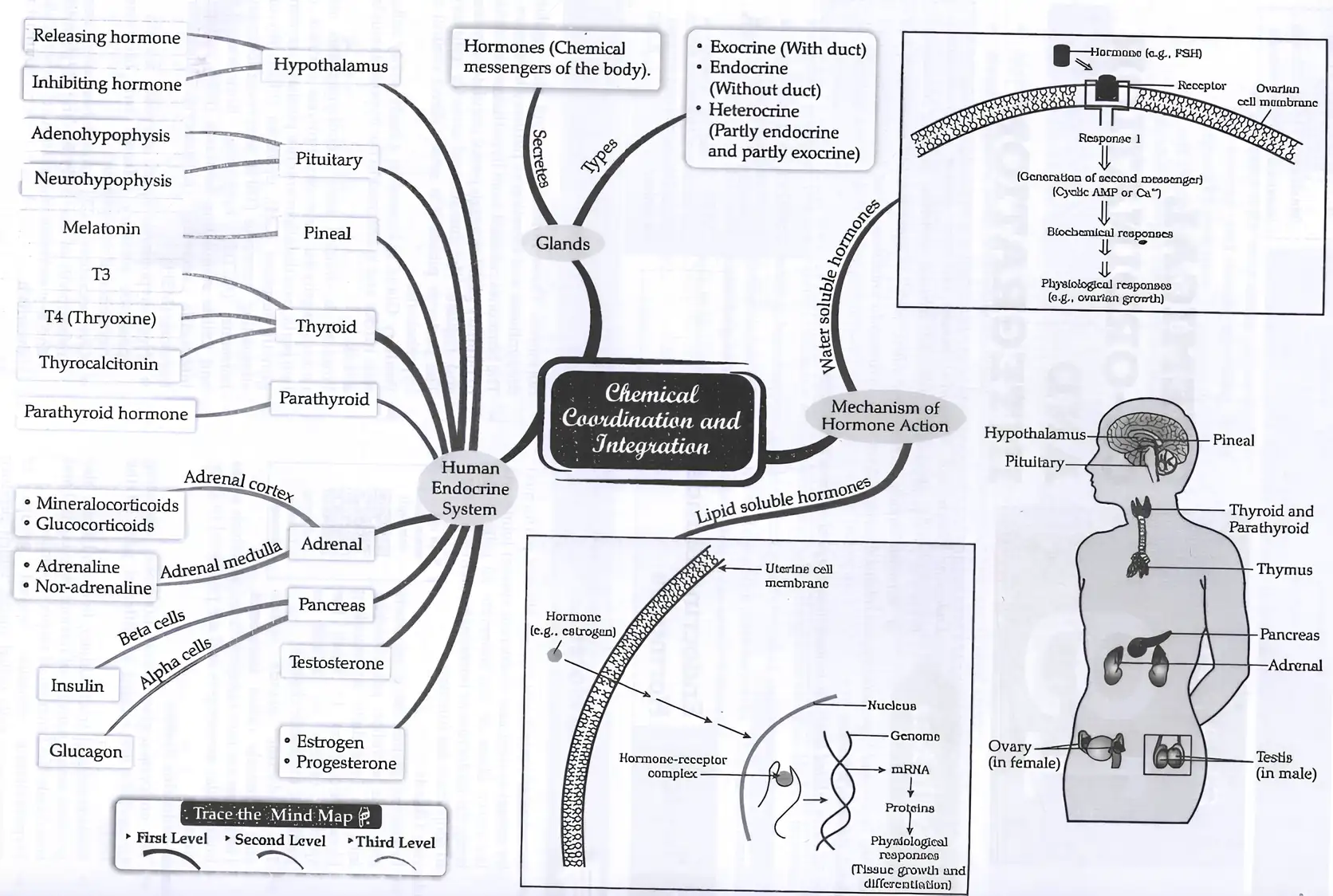
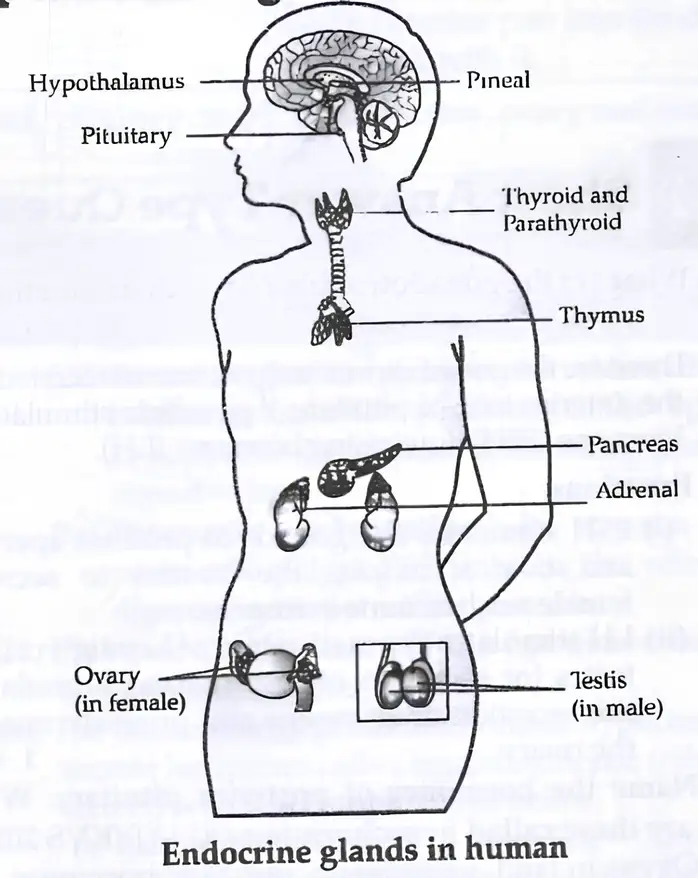
The human endocrine system consists of various glands such as the hypothalamus, pituitary, pineal, thyroid, parathyroid, adrenal, pancreas, and sex organs (ovaries and testes). These glands secrete hormones, which are chemical messengers that regulate numerous physiological processes.
Types of Glands
There are three types of glands based on their mode of secretion:
- Exocrine glands: These have ducts and release their secretions at specific sites.
- Endocrine glands: These are ductless and secrete hormones directly into the bloodstream.
- Heterocrine glands: These have both endocrine and exocrine functions, such as the pancreas.
Major Endocrine Glands and Their Hormones
- Hypothalamus: Contains neurosecretory cells that produce hormones regulating the pituitary gland.
- Pituitary gland: Located in the sella turcica, it has two parts: adenohypophysis (anterior pituitary) and neurohypophysis (posterior pituitary). The anterior pituitary secretes growth hormone (GH), prolactin (PRL), thyroid stimulating hormone (TSH), adrenocorticotrophic hormone (ACTH), luteinising hormone (LH), follicle stimulating hormone (FSH), and melanocyte stimulating hormone (MSH). The posterior pituitary releases oxytocin and vasopressin (antidiuretic hormone, ADH).
- Pineal gland: Produces melatonin, which regulates the sleep-wake cycle and body temperature rhythms.
- Thyroid gland: Produces thyroxine, essential for metabolism; iodine is necessary for its synthesis.
- Parathyroid gland: Secretes parathyroid hormone (PTH), which regulates calcium levels in the blood.
- Adrenal gland: Composed of adrenal medulla (secretes adrenaline and noradrenaline) and adrenal cortex (secretes corticoids involved in metabolism and electrolyte balance).
- Pancreas: Functions as both endocrine and exocrine gland. The endocrine part contains islets of Langerhans with alpha cells secreting glucagon and beta cells secreting insulin, both regulating blood glucose levels.
- Testis: Produces androgen hormones, mainly testosterone, regulating male reproductive functions.
- Ovary: Produces estrogen and progesterone, which regulate female reproductive functions and pregnancy.
Mechanism of Hormone Action
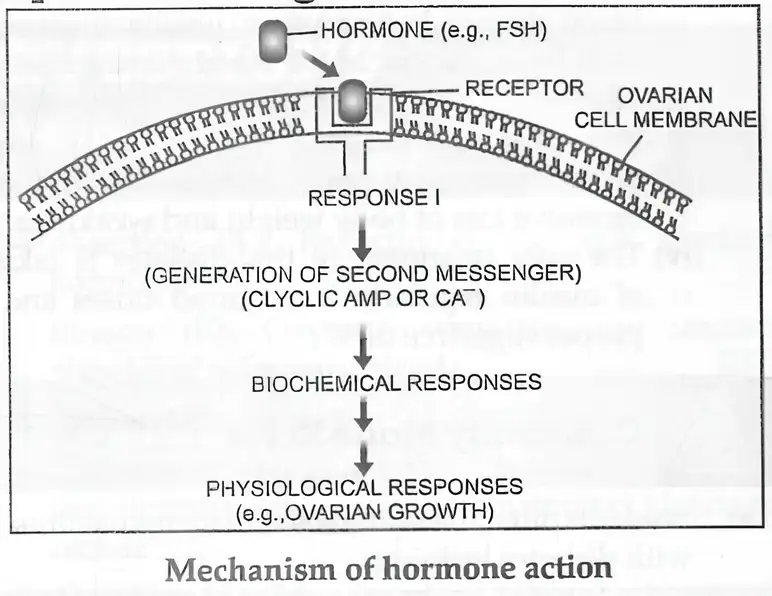
Hormones act by binding to specific receptors on or inside target cells, forming hormone-receptor complexes that trigger physiological responses. Water-soluble hormones bind to membrane receptors and activate second messengers inside the cell, while lipid-soluble hormones pass through the membrane and influence gene expression directly.
Solved Examples
Example 1: Explain the role of insulin and glucagon in blood sugar regulation.
Solution: Insulin, secreted by beta cells of the pancreas, lowers blood glucose by promoting its uptake into cells and conversion to glycogen. Glucagon, secreted by alpha cells, raises blood glucose by stimulating glycogen breakdown (glycogenolysis) in the liver. Together, they maintain glucose homeostasis.
Example 2: Describe the effects of growth hormone imbalance.
Solution: Excess growth hormone (GH) causes gigantism in children and acromegaly in adults, characterized by abnormal growth of bones and tissues. Deficiency of GH leads to dwarfism, marked by stunted but proportionate growth.
Practice Set
- Level 1 (Easy): Name two hormones secreted by the adrenal gland and their functions.
- Level 2 (Moderate): Explain how the hypothalamus controls the pituitary gland.
- Level 3 (Challenging): Describe the mechanism by which lipid-soluble hormones affect target cells.
Answer Key
- Level 1: Adrenaline (prepares body for 'fight or flight' response) and corticoids (regulate metabolism and electrolyte balance).
- Level 2: The hypothalamus produces releasing and inhibiting hormones that reach the anterior pituitary via the portal circulation, regulating its hormone secretion. It also controls the posterior pituitary directly through nerve impulses.
- Level 3: Lipid-soluble hormones diffuse through the cell membrane, bind to intracellular receptors, and the hormone-receptor complex enters the nucleus to regulate gene expression, leading to physiological changes.
Mechanism of Hormone Action
Hormone Receptors and Signal Transduction
Hormones exert their effects by binding to specific receptors located on the target cell's surface or inside the cell. This binding forms a hormone-receptor complex that initiates a cascade of biochemical events leading to the desired cellular response.
Chemical Nature of Hormones
- Peptide and protein hormones: Include insulin, glucagon, and pituitary hormones; they bind to membrane receptors and activate second messengers.
- Steroid hormones: Such as cortisol, testosterone, and progesterone; they are lipid-soluble and act by regulating gene expression.
- Iodothyronines: Thyroid hormones that regulate metabolism.
- Amino acid derivatives: Such as epinephrine, which act via membrane receptors.
Physiological Effects and Disorders
Hormonal imbalances can lead to various disorders:
- Hypoactivity: Deficiency of hormone secretion causing conditions like pituitary dwarfism and cretinism.
- Hyperactivity: Excess hormone secretion causing conditions like acromegaly and exophthalmic goitre.
- Specific disorders: Diabetes mellitus (insulin deficiency), Addison’s disease (adrenal cortex hormone deficiency), and goitre (iodine deficiency).
Solved Examples
Example 1: What causes diabetes mellitus and what are its symptoms?
Solution: Diabetes mellitus is caused by the failure of beta cells in the pancreas to produce sufficient insulin. Symptoms include high blood sugar, excess thirst, weakness, and glucose in urine.
Example 2: Explain the role of hormone receptors in target cells.
Solution: Hormone receptors specifically bind hormones, forming complexes that trigger intracellular signaling pathways or gene expression changes, resulting in physiological effects.
Practice Set
- Level 1 (Easy): Define hormone receptor complex.
- Level 2 (Moderate): Differentiate between peptide and steroid hormones in terms of mechanism of action.
- Level 3 (Challenging): Describe the symptoms and causes of Addison’s disease.
Answer Key
- Level 1: A hormone receptor complex is the combination formed when a hormone binds to its specific receptor on or inside a target cell.
- Level 2: Peptide hormones bind to membrane receptors and activate second messengers; steroid hormones enter cells and regulate gene expression directly.
- Level 3: Addison’s disease is caused by deficiency of adrenal cortex hormones, leading to low blood sugar, low sodium, high potassium, nausea, vomiting, and weakness.
Quick Reference Table
- Hormones and Glands: Pituitary (GH, PRL, TSH, ACTH, LH, FSH, MSH, oxytocin, ADH), Thyroid (thyroxine), Parathyroid (PTH), Adrenal (adrenaline, corticoids), Pancreas (insulin, glucagon), Pineal (melatonin), Testis (testosterone), Ovary (estrogen, progesterone).
- Hormone Types: Peptide/protein, steroid, iodothyronines, amino acid derivatives.
- Disorders: Gigantism, dwarfism, cretinism, goitre, exophthalmic goitre, diabetes mellitus, Addison’s disease.
Common Mistakes and Misconceptions
- Confusing endocrine glands with exocrine glands; endocrine glands are ductless and secrete hormones directly into blood.
- Assuming all hormones enter target cells; only lipid-soluble hormones do, while others act via membrane receptors.
- Believing that hormone excess always causes growth; some excesses cause abnormal growth patterns (e.g., acromegaly).
- Mixing up the functions of pituitary anterior and posterior lobes.
Glossary
- Hormones: Chemical messengers secreted by endocrine glands that regulate body functions.
- Endocrine glands: Ductless glands that secrete hormones into the bloodstream.
- Exocrine glands: Glands with ducts that release secretions at specific sites.
- Hormone receptor: Protein molecule on or inside target cells that binds specific hormones.
- Second messenger: Molecule inside cells that transmits signals from hormone-receptor complexes.
- Homeostasis: Maintenance of stable internal conditions in the body.
- Glycogenolysis: Breakdown of glycogen to glucose.
- Note: Scientific names such as Islets of Langerhans are italicized as per biological nomenclature.