CLASS 11-PCB . BIOLOGY . BIOLOGY . CELL THE-UNIT-OF-LIFE
Chapter 8 : Cell The Unit Of Life
Ch 8
BIOLOGY
CLASS 11-PCB
Cell Basic Unit Life
Cell as the Basic Unit of Life
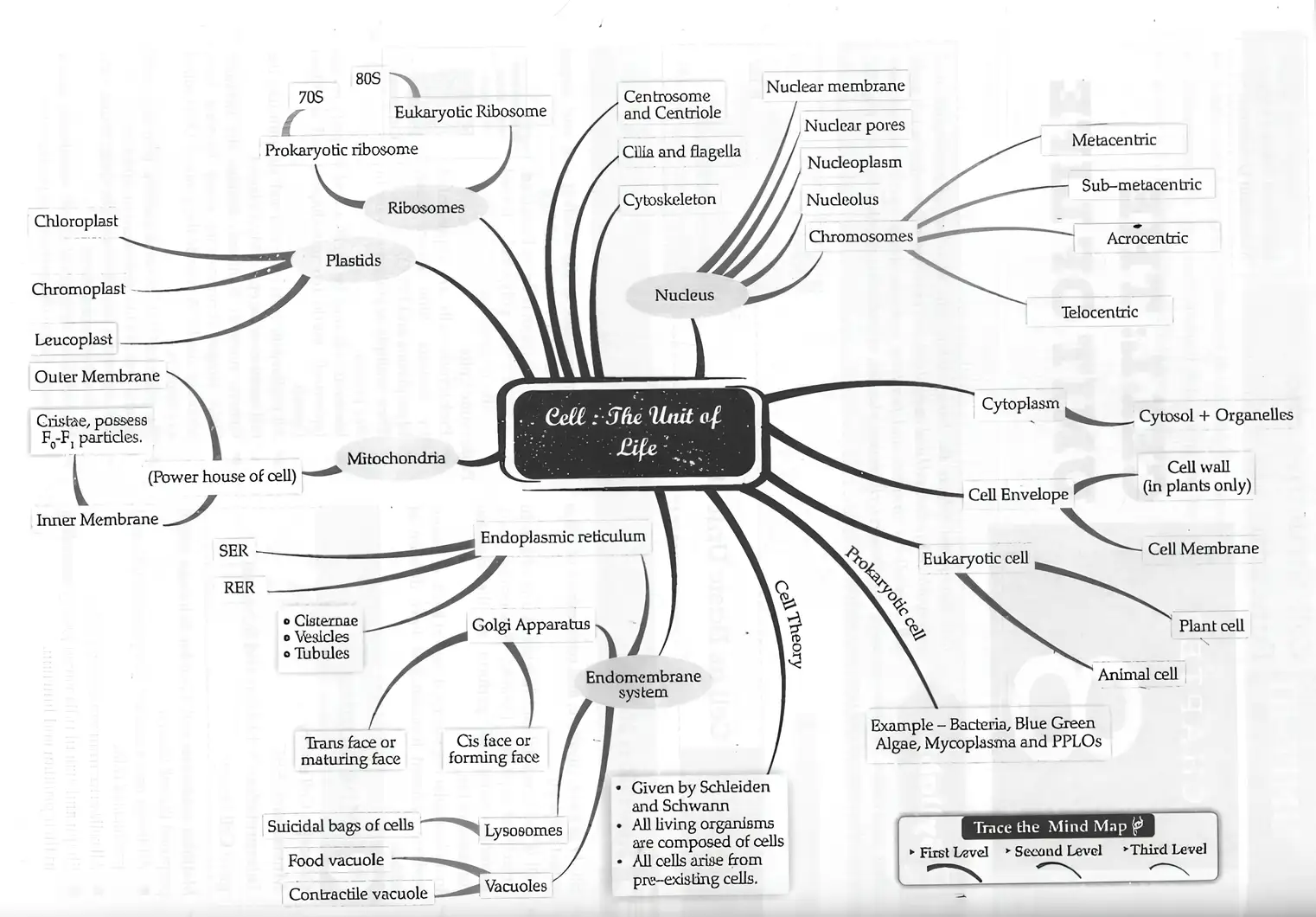
The cell is the fundamental structural and functional unit of all living organisms. It is often called the "Unit of Life" because all life processes occur within cells. Organisms can be unicellular, consisting of a single cell that performs all life functions, or multicellular, where different cells specialize to perform specific functions.
Cell Classification
Cells are broadly classified into two types based on the presence or absence of a nucleus:
- Prokaryotic Cells: These cells lack a well-defined nucleus. Their genetic material is not enclosed within a nuclear membrane. Examples include bacteria, blue-green algae, and mycoplasma.
- Eukaryotic Cells: These cells have a well-defined nucleus enclosed by a nuclear membrane. They possess membrane-bound organelles. Examples include cells of plants, animals, fungi, and protists.
Cell Theory
The cell theory, proposed by Matthias Schleiden and Theodor Schwann in 1839, states:
- All living organisms are composed of one or more cells and their products.
- All cells arise from pre-existing cells.
- Cells vary in shape and size according to their function and position.
Prokaryotic Cell Structure
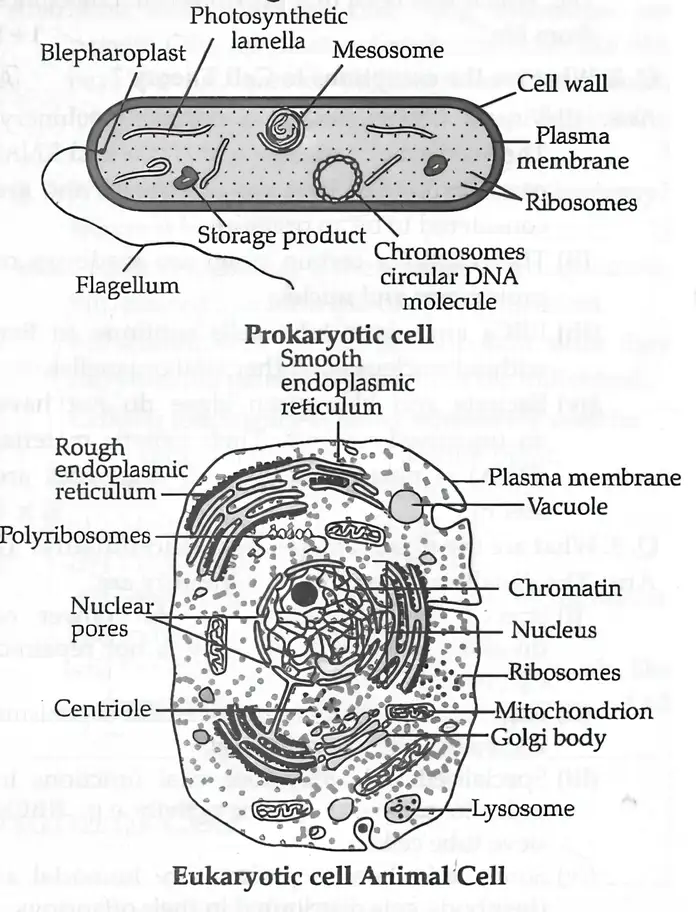
Prokaryotic cells have a simple structure without membrane-bound organelles. Key features include:
- Cell wall surrounding the cell membrane (absent in mycoplasma).
- Naked genetic material consisting of a single circular chromosome and sometimes plasmids.
- Mesosome, a specialized infolding of the cell membrane involved in cell wall formation and DNA replication.
- Flagella for movement, pili and fimbriae for attachment.
- 70S ribosomes attached to the cell membrane for protein synthesis.
- Cell envelope composed of glycocalyx, cell wall, and plasma membrane.
Eukaryotic Cell Structure
Eukaryotic cells are more complex and contain membrane-bound organelles:
- Well-organized nucleus with nuclear membrane containing chromosomes.
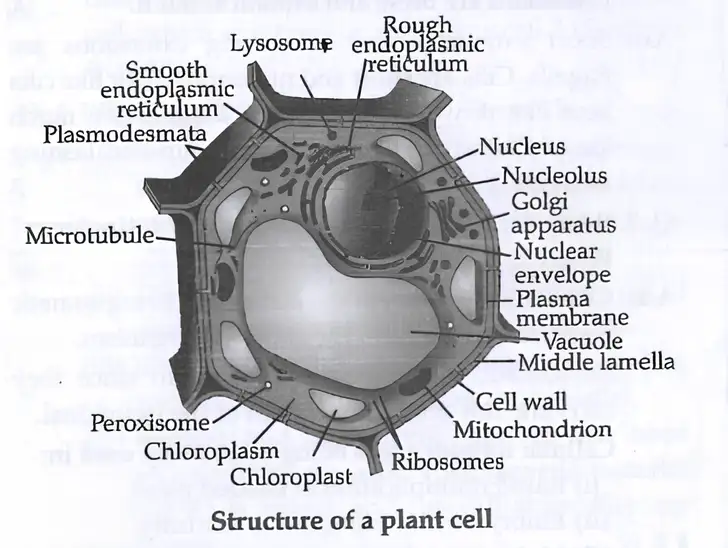
- Membrane-bound organelles such as mitochondria, endoplasmic reticulum, Golgi apparatus, lysosomes, vacuoles, plastids (in plants), and ribosomes.
- Plant cells have a cell wall, plastids, and large central vacuole; animal cells have centrioles.
Solved Examples
Example 1: Describe the main differences between prokaryotic and eukaryotic cells.
Solution:
- Prokaryotic Cells: No nucleus, genetic material is naked and circular, no membrane-bound organelles, smaller size, examples include bacteria.
- Eukaryotic Cells: Have a nucleus with nuclear membrane, genetic material organized in chromosomes, contain membrane-bound organelles, larger size, examples include plant and animal cells.
Example 2: Explain the function of mitochondria in a cell.
Solution: Mitochondria are double-membrane organelles known as the powerhouse of the cell. They generate energy in the form of ATP through cellular respiration. They contain their own DNA and 70S ribosomes.
Practice Set
- Level 1 (Easy): What is the basic unit of life?
- Level 2 (Moderate): Name two differences between prokaryotic and eukaryotic cells.
- Level 3 (Challenging): Explain the role of the cell membrane and how it maintains homeostasis in the cell.
Answer Key
- Level 1: The cell is the basic unit of life.
- Level 2: Prokaryotic cells lack a nucleus and membrane-bound organelles; eukaryotic cells have a nucleus and membrane-bound organelles. Prokaryotic cells are generally smaller than eukaryotic cells.
- Level 3: The cell membrane controls the movement of substances in and out of the cell, maintaining a stable internal environment (homeostasis) by being selectively permeable.
Cell Structure Functions
Cell Wall
The cell wall is a rigid, protective outer layer found in plant cells and fungi. It provides mechanical support, protects against pathogens, and helps in cell-to-cell interaction. The middle lamella, rich in calcium pectate, holds neighboring cells together. Plasmodesmata are channels connecting the cytoplasm of adjacent cells.
Cell Membrane
The cell membrane is a semi-permeable lipid bilayer composed mainly of phosphoglycerides and proteins. Proteins can be integral (embedded) or peripheral (surface). The fluid mosaic model by Singer and Nicolson describes the membrane as a fluid structure with proteins moving laterally within the lipid bilayer. The membrane regulates transport of molecules and maintains cellular integrity.
Endoplasmic Reticulum
The endoplasmic reticulum (ER) consists of vesicles, cisternae, and tubules. Rough ER (RER) has ribosomes and synthesizes proteins. Smooth ER (SER) is involved in lipid synthesis and detoxification.
Golgi Apparatus
The Golgi apparatus packages and transports materials in vesicles. It is important for forming glycolipids and glycoproteins.
Lysosomes
Lysosomes contain hydrolytic enzymes active at acidic pH and are involved in breaking down waste materials.
Vacuoles
Vacuoles are membrane-bound spaces containing water, sap, and excretory products. The tonoplast membrane regulates their contents.
Mitochondria
Mitochondria have a double membrane with inner folds called cristae. They generate ATP and contain their own DNA and 70S ribosomes.
Plastids
Plastids include chloroplasts (photosynthesis), chromoplasts (pigments), and leucoplasts (storage). Chloroplasts contain thylakoids forming grana and stroma, with 70S ribosomes and DNA.
Ribosomes
Ribosomes are RNA-protein complexes that synthesize proteins. Prokaryotes have 70S ribosomes; eukaryotes have 80S ribosomes.
Cytoskeleton, Cilia, and Flagella
The cytoskeleton provides mechanical support and shape. Cilia and flagella aid in movement and attachment.
Centrosome and Centrioles
Centrioles, arranged perpendicularly, form the centrosome and play a role in cell division.
Nucleus
The nucleus contains the nuclear membrane, nucleoplasm, nucleolus (site of RNA synthesis), and chromatin (DNA and proteins). The nuclear membrane is selectively permeable and continuous with rough ER.
Solved Examples
Example 1: Describe the fluid mosaic model of the cell membrane.
Solution: The fluid mosaic model states that the cell membrane is a fluid structure with a bilayer of lipids in which proteins are embedded and can move laterally. The lipid bilayer has hydrophilic heads facing outward and hydrophobic tails inward, allowing selective permeability.
Example 2: What are plastids and their types?
Solution: Plastids are organelles involved in synthesis and storage of food pigments. Types include chloroplasts (green, photosynthesis), chromoplasts (colored pigments), and leucoplasts (colorless, storage of starch, fat, or protein).
Practice Set
- Level 1 (Easy): What is the function of the nucleus?
- Level 2 (Moderate): Differentiate between rough and smooth endoplasmic reticulum.
- Level 3 (Challenging): Explain the role of lysosomes in the cell.
Answer Key
- Level 1: The nucleus controls cell activities and contains genetic material.
- Level 2: Rough ER has ribosomes and synthesizes proteins; smooth ER lacks ribosomes and synthesizes lipids and detoxifies substances.
- Level 3: Lysosomes contain enzymes that digest waste materials and cellular debris, acting as the cell's waste disposal system.
Quick Reference Table
Cell Theory: All living organisms are made of cells; all cells come from pre-existing cells.
Prokaryotic Cells: No nucleus, 70S ribosomes, cell wall, mesosome, plasmids.
Eukaryotic Cells: Nucleus present, membrane-bound organelles, 80S ribosomes.
Cell Membrane: Lipid bilayer with proteins; selectively permeable.
Organelles and Functions:
- Nucleus: Control center, contains DNA.
- Mitochondria: ATP production.
- Ribosomes: Protein synthesis.
- Endoplasmic Reticulum: Protein and lipid synthesis.
- Golgi Apparatus: Packaging and transport.
- Lysosomes: Waste breakdown.
- Vacuoles: Storage.
- Plastids: Photosynthesis and storage.
Common Mistakes and Misconceptions
- Confusing prokaryotic cells with eukaryotic cells; prokaryotes lack a nucleus and membrane-bound organelles.
- Assuming all cells have a cell wall; only plant cells and fungi have cell walls.
- Believing mitochondria are present in prokaryotic cells; they are absent.
- Mixing up rough and smooth endoplasmic reticulum functions.
- Thinking plasmids are part of the main chromosome; plasmids are separate circular DNA molecules.
Glossary
- Cell: The basic structural and functional unit of life.
- Prokaryote: Organism with cells lacking a nucleus.
- Eukaryote: Organism with cells having a nucleus.
- Organelle: Specialized structure within a cell performing a specific function.
- Plasmid: Small circular DNA molecule in bacteria.
- Mesosome: Infolding of bacterial cell membrane involved in cell processes.
- Ribosome: Site of protein synthesis.
- Chromatin: Complex of DNA and proteins in the nucleus.
- Tonoplast: Membrane surrounding the vacuole in plant cells.
- Plasmodesmata: Channels between plant cells for communication.