Structure and Function of Biomolecules
Definition and Classification
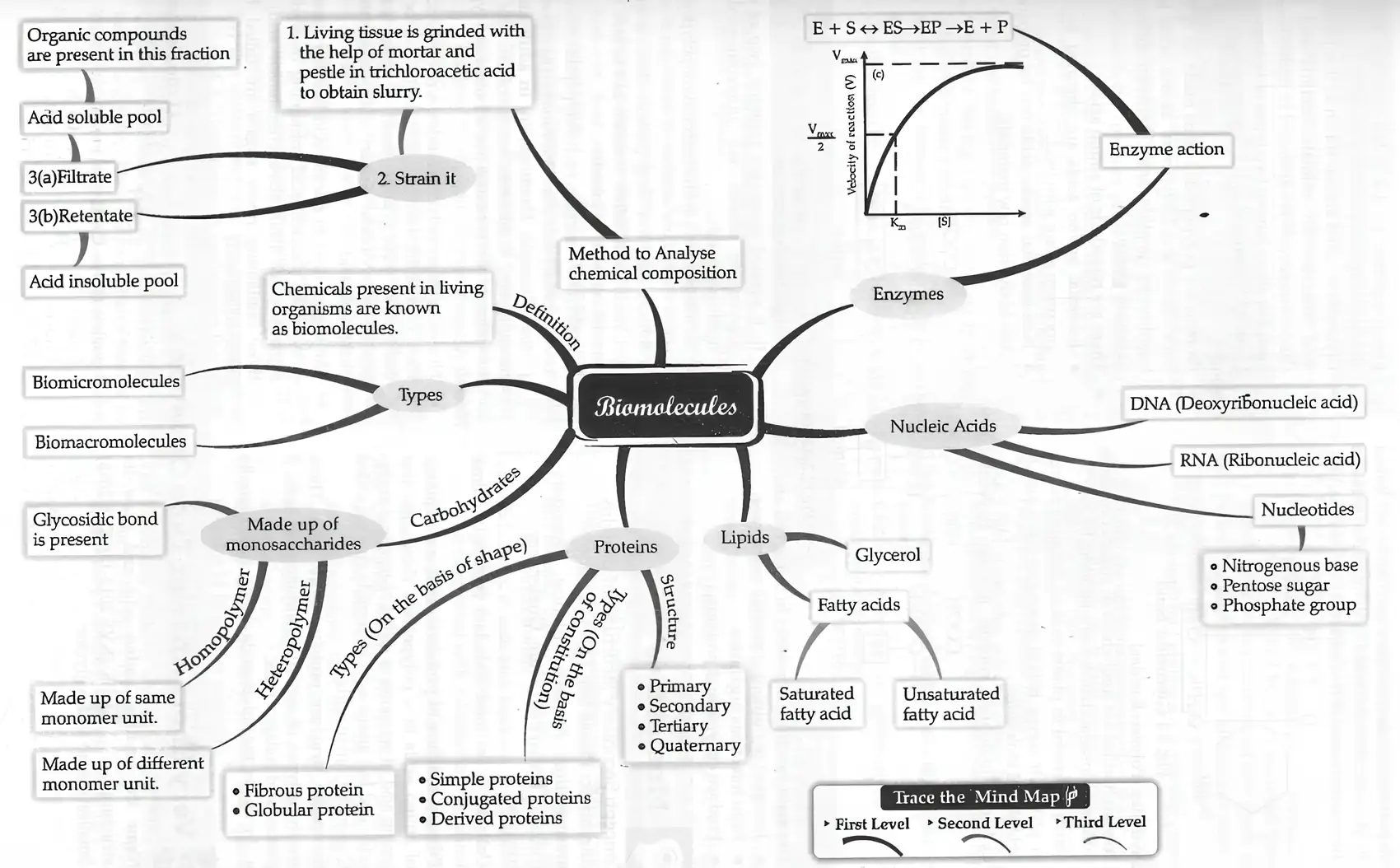
Biomolecules are chemicals present in living organisms that are essential for life processes. They are broadly classified into inorganic biomolecules, such as minerals, gases, and water, and organic biomolecules, including carbohydrates, proteins, lipids, nucleic acids, and vitamins.
Carbohydrates
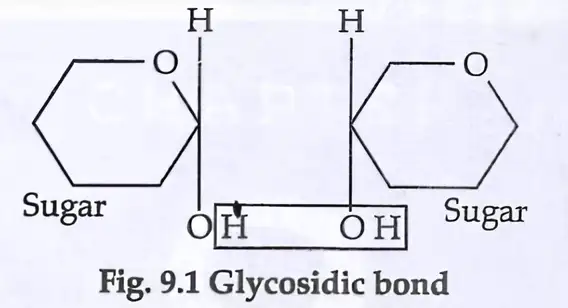
Carbohydrates are organic compounds made up of monosaccharide units. They can form homopolymers or heteropolymers through glycosidic bonds formed by dehydration reactions between two carbon atoms of adjacent monosaccharides. Important polysaccharides include starch, cellulose, and glycogen. Starch serves as an energy store in plants and forms a helical secondary structure. Cellulose, composed of glucose molecules linked by β-1,4 glycosidic bonds, is the most abundant organic molecule on Earth. Glycogen, known as animal starch, is a highly branched polymer with α-1,4 and α-1,6 linkages.
Proteins
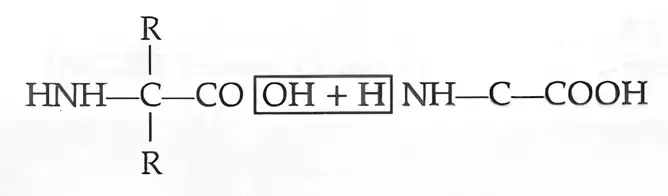
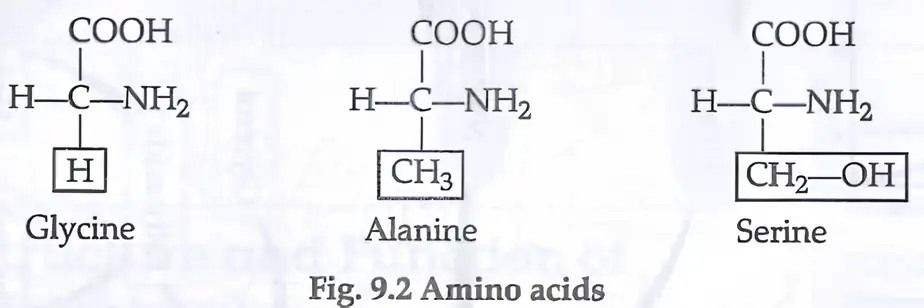
Proteins are polypeptide chains composed of amino acids linked by peptide bonds formed through dehydration synthesis between the carboxyl group of one amino acid and the amino group of another. Amino acids have ionizable -NH₂ and -COOH groups, existing in different forms depending on pH, including the zwitterion form where the molecule carries both positive and negative charges.
Proteins have four structural levels: primary (linear amino acid sequence), secondary (α-helix, β-pleated sheet, collagen helix), tertiary (three-dimensional folding), and quaternary (assembly of multiple polypeptide subunits, e.g., hemoglobin).
Lipids
Lipids include fatty acids and glycerol. Fatty acids consist of a carboxyl group attached to a hydrocarbon chain (R group), which can be saturated or unsaturated. Glycerol is a trihydroxy propane molecule. Lipids are important for energy storage and membrane structure.
Nucleic Acids
Nucleic acids are polynucleotides composed of nitrogenous bases, pentose sugars (ribose in RNA and deoxyribose in DNA), and phosphate groups. Nucleotides are linked by 3'-5' phosphodiester bonds formed by dehydration reactions between the 3' carbon of one sugar and the 5' carbon of the next, releasing two water molecules.
Solved Examples
Example 1: Explain the formation of a peptide bond between two amino acids.
Solution: Two amino acids each have an amino group (-NH₂) and a carboxyl group (-COOH). During peptide bond formation, the -OH from the carboxyl group of one amino acid and an -H from the amino group of the other amino acid combine to release a water molecule (H₂O). The remaining atoms form a covalent bond between the carbon of the carboxyl group and the nitrogen of the amino group, called a peptide bond. This process is a condensation or dehydration synthesis reaction.
Example 2: Describe the difference between saturated and unsaturated fatty acids.
Solution: Saturated fatty acids have no double bonds between carbon atoms in their hydrocarbon chain, meaning all carbons are saturated with hydrogen atoms. Unsaturated fatty acids contain one or more double bonds, which introduce kinks in the chain, affecting fluidity and melting point.
Practice Set
- Level 1 (Easy): What are the monomer units of proteins?
- Level 2 (Moderate): Explain the structural difference between starch and cellulose.
- Level 3 (Challenging): Describe the process and significance of the formation of the 3'-5' phosphodiester bond in nucleic acids.
Answer Key
- Level 1: Amino acids are the monomer units of proteins.
- Level 2: Starch is composed of α-glucose units linked mainly by α-1,4 glycosidic bonds forming a helical structure, whereas cellulose is composed of β-glucose units linked by β-1,4 glycosidic bonds forming straight, rigid chains that provide structural support.
- Level 3: The 3'-5' phosphodiester bond forms between the 3' hydroxyl group of one sugar and the 5' phosphate group of the next nucleotide, releasing two water molecules. This bond creates the sugar-phosphate backbone of nucleic acids, essential for the stability and integrity of DNA and RNA molecules.
Enzymes Types and Properties Enzyme Action
Definition and Nature
Enzymes are proteinaceous biocatalysts that accelerate biological chemical reactions without being consumed. Some nucleic acids with catalytic activity are called ribozymes. Enzymes have specific active sites where substrates bind, facilitating the reaction.
Activation Energy and Catalysis
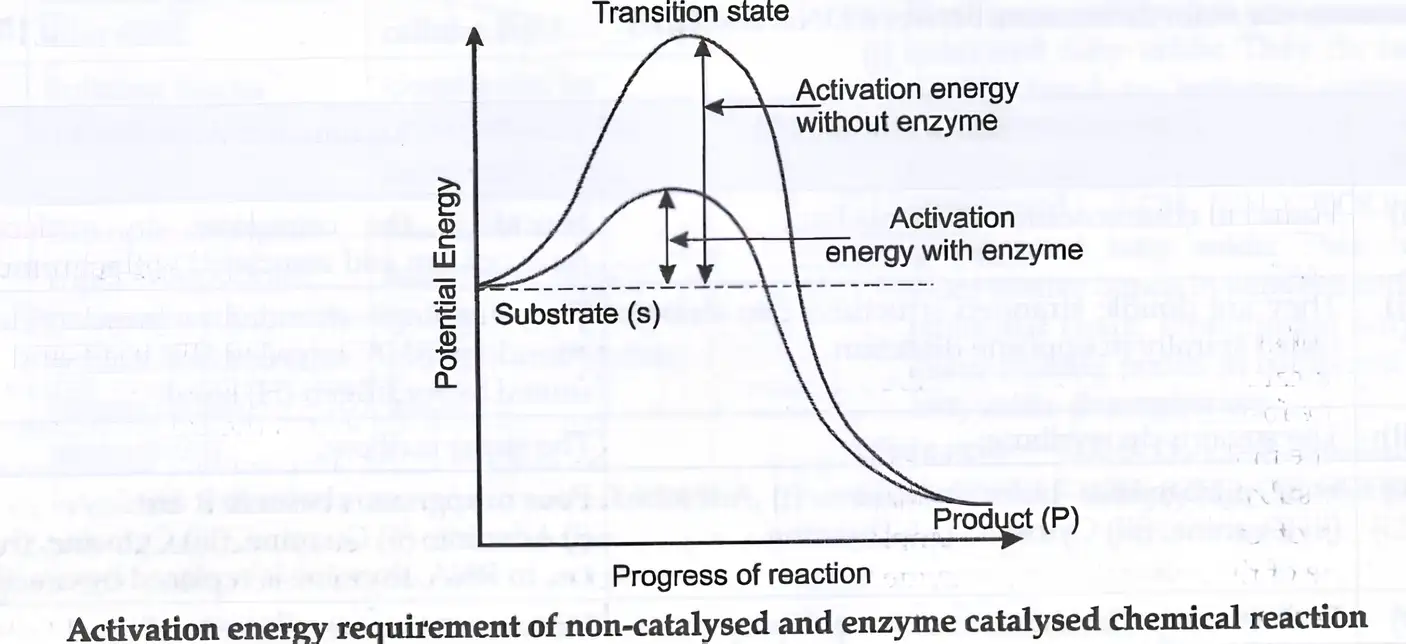
Enzymes lower the activation energy required for a reaction, enabling it to proceed faster at physiological temperatures. The activation energy is the external energy needed to start a chemical reaction.
Mechanism of Enzyme Action
(i) The substrate binds to the enzyme's active site.
(ii) Binding induces a conformational change in the enzyme, enhancing substrate fit.
(iii) The enzyme-substrate complex forms, facilitating bond breakage or formation.
(iv) The enzyme releases the product and is free to catalyze another reaction.
Classification of Enzymes
- Oxidoreductases: Catalyze oxidation-reduction reactions.
- Transferases: Transfer functional groups like methyl or phosphate.
- Hydrolases: Catalyze hydrolysis reactions.
- Ligases: Join two molecules by forming bonds.
- Isomerases: Catalyze isomerization reactions.
- Lyases: Catalyze bond cleavage without hydrolysis or oxidation.
Solved Examples
Example 1: Explain how enzymes affect the activation energy of a reaction.
Solution: Enzymes provide an alternative reaction pathway with a lower activation energy compared to the uncatalyzed reaction. This is shown in a graph where the peak representing activation energy is lower in the presence of an enzyme, allowing the reaction to proceed faster at lower energy input.
Example 2: Describe the role of the active site in enzyme specificity.
Solution: The active site is a specific region on the enzyme where the substrate binds. Its shape and chemical environment are complementary to the substrate, ensuring specificity. Upon substrate binding, the enzyme undergoes conformational changes to better fit the substrate, facilitating the reaction.
Practice Set
- Level 1 (Easy): What is the role of enzymes in biological reactions?
- Level 2 (Moderate): Name the six classes of enzymes and give one example of each.
- Level 3 (Challenging): Explain the induced fit model of enzyme action.
Answer Key
- Level 1: Enzymes act as catalysts to speed up biological reactions without being consumed.
- Level 2: The six classes are: Oxidoreductases (e.g., dehydrogenase), Transferases (e.g., kinase), Hydrolases (e.g., lipase), Ligases (e.g., DNA ligase), Isomerases (e.g., glucose-6-phosphate isomerase), Lyases (e.g., decarboxylase).
- Level 3: The induced fit model states that substrate binding induces a conformational change in the enzyme, enhancing the fit between enzyme and substrate, which facilitates catalysis.
Quick Reference Table
Biomolecules:
- Carbohydrates: Monosaccharides linked by glycosidic bonds; examples include starch, cellulose, glycogen.
- Proteins: Polymers of amino acids linked by peptide bonds; structural levels include primary to quaternary.
- Lipids: Fatty acids (saturated/unsaturated) and glycerol; important for energy storage.
- Nucleic Acids: Polynucleotides with nitrogenous bases, pentose sugar, and phosphate; linked by 3'-5' phosphodiester bonds.
Enzymes:
- Biocatalysts that lower activation energy.
- Active site binds substrate specifically.
- Six classes: Oxidoreductases, Transferases, Hydrolases, Ligases, Isomerases, Lyases.
Common Mistakes and Misconceptions
- Confusing the types of glycosidic bonds in starch (α-1,4) and cellulose (β-1,4).
- Assuming all amino acids exist only in one form; they exist in different ionization states depending on pH.
- Believing enzymes are consumed in reactions; enzymes remain unchanged after catalysis.
- Thinking all lipids are polymers; lipids are not formed by polymerization like carbohydrates or proteins.
- Misunderstanding enzyme specificity; enzymes have specific active sites complementary to substrates.
Glossary
- Biomolecules: Chemical substances present in living organisms.
- Peptide Bond: Covalent bond linking amino acids in proteins.
- Glycosidic Bond: Covalent bond linking sugar molecules in carbohydrates.
- Zwitterion: Molecule with both positive and negative charges but overall neutral.
- Activation Energy: Energy required to start a chemical reaction.
- Enzyme: Protein that catalyzes biochemical reactions.
- Phosphodiester Bond: Bond linking nucleotides in nucleic acids.
- Ribozyme: RNA molecule with catalytic activity.