CLASS 11-PCB . BIOLOGY . BIOLOGY . BIOLOGICAL CLASSIFICATION
Chapter 2 : Biological Classification
Ch 2
BIOLOGY
CLASS 11-PCB
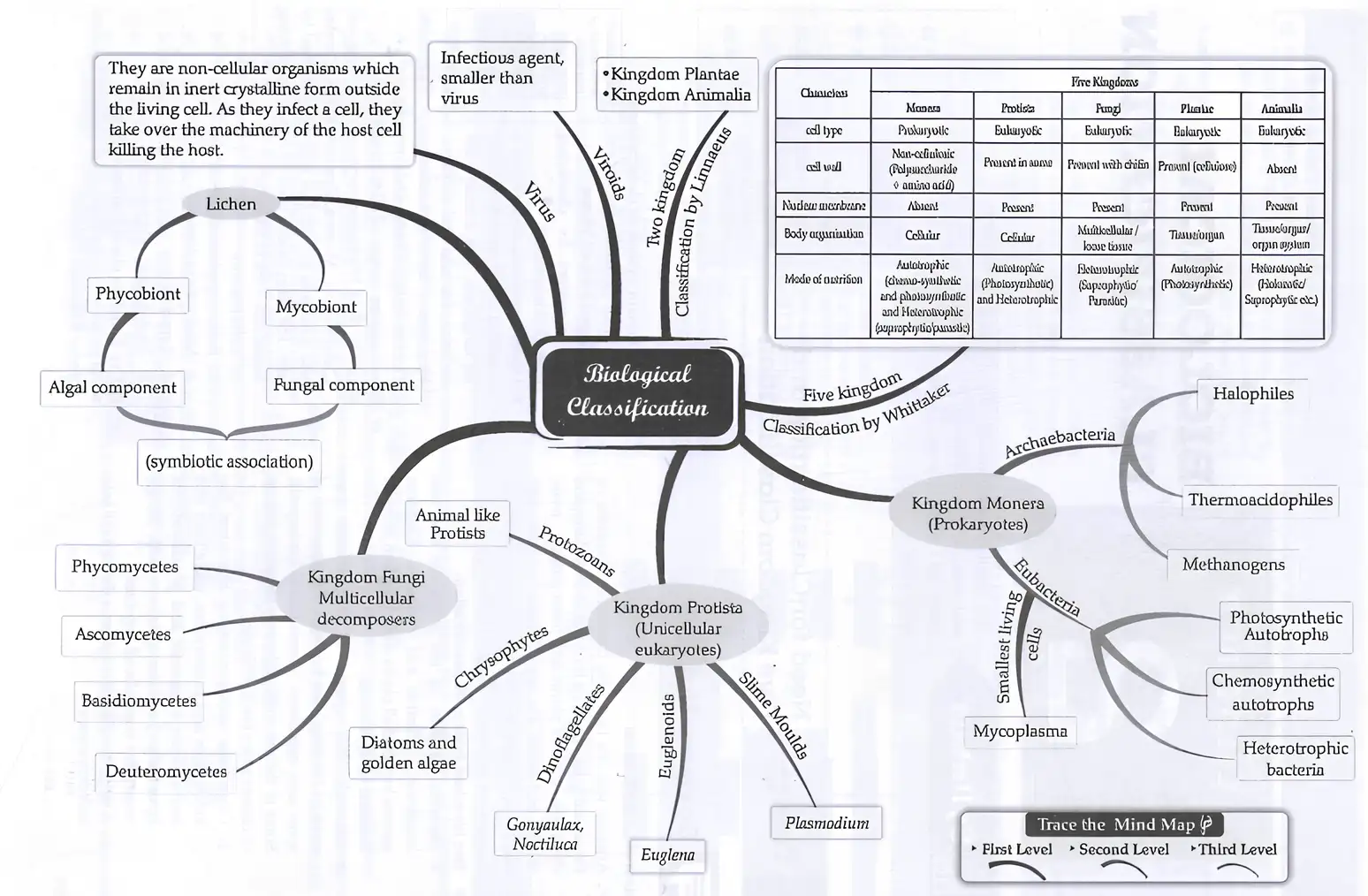
Classification Systems
Need for Classification
Biological classification organizes living organisms into groups based on shared characteristics to simplify study and understanding. Early systems grouped organisms by observable traits, but advances revealed the need for more detailed classification.
Historical Systems
Aristotle first classified plants into trees, shrubs, and herbs, and animals into those with red blood (enaima) and without (anaima). Linnaeus introduced the two-kingdom system: Plantae and Animalia, but it was inadequate due to grouping diverse organisms together.
Modern Systems
The three-domain system by Carl Woese classifies life into Archaea, Bacteria, and Eukarya, with six kingdoms: Archaebacteria, Eubacteria, Protista, Fungi, Plantae, and Animalia. Whittaker's five-kingdom system (Monera, Protista, Fungi, Plantae, Animalia) classifies organisms based on cell structure, body organization, nutrition, reproduction, and phylogeny.
Kingdom Monera and Protista
Kingdom Monera
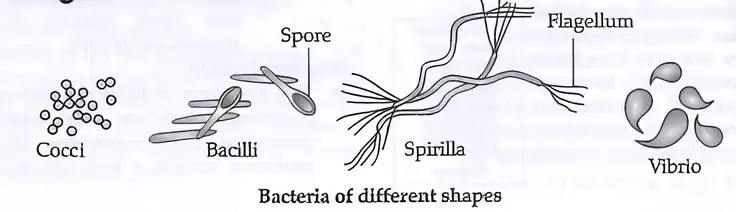
Monera consists of unicellular prokaryotes, mainly bacteria, found everywhere. Bacteria are classified by shape into coccus (spherical), bacillus (rod-shaped), spirillum (spiral), and vibrio (comma-shaped). They have a cell wall made of peptidoglycan and lack a nuclear membrane; their DNA is in a nucleoid.
Nutrition varies: autotrophic (photosynthetic or chemosynthetic), saprophytic (feeding on dead matter), parasitic (feeding on living hosts), or symbiotic (mutually beneficial associations). Reproduction is mainly by binary fission; conjugation is a form of genetic exchange. Under stress, bacteria form spores.
Monera divides into Archaebacteria (primitive, extremophiles with unique cell walls) and Eubacteria (true bacteria with rigid cell walls). Cyanobacteria (blue-green algae) are photosynthetic and can fix nitrogen using heterocysts. Mycoplasmas lack cell walls and are pathogenic.
Kingdom Protista
Protists are unicellular eukaryotes with membrane-bound organelles. They are mostly aquatic and move using flagella or cilia. Reproduction can be asexual or sexual. Groups include chrysophytes (diatoms and desmids), dinoflagellates (some cause red tides), euglenoids (photosynthetic and heterotrophic), slime molds (saprophytic with plasmodium stage), and protozoans (heterotrophic, including amoeboid, flagellated, ciliated, and sporozoans).
Kingdom Fungi
Characteristics
Fungi grow in warm, humid environments. Except yeast (unicellular), fungi are filamentous with hyphae forming mycelium. Hyphae can be aseptate (coenocytic) or septate. Cell walls contain chitin. Fungi are heterotrophic, obtaining nutrients as saprophytes, parasites, or symbionts (e.g., lichens, mycorrhiza).
Reproduction
Fungi reproduce vegetatively (fragmentation, budding), asexually (spores like conidia, sporangiospores, zoospores), and sexually (plasmogamy, karyogamy, meiosis producing spores like oospores, ascospores, basidiospores). The dikaryophase is a stage with two nuclei per cell between plasmogamy and karyogamy.
Classification
- Phycomycetes: Aquatic or parasitic fungi with aseptate mycelium; reproduce by zoospores or aplanospores; examples: Mucor, Rhizopus.
- Ascomycetes: Sac fungi with septate mycelium; reproduce asexually by conidia and sexually by ascospores in asci; examples: Yeast, Penicillium.
- Basidiomycetes: Soil or parasitic fungi with septate mycelium; reproduce sexually by basidiospores on basidia; examples: Mushroom, Puccinia.
- Deuteromycetes: Imperfect fungi with only asexual reproduction by conidia; examples: Alternaria, Trichoderma.
Kingdom Plantae
Characteristics
Plants are photosynthetic autotrophs with eukaryotic cells containing chloroplasts and cellulose cell walls. Some are insectivorous or parasitic. They exhibit alternation of generations between diploid sporophyte and haploid gametophyte phases. The kingdom includes algae, bryophytes, pteridophytes, gymnosperms, and angiosperms.
Viruses, Lichens and Viroids
Viruses
Viruses are non-cellular infectious agents existing as inert crystals outside hosts. They are obligate parasites, taking over host machinery to replicate. Composed of a protein capsid enclosing RNA or DNA, they cause diseases in plants and animals. Bacteriophages infect bacteria.
Viroids
Viroids are smaller than viruses, consisting of short single-stranded RNA without a protein coat, causing plant diseases like potato spindle tuber disease.
Lichens
Lichens are symbiotic associations between algae (phycobiont) and fungi (mycobiont), mutually benefiting each other. They are sensitive to air pollution and serve as pollution indicators.
Solved Examples
Example 1: Identify the kingdom of an organism that is unicellular, lacks a nucleus, and reproduces by binary fission.
Solution: The organism is unicellular and prokaryotic (lacks nucleus), reproducing by binary fission, which is characteristic of Kingdom Monera.
Example 2: Explain why fungi are classified separately from plants.
Solution: Fungi are heterotrophic, absorbing nutrients from dead or living organisms, have cell walls made of chitin, and reproduce by spores. Plants are autotrophic, have cellulose cell walls, and perform photosynthesis. These differences justify separate classification.
Practice Set
- Level 1: What are the main criteria used in the five kingdom classification system?
- Level 2: Describe the differences between Archaebacteria and Eubacteria.
- Level 3: Explain the role of lichens as bioindicators of air pollution.
Answer Key
- Level 1: Cell structure, body organization, mode of nutrition, reproduction, and phylogenetic relationships.
- Level 2: Archaebacteria are primitive prokaryotes found in extreme environments with cell walls lacking peptidoglycan; Eubacteria are true bacteria with peptidoglycan cell walls and found in diverse habitats.
- Level 3: Lichens are sensitive to air pollution and do not grow in polluted areas, thus their presence or absence indicates air quality.
Quick Reference Table
- Two Kingdom System: Plantae and Animalia (Linnaeus)
- Five Kingdom System: Monera, Protista, Fungi, Plantae, Animalia (Whittaker)
- Three Domain System: Archaea, Bacteria, Eukarya (Woese)
- Kingdom Monera: Unicellular prokaryotes; includes Archaebacteria and Eubacteria
- Kingdom Protista: Unicellular eukaryotes; includes algae, protozoans
- Kingdom Fungi: Heterotrophic, chitin cell walls, reproduce by spores
- Kingdom Plantae: Photosynthetic autotrophs, cellulose cell walls, alternation of generations
- Viruses: Non-cellular, protein coat (capsid), DNA or RNA genome, obligate parasites
- Viroids: Infectious RNA molecules without protein coat, cause plant diseases
- Lichens: Symbiotic association of algae and fungi, indicators of air pollution
Common Mistakes and Misconceptions
- Confusing viruses as living organisms; they are non-living outside host cells.
- Assuming all bacteria are harmful; many are beneficial and essential for ecosystems.
- Believing fungi are plants; fungi differ in nutrition and cell wall composition.
- Thinking protists are all animals or plants; they form a separate diverse group.
- Misunderstanding the five kingdom system as the latest; the three domain system is more current.
Glossary
- Nucleoid: Region in prokaryotes containing DNA without a nuclear membrane.
- Saprophytes: Organisms that feed on dead organic matter.
- Parasites: Organisms that live on or in a host, deriving nutrients without killing it.
- Heterocysts: Specialized nitrogen-fixing cells in some cyanobacteria.
- Pellicle: Protein-rich layer covering euglenoids providing flexibility.
- Hyphae: Thread-like structures forming fungal mycelium.
- Mycorrhiza: Symbiotic association between fungal mycelium and plant roots.
- Ascospores: Spores produced sexually in Ascomycetes.
- Basidiospores: Spores produced sexually in Basidiomycetes.
- Capsid: Protein coat enclosing viral nucleic acid.
- Capsomere: Protein subunits of a viral capsid.
- Viroid: Infectious RNA molecule without protein coat causing plant diseases.