CLASS 11-HUMANITIES . SOCIOLOGY . INTRODUCING SOCIOLOGY . SOCIOLOGY AND-SOCIETY
Chapter 1 : Sociology And Society
Ch 1
SOCIOLOGY
CLASS 11-HUMANITIES
Introduction to Sociology and Society
Choosing subjects in senior secondary school is influenced by various social factors beyond individual effort. These include the job market, socioeconomic background, gender, culture, and social norms. Sociology studies how individual choices and societal structures interact, revealing that personal problems often reflect broader public issues. The concept of a 'good job' varies across societies, shaped by cultural values and social recognition. Individuals belong to multiple societies simultaneously, such as community, caste, tribe, or nation, which are often unequal. Sociology systematically studies society, distinct from philosophy or common sense, and has historical roots mainly in Western intellectual and material developments, with significant global and Indian contexts.
The Sociological Imagination: The Personal Problem and The Public Issue
The sociological imagination, as described by C. Wright Mills, helps understand the link between personal troubles and public issues. For example, homelessness is a personal problem for individuals but a public issue requiring government intervention, such as the Pradhan Mantri Awas Yojna–Gramin scheme, which provides financial and labor support to houseless families and those living in dilapidated kutcha houses to build pucca houses.

Exam Question: What is the sociological imagination and how does it help in understanding homelessness?
Answer: The sociological imagination is the ability to see the connection between personal troubles and public issues. It helps understand homelessness not just as an individual problem but as a social issue influenced by economic, political, and social factors.
Pluralities and Inequalities Among Societies
Individuals belong to multiple societies, such as ethnic, religious, caste, or national groups, which creates complexity in defining 'society.' Societies are marked by inequalities in wealth, education, political power, and social respect. Hunger and obesity are contrasting global health issues reflecting social inequalities. Labor conditions, access to healthcare, and living environments vary widely, highlighting disparities.

Exam Question: How do pluralities and inequalities manifest in societies?
Answer: Pluralities refer to the existence of multiple social groups within societies, while inequalities refer to differences in wealth, education, health, and power among these groups, leading to varied life experiences.
Introducing Sociology
Sociology studies human social life, groups, and societies, focusing on behavior as social beings. It differs from philosophy and common sense by using systematic, scientific methods to observe and analyze society. Sociology examines norms and values as they function in real societies, not as ideals. Sociologists aim to report findings accurately and objectively, maintaining social responsibility without bias.
Exam Question: How is sociology different from common sense and philosophical reflections?
Answer: Sociology uses scientific methods to study society objectively, focusing on how norms and values function in reality, unlike common sense or philosophy which are based on personal beliefs or moral ideals.
Sociology and Common Sense Knowledge
Sociology challenges naturalistic and individualistic explanations of social phenomena by emphasizing social structures and contexts. For example, poverty is not just due to individual failings but results from structural inequalities in society.
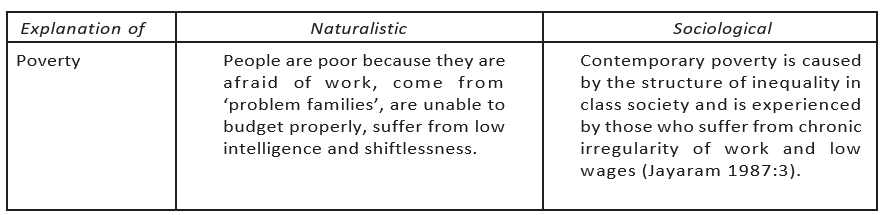
Exam Question: Compare naturalistic and sociological explanations of poverty.
Answer: Naturalistic explanations blame individual traits for poverty, while sociological explanations attribute poverty to social structures and inequalities.
The Intellectual Ideas that Went into the Making of Sociology
Early sociology was influenced by scientific theories like evolution and the study of pre-modern societies. Thinkers like Auguste Comte, Karl Marx, and Herbert Spencer classified societies and stages of development, often viewing Western societies as most advanced. Sociology also drew from the Enlightenment's emphasis on reason and scientific methods, viewing social problems like poverty as issues to be studied and addressed scientifically.
Exam Question: What were some intellectual influences on early sociology?
Answer: Early sociology was influenced by theories of evolution, Enlightenment ideas of reason and science, and the classification of societies by thinkers like Comte, Marx, and Spencer.
The Material Issues That Went Into The Making Of Sociology
The Industrial Revolution and capitalism transformed societies, creating new economic activities, urbanization, and social relations. Industrialization led to the degradation of labor, growth of industrial cities with poor living conditions, and new social dynamics. The shift to factory work introduced clock-time discipline and changed traditional work rhythms.

Exam Question: How did the Industrial Revolution influence the development of sociology?
Answer: The Industrial Revolution caused major social changes like urbanization, labor degradation, and new social relations, which sociology studied to understand modern society.
Why Should We Study The Beginning And Growth of Sociology In Europe?
Sociology originated in Europe during times of capitalism and industrialization, which had global impacts including colonialism. Understanding European sociology helps comprehend social changes worldwide, including in India, which was shaped by British colonialism and global capitalism.
Exam Question: Why is the study of European sociology important for understanding Indian society?
Answer: Because Indian society was influenced by British colonialism and global capitalism, studying European sociology helps understand the social changes and challenges in India.
The Growth Of Sociology In India
Indian sociology developed in the context of colonialism, engaging with Western ideas while addressing unique Indian social realities. It challenged colonial stereotypes, such as the portrayal of Indian villages as unchanging, and integrated both sociology and social anthropology traditions to study India's complex society.
Exam Question: How did colonialism influence the development of sociology in India?
Answer: Colonialism introduced Western sociological ideas to India, but Indian sociology adapted these to study its diverse and complex society, often challenging colonial stereotypes.
The Scope of Sociology And Its Relationship To Other Social Science Disciplines
Sociology studies interactions from individual to global levels and overlaps with disciplines like anthropology, economics, political science, and history. It examines social norms, values, and institutions, providing a broader context to economic and political behaviors. Interdisciplinary approaches enrich understanding of social phenomena.
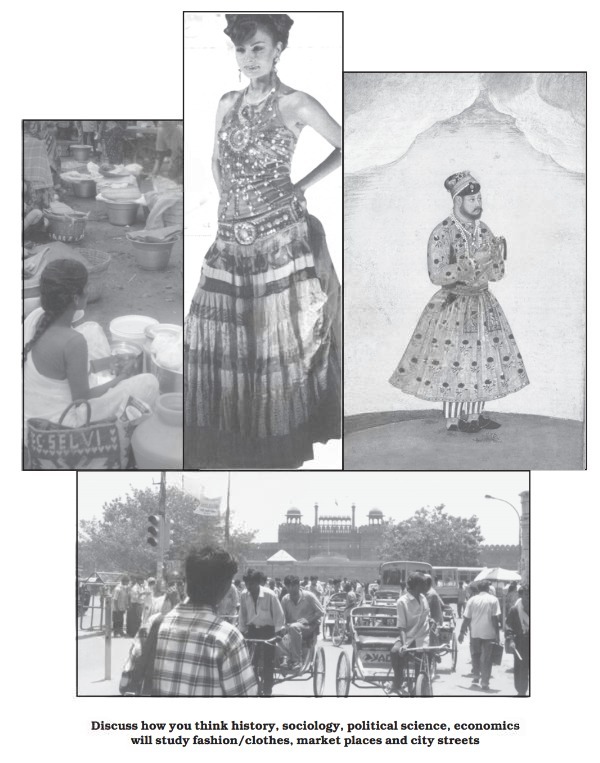
Exam Question: How does sociology relate to other social sciences?
Answer: Sociology overlaps with other social sciences by studying social behavior, institutions, and norms, providing broader context and interdisciplinary insights.
Sociology and Economics
Economics focuses on production and distribution of goods, often using precise models. Sociology studies economic behavior within social contexts, including norms and values. Economic sociology examines how social factors influence economic activities, such as consumption patterns and gender roles.
Exam Question: What is the difference between economics and economic sociology?
Answer: Economics studies economic variables and markets, while economic sociology examines economic behavior within social and cultural contexts.
Sociology and Political Science
Political science traditionally focuses on political theory and government structures, while sociology studies society broadly, including political behavior and institutions. Political sociology bridges the two, analyzing voting patterns, political participation, and the role of social factors in politics.
Exam Question: What does political sociology study?
Answer: Political sociology studies political behavior, voting patterns, decision-making processes, and the influence of social factors on politics.
Sociology and Psychology
Psychology studies individual behavior and mental processes, while sociology focuses on behavior organized in social contexts. Social psychology bridges the two by studying individuals in social groups. Sociology examines how society shapes personality through institutions, culture, and norms.
Exam Question: How does sociology differ from psychology?
Answer: Sociology studies behavior in social contexts and institutions, while psychology focuses on individual mental processes and behavior.
Sociology and Social Anthropology
Social anthropology traditionally studied simple, non-literate societies, while sociology focused on complex modern societies. In India, the distinction is less rigid, with both disciplines studying diverse social realities using various methods. Globalization and modernity have blurred boundaries between the two fields.

Exam Question: How do sociology and social anthropology differ and overlap?
Answer: Sociology studies complex societies and parts of society, while social anthropology studies simple societies holistically. In India, both overlap in methods and subject matter due to diverse social realities.
Solved Examples
Example 1: Explain the concept of sociological imagination with an example.
Solution: Sociological imagination is the ability to see the connection between personal experiences and larger social forces. For example, unemployment may be a personal trouble for an individual but is also a public issue influenced by economic policies and market conditions.
Example 2: Differentiate between naturalistic and sociological explanations of poverty.
Solution: Naturalistic explanations attribute poverty to individual failings like laziness, while sociological explanations see poverty as a result of social structures and inequalities.
Practice Set
Easy
- What is sociology?
- Define the term 'society'.
- What is a 'good job' according to sociological perspective?
Moderate
- Explain the difference between personal troubles and public issues.
- Describe the impact of the Industrial Revolution on society.
- How does sociology differ from common sense?
Challenging
- Discuss the influence of colonialism on the development of sociology in India.
- Analyze the relationship between sociology and economics.
- Explain the significance of studying the history of sociology.
Answer Key
- What is sociology? - Sociology is the scientific study of human social life, groups, and societies.
- Define the term 'society'. - Society is a group of individuals who share a common culture and social institutions.
- What is a 'good job' according to sociological perspective? - A job valued differently across societies based on culture, social recognition, and individual satisfaction.
- Explain the difference between personal troubles and public issues. - Personal troubles affect individuals directly, while public issues affect large groups and require societal solutions.
- Describe the impact of the Industrial Revolution on society. - It led to urbanization, new labor systems, social inequalities, and changes in social relations.
- How does sociology differ from common sense? - Sociology uses scientific methods to study society objectively, unlike common sense which is based on unreflective beliefs.
- Discuss the influence of colonialism on the development of sociology in India. - Colonialism introduced Western sociological ideas but Indian sociology adapted them to local contexts and challenged colonial stereotypes.
- Analyze the relationship between sociology and economics. - Sociology studies economic behavior within social contexts, while economics focuses on markets and economic variables.
- Explain the significance of studying the history of sociology. - Understanding sociology's history helps comprehend its methods, perspectives, and relevance to social change.
Quick Reference
- Sociological Imagination: Linking personal troubles to public issues.
- Pluralities: Multiple social groups within society.
- Inequalities: Differences in wealth, power, and status.
- Naturalistic Explanation: Blaming individual traits for social problems.
- Sociological Explanation: Viewing social problems as results of social structures.
- Industrial Revolution: Major social and economic transformation in 18th-19th century.
- Colonialism: European domination impacting societies globally.
- Interdisciplinary: Combining methods and insights from multiple disciplines.
Glossary
- Capitalism: Economic system based on private ownership and profit.
- Dialectic: Interaction of opposing social forces.
- Empirical Investigation: Factual inquiry based on observation.
- Feminist Theories: Perspectives emphasizing gender inequalities.
- Social Constraint: Influence of society on individual behavior.
- Values: Ideas about what is desirable or proper.