CLASS 11-HUMANITIES . SOCIOLOGY . UNDERSTANDING SOCIETY . ENVIRONMENT AND-SOCIETY
Chapter 3 : Environment And Society
Ch 3
SOCIOLOGY
CLASS 11-HUMANITIES
Introduction to Environment and Society
Look around you. Everything you see, from school uniforms to furniture, originates from natural resources. The chair in your classroom, for example, is made from wood, iron nails, glue, and varnish, all derived from nature. Its production involves many people and processes, including loggers, carpenters, transporters, and traders, each relying on various natural resources and services like electricity and diesel. This complex network of resource flows illustrates the intricate relationship between society and the environment.
Ecology refers to the web of physical and biological systems and processes, including mountains, rivers, plains, oceans, and the flora and fauna they support. The ecology of a place is shaped by geography and hydrology, influencing how humans live there. Human activities have modified ecology over time, making it difficult to separate natural and human factors in ecological changes. For example, deforestation can increase flood risks, and climate change is a widespread impact of human activity.
Social environments emerge from the interaction between biophysical ecology and human interventions. Nature shapes society, and society shapes nature. For instance, fertile soils support intensive agriculture and dense populations, while deserts support pastoralist lifestyles. Capitalist social organization has transformed nature globally, with examples like automobiles causing pollution and congestion. Human interventions increasingly alter environments, often permanently.
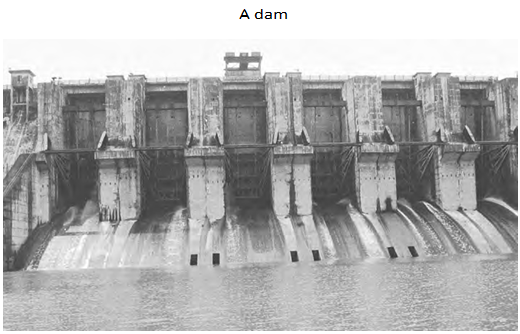
What is a Dam? A dam is a large structure built across a river or stream to hold back water, creating a reservoir. It stores water for drinking, irrigation, industrial use, controls floods, and generates hydroelectric power by turning turbines.
How Does a Dam Work? Water accumulates behind the dam, and gates control its release through spillways. The potential energy of water at height is converted into electrical energy using turbines. The formula for potential energy is PE = mgh, where m is mass, g is gravity, and h is height.
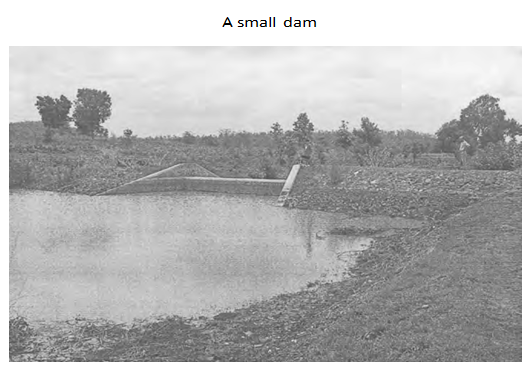
Small Dams store water for irrigation, drinking, or small-scale power. They consist of earth or rock barriers and spillways to release water safely. Water pressure on the dam increases with depth, calculated by P = ρgh, where ρ is water density, g is gravity, and h is depth. Small dams help conserve water but can affect natural river flow and ecosystems.
Social Organisation and Environment
The interaction between environment and society is shaped by social organisation, including property relations and division of labour. Ownership determines access to natural resources, affecting different social groups differently. For example, women often experience resource scarcity more acutely due to their roles in gathering fuel and water but may lack control over these resources.
Social values and norms influence relationships with the environment. Capitalism commodifies nature, reducing complex cultural meanings to profit calculations. Socialist values promote land redistribution, while religious values may lead to conservation or exploitation based on beliefs.
Different perspectives on environment and society reflect debates like nature versus nurture and are influenced by social conditions. Colonialism institutionalized knowledge about natural resources to serve imperial interests, creating disciplines like geology and forestry.
Environmental management is complex due to limited knowledge of biophysical processes and increasing technological complexity. Industrial disasters like Bhopal highlight risks in industrial environments.
Exam Question
Q: How do social organisation and property relations affect access to natural resources?
A: Social organisation and property relations determine who controls and uses natural resources. Ownership affects access and benefits, with different social groups experiencing resource availability differently, often leading to inequalities.
Bhopal Industrial Disaster
On 3 December 1984, a gas leak at the Union Carbide pesticide factory in Bhopal released methyl isocyanate, killing about 4,000 people and disabling 200,000. Despite warnings about safety lapses, government and company officials ignored them due to political and economic interests. The plant lacked safety features, proper maintenance, and emergency plans, contributing to the disaster.
Exam Question
Q: What were the main causes of the Bhopal disaster?
A: The disaster was caused by safety lapses at the plant, ignored warnings by government and company officials, lack of emergency preparedness, poor maintenance, and political interference.
Major Environmental Problems and Risks
Globally recognized environmental problems include:
Resource Depletion
Non-renewable resources like fossil fuels, water, and land are rapidly depleted. Groundwater levels in India are falling due to intensive agriculture and urban use. Rivers are dammed and diverted, damaging ecosystems. Topsoil is lost due to erosion and poor management. Biodiversity habitats shrink due to agricultural expansion, endangering species.
Pollution
Air pollution from industries, vehicles, and indoor cooking fires causes respiratory illnesses and deaths. Indoor pollution particularly affects rural women. Water pollution from sewage, industrial effluents, and agricultural runoff harms water bodies. Noise pollution from urban sources affects health and quality of life.
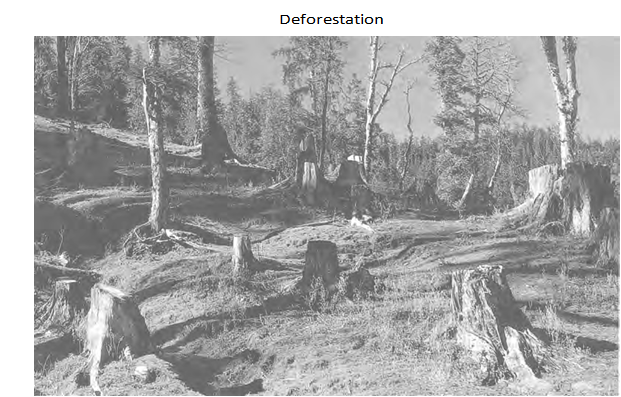
Deforestation is the clearing of forests for agriculture, logging, or urban development. It reduces carbon dioxide absorption, contributing to global warming, destroys habitats, and causes soil erosion.
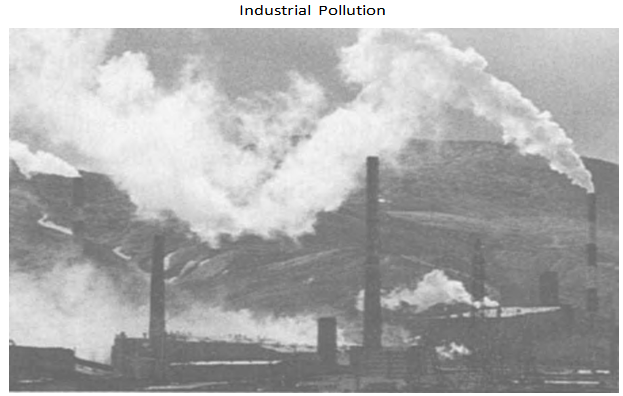
Industrial Pollution releases harmful gases and chemicals into air, water, and soil, causing health problems and environmental damage. Acid rain and global warming result from pollutants like sulfur dioxide and carbon dioxide.
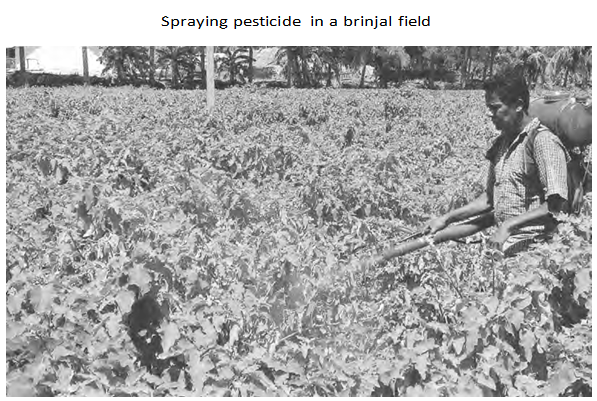
Pesticide Use protects crops from pests but can cause pollution and harm non-target organisms. Safe and responsible use is essential for environmental health.
Global Warming
Greenhouse gases trap heat, causing global temperature rise, melting ice caps, raising sea levels, and disrupting ecological balance. India and China are major contributors to emissions.
Genetically Modified Organisms
Gene-splicing introduces new traits in crops, such as pest resistance. Long-term effects on health and ecology are uncertain. Companies may use genetic modification to control seed use, affecting farmers' independence.
Natural and Man-made Environmental Disasters
Examples include the Bhopal gas leak and the 2004 tsunami, causing massive loss of life and environmental damage.
Exam Question
Q: What are the major environmental problems caused by human activities?
A: Major problems include resource depletion, pollution (air, water, noise), deforestation, global warming, impacts of genetically modified organisms, and environmental disasters.
Environmental Problems as Social Problems
Environmental problems affect social groups differently due to social inequality. For example, in water-scarce areas, richer farmers access deep bore wells, while poorer villagers face scarcity. Public interest in environmental issues may serve powerful groups more than the poor. Conflicts arise from differing interests and ideologies regarding resource use.
Social ecology emphasizes that ecological problems stem from social problems like economic, ethnic, cultural, and gender conflicts. Resolving environmental issues requires addressing social inequalities and changing relations between social groups.
Sustainable Development aims to balance ecological and economic needs, meeting present needs without compromising future generations. It calls for equitable resource distribution and inclusive development.
Farmers' distress and suicides in India are linked to environmental and economic factors, such as water depletion, pest resistance, expensive inputs, and debt.
Exam Question
Q: Why are environmental problems also social problems?
A: Because social inequalities affect how different groups experience and respond to environmental issues. Power and access to resources influence vulnerability and solutions, making environmental problems intertwined with social issues.
Glossary
- Hydrology: The science of water and its flows in a region.
- Deforestation: The loss of forest area due to tree cutting or land use change.
- Greenhouse: A structure that maintains warmer temperatures for plants.
- Emissions: Waste gases released by human activities.
- Effluents: Waste fluids from industrial processes.
- Aquifers: Underground formations storing water.
- Monoculture: The dominance of a single plant species in an area.
Solved Examples
Example 1: Explaining the Impact of Deforestation
Question: How does deforestation contribute to climate change?
Answer: Trees absorb carbon dioxide during photosynthesis, reducing greenhouse gases. Deforestation removes trees, decreasing carbon absorption and increasing atmospheric CO₂, which traps heat and contributes to global warming.
Example 2: Understanding the Bhopal Disaster Causes
Question: What social and organizational factors led to the Bhopal gas leak?
Answer: Ignored safety warnings, political interference, poor maintenance, lack of emergency plans, and prioritizing profits over safety contributed to the disaster.
Practice Set
Easy
- Define ecology.
- What is a dam and what are its purposes?
- List two major sources of air pollution.
Moderate
- Explain how social organisation affects access to natural resources.
- Describe the environmental impacts of deforestation.
- What are the main causes of the Bhopal disaster?
Challenging
- Discuss why environmental problems are also social problems, giving examples.
- Explain the concept of sustainable development and its importance.
- Analyze the role of social values in shaping environmental management.
Answer Key
- Ecology: The web of physical and biological systems and processes including humans.
- Dam: A structure built to hold back water for storage, flood control, and power generation.
- Air pollution sources: Industries and vehicles.
- Social organisation and resources: Determines who controls and accesses resources, affecting different groups.
- Deforestation impacts: Increases CO₂, destroys habitats, causes soil erosion.
- Bhopal disaster causes: Safety lapses, ignored warnings, political interference.
- Environmental problems as social problems: Social inequalities affect vulnerability and solutions.
- Sustainable development: Development meeting present needs without compromising future generations.
- Social values and environment: Influence how nature is used and conserved.
Quick Reference
- Ecology: Interaction of living and non-living components.
- Social organisation: Structure of society affecting resource use.
- Deforestation: Removal of forests causing environmental harm.
- Pollution: Contamination of air, water, or soil.
- Global warming: Rise in Earth's temperature due to greenhouse gases.
- Sustainable development: Balanced development for present and future.
- Bhopal disaster: Industrial accident caused by negligence.