CLASS 11-HUMANITIES . POLITICAL SCIENCE . POLITICAL THEORY . RIGHTS
Chapter 5 : RIGHTS
Ch 5
POLITICAL SCIENCE
CLASS 11-HUMANITIES
Rights
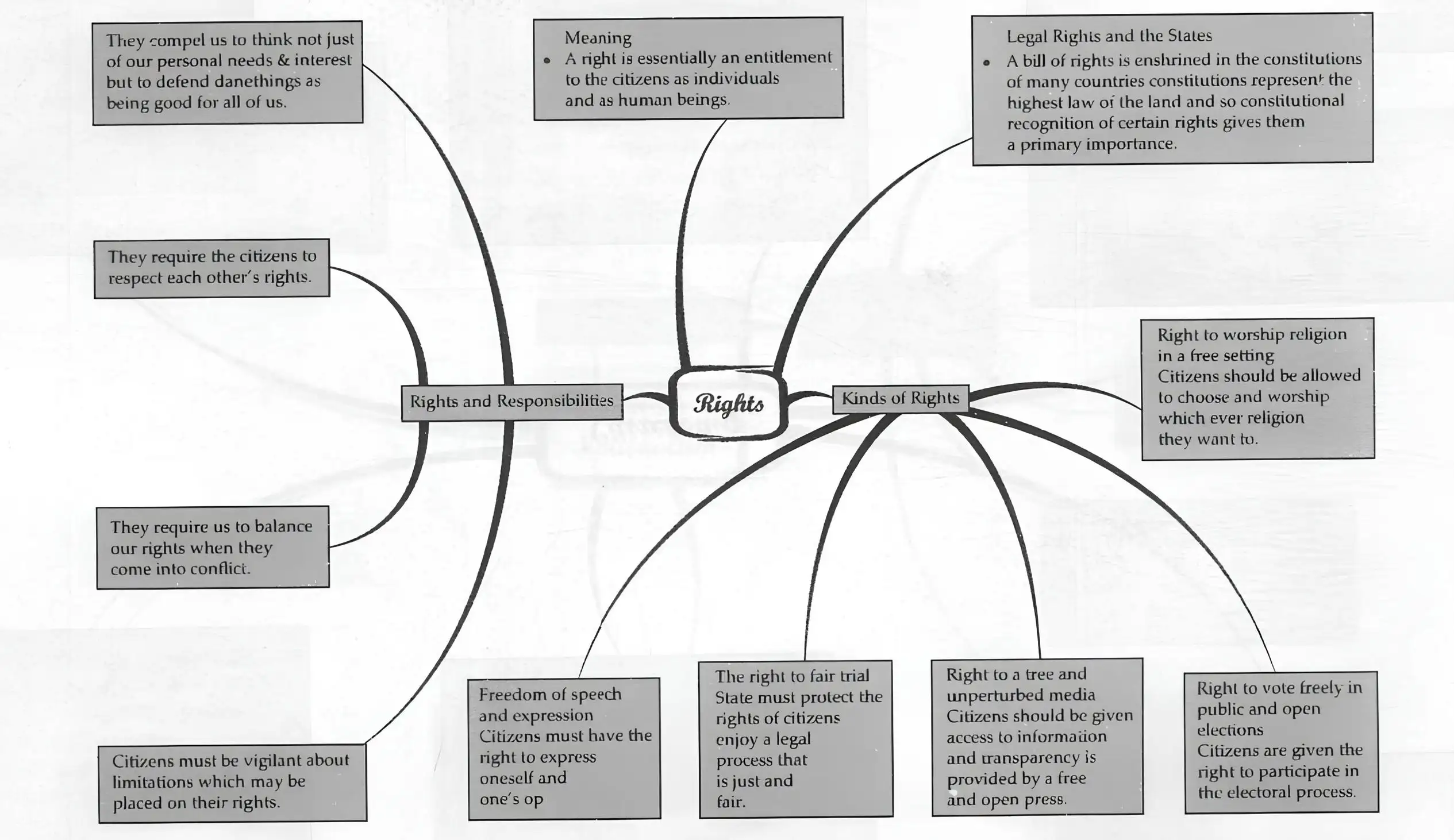
Rights are claims or entitlements that individuals and groups regard as necessary for leading a life of respect and dignity. They differ from mere wants or desires, as rights are recognized and protected by society and the state. The foundation of rights lies in the source of self-respect and dignity and their necessity for well-being.
In the seventeenth and eighteenth centuries, political theorists identified three natural rights of man: the right to life, the right to liberty, and the right to property. All other rights were considered to be derived from these basic rights. In recent times, the term "human rights" has become more common, emphasizing guarantees that human beings seek to lead a minimally good life. Every individual possesses intrinsic value and must have equal opportunities to be free and realize their full potential.
The United Nations Universal Declaration of Human Rights, adopted on December 10, 1948, recognizes claims that the global community sees as essential for a life of dignity and self-respect. Universal human rights have been used by oppressed people worldwide to challenge discriminatory laws and demand equal opportunities.
Constitutions represent the highest law of the land, and constitutional recognition of rights gives them primary importance. Rights are often defined as claims recognized by the state, indicating what the state must do and what it must refrain from doing. Rights ensure that state authority is exercised without violating individual life and liberty.
Types of Rights
Political Rights: These rights allow citizens equality before the law and participation in the political process. They include the right to vote, contest elections, and form or join political parties. Political rights and civil liberties form the foundation of a democratic government.
Economic Rights: These rights ensure that citizens, especially those with low incomes, receive housing, medical facilities, minimum wages, and employment guarantees such as rural employment schemes.
Cultural Rights: These include the right to primary education in one's mother tongue and the right to establish institutions for teaching one's language and culture.
Relation Between Rights and Responsibilities
Rights compel individuals to consider not only their personal needs but also what is good for society as a whole. They require respecting the rights of others and balancing rights when conflicts arise. Citizens must remain vigilant about any limitations placed on their rights.
Exam-Oriented Questions
Q1. What are natural rights? Name the three natural rights identified by political theorists in the seventeenth and eighteenth centuries.
Answer: Natural rights are rights given to individuals by nature or God. The three natural rights identified are the right to life, the right to liberty, and the right to property.
Q2. How do political rights contribute to democracy?
Answer: Political rights give citizens equality before the law and the right to participate in the political process, such as voting and contesting elections. These rights form the basis of a democratic system of government.
Q3. Explain the relationship between rights and responsibilities.
Answer: Rights require individuals to respect the rights of others and balance their own rights when conflicts arise. They compel citizens to think about what benefits everyone and to be aware of any limitations on their rights.
Know the Terms
- Civil liberties: The right to a free and fair trial, the right to express one’s views freely, and the right to protest and dissent.
- Constitutional Rights: Facilities, opportunities, and liberties provided by the state to citizens.
- Duty: An obligation by which we are bound to do something.
- Natural Rights: Facilities given to individuals by nature or God.
- Right: An entitlement or a justified claim.
Solved Examples
Example 1: Explain why the Universal Declaration of Human Rights is important.
Solution: The Universal Declaration of Human Rights is important because it recognizes the claims that the world community collectively sees as essential for leading a life of dignity and self-respect. It provides a universal standard for human rights and has been used by oppressed people worldwide to challenge discriminatory laws.
Example 2: What is the significance of constitutional recognition of rights?
Solution: Constitutional recognition of rights gives them the highest legal status in a country. It ensures that these rights are protected by law and that the state must respect and uphold them, preventing violations of individual freedoms.
Practice Set
Easy
- Define rights.
- Name the three natural rights identified by political theorists.
- What are civil liberties?
Moderate
- Explain the difference between natural rights and human rights.
- Describe the role of political rights in a democracy.
- What responsibilities come with having rights?
Challenging
- Discuss how the Universal Declaration of Human Rights has influenced national constitutions.
- Analyze the relationship between rights and state authority.
- Explain why balancing rights is necessary in a democratic society.
Answer Key
- Rights are claims or entitlements necessary for leading a life of respect and dignity.
- The three natural rights are the right to life, liberty, and property.
- Civil liberties include the right to a free and fair trial, freedom of expression, and the right to protest.
- Natural rights are given by nature or God, while human rights are guarantees recognized by society and the state.
- Political rights allow citizens to participate in the political process and ensure equality before the law.
- Responsibilities include respecting others' rights, balancing conflicting rights, and being aware of limitations.
- The Universal Declaration has set global standards influencing national laws and constitutions.
- Rights limit state authority to protect individual freedoms and dignity.
- Balancing rights prevents conflicts and ensures fairness in society.
Quick Reference
- Rights: Claims necessary for dignity and respect.
- Natural Rights: Life, liberty, property.
- Human Rights: Universal guarantees for a good life.
- Political Rights: Participation in democracy.
- Economic Rights: Access to basic needs and employment.
- Cultural Rights: Education and cultural preservation.
- Responsibilities: Respect and balance rights.
Glossary
- Civil Liberties: Fundamental freedoms protected by law.
- Constitutional Rights: Rights recognized and protected by the constitution.
- Duty: An obligation to perform certain actions.
- Natural Rights: Rights inherent to all humans by nature.
- Right: A justified claim or entitlement.
| Year | Event | Significance |
|---|---|---|
| 17th-18th Century | Identification of Natural Rights | Established the right to life, liberty, and property as fundamental rights. |
| 1948 | Adoption of the Universal Declaration of Human Rights | Set global standards for human rights and dignity. |