CLASS 11-COMMERCE . BUSINESS STUDIES . BUSINESS STUDIES . BUSINESS TRADE-AND-COMMERCE
Chapter 1 : Business, Trade and Commerce
Ch 1
BUSINESS STUDIES
CLASS 11-COMMERCE
Introduction to Business, Trade and Commerce
All human beings require different types of goods and services to satisfy their needs. People buy these goods and services from markets, which can be physical or electronic. The availability of these products and services in the market is ensured by various economic activities such as production, manufacturing, distribution, and exchange. Business is a major economic activity concerned with the production and sale of goods and services required by people.
Business starts with production and ends with consumption. Production of goods is covered under Industry, while the remaining activities belong to Commerce. Together, Industry, Trade, and Commerce form the broader term 'Business'.
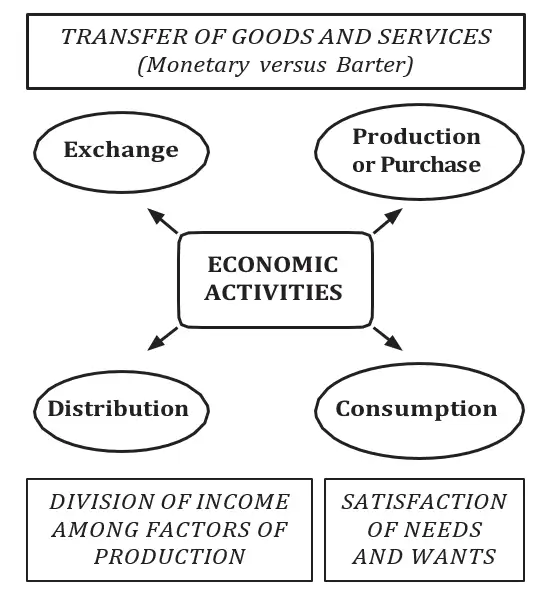
This image illustrates the main types of economic activities related to the transfer of goods and services, focusing on monetary and barter transactions. The key activities include Exchange, Production or Purchase, Distribution, and Consumption. These steps describe how products and money move in an economy.
Role of Business in the Development of Economy
Business, including trade and commerce, has played a vital role since ancient times. India had a prosperous past with significant trading activities conducted via land and water routes such as the Silk Route and maritime trade. Goods were traded internally and internationally, generating surplus income and engaging people in various economic activities like agriculture, weaving, handicrafts, and cottage industries.
Family-based workshops (karkhanas) were important manufacturing units. Indigenous banking systems, including instruments like Hundi and Chitties, facilitated safe money transfer for trading activities, reducing risks associated with long-distance travel.
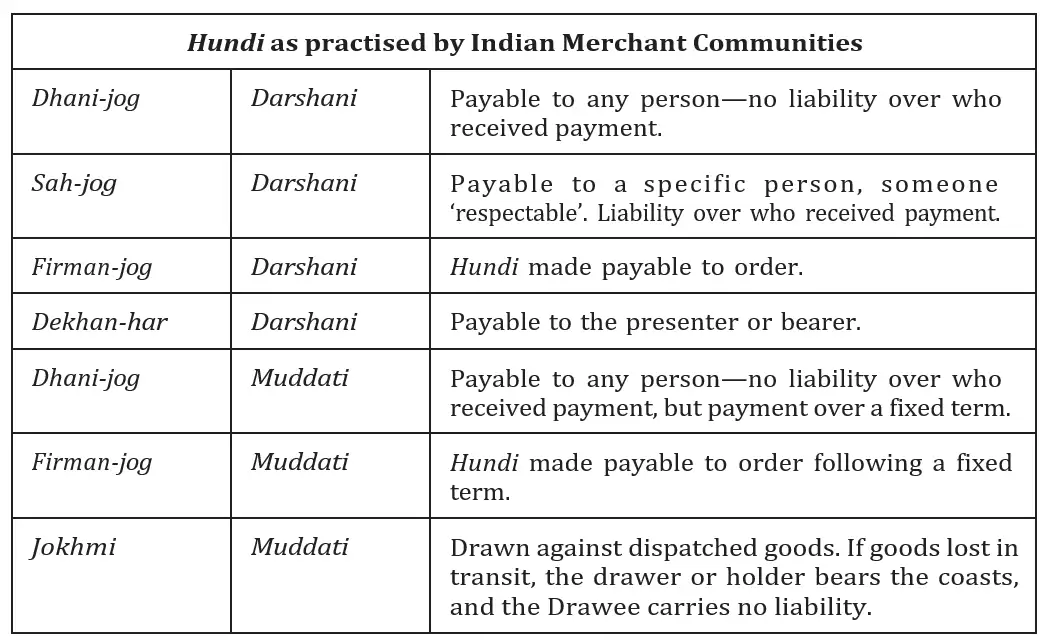
The table shows different types of Hundi, traditional financial instruments used by Indian merchants to transfer money or credit. Types include Darshani (payable immediately) and Muddati (payable after a fixed time), with specific payment rules and liabilities.
India enjoyed a favorable balance of trade with exports exceeding imports, supported by indigenous banking and later commercial and industrial banks. Major ancient trade centers included Patliputra, Peshawar, Taxila, Indraprastha, and others, exporting spices, textiles, and other goods.
Business activities led to the growth of aids to trade such as transportation, banking, finance, and communication. India was known as ‘Swaran Bhoomi and Swaran Deep’ by many travelers, reflecting its prosperity. Between the 1st and 7th centuries CE, India had the largest economy globally, controlling about one-third to one-fourth of the world’s wealth.
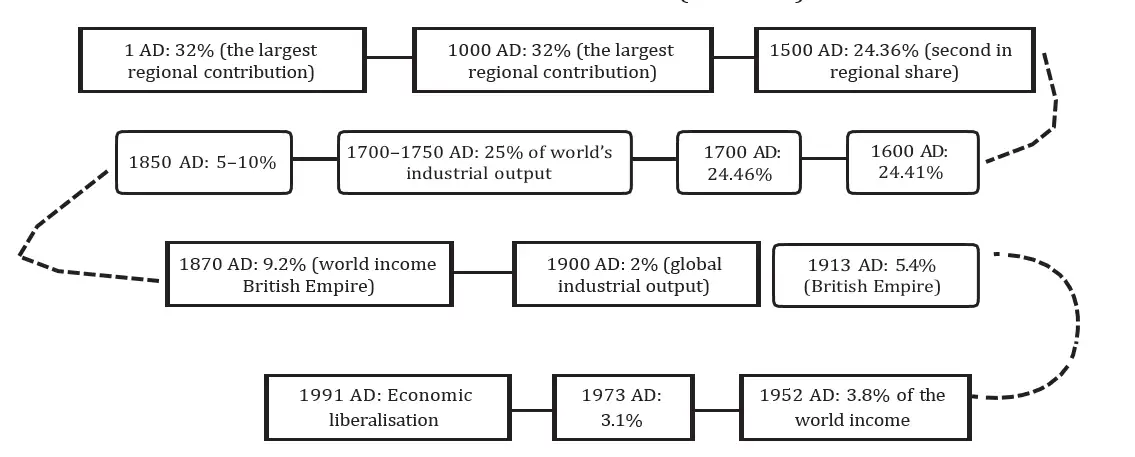
This timeline shows India's share in the world's industrial output and income from 1 AD to 1991 AD, highlighting its rise, decline, and economic liberalization in 1991.
Post-independence, India adopted planned development aiming for a self-reliant socialistic society, focusing on public investment in key industries. However, challenges like lack of capital, population growth, and fiscal deficits led to economic liberalization in 1991, adopting stabilization, restructuring, and globalization strategies.
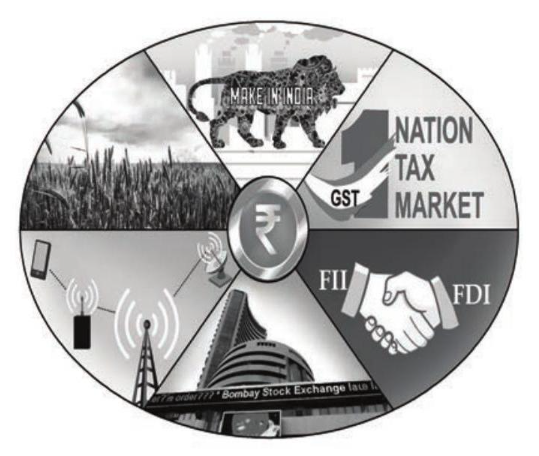
This pie chart represents key aspects of the Indian economy: Agriculture, Make in India initiative, Goods and Services Tax (GST), Foreign Investment, Stock Market, and Telecommunications, all contributing to economic growth.
India is emerging as a fast-growing economy and preferred FDI destination, supported by initiatives like ‘Make in India’, ‘Skill India’, and ‘Digital India’.
Activity: Discuss how business plays a major role in the growth and development of a nation and why it is regarded as the backbone of the economy.
Concept of Business
The term business is derived from ‘busy’, meaning being engaged in activities. Specifically, business refers to an occupation involving regular activities related to purchase, production, and/or sale of goods and services with the aim of earning profits.
Activities to satisfy needs are classified as economic (earning livelihood) and non-economic (performed out of love, sympathy, etc.). Economic activities include business, profession, and employment. Business is an economic activity involving production and sale of goods and services to earn profit by satisfying human needs.
Activity: Is the barter system an economic activity? Give reasons.
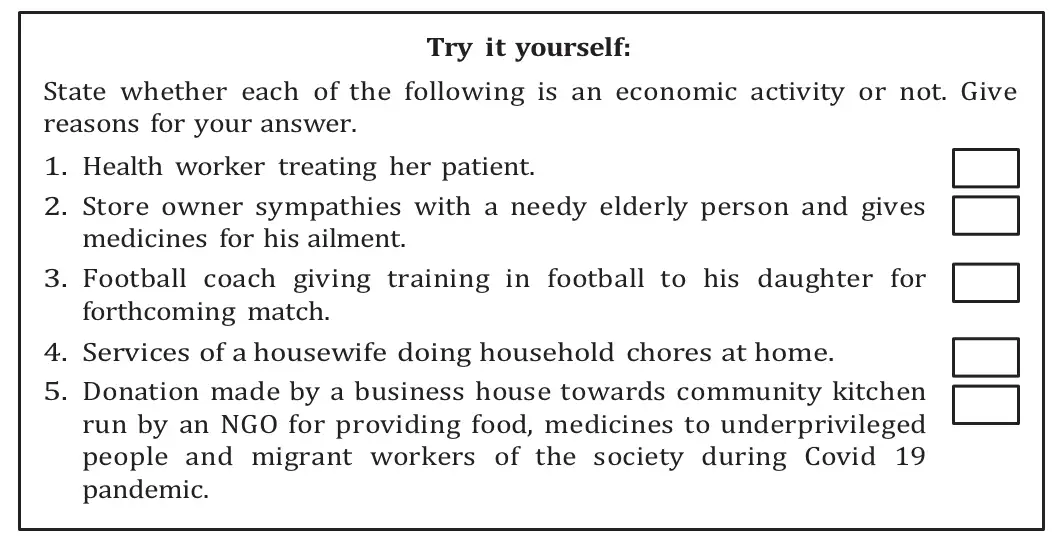
This exercise helps identify economic activities by analyzing whether they involve producing, buying, or selling goods or services for money.
Characteristics of Business Activities
Business activities have the following distinguishing characteristics:
- Economic activity: Undertaken to earn money or livelihood, not out of emotion.
- Production or procurement of goods and services: Goods must be produced or procured before sale.
- Sale or exchange of goods and services: Business involves transfer or exchange for value.
- Regular dealings: Business involves regular transactions, not one-time sales.
- Profit earning: Main purpose is to earn profit.
- Uncertainty of return: Profit amount is uncertain; losses are possible.
- Element of risk: Risks arise from market changes, competition, accidents, etc.
Comparison of Business, Profession and Employment
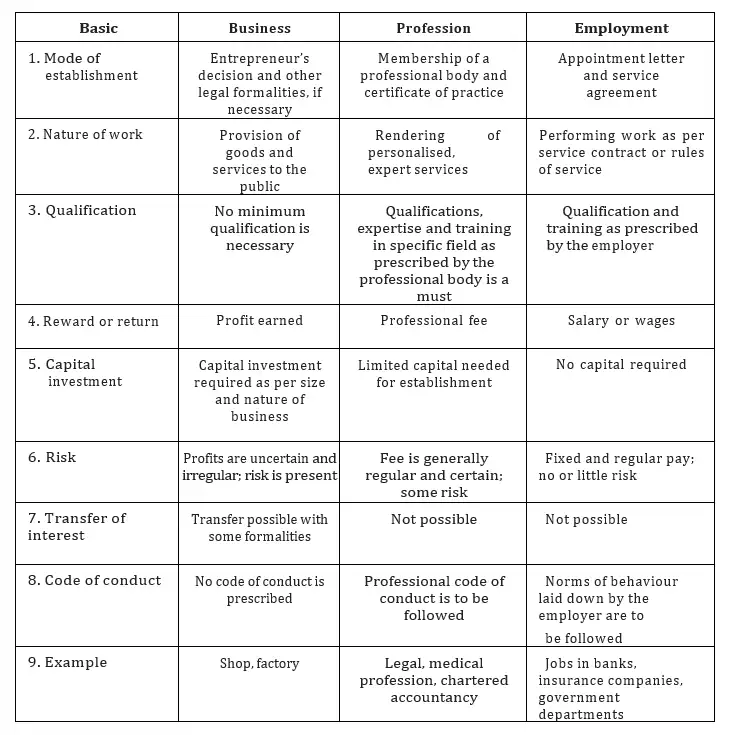
This table compares Business, Profession, and Employment based on criteria like mode of establishment, nature of work, qualification, rewards, capital investment, risk, transfer of interest, code of conduct, and examples.
Classification of Business Activities
Business activities are broadly classified into Industry and Commerce. Industry involves production or processing of goods, while Commerce includes activities facilitating exchange of goods and services.
Industry
Industry refers to economic activities connected with converting resources into useful goods, often involving mechanical and technical skills. It includes:
- Primary industries: Extraction and production of natural resources, including:
- Extractive industries: Mining, farming, lumbering, fishing.
- Genetic industries: Breeding plants and animals, e.g., poultry farms.
- Secondary industries: Processing raw materials into finished goods, including:
- Manufacturing industries: Producing goods by processing raw materials. Types include analytical, synthetical, processing, and assembling industries.
- Construction industries: Building infrastructure like roads, bridges, buildings.
- Tertiary industries: Providing support services to primary and secondary industries, such as transport, banking, insurance, warehousing, communication, packaging, and advertising.
Commerce
Commerce includes trade and auxiliaries to trade. Trade is buying and selling of goods, while auxiliaries are services facilitating trade, such as transport, banking, insurance, warehousing, and advertising. Commerce links producers and consumers, ensuring smooth flow of goods.
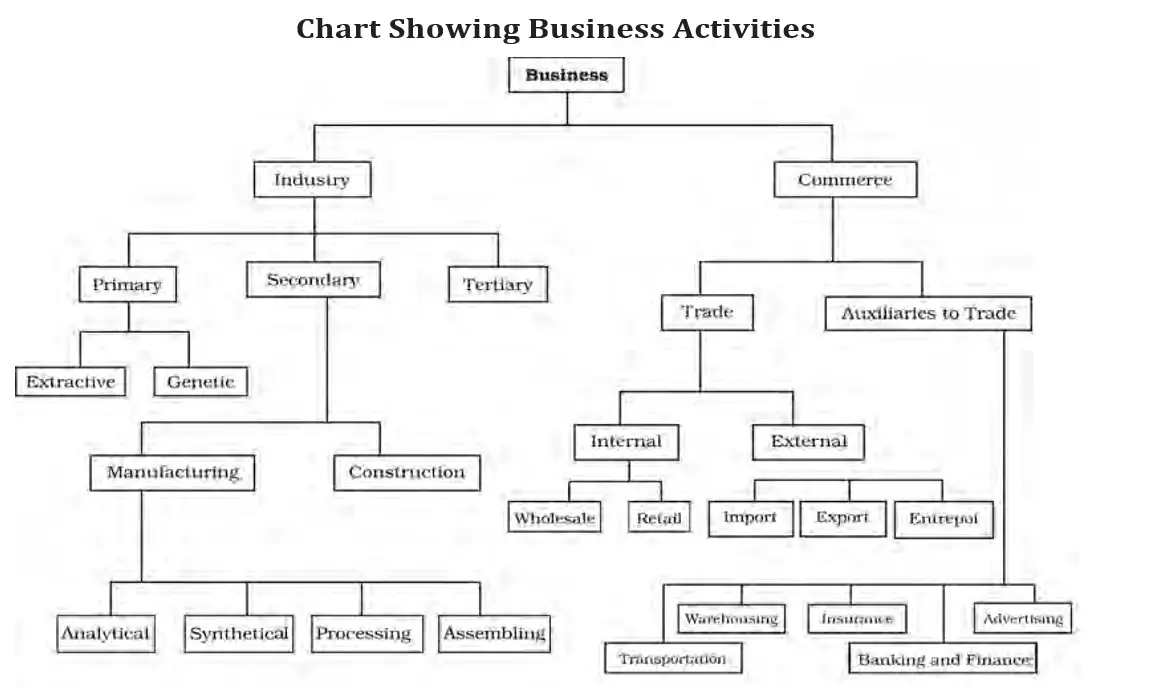
This flowchart shows business activities divided into Industry and Commerce, with further subdivisions illustrating the scope of each.
Trade and Auxiliaries to Trade
Trade involves sale, transfer, or exchange of goods, making products available to consumers. Auxiliaries to trade support trade and industry by facilitating movement, storage, financing, risk coverage, and sales promotion.
- Transport and Communication: Removes place obstacles by moving goods and exchanging information.
- Banking and Finance: Provides funds and financial services to support business operations.
- Insurance: Protects against risks like fire, theft, and accidents.
- Warehousing: Stores goods to maintain supply and stabilize prices.
- Advertising and Public Relations: Promotes products and services to potential customers through paid advertisements and strategic communication.
Objectives of Business
Business objectives guide the survival and prosperity of a business. Multiple specific objectives are necessary, including:
- Market standing: Maintaining goodwill and competitive position.
- Innovation: Introducing new ideas or improving products and processes.
- Productivity: Efficient use of resources to maximize output.
- Physical and financial resources: Acquiring and efficiently using assets and funds.
- Earning profits: Generating reasonable profit for survival and growth.
- Social responsibility: Contributing to social welfare and ethical practices.
Activity: Discuss why maximizing profit is not the sole objective of business.
Business Risk
Business risk refers to the possibility of inadequate profits or losses due to uncertainties or unexpected events, such as changes in demand, competition, or raw material prices.
There are two types of business risks:
- Speculative risks: Involve possibility of gain or loss, e.g., market fluctuations.
- Pure risks: Involve possibility of loss or no loss, e.g., fire or theft.
Nature of Business Risks
- Risk is inherent in every business and cannot be eliminated.
- Risks arise due to uncertainties about future events.
- Degree of risk depends on nature and size of business.
- Profit is the reward for taking risks.
Causes of Business Risks
- Natural causes: Floods, earthquakes, famines.
- Human causes: Employee dishonesty, strikes, management inefficiency.
- Economic causes: Demand fluctuations, competition, technology changes, financial problems.
- Other causes: Political disturbances, mechanical failures, exchange rate fluctuations.
Starting a Business - Basic Factors
Starting a business, or entrepreneurship, involves employing resources to achieve objectives. The entrepreneur is the person who sets up the business enterprise.
Entrepreneurship provides self-employment and creates opportunities for employment and profession, contributing to economic development.
Key factors in starting a business include:
- Selection of type of business: Choosing the industry or commerce branch based on profit potential and personal interest.
- Size of business: Deciding scale of operation, from MSME to large enterprise.
- Location: Choosing a place considering raw materials, labor, power, banking, transport, communication, and warehousing.
- Financing: Arranging capital for fixed and current assets and day-to-day expenses.
- Physical facilities: Availability of machines, equipment, buildings, and services.
- Competent workforce: Hiring skilled and committed employees and managers.
- Tax planning: Considering tax liabilities and their impact on business decisions.
- Launching the enterprise: Mobilizing resources, completing legal formalities, starting production, and sales promotion.