CLASS 10 . SOCIAL SCIENCE . CONTEMPORARY INDIA II . LIFELINES OF-NATIONAL-ECONOMY
Chapter 7 : LIFELINES OF NATIONAL ECONOMY
Ch 7
SOCIAL SCIENCE
CLASS 10
Introduction to Transport and Communication
In our daily lives, we use various goods and services, some available locally and others brought from distant places. The movement of these goods and services from supply locations to demand locations requires transport. Traders facilitate this movement, making products accessible to consumers. The pace of a country's development depends not only on production but also on the efficient movement of goods and services. Therefore, efficient means of transport are essential for rapid development.
Transport occurs over three main domains of the earth: land, water, and air. Accordingly, transport is classified into land transport, water transport, and air transport. Historically, trade and transport were limited to small areas, but advances in science and technology have expanded their reach globally. Today, the world is interconnected like a large village through efficient transport and communication systems, which complement each other.
India, despite its vast size and diversity, is well connected with the world through railways, airways, waterways, newspapers, radio, television, cinema, and the internet. These means contribute significantly to India's socio-economic progress. Trade at local, national, and international levels adds vitality to the economy and improves amenities and comforts of life.
This chapter explores how modern means of transport and communication serve as lifelines of the nation and its economy. A dense and efficient network of transport and communication is a prerequisite for trade at all levels today.
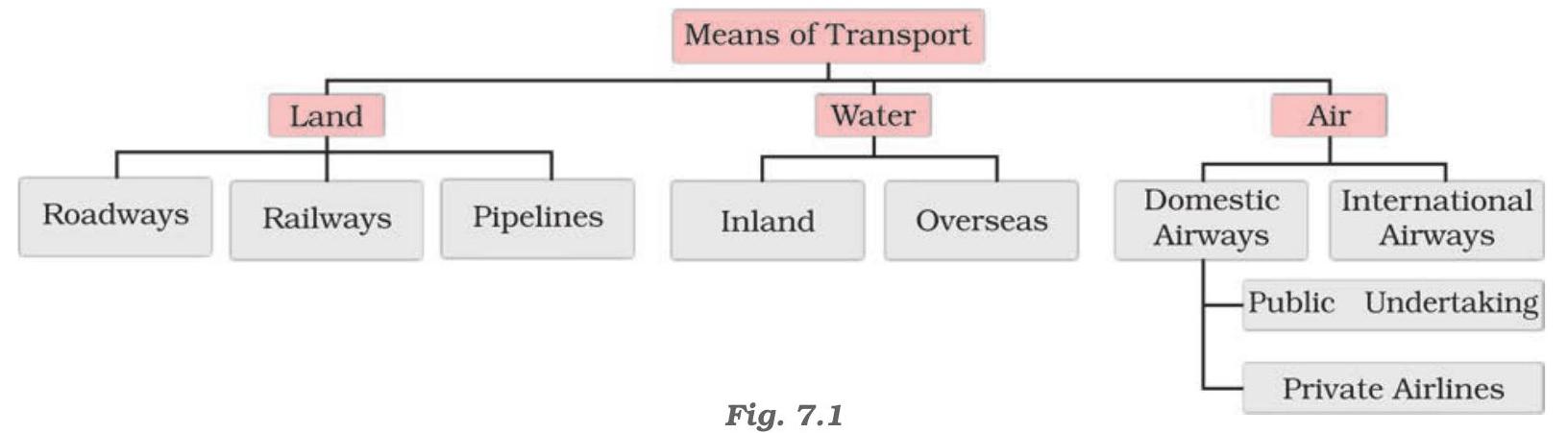
The above chart classifies means of transport into three main categories: Land, Water, and Air transport. Land transport includes roadways, railways, and pipelines. Water transport is divided into inland and overseas transport. Air transport includes domestic airways, public undertaking airlines, private airlines, and international airways.
Land Transport
Roadways
India has the second largest road network in the world, totaling about 62.16 lakh kilometers (2020-21). Roadways preceded railways in India and remain important due to their ease of construction and maintenance. Roads can traverse difficult terrains, negotiate higher slopes, and provide economical transport for small groups and goods over short distances. They also offer door-to-door service and act as feeders to other transport modes like railways, airways, and seaports.
Roads in India are classified into six categories based on capacity:
- Golden Quadrilateral Super Highways: A major project linking Delhi, Kolkata, Chennai, Mumbai, and back to Delhi with six-lane highways. It includes North-South and East-West corridors connecting various parts of the country, aiming to reduce travel time between major cities.
- National Highways: Primary roads linking extreme parts of the country, running mainly in North-South and East-West directions.
- State Highways: Roads connecting state capitals with district headquarters.
- District Roads: Roads connecting district headquarters with other places within the district.
- Other Roads: Rural roads linking villages with towns, developed under schemes like Pradhan Mantri Grameen Sadak Yojana.
- Border Roads: Constructed and maintained by the Border Roads Organisation (BRO) in strategic border areas, improving accessibility and economic development.
Fig.7.2: Ahmedabad-Vadodara Expressway
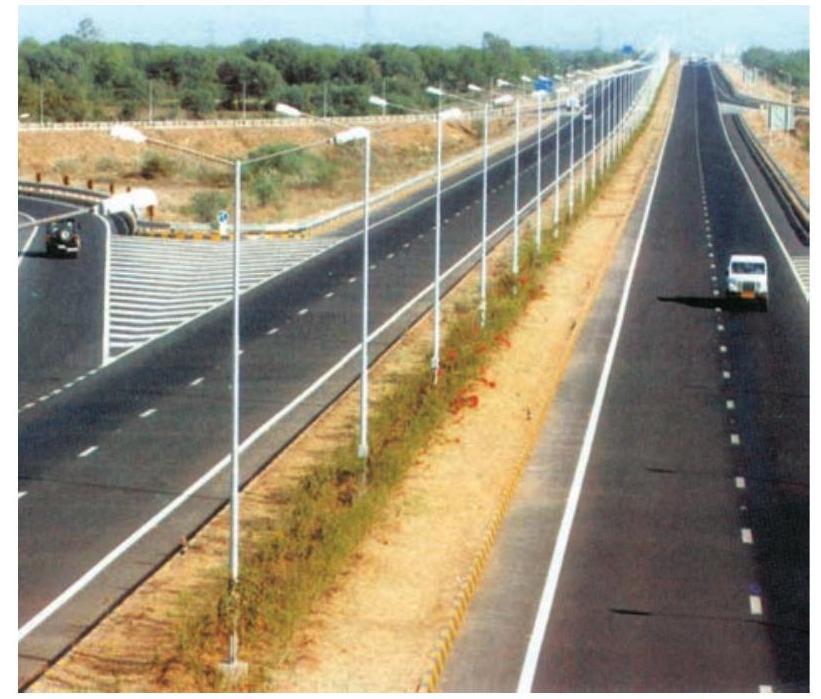
This expressway features divided carriageways separated by a median strip with greenery and streetlights, enhancing safety and visibility. The lanes are marked for orderly traffic flow, and exit lanes allow safe entry and exit. Such highways are designed considering speed, stopping distance, friction, and lighting to ensure safe and efficient travel.
Activity: Collect information on National Highway numbers (old and new) from the Ministry of Road Transport and Highways website. Identify the National Highway number of the historical Sher-Shah Suri Marg between Delhi and Amritsar.
Railways
Railways are the principal mode of transportation for freight and passengers in India, enabling business, tourism, and pilgrimage. Indian Railways have been a great integrating force for over 150 years, binding the economic life of the country and accelerating industrial and agricultural development. The network is divided into 16 zones.
The first train in India ran from Mumbai to Thane in 1853, covering 34 km.
Activity: Find out the current Railway zones and their headquarters. Locate these headquarters on the map of India.
The railway network distribution is influenced by physiographic, economic, and administrative factors. The northern plains provide favorable conditions for railway growth, while hilly terrains and mountainous regions pose challenges. The Konkan Railway along the west coast has improved connectivity in an important economic region despite facing issues like landslides.
Table 7.1: India Railway Track Length by Gauge
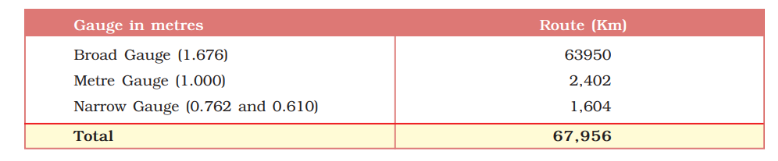
The broad gauge (1.676 m) accounts for the majority of the network with 63,950 km, followed by metre gauge (1.000 m) with 2,402 km, and narrow gauge (0.762 and 0.610 m) with 1,604 km. The total route length is approximately 67,956 km.
Pipelines
Pipelines are a relatively new mode of transport in India, used to transport water, crude oil, petroleum products, and natural gas. They connect oil fields to refineries, fertilizer factories, and power plants. Pipelines have high initial costs but low running costs and reduce trans-shipment losses.
Major pipeline networks include:
- Upper Assam to Kanpur via Guwahati, Barauni, and Allahabad.
- Salaya (Gujarat) to Jalandhar (Punjab) via Viramgam, Mathura, Delhi, and Sonipat.
- Hazira-Vijaipur-Jagdishpur (HVJ) gas pipeline linking Mumbai High and Bassein gas fields with industrial complexes.
Water Transport
India has a rich history of seafaring and water transport, which is the cheapest mode for carrying heavy and bulky goods. Inland waterways extend over thousands of kilometers, though only a portion is navigable by mechanized vessels. The government has declared several National Waterways for development.
Major National Waterways include:
- The Ganga river between Allahabad and Haldia (1620 km)
- The Brahmaputra river between Sadiya and Dhubri (891 km)
- West-Coast Canal in Kerala (205 km)
- Specified stretches of Godavari, Krishna, and East Coast Canal (1078 km)
- Specified stretches of Brahmani, Mahanadi, and East Coast Canal (588 km)
Other important inland waterways include Mandavi, Zuari, Sunderbans, Barak, and Kerala backwaters.
India's foreign trade is predominantly carried by sea, with 95% of trade volume moved through ports along the 7,516.6 km coastline. There are 12 major and over 200 minor ports.
Major Sea Ports
Key ports include Kandla (Deendayal Port), Mumbai, Jawaharlal Nehru Port, Marmagao (Goa), New Mangalore, Kochchi, Tuticorin, Chennai, Vishakhapatnam, Paradwip, Kolkata, and Haldia. These ports handle the majority of India's foreign trade and are strategically located to serve various hinterlands.
Fig. 7.6: Trucks being driven into the vessel at Mumbai port
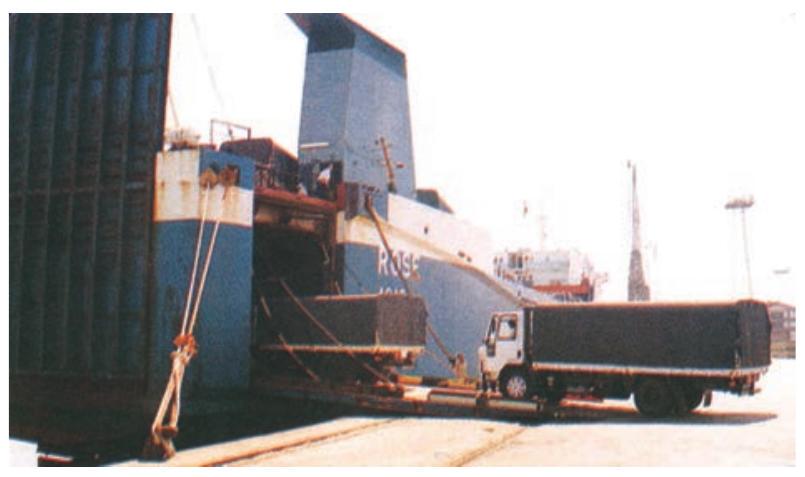
This image shows trucks driving onto a cargo ship via a ramp, illustrating intermodal transport where road and sea transport are combined for efficient cargo movement.
Fig. 7.7: Tanker discharging crude oil at New Mangalore port
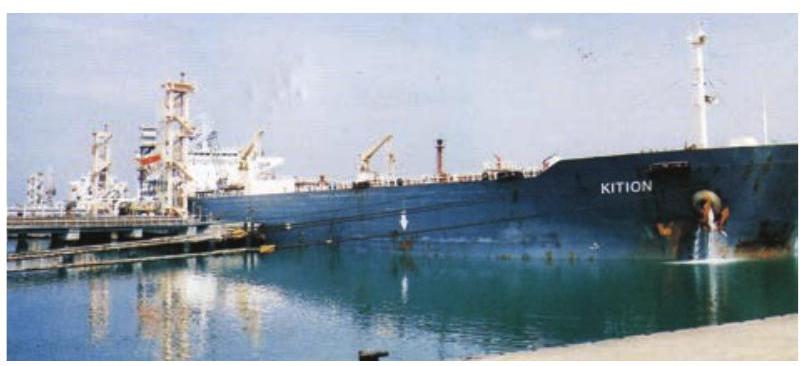
The image depicts an oil tanker leaking oil into the water, causing marine pollution. Oil floats on water due to its lower density, harming aquatic life and ecosystems. Preventive measures and regulations are essential to protect marine environments.
Fig. 7.8: Handling of oversize cargo at Tuticorin port
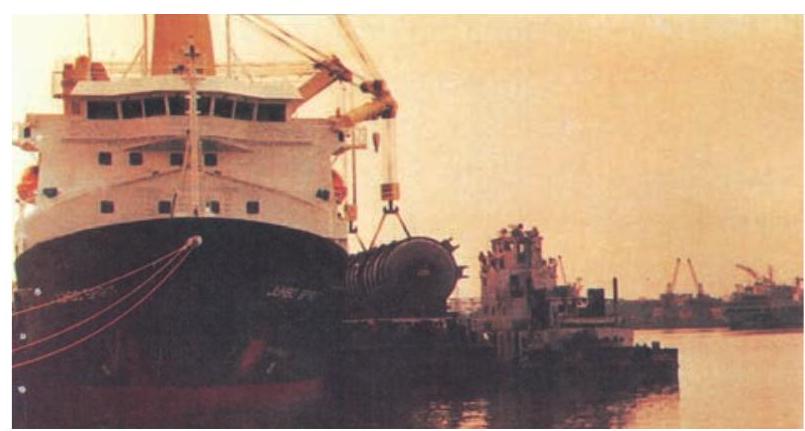
This image shows a crane lifting an underwater vehicle onto a ship, demonstrating marine engineering operations and the role of buoyancy in lifting heavy objects from water.
Air Transport
Air travel is the fastest, most comfortable, and prestigious mode of transport, capable of covering difficult terrains such as mountains, deserts, forests, and oceans with ease.
Fig. 7.9: Helicopter on landing pad
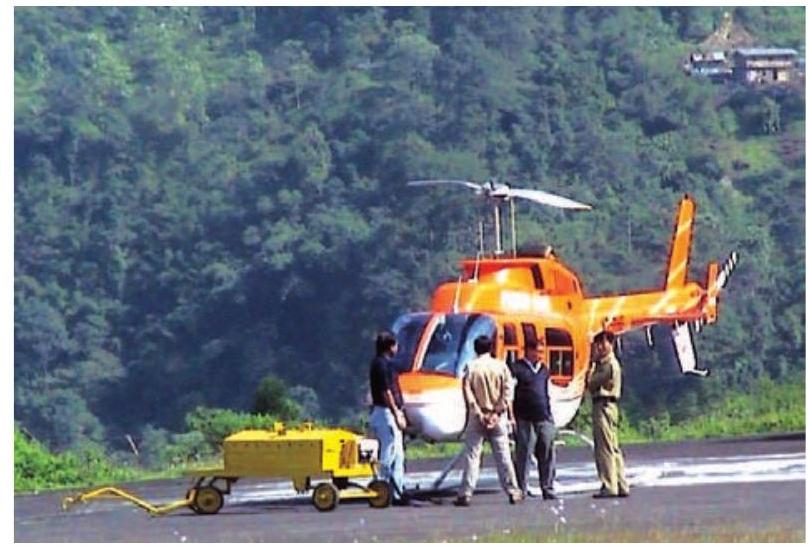
The image shows a small helicopter with ground crew inspecting it. Helicopters use rotating blades to generate lift and can hover and maneuver in difficult terrains. Ground power units supply electricity for maintenance and engine start without using onboard fuel.
Air travel is especially important in the northeastern states of India due to difficult terrain, dense forests, and frequent floods. Helicopter services support oil and gas operations and provide access to remote areas.
Do you know? The UDAN (Ude Desh ka Aam Nagrik) scheme promotes regional air connectivity by making flying affordable and encouraging airlines to operate on regional routes.
Communication
Communication has evolved rapidly, enabling long-distance interaction without physical movement. Personal and mass communication include television, radio, press, films, and postal services. India has the largest postal network globally, handling parcels and written communication with various mail channels for efficient delivery.
India has one of the largest telecom networks in Asia, with over two-thirds of villages covered by Subscriber Trunk Dialling (STD) telephone facilities. The government aims to provide 24-hour STD service to every village, integrating space and communication technologies.
Mass communication provides entertainment and awareness about national programs through All India Radio, Doordarshan, newspapers, magazines, and films. India publishes newspapers in about 100 languages, with Hindi, English, and Urdu being the most common. India is also the largest producer of feature films globally.
International Trade
Trade is the exchange of goods among people, states, and countries. International trade occurs between countries via sea, air, or land routes. Local trade happens within cities and villages, while state-level trade occurs between states. International trade is an indicator of economic prosperity.
Exports and imports are components of trade. A favorable balance of trade occurs when exports exceed imports; an unfavorable balance occurs when imports exceed exports.
India trades with major global trading blocks and regions. Exports include gems and jewellery, chemicals, agriculture, and allied products. Imports include petroleum crude, gems, chemicals, base metals, electronics, machinery, and agricultural products. India is a global software giant, earning significant foreign exchange through IT exports.
Tourism as a Trade
Tourism in India has grown substantially, employing over 15 million people directly. It promotes national integration, supports local handicrafts and culture, and fosters international understanding of India's heritage.
Foreign tourists visit India for heritage, eco, adventure, cultural, medical, and business tourism. There is vast potential for tourism development across the country, with efforts to promote various types.
Activity: On the map of India, mark important tourist places in your State/Union Territory and their connectivity by railways, roadways, and airways. Discuss:
- What types of tourism can be developed in your state and why?
- Which areas are attractive for tourism development and why?
- How can tourism contribute to economic development sustainably?
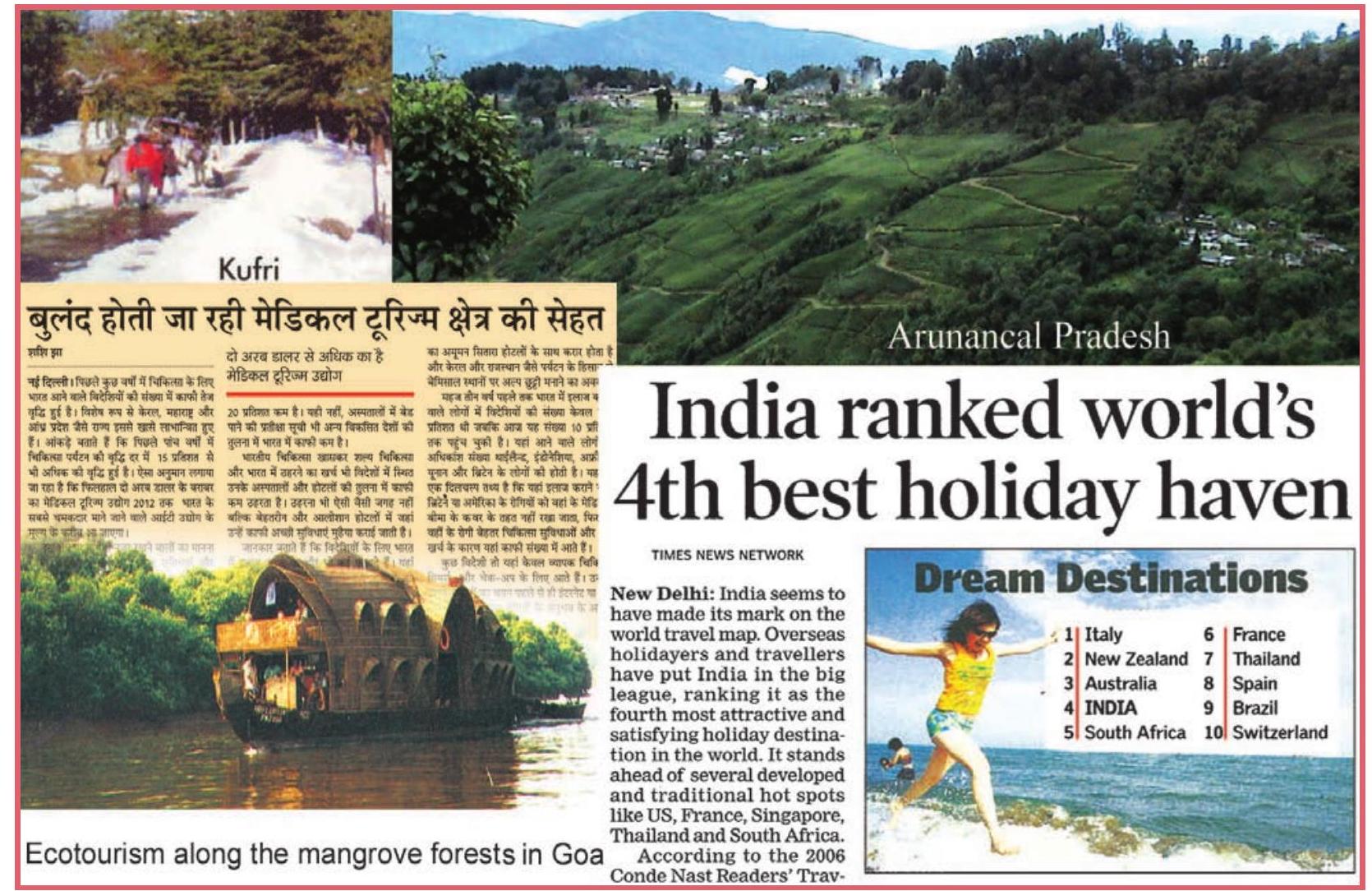
India is ranked as the 4th best holiday destination worldwide, surpassing many developed countries. The images show mountain tourism in Kufri, ecotourism in Goa, and scenic beauty in Arunachal Pradesh. Medical tourism is also growing due to affordable and quality healthcare.
Solved Examples
Example 1: Why are roads considered more flexible than railways in India?
Answer: Roads are easier and cheaper to construct and maintain, can traverse difficult and undulating terrain, negotiate higher slopes, provide door-to-door service, and act as feeders to other transport modes, making them more flexible than railways.
Example 2: What is the significance of the Golden Quadrilateral project?
Answer: The Golden Quadrilateral connects four major metros (Delhi, Mumbai, Chennai, Kolkata) with six-lane highways, reducing travel time and distance, promoting trade, and enhancing connectivity across India.
Practice Set
Easy
- Define transport and explain its importance in economic development.
- List the three main categories of means of transport.
Moderate
- Explain the classification of roads in India.
- Describe the role of Indian Railways in national integration.
Challenging
- Discuss the advantages and challenges of pipeline transport in India.
- Explain how air transport benefits the northeastern states of India.
Answer Key
Easy
- Transport is the movement of goods and services from supply to demand locations; it is vital for economic development as it facilitates trade and accessibility.
- The three main categories are land transport, water transport, and air transport.
Moderate
- Roads are classified as Golden Quadrilateral, National Highways, State Highways, District Roads, Other Roads, and Border Roads based on capacity and function.
- Indian Railways connect diverse regions, promote economic activities, and have been a unifying force for over 150 years.
Challenging
- Pipelines offer efficient transport of liquids and gases with low running costs but have high initial investment and limited flexibility.
- Air transport overcomes difficult terrain, provides quick access, and supports economic and social development in the northeast.
Quick Reference
- Transport types: Land (Roadways, Railways, Pipelines), Water (Inland, Overseas), Air (Domestic, Public, Private, International)
- Golden Quadrilateral connects Delhi, Mumbai, Chennai, Kolkata
- Indian Railways: 16 zones, broad gauge predominant
- Major ports: Mumbai, Kandla, Chennai, Kolkata, Tuticorin
- Communication: Largest postal network, mass media includes radio, TV, newspapers
- International trade: Exports include gems, chemicals; imports include petroleum, machinery
- Tourism: Heritage, eco, adventure, medical tourism growing sectors
Glossary
- Transport
- Movement of goods and services from supply to demand locations.
- Golden Quadrilateral
- A highway network connecting four major metros of India.
- Broad Gauge
- Railway track gauge of 1.676 meters, the most common in India.
- Pipeline Transport
- Transport of liquids and gases through pipes over long distances.
- Inland Waterways
- Rivers, canals, and lakes used for transportation within a country.
- Mass Communication
- Dissemination of information to large audiences via media like radio, TV, and newspapers.
- International Trade
- Exchange of goods and services between countries.
- Tourism
- Travel for pleasure, business, or other purposes, contributing to the economy.