CLASS 10 . SCIENCE . SCIENCE . CARBON AND-ITS-COMPOUNDS
Chapter 4 : CARBON AND ITS COMPOUNDS
Ch 4
SCIENCE
CLASS 10
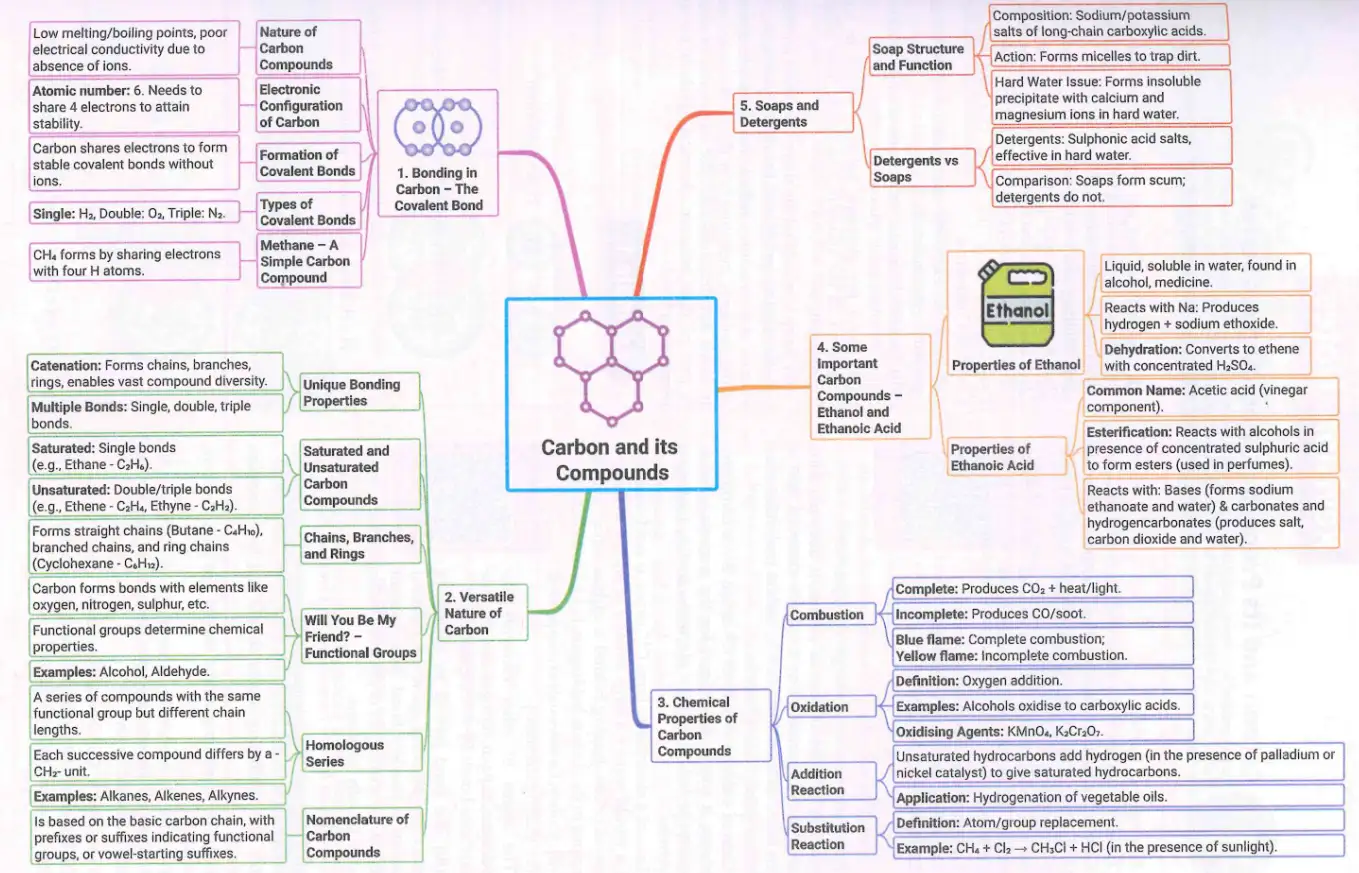
Carbon Properties Homologous Series
Properties of Carbon
The element carbon is a non-metal with atomic number 6 and symbol C. It forms covalent bonds and is a versatile element found in all living things. Carbon's electronic configuration is 2,4, meaning it has 4 valence electrons, making it tetravalent. Carbon forms covalent compounds by sharing electrons with other atoms such as hydrogen, oxygen, nitrogen, and chlorine.
Formation of Covalent Bonds
Carbon attains noble gas configuration by sharing electrons rather than gaining or losing them. Covalent bonds form when atoms share electron pairs, and the shared electrons belong to the valence shell of both atoms. Conditions for covalent bond formation include atoms having 4-7 valence electrons, not easily losing or gaining electrons, and low electronegativity difference.
Properties of Covalent Compounds
- Physical state: gases, liquids, or soft solids
- Solubility: generally insoluble in water but soluble in organic solvents
- Melting and boiling points: generally low
- Electrical conductivity: non-conductors in all states
Lewis Dot Structures
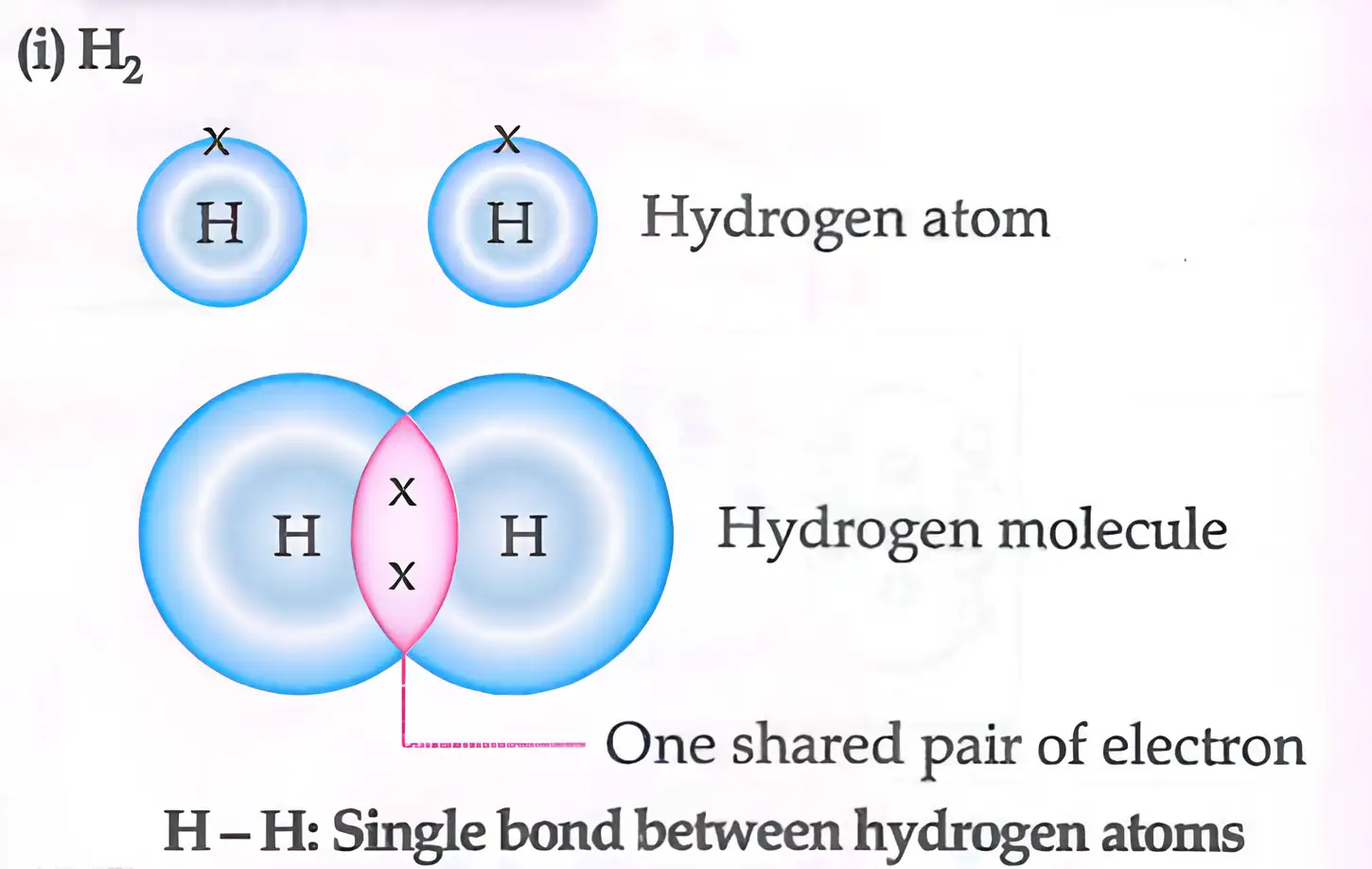
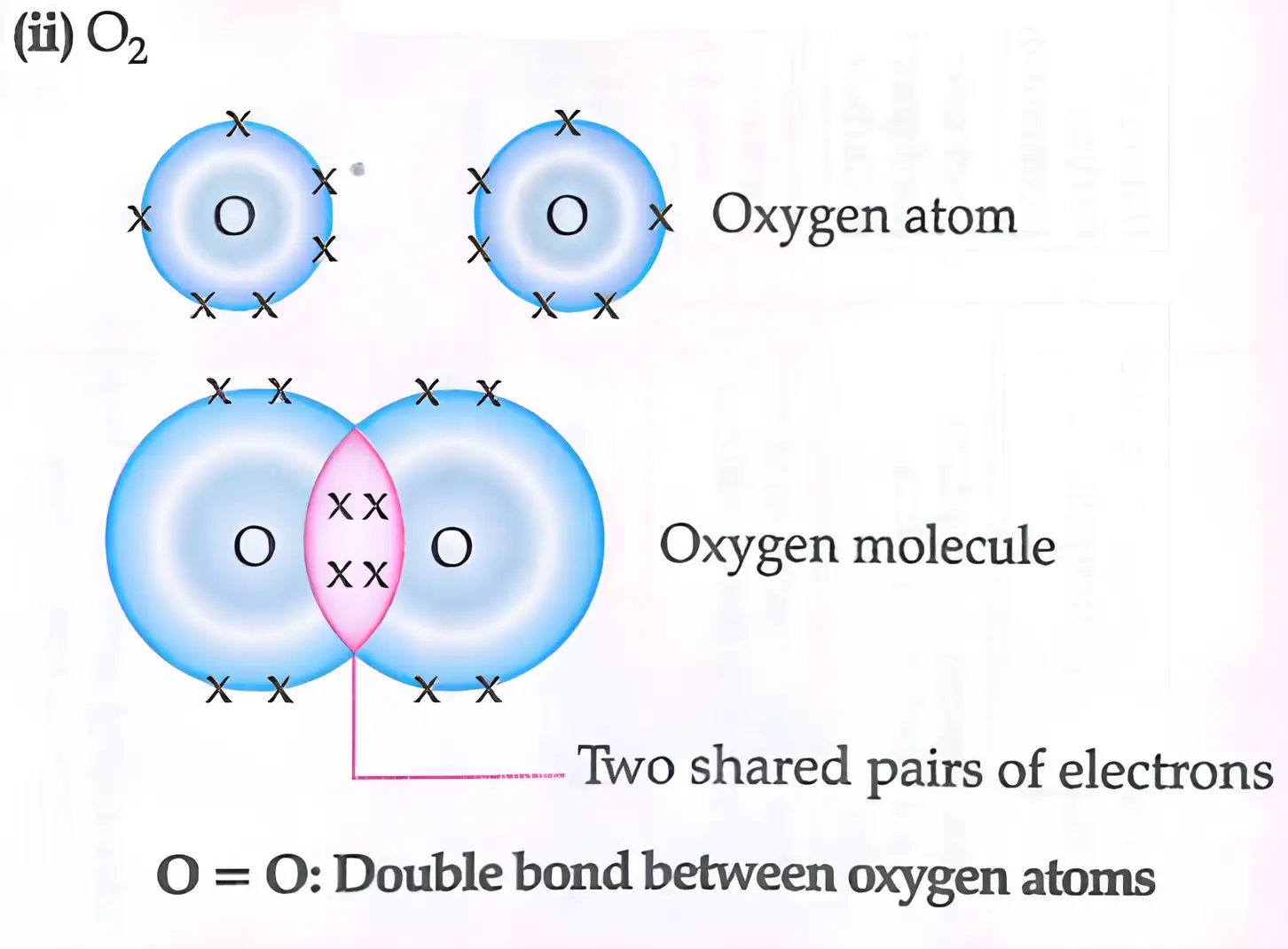
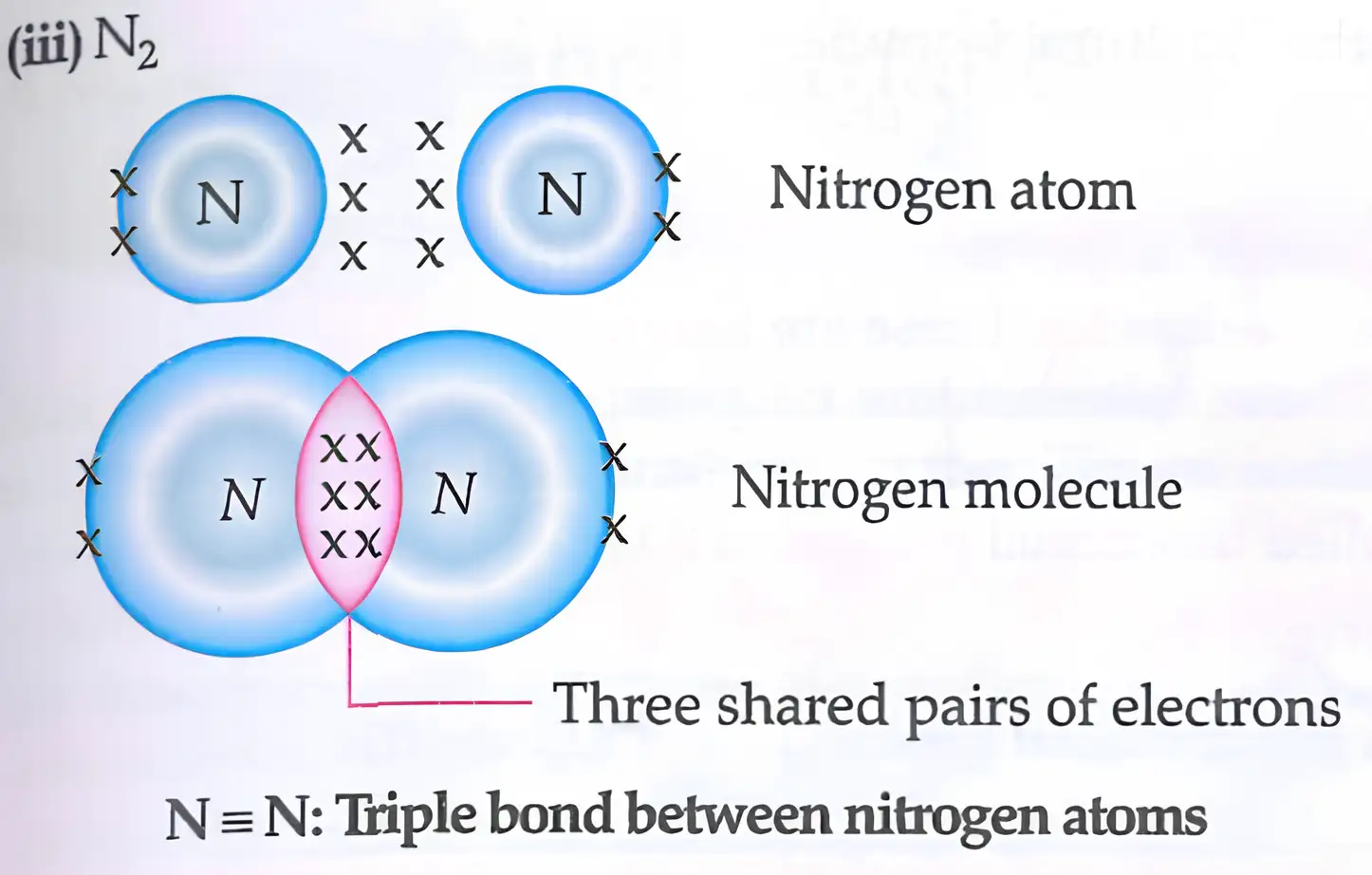
Lewis dot structures represent valence electrons as dots around atomic symbols. Shared pairs of electrons between atoms represent covalent bonds. For example, hydrogen molecules share one pair of electrons forming a single bond, oxygen molecules share two pairs forming a double bond, and nitrogen molecules share three pairs forming a triple bond.
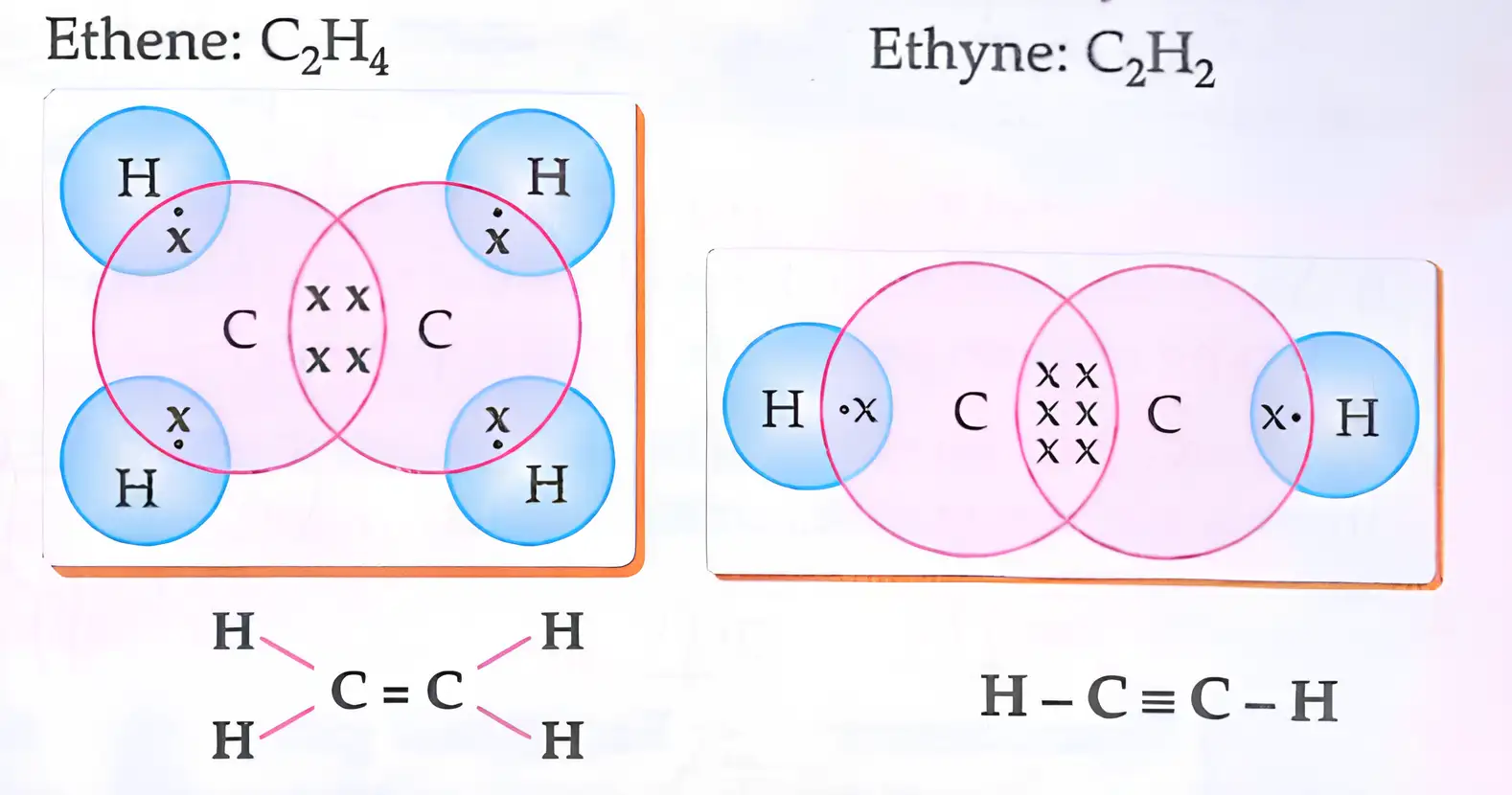
Versatile Nature of Carbon
Carbon exhibits catenation, the ability to form long chains and rings, and tetravalency, having four valence electrons for bonding. Hydrocarbons are compounds of carbon and hydrogen and are classified as saturated (alkanes), unsaturated (alkenes and alkynes), and aromatic hydrocarbons (benzene and derivatives).
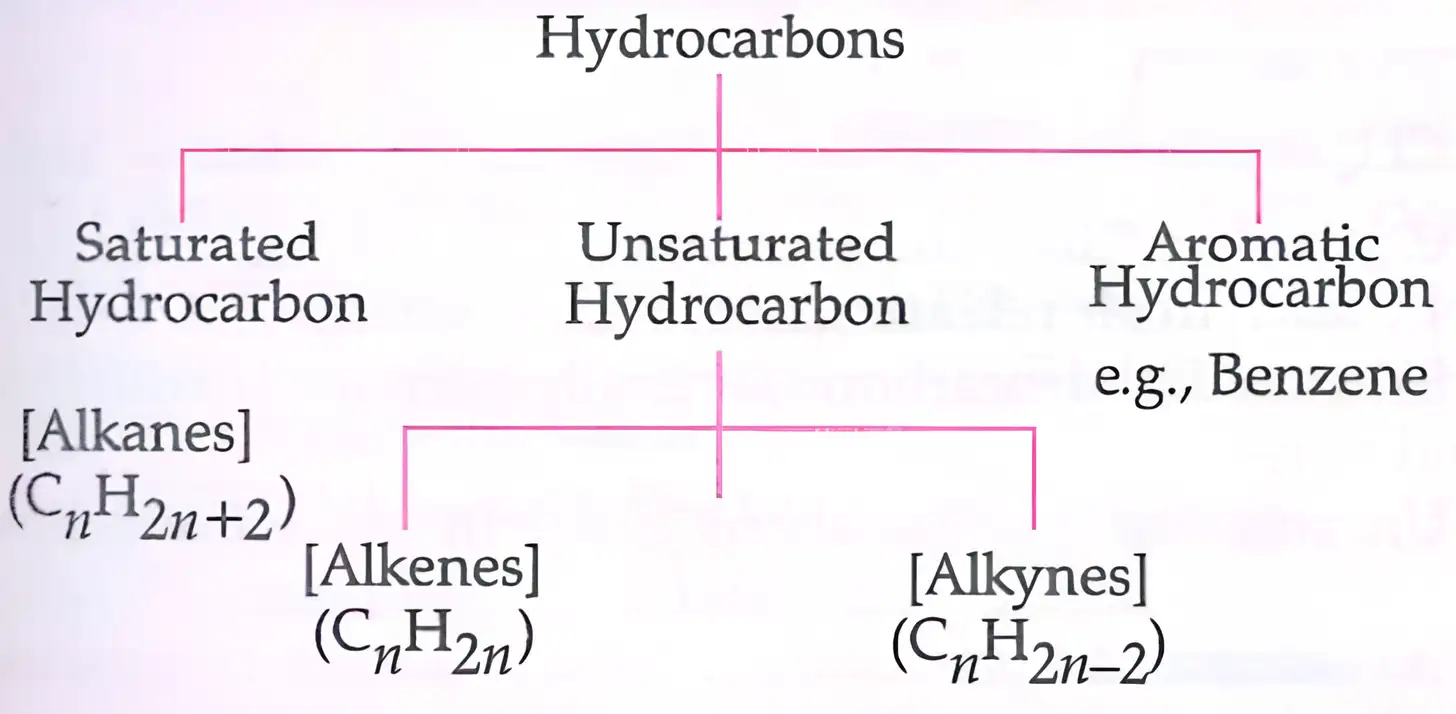
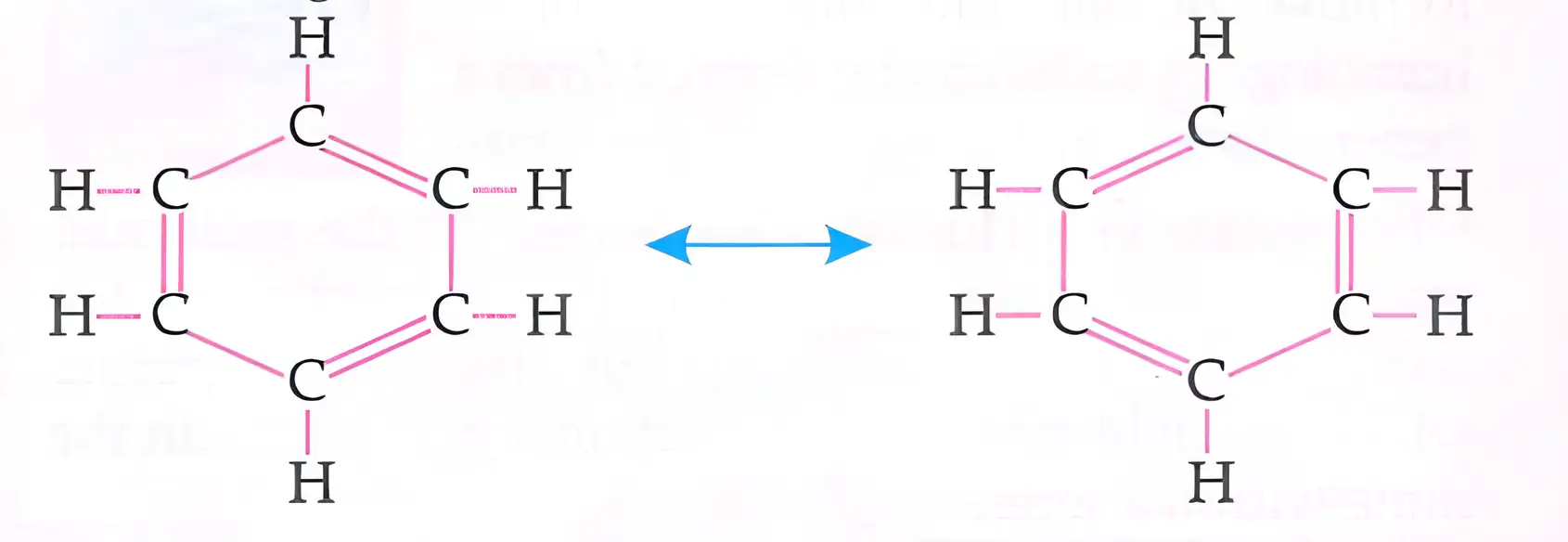
Homologous Series
A homologous series is a group of organic compounds with the same functional group and differing by a –CH₂ unit. Members have similar chemical properties but gradually changing physical properties. Examples include alkanes (CₙH₂ₙ₊₂), alkenes (CₙH₂ₙ), and alkynes (CₙH₂ₙ₋₂).

Chemical Properties
Combustion
Carbon compounds burn in air producing carbon dioxide, water, heat, and light. Saturated hydrocarbons burn with a blue flame, while unsaturated hydrocarbons burn with a yellow sooty flame due to incomplete combustion.
Oxidation
Alcohols like ethanol can be oxidized to carboxylic acids such as ethanoic acid using oxidizing agents like alkaline potassium permanganate or acidic potassium dichromate.
Addition Reaction
Unsaturated hydrocarbons undergo addition reactions where hydrogen is added across double or triple bonds in the presence of catalysts like nickel or palladium, converting alkenes or alkynes into alkanes.
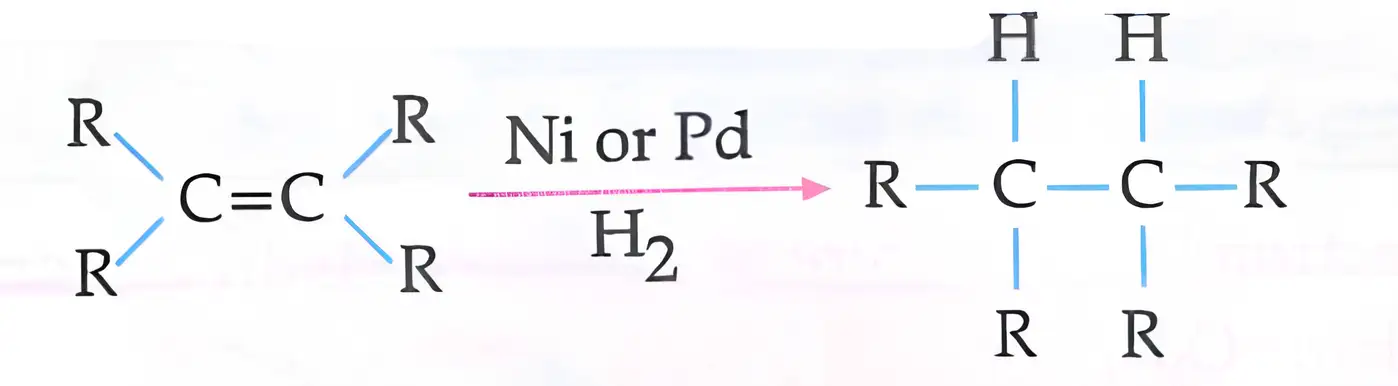
Substitution Reaction
Saturated hydrocarbons undergo substitution reactions, such as chlorination of methane in the presence of sunlight, where hydrogen atoms are replaced by chlorine atoms.
Ethanol Ethanoic Acid Soaps Detergents
Ethanol
Ethanol (C₂H₅OH) is an alcohol used in medicines, alcoholic beverages, and as a laboratory reagent. It reacts with sodium to form sodium ethoxide and hydrogen gas, and with acids to form esters through esterification.
Ethanoic Acid
Ethanoic acid (CH₃COOH), also known as acetic acid, is a carboxylic acid found in vinegar (5–8% solution) and glacial acetic acid (pure form). It reacts with sodium carbonate, sodium hydrogen carbonate, and sodium hydroxide to form salts, water, and carbon dioxide where applicable.
Esters
Esters are sweet-smelling compounds formed by the reaction of an acid and an alcohol in the presence of concentrated sulfuric acid as a catalyst. They are used in perfumes and flavoring agents.
Soaps and Detergents
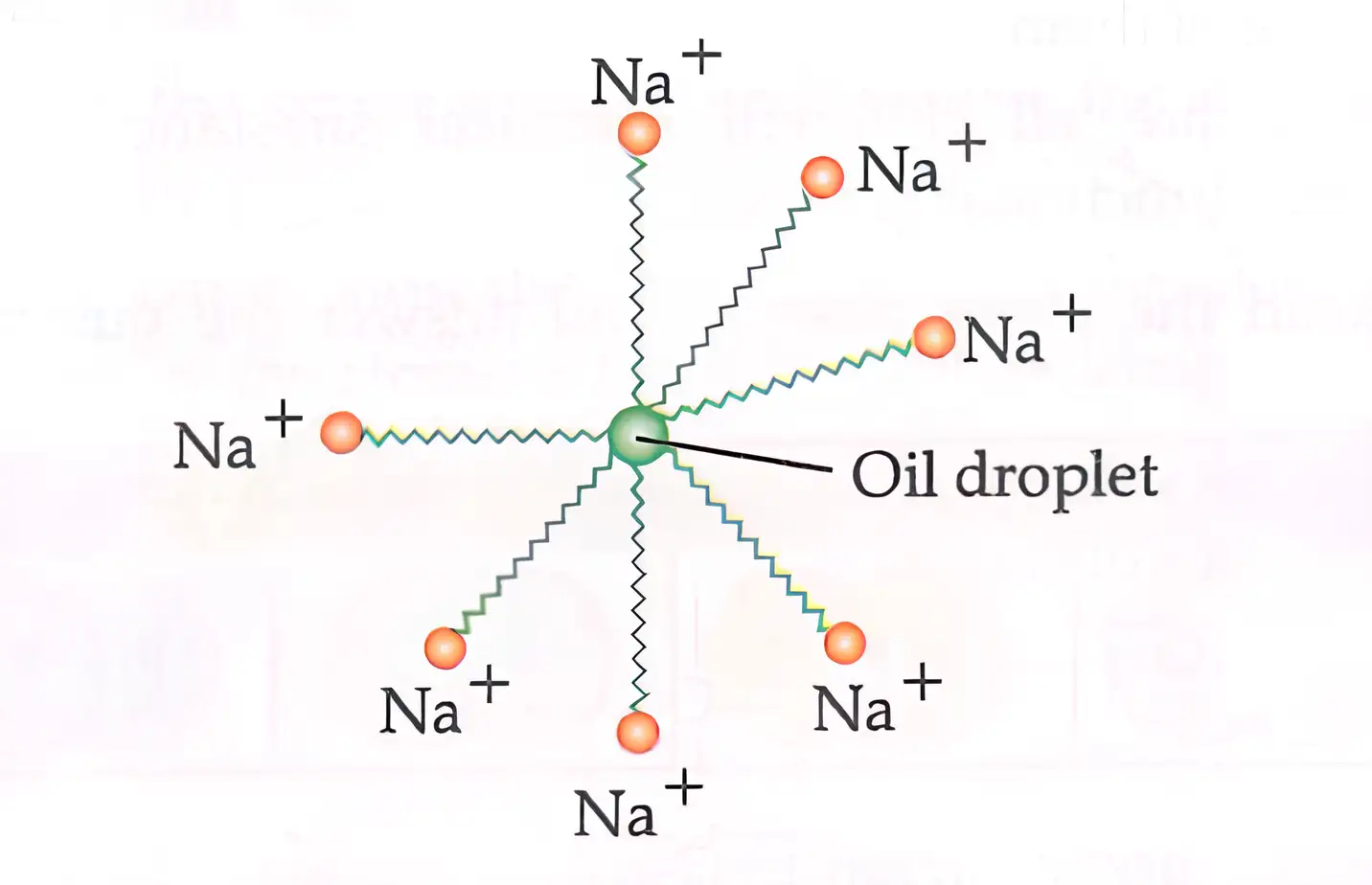
Soaps are sodium or potassium salts of long-chain carboxylic acids. They form micelles with hydrophobic tails attaching to dirt and hydrophilic heads interacting with water, helping to clean. Soaps are effective in soft water but form scum in hard water due to reaction with calcium and magnesium salts.
Detergents are ammonium or sulphonate salts effective in both hard and soft water and do not form scum.

Solved Examples
Example 1: Lewis Dot Structure of Methane
Methane (CH₄) has one carbon atom bonded to four hydrogen atoms. Carbon shares one electron with each hydrogen, forming four single covalent bonds. The Lewis structure shows carbon in the center with four pairs of shared electrons connecting to hydrogen atoms.
Example 2: Combustion of Methane
Reaction: CH₄ + 2O₂ → CO₂ + 2H₂O + energy
Explanation: One molecule of methane reacts with two molecules of oxygen to produce carbon dioxide and water, releasing heat and light energy.
Example 3: Oxidation of Ethanol to Ethanoic Acid
Reaction: CH₃CH₂OH + [O] → CH₃COOH + H₂O
Explanation: Ethanol is oxidized by an oxidizing agent to form ethanoic acid and water.
Practice Set
- Level 1: What is the general formula of alkanes?
- Level 1: Define catenation in carbon compounds.
- Level 2: Explain why unsaturated hydrocarbons burn with a yellow sooty flame.
- Level 3: Write the balanced chemical equation for the reaction of ethanol with sodium.
Answer Key
- Level 1: The general formula of alkanes is CₙH₂ₙ₊₂.
- Level 1: Catenation is the ability of carbon atoms to form long chains and rings by bonding with other carbon atoms.
- Level 2: Unsaturated hydrocarbons have a higher percentage of carbon and incomplete combustion occurs, producing a yellow sooty flame.
- Level 3: 2CH₃CH₂OH + 2Na → 2CH₃CH₂ONa + H₂↑
Quick Reference Table
General Formulas:
- Alkanes: CₙH₂ₙ₊₂
- Alkenes: CₙH₂ₙ
- Alkynes: CₙH₂ₙ₋₂
Important Reactions:
- Combustion: Hydrocarbon + O₂ → CO₂ + H₂O + Energy
- Oxidation of Ethanol: C₂H₅OH + [O] → CH₃COOH + H₂O
- Addition Reaction: Alkene + H₂ → Alkane (with Ni or Pd catalyst)
- Substitution Reaction: CH₄ + Cl₂ → CH₃Cl + HCl (in sunlight)
- Esterification: CH₃COOH + C₂H₅OH ⇌ CH₃COOC₂H₅ + H₂O (with H₂SO₄ catalyst)
Functional Groups and Naming:
- Alcohol: –OH (suffix "-ol")
- Carboxylic Acid: –COOH (suffix "-oic acid")
- Alkane: single bonds (suffix "-ane")
- Alkene: double bonds (suffix "-ene")
- Alkyne: triple bonds (suffix "-yne")
Properties:
- Carbon forms covalent bonds and exhibits catenation and tetravalency.
- Soaps are sodium or potassium salts of long-chain carboxylic acids; detergents are sulphonate or ammonium salts.
- Soaps form micelles to trap dirt but form scum in hard water; detergents work well in hard water.
Common Mistakes and Misconceptions
• Confusing substitution reactions (in saturated compounds) with addition reactions (in unsaturated compounds).
• Incorrectly balancing chemical equations for reactions involving ethanol and ethanoic acid.
• Misnaming steps in soap formation and misunderstanding the structure of micelles.
• Assuming soaps work effectively in hard water without forming scum.
Glossary
Catenation: The ability of carbon atoms to bond with each other forming chains and rings.
Tetravalency: Carbon's property of having four valence electrons available for bonding.
Homologous Series: A series of compounds with the same functional group differing by –CH₂ units.
Covalent Bond: A chemical bond formed by sharing electron pairs between atoms.
Functional Group: A specific group of atoms responsible for the characteristic reactions of a compound.
Combustion: A chemical reaction where a substance reacts with oxygen releasing heat and light.
Oxidation: A reaction involving the addition of oxygen or removal of hydrogen.
Addition Reaction: A reaction where atoms are added to a molecule without taking any atom away.
Substitution Reaction: A reaction where one atom or group in a molecule is replaced by another.
Esters: Compounds formed from an acid and an alcohol with a characteristic sweet smell.
Soap: Sodium or potassium salts of long-chain carboxylic acids used for cleaning.
Detergent: Synthetic cleaning agents effective in hard and soft water.